
 Piercy is a legend among feminists, and her writing was pivotal in my own development during the late 1970s and early 1980s as a newly-hatched adult. When this title, a novel based on the French Revolution, came out in 1996, I put it on my Christmas list and read it hungrily once I received it. When I noticed that it was released digitally this spring, I scored a digital copy from Open Road Integrated Media and Net Galley in exchange for this honest review. It’s a novel that is definitely worth reading twice.
Piercy is brilliant not only in bringing characters to life—and she did a prodigious amount of work before doing so, reading piles of biographies, memoirs, letters and other documents—but also in conveying the reader to the time and place In question. I think it’s because of this that her novel helped me to understand how such an amazing, incredible thing, the revolution, the democratic impulse that overthrew a monarchy, could end so badly. Dry history texts chronicle the “excesses” of the Jacobins. Say what? How meaningless is that? And it is by being able to see the roles played by key figures in the revolution, including the women that are usually left out, that I can see why the leadership degenerated as it did. An inexperienced working class with no background in how to organize a struggle ultimately paid the price, but in the end, the nation was still better off than it had been beforehand.
Using the grammar and conversational conventions of today for easier access to a popular audience, Piercy transports us back to a time when a life expectancy was less than fifty years for most people; open sewers flowed through the streets of Paris, causing horrible illnesses and a high infant mortality rate; and a starving seven year old child could be publicly hanged for stealing bread.
In fact, the bread riots led by the women of Paris were where it all began.
One thing readers should know if they read this novel digitally is that there is a glossary of sorts, a long list of characters and a few basic facts to identify them, but it’s at the back of the book, so you will want to go over it before you start and then refer back to it when you find yourself confused. The topic is huge, and you may need this cheat sheet, so it’s good to know it’s there. There are so many historical characters here, and if you aren’t fluent in this area, you may lose track of Robespierre, Danton, Madame Roland, and oh of course, Marat. And back then, Camille was a man’s name!
Piercy tells the story using the points of view of a wide range of figures important to this struggle. She gives a fair hearing to the perspectives of those that stood left, right, and center in this conflict, denying a sympathetic ear only to royalty—and even Marie Antoinette is treated with surprising sympathy. I came away feeling as if I knew so much more about the French Revolution and its terrible conclusion when I had read it, and rereading it was even more helpful, because it’s a lot to digest all at once, even if one is already aware of the broad contours of this pivotal time in French history.
When I love a book hard, I push it at everyone that comes within my reach, and I have pushed this particular novel at a lot of people over the years. Given how many times I loaned out my own (purchased) hard cover copy, it’s surprising that it isn’t falling apart, and maybe even more surprising that it’s always been returned to me.
Whether you prefer to read digitally or to purchase a paper copy, City of Darkness, City of Light is the most readable, accessible treatment of the French Revolution that I have seen. The fact that Piercy includes the key role played by women, both among the toiling masses and the elite salons of the intelligentsia makes it even better.
Recommended wholeheartedly to anyone that wants to understand the French Revolution!
 The Last Road Home, bold and impressive new fiction by Pushcart Prize nominee Danny Johnson, came to me free thanks to Net Galley and Kensington Books in exchange for an honest review. It tells the story of Raeford “Junebug” Hurley and his friendship with neighboring twins, Fancy and Lightning Stroud. Junebug is Caucasian; the twins are African-American, politely referred to during that time as ‘colored’ or ‘Negro’. The story is set during the Civil Rights movement of the early 1960’s, but in rural North Carolina, the Klan stands tall and strong and absolutely nothing has changed in terms of race relations. Junebug finds himself riding on the fence rail from hell. This fascinating tale will be available to the public in late July. Those that love good historical fiction should read it.
 I was invited to read by Net Galley and Simon and Schuster in exchange for an honest review, and I am so glad I did. It’s a juicy read that kept me transfixed through most of my Memorial Day weekend. You can order your copy now and have it when it comes out June 28.
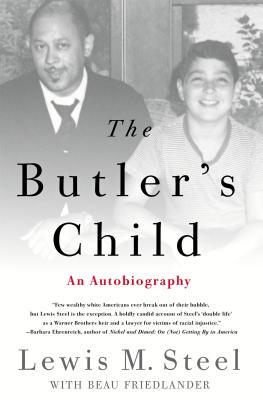 Lewis M. Steel has a long, noteworthy career as a civil rights attorney. He was an observer during the Attica Prison riots; worked for the NAACP during the Civil Rights movement, and later defended boxer Hurricane Carter against a frame-up charge of murder. And I was permitted to read this story free and in advance, thanks to Net Galley and St. Martin’s Press in exchange for this honest review. I rate it 3.5 stars and round upwards; it is now available to the public.
 Isabella Leitner was a Holocaust survivor, and she scribed her memoir using brief entries similar to a diary in format. The length is just 120 pages, about the size of a novella. I was asked to read and review this memoir free of charge before it was released digitally. Thanks go to Net Galley and Open Road Integrated Media for the invitation. This title was just released, so it is available now for purchase.
 Fearless women change history.
 I received this title courtesy of Endeavor Press, who invited me to read and review their material directly; I thank them for the invitation to read and review this Digital Review Copy free in exchange for an honest review.
 Alsop’s book is a collection of essays describing Washington, DC as it was in the 1960’s. Everything here was written then, so it’s a chance to jump back in time and see what the media—and this reporter in particular– thought was appropriate for mainstream Americans reading the news of the day. I was invited to read and review this book thanks to Open Road Integrated Media and Net Galley in exchange for this honest review. I always hate to pan a book when I’ve been invited; it sounds as if I am insulting the host after eating at his table. However, the truth is the truth, and I see this title as fitting a narrow niche audience, but not so much the general public.
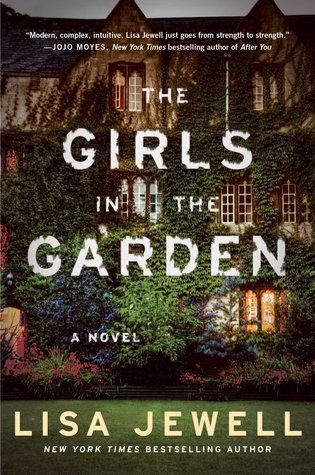 Lisa Jewell is an experienced author, but she is new to me. The Girls in the Garden, published in the UK last summer and soon to be in bookstores in the USA, is good strong fiction, and you should read it. I was fortunate and obtained an advance copy thanks to Net Galley and Atria Books for the purpose of a review. One night I stayed up late, unable to put it down until it was done.
 This title appeared to be a sure fire winner, a thriller that would also spotlight domestic violence and even more so, campus rape. I was pleased when Net Galley and Touchstone Publishers green-lighted my request for a DRC, which I received free of charge in exchange for this review. And without the social issues, which are a mixed bag but still partially useful, this would be a 1.5 star review, because as a mystery, as a thriller, as any kind of fiction, it doesn’t stand up.
 Seattle Book Mama