
Gone to Soldiers, by Marge Piercy*****

gonetosoldiersBrevity isn’t possible here. Settle in and get comfy. Here we go.

The word “epic” gets overused in the world of advertising, and so as a reviewer, I have learned to take the promise with a grain of salt. However, Piercy is renowned, an iconic presence for feminists and for anyone that approaches life from a class perspective. I read this book when it first came out in the 1980’s for no discount whatsoever, and I loved it. Books come and go at my house, since space on the bookshelf is itself a commodity, but Piercy has a permanent shelf all her own; when I saw that Open Road Media had released this book digitally, I jumped on it, even though the release date had passed and even though I already had the book, because I wanted to help promote it, and I was happy to read it again. I rate it 4.75 stars and of course, round it upward.

There are two myths that get told, are believed by others, and then they are retold about World War II. The most recent one is that told by Holocaust deniers, who say that the whole death camp thing was just a huge exaggeration. Yes, there were prisons; yes, guards were mean sometimes; yes, people died, because nobody was getting enough food in Poland and other non-German parts of Europe anyway. This is a lie, but as eyewitnesses grow old and die, it takes a certain vigilance to keep this damnable untruth from gaining a toehold. Piercy tells the truth, and she does it really well. More on that in a moment, but let’s deal with the other lie first.

The second myth, one that’s understandably popular as patriotism grasps the human heart and we wish that our rulers, past and present, were truly noble, is that the USA joined its allies in a quest to preserve democracy and save those poor Jews and other unfortunates tucked away in those hellish camps. Piercy approaches this palace of straw from many different angles and razes it to the ground.  Jews that wanted out faced tremendous obstacles, from nations—the USA included—that were extremely choosy about how many Jews they would take. The US and UK governments were more obstructive than helpful, and countless men, women, and children died because of these exclusions.

Piercy is a brilliant storyteller, and in her hands, the period and its people are so believable, nearly corporal, that I carry them with me still.

This story is told through the eyes of ten characters whose narratives are staggered. There are French characters, British, and Americans; men and women; straight, gay, lesbian, and bisexual.  They hail from a variety of socio-economic circumstances and are affected by the war in different ways. It’s miraculous to see a writer develop even one of these characters as fully and thoroughly as Piercy does; how is it that she does so with a wide range of characters, yet has never been nominated for a prestigious award?

Those of us that are old and perhaps cynical may consider that the very political perspective that makes her prose so rich may be what kept her from landing on a short list. I guess we’ll never know for sure.

Piercy is a scholar and she approaches this historical period with sources in hand. She doesn’t interpret loosely, and her note to the reader tells us in what instance she has taken liberties, for example not wanting to have a whole string of people that have the same first name. Always she is aware of the subtext, the stereotypes that women aviators faced, for example.

My most beloved characters were Jacqueline, a hero of the French resistance, along with her lover, Jeff, and her little sister Naomi, one of the fortunate few who’s sent to live with American relatives before it’s too late. I liked Louise’s moxie, and I loved what happened to Duvey. I also really enjoyed the unusual perspective that Daniel and his fellow code-breakers shared, becoming so familiar with the Japanese point of view that they bonded with the men whose communications they were deciphering.

As we discuss the Japanese, we come to the .25 that I deducted. I did this as a token objection to the use of the racist vernacular that I know was commonplace during the time. This reviewer grew up with a father that served during this war, and reminiscences among the guests he and my mother entertained were so frequent that I, in youthful ignorance, rolled my eyes and decided they were impossibly dull. And my mother taught me that the terms he and they used to speak of Germans, of Jews, of Japanese were never, ever to be used in my own conversations with anyone at any time. And so yes, racist references and ethnic slurs were common to this era.

But I note that whereas our author has had the good taste and the good sense not to repeat the ugly terms by which Jewish people were called, and seldom repeats the anti-German slurs, the “J” word is used dozens of times, usually by the character that fights in the Pacific. And I have to say, it really stings.

There were fewer Asian Americans during the period when Piercy wrote this than there are today, particularly in the author’s own New England home. For anyone writing this today, and for anyone less venerable and also less influential for me personally during my formative years, I would lop off at least a couple of stars from my rating. It’s ugly to repeat these epithets, and it’s particularly painful to me to read them. This is my husband we’re talking about; it’s my daughter, too. It’s my in-laws, one of whom fought, as good Japanese citizens were expected to, for the Japanese Imperial Army. So I would not care to see her go back and insert the horrible terms hurled at Jews and Germans for the sake of consistency; I’d just rather see the “J” word used less often. She could mention it in her introduction if she feels the reader needs to know that she’s made an adjustment.  That’s my viewpoint, and I’m sticking to it.

But it’s also true that when I was young and confused, Piercy was one of the bright feminist lights in literature to whom I looked for guidance. So I am moved not only by the excellence of this work, but also by the shining legacy she has provided for women during an uncertain time.

One further note: though I have a degree in history and have taught it, I have seldom seen much written—at least in English—about the French Resistance. This part is arguably the most deeply resonant part of this novel, and though I had read the book before, it’s amazing what one can forget over the course of twenty or thirty years. I don’t read many books twice because there are so many I haven’t read at all yet; and still this is one that I may read a third time, as I feel my recollection of the fine details already slipping away.

For those that treasure excellent literary fiction; that have the stamina for a novel of this length; that love outstanding historical fiction; that enjoy stories that are told from a feminist viewpoint and that recognize social classes and the way they affect us; this story is unparalleled. Get it and read it.

Best of 2016: Humor

I tried. I really did. The fact is, 2016 was a hilarious year, at least where new books are concerned. Each time I chose one, I felt terrible about the excellent titles I wasn’t choosing and that would win in a different, less competitive year. So here’s my #1 choice in this genre, but I also want to remind you of the other 5 star books that made me laugh out loud this year:

#1

TheFloodGirls

Enter a caption

The Flood Girls, by Richard Fifield*****

Also outstanding:

The Roanoke Girls, by Amy Engel*****

theroanokegirlsAmy Engel makes her debut as a writer of adult fiction with this title, having begun her career writing fiction for young adults. The Roanoke Girls is smoking hot, a barn burner of a book, diving into some of society’s deepest taboos and yanking them from the shadows into the bright rays of Kansas sunshine, where the story is set, for us to have a look at them. It’s not available to the public until March 7, 2017, and frankly I don’t know how you are going to wait that long. I received a DRC for this title from Net Galley and Crown Publishing for the purpose of a review.

Lane grows up in New York City, raised by a mother that shows no sign of warmth or affection, a woman that seems to either cry or sleepwalk through most hours of most days. When she hangs herself, Lane bitterly wonders what took her so long. But then a surprise comes with the social worker assigned to her case. It seems there are grandparents in Kansas, who not only are willing to have Lane, but that actually want her.

Soon Lane finds herself being driven up the private drive to Roanoke, the family manse, a rambling, welcoming hodgepodge of a house, complete with a same-age cousin waving with manic joy from the front porch. Allegra is spoiled, and now Lane will have all the same luxuries. The ostensible farm on which they live is more of a gentleman’s farm, as it happens; the real money comes from oil. And so Lane, who has scraped for every scrap of clothing and food alongside her struggling mother for 16 years, suddenly has the whole world at her beck and call. Allegra takes her to their grandfather’s study and shows her where all the credit cards are kept, and she assures her this is not something they are sneaking or stealing; it is assumed that if they want something, they can buy it.

It seems almost too good to be true…and it is.

There is so much simmering just below the surface, unspoken but thick and almost tangible. Take, for example, the portraits of the Roanoke girls that have gone before them, whose photographs line a main hallway. The collection begins with Grandfather’s sisters, continues with their daughters, the mothers and aunts of Lane and Allegra. What has become of all of them? Allegra explains:

“Roanoke girls never last long around here…In the end, we either run or we die.”

Lane’s picture isn’t included among those in the hallway, and she isn’t sure she wants it there. And as time goes by and the contours of the family’s pathology become clearer, Lane decides it’s time to save herself, and she hits the road, covering her tracks to the best of her ability. She stays away until ten years later, when her phone rings. Her grandfather tells her that Allegra has vanished; they need Lane to “come home” to help the family search for her.

Lane’s interaction with her grandfather is mesmerizing. When he calls her with the news of Allegra’s disappearance, the first thing she asks is how he got her number. Yet once she is back in the Roanoke house, she recognizes that

“…behind the secrets and the horrible truth, under the shame and anger that beat like a heart, there still lives a terrible kind of love.”

The fascinating, intimate narrative Engel weaves is a thing that can’t be taught. There’s no degree, no series of workshops that gives a voice such clear authority. She plays out the story’s thread in careful increments, and the bone-c hilling tone is heightened rather than lessened by the fact that we have a very good idea of exactly what happened to Allegra. I know whodunit halfway through the book, but it doesn’t matter. The author binds me to Lane’s story in a way that is completely undeniable, and I have to see this thing through with her. Toward the end of the book, instead of commenting to myself about aspects of the book or particularly compelling passages to quote, I’m engaging with the text itself. More than once my notebook simply says, “No.”

The reader should know that there are triggers all over the place. Those that are in a sensitive place may want to have someone else read the book first and tell you whether they recommend it to you. But for those that want a chiller of a mystery, and for those that care about women and the ways that society turns people into products for consumption, this is a must read. Or you could just read it because it’s brilliant, and no one else is writing anything like it.

To Kill and Kill Again, by John Coston****

The Terrifying True Story of Montana’s Baby-Faced Serial Sex Murderer

tokillandkillagain

They say you should do what you’re good at, and unfortunately, Wayne Nance was good at killing people. He enjoyed his work. This is the true story of the man dubbed “The Missoula Mauler”, who killed primarily based on opportunity, high in the rugged Rocky Mountains between 1974 and 1986. Thank you to Net Galley and Open Road Media, from whom I received a DRC in exchange for this honest review. The digital version of this true crime story was released October 18, and so you can buy yourself a horrifying Halloween present today. But turn all the lights on before you dive in. Lock your doors, and check your windows. If you have a basement, secure that as well. This isn’t a thing you want to read while you’re home alone at night.

I don’t read much true crime, because it’s dark stuff. To be honest, I wouldn’t have read this one, but an Open Road rep contacted me by email regarding another title I had read, and she was having a Monday moment; consequently, she asked me to review this title rather than the one I had read, and I figured I’d been invited to read it. I don’t turn down an invitation unless I know for sure I won’t like the book, so really, I read this one mostly due to a misunderstanding. By the time it was cleared up, I had downloaded it and was 20% of the way in, and I wanted to see how it came out.

The interesting thing about Nance is that he doesn’t seem to fit the serial killer stereotype. He was a quirky guy, true. But nobody said he kept to himself, or that he was quiet. He was sociable, and he was considerate, an apparently thoughtful young man that would run an errand, drop something off at your house while you were working, bring you your lunch…of course, there was always a chance he’d either forget to return your house keys or make a copy to keep, but that couldn’t hurt you if you didn’t know about it, right?

Well, actually it could. Sometimes it did.

I recently reviewed Open Road’s Fire Lover, a true crime story in which the killer seems drop-dead obvious. That isn’t the case here. At one point Nance came up as a suspect, but he had an alibi. I think when a person lives in a small Montana town and terrible things happen, it’s comforting to assume that the horrific, violent things that have been in the local news are done by an outsider, someone passing through. Maybe it’s a trucker that drives through from time to time, or some other outlier. Nobody wants to think it’s someone they work with, that they see every day.

I have to tell you, this story is not just scary, but it’s also tragic. There are children involved. The book’s blurb says there are photos, but these are not grisly photos of dead people; nevertheless, I found my stomach turning over a time or two. It’s dark, dark business, and you alone know whether you want to read something like this. The satisfying thing is that he is caught, and so other people didn’t die that undoubtedly would have. But as for me, I don’t want to read any more true-serial-killer tales for a good long while, if at all.

That said, Coston has to wade through a lot of data to tell this story, and he does so without getting bogged down in minutiae while setting an appropriate tone and pacing the story expertly. He tells us about the victims so that their own stories will not get lost while we learn the ugly deeds of Wayne Nance.

For fans of true crime that have strong stomachs, this may be the story for you. One thing’s for sure: all your own troubles will look smaller when you are done here.

The Education of Dixie Dupree, by Donna Everhart*****

theeducationofdixieduI rate this 4.5 stars and round it upward. Thanks go to Kensington Publishing and Net Galley for the DRC, which I received in exchange for this honest review. This courageous novel, one that takes place in the past but couldn’t be more timely, is going to create a lot of buzz. Get your marshmallows ready, because I think I smell hot tar and burning wood…or is it paper?

A note: there’s no way to review this without providing at least the basic elements of the story. If you want to avoid spoilers entirely, read the book, then come back and check my viewpoint against your own.

Although it’s billed as being a story about mothers and daughters, and about secrets that pass from one generation to the next, that wasn’t my take away from this one, I have to say. From where I sit, the story is about domestic abuse, and about domestic abuse, and about domestic abuse. I haven’t seen a solid YA novel take this on in such a straight forward manner, and I think there are a lot of children, girls in particular, that will benefit from reading it. Would I read it out loud to a class? No, I would not. Rather, it’s a story better saved for reflection and possibly for discussion in a small group or with a reading partner. It takes a lot of trust just to talk about this book. In some school districts, teachers may face the battery of parental approval and permission slips. Oh, good luck with that.

Dixie tells us her own story. She’s born in a tiny, impoverished hamlet in Alabama in the 1960’s. Her parents are having money problems, and their relationship isn’t going well. Evie, Dixie’s mother, is on the verge of a breakdown of some sort, and she takes out her frustration and rage on the child that looks just like her, and that of course is Dixie. In an effort to apologize, she sits down with her daughter later on and tells her that there are times she can’t control herself:

“’I can’t explain why I react like I do sometimes, you know? It’s done and I can’t take it back, although God knows, I wish I could.’

“I whispered, my voice hoarse, ‘God don’t hear us.’”

At one point a social worker shows up at the house and Dixie has to decide whether to spill it or sweep it under the rug. It’s interesting to see how it plays out.

Ultimately, Evie summons her family for help, and Uncle Ray comes all the way from New Hampshire to lend assistance. Unfortunately, Uncle Ray has a whole lot of demons of his own.  Dixie doesn’t like the way Ray stares at her as if she were his next meal; she doesn’t like the way he brushes up against her. But when she tries to tell her brother how she feels, he laughs at her and points out that she isn’t all that attractive, and her body hasn’t exactly grown boobs; why would a grown up man be interested in dumb old Dixie? And so Ray, who is the sole source of grocery and clothing money for this miserable clan, is left to do what he wants to do unchecked.

“Uncle Ray smelled different, not of Old Spice, but something else, something sharper.”

When Dixie threatens to expose him, Uncle Ray points out that it’s basically his word against hers, and would she prefer he close his checkbook and drive back to New Hampshire? By now Dixie knows what it’s like to be genuinely hungry for days on end. President Lyndon Johnson’s Great Society plan has not yet taken root; there isn’t any assistance available from the state. Sometimes a kid had to stay quiet or starve.

“I felt something break, something turned off like a light switch in the very center of me.”

It’s a hard, hard story to read, and yet I can’t help think of all the girls and women that will read this book and know that they aren’t so strange or terrible, and that this does happen to other girls in other families.

I’ve tried not to give away more than the broadest contours of the story so that you can find out the details for yourself. One thing that I would change if I had the power is the whole adoption thread, which is superfluous and In its own way, more harmful than helpful. It’s almost as if the author is afraid to acknowledge that blood relatives will do this thing to their very own children; yet they will. Hell yes, they will. Any teacher that’s been in the classroom for a few years can tell you that much.

As for me, I have my own story.  [Skip paragraph if you prefer to stick to the book itself.] There were some awkward guitar lessons I had when I was about twelve years old. My guitar instructor had recently decided to teach out of his home; he lived alone. One day after my private lesson, my father asked me, in the car, how that lesson had gone. I was a little afraid of being made fun of, but I told him anyway that my instructor made me feel uncomfortable. I felt as if I spent as much time walking my folding chair away from his as I did working out the chords on the neck of my instrument. I’d move over; he’d move over. His hand would land on my thigh while we were talking. I’d flinch, pull away, and move my chair. He’d move his chair. All of this within the framework of a perfectly normal guitar lesson, if you ignored all the strange furniture and hand-moving. My father, who died in 1978, heard what I said and told me we could get another guitar teacher. I asked if I would have to be the one to tell the man that I wasn’t returning, and he said no. Just consider that chapter over and done.

If only it could be so easy for everyone.

The book isn’t easy, but girls deserve the chance to read it if they want to, and likely there are some boys that could stand to read it, too. This book is for sale now; highly recommended.

The Whole Town’s Talking, by Fannie Flagg*****

 “Up on the hill, Lucille Beemer said, ‘Good morning, everybody.’

“Two hundred and three people just waking up answered, ‘Morning’.”

thewholetownstalking Fannie Flagg is legendary, and rightly so. In fact, at one point in my reading of this DRC, I reflected that someone with her power to move people has power indeed; how fortunate that she uses her gift to benefit the rest of us. I don’t know about you, but I am ready to read something that provides a level of reassurance that all has not gone sour in this world, and that everything passes, sooner or later.  I was  fortunate to read this free and in advance thanks to Random House and Net Galley, but it’s one of the very few books for which I’d have paid full freight if it came down to it. It hits the shelves November 29 and is available for pre-order right now.

Our story begins with the first residents of what will become Elmwood Springs. Lordor Nordstrom arrives from Sweden, and after months of searching, finds the perfect place for his dairy farm in a pleasant spot in Missouri. The year is 1889. He puts up a house, buys some cows, and then, as a founding father, he decides he will donate a piece of land, because every town needs one thing for sure…a cemetery.

“Lordor guessed that preparing a place to spend eternity and trying to figure out how many places to set aside for himself was what made him think about his future.”

I went back and reread that sentence a couple of times; it begins our second chapter. Oh my but Flagg is droll. If one were to read this gem with half a mind on other things, nuggets like this might be missed.

The years go on, and with brief, colorful chapters, Flagg develops the town, introducing new residents that move in or are born here, and at first it seems as if the story is cotton candy, all fluff and sugar. But just as the impression is formed, it is vanquished, because our author is just warming up. Moments that are poignant, bittersweet, and darkly funny are sprinkled in lightly as we start, because after all, we are new to Elmwood Springs.

But the longer we stay there, the more intimately we become acquainted with its denizens and their peccadilloes, and then the more emotional aspects of the story unfold, almost as they might within your own large family or tightly knit community. Flagg convinces me that these people are my people, and her characters are so brilliantly developed, so utterly convincing that even when one of them does something surprising, I understand how that has come to pass.  And every time I think I see where she is headed with one thread or another, she surprises me.

About a fourth of the way in, someone dies and we find them interred, of course, at Still Meadows. But there’s an engaging twist to this aspect of Flagg’s story: the first person to pass wakes up when someone new arrives and greets them. They may be six feet under, but they can see what’s happening at the cemetery, along with everything that can be seen from the cemetery, just fine. And so the discussions that took place in life continue after death, and the dead look on avidly and wait for word of the loved ones they left behind.

As the story develops and characters’ lives are more deeply explored—always remaining more light than dark, and without a single word anywhere that isn’t needed—it occurrs to me that she just may have done it again.

Some people like to take gadgets apart to see what makes them work; I enjoy doing that with literature. And so I find myself looking back at my highlights and notes, looking for what, apart from a dry, accurate wit, makes this writer’s work so special. Some of it is an alchemy whose elements can never be described perfectly, taking ordinary Americans and spinning them into gold. But part of it is undoubtedly her deep respect for working people, and her readiness to see redeemable qualities in characters that upon first glance seem abrasive and unlovable:

“Ida had always been different. At school, when all the kids used to play church and one would be the preacher, another the preacher’s wife, a deacon…Ida said she wanted to be God, because she was the only one who knew how to do it.”

But later, once she was grown, “Someone else remarked, ‘By God, if Ida had been a man, she would have made general by now.”

She also acknowledges that once in awhile, someone comes along that no matter what heroic effort is made on their behalf, will never do anything good for anyone. Hey, it happens.

The comments that are made by various characters reflect both the character’s outlook and usually, the prevailing attitude of the time period as she rolls the town steadily forward to 2016.

And this leads to one cautionary note: as with all of Flagg’s work, it is essential to read the chapter and section headings, which provide context. This reviewer once taught a group of teenage honors students that were unable to make heads nor tails of Fried Green Tomatoes, and I discovered it was because they weren’t reading the chapter headings, and so they didn’t know what the time period was or whose point of view they were reading. Don’t let that happen to you!

Finally, I want to thank the author for the kindly manner in which she draws teachers.  Fannie Flagg, every teacher I know that talks about books, loves your work. We need the encouragement sometimes, and your friendly regard means a great deal.

Highly recommended to everyone.

American Gothic:The Story of America’s Legendary Theatrical Family—Junius, Edwin, and John Wilkes Booth, by Gene Smith***

americangothicI was invited to read and review this title by Open Road Media and Net Galley. Thanks to them for the DRC, which I received in exchange for an honest review. This title was released to the public October 4 and can be purchased any time you want it.

Although I love a good night at the theater as much as anyone else, I came to this bearing a love of history and a strong affinity for the American Civil War. I didn’t realize to what extent this would be purely a biography of this family of actors, and it was because of this that I became somewhat disillusioned.

Smith has carefully documented the lives of Junius, Edwin, and John Wilkes Booth. He talks about their predecessors, their early development, and their careers, and he documents everything he talks about. Those studying nineteenth century American actors will want this book, because these men were the most famous of their time period, tickets to see them perform much sought after.

My problem is with the elephant in the room.

It’s hard not to approach John Wilkes Booth without thinking about military history, and about his role in what was essentially an incipient CIA within the Confederacy. Other sources neatly document the fact that it was not a case of simple mental illness on the part of an assailant that made President Lincoln, the greatest president in the history of the USA, die. There was a great deal of planning involved, of research about where he would be and when he would be there. Contacts were made, and a plot was launched that was initially much more far reaching in scope, but with the surrender of Lee’s army, others within the cadre left town fast and didn’t look back. Booth was the one that decided he was going to follow through, one way or the other. How much of it was due to a longing for an historical spotlight, how much was due to emotional instability, and how much was a calculated effort to revive the Confederacy by assassinating Lincoln, we do not know, but what we do know, and what Smith doesn’t say, is that this was not a matter of simply yielding to impulse, of losing one’s sanity and suddenly deciding to kill a great leader. It was done in a calculated way, and I can’t respect this biography when this information is omitted. All we hear about are references to early signs of “madness”, as if this horrible deed can be swept to the side by the use of one well-placed word.

That being said, The New York Times loved this book. If the history of acting is your wheelhouse, you may want to read it. There’s nothing of method or technique that will help a developing actor, but it doesn’t pretend to be. It’s about the actors’ lives and careers, and that’s pretty much it.

Those that treasure history as a bigger picture, or that are looking for some tiny morsel to help them understand what made John Wilkes Booth carry out this monstrous, well-planned killing will remain as much in the dark when the book ends, as they are now.

Fire Lover, by Joseph Wambaugh*****

fireloveratruestory John Orr was a fire fighter that wanted to become a cop. The psychological test weeded him out; his personality wasn’t stable enough for a guy that carries a gun for a living, and they turned him down. Over the years, however, he became not only a fire chief, but a highly respected arson investigator, and took tremendous pride in the fact that he was part of the law enforcement community. However, occasional snubs from that group made him livid, and he dealt with his rage in the most horrific manner imaginable: he became the most prolific arsonist in California history. Joseph Wambaugh captures this true crime story in electrifying detail. I received my copy from Open Road Media and Net Galley in exchange for an honest review, but you can get your copy Tuesday, October 18, 2016 when it is digitally released.
It starts with the Ole Hardware Store fire. Ole is a family owned business, but it is large in scale, the size of a big box store, and four people die there. Wambaugh provides personal, poignant details of those that perish, and I appreciate this. The white Volkswagen is particularly moving.

Orr doesn’t see it as poignant or tragic, however; he is enraged at the cops and insurance investigators for calling it an accident, and in order to achieve recognition for his twisted projects, he sets more fires. More. And still more. And as the fires increase, the budget, which had been going to be cut, isn’t cut after all, and Orr has all the work he can handle and more, because he is investigating his own crimes. Time and time again, he is seen at the sites of fires doing uncharacteristic things, or before an alarm has yet been sounded, but no one is ready to suggest that he is the party responsible until it is screamingly obvious.

The author is tremendously skilled at shifting the mood from the somber, to the ironic, to the occasional moment that is genuinely comical, without ever missing a beat, setting an inappropriate tone, or dropping his documentation, which is meticulous and must have taken a lot of years to compile. I usually am not fond of true crime stories because I know I may not like the ending; the author can’t choose how it comes out if his story is true. But this one drew me like a moth, and I had to get a closer look.

Wambaugh chronicles Orr’s life as well as the arsons, investigations, and then the trials that follow, and he does it brilliantly. He received an Edgar Award for Best Fact Crime, and it was an honor he earned.

Highly recommended.

The Birthday Boys, by Beryl Bainbridge**

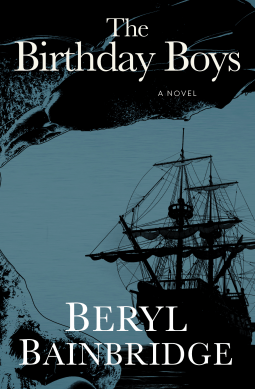
thebirthdayboysThe Birthday Boys is a fictionalized account of the Scott expedition’s travel to Antarctica in 1910. It’s told sequentially through the perspectives of five men that participate, each picking up where the last has left off and of course, also including some personal reflections and memories to make them more real to us. I was invited to read and review this novel based on my enjoyment of the book Ice Brothers, which was also a maritime tale (and is reviewed here: https://seattlebookmamablog.org/2015/01/03/ice-brothers-by-sloan-wilson/ ). Thank you to Net Galley and Open Road Media, but this isn’t my book. I pushed myself all the way through it hoping for some redeeming aspect of it to pop up at the end, but it only gets worse as it goes, at least from my perspective.
Our story begins in Cardiff, and the men and The Owner (always capitalized) are eager to get started before the Antarctic winter sets in, so they pass their whaler off as a yacht in order to prevent safety regulations from slowing them down. They understand they are sailing across the world in a leaky tub, but one of them is too unprincipled to care, and the others are so darn young. In fact, wouldn’t reaching the destination on one’s twenty-first birthday be the best gift ever? Hence the title.

At the outset, I struggled a bit with some of the technical terms, looking up “plimsol line” and a couple of others, but by the 15% mark I had my legs under me, so to speak, and felt more confident. Soon thereafter, however, the nasty references to gender and race came into it. I looked back at the copyright; since this author, highly respected in the UK and winner of awards, was born in 1932, might this be a digital release of a very old book? But not so much: the original copyright date was 1991. Perhaps Dame Bainbridge felt that ugly racist terms might provide some flavor here. Likewise, the women included here, generally wives of the men involved that were tucked safely away at the base camp, were carping or hysterical, squabbled with one another, and Mrs. Scott, the only woman with any character at all according to the narrative, kept insisting that she hated women.

Whoa.

The plot is rugged and gruesome. If not for the issues just mentioned, I might compare the writing to that of Jack London, fascinating for those that love the adrenaline rush of life-or-death adventures, but too grisly for me. There’s some good work with figurative language and at times the scenes are tremendously visceral. Yet at times the pace actually plods along rather slowly for a book of its kind, and so I find myself wondering how this writer managed to be recognized by the queen; that is true, at least, until I find the following passage:

“It’s difficult for a man to know where he fits in any more. All the things we were taught to believe in, love of country, of Empire, of devotion to duty, are being held up to ridicule. The validity of the class system, the motives of respectable, educated men are now as much under the scrutiny of the magnifying glass…”

Well, perish the thought!

If not for the racism and sexism I’d call this a three star read. If an Antarctic expedition thrills you and you have the stomach for the…never mind. I can’t finish that sentence without scrunching up my face and squinting, so let’s go with the bare truth: I don’t recommend this book to anybody.

Being a Dog, by Alexandra Horowitz****

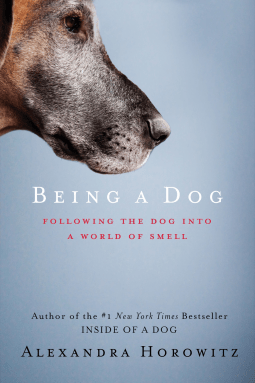
beingadogHorowitz is the author of Inside of a Dog, and here she follows it up with an examination of the sensory experiences a dog encounters, primarily that of smell.  I received my DRC courtesy of Scribner and Net Galley in exchange for this honest review. And though I’ve never been a science maven, Horowitz’s unbridled enthusiasm for dogs had me at hello. It’s a book bound to engage any dog lover.

So, do you have a dog?

I’ve had a dog nearly all of my 58 years, with a brief interim here and there.  I’ve never been dogless long, though; either a dog has found me, or I’ve gone looking for one. And so I was glad of the opportunity to read more about what makes my dog—right now it’s Ox, the oversized beagle puppy—work. I’d read a fair amount about dogs, particularly beagles, my favorite breed, and I thought I was well schooled, but I learned a great deal from Horowitz that I hadn’t known before, or in one main instance, in a way I had known intellectually, but not in my gut.

Almost every dog lover has heard at some point that a dog tends to be governed by its smell, and that this is its dominant sense. But until Horowitz took it apart for me and gave me the details, I didn’t grasp the implications. For example, when we throw the ball, the dog pauses before running after it, right? And with our last little dog, my husband and I would note that he wasn’t really looking in the right place, and we concluded that he was as dumb as a box of rocks. We’d yell; we’d point to it. And eventually, after he had sniffed its perimeter, he’d hone in on the ball and bring it back. And this book explains why that is exactly the correct way to do the job, if one is a hound (or other dog) rather than a human.

Sight is so important to us humans; next comes hearing. If we are in a carnival’s haunted house, and if the first room is sightless and soundless, what do we do? Do we sniff? Of course not! We fling out our arms in front of us or to the sides, partly to find out where things are, and partly to protect ourselves from slamming our face into a hard surface. And now when I consider Ox’s sense of scent, after which is hearing, I realize that by the time he has to look at something, he’s probably gained most of the information he needs already. Why would we fling our hands out in an ungainly manner if we can see and hear? And so indeed, why would my beagle do a visual scan if he can find what he wants through the use of sniffed air currents and hearing? After all, he always brings the toy back to us.

Chapters that engaged me less contained miniature chemistry and physics lessons, never my favorite, and some had longer passages having to do with human olfactory sense than I really wanted to read. I confess after the first few times the author moved from dogs’ senses back to those of humans I skimmed until we were back to the dogs.

There was so much here I hadn’t seen. For example, where does one find the best material for search and rescue dogs, or arson, bomb, drug, cadaver dogs, and so forth? I’ll give you a hint: I was crushed to find out that my beloved hound dogs aren’t necessarily the favorites here.  But it sure is interesting!

Once I had read this book, I felt that I knew my dog a lot better, and this new information solved many of Ox’s previously puzzling habits. To learn more, check out Horowitz’s new release, which became available to the public yesterday.

Because although I don’t know whether a dog is man’s best friend…I know he’s mine.