The Tango War, by Mary Jo McConahay****

TheTangoWarI read my copy free and early, thanks to Net Galley and St. Martin’s Press. This book is for sale now.

This meaty little nugget is one of a kind. I had sworn off World War II, both fictional and historical, because so much information gets repeated; you can only read so much about the most visceral parts of this conflict before your worldview darkens. I am out of the classroom and had promised myself a chance to stop and smell the roses in my retirement years. But then there’s this.

Firstly, there’s nothing about the Holocaust to speak of here. That was a draw card, because I am done with that most searing of horrors for awhile. Instead, she writes about Latin America during the war—and I knew nothing, nothing, nothing about any of this. I was aware that there were some nations down there that are reputed to have flirted with the fascists, and even then, I wasn’t sure it that was the truth or a myth.

The book is broken down, not by relevant Latin American countries, but by subtopics, and this is both more analytical and more interesting than if she’d done it the obvious way. Who knew that there was a model city established inside of the Amazon in an effort to rope more employees—well, slaves—into harvesting rubber for the war? Who knew that vast amounts of South American petroleum ran the trucks and tanks that rolled over Europe? Perhaps most appallingly—who knew that Japanese expatriates and their families, born and raised in Peru and other locations in Latin America,  were kidnapped in a down-low deal between the US and the governments of the affected nations so that the US could intern them, then use them for prisoner swaps?

There are enough weird-but-true facts here to cross your eyes, and the author has her documentation at the ready.  A fifth star is denied because of what isn’t here; why portray United Fruit as upstanding patriots? Many of us know this corporation was a sinister entity with its roots tangled deeply in the CIA. Lots of Guatemalans have plenty to say about United Fruit.  More directly related here is the brief, friendly reference to Disney as a WWII patriot, and yet many of us know how warmly Uncle Walt regarded Hitler: the catch-phrase “Mauschwitz” says it all.  Partial truths make me wonder what else I am missing as I read this.

With that one caveat, this book is recommended to you. The citations are thorough and the text is written free of technical terms that might hamper a wide readership.  Read it critically, but do read it.

The Big Book of Female Detectives*****

TheBigBookofFemaleDWell now, that was a meal. Penzler does nothing halfway, and this meaty collection of 74 stories took me awhile to move through. I read most, but not all, and I’ll get to that in a minute. First, though, thanks go to Net Galley and Doubleday for the review copy. This book is for sale now.

The collection begins with Mrs. Paschal, published in 1864, who must find “the cleverest thieves in Christendom,” and it concludes with a piece by Joyce Carol Oates. The stories are broken down into sections, beginning with The Victorians and Edwardians, followed by Before World War I, The Pulp Era, The Golden Age, Mid-Century, and The Modern Era, and concluded with Bad Girls. Says Penzler in his introduction:

“Seeing the Evolution of the female detective’s style as it gathers strength and credibility through the decades is educational, but that is not the purpose of this book, or not the primary one, anyway. The writers whose work fills these pages are the best of their time, and their stories are among the high points of detective fiction that may be read with no greater agenda than the pure joy that derives from distinguished fiction.”

And so the reader must absorb the hallmarks of the time period, and that means the earliest entries carry a certain number of stereotypes, primarily about the nature of women, but in the end, the detective is successful nevertheless. And it’s fun to see historical details written in present tense long ago, and so we know it’s getting to be late out when the lamplighters come out to start the gas lights in the hallways of the manse, for example. It’s also interesting to read authors that were the runaway sensations of their day, the ones that sold the most and wrote the most and were on the tongues of every mystery reader—and yet now they are completely obscure. We can never tell who will stand the test of time until it happens.

And now a confession. The first time I set out to read this tome, I read the entries in the first two sections and decided I would skip the portion devoted to pulp, which isn’t my personal favorite, and I would skip forward to read an entry by one of my favorite present-day mystery writers, and then go back again to cover the sections that come after the pulp section. That was my plan. I’m telling you this because the mistake I made here could happen to you, too, so here it is.

What I did was I skipped to the last section and began flipping through it, and then I was pissed, because I thought the best female detective writers of today had been left out, and in a huff, I abandoned the rest of the book and picked up something else. It wasn’t until I sat down to write a halfhearted review, in which I would explain what I read and what I skipped and why, that I reread the promotional teaser and realized I must have missed something. I went back to the galley, moved back to the second-to-last section that is clearly labeled “Modern”, and there they all were, and it is the longest, most inclusive section in the collection. That changed everything. So reader, if you go for this book, bear in mind that the sections are not completely linear. The “Bad Girls” section at the end, which didn’t do much for me but you may like it, is made up of stories about women criminals from a variety of different time periods. The most recent time period, the one bearing selections by Marcia Muller, Sara Paretsky, the late and beloved Sue Grafton, Nevada Barr, and a host of others, is second-to-last.

Once I realized my error, of course I returned to read the rest of the book.

The one sorrowful note here is that those of us that love these modern female detectives enough to have bought other anthologies, for example those brought to us by the Paretsky group, “Sisters in Crime,” will run across selections we have already read. I have seen both the Grafton and Paretsky stories already, although the piece by Barr, “Beneath the Lilacs,” is new to me. However, I see authors I haven’t read and will happily watch for now. The end of the mid-century section features “Mom Sings an Aria,” and although it veers a wee bit toward stereotypes, I can’t say I mind too much, because this writer makes me laugh out loud. James Yaffe is on my list now. “Blood Types”, by Julie Smith is likewise pithy, and “Miss Gibson,” by Linda Barnes also cracks me up. And I don’t know why I am still surprised by this. After reading so many anthologies, you’d think I’d realize that the greatest charms are had by finding brand new-to-me authors, but since it’s a good surprise every time, I may allow myself not to absorb the lesson; this way I can still be pleasantly surprised over and over again.

If you buy a holiday gift for a mystery lover, I recommend you get this book. If you try to buy something by your loved one’s favorite author, you may run up against it as I did: they’ve already read it. (And you probably hate returning things as much as I do.) But what are the chances she has this anthology? It’s over a thousand pages of detective fiction, and last I saw, it’s on sale for less than twenty bucks. There, that’s one gift chosen for you, and it’s not even November yet. You’re welcome.

Round Midnight, by Laura McBride****-*****

RoundMidnightWhat an unusual story! McBride cleverly links the lives of four women, and we follow their individual journeys over the course of fifty years; near the end, we see how they are connected. My thanks go to Net Galley and Touchstone for the review copy. This book is for sale now.

June comes of age in 1960. She marries Del, and they move to the newly emerging city of Las Vegas, where property can be had cheaply; they purchase a casino, and their entertainers perform in “The Midnight Room.”

McBride uses setting like a pro, placing us within the context of the time period without resorting to the overuse of distracting pop cultural references that would tempt a less subtle writer. We see just enough of the ‘60s to remind us that women didn’t have the same range of choices that we have now; we see just enough of the Civil Rights movement— a glimpse—to remind us how awful life could be for mixed race families. The first section ends on something of a cliff hanger, and then we find ourselves reading about someone else.

The other three women are Honorata, Coral, and Graciela. The section dealing with Honorata’s life is a hard read at the outset, gritty and full of horrors: a mail-order bridal arrangement that is more like human trafficking, and the reader has to be prepared to read some upsetting passages involving sexual assault. Honorata is so powerless in all of this, and what’s more, she knows it, and I want to sit down and cry for her. Just at the point when I start to wonder whether it’s worth it or if maybe I should abandon this thing since we’re not having any fun here, everything changes, and in the end, Honorata is the character I love most.

How often do we see well written fiction in which all of the main characters are women, and the male characters only exist as scaffolding for them? This was a super cool book. I picked it up after the publication date after it was recommended to me, and I am so glad I did. I would read this author again in a heartbeat.

The one character I don’t entirely believe is Jimbo; toward the end of the story, I get new information that is meant to surprise me and it does, but I am shaking my head and not entirely believing it. However, Jimbo isn’t a main character. The four women that comprise this epic story are nearly corporeal, and I believe them absolutely.

Highly recommended to feminists, and to those that relish good historical fiction.

Rising Out of Hatred, by Eli Saslow****

RisingOutOfHatredDerek Black was the heir apparent to the White Supremacist throne, godson of David Duke, and the son of the founder of the largest hate site in the U.S. This gripping biography tells the story of his transformation, from racist wunderkind to social justice proponent. Thanks go to Net Galley and Doubleday for the review copy. This book is for sale now.
As a young person bent on following his family’s toxic legacy, Black felt that part of the secret to gaining support was in softening the language that went with it. Rather than spewing angry racist jargon around, he argued, Caucasians should instead point to their own pride in ancestry. Everybody gets to be proud of who they are and where they came from, right? So his people just happened to be proud of being from Northern Europe. And then it follows that of course they would prefer to be surrounded by others like themselves. Thus, the call for a Euro-American homeland was, he argued, a reasonable demand.

Later he would hear some of his own catch-phrases used by members of the Trump cabinet.

Derek had never known anyone that wasn’t white; his parents had seen to that. When he went to the New College of Florida, he escaped the terrarium in which he’d been home-schooled, and he came to know a more diverse set of people. This story tells us not only of his own inner struggle and evolution, but also of the painstaking manner in which his new friends cultivated him and became an undeniable part of his life. They invited him to Shabbat meals regularly, gradually breaking down his resistance. In time he came to see the contradictions between the ideology in which he had been raised, and the reality of the real human beings that were now part of his life.

I am amazed at the patience and perseverance of the young people that changed his thinking. I myself would have beat feet far away from a character like this guy, particularly given the enormous stake he had in remaining exactly who he’d been raised to be. Befriend this person? Why would anyone? But they did it, and they met with success.

Black was inclined to withdraw from public life, to fade into the general population as quickly as possible, but his girlfriend persuaded him that since he had made a difference in the wrong way, he owed it to the world to counter that with a more public repudiation.

Saslow is a Pulitzer winner, and his writing is tight and urgent. I didn’t put this story down often once I had begun it. At the same time, Black’s story is told so intimately that it feels a little strange to suddenly realize that Saslow is in it, and we don’t get much information as to how he got there. I would have liked to see a more natural segue from his development, to his conversations with his biographer. It felt a bit abrupt to me.

This, however, is a small concern. The book is fascinating, and you should get it and read it.

The Craftsman, by Sharon Bolton****-*****

TheCraftsman“One night…what’s the worst that can happen?”
4.5 rounded up. I am late to the party where this author is concerned; a literature chat session directed me toward this galley, and now I am sure to read Bolton’s work again. My thanks go St. Martin’s Press and Net Galley for the review copy. This book will be available to the public tomorrow, October 16, 2018.

Is it a thriller, or is it a horror story? Bolton successfully rides the center here, and there’s a good case to be made in either direction. Our protagonist, Florence Lovelady, is a high ranking cop in the UK. Her career was made when she identified a serial killer and was instrumental in his arrest; now he is dead, and she returns to the small town where he nearly made her one of his victims 30 years ago. The plan is to attend the service with her 15-year-old son in tow, and then spend the night or two in a hotel, where her spouse will join them.

Things don’t go according to plan.

The plot is cunningly constructed, beginning with one of the creepiest fictional funerals in literature. The foreshadowing will give even the most cynical reader a serious case of the heebie-jeebies. As for me, I know my limitations, and as soon as I saw how things are in this one, I decided it could not be the last thing I read before falling asleep at night. Ever.

The interesting thing here—and what keeps this story from actually becoming too horrible to be any fun—is that we know, at the outset, how this case, which takes place in 1969, comes out. We are told in a smooth first person narrative what the broad contours of the case are. We know what the crime was; what happened to Florence while she investigated it; who did it; and that he was caught and convicted. There now.

So as we look back to the teenager that was kidnapped, then buried alive, I confess my eyes skipped over some of the explicit horror, but really the description isn’t a lengthy one, and after all, we know that the guy was apprehended. We see the numerous humiliations to which Detective Lovelady is subjected, in the day when female cops are scarce on the ground and expected to run along and make the tea for their colleagues and to comfort the crying women; I love the scene in which she is told she’s being (punitively) put on a desk to type up reports, and it turns out that she doesn’t know how to type. Ha. But then again, we also know that her career is a successful one, that she has weathered these miseries and now outranks most of the men that treated her badly.
But there are surprises in store too, as new developments surface while she’s there in town. One thing after another unravels till we are on the edge of our seats—and this time we don’t know how it will all shake out.

At about the eighty percent mark, a plot element that I won’t identify comes into play that makes me stop cold for a moment and roll my eyes. Oh please. Not this thing. Every steadfast reader of the genre has a mental list of overused devices they hope never to read again, and after doing so well at avoiding them all, Bolton lets a big, beefy one loose, and just as things are on a roll, too. I don’t want to spoil the story for you, but it took the wind out of my sails for a moment. However, after a brief visit to the literary corn-and-cheese factory, she comes out on top again, and the ending is deeply satisfying.

The story features witches—yes, real ones! As well as shadowy, mostly unnamed stonemasons, and Dwane, who is by far the best-written sexton in a thriller or mystery anywhere.

Highly recommended to all that enjoy a creepy murder story with supernatural elements.

The King and the Catholics, by Antonia Fraser****

TheKingandtheCI was rooting around on Net Galley looking for some good nonfiction when I ran across this title. Many thanks to Net Galley and Doubleday for the DRC, which I read free in exchange for this honest review. This book is now available to the public.
Fraser examines the fight for Catholic Emancipation in Britain, from the anti-Catholic Gordon Riots of the late 1700s until roughly fifty years later. It is appalling that so much time, effort and money was needed for so small a thing as religious freedom, but there it is.

My own interest is more in the direction of Catholic history, with Irish history as a major part of that, and so portions of this well written, painstakingly researched and documented tome drew me more than others. I don’t care a whit what the king or any other members of the royal family say, want, or do, so for those with a closer interest than mine, this might well be a five star read. Parts of it are a trifle dry, but then Fraser livens it up with brief, lively sketches of the historical figures involved.

A major player in the struggle was the Liberator, Daniel O’Connell, and I read all of the passages in which this eloquent barrister is featured with tremendous interest. I also enjoyed seeing ways in which events in the larger world influenced events in the UK, from the French Revolution to the Boer Wars in South Africa.

An excellent addition to the library of any that are interested in the topic.

The O Henry Prize Stories 2018, by Laura Furman, editor*****

TheOHenryPrize2018This collection is guaranteed to be good, and I was thrilled when I received a review copy, thanks to Net Galley and Doubleday. Those that enjoy strong fiction should buy it and read it, even if you have to pay full jacket price. This year’s edition holds 20 prize winning stories along with a bit of judging commentary at the end. This book is now for sale.
The first story in any short story collection is bound to be good, and so I knew that Joanne Beard’s Tin House would be strong, and it is, in a dark, surreal way. I wouldn’t read it at bedtime lest it enter my dreams, but it’s memorable, original, and gritty. I also enjoy Brad Felver’s Queen Elizabeth, and Past Perfect Continuous, by Dounia Choukri. My favorite of all of them, the one that made me laugh out loud, is Why Were They Throwing Bricks, by Jenny Zhang, a story that features a cagey, manipulative Chinese grandmother and the grandchildren whose lives she enters, leaves and reenters. Zhang appears to have mostly published poetry up to this point, but I hope she writes more fiction, because I want to read it.

The only aspect of any short story that I don’t enjoy is the open-ended sort that conclude with no real resolution. This screamingly frustrating inclination is minimal here, showing at the ends of a just a couple of the featured stories.

Short stories are terrific to leave, once you’ve finished them, in your guest room, because people that stay with you briefly can read a story or more without the frustration of having to either leave an incomplete novel behind or beg to borrow it, not knowing when they can return it. If you need an excuse to get this excellent collection for yourself, there it is.

Highly recommended.

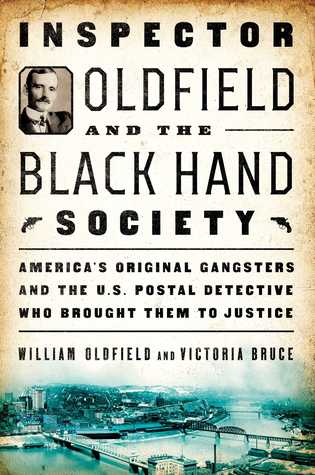
Inspector Oldfield and the Black Hand Society, by William Oldfield and Victoria Bruce***

InspectorOldfieldandtheBI received a review copy free and early, thanks to Net Galley and Simon and Schuster/Touchtone. This book is for sale now.
Who knew that the U.S. Postmaster has the authority to commander an entire ship or airline in pursuit of justice? Needless to say, it doesn’t happen often; think of the press if that were to happen today! But Inspector Frank Oldfield was a man on a mission.

Once the introduction is over, I find an uneven quality to the narrative. The aspect that describes the gangsters and the formation of the Black Hand is fascinating; after the buildup, however, I find the inspector himself less riveting and the writing not as tight as I’d prefer. The research is a little spotty and the sources are not well integrated.

However, if true crime is your wheelhouse, you may want to get a copy of this one-of-a-kind biography.

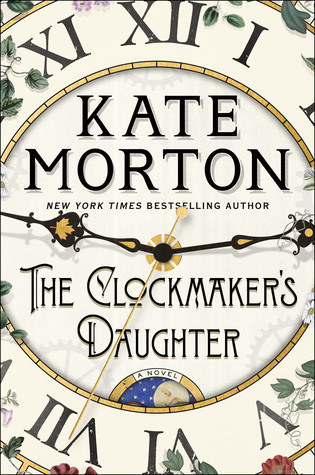
The Clockmaker’s Daughter, by Kate Morton***

TheClockmakersDaughterKate Morton is queen of the British historical mystery, and so I leapt at the chance to read and review The Clockmaker’s Daughter. My thanks go to Net Galley and Atria Books. This book will be available October 9, 2018.
This story starts strong with a spellbinding first person narrative told by the woman whose spirit resides eternally at Birchwood Manor. She came here with Edward, a wellborn cad that “could make the very devil pray”, one that called her his muse. Edward seduced her, yes, but he would never have married her.

Elodie Winslow is an archivist in present-day London.  In the course of her duties, she runs across two pictures in a leather satchel. One is a photograph, quite old, and the other is a sketch of a house that seems familiar to her somehow. And so of course, faithful readers are cued right away to watch for a connection between Elodie, and the people, setting, and events that are introduced at the book’s beginning.

Find me a writer that can create more resonant settings in a British historical mystery; I dare you. For the first quarter of this novel, I was in it, steeping in the escapist paradise Morton provides, drinking in the several characters and narratives. But at the thirty percent mark, when yet another new thread, another new character—or is it an old character pretending to be a new character—is introduced, I find myself searching for a nice brick wall to smack my forehead against. It’s hard to get to know any of these characters with so many new ones added.

Usually with Morton’s books, the details and subsections are worth the reader’s careful attention because it all comes together so well at the end. Here, there’s excellent setting and a lot of secrets but not enough plot or character development, and so before the story is even halfway done I find myself eyeing the page numbers. How much longer…?

I also find myself wondering what story elements are classic, and which are simply overused. The old house with the secret doors?  I will never get tired of this element, especially when the writer is as capable as Morton. But bullies at a boarding school—meh. I am ready to be done with that one. And the sack of kittens to be drowned? I gave myself permission to skip a page, because it is. Not. Worth. It.

Many of Morton’s faithful fans will be pleased; her trademark style is unmistakable, and if that’s what you want, here it is. But a story this complex needs more legs to go with it, and less reliance on stale devices.

Am I done reading Morton? Not by a long shot. Every author has a story or two that isn’t magical. But when a story requires this much effort on the part of the reader, the payoff needs to be greater than it is here.

Recommended to diehard Kate Morton fans; even so, get it free or cheap, but don’t pay full jacket price this time.

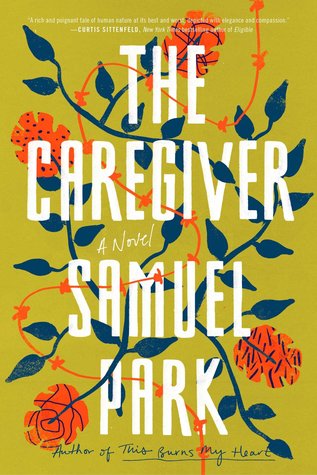
The Caregiver, by Samuel Park*****

TheCaregiverThe Caregiver is one of the year’s best surprises. I read this book free and early, thanks to Net Galley and Simon and Schuster. Our protagonist is Mara Alencar, and our setting is split between present day Los Angeles, and Rio de Janeiro, Brazil in the 1980s. I am drawn to the story initially because of the setting, which I don’t see often; but it is Mara that keeps me turning the pages. Those that treasure excellent, character-based literary fiction should get this book and read it.

Mara is just a kid, and all she really wants is food, shelter, and the comfort and companionship of her mother, Ana. Ana is a young single mother that works as a voice-over actress, repeating the lines of English-language programs in Portuguese. The pay is low, and Ana’s self-discipline is negligible. Life is a constant struggle.

One evening Ana is visited by a group of students that claim they plan to rob a bank in order to fund a revolution. Ana’s job is to distract Chief Lima so that a comrade can be liberated from prison. The comrade will play an important part in the revolution; as for Ana, she will be paid handsomely, and then she will be free to go if she likes. Mara doesn’t like these rough people and their threatening demeanor, but Ana hears the amount they will pay, and once she receives an advance, she’s in.

Everything is seen through Mara’s eyes, both in childhood as these events unfold, and later, looking back during her years working as a caregiver to a manipulative older woman that shares some of Ana’s characteristics. As a child, Mara is often afraid or confused, or both. Her mother reminds her often that she is all that matters, and that the two of them will always be together; in the next moment, she will do something so blindingly selfish, so completely inappropriate that I want to yank the woman into the kitchen and remind her that she has a child and responsibilities. She will tell Mara, not for the first time, that she could never stand to lie to her because they are so close, and she loves her so much; but we turn the page and sure enough, she lies to her child, or she is gone for days on end with no warning or explanation. There are occasions when she seems to lie unnecessarily, and I want to throw my tablet at the wall, I am so frustrated.

The ending is a complete surprise, and it makes perfect sense within the chaotic context of the time and place.

The most admirable aspect of this story is the consistency of the narrator. A writer that can tell a story from a child’s point of view without mixing up the developmental level that affects a child’s perceptions, vocabulary level, and capacity to analyze what she sees is hard to find. A male writer that can do this, and that can also consistently write a woman’s story in the first person without giving himself away is a unicorn. Samuel Park convinces me that I am listening to a woman tell her story, and repeatedly I am pulled under, only to be reminded when I go to make notes at the end of my writing session that this is a male novelist. This doesn’t happen. I am gob-smacked at his level of perception and originality.

I never met Park, but I grieve for him anyway as a reader. Please come back, Mr. Park. One book is not enough; forty-one is too young.

Highly recommended.