Flesh and Blood: A Scarpetta Novel, by Patricia Cornwell *****

fleshandbloodOnce I finally polished off Napoleon, I permitted myself to dive into the treasure trove of lovely brand new books that Santa brought. This little gem was right at the top of my “wanna” list. At this point, while she may be picking up some new readers, Cornwell is largely banking on her substantial fan base. Once more I found myself reflecting on what makes her novels so successful.

Because as she pointed out during an interview awhile back, this is completely unrealistic. Sure, she has carefully followed the procedures and science that govern what a forensic coroner does on the job; yet if she were entirely realistic, it would make for dull reading. A forensic coroner does not visit crime scenes, chase bad guys, partner with cops. She is no more likely than anyone else to be stalked, harassed, or threatened, nor would her family members be. (Although if it helps us here, we can accept that all of these things could happen to just about anybody.) Surely, she would not repeatedly engage in shoot-outs, pack a firearm, or be kidnapped repeatedly.

So what is it that keeps the reader coming back?

For me, it’s all about character development. Not only Kay, but also Marino, Lucy, and to a lesser degree Benton (whom she fleshes out a bit more here) seem almost as real to me as seldom-seen relatives about whom I hear stories second or third-hand. And the fact is, by the time we find ourselves reading #22 in a series, we have bought the premise, and she would have to mess it up pretty badly to shake us loose. Needless to say, that did not happen here!

In turns I read for hours on end, ignoring my family (and my blog); then I would realize how much of the book I had read, and I would parcel it out to myself in chunks to make it last longer. Finally I just had to know how it ended.

We start with six shiny pennies on the stone wall that surrounds Kay and Benton’s Boston home. They are about to leave for a vacation, but of course that won’t happen now. Because there’s something about those pennies. For one thing, though all are dated 1981–the year Lucy was born, and this hooked me even more, since my eldest son was also born that year–they have all been polished in a tumbler of some sort. They’re all lined up exactly evenly on the fence. And wouldn’t you know it, a serial killer appears to be loose, and he is using an unusual sort of copper bullets to do his dirty work.

I won’t ruin the rest for you.

Should you pay full jacket price for this book? I guess that depends on how much money you have, and whether you have read the rest in the series. I can tell you that popular series like this one often create a year-long back-up in the Seattle Library system.

If you haven’t read anything else by Cornwell, then go to the library or used bookstore, if this sounds like something you would like, and start with #1. That’s a cheap, easy way to get your feet wet.

But if you have read the other 21 with the same avid ferocity I have, you should probably just get a copy now. If the nearly thirty bucks it will run you is too rich for your budget right now, wait a bit; the hard cover price will drop dramatically when it goes to paperback, and we know it will.

Great escapist fun!

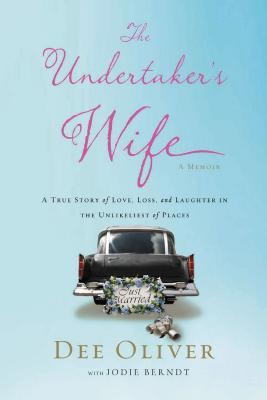
The Undertaker’s Wife: A True Story of Love, Loss, and Laughter in the Unlikeliest of Places, by Dee Oliver and Jodie Berndt***-****

theundertakerswife 3.5 stars. This interesting, accessible memoir will be published in March of this year. My gratitude goes to Net Galley and Zondervan Press for providing me with an ARC.

Dee Oliver grows up in a rarified atmosphere in Virginia Beach, where her parents own an oceanfront home. After completing her degree from a private college, she enjoys life and a series of part-time jobs that entail no serious commitment or career potential, supported by her parents. Eventually she is given a very Southern, Caucasian type of ultimatum: find a real job in which you can support yourself, or find someone to marry. It is understood, in this world in which debutante season actually exists, that the spouse in question will be a man, and that he will be a person of substance. A doctor is preferable, but instead, Dee marries a doctor to the dead, the co-owner of a funeral home.

Life is definitely different now. Dee and Johnnie, her newly betrothed, cannot travel for any length of time, since people don’t make appointments before dying and he could be needed any time. Their honeymoon is a three-way party: just the two newlyweds and the corpse in the rear of the car, being transported, by happy coincidence, to their honeymoon destination.

Their daughters grow up playing tag among tombstones and jumping rope with the velvet rope that keeps the mourners in line.

The one thing that surely does not change is her standard of living. Most of her friends, she tells us, would have to call the painters themselves. How fortunate that Johnnie understood that she needed the advice of a decorator, who would then call the painters personally!

This is a quick, almost flirty read as it begins, but because I make it a point (almost) never to read books by or about affluent people, I almost tossed the book down unfinished. But I knew that something about it had made me request this ARC, and so before throwing my hands up and abandoning ship, I went back to reread the synopsis. It was a good thing I did, because it gave me hope (as Christians like to say) of better things to come.

You see, Johnnie’s occupation taught him how to console and advise the bereaved, but it didn’t take him out of his state of denial about his own mortality. Dee packed him healthy lunches which he threw away, and bought him a gym membership which he never used. It caught up to him in his early fifties, in a sudden and final way.

As half owner of a funeral home, Dee realized that she should go back to school and get the credential necessary to do Johnnie’s job. However, once it was time for her internship, she whacked her well-coiffed head smack on the glass ceiling. No way, no how would her brother-in-law allow her to do such a thing.

It was at this point that Dee received one of life’s more valuable gifts: a new perspective. Riddick’s funeral home is in the African-American section of town, and its owner is not just a man of business, he is a man of the community. It is there that she was able to intern, and the results are really funny, because the area where she lives is exclusively pale, and Riddick’s funeral parlor is in an entirely Black area. Said one visitor, after enquiring whether she was a member of the press, and being told otherwise:

“ ‘So,’ he said slowly, chewing this piece of news the way a child might process his first lima bean. He wasn’t sure whether or not to accept it. ‘So what we got here is a white woman working in a black funeral home.’
‘Yes sir. That’s exactly what you got.’
‘Well, then,’ he concluded, ‘I guess you have overcome too.’ And with that, he tipped his hat to me and walked away.”

Along with her own unique story, Oliver provides us with a good deal of sound advice to follow now, while we are alive. Did you realize that if you die without a will, up to seventy percent of what you own may be taken as taxes? I don’t know whether this applies to those of us in humbler tax brackets than those in her milieu; Oliver did not specify. Either way, though, the point is made that those of us who are married and have divided the responsibilities of married life still need to be aware of a lot of nuts-and-bolts issues that it’s easy to ignore until someone has died.

Here, nobody knows better than Oliver. She has taken care of the dead, advised the bereaved, and she has been widowed. She really does know.

Everyone who writes a memoir is entitled to tell her own story with her own voice. Nevertheless, the class and religious biases here grated and could be toned down. She tells us that we need a “team” to be on to get us through the good times and the bad ones, and here are the teams she recognizes: Baptists, Catholics, Lutherans, Presbyterians, Episcopalians, and nondenominational …it isn’t going to get any more diverse in her world. Jews, Muslims, Hindus, Buddhists, and especially Atheists like me are going to “the other place”, as she describes it earlier in the text, since we have not asked Jesus into our hearts. There’s not a lot of wiggle-room in Oliver’s somewhat limited sphere. Your team may not even exist in her universe.

So should you read this book? I vote that you ought to. Most of this memoir is either light and amusing, or full of down-to-earth, practical advice we can use. Ditch what you can’t use; for example, if you work in construction all day and come home to an empty house, her earnest suggestion that rather than marry too soon after bereavement, you “hire a housekeeper” may not be a real world option for you. But eighty or ninety percent of her recommendations should work for everyone, and if the Bible verses don’t work for you, you can skim past most of them as I did.

The real question is whether you should shell out full jacket price for this book, and that question is a very individual one. If your lifestyle is similar to that of the author, then get one for yourself, and another copy for your BFF. If you’re married, get one for your honey, too.

If not, you may want to pick up a copy less expensively later on, or check it out from your local library if it becomes available there.

Either way, the sobering message to tuck important information where your loved ones can get to it is worth its weight in gold.

Napoleon: A Life, by Robert Andrews *****

napoleonalifeRobert Andrews has created an historical masterpiece in this massive tome, a biography of Napoleon. Thank you and thank you again to Net Galley and Viking Adult Publishers for the ARC.

Andrews is well known among historians; his scholarship and experience firmly establish him as an expert in the field of European history, especially military history and biography. The recent availability of a vast treasure-trove of primary documents made this biography possible, together with a tremendous amount of work and travel. He visited libraries all over the world and battle sites where Napoleon had been before him, before all of us. (And he set off the alarm in Napoleon’s throne three times!)

How long did this take, I wonder? By the time it was published, Andrews must have felt an overwhelming sense both of loss and of satisfaction.

As for your humble reviewer, I came to read about Napoleon, whose military career, rule, and downfall I had studied only at the shallowest level during my undergraduate years a whole long time ago, through the back door. My field is the American Civil War, but I was intrigued by the number of Civil War heroes (and others) who had studied Napoleon’s methods in detail, and referred to them when creating their own battle plans. What was it about Napoleon?

Generally, my advice to those contemplating reading a lengthy biography is to get the basics down first, but I didn’t follow my own advice here. I had the opportunity to get the ARC at the end of November, and it was now or never. I decided to plunge in, poorly prepared though I might be. When I was finished, I found I had bookmarked or made notes in over 700 places in this 926 page work. So whereas I won’t use all of my references, I can truthfully say that there is no filler, no fat. If you haven’t the patience for almost a thousand pages of Napoleon, then don’t go there, but for heaven’s sake don’t pretend that more is included here than is necessary for a thorough, scholarly, yet interesting treatment.

Having said that much, I also have to confess that I struggled somewhat with the ARC. My knowledge of European geography is pretty basic. I know where most of the countries are, what their climates are like, and for the most part, where the borders are located. When we morph into the Napoleonic era, I really, really needed maps, and that’s the price one sometimes pays for an ARC: your “map” is [map insert] noted. There will be a map; I don’t get to see it. So I gamely brought myself to my desktop for the first four Coalition Wars, and was lucky enough to find an interactive map that gave me part of what I needed to know. In some places, Andrews explained what took place so well that I could see most of the battle inside my head. But as of the fifth coalition forward, I quit trying to find my own maps when I couldn’t follow the action, and just read what was in the book.

All told, Andrews corrected some misperceptions I had developed regarding Napoleon. My own view had been that there was a heroic French Revolution, followed by what are usually termed “excesses” by the Jacobins who began the Revolution. (Today these en masse trips to the guillotine would be called atrocities.) But could the whole thing be salvaged? It seemed such a terrible waste to have a popular revolution, throw out not only a monarchy but one unusually lacking in decency toward the peasants and urban poor of France, and then have it all come tumbling down. And it also seems like a waste to have an autocrat take over. This was my perspective before reading Andrews’s biography.

Though his approach is both scholarly and balanced, Andrews offers a positive portrait of Napoleon, whom he treats with a fond, almost affectionate narrative. He points out that Napoleon kept the Bourbons off the throne for over twenty years, and it’s true that they returned in 1815 after Napoleon’s first abdication. Things got really ugly then. And he also points out that Napoleon’s career was unusually complicated. The point is well taken.

For example, who invades neighboring nations, overthrows their leaders, presumes to rewrite their constitution without consulting anyone that lives there…yet bestows upon them more civil rights than they have ever had before? And who else would insist in his terms for peace not only remuneration so that he can pay his troops and the annual benefits of military widows, but also demands that great works of art, privately owned, be turned over to him…whereupon he places them in a gallery where all visitors can enjoy them?

Mind you, the man is no Robin Hood. Far from it! He makes it clear from the beginning that he has no use for the ‘hoi polloi’, and whenever he ceases privately held property, he also sees to it that the previous owner is compensated.

The word “hubris” is often applied to Napoleon, and if not him, then who? Andrews argues that he might have been successful…if only. And there’s the rub, right? Because initially, he and his troops travel fast and hard. In the beginning, he asks nothing of them that he would not do himself. His opponents, on the other hand, are spoiled and effete. They travel with vast amounts of personal baggage and servants. They can’t move until they personally have this, that, the other. And in the end, that is the guy that Napoleon becomes.

The text is made more lively throughout with quotations of Napoleon himself, a prolific writer and a brilliant, articulate speaker.

The chapters are organized according to place, generally speaking, and this is very useful when the reader needs to go back and fact-check.

Andrews argues that Napoleon’s autocracy-as-meritocracy might have been successful if he had applied the standard to all of the dynasties he created after toppling their rulers that he applied to France. Nepotism created endless problems, and though Napoleon somehow thought that he personally might make up for the failings of his relatives, there is only so much one man can do. The many, many worthless siblings and other relatives he installed as instant royalty drained his resources and made problems that didn’t have to happen. His first wife, Josephine, was such an obsessive spender that one hates to think of the number of children under age six who might have lived had the wealth been more widely distributed.

Napoleon’s most loyal base of support was within the military, but he fought so aggressively that too many soldiers died, and the backlash was bound to come sooner or later. Yet the military base he so depended upon wanted him back again after just ten months of Bourbon reign.

Could Napoleon have been successful if he had left the Iberian peninsula alone? If he had avoided attacking Russia? Napoleon himself, upon looking back while in exile during his last years, recognizes that trying to best Britain, with its unstoppable navy, was folly; yet he certainly kept them busy for a good long while.

At one point, he reflects that if he had known he would end up defeated, he could have made different choices. He would like to be allowed to emigrate to the United States; who knows, he could have founded a state there! And here, my jaw drops as I imagine that instead of selling the Louisiana Purchase (which doubled the size of the USA) to the USA via President Thomas Jefferson, he had decided to settle it. But being Napoleon, would it have even stopped there, I wonder? He hated Britain and had nothing against US rulers; maybe he would have been able to kick the British out of Canada instead of fruitlessly attempting to rout them from their homeland.

Suddenly I can see how Andrews has become spellbound by what might have been. He has spent a lot more time with this material than I have, and it’s starting to affect me, too!

I know that some of those who read my reviews are teachers. I don’t see this as high school material; a small portion of it could be selected for honors level seniors or community college students perhaps, but then you have huge books to buy in order to use just a portion. I don’t see even the most gifted teenager sticking it out from start to finish. Though the narrative is engaging, the definitive biography is epic .It requires patience and dedication on the part of its readers. Developmentally, most young folks in their late teens and early twenties just won’t be there yet.

But if you are in doubt, buy one copy and read it yourself, then pass it around a little bit and see how it goes. Likewise, if you are homeschooling a truly extraordinary teenager that you think would gobble this up, buy it, read it (because you can’t home school anyone using a text you have not personally read), and then if you still think it may work and your student is game, give it a try.

All told, the price you will pay for this remarkable single volume biography is nothing compared to its worth in your own library, even if only used as a reference source.

Ice Brothers, by Sloan Wilson ***-****

icebrothersSloan Wilson was a veteran of the second world war, and he served in the Greenland Patrol. Here he uses his knowledge of the place to create an entirely unique setting. In fact, Greenland itself is very nearly a character in Ice Brothers. Thank you to Net Galley and Open Road Media for the ARC.

At the start, I was torn. Although I enjoy both historical fiction and military history a great deal, I deliberately avoid World War II stories that take place in the Pacific theater. My reason is that I don’t like to see Japanese people referred to with racist slurs, even though I know that at the time it was commonplace among many Caucasian members of Allied nations. The”J” word is every bit as offensive to me as the “N” word is. I understand that there was a time when Euro-Americans freely bandied both terms about. However, most editors have the sense to remove it and substitute a less heinous term these days, unless the use of the term serves an important purpose in the story. (For example, check the use of anti-Semitic language by the villainous skipper, Lowery, against whom we develop the bright and personal Nathan Green, who hears his name misused one time too many and vows to change it back to “Greenburg” once he is back in the US.)

So I wanted to read this book, about which little description was available, for two reasons: one was the setting, which will serve as the hook for a lot of readers. What did I know about Greenland? I didn’t even know it was Danish territory! A trip down my upstairs hallway to the large world map hanging on the wall there confirmed the story’s assertion: sure enough, right there underneath the word “Greenland”, writ large albeit in parenthesis, it says “Denmark”. How typically North American of me to have assumed it was Canadian! I surely needed to learn more, and good historical fiction is the most enjoyable way to learn many things.

The second reason for my interest was that it was described as a story in which the protagonist hunts for a Nazi ship. GOOD. So, Japan is unlikely to surface, and I can comfortably read without the story exploding in my face.

So when I hit the “J” word, which was not at all important to the story, but thrown in perhaps as set dressing or to set the tone of the story, I was shocked. The further extraneous reference by a character in the story who asserted that “…those little yellow bastards can’t fight” made it worse. (Of course, there was no reference to the internment of Americans of Japanese descent; extraneous material here is limited to that which is ugly and prejudicial.) I told myself I would take a break and read it a little bit later.

Every time I remembered my obligation to Open Road and Net Galley, I picked up my e-reader, but I had other galleys and other obligations, and each time I thought I would give Sloan’s work another try, I found myself reading a different ARC instead. This persisted for over a month; I can usually finish and review a book faster than that, unless asked to hold my review for publication.

Finally, I had to make a choice. I went back and reread the introduction. I steeled myself and forged onward. It’s a good thing that the plot, setting, and character development were so well done, because that word was used about ten times, and it never contributed a single thing to the story itself.

All right; let’s look at the story, then.

I know very little about watercraft, and was delighted with the accessible, instructive manner Sloan used to clarify the various types of ships and boats and the nautical terms that are most commonly used. I was also surprised and bemused by the stratification of resources apportioned to the Coast Guard as opposed to the Navy, with the Coast Guard serving as the poor cousin that receives whatever the Navy doesn’t need. The ingenious ways in which our fictional Coast Guard officers and crew work around the lack of resources, often not at all legally, must have had at least some basis in fact. I found it really interesting, and it drew me closer to the story as I sympathized with the men on the trawler (The Arluk).

Sloan’s approachable way of describing Greenland’s weather and geography were also really useful.

Greenland is a dangerous place to sail. Today it is different than it was during that time period. I did a web crawl and was horrified to see how much of it has melted now. Back then, at least, it was possible for a sturdy ship to weave its way into a fjord (which is like a peninsula made of water that pokes into the ice mountains), and then have everything freeze, and the ice might crush the ship and its crew against the mountains. The ever-present tension of a possible encounter with Nazis created a sense of suspense that made the book hard to put down after a certain point was reached, even with the racist terminology, which continued to grate and became worse when Paul and Nathan discussed the loyalties of the “Eskies” or “Eskimos” with the Danish inhabitants. The Inuit people were treated as cartoon characters, and the static, repeated description of their faces as round and copper-colored and their mentality as “child-like” made me wonder where this capable writer’s otherwise outstanding skill with varied language had gone. Yet the story still tugged at my interest, and so I made a note in my e-reader and forged on.

Another facet of the story that kept me reading late into the night was the ambiguity of the Danish residents of Greenland, and in particular, the character of Brit. Were these folks really held by force by the Nazis that we could not even see, or were they complicit? Whose side were they on? Would Brit betray Paul to them? When he acceded to her request to see the ship, and she curiously nosed into every odd corner, asking technical questions about the engine and radar, I wanted to pick her up bodily and toss her off the ship!

Sloan was a strong writer for a very different time. His work could still be really compelling, but I doubt I am the only reader who will take exception to the racial slurs that do nothing to drive the plot or develop the characters. I hope either his heirs or his editors will go in and update this work. It can only improve the story to do so.

Recommended, with the qualifications mentioned.

The Sound of Music Story: How A Beguiling Young Novice, A Handsome Austrian Captain, and Ten Singing Von Trapp Children Inspired the Most Beloved Film of All Time, by Tom Santopietro ****

thesoundofmusicstorySince the enormously popular movie based on the story of the Von Trapp family was released 50 years ago, numerous books have been published about the family, the movie, or both. This reviewer tried reading Mrs. Von Trapp’s memoir many years ago and found it surprisingly dry. Not so with this humdinger by Tom Santopietro. When it comes out in February, you may want to read it even if entertainment history is not usually of interest to you. Because after all, The Sound of Music is not just any movie! Thank you, thank you to Net Galley and St. Martin’s Press for providing the ARC so that I could check it out and report back prior to the release date.

That said, if your entire life has been spent sad and deprived, or with your nose to a video game or hiding under a rock and so, somehow, you have never seen this movie, watch the movie first. It is a full three hours long, and not a single moment is wasted. In the tradition of Rogers and Hammerstein, the music forms a part of the narrative, rather than something inserted in between lines of a story which slow it down. Painstaking care was leant to avoid having a moment when the audience would collectively think, “Ho hum, I can see we’re about to burst into song here.” In fact, musicals were not much in fashion anymore, and religious films, which had enjoyed popularity just prior to this one, were now considered old and outdated. Extraordinary effort was taken to engage the audience, and it shows.

One reason it was even considered, odds being what they were, was that the stage version of The Sound of Music, which starred Mary Martin as Maria, had sold tickets like hotcakes. The possibility of a successful motion picture was intriguing. There was no way to use Martin for the film, though; she would have been past the age of fifty years when filming began, and things that can be obscured or disguised on stage tend to show up on camera. There could be no painted backgrounds for film—how cheesy! An entirely new script, with two additional songs added by the original composers, made it much more appealing than the stage version. A lot of money went into making this show work, and it was money well spent.

How the deal was struck to make the movie is explained thoroughly without trying the reader’s patience without a lot of extraneous or uninteresting detail. Each time I thought perhaps I was getting too much information—such as back-stories on the behind-the-scenes specialists—the narrative would lead from there into the aspects of the film that were their particular contributions, and then I would understand why I needed to know about that person. The creator of that gob-smackingly gorgeous wedding dress? Oh, hell yes! The choreographers who put together the whole nine-minute Do-Re-Mi music video…oh, yes I guess that was pretty amazing, so yes! And behind all of it was the genius of Robert Wise, a producer and director I had never even especially noticed before, but now will never forget.

I loved walking through the casting roster. Hmmm, who should play Maria? How about Angie Dickinson? (If you are old enough to remember her, you’ve got to find this pretty amusing.) Mia Farrow? She would’ve had the job if she could’ve sung better. Doris Day had a red-hot career going, but she turned this one down cold, accurately pointing out that her resume had been built by being the quintessential all-American girl, and just how was anyone suddenly going to think she was an Austrian nun? Point well taken.

Some of the others were fun, too. How about Yul Brynner as the captain? He really wanted that job. NO. And so it goes.

Interwoven throughout are the real family Von Trapp. Once she had accepted the deal and signed on the dotted line, the real “Sister Maria” was every bit as outspoken in real life as her fictional counterpart. In fact, she was so outspoken in her limitless suggestions as to how the film could be kept more in keeping with events as they unfolded that finally, a letter was sent off to her explaining, for once and all, that the movie was based “loosely” on her own story and was not intended to be a documentary. Stay out of the way; we’re making a movie here!

Which scenes were shot on a Paramount stage, and which were on location? Sometimes the difference is a matter of angle, with scenes being freely mixed. (The Von Trapp manse had several different locations, according to whether one was out front, out back, indoors, or in the gazebo.)

Imagine Maria skipping down that lane singing “I Have Confidence”…with fifty or so cameramen and other personnel following closely. And didn’t she make it all look easy? A clue: it wasn’t. That woman had an unstoppable work ethic!

And what of the Von Trapps now? Once they emigrated (not really through the Swiss Alps, silly; for one thing, to get there from Austria, you have to go through Germany!), they came to the United States, flat broke after a life of great comfort, albeit not as much luxury as depicted on film. They sang and toured till some of the “children” were sick to death of it and vowed to sink deep roots and stay put ASAP. Eventually they founded a ski lodge in Vermont, where the grand-Von-Trapps, at least some of them, still live and work.

Was Julie Andrews really that nice, or was she different off-camera? You have to read the book, and then you’ll know. Who else is remembered fondly by the cast, and who not-so-much? It’s all here.

Even less central aspects of the story, such as the campy sing along tradition that draws thousands anually, many in full costume (even dressed up as carburetors!) and likened to a nerdy version of the Rocky Horror Picture Show, are interesting and amusing.

What’s more, after you read the book, if it affects you as it did me, then no matter how many times you have watched the movie, you will need to see it again in order to appreciate everything you just read. Happily, we had the DVD ready to hand, and my daughter, who has also watched a number of times before, and I nestled next to the Christmas tree and re-watched it, with me pointing things out to her as we went along.

If you don’t have a date Friday night or prefer a less boisterous evening in the privacy of your own home, this movie just could be a great plan for you! Then you’ll be properly ready to read the book once it comes out around Valentine’s Day.

Mark your calendar. This story-behind-the-story is worth the anticipation.

Just One Evil Act, by Elizabeth George *****

justoneevilact Barbara Havers has gone in over her head, and the morass into which she has slogged out of love and friendship is only getting deeper.

I’m a long time fan of Elizabeth George, a writer I would never have tried on my own initiative, preferring stories that star working class heroes, but one of her early works was given to me at Christmas one year, and I was sucked in by her combination of palpable settings rendered in a painterly fashion, and what at times is intense, tightly plotted crime fiction.

Every writer who maintains a successful mystery/crime/detective series of any length faces a conundrum, sooner or later. For the sake of a good story, they’ve already been forced to twist the real lives of their police officers (or their whoever) to make them more exciting, but in the beginning, it’s easier for the reader, who also wants a good yarn, to buy the premise. Sure, someone might become a hostage, or be forced to dig their own grave while the minutes tick by and we wait for the cavalry to charge in and save the protagonist. Certainly, a person could be pistol-whipped and stuffed into the trunk of a car.

But to no one will these things happen over, and over, and over. Eventually even the most faithful reading audience will roll their eyes and say, “What, again? Oh, I don’t think so.”

There appear to be two successful ways around this, and the author can utilize one or both and if they are skillful, they can keep their series going strong. Noteworthy writers like Sue Grafton, James Lee Burke, Sara Paretsky, Ed McBain, GM Ford, and a host of others have carried them off well.

One way to keep the string going is to create stories that are not only thrillers or mysteries, but are more novel-like in many ways. The protagonist’s personal life is further developed, and if this is done successfully, it gives us still more buy-in to the mystery plot into which it is woven. And here, George has been more successful at some times than others. There is always the danger that in presenting us with the protagonist’s deepest emotions, the story can turn into a soap opera. Mystery readers don’t need the corn. They’ll pass on the series if the writer crosses a line or is not credible. But referring back to most of the writers in the list above–and if you love a good mystery series, you can probably name others–it’s clear that it can be done.

The other way to keep the string active without burning out the protagonist is to further develop secondary characters and turn them into protagonists themselves. I have been greatly cheered to see George develop both Winston Nkata and Barbara Havers in this manner; this particular book has original protagonist Thomas Lynley working in the shadows, and his life pops up from time to time as well in ways I found appealing, but the chief protagonist of this work is Barbara Havers.

And Havers is beyond question a working class protagonist. She came from no money whatsoever, and her only living family is her mother, who is in a care home and partially dependent upon Barbara, whom she does not even recognize any longer. It’s one lonely life. What do such people do? They may become self-absorbed or clinically depressed, or both. Or they may get by with a little help from their friends.

And this is the crux of this particular episode, #18 in the Lynley series. (No ARC here; I got my copy from the library, but would otherwise have requested it at Christmas.) Havers has long had a friendly relationship with Lynley, her former partner. He’s a lovely bloke, but he doesn’t come from the same side of the tracks as she does, and there are definite limits to their friendship. His love life, and hers if she had one, are not up for discussion.

Her closest friend is her neighbor, Taymullah Azhar, and his daughter, Hadiyyah, a precocious nine-year-old who has become nearly a surrogate daughter to Havers. The two of them are often the bright spot at the end of a long, often thankless day at work.

When Hadiyyah is kidnapped, Havers is beside herself. She has to help. When her boss tells her that she is to stay away from this investigation, from which she has absolutely no professional distance, she looks for ways around the order. She can investigate when she is off-duty, right? Except she uses her police credentials to open doors. Well, she probably would not be the first.

But again, and again, and again she pushes the margin of what she may do and keep her job. The result is a tightly packed psychological thriller that at times kept me awake. Was that really 700 pages? It surely didn’t seem that long!

Because it is so easy to relate to Havers, the reader is likely to feel that frustration, the one we felt when we went to the horror movie at the local theater. You know the scenario I mean: the two youngsters are out on a date and they’re caught in the rain. There is no shelter anywhere in sight except for a house that appears to be empty. The rain pours down, and the background music takes on minor strains. We say to the teenagers, “Don’t go in the old dark house! Don’t do it! Better wet than dead. Don’t turn that doorknob!”

And here we are. Havers does, metaphorically of course, go into that house, the one with no lights and things that go bump in the dark. And all sorts of interesting ethical issues bump up against her.

When is lying to your boss justified? Well, that’s not so hard…but what about lying to a friend? What if, in lying to one friend, one may save the life of another…but the life of the friend to whom you have lied may be damaged? When should journalists be called in, even if they cannot be trusted not to assassinate the character of an innocent individual while carrying out your important mission? What if there does not appear to be any other way to save a life? To stop a killer?

I was surprised to read some fairly vicious reviews of this novel. I loved it, for the outstanding manner in which setting was incorporated so palpably without slowing the course of the plot; for the development of characters (and Isabelle Ardery, boss back at Scotland Yard, is another). And I enjoyed the ambiguity of the questions it raised.

Immensely satisfying, and highly recommended.

The Festive Christmas Book, by Norma Jost Voth ****

Where have I been, you may wonder. The truth is, I have been swallowed up not only in the holiday season, but also by the most recent bio of Napoleon, which clocks in at 993 pages, and Elizabeth George’s Just One Evil Act, which is over 700.

Meanwhile, I thought I would take a fond trip down memory lane and tell you about one of my favorite Christmas books. It is not newly published, but a person can get anything on the internet these days, and it makes a wonderful gift also. And hey…you just never know when you may need to make dinner for eighty people! How many cookbooks can tell you how to do that?

This was given to me at Christmas nearly 20 years ago by a really good friend.

thefestivechristmasbookAs a cookbook (or primarily, a baking book) I haven’t found it all that useful. Of course, by the time I got it, I had enough cookbooks, baking books, and related volumes (barbecue, confections, and so on) to fill a six-shelf bookcase. Perhaps if I’d received this one without already knowing what to do over the holidays, I’d have used it more.

The main joys this little treasure represents are the stories that precede each set of recipes. The recipes are broken down according to cakes, cookies, and breads “of Christmas”, and this essentially means that the recipes all come from Europe and the USA, with a couple of brief nods elsewhere. (At least the authors do not claim it represents the whole world, as some Euro-centric compilations have been known to do.)

There are stories that either go with, or precede, many of the recipes. And that is why my friend gave this to me, and why I have kept it over many moves of house since then, paring my cookbook collection down to less than half its former self. When I don’t really feel like hitting the kitchen so much as curling up in a cozy armchair thinking about baking, this is a lovely (and aesthetically rendered) little volume. There’s a lot more chat to it than any ordinary cookbook, and it is just right to fit comfortably in one’s hand.

Charming!

Here’s what is good (to me) about the recipes, just in reading them. NONE of them uses a pre-packaged mix as an “ingredient”. If a person wants to buy cookie dough already in a roll in the supermarket’s refrigerator section, let them go do it, and likewise cake and cookie mixes. These should not form the basis for a scratch recipe, to my way of thinking.

In the end, the part I liked–stories, lore, culture–were the bits that I needed, having already been handed down a score of family recipes that I already love.

For stories and recipes from the Old Order Amish (dinner for 80), the Greeks,Irish,Scandinavians,Germans, Moravians, Polish, and a few from Mexico as well, curl up and enjoy. And a note to those newly in charge of a celebration: don’t try to do everything! A little goes a long way.

Victorian Murderesses, by Mary S. Hartman ****

victorianmurderessesIt took me awhile to decide to include this title on my blog. The problem as I saw it was that it was marketed in October as a fun-but-naughty romp through history. The reality is less interesting, and to my eye, unbelievably dry. My daughter, a high school student, saw it differently. The four stars are our compromise between my three stars and her five.

“True crime” is a big house with a whole lot of rooms. Some true crime books are deliciously prurient; others are as dusty as the top of a ten foot tall bookcase. In this case, the title (“unspeakable”) and the jacket artist lead the reader to believe we are really going to get down and dish the dirt, and what is more…it’s all true!

Instead, what we have here is a very well-written, well-documented, extremely scholarly if surprisingly dull bit of research, maybe the author’s advanced degree work. The collision between the teaser and the product are somewhat jarring. This was a First Read sent me free through the Goodreads program and the publisher. I would have abandoned it more readily had I not felt a duty to get through it.

What would have fit the bill without ruining the author’s hard work is a good piece of juicy narrative nonfiction. Put in the documentation, but pick up the pace! As is, the book is sometimes a feminist treatise that all but blames Victorian society’s social contract for slut-shaming as an understandable excuse for murder in the case of unsuitable, unmarriageable mates of the lower classes (sorry, no sympathy here), or a self-defensive maneuver against constant verbal abuse, without the loss of a high standard of living that came with the ornery groom. A baby born out of wedlock gets snuffed when an abortion can’t be obtained. The author is inexplicably sympathetic to the not-for-long-I’m-not young mother. Don’t get me wrong; I am pro-choice and an ardent feminist, which you already know if you’ve been reading my blog long. But we’re talking about an infant carried to term, birthed, then suffocated. It turns my stomach to think of it.

At other times, the pace quickens a bit, as if the author is about to get excited and take us along with her, but then her dispassionate researcher’s mind grabs hold of her–stop it right now, you’re getting worked up!–and we go back to the librarian’s hushed monotone.

The font, while suitably Victorian, is really tiny and hard on the eyes.

It may be that I am being unfair to Hartman; she has done a good deal of work here, and the fault may lie with Dover or whoever is publishing and promoting her work. All I know is that I expected this to be a fun read, and it wasn’t. I kept pushing it away in favor of other reading, as if postponing the book might make me like it better once I returned to it.

My daughter, on the other hand, took it to a corner and became disconcertingly fascinated by it, not unlike a cat who’s just found an aquarium full of fish. Hmmm! Her explanation: “It’s even better than I expected!” Well…okay. And now, it’s HER galley.

A strong, scholarly effort that should have been marketed as such. Not a Halloween read.

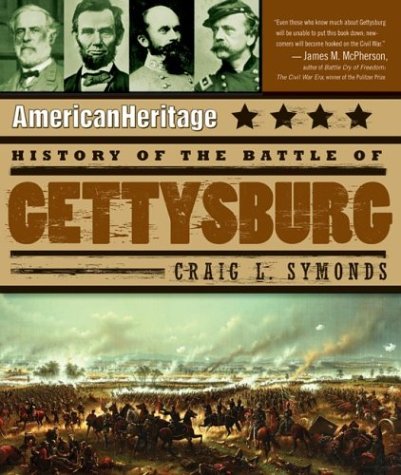
History of the Battle of Gettysburg, by Craig Symonds *****

historyofbattleofgettysburg Ordinarily I have little patience for anyone who picks up a book on US military history and just wants to look at the pictures.

But I read the text. In most places it’s fine, but once you start reading McPherson and Sears on Gettysburg, there isn’t much that Symond’s text will tell you that’s new. Symonds sticks to the basics, and he gives you the brass tacks, if you want to cut to the chase. He is the retired chair of the US Naval Academy. His background speaks for itself, and he is highly lauded as a Civil War scholar.

And look at the pictures!

The American Civil War was the first US war that had photography available. No, they couldn’t take action shots yet; the subject had to remain stationary for too long at a time for that to work. But there are a lot of primary documents here, photographs of leaders, of letters and memos as they were originally written (with the text beneath them if illegible; spelling was pretty much a discretionary practice back then). There are photos of battlefields with men still lying on them. (It is now considered a breach of national security for the press to go to Afghanistan and shoot photographs of US troops, whether in action or in closed coffins, for the American public to see.) There are photographs of the weapons available at the time, and of landscapes you can visit today that look nothing like they did then.

Look at the pictures!

My favorite is a full page photograph of Lincoln. His bow tie is dusty, faded, and crooked. His hair cut is terrible. His face is creased, and it bears the hardship of many sleepless nights, and perhaps also of the death of his son and the illness of his wife. It is a picture of a real person, long before the era when presidents became packaged goods to be marketed to the American public.

I have sometimes felt bad about the fact that I will likely never visit the Smithsonian. It is the dream of all serious students of American history. But my legs won’t let me get far now, and an airport is accessible only if I use the wheelchair service, which makes me feel quite conspicuous. It’s far easier to stay home and read.

This book, which I purchased some time ago in hard cover, will hold a place of pride on my bookshelves for many years to come. Primary sources aren’t that easily come by. Along with Sherman’s and Grant’s memoirs, this is an important addition to my Civil War library.

Betrayal of Trust, by J.A. Jance *****

betrayaloftrust Jance’s JP Beaumont detective series is one of my all-time favorites. Set (usually) in my own home town, it carries a gritty yet human, thoroughly believable flavor that I just can’t find anywhere else.

In this case, Beaumont is roped into a scandal unfolding at the governor’s mansion; it turns out he knows the governor. She was the girl who was too important to talk to him in high school, but now she wants his skill in discreetly looking into some things she’d rather not see on the front page.

It doesn’t work out that way.

This title has been re-released, and so I accidentally read this twice, but even once I had realized my error, I decided to plow through and finish it a second time. It wasn’t that I had no other books; but this series is on my very short list of things I don’t mind seeing a second time around.

Highly recommended to anyone who enjoys good detective fiction.