A Killer’s Guide to Good Works, by Shelley Costa*****

akillersguidetogoodShelley Costa is a writer to remember. Her dazzlingly dark humor and her ability to spin a tight original story that builds irresistibly caught my eye with her first Val Cameron mystery, Practical Sins for Cold Climates. I began checking in with Henery Press regularly when I logged onto Net Galley, and my stalking paid off big time. Thanks go to Henery and also to Net Galley, from whom I received a DRC in exchange for an honest review.

In this second Val Cameron mystery, our protagonist is back in the big city where she belongs. She is looking forward to lunch with her best friend Adrian, who promises to show her something rare and wonderful, but when she reaches Adrian’s office, her friend has been murdered and the artifact is gone. Val’s loss is our gain, as Costa unfurls another outstanding mystery. This title is available to the public September 20, 2016.

Adrian had been looking forward to having her brother visit, and she had wanted Val to meet him. The brother, a monk on vacation from his usual life in an abbey, is the other primary character in this story. Val had already let Adrian know that she didn’t care for religion, for churches, for clergy…and she was absolutely not, positively not going to meet Adrian’s brother. No, no, and no.

That’s not how it works out.

Costa is a smart writer and she never wastes a word. The humor here is undoubtedly dark for the cozy mystery set, and so the reviews that are written by the cozy folk don’t reflect her writing ability. Those that want a house pet or caterer to solve a mystery will be disappointed every time they read Costa.  To my way of thinking, that’s more a matter of the wrong target audience than a reflection on Costa, who is razor sharp and wickedly hilarious.

Highly recommended.

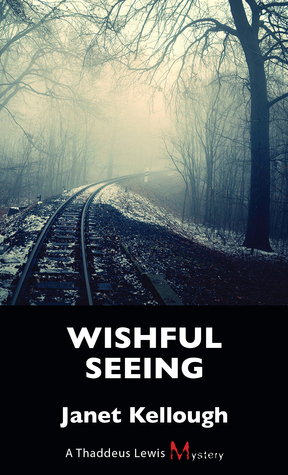
Wishful Seeing, by Janet Kellough****

wishfulseeingThaddeus Lewis, the traveling preacher sleuth, is back on the road again. He’s headed to speak at a gathering of Methodist Episcopalians when he finds himself involved, once more, in a murder case. This cozy mystery is my second in an endearing series by Janet Kellough. I snapped up the DRC when I saw that Dundurn had made it available on Net Galley, so I read it free in exchange for an honest review. This title will be available to the public this Saturday, July 30.

A body has been found in Rice Lake, and there are witnesses that saw Major Howell and his wife Ellen, the woman in the blue dress, near the scene of the crime “in the right place at more or less the right time”.  In the Canada that existed back then, that was enough to put Mrs. Howell in jail; her husband would be there too, but he is nowhere to be found.

Lewis finds himself drawn toward her case. Is it because he saw bruises on her arm that suggested her spouse may have handled her ungently? Is it because she is lovely, and he wishes she were with him instead? Or is it because Lewis just can’t scratch that legal-eagle itch enough times to be rid of the urge?  Likely it’s some of each.

The main draw card here is setting. Kellough has done a good deal of research in laying out both the area around Toronto during its frontier period. The result is a historical mystery with a travelogue feel to it. Kellough takes us to a time and place nobody can visit anymore except through literature, and she does a great job of it. She includes a lot of interesting details about the history of the Canadian legal system that drew my attention, because it was very different from what those of us raised in the US have come to expect. I found this aspect of it fascinating.

I also really enjoyed the part played by the little dog, Digger. I wouldn’t care to see him start solving crimes, but I hope we see him again in a future installment.

The only weak part is—perhaps unfortunately—at the beginning. There is so much of Thaddeus’s inner narrative, so much soul searching and comparison of beliefs among the various Protestant denominations that if I had not read Kellough’s work before, I would have wondered if I had inadvertently stumbled across Christian fiction. In fact, my notes show that at one part I wondered anyway.

Yet in another way, if there has to be a slow part, let it be at the beginning. And it’s clear that Kellough is not attempting to put together a thriller that grabs the reader by the throat, but rather is treating us to a relaxing story that one may take to the hammock and flop down with.

Nevertheless, by the time all the groundwork has been laid, it is a hard book to put down.

So this is your beach read. Take it to the shore, to the mountains, to the river, or even your own back yard, but don’t cheat yourself by passing it by. You can have it this weekend, and those that enjoy both historical fiction and mystery wrapped up at once are in for a treat.

Salvation Lake, by G.M. Ford*****

salvationlakeFord is the rightful heir to the late great Donald Westlake, a writer of monstrously amusing mysteries full of quirky sidekicks and kick-ass, zesty dialogue. There’s nobody like him in Seattle or anywhere else. I gobbled up the DRC when it became available via Net Galley and publishers Thomas and Mercer,  so I read this free in exchange for an honest review. But I’ll tell you a secret: if I’d had to, I’d have paid for this one had it been necessary. And so should you. It’s for sale today, and you can get it digitally at a bargain rate.

But back to our story.  We open at a bar called the Eastlake Zoo. The band of misfits to which detective Leo Waterman is tied through bonds of family history and quixotic affection are rocking the house in “well-lubricated amiability”. In fact, there’s a story being told right as we begin, and if it doesn’t hook you, check your pulse, because you’re probably dead. Here:

“Red Lopez was a spitter. When Red told a story, it was best to get yourself alee of

something waterproof, lest you end up looking like you’d been run through the

Elephant Car Wash.

‘So we was comin’ down Yesler,’ Red gushed. “Me and George and Ralphie.’

Everyone had found cover, except the guy they called Frenchie, who was so tanked

he  probably  thought it was raining inside the Eastlake Zoo…”


Right?

As it happens, Waterman, who’s inherited his old man’s ill-gotten wealth, has been lying low and enjoying the good life, but now his late father’s hideously distinctive overcoat has been found on a corpse, and  Timothy Eagen of the Seattle Police Department want to talk to Leo. Now.  There’s bad blood between them:

“…he hated my big ass the way Ahab hated that whale…Eagen was a skinny little turd with a salt-and-pepper comb-over pasted across his pate like a sleeping hamster.”

Since SPD has been under the eye of the Feds lately, Eagen can’t give full rein to his attack-Chihuahua impulses. SPD needs to provide “the kind [of law enforcement] that doesn’t look like Ferguson, Missouri or Staten Island, New York.” So Waterman doesn’t get shaken down or tossed into a cell, but his curiosity is piqued, and since he has no paying job and time on his hands, he finds himself checking into a few things. One thing leads to another.

What relationship does the victim, known as the Preacher, have to Mount Zion Industries, whose pamphlet is found among his effects? Before we know it, Leo is off and running, checking out Salvation Lake, located at the end of Redemption Road. Events tumble one upon the next, and I found that instead of reading in my bed that evening, as is my usual bedtime custom, I was reading on it, bolt upright and clicking the kindle to go a little faster please.

Waterman may have come into money midway through life, but his perspective is a working class perspective. His take on the city’s thousands of homeless denizens and the relationship that cops have to those in need strike a sure clear note that must surely resonate with anyone that’s been paying any attention at all.

Meanwhile, Salvation Lake is written with warp speed pacing, sharp insight, authority, and the kind of wit that can only come from a writer that has tremendous heart.

Don’t miss it. Get it now.

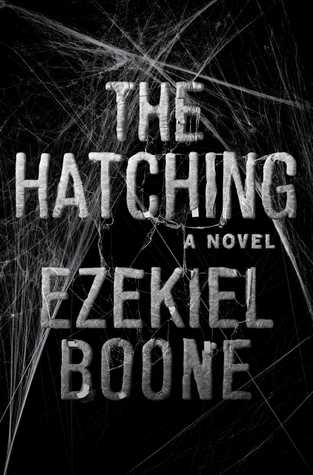
The Hatching, by Ezekiel Boone****

thehatching I was never afraid of spiders until I read this book. Thanks to Boone’s monstrous, boisterous, hair-raising new novel, I now eye the ceiling for wolf spiders that hunt at night just before I fall asleep…and I usually find one. I received this DRC in advance thanks to Net Galley and Atria Books, in exchange for this honest review. This book goes up for sale July 5, 2016 and frankly, I don’t know how you’re going to wait that long!

Right at the start, something has gone very wrong.  In Peru, a shadow falls upon a group of helpless tourists and devours them with breathtaking speed. Soon thereafter, China tells the world that it has inadvertently nuked one of its own villages. Just an accident; terribly sorry. Please don’t push that button, because we aren’t gunning for you, oh mighty imperialist powers.

When a bizarre package arrives at the laboratory of Melanie Guyer, she immediately tucks its contents into an glass tank where it can be watched in a secure environment. There. See now, that’s sensible. And yet…

Clear on the other side of the continent, the greater Los Angeles area finds itself under quarantine. With a finger to the wind, one soldier in charge of the containment eyes the razor wire and holding pens springing up and decides to make a break for it while he can. He powers the hell through the closed gate, because there’s a time to sacrifice for one’s country, but there’s also a time to save yourself first:

    He took the last few steps to the truck and had his hand on the door handle  when  he  heard the sound.  It was a sort of scraping…and he noticed there was something wrong …with the shadows. Over there, maybe twenty paces away, one of the shadows seemed to be moving a little, pulsing. He watched it, fascinated, and it wasn’t until a thread of black seemed to fall out of the shadow and unspool toward him that he broke from his reverie.

Uh oh.

However, survivalists in Desperation, California aren’t panicked; they’re gloating. All that preparation for doomsday, and now it’s here. Let’s have a party! The doors are sealed against radiation, against spiders, against whatever. The dog has even been trained to go potty on a little piece of Astroturf. They are so ready.

I wasn’t sure I liked this book at first. The moment when the first spider popped out of the first human host, I made a note in my e-reader saying this is just another version of the 1970’s movie Alien, but with spiders. Still, I continued to read.

When the president of the United States asks quite seriously whether zombies are involved, right around the halfway mark, I wanted to throw my kindle across the bedroom. If it had been a library book, I would have slammed it shut and put it in my tote bag to return first thing in the morning. But it wasn’t a library book, it was a DRC, and so I had an obligation, and I gritted my teeth (president. Zombies! My ass,) and continued reading. And I am really glad I did, friends, because it got so much better.

Let’s go back to the movie Alien. For those unacquainted with this cult classic, the story devolves around aliens that seek human hosts. The setting of Alien is a space ship, so they’re a very long way from home and help; yet they are also contained.  And as I read on, I realized that in Boone’s setting—the entire planet—there are so many more possibilities. I hit about the sixty percent mark and had to munch my way through the rest, if you’ll pardon the expression, until the very last page was done.

I found myself pondering the possibility of a sequel.

I nearly tacked on the fifth star, because this was tremendously entertaining, and Boone breaks up the horror with odd places, few and unexpected, that are laugh-out-loud funny. But then I reflected on the fact that I rated every single thing Michael Crichton ever wrote as four stars, and I see this quirky, horrifying, delicious novel as on a par with Crichton. Rather than hustle back and re-rate everything Crichton ever wrote, which would be a bit impulsive, I stuck to the four star standard.

There’s no explicit sex here, but there’s plenty of gore. Those that love good horror and science fiction should snap this book up right away. And if one is looking for a summer read to keep your nerdy teen out of trouble for a hot minute over the summer, this is a good choice for that set also.

But you’ll never see a spider web in quite the same way once you’ve read it!

Huge fun for anyone not already genuinely afraid of spiders.

 

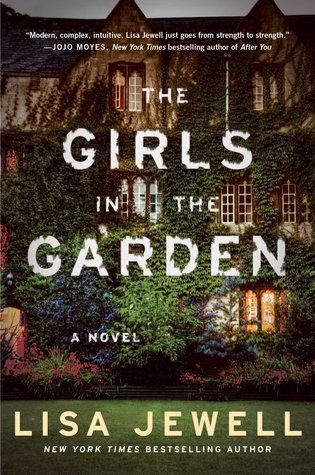
The Girls in the Garden, by Lisa Jewell****

thegirlsinthegardenLisa Jewell is an experienced author, but she is new to me. The Girls in the Garden, published in the UK last summer and soon to be in bookstores in the USA, is good strong fiction, and you should read it. I was fortunate and obtained an advance copy thanks to Net Galley and Atria Books for the purpose of a review. One night I stayed up late, unable to put it down until it was done.

Clare and Adele both have daughters, and both live in mixed-use residences that enclose a very large private garden. It’s been a great place to raise children for generations; in fact, some of the adults raising families here were also here as children. And there are so many children, introduced so quickly! I can usually juggle a hefty cast of characters just fine while also reading other books on the side, but in this case, the combination of all these characters and a surprising amount of culture shock—I am not as well informed with regard to British culture as I thought I was—left me staggering during the first ten percent of the book. My e-reader has notes that say, “Wait! Who?” and “Whose kid is this now?” and twice, “The fuck??” “What is a onesie, other than baby clothing?” Context wasn’t helping, so I did a web crawl. Okay, now I know. And isn’t tea usually mid-afternoon, with cookies or cake, and isn’t high tea formal and later? Do they have tea instead of lunch, instead of dinner, or are there four meals here?

And when I ran across spaghetti and peas for tea at 5 PM, again I wrote, “THE FUCK?”  Who eats peas in their spaghetti?

If a reader has to be confused, it’s better to have it be at the beginning and then catch up, than at the end, where one may walk away feeling stung and bewildered. Although I never did fully feel I had placed all of the characters, by the twenty percent mark I had a good feel for the primary ones and most of the others, and that was enough to make this an enjoyable read once I was oriented.

The story builds up to, and then centers around a party at the end of which adolescent Grace is found bloody and half-dressed, lying in the bushes. What has been done to her, and who has done it?

Ordinarily I would consider this a spoiler, but it’s provided on the book’s blurb and jacket, so readers are told right away this is our central problem. But there are layers that delve deeper, and these are what make this such an interesting read.

When is a parent over-protective, and when are they not careful enough? What makes someone a good parent? How much do we hold tight to keep our children safe, and when is it right to let things go; not only to trust our kids, but also to trust the world with our children?

There are no easy answers, but I found myself making small clucking noises when one parent or another makes what appears to me to be an error in judgment. Likely you’ll do the same, though perhaps not in the same places. The ambiguity makes it delicious.

The narrative point of view shifts from that of Pip, who is twelve, to that of Adele, one of the mothers. This is effective. Pip writes letters to her father, and they assume a portion of her narrative, adding a first person perspective, and at first I thought this device was too cutesy, but I changed my mind by the halfway point. It adds something that would be hard to inject as effectively any other way.

As to what has happened to Grace, there are so many possible villains, so many motivations and opportunities, but when the solution is finally reached, I feel as though the author has played us fairly. Sometimes a mystery writer will reach clear into left field for a solution. Perhaps they may discover a secret twin during the last ten percent of the story, or perhaps the villain is someone everyone had believed long dead. And that doesn’t happen here.

Ultimately I don’t think the story is really about Grace. The story is about trust within adult relationships. Misplaced trust can be dangerous; too much suspicion is toxic. And so the dance women do—and perhaps everyone does—is in trying to find the balance. It isn’t easy, especially when we are young parents, still learning the ropes ourselves.

Despite the tumble of characters at the beginning that I suspect will challenge many readers as it did me, I recommend that you read this book. It offers us something I haven’t seen anywhere lately.

The Girls in the Garden becomes available to readers in the USA Tuesday June 7, 2016.

The Last One, by Alexandra Oliva****

thelastoneThose that occasionally hole up on their days off and binge on reality TV shows will love this book; those that don’t will love it too.  This reviewer has never watched a single episode of “Survivor” or any other reality-survival show, and yet once I began reading this novel, it elbowed aside all the other books I was reading till I was done. Thanks go to Net Galley and Random House Ballantine for the DRC, which I received in exchange for this honest review.
In an interesting twist, readers are told up front that part way through this competition, most of the other contestants, along with the cameraman, producer, and a number of other support staff that would ordinarily be in charge of extricating her or announcing her victory, will die. Our protagonist, whom the show’s producers call “Zoo” because she has a job involving animals in real life, won’t know that the show is over, because the people in charge of telling her will be gone.  And so the suspenseful aspect of this story for readers is at what point does the competition actually end, and once we are sure it’s over, when will Zoo figure it out? What will she find when she finally makes it home, assuming she does?


The production team tries to get everyone out, but they’re on Solo Challenges and widespread. There were contingency emergency plans in place, but not for this. It’s a spiral like that child’s toy; a pen on paper, guided by plastic. A pattern, then something slips and—madness. Incompetency and panic collide. Good intentions give way to self-preservation.


Oliva is a champ when it comes to examining media and its effect on the thinking of ordinary people living in the real world, and in this case, even in a virtual one. And as the competition begins, we see how real people are being warped and cast as characters for a viewing audience; a sympathetic  contestant’s ungentle words during a stressful moment are edited out; an introverted, serious individual is billed as arrogant, and so his small acts of kindness will be cut from the final film.

It’s an unreal sort of reality programming, stories retold to make them more saleable to the viewing audience. Oliva nails the way that mainstream media manipulates our thinking; it’s one reason I watch so little television, but it’s not a book that will ruin your favorite shows for you.

Those looking for an absorbing beach read or a thriller to curl up with at the family cabin could do a lot worse.  This guilty pleasure becomes available to the public July 12, 2016.

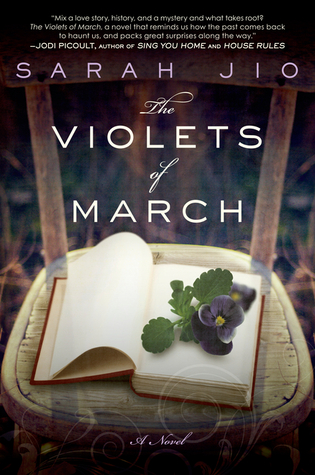
The Violets of March, by Sarah Jio

thevioletsofmarchThe Violets of March is a crossover title, part cozy mystery, and partly—maybe mostly—romance.  I purchased it for myself years ago, back when I was teaching, not advance-reading, and buying all my own reading material. It’s not a bad book, but given that I had paid full jacket price for the trade paperback version after reading some rave reviews, I felt let down. It’s a pleasant read, but it didn’t live up to its hype.

Nevertheless, once I had it in my collection, I was glad of it, because at the time, the other books I was reading were the sort that grab the reader by the hair and won’t let go till they’re done. I needed a calmer, more sedately paced novel to read at bedtime, and this was it. It held my attention, but it didn’t keep me awake when it was time to turn out the light.

Our protagonist is Emily Wilson, whose life, up till now, has been lovely. She is a successful author and married to a gorgeous man; what more can she want from life? But then one day he announces he is leaving her for someone else. Boom. Gone. She retreats to the home of her beloved aunt on Bainbridge Island, which is off the coast of Washington State, to lick her wounds. While there she finds herself ferreting out mysteries buried long ago. The plot becomes a story inside a story, and three different narratives are counter posed, two from the past, one from the present.

At the same time, Emily commences dating again. Here I am comfortable, because this isn’t erotica, it is an old fashioned love story, with the protagonist trying to choose between two men, one an old flame from high school, the other a local man she hasn’t known before.

The character development is not what I might hope for, but then this is a debut novel. It’s shallow, but it’s also soothing. It held my attention until I got a little bit sleepy, and then it didn’t anymore, which was exactly what I needed.

In addition, it is the sort of novel one could hand to a bookworm daughter of a fairly young age, if her reading level and interest were there, without worrying about content. Likewise it could grace the shelves of a middle school or high school classroom without a concern that parents would storm the school (as once occurred when I put The Color Purple on my honors shelf).

That said, I won’t pony up full cover price for this author again. But then, I rarely do that anymore anyway.

Those seeking a light romance with some cozy historical mystery elements to read at bedtime or on the beach could do a lot worse for themselves. It’s a matter of taste and priority.

Lilac Girls, by Martha Hall Kelly***-****

lilacgirlsLilac Girls is the story of three women during World War II. I received a DRC for this book courtesy of Net Galley and Random House Ballantine in exchange for an honest review. I rate this novel 3.5 stars.

The story centers around Caroline Ferriday, an actress and New York socialite that volunteers at the Consulate organizing clothing and other essential items for French orphans; Kasia, a Polish teenager that is active in the resistance movement; and Herta Oberheuser, a doctor given one opportunity to practice medicine under the Nazi regime…at Ravensbruck. All of these are based on people that existed, though the story is a fictionalized account.

Kelly’s debut novel is strong in historical detail and setting. Here she describes Kasia’s home town in Poland:


Lublin rose beyond them in the distance, like a fairy-tale city, scattered with old

red-roofed pastel buildings as if a giant had shaken them in a cup and tossed

them on the rolling hills.


Whether it’s at Ravensbruck, which was a Nazi concentration camp, at an orphanage in France, or in a glittering nightclub, Kelly nails setting. I would like to see her rely less on crutches such as famous people of that time period that pop into the scene—this device signals a lack of confidence to me, and Kelly can get by without these props.

I also would have liked to see less brand name identification, which looks a lot like product placement. The whole advertising jingle for a particular brand of cookies, and a particular New York department store whose name may actually have appeared some thirty or forty times hindered the novel more than it helped; Kelly will do well to leave her advertising career behind when she sits down to write fiction. But this is her first  novel, and given what I see here, I think we can expect great things from her in the future; she is just getting warmed up.

In addition to crafting resonant settings, Kelly does the world a favor in telling about the experiments done on members of the Polish resistance, known as “the rabbits” because of the way they hop around rather than walking after their legs have been experimented on surgically, often done to them in ways that further medical knowledge in no way at all. Though it is critical to remember that what Hitler and the Nazi regime did to the Jews was real—and it’s more important than ever now that most World War II veterans have died and revisionists would like to rearrange the historical record and count the camps as an exaggeration of the facts—few know of the extent to which other groups were also sent away, often to die before the end of the war. The author makes an important contribution to historical literature by doing this.

That said, I have to confess that I am a little bit disappointed because I have wanted to read more about the resistance movement itself, and when I read the teaser for this story, I thought that one character’s life within the story would center on this aspect of the war. Instead, Kasia is arrested almost immediately, and once inside the camp, her story is in many ways like other Holocaust stories.  It’s horrific, and if you have not read any other stories set during the Holocaust, then you will certainly want to read it. I have read enough Holocaust stories, and this character never stops being fictional for me.  And the same is true for Caroline, who seems shallow and superficial despite her sacrifices and tireless effort.

The character that makes me sit up and take notice is Herta. I can’t recall having read a Holocaust story in which a Nazi speaks to us in the first person, and the gutsy depiction of this opportunistic woman mesmerizes me. The offhand remarks that Herta makes to rationalize her choices as she slides down that slippery slope ethically, letting her standards be eroded in order to further her career and increase her own standard of living, are chilling and immediate. I believe in this character. Kelly is deft in the way she depicts this ambitious but morally pliable, solipsistic individual. There are a hundred chances to make her into a caricature, but Kelly’s subtle finesse steps back every time this might occur, and the result will leave you breathless with horror.

Whether to invest the full jacket price of this novel depends on how deep your pockets are and whether you have read a lot of Holocaust literature. If you haven’t, you’ll want to add this title to your collection. And come what may, Kelly will be a writer to watch in the future.


The Girls, by Emma Cline*****

thegirlsThe Girls is a fictionalized account of the Manson Murders, a terrible killing spree that stunned the USA in the 1960s before any mass shootings had occurred, when Americans were still reeling from the assassinations of President Kennedy, his brother, Senator Robert Kennedy, and Dr. Martin Luther King. Manson, a career criminal with a penchant for violence yet possessed of a strange sort of charisma, attracted a number of young women and girls into a cult of his own founding. Later they would commit a series of grisly murders in the hills outside Berkeley, and it is this cult and these crimes on which Cline’s story is based. Great thanks to Net Galley and Random House for the DRC. This book will be published June 14, 2016.

Evie is an only child of the middle class; she is well provided for, but her parents have split up and her presence is getting in the way of her mother’s love life. Evie needs her mother’s attention now that she has entered her teens and so she pushes the limits in small ways, then in larger ones. When it becomes clear that her mother just doesn’t want her around, Evie looks elsewhere and finds herself drawn to a feral-looking young woman named Suzanne, who has unsuccessfully tried to shoplift something from a nearby store. Before long, Evie is sleeping on a mattress at the rural commune where Suzanne lives, eating from the communal kitchen and being used sexually by the group’s charismatic leader, and then by a man in the music industry that Russell, the founder, wants to please in the hope of having his music published.  Russell dispenses hallucinogenic drugs freely to make the girls more compliant.

We know immediately that this place, the commune, is not a good place. When we find that the babies  born to young women that live there—in this era before Roe versus Wade gave women the right to choose—are segregated from their young mothers and the pitiful way they regress and attempt to attach themselves to various females in search of a mother or mother figure, that’s a huge tell. But when Evie arrives she doesn’t want to know these things, at least not yet. All Evie wants is to be with Suzanne.

The story’s success isn’t anchored so much in the story line, a story that’s been tapped by previous writers, but in the dead-accuracy of setting, both the details of the time and in every other respect as well, from home furnishings, to slang, to clothing, to the way women were regarded by men. The women’s movement hadn’t taken root yet. This reviewer grew up during this time, and every now and then some small period bit of minutiae sparks a memory. In fact, the whole story seems almost as if a shoebox of snapshots from pre-digital days had been spilled onto the floor, then arranged in order.

The other key aspect that makes this story strong is the character development. Evie doesn’t have to live in poverty among bad people, but she feels both angry at her mother and hemmed in by the conventional expectations of her family and friends. Her boundary-testing costs her the loyalty of her best friend, really her only friend, and so she casts about for a new set of peers. Her mother prefers the fiction that she is still visiting Connie, the friend that has disowned her, and this lie provides Evie with a lot of wiggle room on evenings when her mother is with her boyfriend and finds it convenient for Evie not to be home.

As for Evie, what has started out to be an adventure, a bold experiment in branching out from the middle class suburban life she’s always known, gradually begins to darken. But the worse things get, the more important it is to her to prove her fealty to Suzanne, to not be rejected a second time as she was with Connie. Hints are dropped that probably she ought to just go back where she came from before it’s too late, but she is determined not to hear them.  I want to grab her by the sleeve and get her out of there; Evie won’t budge. Once she is in trouble at home for the things she had done on behalf of the group, her desire to avoid her home and stay with Suzanne grows even stronger, which leads her into more trouble yet. Clues are dropped that something big is going to happen, something that our protagonist maybe should avoid, but she plunges forward anyway with the bullheaded determination peculiar to adolescence.

All told, Evie’s future doesn’t look good.

Readers among the Boomer generation will love this book for its striking accuracy; those that are younger will feel as if they have traveled to a time and place they have never seen before. One way or another, Cline’s masterful storytelling weaves a powerful spell that doesn’t let go until the last page is turned. Riveting, and highly recommended.

The Black Glove, by Geoffrey Miller*****

The Black GloveThe place is Hollywood, California; the time is 1980. Terry Traven is a private detective specializing in finding the runaway children of the wealthy. He is offered a job that appears to be more of the same; a local mogul’s son has disappeared, and Dad wants him found. But then the disappearance turns out to be a kidnapping, and the kidnapping turns out to be a murder, at which point all hell breaks loose. This story is fast-paced and though it’s set a generation or two ago, the issues with police brutality—otherwise known as “the black glove”—make it more socially relevant than your average piece of crime fiction. There are other components that will sit well with those with an eye for social justice, too. Thank you Brash Books Priority Reviewer’s Circle for the DRC, which I received in exchange for a fair and honest review. This book is available for sale right now.

The beginning of the book doesn’t appear to be auspicious. A guy walks into Traven’s office and presents him with a dossier that tells him all about himself, at least in the words of intelligence sources. The dossier is too lengthy–we see every word, pages and pages of italicized material– and is clearly a fast, easy way for the author to introduce us to the character. I was prepared to be let down.

Once we get past that sloppy introduction, however, the story is complex and fast paced enough to remind me of James Lee Burke’s detective series. Toss in some quirky names, like Senator Suspenders and a punk rock band called The Dead Cherries, and add a whole lot of action. And yet somehow we find ourselves discussing issues of race, gender, and gay rights without slowing the pace at all. I almost always take off at least a star for the use of the “n” word, but the way it is used here isn’t just some cheap stunt to show us that a bad guy is really rotten or ignorant; instead, the characters manage to embark on an abbreviated discussion of race and white privilege without ever becoming preachy or distracting from the main thread.  Some of it is very indirect, and it took me awhile to get a handle on it. In other places, it’s crystal clear, as when the visiting room at the jail is “gas chamber green…a cruelly subtle reminder to the inmate of his loss of freedom.”

The story’s subscript demonstrates how women and people of color are sometimes so overwhelmed by the racism and sexism that is inherent in US culture—and even more so when this novel was written than now—that we find ourselves internalizing that hatred. Likewise gay men, lesbians, and bisexuals; those from the Boomer generation will recall just how difficult this time period was for anyone that wasn’t straight.  And given that Miller wrote this during that time, I consider this story to be courageously written, a gutsy story by a writer unafraid to take a hard look at a controversial topic.

In fact, Brash Books hasn’t introduced a detective this brainy and complex, yet entertaining since they brought out Barbara Neely’s Blanche White series. What a tremendous find! I wish there was a whole series with this detective.

Meanwhile chances are excellent that you haven’t read this book yet, and if you lean left and enjoy a good detective novel, this is one you should scoop up right away.  It’s strong fiction with a progressive thread running through it. Don’t miss out.