Somewhere Toward Freedom, by Bennett Parten*****

Bennett Parten is a fine historical writer, and here he examines General William Sherman’s renowned march through Georgia during the American Civil War through the lens of the formerly enslaved people that followed him. It’s a job that needed doing, and I’m glad that Parten was the one to do it. My thanks go to Simon and Schuster and NetGalley for the review copy. This book is for sale now.

The Union’s approach to formerly enslaved people evolved considerably over the course of the war. (This is your reviewer talking, not Parten.) In the beginning, when both North and South thought the conflict would be a brief one—ending, of course, in their own victories—anyone that left a plantation without permission to follow the Union army was promptly returned to their owner. But this was problematic from the start, if only logistically, as such practices slowed the army’s pace and drained resources from it, all in service to the enemy. For a while, then, everything was unofficial, as gradually, the formerly enslaved were sometimes folded into the army as support staff, helping cook, set up camps, pave roads, and whatever other noncombat roles needed to be filled. Eventually the practice was codified, not because slaves were declared free—not yet—but as “contrabands” of war. The idea was that by taking the enemy’s property that one runs across, be it livestock, crops, or (wince!) human beings, one’s own forces were strengthened, the enemy’s weakened. And after the Emancipation Proclamation, the formerly enslaved could theoretically go wherever they chose, but since guns and dogs can render such a proclamation from a far away and often unrecognized authority, it seemed like a wise plan for the formerly enslaved to follow the Union army.

Prior to reading this book, I was unaware of the relative size of the crowd of followers as opposed to the army itself. As Sherman’s forces made their way through Georgia waging total war, razing fields and burning cities, the crowd behind it grew from hundreds, to thousands, to tens of thousands!

Sherman’s first obligation, as he saw it, was to win this war. The army had to be his focus. Yet, as enthusiastic followers swarmed, they needed food, shelter, and sometimes other assistance. Initially, the troops were instructed not to give food to anyone other than those followers tapped to serve the army, but it proved difficult to enforce. There were children there, and they might well starve if not fed. The army had, as an intentional strategy, denuded the farms and villages of food and other necessary resources, so telling the followers to go find their own food was disingenuous. The army had nearly all the food there was; unfortunately, it wasn’t enough for thousands of extra mouths. And at times, Sherman and his generals made an effort to prevent, or to at least not help, the followers from remaining with them.

The greatest scandal was the one at Ebenezer Creek. (Sherman himself was not physically present for this, but what happened was consistent with his policies.) Georgia was full of rivers, swamps, creeks, and bogs, and in order to cross them, sometimes the engineers constructed bridges, and then either burned them behind themselves to prevent the enemy from following, or retrieved them for later use. In this instance, the enemy was close at the rear, and the order was given to pull up the bridges just as soon as the last soldier was across. The result was horrifying: with the hounds baying behind them, the desperate followers used every possible means to try to stay with the army. Some drowned; others were captured and either returned to slavery or killed. Women and children perished in those muddy waters, and later, the Federals launched an investigation.

There were other less dramatic, yet still tragic, incidents of the same sort.

In order to solve this conundrum, Sherman ordered a series of abandoned plantations in Port Royal, an island in South Carolina, to be turned over for the use of the freedmen and women. The book goes into a fair amount of detail about how these were run, with a fierce competition between two sides for control. Despite an overly colonial administration, formerly enslaved people were able to farm for themselves, and in some cases were able to buy land with the money they earned. It was a sound, if flawed program that was ultimately destroyed when Lincoln was murdered and Andrew Johnson, a sympathizer of the South, became president and gave the plantations back to their original owners, making no provision whatsoever for the farmers that now worked them.

It is this aspect of which I knew nearly nothing. Part of this is because I am a coward; I have a dozen or more books about Reconstruction that I say I will read, but then I don’t, and that is because I know the ending will be heartbreaking. But there’s also this: conventional histories of the Civil War tend to follow one or another army, general, and so forth, and very few tell the story of what happens after the army marches onward. And so I learned a good deal from this portion of the book; and yes, my heart broke, but not as much as those of the people that were first assisted, and then abandoned by the U.S. government.

Finally, I want to comment on the notes and sources used here. They are beyond reproach, with many primary sources used, multiple sources per endnote in most cases, and well-integrated. I particularly appreciated the quotations of the followers themselves.

I highly recommend this book to all that are interested in the American Civil War, Reconstruction, and the many social and racial problems that have continued to weigh on American society ever since.

Those We Thought We Knew, by David Joy*****

David Joy is a brilliant writer. His stories, set in the Carolina mountains that he calls home are resonant, visceral, and always about believable characters that hail from the hardscrabble working class. Those We Thought We Knew is his best. My thanks go to Net Galley and Putnam Penguin for the review copy. This book is for sale now.

Sylva, North Carolina is the sort of insular, homespun community that you don’t see much of anymore. Everybody knows everybody, not only by name but by family, religion, and a host of salient details that form their backstories. There’s not a lot of traffic in or out of Sylva, nestled as it is in a hollow of the mountains. Now, however, two newcomers have arrived, but they aren’t together. Surely not. One is a lowlife vagrant, a pencil-necked, mullet-headed, greasy drunk in an ’84 Caprice named William Dean Cawthorne. When the sheriff’s deputies roust him, one of them finds a small notebook that contains some surprising names; he also has a long, white robe in the car, and with it, a conical white head covering with eyeholes in it. Mr. Cawthorne, you see, is a recruiter for the Klan.

Toya Gardner comes to town at about the same time to visit her grandmother and work on her thesis. She’s a graduate student from Atlanta; she creates meaningful African-American sculptures and other art works. But when she finds the statue of the Confederate soldier in the town square, she is inspired to make a different artistic statement than she’d originally planned, and when she does, all hell breaks loose.

This searing story sees two terrible crimes unfold in sleepy little Sylva. The dynamics that exist between the county sheriff, the Sylva police force, and the local citizenry—particularly Toya’s family—are rich and complex, and they showcase Joy’s best character development to date. In the end, we must concede that alongside the horrors represented by overt white supremacists, the more chilling may be that which simmers below the surface of men and women that, yes, We Thought We Knew.

This is brave writing. Joy will no doubt be the subject of some unfriendly attention because of it. My hope is that it draws the accolades that it deserves from those that seek true social justice, and that it will inspire useful, critical introspection and conversation on the part of its readers.

Highly recommended.

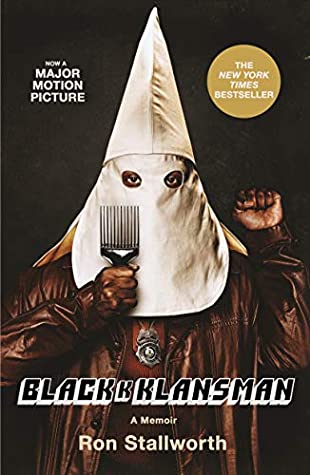
Black Klansman, by Ron Stallworth****

I was intrigued when I saw this book, and so I checked out the audio version, which the author reads himself, from Seattle Bibliocommons. It is one of a kind.

My first question, upon seeing the premise, is since when the FBI has any interest in busting the Klan or other White Supremacist organizations. Generally they chase activists on the left, and give those on the ultra-right a pat on the head and a cookie. This is addressed in short order, as the author explains it is his own idea. He initiates it when he learns how easy it is to join the Klan, and once he has access, his bosses agree to let him pursue it. And understand this: he is the only Black FBI agent in Colorado, and there is at least a wee bit of pressure on the Feds to increase their diversity just a wee. So for a brief and shining time, Stallworth is permitted to chase this lead.

The way Stallworth is able to join is that his membership interview is a phone call. At this time, there aren’t a lot of Klan members in the Rockies, and they’re spread thin. When the occasion arises for him to show up in person, he sends another agent, then takes over again on phone and through the US mail. (Heaven knows how this would shake out today; this would be difficult on Zoom.)

The memoir is important to write, because just as he is closing in hard on illegal activity that might result in arrests, he is called off by the brass, and he’s ordered to destroy every speck of research and evidence he’s compiled. Without this memoir, nobody would ever know it even happened. What a crock. What a bitter pill. I feel sick for him.

The audio is delivered in a wheezy, laconic narrative that sounds a lot like an old man sitting on his front porch telling the neighbors about his proudest exploits. It works for me.

Highly recommended.

Daughter of a Daughter of a Queen, by Sarah Bird*****

Cathy Williams was a real person, and Sarah Bird steps up to tell her story, marrying an engaging narrative with historical fact. Though I am mighty late, I received this book free and early. My thanks go to St. Martin’s Press and Net Galley for the review copy.

Cathy Williams was born a slave, though her mother told her to regard herself not as a slave, but as a captive, one of noble warrior blood whose destiny was freedom. The American Civil War led General Philip Sheridan to the tobacco farm in Missouri where Cathy and many others performed forced labor for “Old Mister.” Sheridan chooses her to work in the kitchen; she isn’t pretty, and he figures she will do what she’s supposed to, rather than being caught up in romance. She and other former slaves work in exchange for meals and protection against Rebel slave-hunters.

The American Civil War is my favorite historical period to read about, and I have a soft spot for Sheridan, so this makes the story all the sweeter for me. Before my retirement, I was a history teacher and the civil war was what I taught for one term every school year, yet I didn’t find any inaccuracies here. That’s a rare thing.

Usually, stories that are set during this period hit a climax when the war ends, and soon after that, the book is over. Bird doesn’t do that here; after all, this story isn’t about the war, it’s about Williams. Victory is declared, everyone whoops for joy, and we’re not even halfway in it yet. I like this, because it shows some continuity, and one must wonder, at times—so the war ends, and then what? The South is decimated. The army virtually dissolves. What becomes of those we have been reading about? Reconstruction starts and fails, we know this; yet one wonders about individual stories.

After the war, the army is still Cathy’s home. She is a big woman, and when a soldier friend is murdered, she takes his army coat and dresses herself up as a man, becoming Private Cathay, and she joins the Buffalo Soldiers. In real life, she is the only woman to do so.

I won’t even try to recount the many experiences Williams has; in some ways, it’s a less exaggerated version of Forrest Gump, or Little Big Man, but an African-American woman is the subject, and the story is true. Bird did some top-notch research for this thing, and between that and her considerable skill with character development, pacing, and dialogue, the result is pure gold.

It starts a little slow, but patience will reward you. There’s a fair amount of violence—how could there not be—and a number of ugly situations that might make this a bad fit for a classroom read-aloud, and that’s a shame, but the story had to be told this way. I recommend it for high school libraries, and Black History Month shelves; it might also make a fine gift for your precocious reader, depending on your comfort level and theirs. The very best thing to do, younger readers or no, is to read it yourself. I alternated my review copy with the audio version that I scooped from Seattle Bibliocommons, and the reader is a standout, so I recommend it in that form as well.

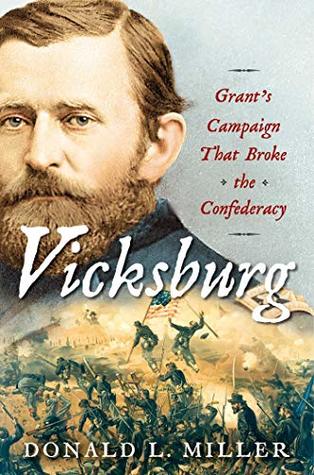
Vicksburg, by Donald L. Miller****

4 stars plus. Donald Miller’s treatment of Vicksburg is one of the best I’ve seen to date; it’s clear, easy to read, well documented, and in parts, vastly entertaining. Thanks go to Net Galley and Simon and Schuster for the review copy. This book is for sale now.

The siege and battle of Vicksburg was the single most significant event in the American Civil War. When the Union emerged victorious, it seized control of key arteries of commerce, food, and military supplies by capturing access and use of the Mississippi River as well as an important railroad that ran east to west. It liberated vast numbers of slaves, and it dealt a savage blow to the morale of diehard Southerners who believed the city and its fort unassailable. The fall of Vicksburg cut the Confederacy in two, and it made communication between the two halves slow and difficult. It also sealed President Lincoln’s election and provided him with a second term he might otherwise not have gained. I knew all of these things before I began reading Miller’s work, but I found a tremendous number of details I didn’t know about, and more importantly, I gained a much solider sense of context.

Many prominent works on Vicksburg are also Grant biographies, and that usually suits me fine, because Grant is one of my greatest heroes. However, those that read about Vicksburg solely within that framework lose out on the progress made—and sometimes lost again—by the Union Navy and others. Though I had read James McPherson’s work on the Union Navy, there is a lot more detail provided here by Miller. The rivers that surrounded Vicksburg are confusing as heck, and this played a big role in lengthening the fight, but at the same time, it can also confuse readers. It certainly did me. For example, when those traveling on rivers go “above” a certain point, what does that mean? I always assumed it meant north, but sometimes it doesn’t. I had never heard or read the term “Brown water navy,” (or if I did, I had thoroughly forgotten it), and this is a key aspect of the story. For the first time I have a solid grasp of the route used by the Union navy and army.

Readers should know that Miller is fond of including gore. I don’t know whether this is because college students are easily bored, and the consideration of Grant calmly conveying orders while spattered in brain matter is just more attention-getting than the same information without the gore, or whether Miller feels compelled to use these details to drive home the horror that heroes were forced to look beyond in order to be effective, but there it is, and so if you are inclined to take a book with you on your lunch break, you may want a different one then.

One of the aspects I appreciate most is the emphasis Miller places on the role of slaves during this critical time. If the waters were inscrutable, the land was little better in places, with thick, tropical foliage, snakes, leaches and other hazards. Those that lived nearby had an incalculable advantage, but local whites used this knowledge to confuse and obfuscate troops they considered to be enemies. Slaves, on the other hand, understood how important a Union victory would be, and they provided information that would have taken a lot longer to obtain without them. This is material that other writers often mention briefly but treat as a side issue. Miller goes into specifics, gives concrete examples, and shares the respect that Grant gained for his newly emancipated spies, guides, and soldiers.

The chapter titled “The Entering Wedge” is where good prose and information become solid gold. During this section of the book and the chapter after it, I did a lot of rereading for pleasure. There are excellent quotes throughout the book, and the author wisely focuses on those that are little seen in other books, providing a freshness and you-are-there quality at times that I haven’t seen for a long time.

At one point, during a passage discussing the caves that housed soldiers as well as local families affected by shelling, I realized that these must surely be part of the national park dedicated to this event, and I searched the web for images of them; sadly, because of the very soft earth in and around Vicksburg, (most likely the same soft earth that enabled the river to continuously change course,) those caves are all gone, washed away by hard rain. There’s a photo of a modern version based on the information available, but that’s not the same thing. Rats.

I nearly gave this book five stars, but there’s a surprisingly disturbing part toward the end that left me deflated and scratching my head. There are pages and more pages devoted to ugly rumors that seem to begin and end with Cadwallader. Although the author repeatedly reminds us that these statements are “unsubstantiated” and “controversial,” he nevertheless devotes a whole lot of time and space to them, and what’s more they are near the end, where the reader is most likely to recall them. Overall, he seems harder on Grant than most are, but up to this point he was fair, weighing his weaknesses while acknowledging his strengths. Why he would do a hatchet job on this iconic hero in closing is a mystery to me. Then the very end of the book is given to a Confederate.

Nevertheless, this is a strong work for those that know the basics and want the details. I don’t recommend it to those new to the American Civil War; if you are just getting your feet wet, read McPherson’s Battle Cry of Freedom, or explore the excellent historical fiction of Michael and Jeff Shaara, Shelby Foote, and E.L. Doctorow. But for those that are well-versed and in search of new information, I highly recommend this book.

The Water Dancer, by Ta-Nehisi Coates****

By now, nearly everyone that loves reading has heard of this debut novel by one of the century’s most celebrated writers. Not every strong journalist can also write fiction, but Coates can. I read it free and early thanks to Net Galley and Random House. It’s for sale now.

The concept is a strong one. Why have we seen so little historical fiction set during the period just before the American Civil War and from the point of view of a slave? In an earlier essay Coates has pointed out that African-Americans need to reclaim this time period, that shrinking back from studying it is in a way a concession that shouldn’t be given. That’s the perspective on which this novel is built. It isn’t an easy read by any means; readers need strong literacy skills and a cast iron gut. The level of pain and violence—especially at the outset—is wrenching, and it should be. I took a long time to read this book because I could only swallow it in small portions. You may not want it for mealtime or bedtime reading.

Our protagonist is Hiram Walker, and he is the progeny of an enslaved mother and the plantation’s owner. Hiram is strong, capable, and attractive. When his father pulls him from the “tasked” and brings him home, other slaves warn him to be on his guard; he will never be considered a full member of this family, and he’ll never be considered an equal with Maynard, his Caucasian half-brother whose work ethic, talent, and intelligence could fit together in a thimble with room to spare. Hiram is assigned to prevent Maynard from going off the rails; however, since the authority runs in the opposite direction, Hiram is ultimately unable to save Maynard, who drowns after overindulging.

Hiram has an unusual gift, a supernatural talent that lends interest to the story without becoming its central focus.

Ultimately our protagonist is going to have to run for his freedom. During the years just before the Civil War, owners of large plantations in Virginia and the Carolinas find themselves in desperate straits. The land has been badly over farmed, and both cotton and tobacco are demanding crops. The soil is used up; farmland that once produced bountifully is no longer productive. The solution that most of the large owners seize is to expand their holdings westward. Vast numbers of slaves are either sold and sent to the deep South “Natchez Way” or moved there to work for the same owner on different land. Those that go are treated severely, and their families are fragmented without a moment’s hesitation. While some slaves were able to negotiate for their own manumission in earlier years, this option is no longer on the table. Coates does a stellar job keeping this aspect of his story consistent with historical fact.

Hiram’s escape is ultimately successful after a number of nightmarish experiences, but he is persuaded to return and to assist in the Underground Railroad, and he does so partly with the goal of freeing those that mean the most to him. Along the way he meets Harriet Tubman, and the way Coates depicts her is credible and fascinating. But the thing I love most, apart from the story’s basis and the eloquent word-smithery that shines here and there, is the way Coates condemns the hypocrisy, the culture of the slaveowner that makes the most horrible men able to look at themselves in the mirror and like what they see:

For it is not simply that you are captured by slavery, but by a kind of fraud, which paints its executors as guardians at the gate, staving off African savagery, when it is they themselves who are savages, who are Mordred, who are the Dragon, in Camelot’s clothes. And at that moment of revelation, of understanding, running is not a thought, not even as a dream, but a need, no different than the need to flee a burning house.

My one concern is with the dialogue. This historical tale will spin along beautifully, but then one person will tell another, “Trust me on that,” or “Sounds like a piece of work to me,” and the effect this has on me as a reader is that the spell is broken, and I am no longer transported to the time and place of the story.  And to be sure, everyone that writes historical fiction has to decide how much language of the period to use, and when to use current grammar and sentence composition so that the modern reader can follow it. But this is something that jumps out at me at the beginning, in the middle, and even at the end. I tell myself to forget about it and I immerse myself in the story once more, but then there it is again. No other reviewers seem to have noted this, but a part of me thinks that the braver course would have been for Coates to write this story under a pseudonym, because I suspect that without the famous name attached to it, more genuine criticism about this single, pervasive glitch would have been forthcoming.

Be that as it may, this is one hell of a fine story, and it’s told just when readers need to see it most. I recommend it to you without reservation.