
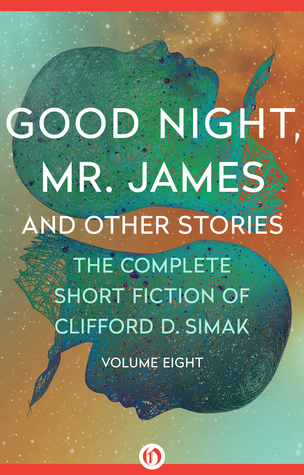
 Simak was a prodigious writer of science fiction during the middle of the twentieth century; he was the third Grand Master of the Science Fiction and Fantasy Writers of America, and won numerous other awards, among them the Nebula and multiple Hugo Awards. His short stories are being republished digitally, and as fast as Open Road Integrated Media can publish them, I snap them up, having already read two volumes; this is volume eight. Thanks go to ORIM and to Net Galley, from whom I received a DRC in exchange for this honest review.
There’s a special sort of satisfaction that comes from reading science fiction written during the era that followed World War II, and in seeing what technology science fiction writers imagined might be around the corner. Many times we read stories of passenger flights to other planets and galaxies, stories of mind control, and yet nobody ever imagined that one day we would each have a small telephone in our pocket that would double as a camera, wristwatch and telegram service. But the musings and imaginings of old school science fiction are just plain fun, and they don’t require the technical proficiency that some of today’s writers often require in order to read, understand, and enjoy the stories they produce. Sometimes a bit of philosophy and world view sneaks into these stories, and we may find kindred spirits in the most unlikely places.
The title story used to open this collection is a fun one, and the tension that accompanies Mr. James as he approaches the enclosure where he believes he’ll find the ‘puudly’, a creature from another world unwisely snuck into the present one, is almost unbearable. What follows on his journey home is absorbing as well. But this wasn’t my favorite story. There are two others I found even better, but first, let’s get this other news out of the way.
The bad news is that there is just a trace of the racist stereotyping common to white folk of this time period, but it’s limited to one story, and it’s scarce. If you read my reviews often, you know that if I see it, I call it out, and my tolerance level is much lower than that of most reviewers. It’s in one story which isn’t all that good anyway, and it pertains to Asians that are featured briefly. The story is “The Gunsmoke Drummer Sells a War”, and it’s a cowboy tale of the sort that was popular in the USA during the 1950’s. A man of Chinese origin is referred to as ‘The Chinaman’, and during his short tenure in the story, he is untrustworthy. He speaks in a “sing song” cadence. This story cost the book half a star, but it’s my view that you could buy this collection, skip this story, which is overlong and contains some less than stellar dialogue, and you’d still get your money’s worth. That’s all the bad news there is here.
“Reunion on Ganymede” made me tremble with mirth, nearly causing me to wake Mr. Computer, who slumbered peacefully beside me. In this story Gramps is dying to go to the reunion of veterans of a war that took place between the “Marshies” (Martians) and the “Earthies” . His family is trying to dissuade him from taking his flame gun with him. They tell him the weapon is too old to be trusted, but clearly it isn’t the gun, but rather the owner that they’re worried about. As developments take an unexpected turn, it becomes obvious that there are some things for which one just can’t plan. Eventually we see that Gramps and other characters unforeseen by his kinfolk are on a collision course, and what follows is pure poetry.
However, my very favorite story is “Kindergarten”. A man has bought a cabin and retreated to it; he’s been told he has a short time to live, and so he’s determined to do it in pastoral solitude. Imagine his surprise when he goes for a stroll one day and finds the mysterious machine on his property! It’s certainly not a saucer, yet it’s also not from Earth. It couldn’t be. And the whole thing unspools in a way I interpret as being subversive and delicious. Please note that the entire collection is edited and introduced by a close friend of the author’s, the latter having died in 1988. The editor’s spin on this story is completely different from my own, and yet knowing this didn’t make me enjoy it any less.
If you’ve had the pleasure of reading the We Install story collection, or Grotto of the Dancing Deer collection, you know what kind of prose Simak spins, and if you like old school science fiction, you almost have to like most or all of his. If you haven’t dipped a toe in the water yet, hop on in. Between this collection and at least nine others, there’s plenty to keep you reading happily for quite some time.
As a last note to teachers looking for suitable classroom stories, there’s no sex or foul language here, but be prepared to discuss or explain some of the slang of the period in question.
Highly recommended and available to the public now.
 This particular book is not in my wheelhouse, but I was offered a free copy in exchange for a fair and honest review, and the person doing the offering is a friend of the author’s and of mine. Thus, I found myself spiraling down the rabbit hole, reading about everything from Watergate to the connection between the Freemasons and the Mormons. This book is available to the public right now.
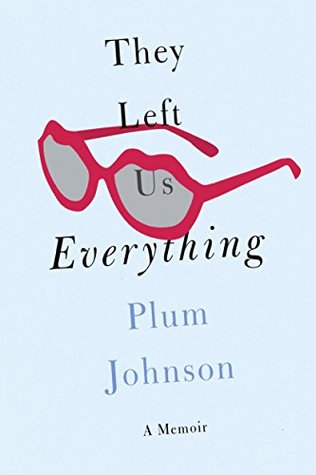 Plum Johnson is gathered, together with her siblings and other family members, at the family manse following the death of her mother. This memoir focuses on the things she’s learned and the insights she gains over the course of the year it takes to empty and sell the property. Thank you to Net Galley and Putnam Penguin for the DRC, which I received free in exchange for this honest review.
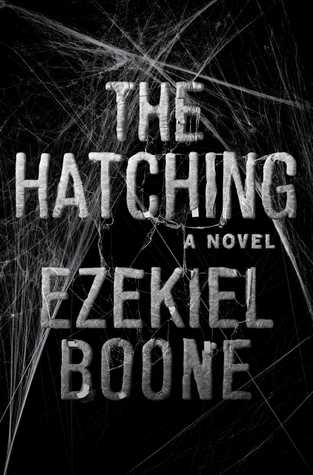 I was never afraid of spiders until I read this book. Thanks to Boone’s monstrous, boisterous, hair-raising new novel, I now eye the ceiling for wolf spiders that hunt at night just before I fall asleep…and I usually find one. I received this DRC in advance thanks to Net Galley and Atria Books, in exchange for this honest review. This book goes up for sale July 5, 2016 and frankly, I don’t know how you’re going to wait that long!
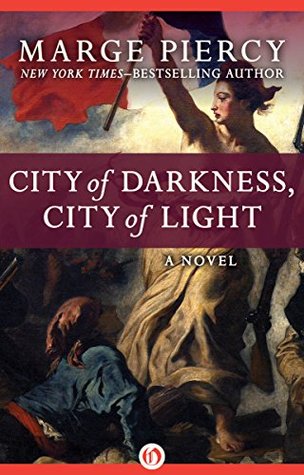 Piercy is a legend among feminists, and her writing was pivotal in my own development during the late 1970s and early 1980s as a newly-hatched adult. When this title, a novel based on the French Revolution, came out in 1996, I put it on my Christmas list and read it hungrily once I received it. When I noticed that it was released digitally this spring, I scored a digital copy from Open Road Integrated Media and Net Galley in exchange for this honest review. It’s a novel that is definitely worth reading twice.
 The Last Road Home, bold and impressive new fiction by Pushcart Prize nominee Danny Johnson, came to me free thanks to Net Galley and Kensington Books in exchange for an honest review. It tells the story of Raeford “Junebug” Hurley and his friendship with neighboring twins, Fancy and Lightning Stroud. Junebug is Caucasian; the twins are African-American, politely referred to during that time as ‘colored’ or ‘Negro’. The story is set during the Civil Rights movement of the early 1960’s, but in rural North Carolina, the Klan stands tall and strong and absolutely nothing has changed in terms of race relations. Junebug finds himself riding on the fence rail from hell. This fascinating tale will be available to the public in late July. Those that love good historical fiction should read it.
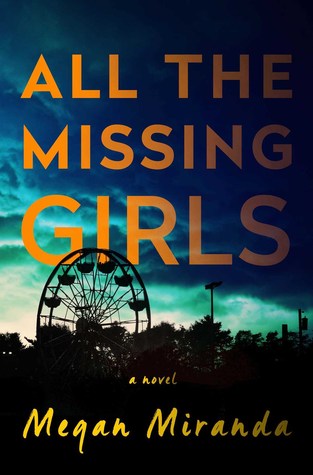 I was invited to read by Net Galley and Simon and Schuster in exchange for an honest review, and I am so glad I did. It’s a juicy read that kept me transfixed through most of my Memorial Day weekend. You can order your copy now and have it when it comes out June 28.
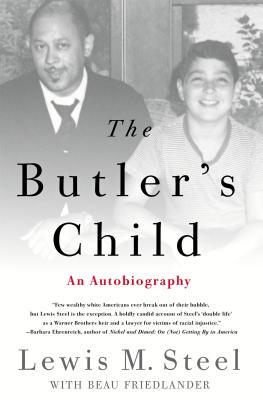 Lewis M. Steel has a long, noteworthy career as a civil rights attorney. He was an observer during the Attica Prison riots; worked for the NAACP during the Civil Rights movement, and later defended boxer Hurricane Carter against a frame-up charge of murder. And I was permitted to read this story free and in advance, thanks to Net Galley and St. Martin’s Press in exchange for this honest review. I rate it 3.5 stars and round upwards; it is now available to the public.
 Isabella Leitner was a Holocaust survivor, and she scribed her memoir using brief entries similar to a diary in format. The length is just 120 pages, about the size of a novella. I was asked to read and review this memoir free of charge before it was released digitally. Thanks go to Net Galley and Open Road Integrated Media for the invitation. This title was just released, so it is available now for purchase.
 Fearless women change history.
 Seattle Book Mama