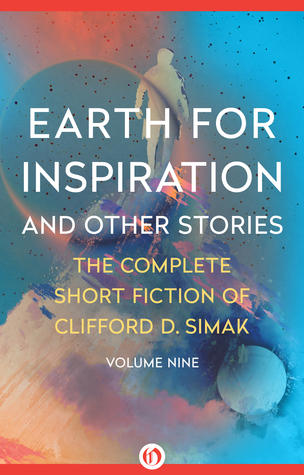
 Clifford D. Simak wrote for decades during the mid-twentieth century. His close friend, David W. Wixon, has undertaken, with Simak’s approval in his declining years, to collect all of the stories that were published in various magazines and anthologies beginning in the 1930’s and ending before the digital age was off the ground. This one is volume 9, and it’s an interesting hodgepodge of the very best—which is most of it—and the very worst, which is just two stories. Needless to say, I thought a lot about how I should rate such a collection.
Finally, I decided that price would be the deciding factor. If it was going to set you back twenty or thirty bucks, then I’d have to cut it down the middle and call it three stars, which would be sad but fair. However, I logged onto the big A and found it’s sold digitally for six bucks. At this price, you’re paying a buck each for six absolutely stellar short stories; there are three more good ones thrown in; and you can afford to skip the two stinkers. Given that factor, I’m rating this 4.5 stars, with just half a star gone for the two missable stories, which I’ll talk about in a moment.
Thank you Net Galley and Open Road Media for the DRC, the fifth Simak collection I have received from them. I sat on this one for a long time because I’d been reading a lot of his work, and was beginning to get grumpy at the similarities among some of them. Just how many different characters can a writer name “Doc” and remain credible? But then I realized that when Simak submitted his stories to various periodicals, names were about the least important aspect of his work, because he wrote them never dreaming that his writing would be important enough to appear in an entire series, back to back. Who knew he would become so successful?
During the 1940s and 1950s, as Wixon points out, science fiction was barely off the ground—pun intended—and Westerns were massively in style. I guess you could say they were the zombie apocalypse of their time; if a writer wanted to pay his rent without having to work a day job, he had to write some westerns. And since Wixon is publishing all of Simak’s stories rather than the best-of, he has to insert the few losers somewhere also.
So let’s just get the bad stuff over with so I can tell you what’s great here. The bad ones are sandwiched midway through the collection and appropriately flanked by good writing before and after. “Hellhound of the Cosmos” is bad enough that Wixon’s preface—a brief paragraph appearing before each story—says he “…will not try to excuse this story’s failings” by pointing out that Simak wrote it in 1931, at the very get-go of his career. Fine; don’t. But it’s a really dumb story, and I’d hate to see you use it as a yardstick by which to measure this man, who would become a Grand Master of sci fi. Read it or skip it, but this is not the story I recommend.
Further along we have “Good Nesters Are Dead Nesters”. This one is actively offensive, and if it were written today, I might well shoot down the entire collection because of it. But I know from the things I heard during my childhood that the language used here, while truly offensive, was also commonplace back then. The US was a lot whiter; the interstate was a new thing; satellite communication wasn’t yet dreamed of. People lived in isolated areas and got stupid ideas about what other people were like, largely due to stereotypes promoted in the news, on radio, and on black and white television.
So although I—married to an Asian immigrant—am as pissed as anyone about the singsong caricature of the Chinese cook, I also know this was a widely accepted way to regard people from China and Japan. As if that’s not terrible enough, a disabled person is referred to as a helpless, “twisted cripple”. Ohhh, no thank you. As you can imagine, I quickly gave myself permission to make a note and then skim till I reached the next story.
However, the stories that flank the collection, starting with the title story and ending with “Full Cycle”, are outstanding. The latter is written in the 1950s, and reflects both the reality of a pair of Atomic bombs having been dropped in Japan eleven years before it was written, as well as the anti-communist hysteria so prevalent in the news. The idea is that all cities are decentralized, because a bomb might be dropped on a large urban center, but the USA is a very big place, and so small, mobile communities, all of them having traded their houses for trailers, is now the way Americans live. It’s very cleverly put together conceptually, and Amby, the protagonist, is so well drawn that at times, I wanted to weep for him.
“Honorable Opponent” has to do with a US planetary colony that has just been defeated by another planet’s military. The result took me entirely by surprise, and I think I’ll remember this story after I’ve read other science fiction by other authors. The same is true of “Carbon Copy”, a fine tale combining science fiction, ruthless capitalism, and brilliant imagination. “Desertion” is another stellar story. If you want to read science fiction that makes your dreams sweet, read this one at bedtime. “Golden Bugs” is equally clever.
So for the price you pay, there is too much good writing here to turn your back on. My records tell me that over time I have read over 100 short story collections, which is about 90 more than I ever expected to read, and yet this one is outstanding among them. For those that love old school science fiction, this one, with the caveats mentioned, is highly recommended, and it’s available now.



 Amy Engel makes her debut as a writer of adult fiction with this title, having begun her career writing fiction for young adults. The Roanoke Girls is smoking hot, a barn burner of a book, diving into some of society’s deepest taboos and yanking them from the shadows into the bright rays of Kansas sunshine, where the story is set, for us to have a look at them. It’s not available to the public until March 7, 2017, and frankly I don’t know how you are going to wait that long. I received a DRC for this title from Net Galley and Crown Publishing for the purpose of a review.


 I received an advance reader’s copy of this darkly amusing novel from Net Galley and Atria Books. It’s funny as hell, and even more amusing to teachers, school counselors, and others that have dealt with high maintenance parents and the aura of entitlement they carry with them. I rate this title 4.5 stars and round upward. It comes out December 27, 2016, just in time to chase away your post-holiday depression.
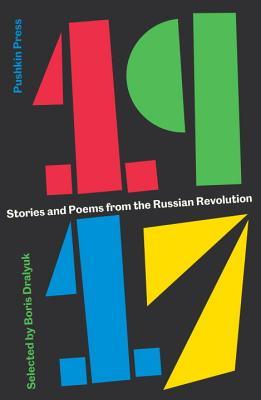 I received my DRC for this collection courtesy of Net Galley and Pushkin Press. I thank them for the opportunity to read and review; this compilation of poetry and prose will be for sale on December 1, 2016. What a crying shame it’s so negative.
 Fannie Flagg is legendary, and rightly so. In fact, at one point in my reading of this DRC, I reflected that someone with her power to move people has power indeed; how fortunate that she uses her gift to benefit the rest of us. I don’t know about you, but I am ready to read something that provides a level of reassurance that all has not gone sour in this world, and that everything passes, sooner or later. I was fortunate to read this free and in advance thanks to Random House and Net Galley, but it’s one of the very few books for which I’d have paid full freight if it came down to it. It hits the shelves November 29 and is available for pre-order right now.
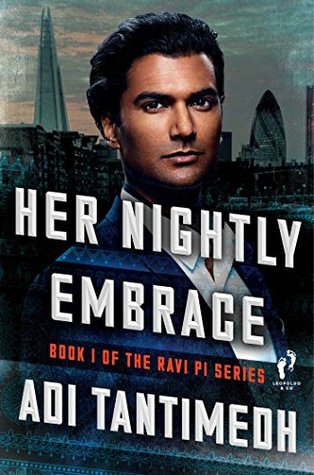 I was invited to read and review this title by Net Galley and Atria Books. I thank them for the opportunity. The first two chapters showed signs of promise, but in the end, this book is poorly written and for most, it will also be offensive. I can’t recommend this title. That said, it’s about to become a television program, so perhaps you will enjoy it more than I do. But I have to call them as I see them, and if they give this writer a host of awards, I will still say this book is worth one star and nothing else.
 Note to the reader: I originally posted this when my blog was just a few months old, and I was still struggling with basic issues, such as how to insert the book cover into the text. Now the holiday season is here again, and I am running my review–with some basic technical adjustments–one more time, because in the past two years, I haven’t found a Christmas book I like better than this one. It’s the only book I’ve found since I’ve been writing reviews that I found worth actually buying not just one but two copies at full price to give as gifts. For those that love Christmas stories and mysteries, this one’s for you!
 Seattle Book Mama