
Social Creature, by Tara Isabella Burton*****

socialcreature“Chop chop, Cinderella.”

Here it is, a story of our time.  Lavinia is spoiled and wealthy; Louise is newly arrived in New York City, and apart from her rent-stabilized apartment and a handful of part time jobs, she has nothing. Wealth and want collide and as Louise is swept up into Lavinia’s world—not to mention her Facebook and Instagram pages—the tension mounts. We know that Lavinia is going to die soon, but we don’t know how or why, and of course we wonder what will become of Louise once that happens. Burton’s story unfolds with sass and swagger, and you want to read this book, which is for sale today.  Get it. My thanks go to Net Galley and Doubleday for the review copy, which I read free in exchange for this honest review.

More than anything, Louise wants to become a writer. She has tremendous talent, but between three part time jobs and Lavinia’s endless and unreasonable demands, she has no time for it. Lavinia wants to party, and she’s generous at times, furnishing Louise with expensive dresses, high-end trips to the beauty salon, and eventually, housing. In exchange, she more or less owns Louise.

Louise moves in with Lavinia, but Lavinia has the only key.

Perhaps even more alluring to Louise are Lavinia’s seemingly endless connections to the literary movers and shakers in New York.  Lavinia, you see, has had time to write a book, and she’s done it. It’s terrible, but Louise cannot say as much. She has too damn much to lose.

Burton’s voice is like no one I have ever read, and in some ways the comparisons that have been made to well known writers are unfortunate, because her work is wholly original. The thing I love best about this story is that nothing is overstated. The narrative takes off hell-bent-for-leather, and the reader has to follow closely to find out the basic ground-level information about both both women. It’s as if we have landed as invisible companions in the middle of a party, and we have to hit the ground running, exactly as Louise has had to do.

This is risky writing. The first half has very little plot and little action; its success hinges entirely upon its characters. Burton carries it off brilliantly, with genius pacing and the disciplined use of repetition as a literary device.  This is a novel that should take all of us by storm, but failing that, it has all the makings of an amazing cult classic.

This is cutting edge fiction, written by the most unlikely of theologians. I highly recommend it, even if you have to pay full jacket price.

Us Against You, by Fredrik Backman****

“The first time Peter realized that the tiny person was sleeping soundly in his arms. What are we prepared to do for our children at that moment? What aren’t we prepared to do?”

UsAgainstYouUs Against You is the second in book in the Beartown trilogy. My thanks go to Net Galley and Atria for the invitation to read and review. This book will be available to the public tomorrow.

Beartown is in crisis. The hockey team has been undone by the arrest of their star player for rape, and Maya, his victim, has been harassed endlessly as if she were the perpetrator. Resentments simmer. There are anonymous callers. A new coach is hired, not only a woman—but a lesbian. Chins wag. New owners roll into town, friendly and treacherous, generous and oily. Violence hums beneath the surface as the town polarizes between the hometown hockey team and that in the neighboring town, to which some Beartown citizens have decamped.

Fredrik Backman, who is possibly the finest male feminist novelist in the world, is on a roll here. It’s interesting to note that although the hockey players in this story are men and boys, the best developed, most complex characters are the women. I like reading about Peter, Leo, Amat, Benji, and Teemu, but the characters that keep me coming back are Kira and Maya, Ana and Ramona. More than anything I want Kira to pack her bags and seize the opportunities presented to her, with or without Peter. Just go, woman, go. But it’s always easy to suggest that someone else should leave a troubled marriage behind, and the way that she deals with this problem—and the role that her daughter plays in the decision—is thought-provoking.

Meanwhile there are about a dozen other small threads here, and again, Backman is among the best writers when it comes to developing a large cast of town members without dropping anyone’s story or letting the pace flag. His use of repetition as figurative language is brilliant, and he is unquestionably the king of the literary head fake. If I taught creative writing to adults, I would assign my students to read his work.

I have some relatively minor quibbles here, although I know so little of Swedish culture that they may or may not be valid within that framework. I would dial the sentimentality and drama down twenty to twenty-five percent; clearly most readers love this aspect of these novels, but I would argue for a smidge more subtlety. There are occasional exaggerations that remind me that the characters are fictional. When the entire town is economically depressed, and yet everyone shows support for something by showing up in matching jackets, and when a preposterous amount of spare change goes begging in the kitty at the local bar, I wince. But then I am quickly drawn back in by the complex, compelling characterizations.

If you’re a fan of Backman’s, you won’t be disappointed. If you have never read his work before, don’t start here. Read one of his excellent stand-alone novels, or begin with Beartown, the first in this series. Recommended to those that love fiction that features excellent, complex characters, particularly female characters.

The Creole Debate, by John H. McWhorter****

thecreoledeThanks go to Net Galley and Cambridge University Press for the review copy. I am reviewing this title because accepting the galley created an obligation on my part, but these are deep waters, and I found myself thrashing around in them searching for the shoreline.

Since retirement, I have sought to stretch myself by stepping out of my own comfort zone, veering away from the types of fiction that I have always enjoyed, and from the historical and other nonfiction titles that dovetailed with my work. In doing so, I have often been rewarded. Sometimes I learn things, and a couple of times I have discovered that I enjoy a genre that I had never even explored before. Taking risks can be a good thing.

Then there are situations like this one. This one is just embarrassing. Take my rating with a grain of salt, readers, because for the most part, I have no clue what is in here or whether McWhorter has proven his point. I was able to figure out what the debate is about: some linguists claim that Creole speech is a dialect created from other languages (and if I’m wrong about that–it occurs to me that my review may attract the attention of actual linguists–tell me so, but be gentle here, because I am doing my best.) The thesis presented is that Creole is a legitimate language unto itself, and the writer delves into the history of its evolution in order to prove its independent development.

Is he right? Is he incorrect? Hell if I know.

Generally I appreciate reading specialized texts (in the humanities, where I am usually at ease) that don’t dumb things down for the reader and that assume some facts are understood in order to move forward. And one might expect nothing less from a Cambridge publication. But there are enough terms used that are technical and specialized for use by linguists, and there is enough prior knowledge assumed here as well, that I soon realize I am in over my head. A Google search isn’t going to cut it here.

What I did pick up by noting the descriptive terms and phrasing is that this is a red-hot debate, one that excites a certain amount of passion and perhaps even creates lifelong grudges among scholars in the field.

So forgive me, linguists, because I know not what I do here. This may be a five star book, at least for linguists that can understand what’s being said; or perhaps the case is poorly made and it’s less than the four stars given here. Four stars is my default for a book that is good but not stellar, and since I don’t understand enough of the argument the author makes here to provide a valid, fair rating and am nevertheless required to rate the book, my default of 4 stars is the port in which I will rest, in my lifeboat, until I can find the courage to wobble onto the shore.

Recommended for those that are confident as linguists, and that are interested in the discussion.

Robin, by Dave Itzkoff*****

robinWhere were you when you heard that Robin Williams had died?
I was so stunned and grieved at this loss that I honestly wondered if something was wrong with me. I had admired Williams since Mork “uncorked” in the late 1970s, and for decades I enjoyed his work, but after all, he was a complete stranger. I had never met him; why did my heart drop to my toes and stay there for a while when he left us? But as the internet exploded and friends also responded, I understood that it wasn’t just me. He was so raw, so vulnerable in so much of what he did on screen that he became, in a way unlike most entertainers, a part of who we were.

Huge thanks go to Net Galley and Henry Holt for the review copy. This book is for sale now.

Williams grew up in a well-to-do family, an only child that didn’t learn he had half-brothers till adolescence. His invented characters began in private during childhood with his large collection of toy soldiers, for which he invented complex lives and scenarios; in middle school he began assuming the voices of invented characters as self-defense socially. From his school days all the way through his life, those that spent time with him personally or professionally said that he was unknowable, and he admitted in an interview that in many ways, he was “performing to avoid.”

But none of us knew that when he burst onto the airwaves; all we knew was that this actor was manic, hilarious, audacious, insightful, and unpredictable. Itzkoff deftly segues in and through each period in Williams’ life, through his marriages, parenthood, and friendships, and of course, through the enormous body of artistic work that he amassed over his lifetime. There are perceptive quotes by those that knew him, some wry, some surprisingly hostile, and many of them pithy, and it boggles the imagination to consider how many of these the author began with before he whittled them down to just the right size and number, to provide as complete an account as is possible without allowing the pace to flag.

Here is one favorite clip taken during Robin’s early career:

Some of my favorite sections of the book share behind-the-scenes vignettes from the Robin Williams movies I most enjoyed. One interesting anecdote concerns the making of Dead Poets Society. Disney deemed the title to be too risky; nobody wants to watch something dead, they figured, and so why not change the title to “The Amazing Mr. Keating”? Robin and other cast members laughed; the producers laughed; then they told the Disney people that production would stop immediately if such an attempt were made.

Although usually even well-known movie actors have to audition for Disney animation voice roles just like anyone else would, an exception of great proportions was made for Williams, and in fact, the role of the genie in Aladdin was written for him specifically. Try to imagine that movie without him. Impossible!

I tore voraciously through this absorbing biography of this truly brilliant performer, but as the end neared, the pace of my reading slowed, because I knew, more or less, how it would end. I would have liked the chance to change it, but nobody can do that. It’s a sad, rotten thing to see such a bright star fall so tragically.

Itzkoff’s sources are strong ones, and his tone is intimate without being prurient, affectionate but not fawning. I would read this biographer’s work again in a heartbeat.

Highly recommended.

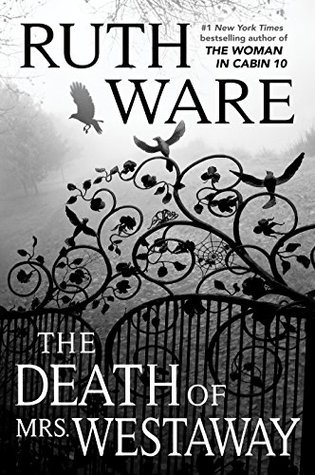
The Death of Mrs. Westaway, by Ruth Ware****

thedeathofmrsw“How could one family, one person, have so much?”
Hal’s mother dies, leaving her nothing but a cheap rented apartment, a deck of tarot cards, and endless sorrow. She is perplexed but slightly hopeful then, when she receives a note from an attorney indicating she has inherited money; it’s got to be a mistake, but she sure can use it. Why not see where it leads?

My thanks go to Net Galley and Simon and Schuster for the DRC, which I received free and early in exchange for this honest review.

Ware writes in a classic style that’s been compared to Agatha Christie. The traditional elements are there: a menacing old house with a creepy housekeeper; a fortune, complete with competing would-be heirs; an ambiguous old photograph; sinister strangers; a nasty winter storm that prevents escape. In less capable hands it might feel generic, but Ware provides some clever twists that update the old-school model, making for an absorbing read.

My practical side inserts itself, and I find myself wondering—if she feels intimidated by the family, can’t she find an attorney to handle this mess for her at a distance, given what’s waiting at the back end of the transaction? And when she returns to the spooky old house with nothing resolved yet, her stomach in her boots, quivering, I want to say—in all that great manse, surely she can find a different bedroom, one without bars on the windows and locks on the outside of the door. Why be bullied by an 80-year-old housekeeper? Find a different room and claim it, for heaven’s sake. Clean it and put the sheets on yourself if it comes down to it.

But if Hal followed my advice, the story would be no fun at all, so it’s just as well she cannot hear me.

Ruth Ware writes like nobody else, and those that have read her work before know how addictive it is. The more pages I turned, the more I wanted to turn. Mystery lovers and Ware’s fans will want this book right away; turn on all the lights and lock the doors and windows before you dive in. Trust me!

This book is for sale now.

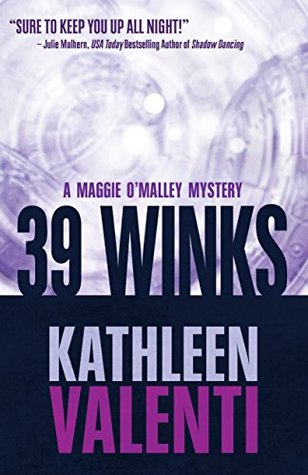
39 Winks, by Kathleen Valenti****

39winksValenti’s droll new series continues, with Maggie O’Malley and her hunky boyfriend, Constantine riding in to rescue his beloved Aunt Polly. Those that read Protocol, the series opener, know that Valenti writes with swagger, often with tongue in cheek. Thanks go to Net Galley and Henery Press for the DRC, which I received free and early in exchange for this honest review. This title is now for sale.

What would induce a woman to walk away from her job in order to play amateur sleuth? Maggie wouldn’t know. She is currently unemployed. Her career with Big Pharma tanked after she turned whistle-blower, and now she’s been sacked from her position as a retail sales clerk. Damn. But it’s just as well in a way, because Constantine’s Aunt Polly served as “the woman who fit the mother-shaped hole in her life,” and she needs Maggie’s help. She’s in declining health—Parkinson’s? Alzheimer’s? Bad air, bad water, poisoned food, poison gas? And following the murder of her husband, Howard, who even Polly acknowledges “was a bit of an ass”, Polly is under investigation, a favorite suspect since she is the surviving spouse of an unhappy marriage.

Valenti’s feminist spirit could not be more welcome than it is today, and her dialogue crackles. This is a fast read, part satire, part suspense, and I love the banter that unfolds between Polly and Constantine, reminiscent of the snappy patter of Cybill Shepherd and Bruce Willis in the 1980s TV show “Moonlighting” (which actually draws a mention toward the story’s conclusion).

Take Maggie O’Malley on vacation with you. It will be better with her than without her. Try not to wake the passenger snoozing next to you on the plane with your snickering, though—unless you’re bringing a second copy to share.

A Brotherhood of Spies, by Monte Reel****

BrotherhoodSpies3.5 stars rounded up. Thanks go to Net Galley and Doubleday for the DRC, which I received free and early in exchange for this honest review.
The story begins with a US spy plane being shot down over Soviet (Russian) airspace in 1960. This is embarrassing. Eisenhower’s people decide to make something up; after all, nobody survives an airplane crash over dry land. Moreover, the pilot was provided with a cyanide capsule—James Bond style—so even if he survived, he must be dead; likewise, the plane was likely blown to bits, with not much left for the Soviet investigators to learn.

Let’s say it was a weather plane. It wandered off course, and those mean Soviets shot it down.

But oh dear, this is even more embarrassing: the pilot lived, and he didn’t feel like taking the poison pill. Would you?  So the Russians know what he was flying, and they know who he is. They’re telling the world.

Just reading the teaser for this book, I was hooked. But just as a brilliant writer can take dross and make a good tale of it, so can an indifferent one take compelling information and make it into a snooze. For me, this was not an entertaining read. I had agreed to write about it, so I had to read it, and it felt like work.

I want to be fair here: there are people that will read this book and like it. There’s a lot of technical information about the spy plane, and about many other spy planes, some of which were never built. Apart from the truly bizarre one that was supposed to be landed on its belly (no landing gear), or the ridiculous idea of a nuclear powered plane, I found my attention drifting during these descriptions. But I am not interested in aviation, and if you are, you may like this.

The other aspect that causes my attention to wander is the history 101 aspect of it. I’m a retired history teacher. I don’t need an author to walk me through the Cuban Missile Crisis or the Bay of Pigs. However, I note that other reviewers came to this work with no knowledge of either, and they are delighted to be clued in. For newbies, count this as a win.

Finally, I have to credit the source work. Reel didn’t take the easy way out. His end notes are first rate.

For those that are relatively new to this chapter of American history, this may be a compelling read. For those interested in the history of American aviation, it is recommended. For those that are well read in the field, maybe not.

This book is now for sale.

In It for the Money, by David Burnsworth***

InItfortheMoneyHere’s the thing that makes this title so difficult to review. It has tremendous strengths–strong concept, engaging protagonist, fearless prose. I like his animal sidekicks, Dink and Doofus. Crome is one of the finest sidekick characters I’ve seen in a mystery.
Thanks go to Henery Press and Net Galley for the DRC, which I received free and early in exchange for this honest review.

On the other hand, there are some serious issues with pacing, which is clearly uneven, and also some of the worst grammar disasters I have ever come across in prose written by an adult. “Had brang” comes to mind, but they are legion. I wanted to ignore this aspect, given that it’s a galley, but I’ve seen hundreds of them, and yet nothing that isn’t self-published has grammar this awful. The result is a deeply frustrating read.

What I suspect is that this could be a terrific series given the services of a high profile editor.

The Lost Indictment of Robert E. Lee, by John Reeves*****

LostIndictmentRobtELeeI’ve never understood why so many Americans revere the memory of Robert E. Lee, the general that turned Lincoln away at the outbreak of the American Civil War and instead commanded the treasonous Army of Northern Virginia. When I saw this title, I leapt at the chance to read and review it. Thanks go to Net Galley and Rowman and Littlefield Publishers for the DRC. The book will be available to the public June 1, 2018.
Before reading this book I wasn’t even aware that an indictment had ever been issued. This is particularly odd given that a good part of my teaching career involved teaching American history and government. I even wondered, before opening it, whether this indictment would be metaphor; no indeed. Reeves did a lot of digging in order to write this book, and that’s what makes it worth having. His sources are ones that I cannot find myself through a quick Google search or a trip to the library or bookstore. Reeves  uses sources that require traveling hither and yon in order to access special collections that libraries won’t check out to anybody ever, that’s proof that this writer had done the legwork.

Back to the indictment. Following the end of the war and the death of Lincoln, the North—contrary to mythological retellings—clamored for retribution. Let’s all be brothers and have peace? Oh hell no. Who had not lost a brother, a son, a husband to this terrible conflict? And President Andrew Johnson, working hand-in-glove with the passionate abolitionist, Judge Underwood, set out to “make treason odious.” At a bare minimum, Lee, Jefferson Davis, and the members of the Confederate cabinet most closely linked to the war itself needed a day in court. Afterward, they needed to either hang, or rot in prison for a goodly while. So the thinking went.

As usual, the devil was in the details. Why is it so difficult for government to move swiftly? A lot of terrible decisions were made here, the most noteworthy being to try these men in a civilian court rather than in a military tribunal. Too late they realized that Lee must then be tried by a jury of his peers in Virginia. This would have been disastrous, since Lee was regarded by most Caucasian Virginians as a hero, much the way we now look at Lincoln. After all, when the war broke out, most antiwar or antislavery advocates had to move North in fear of their physical safety, and only the diehard Dixie whistlers remained, so a fair and impartial jury in Virginia was a nonstarter. What could possibly be worse than letting Lee off scot-free? What would be worse would be for him to be exonerated.

Added into the stew was a heap of political scandal and the unraveling of Johnson’s presidency, and the tarnishing of Underwood’s reputation, a man controversial from the get-go.  At the end of the day they were too busy salvaging themselves to bring these men to justice.

I find some measure of comfort in the knowledge that Arlington, the huge, fancy estate that had been passed down to Lee’s wife and of which he never stopped bragging, as if property ownership and family history made his family American royalty, was expropriated by the Union, and its extensive grounds became Arlington National Cemetery. After Lee’s death, there was considerable talk among the public suggesting that the widow Lee should get her old house back; however, she overstepped when imperiously telling Congress that she also wanted the remains of all those poor boys dug up and interred some other place. There was almost nothing she could have said or done to lose the sympathy vote more quickly.

This excellent book is highly recommended to those that are interested in the American Civil War and its aftermath.

The Island Dwellers, by Jen Silverman*****

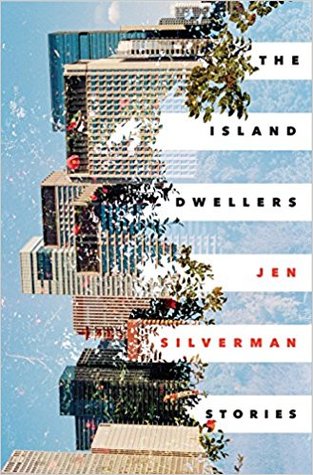
TheIslandDwellersJen Silverman is a playwright with a list of awards as long as your arm. With this impressive collection of short stories, she steps into the world of prose with guns a-blazing. Thanks go to Net Galley and Random House for the DRC, which I received free and early in exchange for this honest review. This book is now for sale.

Silverman’s contemporary fiction is themed, as the title suggests, around people that live on islands in various parts of the world. Everything here is edgy and a little bit dark. Her characters are melancholy, naïve, neurotic, bent, and at times laugh-out-loud funny; she doesn’t leave her endings—or her readers—hanging, and I didn’t successfully predict the way any of her stories would turn out. We have destructive relationships; relationships that are hellishly unequal; artists that aren’t really; strange, strange animals—oh, hell, that Japanese pit viper! But the thing that ties these tales together, apart from the theme, is deft, tight writing.

Anyone planning a vacation should pack this title, whether in paper or digitally. Short stories are terrific for bed time and when traveling, because the end of each story gives the reader a reasonable place to pause even when the prose is masterfully rendered, as it is here. This volume was released May 1, 2018 and is highly recommended.