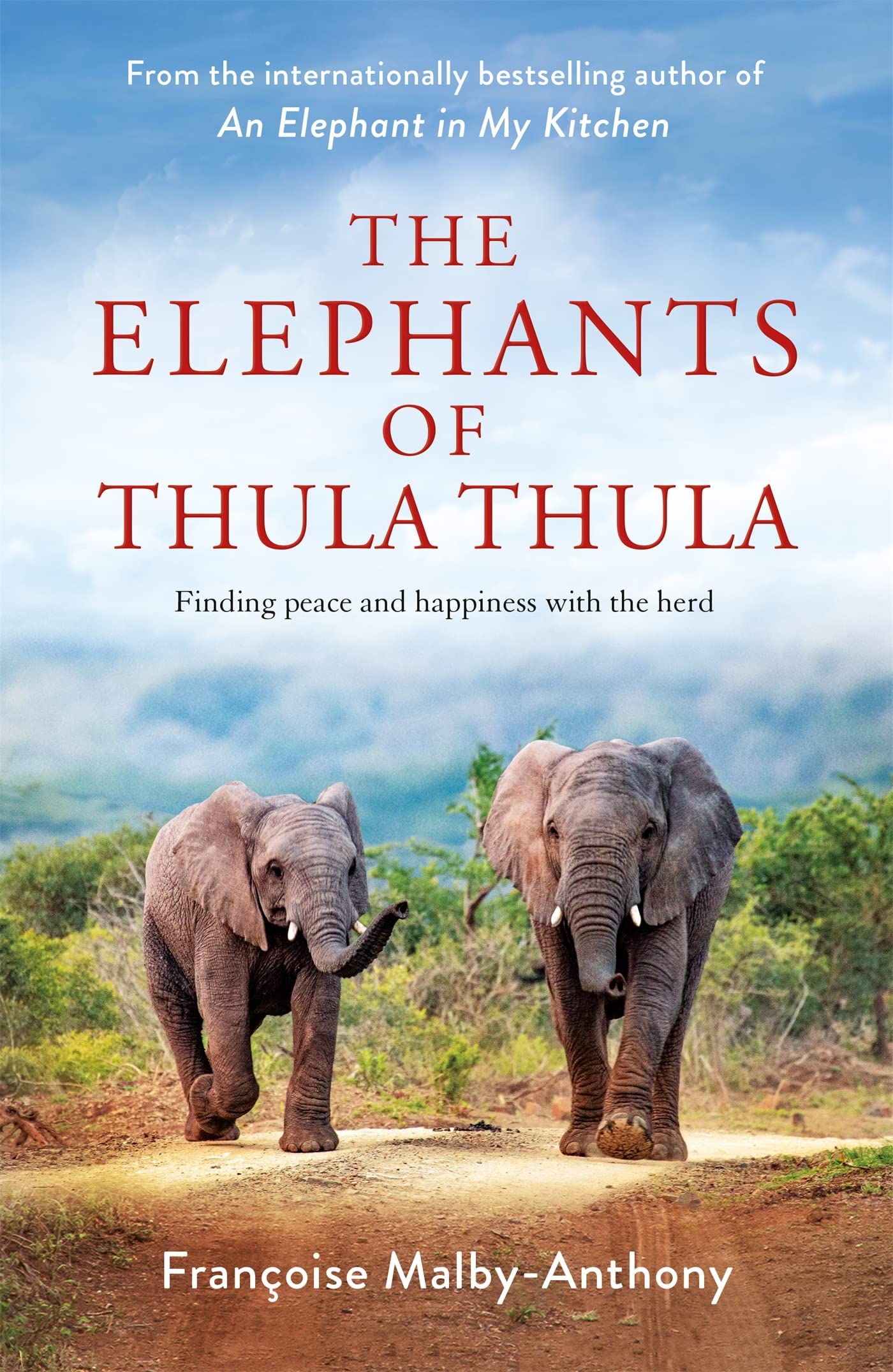
The Elephants of Thula-Thula, by Francoise Malby-Anthony****

Francoise Malby-Anthony is an established author and the owner of a game reserve in South Africa. Although she’s written previous books about this reserve, The Elephants of Thula-Thula is the first of her books that I’ve read. My thanks go to Net Galley and Macmillan Audio for the review copy; this book is for sale now.
As I begin listening to the audiobook, I am not sure I like it much. After a brief passage about elephants, the author segues into a longer piece about rhinos and by the time she admits that the rhinos are her favorites, I mutter, “No kidding!” There are other passages in which she gushes about the refuge’s well-heeled but generous donors, and I’m beginning to feel as if this is the sort of book that people will buy because the refuge is a good cause, but nobody will actually learn anything or even enjoy it much.

About halfway in, though, I have a change of heart. The second half is much better than the first. She discusses throughout the book the challenges posed to the refuge by the pandemic, and she talks about the measures taken to remain solvent while also keeping her employees whole. There is actually more talk about elephants now. I confess I am jarred by the moment when a favorite animal dies (no spoilers) and she tells us that this is the worst grief of her entire life. She says this not too long after explaining that the reserve’s founder, her husband, has recently died, and so my head snaps up when the tells us that the loss of the animal is the worst. I am chalking it up to hyperbole, but if I were the editor, I’d suggest a rewording.

Nevertheless, there are wonderful anecdotes about the elephants, and of course the rhinos, as well as the addition of a cheetah. She discusses baboons—I’d never fully realized how scary they can be—and I enjoyed hearing about how one goes about moving a giraffe to another location. There’s a lot more about elephants in the second half, and she discusses the threat to the herd when some bureaucrats add up the acreage and decide that there are too many elephants here, and some must be either moved out or “culled” (which means, of course, killed!) The reserve is expanded, but it takes a whole lot of jockeying and maneuvering to carry it off.

Readers that have enjoyed Malby-Anthony’s earlier books, or that have a strong interest in wildlife preserves may enjoy this book greatly, and it is to them that I recommend it.

Collateral Damage, by J.A. Jance****

Collateral Damage is the 17th book in the Ali Reynolds mystery series by J.A. Jance. My thanks go to Net Galley and Gallery Books for the review copy; this book is for sale now.

As fans of the series know, Ali is married to B. Simpson, and together they run a small but increasingly prominent cybersecurity firm called High Noon, appropriately named given their Arizona home base. In this installment, B. is on his way to the airport when he’s run off the road. He and the man driving him are badly injured, and the police take the lazy way out, assuming that Ali is behind the crime. Who could better benefit from his death? The business is worth a lot of money, not to mention B’s fat life insurance policy. Soon Ali and her trusted High Noon employees investigate, assisted once more by Frigg, the nearly sentient AI that can go where no one is supposed to go, and find out things that aren’t legally obtainable.

Jance is a veteran mystery writer, and she’s produced bestselling novels for decades. This time around, the novel is better than what most authors can do on their best days, and yet it’s not Jance’s most riveting story. The pacing is on the sedate side, and it’s not until we are well and truly at the climax that it feels urgent. I suspect this is because the story’s protagonist, Ali, and the other repeating characters that I have enjoyed so much over the past few years are sidelined here. Once Frigg ferrets out the critical information that suggests that the crime is the work of a longtime serial killer, Ali provides the cops whose unsolved cases are involved, and we mostly follow them, alternately with the baddie.

A side note, but one worth mentioning: Jance has a couple of long-running series that are set in Arizona, and there have been times when I’ve reported that I dislike the tinge of stereotyping that I have seen in the way her Latinx and Black side characters are depicted. I feel as if she’s turned that around here, and having registered complaints in the past, it’s only fair to recognize that this time, she’s done well.

Fans of the series will want to read this in order to enjoy continuity between the last, Unfinished Business, and whatever she writes next. For new readers, I advise beginning the series with number 11, Clawback. Going back to the first entry—which of course, you can do—requires reading the series before it develops into a strong vehicle. If you start the series here instead, you will have the information you need to move forward, and the quality is as uniformly excellent as any other series I have read.

I recommend this book to Jance’s readers, and I recommend it to new readers as suggested above.

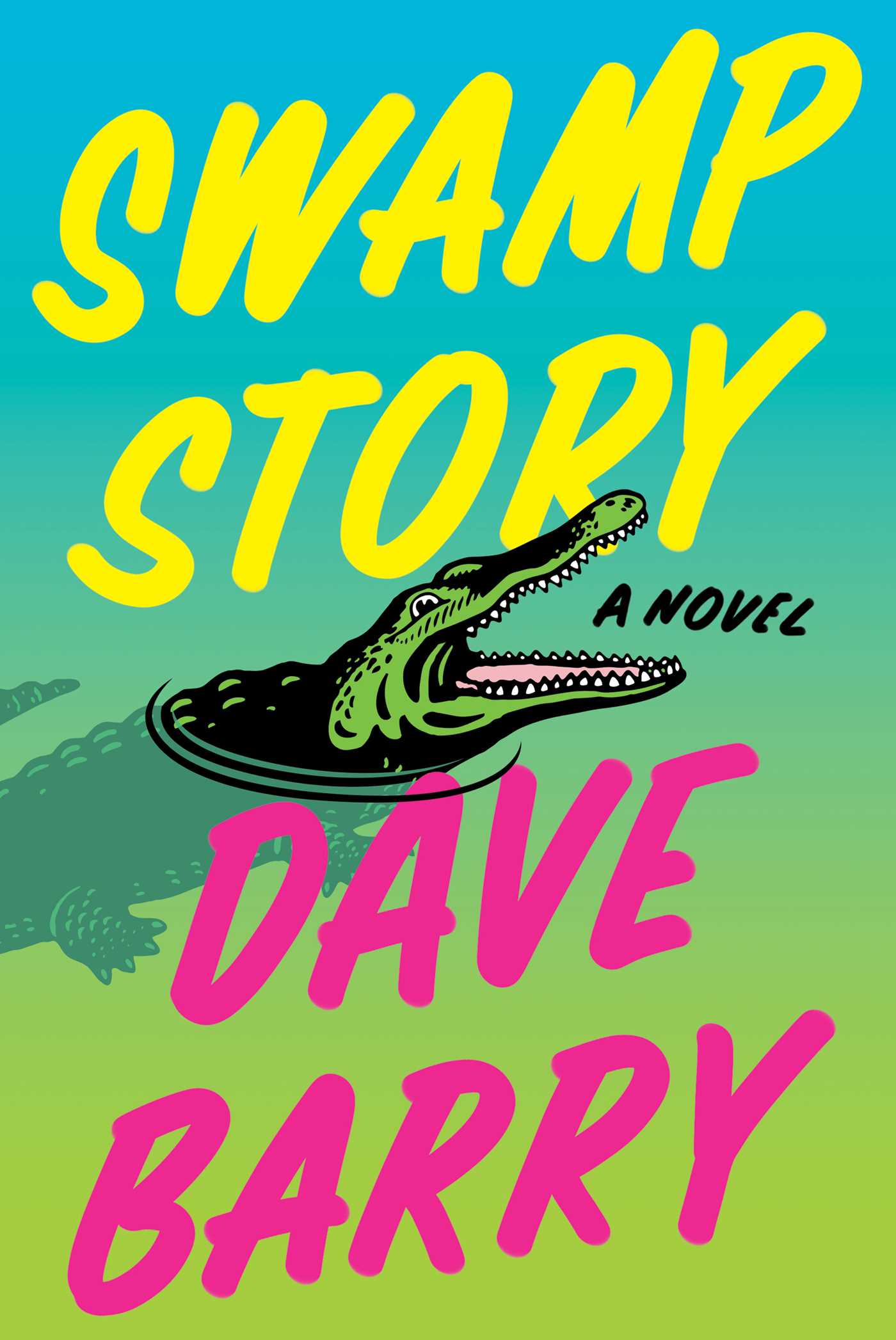
Swamp Story, by Dave Barry*****

Dave Barry’s new novel, Swamp Story, should come with a warning label: Danger. Do not read in area where explosive laughter is not permitted. Fans of Barry’s will be pleased to hear that this is possibly the best thing he’s ever written. Readers new to Barry will want to read more. This book will be available to the public May 2, 2023.

My thanks go to Net Galley and Simon and Schuster for the invitation to read and review.

Our protagonist is Jesse, a lovely person that has made a huge mistake. She feel hard for Slater, a young man with a smokin’ hot body, a limited brain, and a solipsistic world view. Now she’s stuck in a cabin in the Everglades with him and his camera wielding buddy Kark, and oh yes—their baby, Willa; not to mention all of the flora and fauna that live here:

“Kark! You need to get this!”

“What?” said a voice, as hoarse as Slater’s, maybe hoarser.

“Big fucking snake,” said Slater. “I mean big.”

The snake slid forward another two feet, directly toward Jesse and Willa. Jesse saw that she now no longer had the option of even trying to run past it.

“Slater!” she said, trying to keep the panic out of her voice, not wanting Willa to pick up on it.

Slater held up his hands in a Calm down gesture.

“It’s cool,” he said. “This’ll be good. Good footage.”

“Good footage?” said Jesse. “Are you—”

“Goddammit, Kark,” yelled Slater, “get the camera out here!”

“OKOKOK,” said Kark, emerging from the cabin, holding the video camera. ” Fuck. The battery’s dead.”

Things appear to improve for Jesse when she stumbles across a cache of gold bars hidden in the glades, but this proves to be a mixed blessing, as some truly bad men learn of her good fortune and seek to take it from her, using any means necessary. However, the first such men, Billy and Duck, are not only evil, but also hilariously bumbling at times. And then, of course, there are the others.

Meanwhile, the owner of Bartle Brothers Bait and Beer decides to give his languishing business a shot in the arm by manufacturing an internet hoax. The Everglades Melon Monster is a sketchy, low budget creation whose star is an inebriated fellow wearing a Dora the Explorer head, and yet, somehow it works. Now it seems that everyone is descending on the Everglades, and almost every person that arrives is “batshit crazy.”

I’m not telling you how this thing ends; you’ll need the book for that. Don’t wait for the movie. You can thank me later!  As for me, I’m off to order a Bartle Brothers Bait and Beer tee shirt.

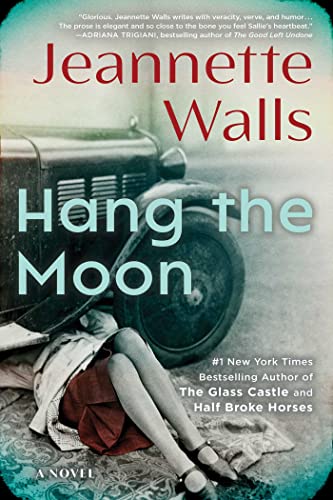
Hang the Moon, by Jeanette Walls*****

Jeanette Walls is the author of outstanding memoirs, most notably The Glass Castle. Her new novel, Hang the Moon, is brilliant, and you should read it. My thanks go to Net Galley and Scribner for the review copy. This book is for sale now.

Sallie Kinkaid is born and raised near the turn of the twentieth century in a tiny backwater in Virginia, daughter of its wealthy scion, “Duke” Kinkaid.  Her mother has died, and Duke has remarried, and now Sallie has a younger half-brother, Eddie. Sallie is a daredevil, given to occasional recklessness, whereas Eddie has a gentler, more introverted nature, with a love of learning and music. But one day, hoping to awaken some more adventurous aspect of his personality, Sallie takes Eddie out for a ride in her cart, and he is injured. Just like that, Sallie no longer lives with her father; she is cast out to live with an impoverished aunt, and there she remains for nearly a decade.

Sallie is a young woman when she returns, and now she must navigate the shoals of local politics, keeping clear of Duke’s sometimes unpredictable temper.  Duke owns nearly every property in the county, and he is deft at doling out favors and keeping the local peace, always in a way that works to his own advantage. Sallie has a hundred questions, some longstanding, and others that develop as she works for her father. However, questions are discouraged in the Kinkaid home. An aunt tells her, “Honey, there are some rocks you don’t want to look under.”

When the local economy is shaken by the unthinkable, Sallie must make some hard choices as she comes into her own. Moonshine has long been an unofficial, yet pivotal way that the local working class makes its living, and when feuds erupt and the government attempts to intervene, Sallie must choose sides. As she comes into her own, she discovers some hard truths about the family she thought she knew. Walls is at her best here, with a strong, resonant setting, a clear, credible plot, and unforgettable characters. This is the sort of book that one comes back to. Highly recommended.

Livid, by Patricia Cornwell*****

I really enjoyed this, the 26th entry into the Kay Scarpetta series. From time to time, people publish unhappy reviews, but for me, it never gets old. In this one, a terrorist attack is made locally, and it’s associated with an attempt on the life of the U.S. president, who is in town at the time it occurs. Kay is, of course, the chief coroner, and she’s forced to perform the autopsy on someone she knows.

The ending isn’t satisfying, and with any other author, I’d knock off the last star. But with Cornwell, I know from experience that when she does this, it’s because it isn’t really over. This will come up again, if not in the next book, then in another soon after it.

Because I couldn’t get the galley, I checked out the audio book at Seattle Bibliocommons. The audio is kind of a mixed bag. I like how the narrator voices the protagonist, and she also does recurring character Pete Marino well. I thought it was wrong to read the voice of Lucy, Kay’s badass adult niece, with a higher pitched voice than any of the other characters. She is a daredevil that doesn’t suffer fools, and if anything, her voice should be lower in pitch than Kay’s. I also thought she made the judge a bit too languid sounding, which is at odds with the things she says. In short, if you are a reader that enjoys both audiobooks and print ones, go with the print. If you like only audiobooks, then go ahead.

If you haven’t read this series, I do suggest you begin with the first and work your way up. I might not have enjoyed this one so much if I didn’t know the characters.

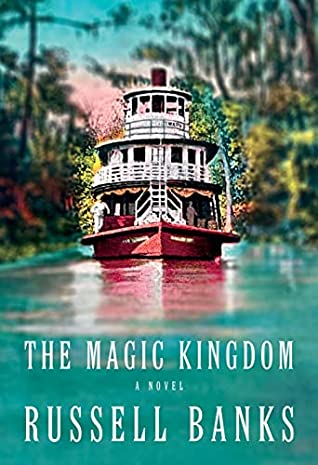
The Magic Kingdom, by Russell Banks*****

Some writers may fade as their bodies begin to fail them, publishing books that aren’t quite up to their usual standards; Russell Banks, on the other hand, seems to have saved one of his best for last. The Magic Kingdom tells the epic tale of Harley Mann, a boy that spends most of his boyhood on a Shaker plantation in Florida, and then becomes a real estate mogul later in life. My thanks go to Net Galley and Knopf Doubleday for the review copy. This book is for sale now.

Harley’s father dies when he is young, and his mother is forced to take him and his many siblings elsewhere. At first, they land in a religious cult on a plantation that works them like slaves; then Elder John, the head of a Shaker Colony in Florida, rescues them. Harley’s mother and most of his siblings become Shakers and remain with the colony until its eventual demise, but Harley has his doubts.

Nobody can craft character the way that Banks has, and he has melded a fascinating setting, one which begins over a hundred years in the past and follows Mann into his dotage in 1971, and which also incorporates a fair amount of Florida geography and history. Most of the story centers around Harley’s deep and abiding love with Sadie Pratt, a young woman being treated for tuberculosis in a nearby sanitarium. Sadie is not a Shaker, but is friend to them, and visits often when her health permits; Harley, just coming of age, falls for her hard. There’s a good deal of tension between Harley and Elder John, who despite all of his adherence to Shaker beliefs and practices on the surface, is also privately building himself a personal stake that only Harley knows about. By the time the book is over, I find myself wondering whether Harley’s character represents a real historical figure. No indeed; this is just the kind of magic that one finds in Banks’s novels, his capacity to build characters so real that they are nearly corporal.

The little shots off the bow that are fired at the Disney Corporation—by Harley, of course, and his representative after his demise, not by Banks—add a tinge of edgy amusement.

Because I had fallen a bit behind, I procured the audio version of this book from Seattle Bibliocommons, and so I can tell you that the narrator does a fine job, and it’s as easy to get lost in this story listening to it as it is reading it from the text; I did some of each.

This novel is brilliant, and all that love excellent literary fiction or historical fiction should get it and read it.

Poverty by America, by Matthew Desmond****

“Hungry people want bread. The rich convene a panel of experts. Complexity is the refuge of the powerful.”

Desmond is the author of Evicted, the Pulitzer winning examination of urban homelessness. Desmond himself grew up poor, and his family was forced out of their home when he was a child. These things give him a different and more authoritative perspective than most urban ethnographers.

 My thanks go to Net Galley and Crown Publishing for the invitation to read and review. This book will be available to the public tomorrow, March 21, 2023.

This book is written for a general readership, and it’s more readable than any other nonfiction work I’ve seen on this subject. His tone is conversational, and his research is impeccable, drawing from a wide variety of sources, well integrated and organized. He addresses the past and present roles of racism, explaining how the overtly discriminatory statutes and policies of the past have morphed into more subtly framed, yet still ubiquitous ones of today. He tells us “why there is so much poverty in America and…how to eliminate it.” He speaks to an audience of middle and upper class readers, warning that we must “…each of us, in our own way, [must become] poverty abolitionists, unwinding ourselves from our neighbors’ deprivation and refusing to live as unwitting enemies of the poor.”

In revealing the roots of American poverty, Desmond is thorough. He discusses the role played by medical costs, and the many workers that still cannot afford health care; the withering of unions, and the way that gig workers and independent contractors have replaced permanent employees; incarceration, and the debilitating effects it has, not only on the person sent away, but on their families for generations to come; the way that government assistance programs have been legally diverted to programs having nothing to do with the poor; the way that poor people are forced to pay more for the same goods and services that the better off pay. He discusses the ways that those living in poverty are cut off from political and economic opportunities. He does these things better than anyone else is doing them right now, and it makes me mad as hell, seeing millions of ruined lives all laid out so starkly.

It is when he approaches solutions that things become a little muddy. There are a few of his suggestions that I genuinely disagree with, but most of them are sound; the problem is that, despite his assurance that all of these changes can be made without much incursion into the lives of the wealthy and powerful, the chances of these people agreeing to implement such changes are somewhere between slim and none. He assures us that he is no Marxist (and that’s the truth, alas,) and that the rich can still have plenty; yet in reality, it’s clear to this reviewer that the kinds of changes that are needed are ones that working people will have to force from the tightly closed fists of the rich. This is where the fifth star falls off of my rating.

Nonetheless, Poverty by America is well worth your time and money, and I recommend it to you.

The Answer Is, by Alex Trebek*****

I first sought to read this book when its author was still alive. I couldn’t get the galley, and so I obtained a copy of the audiobook from Seattle Bibliocommons, by which time Trebek had left us.

It’s a curious thing, the attachment so many of his viewers, myself included, felt toward him. He was a game show host. There are other game shows that have longstanding hosts, but when they die—if they haven’t already—it will register as nothing more than a footnote, a handy answer in Trivial Pursuit. But somehow, with his polished yet soothing demeanor, Trebek found his way into our hearts. Go know.

The audio is read alternately by Trebek and by Ken Jennings, a record-breaking champion that found a measure of fame himself. It works nicely. Here are the things that surprised me. First, Alex’s family lived in a small town in Canada near Ottawa. They struggled financially, and so in order to pursue higher education, Alex had to have a scholarship. He got one, but while enrolled, he got into a power battle with a particularly hated teacher. Alex was expelled. That was a good school, though, in spite of the man Trebek so hated (and about whom he never changed his mind!) In the end, he and his father returned to the school, met with the administrator, and begged. A more sympathetic teacher/mentor agreed to be in charge of young Alex, and he was able to go back and complete his degree.

His career started in radio, working as a disc jockey. He had a love of classical music, and found his way to the Canadian Broadcast Corporation. Later, he was invited to audition for a game show in the States. So much more money! From there he hosted quite a number of game shows, finally landing his berth in Jeopardy in 1984. Later on he briefly considered trying to move into acting, but he came to know some actors that worked on the same set where Jeopardy was filmed, and he soon found out that they were making the same money as he was or less, but he only worked for a couple hours each day, home in plenty of time to eat dinner with his family and pursue hobbies and whatnot, whereas the actors were keeping grueling schedules. At that point, he decided he liked it just fine right where he was.

In parting, he reminded his listeners that everybody dies, and he is in his nineties. He’s had a good life. It’s time to go. I found this tremendously graceful, because pancreatic cancer has a reputation for being one of the most painful forms of the disease. But maybe that was Trebek’s magic:  always putting the other person at ease.

Highly recommended.

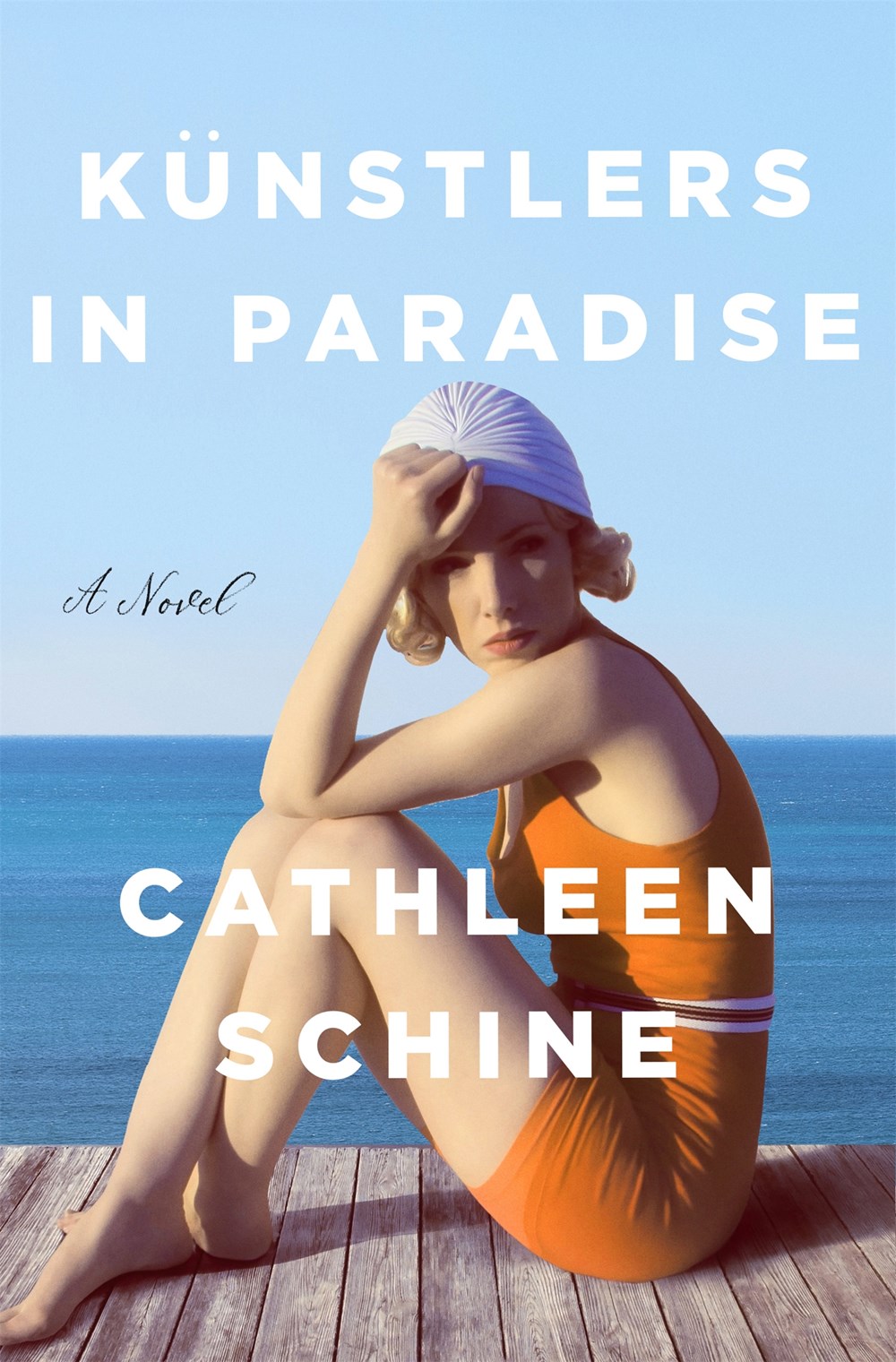
Kunstlers in Paradise*****

4.5 stars, rounded upward. My thanks go to Net Galley, Henry Holt Publishers, and Macmillan Audio for the review copies. This magnificently quirky novel is for sale now.

Julian Kunstler is kind of a mess. He’s a twenty-something New Yorker whose girlfriend has just dumped him. He has no job, and he doesn’t want one; at least, not the low-paying, entry-level variety of jobs for which he is qualified. He takes himself home to his parents who have been paying his way, confident that they will understand his plight and increase his allowance. Instead, he hits a wall. What are your plans for the future, Julian? (None.) What do you plan to do for money? (Get it from you.) Just as a dramatic situation has begun to unfold, they hear from his 93 year old grandmother, Mamie, who lives in Los Angeles. She wants him to come to stay with her awhile; she needs assistance. He’s not so sure that he wants to go, but when his parents insist, he gets on that plane. Once there, the pandemic strikes, and he is trapped in lockdown with his grandmother and her elderly companion, Agatha.

Mamie has always been fond of Julian, and although she does need a driver for doctor appointments and the like, what she wants, more than anything, is to tell her life story. Most of it, anyway. It begins in Austria, as Jewish artists like her father, a successful composer, are being pushed out of public life by the Nazis. (Here, I emit a small moan; I am heartily sick of Holocaust stories. Happily, we don’t stay there long, and this story is worth it.) She goes on to describe the shock she experiences in suddenly being transplanted into a completely different climate, language, and culture, and much of Mamie’s story is droll. And Julian, who never would have sat still for these tales had they come from his parents, listens. At first, he listens impatiently, assisted by Mamie’s generous liquor collection. As time goes on, he begins to listen with greater patience and understanding. And by the end of a year’s time, he listens with genuine interest. His own exile from New York is pale, after all, in comparison to the exile his predecessors endured.

The most dynamic character is, of course, Julian, but through Mamie’s stories, we see how life has already changed her. Agatha is enigmatic until the book is nearly over, and I love what Cline does with her, too.

If I were to change one thing, I would edit down the material about the genius composer friend that emigrates from Austria and is close to the family. This reviewer was a music major once upon a time, and if this part of the narrative is a bit much for me, then probably many others will feel the same. Of course, if the reader comes to the book with a deep interest in Schoenberg, then it may prove quite satisfying.

I am fortunate to have access to both the digital print galley and the audio version, and reader Jesse Vilinsky is hands down the funniest, most skillful voice actor I have ever had the pleasure to hear. Cline’s book is very good, but in the hands of Vilinsky, it is infinitely better. Her interpretations of Mamie and Julian are spot on, hilarious at times, moving at others. The way she voices Agatha is absolute comic genius!

For those that love quirky humor and historical fiction, this book is highly recommended.

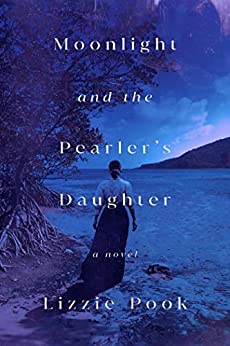
Moonlight and the Pearler’s Daughter***-****

3.5 stars rounded upwards. My thanks go to Net Galley and Simon and Schuster for the review copy. This book is for sale now.

Eliza has always been close to her father, a man that runs a fleet of pearling vessels. Her mother is gone, so it’s only Eliza, her father, and her brother. Then one day, the fleet comes back, but her father isn’t with it. He’s gone missing! Did he fall overboard? No, not that anybody saw, but if he isn’t on the ships, it seems the logical explanation.

For a variety of reasons, Eliza doesn’t believe it. She is determined to find him herself; yet to do so, she must go places and do things that are absolutely unacceptable for a woman in Western Australia in 1886. Fortunately—and conveniently—a young German man wants to go these same places, and he accompanies her. From there, things proceed in about the way you might expect.

Other reviewers that came before me say that this story is beautifully written, but terribly sad. I steel myself, but though the story is melancholy in places, I don’t find it depressing. However, I am also less impressed than I anticipated.

The good: I love the setting, and the setting plays a large role in this tale. Australian pearl divers! I have never read anything like this before, and I learn some things. I have never thought before about how the pearls that jewelers sell are collected. Though I would imagine that the process has changed over the past 150 years, it is still interesting to me. Along the same lines, I appreciate the amount of detail in the author’s notes.

On the other hand, the character development is underwhelming. Neither Eliza nor Axel is much different at the ending of the story than at the start. Eliza is a bit wiser, and she has learned things about her father and brother that had been kept from her before, but I can’t call hers a dynamic character; Axel is even less so. The same applies to the quality of the writing. It isn’t bad, but after the buildup, I expected it to be better than this. But the worst thing is a plot twist, right within the climax, that is jaw-droppingly improbable. My mother used to warn me that if I roll my eyes up into my head, they may stay there, so I am grateful to have emerged from this novel with my vision intact. Ohhh, brother.

So for a bit I consider that this is a three star read, but the resolution involving Eliza and Axel is very nicely done, and it wins me back enough to round it up to four. I recommend this book to those interested in the setting.