
 This newly released digital version of Garrow’s outstanding, comprehensive recounting and analysis of the famous Selma demonstrations carried out by Martin Luther King Junior, other civil rights leaders, along with masses of African-American civil rights activists could not be more timely. In 2013, the Voting Rights Act passed in 1965 after a lot of effort and sacrifice was gutted. The US criminal “justice” system has drawn the eyes of the world, and they aren’t friendly eyes. Thank you, and thank you once more to Net Galley and Open Road Media for making the DRC available for me to read, and for publishing this excellent book digitally for you to access also.
Please be aware that this is not a popular biography of the struggle, but a scholarly one, and will be most appreciated by those who, like your reviewer, have a strong interest in the topic, or who are doing research. In that spirit, I encourage those who also read it to access the endnotes. Garrow has some really interesting remarks, and his references and cross-references will make any researcher bow in awe.
Many people don’t know that Dr. King entered the struggle as a civil rights novice, newly out of graduate school and just 26 years old. (Open Road has also just released the digital version of Garrow’s Pulitzer-winning biography, which I have also reviewed.) Initially his hope was to shame segregationists into integrating schools and providing equal services to Black Southerners. The failure of the movement to make any in-roads in Albany, Georgia convinced King and other leaders that this method would not work. Instead, the eyes of the nation must be made to witness the injustices being meted out in Dixie. For the media, both print and television, a relatively recent mass media source, to pick up events there, they needed to demonstrate in a nonviolent fashion, not back down, and do so in a place where a nasty, violent response on the part of Caucasian cops could be counted upon. In other words, no change could take place without confronting Black America’s worst nightmares head on and intentionally.
Birmingham was the first place this was attempted. Bull Connor was known for gratuitous violence, and the footage of some really ugly aggression, especially the widely-circulated photo of the cop holding an unarmed demonstrator in place while siccing a huge German Shepherd on him, prodded the consciences of Caucasian viewers in the North. (Many Northerners of color were already funding the movement; musician Harry Mancini was one important fundraiser.)
But the attempt of Birmingham demonstrators to effect change was limited. Although it drew international attention, the Kennedy administration seemed more intent on finding ways to shut King and the Southern Christian Leadership Conference down than they were on creating adherence to Federal laws that gave Black folks equality.
Garrow reminds us (or informs us, depending on the reader’s age) that in the late 1960’s, one in three white Americans polled said they would not want to sit next to a Black person on a train or bus, and similar figures also showed that they didn’t want African-Americans living near them, at their kids’ schools, or even trying on the same outfits in department stores that they themselves might later try on.
Young people that are tired of hearing the Dream speech and watching Eyes on the Prize footage (for which Garrow also receives a portion of the credit) don’t seem to understand exactly how brave these people were. My own father told me, when I asked about the footage on television, that the policemen on the evening news were just doing their jobs. He shook with rage as he pointed at the screen and told me, “These people are breaking the law!” I was six years old at the time.
So some people up North needed to either change their minds, or be so repelled by the violence being done to innocent people who obviously wanted something reasonable that they would insist that the right thing be done. And although the movement never did change my father, it changed the thinking of a lot of people.
Birmingham failed to do the job for two reasons, says Garrow . First, they were not able to maintain a completely nonviolent atmosphere on the part of the Black participants. While demonstrators were nonviolent, thousands of African-Americans, some of whom dared not demonstrate actively lest they lose their jobs, became enraged at the maltreatment of the demonstrators; some threw pieces of bricks, concrete, and bottles at the cops from the sidelines.
When I think about this, it doesn’t seem like an even contest to me. Swarms of cops in riot gear; huge attack dogs; fire hoses; lethal weaponry of just about everything except tanks and missiles were accessed by the cops. And a few locals pitched a few bottles. Big damn deal.
But media loves to try to portray both sides of an issue, however uneven they may be. My own years spent participating in, organizing, and sometimes leading demonstrations taught me that if one demonstrator or supposed supporter shows aggression and can gain the media’s attention, the demonstration will magically turn into a “riot” on the news the next day. Or a “conflict”. We can find synonyms all day long, but you get the picture. When there are ten thousand peaceful demonstrators and ten people that break windows, the evening news will give as much time, or more, to the window breakers as the ten thousand. If a member of the lunatic fringe shows up with a forty-foot bloody cross, they’ll goddamn interview the nut and the demonstration’s goals may not get any time at all.
But the people that trained me in struggle were largely educated by their own participation in the Civil Rights movement. The methods of the Civil Rights movement would become valuable lessons for those that led the movement against the Vietnam War. The SCLC, SNCC, CORE, and other organizations that led this movement had to invent most of it, or at least Americanize it; many of the basic tenets were borrowed from Gandhi when he led the movement to kick Britain out of India.
So, there were a few folks that were not strictly nonviolent in Birmingham; the other problem, says Garrow, is that there was no one, clear goal in Birmingham. So much was so wrong that they went in with a laundry list. When it got into the news, it seemed muddy. Those who loved justice could see what was wrong; but every struggle needs a single, clear demand in order to start those waters of justice rolling. In Birmingham, it wasn’t plain what they were there to do.
Selma was the tipping point. All those lessons came into play. The single goal, one that the Democratic administration had pledged (privately of course) to support, was for Black folks to be able to walk into the courthouse and register to vote. No literacy tests; no poll fees; no goddamn alley entrance for people of color. Just walk through the front door; register; and vote.
This time discipline was perfect; the marchers were absolutely, completely nonviolent. Sheriff Clark, the mad dog that the movement sought to bring out of his ugly hole snarling and swinging, did not disappoint. People were sent to the hospital, and a Caucasian clergyman who answered Dr. King’s call to come support the Civil Rights of Southern Blacks was killed by the cops. This time it was clear what the goal was, clear who was wrong and who was right. And the telegrams (an ancient technology since replaced by e-mail) rolled into the Capitol.
Black intelligentsia and working class, I; crazy Southern Bubbas, 0.
President Lyndon Johnson was a crafty old bastard, a politician who knew what side his bread was buttered on. At first he too sought to shut the whole thing down, get people out of the streets and home to their own hearths. But when events unfolded and it became clear that a sea change was occurring, he got on television and gave the best damn speech possibly since the days of Lincoln. Garrow reprints the entire masterpiece. It was viewed by seventy million Americans.
If you are still with me—and my five star reviews are almost never brief—then you may also have sufficient interest to read Garrow’s history of the movement and particularly of Selma, Alabama and the crossing of the Edmund Pettus Bridge. His research is impeccable, his organization easy to follow (or to access a portion of, for those doing research of their own), and his narrative is really compelling.
Once you are done, I hope you will give some time and attention to the new Civil Rights Movement unfolding before us right now. It’s everyone’s job to be sure everyone can vote. And until African-American men and teenagers can drive, walk, and work without harassment or violence from cops and vigilantes, #ICAN’TBREATHE.
A Grown-up Kind of Pretty: A Novel, by Joshilyn Jackson ****
 Mosey Slocumb’s mother, Liza, has had a stroke. It’s a good thing both of them live with Big. Big is the name given Ginny, mother of Liza, grandmother of Mosey. The ladies in the family tend to give birth early and unexpectedly; both Ginny and Liza had babies at fifteen. In the inner city, this happens so often that most folks don’t care, but in their tiny southern town, the judgments fall hard and fast. They are not welcome in the homes of their other relatives, nor even at church. They are “the ones who had been put out like bad cats. Outside, all Liza and I could hope for was the dark, ass end of Jesus,” according to Ginny.
The town does not only judge sins that have taken place; it also anticipates sin. Mosey is fifteen now. She can feel the eyes of her classmates, her teachers, and even Big and Liza keep her under close scrutiny. Although she is a virgin, she has taken to using home pregnancy tests…just in case.
All of this changes with the discovery of the silver box buried beneath the willow tree.
All that Ginny, Liza, and Mosey have, really, is each other, and when their family is threatened, all of them–even poor, damaged Liza–come out swinging.
This is a fun book once the early part is past, or at least that was my take on it. Jackson is a courageous writer, but some may find her style too abrasive to enjoy. She takes conventional religion apart, no doubt about it, and whereas I was fine with this, those that enjoy a family-like church relationship may easily be offended. So then, this is for the more leftward-leaning among us, yes?
Yes but no. There were several passages at the start of the book that also sounded a lot like life-begins-at-conception, and abortion-is-murder. It wasn’t said, but it was implied strongly enough to raise my hackles. Had I not already really enjoyed this writer’s later work (Between, Georgia), I think I might have slammed the book shut and tossed it onto the yard sale pile.
Even the most brilliant author must make sure that when she takes a stand, or two, or three, she has an audience left after those she has offended fall by the wayside.
That much said, I really enjoyed this story once I was past the initial rough patch. An engaging story, mostly, about three generations of women who stand by one another through whatever comes.
Yesterday Is Dead, by Jack Lynch ****
 Peter Bragg is a San Francisco private eye. He is originally from Seattle, but he left all that behind: the rain, the grey skies, the depression…and Lorna, his ex-wife. Now a case brings him back. He isn’t eager to make the trip, but an old friend is in a spot and needs his help. And for the reader, it is a trip indeed, since the story is set in the 1980’s, when it was originally published. This established mystery series is now available digitally, and I was lucky enough to jump on Net Galley’s offer to read it free. My thanks go to them, and to Brash Books, for the DRC. What a fun romp!
These are modern times alrighty. There’s a new Interstate connection to Bellingham; a guy can hop on the I-5 and be there in two hours. Neat!
Those that have been to Seattle lately understand how wry this is, since a person can sit that long in gridlock just trying to get to the outermost suburbs now, at least during rush hour.
In addition to a trip back in time, Lynch serves up all sorts of twists and turns that keep the plot moving nicely, but also keep the game fair for the reader.
When all was said and done, I found myself wishing I could read the whole series. Recommended to anyone that enjoys good detective fiction. You can get it for yourself May 5, 2015. And you should!
I See You Made an Effort: Compliments, Indignities, and Survival Stories from the Edge of 50, by Annabelle Gurwitch ***-****
 Gurwitch is entering the downhill slope of middle age, and she isn’t going to go gently. In this enjoyable collection of essays, she is sometimes hilarious, and at other moments more philosophical. But she is never dull. Thank you to Penguin Random House for sending me an ARC.
Middle age means a deluge of mail order catalogs that sell products for the incontinent, the arthritic, the retired. Gurwitch doesn’t want them. What she might want is a few intimate moments with her hot yoga instructor—ah, so young!—or maybe even the young man who’s fixing her computer.
Alas, middle age also means caring for parents that are in declining health, and some of us get to raise teenagers at the same time. If you can’t laugh, you might have to cry! And sometimes, being middle aged means a precipitate end to a career, when your old employer sends you packing and those that are hiring want someone younger than you. They don’t say it, but it’s obvious.
And so middle age means you need to buy some really good concealer, because if you have been a sturdy feminist whose self-esteem used to mean that no cosmetics were necessary, guess what? Once you’re old enough, just picking those chin hairs out with tweezers isn’t going to do it. Lose the unibrow; trowel on the concealer and redraw the brows you just removed; cross your fingers that it works. “Facial hair,” she reminds us, “is an equal opportunity offender.”
Gurwitch is an actress, for those that didn’t already know that, and she has some stories to tell that will either make you howl with laughter or moan with pain, depending upon your perspective. Perspective? She has it here in spades. My personal favorite was her piece on petty theft. I hope she can still get a hotel room in her own name!
At times her tone becomes more philosophical, because there’s not much that’s funny about having people close to you die, and unfortunately, that’s one more unwanted surprise Mother Nature pushes at us when we edge our way toward 50 and beyond. And she wants you to remember that you can’t die without telling someone your password. You just can’t.
Many of us swore we wouldn’t sit around and bitch about our physical complaints when we grew old, the way our parents did…but now there’s Google. There’s WEB MD. For every symptom we have, there are at least twenty dread diagnoses possible! Get off the computer! Are you listening?
If you are under 40 and still reading this review, you ought to know by now that this book is not for you. If your mother is still alive, however, you should get this for her. Mother’s Day is coming. And for heaven’s sake get her a dozen red roses to keep it company.
Because you just never know. It could be her last. And really, that’s not so funny.
The Oregon Trail: An American Journey, by Rinker Buck *****
 Buck is a journalist and author who replicated (to the extent possible in modern times) the covered wagon crossing of the old Oregon Trail, much of which still contains the original wagon ruts. A creature of the Pacific Northwest myself, I thought I had the whole Oregon Trail story down cold, but I learned a lot from Buck’s wonderful memoir, which threads his own experience with the historical information he gleaned from a variety of sources into a fluent, fascinating, accessible yet hyper-literate narrative. My great thanks go to Simon and Schuster and Net Galley for the ARC. The book will be available to the public in August of this year.
Buck discusses his experience, and the book, here:
The germ of Buck’s idea to travel the old Oregon Trail in a covered wagon came from a favorite childhood experience. Buck’s father took his large family on a covered wagon vacation during the late 1950’s. They traveled in New Jersey and Pennsylvania, and it is one of the author’s fondest memories. His brother Nick, who sounds like a real character, decided to join him on this adventure, and their skills complemented each other wonderfully in most instances, with Rinker having done a great deal of research and put up the considerable sum it took to buy the wagon, the mules, and so forth, and Nick having a wealth of eclectic knowledge about covered wagons and mules as well as tremendous mechanical aptitude in general.
Our author is one hell of a writer. His down to earth metaphors made his story accessible for modern people. For example, he says that the Conestoga wagon was the semi truck of the mid-1800s while the prairie wagon used by most families, which was made by Sears Roebuck, Studebaker, and John Deere, were more like the station wagon. The whole narrative is peppered with this sort of figurative language, and it’s both amusing and helpful. And I loved seeing the ways in which the problems of the early pioneers often became his problems also, sometimes in ways that would have halted an ordinary traveler right then and there. But Rinker and his brother are serious badasses, and they kept on going.
Think for a moment how high up the driver’s seat on a covered wagon is, for example, and how immensely soporific the repetitive clopping of hooves are on a very warm spring day. There is no safety belt; there is nothing whatsoever to keep a man from falling off and being crushed beneath the wagon.
Narcissa Whitman, one of the early settlers who together with her husband, founded the Whitman mission in Eastern Washington (part then of the Oregon Territory) made the trip on horseback. But she had no safety belt either.
The Mormons, or Latter Day Saints, did a whole lot of it on foot and pushing carts; those that lived through the experience populated Utah. But I agree with Buck that Devil’s Gate was not solely part of the Mormon experience, and President Bush had no business turning federal park lands over to the LDS Church. Frankly, it steams my clams all over again just writing about it…moving on.
I also have one small bone to pick with Buck’s research, though it isn’t enough to lop a star off my rating: he says that the 400,000 pioneers that crossed the Oregon Trail was the greatest overland migration in history. To be fair, when he wrote this, it was widely accepted as truth. But in 2010, Isabel Wilkerson documented an overland migration of 6 million African-Americans from the South to Northern Industrial cities and also to California between 1915 and 1970. The Oregon Trail, then, may be the second largest, but not the largest.
I also might have liked to see a citation accompany controversial facts tossed in, such as the claim that it was covered wagon makers, not Henry Ford, who started the mass assembly line. Generally I liked the flow of the text made possible by avoiding footnotes, but if one is going to butcher a sacred cow, one should back the assertion with a source.
But all these things are minor compared to the value, both in education and entertainment provided by the story of the Rinker brothers’ modern day reenactment, which is nothing short of spellbinding. I had just begun it when I came down with a case of flu, and I can’t tell you how comforting it was to curl up under my covers with my glass of orange juice and this book and immerse myself in their journey, which commenced in Missouri and like the original pioneers, continued across six states. And although I have never done the trail itself (and if I were to do so, I’d be one of the Winnebago set that made him half-crazy with their giant rigs that spooked the mules and their never-ending cameras winking at him and blocking his way), I have driven through all of the states he crossed through except Kansas.
It was useful to have traveled through most of the region that Buck described, yet his descriptions were so palpable that I think even if you have never been there and never plan to, you will see much of it in your mind’s eye.
I’m not sure what is the most remarkable part of this wonderful memoir: the novel aspect of the covered wagon trip during the 21st century, or Rinker’s voice, which switches seamlessly from that of historian, to that of family member with family issues, to that of the humorist who can appreciate life’s ironies even in adverse circumstances. All I know is that you don’t want to miss out on this one. What a terrific story!
Boy: A Novel, by James Hanley ***-****
 3.49 stars, and my thanks go to Net Galley and Open Road Integrated Media for the DRC. The digital version of this story became available yesterday, and you can get a copy of your own if you’d like.
Boy, a tragic story that reads like a hybrid between Dickens and Melville, was originally published in 1930, and ran into all sorts of censorship. There are passages that contain sex that would not even be considered erotica now, since they avoid much specificity, but for the bourgeoisie of that time period, it was way too much. The censorship fight was where my interest came from, because I don’t generally seek out tragedy. I wanted to see what all the fuss was about. Any time anyone tries to keep the printed word from being accessible, my curiosity is piqued.
Arthur Fearon is an academically talented student whose parents make him leave school at thirteen even though at the time, the legal drop-out age in Britain is fourteen. His father has been on strike and had no income for awhile, and is bad at bringing his paycheck home when he has one. An only child, his parents both look to Arthur to become the family bread winner. His father finds him a position on the docks, and Arthur hates it so much that he stows away on board a ship, with the notion that he will emigrate away from England, maybe land in the United States and get a fresh start. Young as he is,it never occurs to him to learn which ship is going where. The ship he hides on isn’t even headed that way.
Issues of child abuse and in particular the way this youngster is turned away by every adult from whom he seeks help are hard on the eyes and hard on the heart.
The writing style is one that may not work for a lot of people in 2015. This was written in more or less the same era as Upton Sinclair’s The Jungle, and it has a lot of stylistic similarities. Inner narratives run on for much longer than one might expect, because the reader of 80 years ago had a much greater attention span. There is a fair amount of repetition that was considered acceptable then but might not be appreciated by today’s readers.
One thing I can tell you for sure: if you are feeling sorry for yourself, this book will make all your own problems look like nothing at all. Just right for the reader that wants a good three-hanky novel.
Bearing the Cross: Martin Luther King, Jr., and the Southern Christian Leadership Conference, by David J. Garrow *****
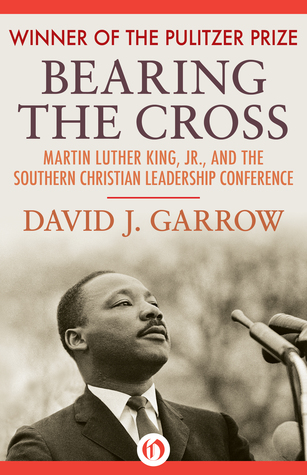 This comprehensive, scholarly yet accessible biography of Dr. King has already won the Pulitzer. Neither Net Galley nor Open Road Integrated Media really needs a review from me. Yet, because it is only now being released digitally, I saw the opportunity to read it free, and I leapt up hungrily and grabbed it while I could. But if you have to pay to read it, I will tell you right now, you will get your money’s worth and more.
The crossing of that bridge in Selma, Alabama was 50 years ago. You don’t need me to tell you that racist cops are still a problem throughout the USA, but the institutionalized American apartheid that was Jim Crow throughout Dixie is dead and gone. Much remains to be done, but what was accomplished by Dr. King and hundreds of thousands of African-Americans, along with other people of color and a handful of progressive white folks, is very much worth celebrating.
For many years I have wanted to read more of Dr. King’s speeches. School children are sick to death of the Dream speech, however brilliant and visionary it was at the time. It’s been used so often that it’s almost like the Pledge of Allegiance, tired and recited without a lot of meaning or enthusiasm by those too young to recall how radical the Civil Rights activists were considered back then. Garrow draws heavily from King’s speeches and letters here, and I was once more electrified to see what an eloquent person he was.
As Garrow explains, Dr. King did not set out to be a leader of anything except a good-sized church. He saw his entry into the theological world as that of a social activist, certainly; he received his BA in sociology, not religion or philosophy. But he had initially perceived his leadership role as that of mentor and guide to the congregation of a Black church in the American south. That was all he expected to become. When Rosa Parks was arrested for failing to yield her seat at the back of the Birmingham bus, demonstrations began to burgeon, and E.D. Nixon, a leader in the struggle, called upon King to speak at a key rally. After that, events unfolded and he found himself at the helm of a movement that was larger than any one person, but it needed a leader, and he was that man.
He was just twenty-six years old.
King quickly learned that in order to effect change, he had to gain the sympathy and agreement of a large segment of the American public, and at the time, that public was overwhelmingly Caucasian. Black folks were less than fifteen percent of the population, so they would need allies. In order to gain allies, he needed the media, particularly the big-city newspapers and television stations of the north. And in order to grab those headlines, show up on the evening news, he had to expose ugly, brutal repression. Because attempting to gain integrated facilities in a southern locale where he and his fellow activists would merely be cold-shouldered was just not newsworthy. Smart southern sheriffs who adapted the strategy of not hauling away those who sat illegally at lunch counters or entered stores through the whites-only entrance, but merely telling the proprietors to leave them there but not serve them and eventually they’d go away, were wicked but smart. The media would leave, disappointed to have traveled all that way without bloodshed or arrests, and the practice of segregation would continue, legal or not.
So in order to get the national news coverage that the Civil Rights movement had to have in order to turn the tide of public opinion, King had to lead people right into the teeth of the buzz saw, over and over and over again. Where’s Bull Connor? Let’s go there! Where is the Klan the ugliest, nastiest, most brutal? Put that place at the top of the list! And over the course of time, Americans saw it on the evening news, on the front page, and they responded.
The death threats piled up. Were it not so horrifying, it would be funny to note the number of times a vehicle blew up, a building was hit by a Molotov cocktail, shots were fired just where a moment ago Dr. King had been sitting, standing, talking, sleeping. He spoke to his wife and associates often about death, because he knew he could not get out of this movement alive, nor could he abandon it.
He had never, ever led anything before, apart from being student body president at his small college. Now he was thrust into the ultimate position of leadership. The activists who were already involved in struggle needed a minister, because a minister was a peaceful person, above reproach morally. They needed someone handsome, someone inspirational, a man that could speak eloquently. And Martin King, as he was then known (his father being “Daddy King”) was their man.
Years later, exhausted, suffering from clinical depression, King considered looking for a successor. Surely one person should not remain at the helm indefinitely. Perhaps he could, after all, lead a normal life, go home to Coretta, who was pissed at him for always being gone and not including her in his activities, and become a full time pastor at his church once more.
Then he won the Nobel Peace Prize, and although he was overjoyed at the honor, in another way, it weighed heavily upon him, because it was clear that now, he was the symbol. He was in it for keeps. The eyes of the entire world had likened him to the struggle against racism.
There was a lot of money attached to that prize, too. King was determined to donate all of the proceeds to the movement. Coretta asked if they couldn’t just take a small piece off for the children’s college funds? Nope. He didn’t even want to own a house, didn’t want anyone to charge that he was living larger than the average Black man in the American South. He was determined to live in the same kind of house, in the same neighborhoods that everyone else lived in. Eventually he agreed to buy a small brick house in an African-American section of Atlanta, but he worried that even that was too much. Others saw it and were surprised by how small, how humble it was. But King was concerned lest he place himself above others in struggle.
Later, he would ignore the advice of others in the movement when they told him to back off his opposition to the Vietnam War. It was a principled stand, and it cost him his support from the Johnson administration. He saw it as a key part of antiracist work; the US war against the people of Vietnam, the constant bombing, was related to race, and he saw it and said so.
The biography, which is carefully documented and also has a complete index, chronicles his most glorious triumphs, and also his struggles. Depression laid him really low, and nobody had any Prozac back then. I found myself wondering whether “hospitalized due to exhaustion” simply meant that his depression had got the better of him, and he had gone to bed and was unable to get up. I’ve been close to depressive folks, and I have seen it happen. It’s almost as if they are weighted to the bed. And again I find myself thinking what a young age he was, so very inexperienced, to be saddled with this enormous task.
There were other struggles as well. The FBI wired everything, everywhere he went. They documented his affairs so that they could blackmail him with them. Oh minister who is above reproach, look what we’ve got on you! And back then, that was a real thing. It would have created a scandal. King told one of his closest associates that he lived out of a suitcase for 25-27 days out of the month, and that sex relieved tension. And in 2015, the public, even probably many churchgoers, would see it and nod. His marriage was very tense, but Coretta was careful to present a staunchly supportive front, because there had to be unity in order to keep the focus on ending institutionalized racism. But in 1965, a prominent minister with women-on-the-side might well have been shunned by his own people, no matter how many times he stood at the pulpit and proclaimed himself a sinner.
Politically he foundered at times as well. During the struggle to end Jim Crow, primarily from 1955-1963, the crowds were there, overwhelmingly African-American of course, and they were ready to do what it took. They would march with or without him, but to prevent agents provocateur from turning peaceful marches to riots, King’s staunchly nonviolent leadership was key.
But what if the courts told King he could not march? Should he go, or should he stay? He waffled. He wasn’t sure. What was at the root of racism? He was sure it was the profit motive, and repeatedly stated, later in his career, that there needed to be a radical restructuring of the country’s wealth. But to foment an armed revolution was beyond him, and he was stuck in the rut of calling for mass civil disobedience.
At this point in my review I will break away from King’s story for a moment and speak of my own experience as an activist for various causes. I organized a lot of marches, carried a lot of bullhorns, and I will tell you this one thing: masses of people will not usually commit civil disobedience. When the march is over, the marchers don’t need a police record. When it’s time to wake up and go to work, they can’t be in a jail cell. They may have people depending on them, or they may just not want to go through the prison system, and who can blame them? Frankly, I wouldn’t either. I sometimes worked with people that wanted to participate in civil disobedience, but that whole thing had to be kept clear and separate from the rest of the march. The crowd needed to know when it was time to go home if they didn’t want to face arrest. And Dr. King did not understand this. You can have mass marches and mass rallies if you build them and promote them well enough. Or you can have a few people commit civil disobedience. But the one thing he wanted, later in his career while trying to end racism in Chicago, in Cleveland, in Detroit, and that in most situations you just cannot have, is massive civil disobedience.
So toward the end of his career as well as the end of his life, King was trying to put together a march on Washington, DC in which the participants would put up tents on the lawns of the capitol, sit in the Attorney General’s office and refuse to leave, until…and there, the list of demands was ever-changing. This was never going to happen, and he was frustrated by the lack of support he received from others in the movement when it came down to this plan.
If you are unfamiliar with the various organizations and individuals within the Civil Rights movement, you may have difficulty keeping up with the names and the acronyms. I had no trouble, but I also came to the book with the basics under my belt. The most famous organization, the NAACP (National Association for the Advancement of Colored People) was fiercely jealous of King’s organization, the Southern Christian Leadership Conference (SCLC). They saw it as divisive to have more than one civil rights-based organization. They also saw it as a threat to their dues base. Everything possible was done to keep these backroom skirmishes out of the public eye and present a solid front, but sometimes word leaked out. The Student Nonviolent Coordinating Committee (SNCC) was the group that brought the lunch counter sitters and the Freedom Riders. They were bitter, and at times rightfully so, because they went out on a limb and did things that SCLC promised to reimburse and then failed to do so. When the big collection was taken at one march or another, they expected their gas money back, and money for car repairs. They’d gone into this with little other than the shirts on their backs, and when the money promised them never arrived, they were pissed. They also never forgave King for refusing to go on the Freedom Rides with them.
But when all is said and done, King did the very best, if not better, than any man in his circumstances could be expected to do. He knew it would cost him his life, and he did it anyway. Without his leadership, what would have happened? History always marches forward, never backward, but things might have played out very differently. A lot more people might’ve gotten dead trying to achieve the same objective.
For those seeking the definitive biography of Dr. Martin Luther King, look no further. This excellent, Pulitzer winning work deserves a place of pride in everyone’s library.
Careless Love: The Unmaking of Elvis Presley, by Peter Guralnick *****
 This is the second volume of the definitive biography of Elvis Presley, renowned as the king of rock and roll. The first volume is Last Train to Memphis: The Rise of Elvis Presley, which I have also reviewed. Biographer Guralnick spent 11 years with Presley, and he conducted hundreds of interviews in order to create a fond but balanced portrait of this key figure in American musical history. If you are going to read an Elvis bio, this is the one.
I came to read this through a combination of opportunity combined with respect for that historical role of this legendary musical figure. I was born too late to be much of an Elvis fan; he was falling fast as I was coming of age. By the time I was old enough to really hone my musical tastes, he had become a caricature who was mocked by stand up comedians. It was only recently, when I ran across the first volume in a used bookstore that I began to take a serious look at his career. I had read over 300 biographies and memoirs, and it seemed to me that anyone that takes contemporary musical history seriously ought to at least have a look at it, and so I did. I was amazed to find that before his tragic decline and death, he had enjoyed two decades of unparalleled success, outselling even The Beatles at one point. The first volume chronicled his rise to fame, and it was a lot more fun to read. This one is a like reading about the Titanic; it’s too huge to be ignored, but you know it isn’t going to end well.
Whenever I read a music bio, particularly of someone I did not follow closely, I get online and find the songs that are mentioned most often. As I read this one I moved from the book to my desktop and back again, checking out some of his work on YouTube…and I actually purchased one song, because it was catchy.
This volume takes up the life of our musician following his service during World War II. In Germany, he had met Priscilla Beaulieu, who was still in high school. Elvis was, for all his celebrity, not a real mature fellow, and she was just what he needed. He enjoyed her company while being careful not to break any US or military laws, nor damage either of their reputations. He wondered whether the American public would have forgotten him when he came back to the States, but thanks to the Colonel, his non-military manager who adopted the nickname for fun, he was very much in the mind of America’s teens.
“Colonel” Tom Parker was a real piece of work, a cold, calculating capitalist who would shove paperwork under the nose of Elvis’s grieving father the very day Elvis was buried lest the licensing of his image and music be usurped. Guralnick also gives a fair amount of detail to this old-school huckster, who nevertheless helped keep Presley’s musical career afloat for decades.
Elvis’s descent into the world of addiction and depression is a terrible thing to read about. Following the death of his mother, Gladys, who was the center of Elvis’s life, he struggled with insomnia. Though Guralnick never actually says as much, I got the feeling that he was afraid of the dark, and afraid of death. At night he always had a good-sized crowd of good ol’ boys ready to hang out with him at Graceland, rent the nearby movie theater during its off-hours for their private enjoyment, or enjoy the local entertainment when he traveled. Only when the sun rose did he sleep. And like so many celebrities that rose to fame before adulthood, he soon sank into a dark place where he had to travel with his pet physician, who would feed him Demerol and numerous other heavy-duty, hospital-grade drugs when there was nothing the matter with him that a decent diet and some exercise could not probably have cured, at first anyway.
The last years of Presley’s life were strange, and before he left us they became stranger. He did a lot of things commonly associated with bipolar disorder (my term, not the author’s): he couldn’t just buy a fancy car for his wife or girlfriend, but had to buy one for each of the guys, and then another for their wives. He bought houses for himself, and then he bought houses for others. He bought diamonds for himself, and each of the closer members of his entourage was given a giant diamond custom-set into a pendant with “TCB”, for “Taking Care of Business”, with his own signature lightning bolt all spelled out in smaller diamonds. He needed a ranch, so he needed a horse; then each of the guys needed a horse; they each needed a mobile home on the ranch and a truck to drive while they were there…and so it went. Vernon, Elvis’s father, was in charge of paying the bills, but when Elvis’s spending spun out of control, Elvis didn’t want to hear what his father had to say about it. He knew he was making money hand over fist, and the notion that he might truly go broke didn’t compute. Toward the end, as his life became more desperate, he decided he needed an airplane, customized inside so he could sleep while on board, and then he decided to buy one for the Colonel too.
It wasn’t just his spending that was bizarre. He developed a fixation on law enforcement, and he wanted to be a special private agent for the government so that he could turn in celebrities that used illegal drugs. (The irony would have been entirely lost on him, even had anyone had the guts to point it out.) He wanted a meeting with J. Edgar Hoover, and sent him an obsequious letter calling him the country’s greatest American. It didn’t work. He collected cop badges from departments in the cities where he performed; a few turned him down, but usually he could get them to give him one by cranking up the pressure while turning on the charm…and of course, as always, he gave a lot of gifts.
Then he decided to go to Washington D.C., and a desperate President Nixon, who had been spurned by nearly every celebrity musician and actor he’d ever had his people approach, invited him in and got him the badge he wanted.
But then, what’s a badge without the gun? Presley’s gun collection, together with his unsafe habits, sometimes firing a gun while he was personally loaded with a bellyful of narcotics just to get people’s attention in his home, frightened away the women that were in his life during and following his marriage to Priscilla and the birth of his daughter, Lisa Marie.
It just makes you want to sit down and cry.
The one time I visited New York City, I got a garrulous cab driver and asked if he had driven for celebrities. Indeed he had. There were some that were very rude to him, but he said Elvis Presley was a really respectful man, a true pleasure to drive around.
If you have never heard this legendary man’s music, get on YouTube or the streaming source of your choice and check out some of his work. Musically he was a genius, perhaps a savant, and that remained true for over a decade after he had served in the military. His place in musical history cannot be contested.
If you have a strong interest in music history and/or biographies, get this book, together with its companion mentioned above. It may be out of print, but used copies are not hard to come by. And keep a box of tissues nearby; this is one of the saddest endings you can imagine. A great legacy in spite of everything, and a tremendous tragedy.
The Expats, by Chris Pavone *****
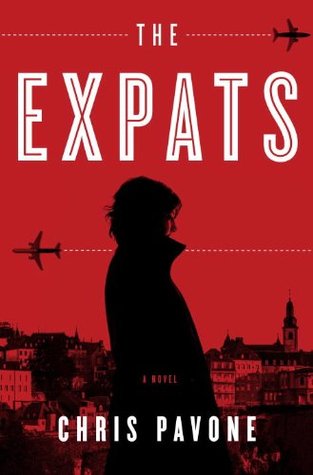 Chris Pavone spins one fine espionage thriller. I was introduced to his work when I read a galley of The Accident, the white-knuckle suspense story that follows this one. I was sufficiently impressed that I checked to see what else he had written. This first effort, which I borrowed from the Seattle Public Library, earned him the Edgar Award and a number of other kudos also. It’s a real page-turner.
Katherine is a mother of two young boys, and although her husband doesn’t know it, she works for the CIA; she has told him she is a government employee, and that she sits around all day writing position papers. She never inquires too closely into the life he led before he met her because she is afraid of the quid pro quo that must surely follow such questioning. The consequence is that she has been married for years to a man she doesn’t really know all that well. But he and the boys are really all she has; she has no other family to speak of.
She’s sitting on a mountain of unspoken experience. She has killed more people than she cares to remember. The reader is fed tiny shards of her memories in gradually increasing tidbits, and it is very effective in building toward the conclusion.
Her spouse Dexter, meanwhile, springs the surprise on her one evening: his work requires him to move from Washington D.C. to the tiny European secret-banking center Luxembourg. He works in I.T. in the banking industry as a security consultant, preventing hackers from thieving the bank’s massive resources. That’s what he tells her, anyway.
Relieved in a way, Katherine quits her job. The CIA doesn’t lift her cover, but they let her go little by little. Now she can finally focus on her sons, on her home, on her marriage…and so she sets up housekeeping in Luxembourg, enrolls the boys in school, enrolls herself in cooking classes during the day…and is bored out of her mind.
It was easy to buy the scenario as Pavone presents it, because it all figures. Who would join the CIA but a real adrenaline junkie? And what woman that has stalked other people, killed people, dodged those that stalked her or that sought retribution…what woman in such circumstances would not be bored out of her mind by cooking classes and shopping for area rugs and shower caddies?
It isn’t made easier by the fact that Dexter is always at work; that’s what he says, anyway. He is at work, on the road, in a meeting all the goddamn time. He spends an awful lot of time with Bill, another American expatriate, whose wife Julia seems a little too friendly to be true.
So is she merely acting like a CIA employee, governed by auto-suspicion? Or are these people setting off her spook-dar for a more substantial reason? And just what the hell is really up with Dexter? You would think the guy could show up for Thanksgiving dinner, for heaven’s sake!
If you have never read anything by Pavone, read this book first, and if you like it as much as I did, get The Accident second. Each is a stand-alone novel; they aren’t a series or sequential. But the second book is just a tiny bit better than this one, and I found myself slightly let down by an ending that seemed slightly too tidy. And in truth, I don’t think I’d have felt that way if I hadn’t already read something of his that is even better. In other words, judged against other thrillers written by other writers, this one is a sure-fire five star novel. Judged against Pavone’s subsequent work, the score shrinks a tiny bit.
The best part of all may have been the afterword. I always wondered about the research that went into writing spy thrillers. How the hell does anyone find out anything about the CIA, unless they are employed there and sworn not to tell? And Pavone tells us how he did it: he made it up. And that’s why it’s called fiction.
Guaranteed to absorb your attention for a long weekend and make all your own troubles look small.
Harvey Kurtzman: The Man Who Created Mad and Revolutionized Humor in America, by Bill Schelly ***-****
 Kurtzman was a comic genius who was ahead of his time. He created MAD magazine and also left his mark in comic book history and in men’s magazines such as Playboy. My great thanks go to Edelweiss, Above the Treeline and the publishers for the DRC.
Schelly, another MAD alum, has fastidiously documented every aspect of this biography. It begins with Kurtzman’s birth to parents active in the Communist Party USA and the International Workers of the World. Kurtzman himself was not a Communist, but opposed racism and was a progressive thinker. He was educated at a public art school in New York City that was funded by the Works Progress Administration, which is where he learned lettering skills that would stand him in good stead in the comics industry.
MAD was a creature of its time, and Schelly suggests that even comics, which were frowned upon by the older generation, were a tool that young people used to break free of the repressive society of the 1950s. Kurtzman created war comics and horror comics for EC, and maintained a furious work ethic. His humor entries began as “Look Here!”, a single page of filler, and then grew when comics began to wane under the government’s newly devised Comic Code, which was itself a blow to the First Amendment and drove a number of comics out of business. In fact, MAD began as a comic also, but went to magazine format in order to break free of code restrictions. It never applied for code approval, and was a breath of fresh air and gut-splitting humor to those of us that grew up reading it. Unfortunately, he and Bill Gaines, the publisher, came to a parting of the way after the magazine’s first year had ended, so although his signature still graces the cover of every subsequent issue because of the continued use of his cover art, those seeking a biography of MAD Magazine (and I confess I was) are not going to get much of it.
Multiple examples of Kurtzman’s work (signed “Kurtz” with a stick-figure man following) are given full page space in this volume. My advice to you is that if you read it, you don’t buy it digitally. There is so much detail that as the text suggests, one needs a microscope to get it all at full size. Of course, mine was free, and reading it digitally was still a privilege in such a case. If you’re going to pony up the money, try to get it on paper. I think you’ll enjoy it more.
I confess I was personally never interested in comics, and Playboy magazine is a hot-button subject, and so I skimmed that portion of the biography.
Kurtzman was diagnosed with Parkinson’s in his late 50’s and then cancer as well. He died at 68 and was cremated.
Reading Schelly’s biography made me crave a coffee-table volume of MAD Magazine art. I kept a copy of this subversive little periodical tucked inside my biology text book in middle school. I ask you to imagine MAD Magazine and Watergate. I wish I had saved every issue, but I passed them on to friends, which is also a great thing to do.
MAD as we knew it is moribund. It was taken over–if I remember correctly, by the TIME people, but certainly by a big-business press–and it has been shrunk, commercialized and sanitized to where it’s no longer interesting. The work of Kurtzman, Schelly, Jaffee, and the other MAD geniuses was what made it so brilliant.
For those with a strong interest in comic art history, highly recommended. For those interested in MAD history, recommended if you can find it at a discount or in a library.
 Seattle Book Mama