Off and Running, by Philip Reed****

offandrunningOff and Running is a comic caper set around Y2K. Jack is a writer looking for his lucky break; Walt is an old man, a beloved American icon who hasn’t published a memoir yet. Garrett is Walt’s ill-begotten, bad-tempered adult son, the worst celebrity brat imaginable. Reed tosses them all into his literary blender and what comes out is both hilarious and at times, genuinely suspenseful as well. Thank you once more to Brash Books and Net Galley for permitting me a sneak peek; this amusing tale will be for sale in August.

Jack has had one project after another not work out. His wife, Sarah, has had it with him, and wants him to go out and get a real job. Every day she schleps out to her full time job, coming home tired and ill tempered, and she doesn’t want to hear anymore about how Jack’s latest book proposal will make money for sure. She has a change of heart when Jack’s agent sends him out to see the venerated, universally loved comedian, Walt Stuckey. Walt is choosey about who he sees and what he talks about, but over time, Jack builds a genuine rapport with him. They become friends, and Jack is accepted as Walt’s biographer. Just as Walt invites Jack and Sarah to come stay the weekend with him and his girlfriend, Mary, the unthinkable happens: Walt has a stroke. The son-from-hell Walt loves but has been unable to develop a positive relationship with takes charge. Walt is held virtually a prisoner, and it soon becomes clear that Garrett does not really want Walt to recover. He wants Walt’s financial empire, and he will be the executor of Walt’s estate when he goes.

So the first thing Garrett does is to isolate Walt. Since his own memoir is the one thing Walt is truly excited about and could give him reason to live, Garrett uses his power-of-attorney privilege to fire Jack and cancel the memoir. Mary isn’t having any of it, and once he thinks about it, neither is Jack. Jack is determined to finish this book. It’s what Walt wants, too. And most of all, Jack wants to know why the reference to Bebe Rebozo in Walt’s comedy routine caused his over the top hit comedy show, which was “funnier ‘n hell”, to be cancelled without a moment’s warning. He’ll find out, or die trying.

So Jack and Mary launch a rescue mission to free Walt from his rotten son-turned-captor, and the result is alternately suspenseful and hilarious.

There are several events in the book that strain credulity, but it’s okay, because this is not literary fiction; this is a caper. I couldn’t wait to see how it ended, and I was sorry when it did. A considerable portion of the story is set in Death Valley, and the heat, the inescapable sun, the gritty sand were all so palpable that I nearly resolved never to leave my cool damp domicile again.

We all need something ridiculous in our lives now and then. Humor relaxes us and puts our own worries into perspective. Do yourself a favor and order this book when it comes out digitally August 4. Then, you’ll be off and running!

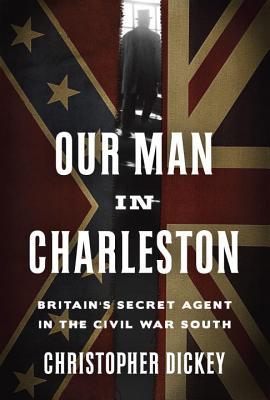
Our Man in Charleston, by Christopher Dickey *****

OurmanincharlestonThis is the most fascinating book I’ve read in a long time! Equal parts biography and American Civil War nonfiction, it details the experiences of Britain’s foremost spy, Robert Bunch, who was living in Charleston, South Carolina when the Civil War began and for its duration. I am truly grateful to Crown Publishers and Net Galley for permitting me to read the DRC in advance. And perhaps it is just as well, in a way, that my kindle fell in the potty when I was done and with it went hundreds (genuinely) of notations that I made as I wended my way through it; I had procrastinated writing this review because there was so much I wanted to say. Too much, in fact! Sometimes I have to remind myself I am writing a review for would-be readers who might want to discover a few things on their own. Part of my writing mind is still wired in the direction of academic analysis, which is too ponderous for most readers to slog through, and not really necessary for our purposes.

I was riveted almost from the get-go. At first I had the bizarre notion that a British view of the Southern Rebellion would be objective. If I’d thought harder, I would have realized that isn’t true; Britain had a tremendous amount of interest in the outcome of this fight. But its interest was completely different from either the Union’s or that of the Confederacy. There were a couple of horrifying instances in which it might have chosen to recognize the Confederacy, but those moments quickly passed.

Even before war broke out, tension had been quietly mounting over the treatment of British seamen that landed in Charleston. On one occasion a single Black sailor had instigated a relatively small uprising on a plantation, and this act—the most fearful nightmare of the Southern ruling class, self-styled aristocrats who lived as a tiny minority among an enormous number of Black laborers who had every reason to hate them—gave birth to the Negro Seaman Act. The law stipulated that any Black sailors from another country that worked on board a ship that docked in Charleston, must be kept in jail until it was time to leave again. This was the stuff of which international incidents were born. Britain would attempt to solve the problem through Washington, D.C., only to find that Charleston had already begun to flout Federal law and that the nation’s promises were not kept. Eventually, a quiet negotiation began with Charleston authorities. When they continued to behave badly, Britain had little recourse, since it did not want it known in Washington that they had been dealing with the government of South Carolina as if it were sovereign. This probably also fed the delusions of Southern grandeur and may have encouraged them to believe they did not need the national government at all.

Robert Bunch was originally stationed in the north, but found himself in Charleston more and more often. His habit, as Britain’s agent, had been to head north during the unbearably humid, tropical summers of the deep South, but as events polarized the nation and northerners were no longer welcome, his own position became more and more tenuous. His job was to send reports to Britain, but whenever he went in public, as he had to do a great deal in order to pick up information, he was questioned increasingly closely about Britain’s view of the Confederacy. Which side would Britain take? Was he a spy? (Gracious, no!) Maybe, were he on the side of the Union, he should be locked up! (Please, please no!) He would have preferred, at one point, to go north and stay there, but his orders were to stay put, so that’s what he did.

In order to maintain his role and save his own neck, his behavior became increasingly misleading. The dispatches he sent to England were so adamantly opposed to recognition of the Confederacy that he was reproached a time or two for trying to make policy when his job was simply to provide information. However, when he was asked by local folk whether surely, Britain would soon recognize the Confederacy, and wouldn’t he encourage this, he gave misleading smiles, made ambiguous remarks, and agreed that of course he would be happy to slip the British nanny’s letter home in his diplomatic pouch so that it could reach the U.S. mail from which they were otherwise cut off.

He became so convincing in his subterfuge that at one point, he was nearly brought up on charges of treason against Britain. U.S. Secretary of State Seward, a difficult, punctilious man, had a number of bones to pick with Britain, and at one point tried to foment war with them, convinced that if it broke out, the South would drop their ridiculous posturing and rush to defend the red, white and blue. Lincoln felt differently, however, and made it clear to Seward and to Britain that he was only interested in fighting one war at a time. To save face, Seward latched onto Bunch’s dismissal as the single demand he would press. Surely, in order to avoid international tension, Britain wouldn’t mind hanging one of their lowly agents out to dry? Send the boy home and there’s an end to it. Get him gone.

Lord Palmerston, a man with power disproportionate to most in his position, had eclectic tendencies, and was having no part of firing Bunch. He liked the guy, and wasn’t really interested in being shoved around by the former colonies of Britain. If the US of A had to have its capitol torched a second time to get the point as to whose navy was better? Fine. Hopefully not, but Bunch was staying. And that is how it was.

There are two things that popped out at me in reading this compelling work. My vantage point, for those who haven’t read my reviews before, is that of a former history teacher. It was my job to teach teenagers about the American Civil War, or as much as teens can learn in ten weeks at one hour a go. It was by far my favorite quarter of the school year, but I was so overwhelmed with work and meetings that I didn’t have a lot of time to read in my field. I could use my six weeks off in the summer to read whatever I chose, if I wanted to, and that was about it. So although I could have used this information back then, it is nevertheless satisfying to have one nagging question answered, however belatedly.

My question, and my students’ question sometimes, was if Europe was able to rid itself of slavery by the government’s buying slaves from slave owners, why didn’t that work in the USA? And the only response I had—one provided by reading James McPherson and a Marxist historian named George Novack—was that they refused. They just wouldn’t do it.

But why? Surely it was obvious they were living in a feudal economy that the rest of the industrializing nations had abandoned. Surely they had to know they could not freeze history. Why cling to it beyond all reason?

Questions related to war are always rooted in economics, and so to simply say they were irrational, which is more or less my answer apart from I-don’t-know, felt incomplete. A number of other historians gave that reason, but it felt like a puzzle piece forced into the wrong hole. And Dickey provided me with the missing piece. Although I had read vague things about speculation in slaves and that uniquely American, horrific practice, slave breeding, which brought us international shame before all was said and done, I didn’t recognize the link between speculation and the tiny handful of wealthy plantation owners that made the choice to go to war rather than let it go.

Those that have followed the financial news in the USA and many other nations over the past decade are aware that a lot of home owners are losing their houses when they can’t pay mortgages, especially balloon mortgages, and more dreadful still is the fact that they are “under water”, meaning that after the bank takes the house back, or it is sold, they will still owe payments on it. They’ve borrowed more against it than it is worth, and only bankruptcy will solve their problem. When they lose that house, they lose everything.

And so it was with a large number of plantation owners. They had borrowed against their slaves. That was where their equity was: in human capital. If they allowed the government to buy their slaves at their current market value, they would become bankrupt, and having gained their social standing on nothing more than wealth and pale pigmentation, they would be ruined socially and financially. As long as there was any other choice, they would take it. They would send their own sons to die for it, though generally they chose to pay someone else to go in their own places.

They were underwater.

Britain’s perspective at the outset was that if one side had slaves and the other did not, then of course they would not recognize the upstart nation. When the border states were permitted to keep their slaves, it was still considered wiser to back the winning horse in any race, and so unless it appeared the Confederacy was about to win the war and gain international status as an independent nation anyway, there was nothing to be gained by antagonizing Lincoln’s administration.

I had wondered, in past years, whether Britain might not have yearned for the South to become independent. If one looks at a map of the USA as it was then, and the size of British possession of Canada, if it also dominated the Southern USA economically, and if it had a navy in the Atlantic that could pound the coastline, could it not overturn the American revolution? That slice of the Union is small compared to Canada, when the Confederate states are added in like the bottom bun of a hamburger. How delicious!

Not so, says Dickey. Britain had other fish to fry. It had been absorbed in fighting the Crimean War, and at the time, events in Europe were considered vastly more important than our own emerging outpost. It might be nice to have, but they didn’t need it badly enough to weigh in with the slaveocracy. The South had been so smugly sure that Britain needed their cotton for its mills, but in fact, they had planned well against such an eventuality, and had over a year’s worth of cotton socked away in storage. To the impertinent Southern men and women that sashayed up to their representatives to announce that Britain would simply have to recognize them, the response was generally somewhat courteous, muted, non-committal. If pressed, they suggested that cotton could indeed be grown in India. No worries.

And here I am three pages later according to Microsoft, and I have really only skimmed the surface. Think if I’d had my notes available! Believe me when I say I have just scratched the surface. I had so many delicious quotes, and now you’ll have to go ferret them out for yourself!

This magnificent book comes out July 21, 2015. For once I can tell you that whether or not you are conversant with the finer details of the American Civil War, you will be able to read this with no trouble. A knowledge of the broad contours of the war will make it more satisfying, but not strictly necessary. Those who enjoy history in general, or biographies in general, will likewise find it a must-read.

You have to get this book!

Rock of Ages, by Howard Owen ****

rockofagesRock of Ages, an intriguing novel by Howard Owen originally published in 2007, isn’t merely a mystery, but engaging fiction. I enjoyed everything except one small but noticeable problem near the end. Giant thanks to Net Galley and Open Road Integrated Media for allowing me a glimpse of the digital version in advance. It becomes available for purchase June 9.

Georgia is a respected professor for whom menopause and mounting personal losses—the death of her husband comes at almost the same time her aunt dies, and her parents are both gone—become so distracting that she abruptly takes a leave of absence. She has seen her father’s ghost sitting in the back of her classroom.

She takes time off and heads for the small town in North Carolina where her aunt had lived. When she arrives, her son Justin is there with his girlfriend, Leeza, who is pregnant.

The first half of the book is where the writer is at his best. The villain, “Pooh” Blackwell, is artfully portrayed. Georgia’s former teacher, Forsythia Crumpler, was also really well spun. I found myself talking to Georgia, making notes in my kindle asking her just what the heck she is doing, talking to her son and his honey that way. Does she want to be forever estranged?

Georgia’s misbehaviors are subtle enough at first that the reader is left wondering whether this is the author’s idea of appropriate parental behavior, or whether he is deliberately drawing a difficult protagonist. Turns out it’s the latter, and the way he develops her as the story progresses is terrific, at least until near the story’s conclusion.

So now let’s talk about the rape. What on earth makes the writer think that a woman of 52 years who has been through a good deal of trauma in her life, will think rape is not a very big deal? When she was “younger, a little more precious and fragile”, it would have been much worse.

Say what?

If the protagonist’s mental narrative had only said she was glad to be alive, I could roll with that, but he adds just enough other considerations to make me want to throw the book across the room. I speak as a woman that has never been sexually assaulted, but like most people, I know women that have. And research actually indicates that the more trauma one has been through after age 30, the harder one grieves, because all of the other losses are relived along with the new, fresh loss. Until this point, I had bonded to Georgia’s character, and she was practically tangible to me. When she began reflecting about the rape, the spell was broken and it was just the product of some clueless male’s bizarre imagination. It’s probably a bad idea for anyone to try to quantify a rape or decide where it falls on the progression of a character’s negative experiences, and all the moreso for a man to decide about a female character. One star fell off and this tirade jumped into my review. So there you have it.

The ending is otherwise not terribly imaginative, but also veers away from the trite, pat ending I thought I saw coming. Sadly, by that point I was too irritated to enjoy it.

The novel is billed as a mystery, and it surely includes two of them. We wonder about the ghost; it has made another appearance at the Rock of Ages, which is locally known to be haunted. We also wonder whether Pooh Blackwell killed Aunt Jenny for the deed to her house, or whether she drowned accidentally. But really, the main story here is Georgia’s inner struggle. The mystery takes a back seat, and it works well that way, apart from my earlier qualification.

The prequel to this story won acclaim, and I would love to read it if I can find a copy.

The series will be one to watch. Perhaps Owen will write Justin in as his next protagonist, and if so, I would love to read it.

Interesting work from an award-winning writer.

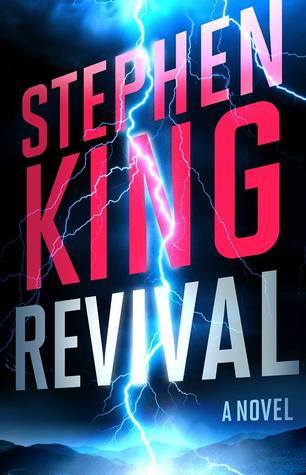
Revival, by Stephen King *****

revivalI was reading along; King was his usual irreverent self, cracking wise and bopping to the oldies. I experienced Jamie Morton’s childhood, his family, and the tragedy that befell their pastor, whom he adored. And then…something happened.

Mother, something happened.

As the landscape grows darker, I found Jamie again, older and much changed. The narrative filled me in on the years that were missed, and why things have gone so badly for him. Things are going to get better…and yet, so much worse. So very much worse.

Not too far in, Jamie has a repeating dream that I have had too. I was shocked! I wonder whether it is a textbook example of a grief dream? My repeating dream has been gone for over 20 years, but I had that hummer off and on for over ten before them, and was quite surprised to find them nestled into a horror story. I may try a search on it and see what pops up, not unlike Jamie’s joker in the deck of cards. You never know.

Is it just me, or has King been discussing, under cover of his standard things-that-go-bump-in-the-night, issues involving aging and death? Of course, in a horror novel, people die, and so there are grieving people in a lot of his books anyway. But in Dr. Sleep, the baddest of the bad guys prolonged their own lives at the expense of those who are young and have not had a fair turn on life’s merry-go-round yet. And although Revival doesn’t discuss these things as obviously, underneath it all lies a strong current, that we should leave when our turn is over, not tamper with nature, and accept that when it’s over, it’s really over.

If that wasn’t his intention, it’s not a bad message anyway, particularly for the Boomers whose music he incorporates into nearly every story. We want to stay, but when our turn is over, we just have to go, and make way for those that are being born.

If the reader doesn’t care to reflect on mortality in general, it is still one helluva great story!

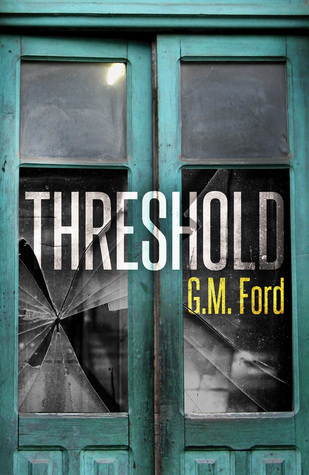
Threshold, by GM Ford *****

thresholdGM Ford writes really strong mystery novels. He takes the reader from falling-down-funny to high voltage suspense with a mere flip of the kindle page. As usual, this novel, a stand-alone called Threshold, is set here in Seattle.

Mickey Dolan is a detective sergeant, and he is tasked with helping find the wife and two daughters of a powerful city councilman. But not all is as it appears. Much of the mystery centers around an albino woman named Grace. Grace has the ability to bring people out of comas; at one point, she says that these are people that weren’t really ready to die yet anyway, but this is the closest Ford has ever come to dabbling with the supernatural. It makes me wonder whether he will ever try writing horror. But that is speculation on my part; here, it is just one element of a really great tale of suspense.

Back to our story. Grace, her mother Eve, and the missing family members appear to be tucked into an anonymous, generally industrial chunk of land in the industrial Duwamish heartland of Seattle. Why are they there of all places, and why was it so impossible to find them? Why is Grace so reclusive, and what does she have to do with the missing family members?

At some point, the credibility question pops up. I’m a big believer in facts. I like the material world, and when things start to go woo-woo, as when supernatural gifts are introduced into the plot, my forehead wrinkles. What’s up with the weird stuff?

But when all is said and done, a strong writer can make me believe just about anything. Just as Steve King convinced me that there was a haunted clown in the sewer, Ford got me to buy Grace Pressman’s quirky little talent. Because when all is said and done, if the story is good enough, we will want to believe it in order to keep the magic flowing, and that’s how this tale was for me.

Note that there is no thank you to the publishers here. I found this little gem for less than a Lincoln on Amazon, and I said oh hell yes. I almost never pay full jacket price for a book these days; retired academics don’t have a lot of pocket money, and my educator discount bit the dust when I left my profession. This one was both cheaper than usual, and by an author I really enjoy, so I straight-up bought it.

So should you.

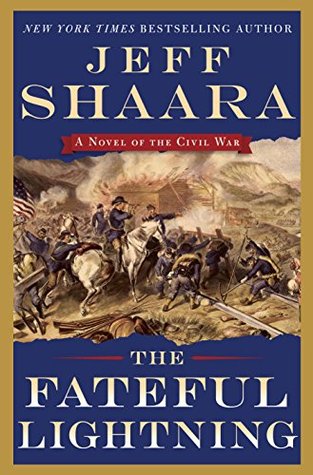
The Fateful Lightning, by Jeff Shaara *****

thefatefullightningThose that love strong Civil War fiction have to get this book. It comes out in June, but thanks to the wonderful people at Net Galley and Random House/Ballantine Publishers, I was able to sneak a peek ahead of time. Although it is the fourth in a series, it also works really well as a stand-alone novel if you know the basic facts regarding Sherman’s siege of Atlanta and its subsequent burning. As we join him and his hardened veterans fighting under Howard and Slocum, “the two fists that Sherman intended to drive through the heart of the deep South”, they prepare to march to the sea.

I have read every one of Shaara’s novels, those about the Civil War as well as the American Revolution and US war against Mexico. I am a fan. The last in the series, The Smoke at Dawn, left me hovering between a four and five star rating. It was a good read, yet I wasn’t sure I liked the way he voiced Sherman; I thought he made him sound a bit remote. But then it became evident that the controversy that sparked the indignation of other reviewers was his inclusion of one fictional character among the various perspectives presented (he flips back and forth, a format he uses regularly and that readers of his other work will recognize). The fictional character was invented to represent the too-often-voiceless rank and file, without whom the war would not have been fought or won. And I thought that this was actually a great idea, so I flipped from four to five stars in defense of his choice.

In this final installment, Sherman’s voice sounds much more real to me. I don’t know what happened, but it feels to me as if all the cylinders clicked into place. William T. Sherman is one of my heroes; I consider him America’s all time finest general, with Grant coming in second. He remains controversial to this day, mostly in the American South, so for those who wonder, the perspective definitely leans toward the Union, though both perspectives are given space. And it seems gobsmackingly obvious to me that in a war between feudalism and industrialization, between slavery and freedom, the latter should be the team to root for. But for those that feel differently, you’ve been warned.

Here we also meet a new fictional character named Franklin. Franklin is a slave until Sherman’s men come through. His father, an older man who was hobbled permanently by one of the master’s coon hounds when he attempted to flee, won’t leave the Plantation even after he hears that he is free. The master is gone, but it doesn’t matter. Walking is too hard, and frankly, he is also too afraid. And if someone were to sic a mean dog on me, I just might feel the same. But his son, Franklin, is grown, strong, and completely unafraid. He is allowed to join Sherman’s men as a laborer, and during a fight, he makes a heroic choice even though he has not been given a weapon or even permission to touch one. And the role that Black troops and spies also played is also included.

Throughout the narrative, Shaara’s voice feels authentic and honest to me. The reality of racist Caucasians within the Union’s forces is acknowledged, and the horrible crossing in which one of Sherman’s new, political generals causes the drowning of an unknown number of African-Americans trying to follow the army across a pontoon bridge that’s being withdrawn from enemy forces is not glossed over. More importantly, the slave breeding that brought international shame on the United States, a practice done exclusively here, in the “land of the free and home of the brave”, is presented; I can’t think of any other novelist I’ve read who includes this critical factor.

Fans of military history will appreciate Sherman’s approach to the war, that one cannot win by capturing the capitol of the rebellion, but rather, the Confederate forces must be defeated, and the people of the South that supported them had to know they were done. The desertions that marked the end days of the Confederate Army were the result of Sherman’s “juggernaut” through the South. Those that left home to fight to defend it, sometimes deserted for the very same reason. Home might not be safe; they might be needed back there. Shaara’s depiction of Sherman was consistent with Sherman’s memoir in this and every other regard.

In reading Shaara’s note to the reader, I felt a bit sorry for him, because it sounds as if every single Civil War buff has some treasured bit of arcane information or some hero in the family and they’re annoyed that Shaara has failed to include them. But this was one big war, and as the author notes, he can’t include everything. His publisher has set limits in terms of time and space. And Shaara has served them, and the memory of those who served the side of moral right, admirably.

The book will be sold in time for Father’s Day. But really, you should buy it for yourself. It’s worth every nickel.

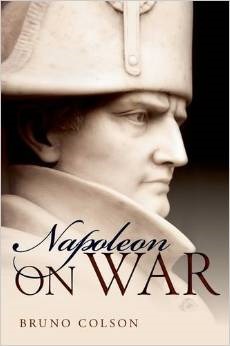
Napoleon: On War, by Bruno Colson ****

napoleononwarWhat an ambitious project! This tome is not the kind of thing any writer puts together for money. It’s a labor of painstaking love and pride. Years were spent assembling Napoleon’s military ideas. Thank you once and thank you twice, to Oxford University Press and Net Galley for allowing me to preview the DRC. And of course, thank you to Mr. Colson for his effort. You can buy it this month.

The difficulty in publishing Napoleon’s ideas is that they were scattered. The man was not only a military genius but also an academic one, and every time he turned around he was having someone take something down. Assembling them into one place was another matter, particularly since he was captured, exiled, captured again, exiled again. In a fit of despondency he tossed the memoir he had begun into the flames at one point. So gathering everything together and then sorting the philosophical, which still has relevancy, from the technological part of Napoleon’s military work that is now outdated by more sophisticated weaponry, is another massive task. It’s no small wonder it took someone a long time to do the job and do it right. The reader will perhaps be surprised to learn how many quotations have been ascribed to Napoleon that he actually never said.

That said, I also have to acknowledge that the niche audience here is academic. This is nobody’s breezy popular biography. And whereas I could happily never see some media jerk throw together something and pretend it’s accurate based upon his own personal fame, at the same time, I just need to warn the reader that this is going to be tough going. I’m persistent; I love history. I was willing to wade through Neil Sheehan’s Pentagon Papers, and I was willing to fight my way through this book too. But for most readers, either a purpose, such as perhaps upper level or graduate level university course work or a thesis, or a really intense interest in French history and military strategy will be required to get through it.

Colson’s scholarship and research are beyond reproach. Read the introduction and you’ll get the point. He has done his homework many times over. In fact, unless one is a fluent reader of French, it would be impossible to duplicate his effort even if one were inclined to try. But why do that, when you can access this excellently researched and painstakingly organized volume?

Highly recommended for the serious scholar.

Blanche Cleans Up, by Barbara Neely ****

blanchecleansupBlanche Cleans Up, which is #3 in the Blanche White mystery series, is more than a murder mystery, as the numerous word plays in the title imply. This is a smart, funny-yet-serious series, and I am thrilled to be able to review another one for Net Galley and Brash Books, who provided me with a DRC. This title was released at the beginning of May, and so you ought to be able to buy it right now.

Blanche is a single African-American woman who chooses to do domestic work so that she can select her employers. She is good at her work, and so anybody she doesn’t like, doesn’t get to hire her. But in this episode, she has been roped into a job she otherwise would not do, at the behest of a family member. Inez, their usual cook and head housekeeper, is in desperate need of a vacation, and Inez can’t go unless she can guarantee a good substitute to take her place. Blanche, who sometimes has an acid tongue but also a heart of purest marshmallow, caves in and agrees to step in for a week. Of course, after all hell breaks loose, Inez is gone for at least two weeks. Who wouldn’t be, under the circumstances?

Neely is a seriously brainy writer. Meta-meta-meta-cognition is all over the place in Blanche’s internal narratives. It’s an approachable way to talk about social issues, primarily race, but also about sexism, the rights of gay and lesbian people, and of course, about class. So if you are socially conservative…if you are conservative, why are you reading my review at all? What are you thinking? Are you new here? Get out get out get out. Shoo! Scoot. Skedaddle.

Ah. I feel better now. Gave me quite a turn. Anyway, those who are looking for a mystery because their brain is tired and they just want a cozy read—and I do this myself from time to time, nothing wrong with it—will need a different book, because Blanche books are really about social issues, and the mystery is merely an approachable forum with which to address them. Not that pacing, characterization, and story arc are missing; far from it! I was riveted from the seventy percent mark and had to finish it. It’s a solid story, not literary fiction, but a good mystery. But if you are looking for a good story and think you will just ignore the issues under discussion, you are mistaken, because they are so strongly interwoven here that it’s impossible to just read it for the mystery aspect.

I should also mention that the intended audience appears to be Black folk and other people of color. That doesn’t mean Caucasians can’t enjoy it, and it may be a good lesson in empathy, especially if you haven’t done a lot of introspection. At times, Neely echoes WEB DuBois on the color line; in the elite white folks’ household, a young Black man who was close to the child in residence was welcome through the front door…until.

Neely weaves a lot of plot points and a lot of issues into one deft tale. It’s really well crafted. I especially enjoyed the development of Blanche’s adopted son (nephew whose mother is dead) along with neighborhood activist Aminata. And I liked what she did with her teenage relative who developed a serious problem.

When you finish the book, you almost have to have a heart and mind that is a little more open to types of people you might have unthinkingly dismissed before. There’s really nothing else like it. How often do you get the opportunity to improve yourself and have fun at the same time? Do it!

The Promise, by Ann Weisgarber *****

This outstanding novel hits the shelves today in paperback! Three cheers and a trip to your favorite bookstore or website are in order. Huzzah!

seattlebookmama's avatarSeattle Book Mama

thepromise  Romance is not my genre, generally speaking. But for every generalization, there is an exception, and Ann Weisgarber’s The Promise is an exceptional novel. Set primarily in Galveston, Texas in 1900, it’s beautifully voiced. Other reviewers mentioned Willa Cather, and I could see some of that. My first thought was the similarity in tone to Helen Hooven Santmeyer’s epic And Ladies of the Club, one of my favorites.

Right about now I am required to tell you that I received this luscious hardcover novel absolutely free via the Goodreads.com first reads program. I hate doing that, because it implies that this is the source of my high rating and compliments. But if you check my first reads record (and I recently changed my privacy settings so that anyone can do that), you will see that I don’t routinely give high ratings or praise. If the cover letter asks me…

View original post 298 more words

Yesterday Is Dead, by Jack Lynch ****

This riveting detective novel is for sale today in digital format, so I am reblogging my review. The whole series is big fun. Enjoy!

seattlebookmama's avatarSeattle Book Mama

yesterdayisdeadPeter Bragg is a San Francisco private eye. He is originally from Seattle, but he left all that behind: the rain, the grey skies, the depression…and Lorna, his ex-wife. Now a case brings him back. He isn’t eager to make the trip, but an old friend is in a spot and needs his help. And for the reader, it is a trip indeed, since the story is set in the 1980’s, when it was originally published. This established mystery series is now available digitally, and I was lucky enough to jump on Net Galley’s offer to read it free. My thanks go to them, and to Brash Books, for the DRC. What a fun romp!

These are modern times alrighty. There’s a new Interstate connection to Bellingham; a guy can hop on the I-5 and be there in two hours. Neat!

Those that have been to Seattle lately understand how…

View original post 94 more words