Cold Quarry, by Andy Straka**

coldquarry

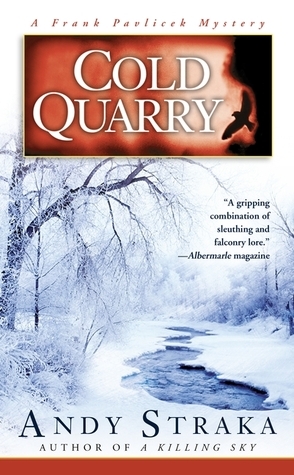
This is 1.5 stars rounded up. No, no, and no.

I received this DRC free from Brash Books in exchange for an honest review.

I was attracted to this mystery, which is set in West Virginia, because it has the novel element of hunters that use falcons, in addition to white Supremacist bad guys known as the Stonewall Ranger Brigade. And it started out as a promising read, with detective Frank Pavlicek and his former Navy Seal partner, Jake Toronto, looking to find out who shot Chester Carew in the back, leaving him dead on his own land. The birds of prey stand as metaphors for Pavlicek and Toronto, who will now hunt the killers as “cold quarry” in order to exact justice.

Who was to expect, then, that the entire novel would be riddled with blantant sexism, with only one positive depiction of a female? It is this one redemptive moment that saved this mystery from a one star rating, a rating I save for the illiterate and the blatantly offensive.

Before I explain further about the stereotyping of women in this work, I should also mention that the N word is used twice–once by a bad guy, once by a more complex figure–and our hero is known to have shot and killed a young African-American man when he was a cop. We are told this was a righteous shooting that gives our hero terrible nightmares nevertheless.

What timing.

But back to the women. Because I wanted to enjoy this book–who picks up a murder mystery without wanting some escapist enjoyment?–I withheld judgment until the 75 percent mark, and even then I read the whole thing to see whether there would be some sly move in which the sexist behaviors of the main characters were called out, or in which the protagonist found himself reflecting that he’d misjudged some women and situations. But the entire narrative was loaded with it, not just the main character’s dialogue and behaviors, so I didn’t think it was likely, and in the end, there was only one good moment for a female character, and the rest were endless cliches.

We have Betty in her apron (“It’s all right, I’ll just be in the kitchen”); nutcase bar owner Roswell Parker; seductive reporter Kara Grayson, who goes to pieces during a violent scene in which she is not injured.

“You stay here with the woman…” Frank tells Jake.Kara tends to an injured animal, and when the dust has settled the two menfolk rush out to save the world while “A female sergeant had also arrived and seen to it that Kara Grayson and the German Shepherd were taken care of.”

We often hear of women that occupy professional positions; we just never see them do their jobs, or if they do, they mess it up. Federal agent Colleen Briggs is one such character, and everyone feels great when she is openly dissed by the deputy sheriff, since she is “a robotic clone of a federal agent”.

Pavlicek has a grown daughter who’s out of state doing some work for him online, but when he gets her on the phone she “pouts”, and he tells her, “You let me worry about that, honey.”

Chester Carew’s son Jason is just old enough to read The Cat in the Hat, but he is old enough to protect his mother, who is helpless, apparently.(Remember Betty? In the kitchen?) Pavlicek gets her permission to speak to her son alone, but he doesn’t tell her what the kid knows or what the kid has seen. And the kid doesn’t want her to know.

We meet Jake Toronto’s girlfriend, who is an attorney, but when we run into her at home, she is cradling a baby. Frank’s daughter Nicole, who has arrived in town, takes time for “the appropriate oohing and ahhing over the baby”, and then follows her father and Priscilla into…where else? The kitchen. At this point–and I don’t want to give a spoiler, so I’ll use broad strokes–Frank needs to take care of something for Jake that Jake isn’t available to do, and this includes getting confidential material out of the house. Priscilla is concerned because Jake keeps that door locked; of course she wouldn’t have a key, right? But Frank does. When his daughter asks what is in there, he says, “It’s just Jake’s little office.”

Priscilla does help, though, by getting “‘Just, um, some personal stuff I already knew about in the bedroom’…she looked at Nicole and the two of them giggled.”

Oh, but it isn’t over yet. Not by a far sight. “Priscilla’s hands were dwarfed” by Jake’s shotgun, so of course, Frank took it from her.

It occurs to me during all this that since Priscilla is–we are told–an attorney, perhaps Frank is protecting her professional credibility by having her not know some things, or else maybe Jake was, but the word “attorney” is mentioned just once and never comes into play again.

We have a number of promiscuous women, all of whom are morally compromised. We have lazy nurses. And in a confrontation with bad guys, the uglies hurl the ultimate insult and Frank and Jake by calling them “little girls”.

Excuse me now. I am going back to my DRC of Gloria Steinem’s memoir. I need something to read that will remind me that women are worthy of dignity and respect.

If your ideas about gender are lodged in the 1950’s, by all means, get this book, and have a real good time.

As for me: no more Andy Straka!

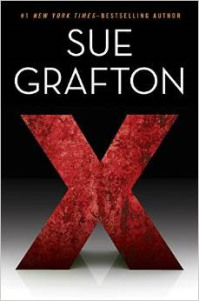
X, by Sue Grafton *****

It’s only a week away! This one was worth waiting for, and will be available to the public August 25.

seattlebookmama's avatarSeattle Book Mama

xBefore I review this title, I have a plea: can we just make the alphabet a teensy bit longer? Because I don’t think I am ready for this series to end, and it’s getting perilously close. But meanwhile, thank you to Net Galley and Putnam-Penguin Publishers for the free DRC, an unexpected treat, especially since it was such a clean galley. The title goes up for sale August 25, but you can order it in advance, too.

As often happens, our story isn’t just about one mystery. There’s an official investigation that goes bad; an unofficial investigation that goes worse; and then there’s a big pile of trouble that drops itself into the neighborhood where Kinsey and Henry (who is ten percent Kinsey’s landlord and ninety percent her surrogate father) live. As always, taut suspense is intermingled brilliantly with silly, naughty, impulsive things that Kinsey Millhone, our intrepid but mischievous…

View original post 778 more words

The Miser’s Dream, by John Gaspard*****

themisersdreamThe Miser’s Dream is the third in a series featuring magician Eli Marks. Once I got into it, I did a forehead slap because I could also have read the first two in the series free and reviewed them, had I been paying attention. Thank you to Net Galley and Henery Press for hooking me up with this enormously entertaining novel. It’s billed as a cozy mystery, but were the humor placed around the killer rather than the sleuth, it could have been a comic caper. The title will be for sale October 27.

Marks runs a magic shop and works as a magician locally. He lives over the shop, and the quirky placement of its windows permits him to see into the projection booth of the adjoining theater. Imagine his surprise one fine day when he looks out his window to see a corpse—the projectionist—on the floor of the projection room. It is a locked room mystery, since the man could not have killed himself; the weapon is there in the room; and the door is locked from outside, showing no sign of forced entry.

Just like magic.

Gaspard occupies common country with Grand Master James Lee Burke in his cleverness at choosing engaging, oddball names for his characters. In addition to Detective Sutton-Hutton, we also have the sinister Mr. Lime and his assistant Harpo. The latter two seem to have some inside information. Whereas the character descriptions for these two were a trifle overdrawn, putting me in mind of a Tim Burton animation, the dialogue was sometimes quite splendid, and their role in the story is interesting and well played.

For the first half of the book, I didn’t care at all who the killer was. I was having such a good time with the double features, which I highlighted in my DRC and added to at length, but you’ll have to get the book because I’m not going to post a spoiler. There were other odd bits of hilarious detail in unexpected places, perhaps the best, in my view, being the scene with the flower pot. I had begun to wonder whether there was so much extraneous hilarity here that the murder was becoming obscured, but then it all came into focus just when it needed to, and I didn’t have to retrace the thread to figure things out. The plot is mostly linear and Gaspard has used just the right number of characters, not enough to confuse or clutter.

If you need a good laugh, get this book when it comes out. If you like a good cozy mystery, I likewise recommend it. And for those that have precocious pre-teens and adolescents that sometimes read adult-reading-level material, this one has no explicit sex and relatively clean language, and so it is safe to pass on to your budding bibliophile.

To sum up: this is hands-down the funniest thing I have read in a long time, expertly paced and hilariously detailed. Do it.

I Am Crying All Inside and Other Stories: The Complete Short Fiction of Clifford D. Simak*****

iamcryingallinsideClifford D. Simak is a science fiction legend. Before his 55-year career was done, he earned 3 Hugo Awards, the Nebula Award, and was named Grand Master by the Science Fiction and Fantasy Writers of America. I scored big when Open Road Media and Net Galley invited me to read and review this wonderful collection. It is available for purchase digitally now, and will be released October 20.
The fact is, I miss old-school science fiction writing, the fun stuff that is the product of a fertile imagination but requires no knowledge of programming code or other technological wizardry. What’s more, the quality offered in this collection is not only excellent, but evenly so. Common themes tend toward robots with complex feelings, sentient plants, and time travel, but there is no sense of sameness otherwise. Sometimes we are on a far-flung planet; sometimes we are back on planet Earth after it’s been wrecked to where anyone with any gumption has up and left, with only sorry-ass losers remaining. The common factor among all of these stories, in fact, is Simak’s ability to engage the reader.
Given the strangeness of the worlds science fiction and fantasy writers create, one would expect to feel intellectually curious about what the writer has cooked up, but what astonishes me every time I read really strong science fiction is the way the writer manages to work our emotions, causing a lump to form in one’s throat over something that could not possibly happen. By creating an alien setting in which a human, or human-like thought and emotion is present, a sneaking affection is created, and before you know it, there you are practically weeping over the poignant scenario that’s before you. The hook isn’t sentimental or maudlin, and that is why it is so successful. The subtlety is powerful, and we are connected to characters that not only don’t exist, but could never exist in the way the author has laid it out. And so, if Stephen King is drawn to things that go bump in the dark and binds our emotions to oddities in that genre, so has Simak laid our feelings bare using distant, fictional moons in solar systems that don’t exist. It’s a hell of a gift.
Every time I read a short story and decided that I had a new favorite, I looked back over the earlier ones—they were all so strong!—and then read on, and found myself uncharacteristically unable to choose one over the others. There isn’t a weak one in the batch; all are outstanding.
At one point I was ready to knock half a star off over the one-time use of the “N” word in one short story written in the first half of the twentieth century, but then there were all sorts of references to racial purity within the context of the story (alien races) that convinced me that he had an agenda when he did so, and not necessarily a bad one. If it were up to me, I’d leave the word out, but given its purpose here, one could argue for its inclusion.
But it’s worth being warned that it’s there. Nobody likes that kind of surprise.
The only other bad news here is that Simak is dead.
The good news is that over his prodigious career, he wrote enough material to fill 13 more collections beside this one, and if permitted, I will read and review every single one of them.
Highly recommended to anyone that loves old school sci fi.

The American Civil War: A Military History, by John Keegan ***

theamericancivilwaramilitaryhstThis was a disappointment. Keegan’s history of World War I was outstanding, and likewise he did a brilliant job with World War II. In contrast, his treatment of the American Civil War is nothing special. His sources are secondary; he hasn’t spent countless hours sitting in local and regional libraries reading collections of letters or rare documents. The man lives in England, and as far as I can see, he may have written this book from there. His maps are insufficient, and the ones he does use are the ones you’d see in anyone else’s American Civil War literature. Likewise, his photographs are ones I already saw somewhere else.

All of that could still make a four star work if he put a fresh perspective into play. I recently read and reviewed the outstanding Our Man in Charleston, by Christopher Dickey. That book offered the British perspective on the conflict, and it was very different from that of either the Union or the Confederacy. I had hoped that Keegan would likewise offer a new perspective and a lively discussion.

The book is instead, dull, dull, and dull. I did not see one piece of information I didn’t already know…and he called John Brown a “wild man”, perpetuating the textbook stereotype that tends to be used by those that don’t care to dig too deeply.

In his end notes he thanks James McPherson, and really if you read McPherson’s Battle Cry of Freedom along with the memoirs written by generals Grant and Sherman, you’ll learn far more and with much fresher, more interesting prose. It is these to which he refers most liberally.

On the plus side, I got my copy used. On the sorry side, it was still eight bucks I could have spent on something I want.

I advise you to read something else. If you want to read Keegan, read about one of the world wars. If you want one basic yet thorough treatment of the American Civil War, read Battle Cry of Freedom. But not this book.

Blanche Passes Go: A Blanche White Mystery, by Barbara Neely*****

blanchepassesgo“Blanche’s mind rang with remembered slights and taunts, and echoes of that awful, heartbreaking instant of fear that was a part of every trip into the white world—a fear of being refused or given poor service because she was black, stopped by a cop because she was black.”

I finished reading Blanche Passes Go on the second anniversary of the death of Michael Brown, who was shot dead by a cop for jaywalking. Bernie Sanders, the candidate who fancies himself the liberal savior for all progressive-minded Americans, spoke here in Seattle that day. The purpose of his talk, apart from campaigning and fundraising, was to celebrate the birthday of Social Security. The speech was disrupted by a pair of African-American women who took exception to his myopia.

So I guess you could say that everyone, even those that don’t generally enjoy mysteries, ought to be reading this book right about now. In particular, if the reader is still trying to figure out why so many people, particularly people of color, get upset with the clueless slogan “All lives matter”, this book is here, just for you. Neely approaches issues of race, class, and gender in a way that is clear but not unkind. It’s her best work to date, and could not have been published by Brash Books at a more appropriate time. My great thanks go to them and the people at Net Galley for providing me with a DRC, and to Neely for laying it all out so that anybody who has a willing heart can get the picture.

In this fourth Blanche White mystery, Blanche has gone home to Farleigh, North Carolina for a vacation, and to try partnering a catering business with her best friend, Ardell. But Farleigh is a small place, and she can’t avoid running up against David Palmer, a Caucasian man that raped her. She never reported it, of course; were they really going to haul the well-heeled, powerful white man for a sperm sample, given the long history of Caucasian men raping Black women with impunity? Not likely! So when her long-simmering rage is ignited by the sight of him, she vows to not only get mad, but to get even as well.

Blanche White novels always have multiple threads that weave in and out of the plot line, but this is the most complex and impressive yet. Not only does Blanche have to grapple with Farleigh and Palmer, she is back in her home town, and her mama is still here. Like many women, Blanche has hit middle age and menopause with a renewed, powerful yearning to know more about her mama, who never stops talking but never gives away the personal information Blanche is almost begging for, and about her father, about whom virtually nothing has been told her. Blanche decides that once a person has children, their privacy is no longer as sacred as it was before, and a lot of personal information becomes family property. I loved that.

Well into the book, Ardell accuses Blanche of sounding exactly like her mother, and Blanche is dumbfounded to realize it’s true. I threw back my head and laughed out loud. It’s the rare woman that doesn’t hear her own mother coming out of her mouth sooner or later, and the moment was built so deftly and executed so well that it landed hard on my funny-bone.

Other Blanche novels have accentuated the protagonist’s tightly held independence. Here, she meets a fine man named Thelvin on the Amtrak coming into Farleigh, and at some point, she has to decide just how flexible (or inflexible) she is going to be.

Another component is Mumsfield, an acquaintance that has Down’s Syndrome and is about to be married to someone who may be after his money. This aspect of the story, like the others, is skillfully crafted. Mumsfield is not completely helpless, and the fact that he has Down’s does not make him Blanche’s friend, as he claims to be. There is still that division of white privilege. It’s not that Blanche could not have a white friend, but it would have to be someone with ownership of what that means.

Because all of these components are told in the third person omniscient, and because the writer is a complete badass, we are privy to all the intricacies involved here. Add a problem with domestic abuse next door to the Miz Alice where Blanche is staying, and you have an interesting stew indeedy.

Highly recommended.

The Guilty One, by Sophie Littlefield *****

Tomorrow! It will be released tomorrow! I can’t post the review I just wrote for another galley because I was asked to hold till publication, but there is so much great literature coming out mid-August that you should be kept busy reading anyway. This one is a humdinger.

seattlebookmama's avatarSeattle Book Mama

Sophie Littlefield, author of the Bad Day series (A Bad Day for Sorry, etc) has hit a new level of excellence with The Guilty One. Many thanks to Net Galley and Gallery Books for the DRC! This book goes up for sale on August 11, and if you love a good novel, this one is for you.

Our chief protagonists are Maris and Ron. Maris is Calla’s mother…or she was. Calla is dead now. The court has convicted Karl of her murder, a heartbroken, enraged loss of control over a bad teenage breakup. Ron is Karl’s father, and as we open our first setting, he is considering jumping off the Golden Gate Bridge. At the last minute he decides to phone Maris, and ask her whether to jump or not.

theguiltyoneIt shows a good deal about Ron’s character, weak and lacking in integrity, that he not only phones Karl’s victim’s…

View original post 503 more words

Live From Death Row, by Mumia Abu-Jamal*****

livefromdeathrowMumia is a former Black Panther. The facts support his having been framed in the murder of the cop, a crime for which he was nearly executed.

Live from Death Row, written before his sentence was commuted, is not, however, a vehicle he uses to advocate for himself or plead his own case to the public. He has written other books I haven’t read, and I don’t know if he did that there.

Instead, here he uses his own situation to discuss the racism inherent both in the U.S. court system; he also talks about racism on death row.

The mandatory fresh-air time, prized and treasured by men who rarely see the clear blue sky, is an Apartheid one, at least in Supermax, RHU,SMU, and SHU (ultimate maximum security prisons, which he says have swelled since jailhouse overcrowding has made prisons tenser places and more people are tossed into “the hole”). The vast majority of prisoners are Black, though they are a minority of the population at large, and in the Pennsylvania prison he describes, 80% of those maximum security cases, those who wear Black skin, are crowded into a courtyard. They can’t see green grass or the outdoors, only four brick walls and way up there, blue sky. Why? And where are the other prisoners going?

The other prisoners (who are also maximum security) who are not Black have a SEPARATE courtyard, which is surrounded by chain=link fencing with razor-wire, but has the view. The 20% have the perk of a much less crowded space and the capacity to see Mother Earth during their treasured time outside prison walls.

As to the racist system that places Blacks on death row at such a startlingly high rate, he offers the following statistics and footnotes all of them like the scholar he was before being incarcerated, and continues to be behind prison walls. He uses a Georgia case because it is one which caused the Supreme Court to recognize the following facts:

*defendants charged w killing Caucasian victims are 4.3 times as likely to be sent to death row as those charged w/killing Blacks;

*the race of the victim determines whether or not a death penalty is returned;

*nearly 6 of 11 defendants who received the death penalty for killing Caucasians would not have received the death penalty if their victims had been Black;

*20 of every 34 defendants sentenced to death would not have been given the death sentence if their victims had not been Caucasian.

He continues to pound one damning fact upon another, and cites court cases to back them up; those above come from McClesky vs. Kemp (1987). If the case sounds old, I would argue that precedents are set by very old cases indeed, and of course, this book was published early into the 2000 decade. I doubt a more recent gathering of data would return more favorable information; in the case of jail overcrowding, I suspect the recession has made it worse.

A person would have to be hiding under a rock or in a coma not to be aware of the level of violence visited upon African-Americans by cops and vigilantes within the past year.

I applaud Mumia for using his well-known case to set the facts before us, rather than trying to build momentum to save himself. There was a considerable amount of public pressure NOT to execute him, and I do think that had to do with his sentence being commuted; as it was, my kids’ urban U.S. high school was “barely holding together”, according to a counselor I knew there, the day that Mumia’s case was turned away by the U.S. Supreme Court.

If you are interested in reading about social justice issues, this relatively slender volume holds an astounding amount of really critical information. I appreciate Mumia’s relentless effort to make the public, both in the US and internationally, aware of the atrocities that continue to visit Black prisoners in the USA, and it’s more relevant now than ever!

Gold Coast Blues: A Jules Landau Mystery, by Marc Krulewitch****

goldcoastblues“Tanya Maggio’s a missing person, and I got a feeling she’s missing on purpose.” This third entry of the Jules Landau series finds Landau searching for Eddie’s missing girlfriend. There’s a faded noir feeling in its pages as Landau bounces between Chicago and New Jersey trying to trace back the thread. Though confusing at times, a trifle overburdened by excess characters, it’s a fun, original story. Thank you once and thank you twice to Net Galley and Random House Alibi for the DRC. This title is available for purchase September 22.

The search for Tanya leads Landau to the mean streets of Irvington, New Jersey, where a crooked cop named Cooper explains that in their town, they don’t try stamp out crime…they manage it. So anyone that is hooked up to the criminal world is fair game; the idea, at least ostensibly, is that bystanders should not be caught in the crossfire.

Right.

Turns out the New Jersey people are running a scam. Those among the one percent that have more time and money than good sense invest in fine wine, wine that is worth hundreds of thousands of dollars for a case of a dozen bottles. Hey, its value appreciates, and some liken it to gold or silver. If a bottle gets busted, then that’s what insurance is for.

With a bizarre scenario such as this one, it’s only to be expected that someone would come up with the idea of counterfeiting labels and brewing up some fake stuff. After all, no one is going to drink it anyway, right? Who’s to know?

The plot twists, and it turns sometimes enough to confuse me. Hold up…are we in Illinois, or are we still in Jersey? But when push comes to shove, this romp is too enjoyable to walk away from. “That little shit Spike”, an heir to the Irvington mob, is one character that shines bright enough to keep those pages turning. Another, of course, is Landau’s ridiculous cat Punim, for whom he sits down to compose a legal trust fund when he is depressed and in danger. His own life may be on the line, but by god someone has to be paid to feed Punim his chicken hearts every day. And then there is Amy. Is she an enemy? A spy? She sure as hell isn’t really a psychic, but she knows enough that she has to be something. Maybe she has Tanya tied up in her closet. You never can tell.

The originality of the plot is assisted by Krulewitch’s affinity for figurative language. I loved his description of the “horror hotel” and the “stunningly verdant” house located on…wait for it…Bunnybrush Lane.

September is a good time to curl up under the quilts with a good book, or for those in warmer climes, it’s not too late to stretch out on the beach with one. Either way, if you need an escapist beach read, or a good noir mystery, this might be the book for you.

All In, by Joel Goldman and Lisa Klink *****

all inThis one is 4.75 stars, rounded up. Thank you to Net Galley and to Thomas and Mercer for the DRC. This absorbing thriller will be available September 8 for purchase.

Cassie Ireland is an asset recovery specialist; she views herself as a modern-day Robin Hood whose job it is to steal back money, goods, or even really embarrassing videos from those that originally stole them. Her employer is a shadowy individual code-named Prometheus–a moniker chosen because Prometheus was the sneak thief of the gods. Ireland’s nimble, silent in her work, and careful in trusting others. She really can’t be played.

Her job here is to steal select items from the home safe of crooked-wealthy magnate Alan Kendrick. In order to gain access to his treasure trove, she must first make it past a sophisticated security system, to which she gains access by deceiving Kendrick’s wife, Gina. Once Cassie found her way into that safe, I stopped breathing until she was out again. I think my fingertips turned blue. But once she’s been in and out, things once more begin to unspool at a heart-pounding pace.

Jake Carter is a professional gambler, and he too has a grudge to settle with Alan Kendrick. He plans to beat him at poker; he’s fast, smart, and fair. Unfortunately, the last whale he took down has sent goons after him. They want the money he took from Theo at the table, and they also want him dead. Jake’s challenge is to go after Kendrick while dodging Theo’s assassins.

Ultimately, Cassie, Jake, Theo and Kendrick all land on the same enormous floating gambling casino. You can run…but only so far. You can hide, but sooner or later, you’ll be found. On the other hand, you can also turn your stalkers into your prey, if you’re cunning and well organized, and if you can gain the loyalty of others nearby. And then too, you might be able to grab a helicopter!

All In is fast, escapist fun. Ordinarily I would call this a four-star review. Four stars are my default for books that are anywhere from pretty good to really good, but that don’t meet the gold standard of five stars. My four star reviews are big houses with a lot of rooms. If I hate a book but concede that others are likely to enjoy it, I will go with four stars and explain what I didn’t like. I also give four star reviews to books like this one that I like a lot, but can’t see them as the very epitome of their genre. Five stars means excellence that is above and beyond ordinary work.

The tipping point here that knocked this up to five stars is the use of race and gender. Nobody wants to be preached at in the middle of a thriller, and Goldman and Klink don’t do that. Rather, it is by the assumptions that are inherent in their choice of protagonist (Ireland is African-American, female, smart as hell and way more fit than any gum shoe I can recall); the way the plot unfolds, with no helpless damsels waiting for great big men to come save them; and the way secondary characters are handled, the butler foremost among them. It reminded me a bit of Barbara Neely’s writing, and so I wanted to stand up and cheer.

Fall is coming, and whether you are still basking in the sun on weekends or huddled by a fire, it’s a great time to treat yourself to a tightly paced, accessible thriller by authors that show their respect for all people, especially the working class, in the way they sculpt their characters and plot. It looks like a winner to me.

Why not order it while you can?