Beautiful Country, by Qian Julie Wang*****

“Secrets. They have so much power, don’t they?”

Qian Julie Wang is born in China to a professional couple living under the shadow of governmental disfavor. Her father’s elder brother has written critically about Mao Zedong, naively signing his own name to the article, and as a result, the entire family lives under a cloud and the threat of violence, courtesy of Chinese Stalinism. When her father finds a way to relocate himself and his family to New York, it is under a tourist visa, and so they cannot legally remain in the USA, or get any sort of legitimate employment. Wang’s memoir tells of the deprivation and terror, combined with occasional lifesaving windfalls and ingenuity, of growing up as an “illegal,” and of how, against all odds, she ultimately finds success and citizenship.

My thanks go to Net Galley and Doubleday for the invitation to read and review, along with my apologies for being inexcusably late.

Wang comes to the USA, which in Chinese translates to “Beautiful Country,” as a small child. From the moment her feet touch American soil, her parents drill the story into her: “I was born here. I’ve lived here all my life.” Because they are in the US illegally, they must find work to do under the table, and so they are exploited by the most malevolent sweatshop owners. At first, Wang is also employed, toddling off to do piecework with her mother, but eventually she is enrolled in school, where she proves to be highly capable once she overcomes the barriers of language and culture.

More than anything, her life and that of her parents is dominated by fear and secrecy. Opportunities that would otherwise be helpful must often be bypassed because of the documentation required. Her parents’ emotional stability, their marriage, and her mother’s health are broken.

If this story seems unbearably grim—and I confess, this is why I delayed reading it, moving other, pleasanter stories to the top of my queue—it is ultimately a story of resilience and of triumph. Wang is a gifted writer, and she breaks up the horror by recounting small victories and pleasures that punctuate her youth. But the most important aspect of how the memoir is presented, is that everything is told through the lens of childhood, and so we see everything as a seven-year-old Chinese girl, a nine-year-old, etc. would see it.

Because I had fallen behind, I checked out the audio version of this memoir from Seattle Bibliocommons, and Wang does her own narration, which is my favorite way to hear a book, because there’s no danger that the reader will add emphasis or interpretation that conflicts with the author’s intentions. The climax arrived as I was wrapping Christmas gifts, which made me all the more aware of my level of privilege.

Wang tells us:

“Most of all, I put these stories to paper for this country’s forgotten children, past and present, who grow up cloaked in fear, desolation, and the belief that their very existence is wrong, their very being illegal. I have been unfathomably lucky. But I dream of a day when being recognized as human requires no luck—when it is right, not a privilege. And I dream of a day when each and every one of us will have no reason to fear stepping out of the shadows.”

Highly recommended.

Three Girls From Bronzeville, by Dawn Turner****

Dawn Turner is an award-winning journalist who grew up in Bronzeville, the historic home of the Black Community in the south end of Chicago. My thanks go to Simon and Schuster and Edelweiss for the invitation to read and review; I also extend my apology for missing the date of publication. This well written memoir is for sale now.

Turner looks back at her life through the lens of sisterhood. The two other girls mentioned in the title are her younger sister, Kim, and her best friend, Debra, whom she meets in elementary school. She takes us through the benchmarks of her life in a narrative that is both intimate and conversational, but that also features a keen depth of analysis, as she examines their experiences with regard to race, gender, social class, and of course, a few random, intangible but significant aspects of their experiences.

I enjoyed this book. There’s some terrific humor—for example, as a child, Dawn ascertains that a trip to the hospital is the equivalent of a death sentence, and when she needs a tonsillectomy, she gives away her most prized possessions, explaining that she is “going home to be with the Lord.”

And…about that. The humor is terrific, but the Lord dominates this story in a way that makes me uncomfortable, with passages that go far beyond the brief and the pithy. It’s her story, and she should tell it the way she chooses, but the almost constant religious references make this more of a Christian memoir than one for general audiences. It has a lot of nice moments and is told by a skillful scribe, but at the same time, I’m not sure I’d read another memoir of hers, should she choose to write it, because I find these frequent references tiresome. I have to wonder if the story would be any less authentic if this aspect were included with a gentler hand.

There are lots of meaty issues, thought provoking and common to the experience of a great many people. At one point, for example, she gives a speech at school, and although it is exhilarating and more than successful, Debra passes her a note asking why she sounds white when she speaks to an audience. Later, as an adult, Dawn and her husband confront other choices. Is it better to get a house in a low crime area that is mostly Caucasian, or should one stay in the Black community, even if there are fewer opportunities for their child there? Then the same issue arises regarding school choice. There are many other thought-provoking situations, but I’ll leave you to find these on your own.

This is a powerful memoir written by an accomplished wordsmith. For those that can read it with Jesus riding shotgun, this book is recommended.

The Ride of Her Life, by Elizabeth Letts*****

Elizabeth Letts has become one of my drop-everything authors. Instead of writing about the same historical figures that everybody else writes about, she finds noteworthy women that have fallen through the cracks of history. The Ride of Her Life chronicles the latter years of Annie Wilkins, a senior citizen that given not long to live, and not much to lose, decides to embark on a cross-country journey on horseback so that she can see the Pacific Ocean before she dies. I was invited to read and review this remarkable novel by Net Galley and Random House Ballantine. It’s for sale now.

Annie Wilkins lives in rural Maine, and is endeavoring to continue to run the family farm. It hasn’t gone well. Between a series of events beyond her control and an aging body, she falls behind, and then more so, until the bank gives notice of foreclosure. At the same time her lungs aren’t doing well; the doctor gives her two or three years to live, but only if she does so restfully. She is offered a place at the county home, which is essentially a charity lodging for the indigent.

Under similar circumstances and with no family to fall back on, most of us would have sold the farm and gone to rest in the county poorhouse, but Annie is not like most people. She sells up, and she plans her next move carefully. She packs up the things she and her dog will need for their trip, and since the purchase and maintenance of a car are beyond her means, she buys a good horse. That’s it. She packs up her maps and gets on the horse. (The dog alternates between walking and riding.)

Part of the joy in reading of her adventures is the window it provides into the United States in 1954, before most of us were born. For those outside of cities, horseback travel is still not unusual; Annie’s greatest challenge, of course, is her lack of awareness about highway safety. Her initial plan is to ride alongside the road when possible, and on the shoulder when it isn’t, but there are a host of dangers out there, and almost everything that can happen to her, does. But people are essentially goodhearted, and in every instance, someone kind and decent comes along and does right by her and her critters.

In the polarized time in which we live, this is exactly the story we need. I suspect that if Annie were to do the same thing today, there would still be people that would come along, and without inquiring who she voted for in the most recent election or whether she has received a vaccine, would feed her, or offer up their guest room for a night or two, or would drive her to the hospital. Those people were there then; their descendants are here still. We have not changed all that much.

Letts has told an engaging story, but part of my mad respect for her has to do with her attention to detail. The very best historical fiction is essentially true, with dialogue added for interest, and Letts writes the best, no doubt about it. Her endnotes are impressive, and she tells us that she drove more than 10,000 miles while researching her book.

Because I had fallen behind with my reviews, I checked out the audio version from Seattle Bibliocommons and alternated it with my digital galley. Both are outstanding; you can’t go wrong either way. Highly recommended!

The Soul of a Woman, by Isabel Allende*****

Isabel Allende has long been a guiding light for women, immigrants, and social justice activists. She is an old woman now, and her wisdom and word smithery have only grown deeper and wider. Thanks go to Net Galley and Random House Ballantine for the review copy. This book is for sale now.

There are four sections to this compact memoir, and overall, it is a memoir of Allende’s feminist philosophy and experiences. She also describes the trajectory of the feminist movement and the gains that have been made.  One of Allende’s most agreeable attributes is her candor, and she discusses her relationships with the men she has married with disarming frankness and humor. Her voice is like nobody else’s.

Generally speaking, I find it annoying when an author uses space in the book they’ve sold us to advertise a product or beg for funds, nonprofit or not; however, this time I wanted to stand up and cheer! Allende’s foundation exists to support women’s reproductive choices, and that includes abortion. Out of all the years I’ve blogged, over one thousand reviews I’ve scribed, and I have never seen abortion rights advocated so forcefully. I bow in admiration.

If I could have something more from this iconic writer, it would be an overall autobiography. She has written numerous memoirs, but all of them focus fairly narrowly on one particular aspect or time period. I would love to have her whole story in her own words.

Highly recommended.

The Kitchen Front, by Jennifer Ryan****

I enjoyed Ryan’s historical novel, The Spies of Shilling Lane, and so I was thrilled when Ballantine Books and Net Galley offered me a review copy for this one. It’s for sale now.

The story is set in rural England during World War II. We have four protagonists, all of them women. Audrey Landon is a widow; her husband died in the war, leaving her with two boys to raise on her own. The old family home, which she inherited from her parents, is falling apart, and she has no means to repair it. In some places, the roof has caved in.

The second is Audrey’s sister, “Lady” Gwendoline. Gwen puts herself first at all times, since nobody else ever has. She married for wealth and convenience, and she lords her affluence over her sister and everyone else. But her husband is a cruel man, and her existence is a lonely one despite its material comfort.

Zelda was a top chef in London, but once her pregnancy became visible, she had to get gone. Her landlord calls her a “trollop,” and she knows she can’t stay there now, so she applies for wartime housing. The volunteer in charge of placing her is Lady Gwendoline, who snickers with amusement as she assigns her to live in Audrey’s house.

Nell is a chef’s assistant at Fenley Hall, the prestigious old pile where Lady Gwendoline and Sir Strickland hold court. The chef, Mrs. Quince, has taught her nearly everything she knows, and it’s a good thing, too; the old lady isn’t getting any younger.

All four women enter a cooking contest held by the Ministry of Food, a “wartime cooking challenge” to showcase recipes that use ordinary ingredients and work around rationing.  The winner will be the new announcer for The Kitchen Front, a wartime radio program—and this program existed in real life.

As in the last story, Ryan develops her four characters in a way I believe; the most benevolent have flaws, and the most unsympathetic, Lady Gwendoline, is complex and capable of change. It is Gwendoline that is most developed at the end, but all four are dynamic characters.

For a brief while, I use the audio version of this book, which I obtain from my local library. Jasmine Blackborow does a fine job as reader in most regards, but there is a side character that turns up in a couple of emotionally charged scenes, an Italian prisoner of war, and when she voices him, he sounds like Dracula, which ruins the magic. For this reason, I recommend sticking to the printed version.

The first half of this story is almost unputdownable, and for a time I nearly forget my other books. But as the climax approaches, things become predictable, almost formulaic, and the ending is a bit too tidy for my tastes. The scenes toward the end with Mrs. Quince are overwrought.  It’s not terrible, but because I am so far in love with the first half, I am disappointed by the denouement. Also, if recipes must be included, as apparently they must, the author should give them character by using the substituted ingredients in the instructions; the more desirable ingredients can be footnoted.

Ultimately I rate The Kitchen Front four stars; five for the first half, three for the second.

The Vanishing Half, by Brit Bennett***-****

This book wasn’t on my radar until it hit the best seller lists. The premise is a provocative one, and so I hopped online and ordered a copy of the audio book from Seattle Bibliocommons. It held my attention all the way through, but when it concluded, I felt a little cheated.

The chief protagonists are two girls, twins, raised in a tiny (fictional) town deep in the American South. The whole town is Black, and everyone—everyone—is light skinned. Sisters Stella and Desiree become restless as they come of age, and they conspire to run away to the big city. They pack a few things, gather what money they can, and head for New Orleans. The time is the mid-1900s. They arrive, find a place to stay, and get jobs. One day Desiree comes home from work, but Stella doesn’t. She’s gone. Enough of her things are missing to suggest that she hasn’t met with foul play, yet Desiree is her twin, and she is undone by Stella’s unexpected departure. Not even a note!

Stella is in the North; Stella is passing for Caucasian. But to do so, she has to cut all family ties. Her new husband has no idea.

The story progresses, and Desiree does the opposite, marrying a man who is very dark. Their daughter is what might be called blue-black. Now neither twin can comfortably return to Mallard, with one too Black, and one not Black at all, as far as anyone can tell.

The story progresses through various life changes, and eventually the focus is on the twins’ daughters, one each. Of course, the reader must wonder whether the sisters will ever be reunited, and if so, what will happen then.

When the book is over, I feel as if I am leaving the table before I’m full. There were so many opportunities here, and the author squandered all of them. The protagonists never develop to the point where I bond with any of them, and I cannot tell what the author’s purpose is here.

This book is for sale, but don’t break the bank to get it. Read it free or cheap, or give it a miss.

Well-Read Black Girl, by Glory Edim, editor****

Ahem. Yes, I am in fact, over two years late with this review. I can explain.

My dog ate…no, wait. I got a flat tire when…oh. Yeah, that doesn’t work.

So now I have to tell the truth, having failed miserably, as I usually do, at lying. Here it is. About a month after I received the galley to this book, courtesy of Net Galley and Random House, national news and social media went into a virtual frenzy discussing cultural appropriation. And I froze. I started examining everything I did through that lens, and I may have gone overboard. I looked at this galley and I thought, I have no right to review this thing. And when I read the introduction anyway, I feel it even more so. Not written with me in mind, was it? Was this the literary equivalent of reading someone else’s mail? And so I did the easy thing, which was to shove it onto the back burner and read something else. Repeatedly.  

Several months later, it occurred to me that nobody would even have to know if I were to sneak it out of my files and just read the article by Jesmyn Ward, which was actually why I had originally requested it. Ward is on my read-anything list. I read it, and I liked it, and then I shuffled it back into the file. No harm done.

This spring, as the world tentatively emerges, one hopeful toe at a time, from the isolation imposed on all of us by the horrific pandemic, I realize what I should have known all along: that anybody can read anything, and form an opinion about it; and that since I was granted the galley, I actually owe a review. I straightened my spine, dusted myself off, and sat down to read it. There was no blinding light or thunder from the heavens. Nothing smote me. I read it, and I lived to tell the tale.

Most of the authors here are new to me; in addition to Ward, I also know Jacqueline Woodson’s work a bit, mostly from my years teaching language arts, when I used her YA book. Everyone here included in this compendium is a strong writer, and they are largely preaching to the choir, since the audience are also bibliophiles. But the common thread, the point they drive home—and rightly so—is the importance of finding literature about girls that look like themselves. They speak of it as empowerment and validation.

Back in the stone age, when this reviewer was enrolled in a teacher education program, we were likewise taught the importance of inclusive literature. It seemed so obvious to me, this obligation teachers surely have to make sure all of their students are represented in the books their students read, or have read to them. I figured it was a no-brainer. But when I arrived at my first teaching position in elementary school, (heaven help me and those children both,) I was shown the supply closet and there were the classroom book sets. The main characters were Caucasian boys; Caucasian boys and girls; fluffy woodland animals, mostly male; and more Caucasian boys. I sadly examined my battered Visa card and drove to the bookstore to order better books. And I was further amazed to learn, later, that my colleagues, all of whom were Caucasian, believed that the school’s book collection was terrific. Their students loved those books, and that included the children of color that made up approximately half of the population there, they told me.

Sure they did.

The essays in Well-Read Black Girl are a much-needed reminder that racism isn’t always overt; sometimes racism is exclusionary, unintentionally so. And what silences young voices, and what teaches children that books, and life in general, are not about them, worse than discovering that they are not important enough to be included in books?

When I moved to secondary education, where I belonged, I visited the book room there, and I found a set of books about African-American boys, but the message inherent was that they are constantly exposed to drugs and gangs, and it will be hard as heck not to be drawn in. And once again, I scratched my head. These Black kids, most of them were from middle class homes, or loving, well supervised working class homes. Drugs? Not so much. And what did these books teach their Caucasian classmates about Black people? I sighed and got back in the car, already apologizing silently to my Visa once more.

This collection of essays is important, not because of any particular brilliance in composition; they are well written, but not memorable for the writing itself. Instead, they are the key to understanding, from primary sources, why Black girls need books that depict Black girls and women in a positive light.

I’ve assigned four stars to this book for general audiences, but for teachers in training, it is five stars. Every teacher training program should include these essays as required reading. We have to read it until we get it right.

The Autobiography of Mother Jones, by Mary Harris Jones*****

Note: I wrote this review before I began this blog, and I was shocked when I found I had somehow not included it here. There’s no disclosure regarding a review copy, because I didn’t get one. I bought this book and paid full cover price, and I will keep it until it is pried from my cold, dead hands.

Mother Jones has been called “the most dangerous woman in America”. Some refer to her as an anarchist, but in her autobiography, she denounces anarchism, though allows that these folks have their hearts in the right place. She has been called a syndicalist (which is probably closer to the truth), but the fact is that she was motivated by what she saw right there on the ground in front of her. When the Russian Revolution unfolded, she was by her own account past 90, and by the account of another biographer, in her mid-80’s, so either way, she was very, very elderly, yet she championed its achievement at the Pan-American labor conference held in Mexico:

“…a new day, a day when workers of the world would know no other boundaries than those between the exploiter and the exploited. Soviet Russia, I said, had dared to challenge the old order, had handed the earth over to those who toiled upon it, and the capitalists were quaking in their scab-made shoes.”

Jones’ career as a political organizer began shortly after she turned 30. She was a married woman, her husband an iron worker, and she stayed home with their four small children. “Yellow fever” (which I think is malaria) came and killed her whole family, and then as if that wasn’t enough, the great Chicago fire swept away her home and all her possessions.

Some would have turned to suicide. Some would have gone looking for an elderly widower to marry. Some would have gone off to find distant relatives and live with them as little more than domestic servants.

Jones reinvented herself and gave the next fifty-plus years of her life to making the world a better place.

Still clad in a widow’s black garments, she put her hair up in a chaste bun and left Mary Harris Jones behind. From this time forward, she would be “Mother Jones”. Think of it! The cinders from the American Civil War were barely cold, and women had no position in American political life, including the labor unions. Yet by becoming a mother to workers everywhere, including the women and small children laboring in mines and textile mills, she became a force to be reckoned with. It was a brilliant piece of theater, entirely sincere in its intention and in many cases successful. She was one of the most ardent champions of the 8 hour day:

“The person who believed in an eight-hour working day was an enemy of his country,a traitor, an anarchist…Feeling was bitter. The city [Chicago] was divided into two angry camps. The working people on one side–hungry, cold, jobless, fighting gunmen and policemen with their bare hands. On the other side the employers, knowing neither hunger or cold, supported by the newspapers, by the police, by all the power of the great state itself.”

When Mother speaks, people feel they should listen, and if she speaks in their better interests, they listen harder. And in the early days, at least, the boss’s goons and the local law thought twice about putting a hand on Mother. It wasn’t nice!

Later, as her impact on their wallets hardened their resolve, they would deal with her less gently. She didn’t care. She spent nights in jail when she could have left town instead. Sometimes she traveled into a coal mining enclave where every bit of property besides the public roads was owned by the mine owners. Even homes that had been rented to miners were closed to her, as was made clear enough to break almost anyone’s heart. She describes a mining family that held a union meeting at which she was present in the coal fields of Arnot, Pennsylvania. The following day the company fires and evicts the family, and “they gathered up all their earthly belongings, which weren’t much…and the sight of that wagon with the holy pictures and the sticks of furniture and the children” made the local miners so angry that they decided to strike and refuse to go back to work till their union was recognized.

The quote most well known that shows up on tee shirts, posters, and coffee mugs among the liberal and radical milieu today is knocked clean out of context, in my view. “Pray for the dead and fight like hell for the living” was delivered in order to get working men out of the local church, where the priest was trying to cool down the heat and persuade the coal miners to wait for a reward in heaven. “Your organization is not a praying institution,” she reminded them, “It’s a fighting institution!” She tells them to leave the church and meet in the local school, which their own tax dollars had bought. And she later tells other miners that striking is done to provide “a little bit of heaven before you die.”

From Chicago to the coal fields of West Virginia, from New Mexico to Pennsylvania, she was found among railroad men and their families, machinists, textile workers, and above all, miners. She had no use at all for union officialdom, and though she occasionally praised a senator or governor who saw the light of day and called off the hounds of vengeance so that unions could be organized and the workers represented, more often than not she saw them as perfidious and untrustworthy.

When Eugene Debs became a candidate for U.S. president, she embraced his campaign, though she stayed among the workers, which I think was the correct thing to do. But when Debs comes to speak to coal miners and the union officialdom wants to meet his train quietly with a few representatives, Jones proposes all the union members go to greet him. They stampede down to the train, leap over the railings, and lift Debs onto their shoulders, she says, shouting, “Debs is here! Debs is here!”

I could have been finished with this slender volume quite quickly if I hadn’t been making notes (most of which, as usual, I cannot fit into my review, but then I should leave you some choice tidbits to find for yourself, and there are still many of them!) The chapters are brief, and so the book can be read just a few minutes at a time. And the introduction is written by one no less auspicious than Clarence Darrow himself.

You may look at the price and wonder whether you should pay that price for this slender little volume. The answer is, oh hell yes. Please remember that the words of the woman herself are worth twice as many from some armchair hack who wants to pick it apart and wonder whether she was really 83 or 85 at such-and-such moment? Spare yourself the blather and go straight to the primary source. It’s worth double the cover price!

Celebrate Women’s History Month With This Terrific New Release

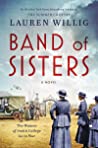
I reviewed this excellent novel in January, based on a true story of American women that travel to France to help civilians during World War I. If you haven’t checked it out, have a look by clicking the link below the picture.

The Four Winds, by Kristin Hannah****-*****

“‘My grandfather was a Texas Ranger. He used to tell me that courage was a lie. It was just fear that you ignored.’ She looked at him. ‘Well, I’m scared.’

‘We’re all scared,’ he said.”

Kristin Hannah’s electrifying new novel, The Four Winds, is set during the Great Depression in the American Dust Bowl and California. It’s a story about courage, and about the ways that love can transform us. My thanks go to Net Galley and St. Martin’s Press for the invitation to review. It’s for sale now.

Elsa is born into a wealthy family, but this doesn’t do her much good. She is tall, ungainly, and considered homely by her parents, a contrast to her two younger, more adorable sisters. She was very ill when younger, and the family liked having her tucked away in her room so much that they would like her to remain there. When company comes over, it is suggested that she go “rest.” Affection and kindness are denied her entirely.

One day, in a fit of unheard-of rebellion, she buys herself a silk dress and sneaks out to a speakeasy. There she meets Rafe, and before long she is rolling in the hay. When the morning sickness comes upon her, her furious father drives her to the Martinelli farm, (“Italians, no less!”) and she is unceremoniously dumped there. The baby is a Martinelli, he tells them, and it—and its mother—are your problem now.

Rose and Tony Martinelli are not affluent like Elsa’s parents; she learns to haul water and do farm chores, and she learns how to make delicious, cheap food the Italian way. But her father’s abandonment is a blessing in disguise, because the Martinellis are good people. She is happy there with them. She marries Rafe, and she bears two children. But the land has been over-farmed, and soon the dust storms come and destroy nearly everything they have built:

Past the outhouse, a murky, urine-yellow haze burnished the sky. Wind picked up, barreled across the farm from the south. A board flew off the chicken coop and cracked into the side of the house. Rafe and Tony came running out of the barn. The cows mooed angrily and pushed into each other, pointing their bony butts into the dust storm.

The door opened. Rose yanked her to her feet, pulled her into the rattling, howling house.

Elsa and Rose ran from window to window, securing the newspaper and rag coverings over the glass and sills. Dust rained down from the ceilings, wafted from infinitesimal cracks in the window frames and walls. The candles on the makeshift altar blew out. Centipedes crawled out from the walls, hundreds of them, slithered across the floor, looking for somewhere to hide.

A blast of wind hit the house, so hard it seemed the roof would be torn off. And the noise. It was like a locomotive bearing down on them, engines grinding. The house shuddered as if breathing too hard; a banshee wind howled, mad as hell.

Friends, this isn’t even the climax. This is sixteen percent of the way into the story. And misery and tribulation continue to rain down on this poor little family and thousands more like them. The crops die, and the livestock that doesn’t starve is killed by breathing dust. Children, including Elsa’s little boy, fall ill with dust pneumonia; no matter how hard they try to prevent it, so much dust is in the atmosphere that it makes its way into the lungs, and so the youngest and oldest are soon in trouble.

The first half of this novel is a rough read. There’s sorrow, and suffering, and loss, and grief, and I find myself eyeing the page numbers and thinking to myself that if this were written by anybody else, and if I didn’t owe a review, I probably wouldn’t finish it, because who wants an entire story of this? But at about the halfway mark, things begin to change.

By now, Rafe has hit the bricks. Never a man of character or great resolve, he sneaks off into the night, leaving the three remaining adults to care for the children and the farm. And it is now that change takes place. Without Rafe to anchor the family as is traditional during this period, Elsa is left to make the decisions about her children’s futures, and in doing so, she changes.

Hannah portrays the Depression era American West vividly and accurately, and this is when the story grows legs. The plight of agricultural workers is likewise dealt with in clear, immediate detail. My one quibble, and it is the source of the missing half star in my rating, is her inexpert portrayal of Communism, which plays more than a passing role in the last thirty percent of the story. The first time I saw farmworkers’ struggles as “shutting down the means of production,” I cleared my throat, but I told myself it was possibly a typo that might be edited out in the finished version. The next two times I saw it, I started making notes. This is not a technical error; this is a dumb-butt error (trying to elude the censors here) that should have been caught on the first pass, and because it appears when the climax ramps up, it is a distraction that interferes with the flow of the narrative.

Nevertheless, this is a well-written novel, set during an interesting time period. Particularly arresting is the development of the relationship between Elsa and her adolescent daughter, Lareda, whose point of view is shared alternately with Elsa’s.  Setting, character, and plot work together seamlessly to enforce one another and move the story forward, yet if I had to hang my hat on one laudable aspect of this book, it would be character development.

I strongly recommend this novel to you.