
Dorothy Day: The World Will Be Saved By Beauty, by Kate Hennessy***

dorothydayDorothy Day is an interesting historical figure, the woman that founded The Catholic Worker, which was initially a combined newspaper, homeless shelter, and soup kitchen. I once subscribed to The Catholic Worker, and since it cost one penny per issue, you couldn’t beat the price. I saw this biography available and snapped it up from Net Galley; thanks go to them and Scribner, who provided me with a DRC in exchange for an honest review. This title was published in late January and is now available for purchase.

I always had a difficult time getting a handle on what The Catholic Worker stood for. The name suggests radicalism, and indeed, Day was red-baited during the McCarthy era. Day was a Catholic convert and a strong believer in sharing everything that she had with those that had nothing. She worked tirelessly and selflessly, and despite often living an impoverished existence somehow made it into her eighties before she died, an iconic crusader who became prominent when almost no women did so independently—though she was no feminist, and believed that wives should submit to husbands. Since her demise, speculation has arisen as to whether she might be canonized.

What was that huge crash? Was it a marble statue being knocked the hell off its pedestal? Hennessy takes on the life and deeds of her famous grandmother with both frankness and affection. In the end, I came away liking Day a good deal less than I had when I knew little about her. Her tireless effort on behalf of the poor included anything and everything her very young daughter had in this world, and at one point she remarked that she felt unable to ask others to embrace a life of poverty if her child wasn’t also a part of that. It was a different time, one with no Children’s Protective Service to come swooping down and note that the child was sleeping in an unheated building in the midst of frigid winter; that there was no running water, since the building was a squat; that the only food that day was a single bowl of thin soup and perhaps a little hard bread donated from the day-old stores of local bakeries; that even small, personal treasures and clothing given the child by other relatives and friends would either be stolen by homeless denizens or even given away by her mother, a woman with the maternal instincts of an alley cat. Day did a lot of good for a lot of people, and no one can say she did it for her own material well being, but she more or less ruined her daughter’s life, and even when grown, Tamar’s painful social anxiety and panic attacks derailed her efforts to build a normal life for herself.

Nevertheless, the immense contribution that Day made at a time when the only homeless shelters were ones with a lot of rules and sometimes religious requirements cannot be overlooked. She is said to have had a commanding presence, endless energy (and the mood swings that accompany such energy in some people), and a mesmerizing speaking voice. Day’s physician also treated the great Cesar Chavez, and reflected that their personalities were a lot alike.

I confess I was frustrated in reading this memoir, because I really just wanted the ideas behind the Catholic Worker laid out for me along with the organizational structure. Was the whole thing just whatever Day said it was at the moment, or was there democratic decision making? I never really found out, although I gained a sense that the chaotic events shown in the memoir reflected an unarticulated organizational chaos as well. This is a thing that sometimes happens with religious organizations; the material underpinnings are tossed up in the air for supernatural intervention, and the next thing they know, there’s an ugly letter from the IRS.

Only about half of this memoir was actually about Day; my sense was that the author did a lot of genealogical research and then decided to publish the result. The first twenty percent of the book is not only about Day’s various romantic entanglements; a significant portion of the text is mini-biographies of those men, and frankly, I wasn’t interested in them. I wanted to know about Day. Later I would be frustrated when long passages would be devoted to other relatives and their lives. Inclusion of daughter Tamar was essential, because Dorothy and Tamar were very close all their lives and shared a lot, and so in some ways to write about one was to tell about the other. But I didn’t need to know about Day’s in-laws, her many and several grandchildren, and so on. I just wanted to cut to the chase, but given the nature of the topic, also didn’t want to read Day’s own writing, which has a religious bias that doesn’t interest me.

Those with a keen interest in Dorothy Day and the Catholic Worker may want to read this, because not many books are available that discuss her life and work. On the other hand, I don’t advise paying full cover price. Get it free or at a deep discount, unless you are possessed of insatiable curiosity and deep pockets.

Bluff, Bluster, Lies and Spies, by David Perry*

bluffblusterliesThe American Civil War is part of the curriculum I used to teach, and in retirement I still enjoy reading about it. When I saw that Open Road Media had listed this title on Net Galley to be republished digitally this summer, I swooped in and grabbed a copy for myself. I was so eager to read it that I bumped it ahead of some other DRCs I already had, and I really wanted to like it.  Unfortunately, this is a shallow effort and it shows.  Don’t buy it for yourself, and for heaven’s sake don’t advise your students to read it.
It begins gamely enough with a discussion of events in Europe and how the changing contours of that part of the world affected the attitudes of England, France, Russia, Prussia, and Spain. At this point my curiosity was piqued, because I had never read anything about which side of the Civil War the last three of these countries favored.  But if the rest of the text can be believed—and parts of it cannot—the reason we never hear about Russia, Spain, and Prussia with regard to this rebellion is that they decided they had no stake in its outcome. This part of the text could have been dealt with in one sentence rather than owning a share of the introduction and being dragged in again later, but this is not the only bit of obvious filler that burdens this misbegotten book.

I am tantalized initially when Perry brings in a controversy that does interest academics: would Britain have recognized the Confederacy in order to get cotton, or was it busy with other considerations and willing to obtain cotton from colonial holdings in Egypt, India and elsewhere for the duration? This question is discussed, leaves the narrative and is broached again several times, because although the book has chapters, it isn’t organized. The same topics of discussion, and the same quotations that serve as its meager, questionable documentation are dropped into the text again and again. It’s as if Perry doesn’t expect anyone to read it all the way through and is hoping we will drop into the middle of the book somewhere to look up a fact and then leave again without seeing whether he actually knows what he’s talking about.

He doesn’t.

For example, after citing the same obscure document for pages on end—since I read it digitally, I highlighted “Dispatch 206” seven times before noting that this section, at least, is garbage—he brings up Poland. He talks about Poland and Russia’s attachment to same as a buffer state, but never shows any relationship between Poland and the American Civil War other than that Russia had other greater priorities at this time, which had already been established in an earlier section.  And he misuses the term “Manifest Destiny”. Perry apparently believes this term has equal use to multiple governments in reference to themselves around the world.

He tells us that privateers are outlawed during the Civil War and infers that this, therefore, will surely mean that all the sad pirates will dock their ships and get honest jobs. No more privateers out there now, matey!

He says that Lincoln was a slow thinker, and he refers to American diplomats as ditherers.  He documents none of it.

I read the citation section to see if more joy would be had if I pursued this book past the halfway mark. I read his author bio, which indicates no expertise regarding this conflict, which by now doesn’t surprise me.  Frankly, I don’t understand why this book ever saw the light of day, or why Open Road would republish it.

I would love to say that those with deep pockets should go ahead and order it if they can afford all the books they want, but I can’t even say that. The book is unreliable, disorganized, and badly documented. It contains falsehoods and insults the reader’s intelligence.

Put your plastic away. This is dross.

Killers of the Flower Moon**

killersoftheflowermoon I received this book free from Net Galley, courtesy of Doubleday, in exchange for an honest review. It looked like a fascinating read, but I am disturbed by the sources chosen, which sent up all sorts of red flags right from the get-go and before I had even focused on the references themselves, a due diligence that has to be done before any nonfiction work can be recommended. Once I examined the references, I concluded that so many of them are so questionable that nobody, including the writer, can demonstrate anything beyond the premise of the book itself to be true. The killings happened; that’s about it.

I am perplexed, because this kind of error is the sort I’d expect from a novice, perhaps a zealous but careless graduate student bent on self-publication come hell or high water. Grann, however, is an established journalist who’s written for solid mainstream publications. He’s published successful novels. This is his first nonfiction book, and I am surprised that it went to press without his own eyes or those of his publisher finding the glaring problems here.

Early in the text a fact is documented with a block quote from one of Laura Ingalls Wilder’s “Little House” books, a series of YA novels loosely based on the author’s experiences during the Westward Movement, as Euro-Americans pushed the frontier back and took possession of Native territory. Many years ago, an interviewer challenged Wilder on a scene in one of her books, one in which a man recounts having been surrounded, chased, and threatened by wolves. The interviewer pointed out that wolves don’t do that, and Wilder tartly responded that she wasn’t aware that she had been supposed to be writing history or biology, but rather stories she had made up for little children to read. Her only nonfiction is a memoir she wrote later in life, which was not as widely seen.

This historical fiction, then, is Grann’s source material, and the fact that he chooses to give it a block quote also makes me wonder…if this is his good reference, what do the others look like?

A great many other sources are newspapers from what was then Western territory, newspapers from Oklahoma and elsewhere during the early 1800s. This is suspect material. There were no laws against printing inaccurate material, and journalists from this period often printed lies, sons of lies, and interviews based on lies, because there was absolutely no risk of penalty for doing so. To use sources like these, the very least a writer should do is find legitimate sources that agree with the questionable sources and cite both. This doesn’t happen here.

I have no idea why a good house like Doubleday would release this book, or why the writer didn’t use credible sources. Maybe he couldn’t find anything else, but that’s speculation, and I’ve just explained why nonfiction should not be based on guess work, on fiction based loosely on fact, or on unreliable sources, so I won’t take this line any further lest I be guilty of the same.

I was going to close by recommending that the reader just looking for a good story and not concerned about the research might like the book, but then I am confronted by the other unfortunate aspect of this story: I was pushing myself through it. I wasn’t spellbound, but as long as I believed there might be new information to be learned, I was ready to force myself to read this book, tedious though it is. With a DRC, I generally figure that once I’ve signed on, I have to make good on my promise. I wasn’t reading because I was absorbed; once I got a sense of the narrative I was reading out of duty, and out of the hope that at some point this thing would pick up steam. My hope was derailed by the bad source material.

Not this time.

Blind Ambition, by John Dean*****

blindambitionJohn Dean was counsel to the president during the Nixon administration, and was the first to testify against all of the Watergate conspirators, including Nixon and including himself, a bold but necessary decision that led to Nixon’s resignation—done to avoid imminent impeachment—and Dean’s imprisonment. Dean’s story is a real page turner, and Nixon-Watergate buffs as well as those that are curious about this time period should read this book. I read the hard copy version, for which I paid full jacket price, shortly after its release, and when I saw that my friends at Open Road Media and Net Galley were re-releasing it digitally, I climbed on board right away. This title is available for sale today, December 20, 2016.

Dean was a young lawyer whose career rose rapidly. When Nixon found out that men employed by the Committee to Re-Elect the President had been arrested for the burglary of the Democratic Party National Headquarters, which was housed in the Watergate Hotel, he quickly became enmeshed in a plan to bury the whole thing. Once he realized (belatedly) that he and his closest advisors had made themselves vulnerable to criminal charges, he had Haldeman, his right hand man, reach into the White House legal staff to find an attorney that could serve as an intermediary so that none of them would need to have illegal conversations with each other. Dean was sometimes called upon as a problem solver, but more often he was essentially the messenger between the president and his closest advisors. Nixon’s thinking here was that everything that passed through Dean would be covered by client-attorney privilege. When this turned out to have no legal basis and heads were going to roll, Dean learned that his own head would be among those served up on a platter by the administration in its effort to save itself. He chose to strike first by testifying against everyone involved in the conspiracy to obstruct justice, and eventually this included President Richard Nixon.


Those old enough to recall having watched Dean testify on television will be interested in the back story here. Dean has a phalanx of his own attorneys, but he decides to appear at the microphone without them; they are among the faces in the back on the TV footage. He also chose to speak in a dead monotone, because the information he was transmitting was itself very dramatic, and he had already been represented as a squealer in some media sources. Instead, he chose to portray himself as a small man, slightly balding, with his horn rimmed glasses and his notes, sitting alone in front of a microphone in order to bravely announce the truth to the Senate and the world.  And it’s effective. See what you think:


When I first read this book I was not long out of high school, and I met the text with snarky disapproval, based more on the very idea that a man as young as Dean could choose to affiliate himself with the Republican Party during the time the Vietnam War raged than on the skill with which the book was written. This time I come to it as an adult with a lot more experience related to writing, and my reaction is completely different.  Dean writes his story like a legal thriller. It’s fascinating and enormously compelling.  I find that what I think of Dean morally and politically is irrelevant when I rate this text; the writing is first rate. Most interesting of all is the way he is able to inject wry humor into the series of events that ended his legal career and sent him to jail. His sentence is not long, though, and much of it is spent in a relatively gentle confinement. He becomes a college professor and writer later in life, which he still is today.


Those that have real depth of interest will also be interested in a later book, The Nixon Defense, written once all the Nixon tapes were released to the public:


The Nixon Defense: What He Knew and When He Knew It, by John Dean *****


Both are riveting, and highly recommended.

Al Capone: His Life, Legacy, and Legend, by Dierdre Bair***

caponeWhat is it about mobsters that draws our attention?  National Book Award winner Deirdre Bair takes on America’s most famous mobster, Al Capone, and examines the myths and legends that have sprung up in the time since his death. I thank Net Galley and Doubleday for permitting me the use of a DRC, which I received free in exchange for this honest review. The book is available to purchase now.
Alphonse Capone was the first child in his large family to be born on American soil. His family was terribly poor. To steer him toward employment after he had left school, his father purchased a shoeshine kit for him so that he could begin his pursuit of the American dream; Al had other ideas, and his first racket was begun at age 16, shaking down other shoeshine boys as part of his very own protection racket. He was mentored by a man named Torrio, a mobster of the old school. Later Torrio would move his business to Chicago, and once New York became uncongenial, Al’s family sent him out there to join him.

The biography is intended to examine Capone’s life primarily from the vantage point of those near and dear to him; some of his grandchildren are still alive, and I gained the impression that the book was initiated by them. It is obvious from the start that the brutal killings—at the apex, Chicago saw a murder every day—and other vicious acts of retribution over what were sometimes small or even imaginary slights, are soft pedaled and his family life is emphasized.

I guess it’s all a matter of what you’re looking for.

Capone had an organizational genius, and since his entire empire was an unofficial one, he became the embodiment of capitalism unfettered. Bair tells us that the Harvard School of Business uses his business plan, or aspects of it, as part of the curriculum. And had the US Supreme Court not ruled in 1927 that income derived from illegal sources is still taxable income, chances are outstanding that Capone would never have gone to prison. He surely would not have found himself on Alcatraz Island without access to quality medical care; one wonders, however, whether having him live longer would truly have been desirable.

In fact, relatively speaking, I almost feel moved to thank the Bloods and the Crips for their restraint. Well, almost.

Capone was once called “The most shot at man in America,” and Bair examines the stories that are told or that have been written about him. For the diehard aficionado of all things Capone, hers is a must-read. For those with a more general interest looking to read just one book about him, I suspect that one of the many other biographers Bair quotes may be a better bet; it’s hard to say, though, because as Bair points out, after Capone’s death from pneumonia related to syphilis, his wife Mae burned all of his letters and other papers left behind, knowing that private business can quickly become public when one is sufficiently famous. And though Capone loved the limelight and even courted it, wearing flashy clothing and ostentatiously bestowing large gifts on total strangers at times, Mae was a private person. So there aren’t many primary sources to tap, when it comes down to it.

Nevertheless, I found myself highlighting in blue (which is the color I use when I see problems with a galley) the many times I saw the literary version of a flow chart drag down the pace:  “…according to rumors”, “…what may have happened”, and similar catch phrases, along with the menu of choices of what may have happened here, there, everywhere. I think that as a reader just looking for one definitive biography, I would have been happier to see the actual facts that are known. Many of them are riveting! For example, when it became clear that rivals sought to kill him, Capone had his home remodeled to accommodate a machine gun turret. His dining chair had a bullet proof back, as did the windows of his car. There are a lot of fascinating little details that are unquestioned in their veracity, and these are the places where my interest is piqued.

Second to Capone, by far the most interesting character is his wife Mae. Mae was lace curtain Irish, and intermarriage between the two still very distinct cultures was unusual. As I read of the things she has done to keep her family together and herself sane, particularly during Frank’s decline after his final illness began to affect his thinking and motor skills, I am truly impressed. The fact that ultimately it is she, and not a male family member or associate to whom Capone’s men come for business decisions once Frank can’t do it speaks volumes about her intelligence and talent.  I might like to read more about Mae Capone.

For those with an interest similar to mine, my recommendation would be to read this book if you can get it at your library or access it inexpensively, but barring deep pockets or strong interest, I wouldn’t pay full jacket price.

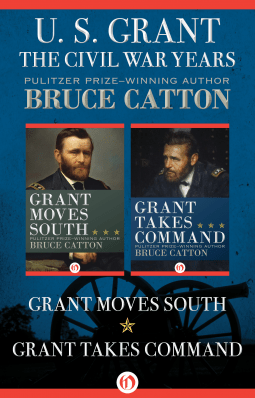
US Grant: the Civil War Years: Grant Moves South and Grant Takes Command*****

usgrantthecivilwaryI was fortunate to receive a DRC of this two volume biography of America’s greatest general, US Grant. Thanks go to Open Road Media and Net Galley for providing it in exchange for this honest review. This is the sixth Grant biography I’ve read, and aside possibly from Grant’s own memoirs, which are valuable in a different way than this set, I have to say this is hands-down the best I have seen. Catton won the Pulitzer for one of his civil war trilogies, and this outstanding biography is in the same league. Those with a serious interest in the American Civil War or military history in general should get it. It’s available for purchase now.

When I had read a couple of US Grant biographies, I told myself that enough was enough, and that I should push away from this one subject in favor of others. I am glad I ignored my own advice, because I have come away from this prodigious, in-depth study with a deeper understanding than anything else has provided.  It’s over 1100 pages long, and over 800 pages once one discounts the end notes and index, but it is as great a pleasure to read at the end as at the start, if not more so.

Is this a good choice for someone new to the American Civil War? Generally speaking (if you’ll pardon the pun) I’d say no, but for someone otherwise well versed in military history or with a tremendous interest level, time, and stamina, it could be. Because Catton is known as an expert in this field, I especially enjoy not having to review his citations. I know his sources will be strong, and one brief overview convinces me this is true.

The first volume starts with his less than glorious entry into the war. As many know, he had been a member of the regular US army during the conflict with Mexico, and had fallen apart and had to go home. Now he is back, but only after a string or two has been pulled by a family friend, and even then, his task is a daunting one. Volunteer soldiers don’t take orders or submit to discipline as a West Point soldiers do, and when he arrives, it seems the lunatics are running the asylum. One of the things that I am impressed with anew every time I read about Grant is his unerring judgment, the social radar that is an indisputable part of his talent. By knowing where to go easy on his men and how to bring them into conformity where it’s most important, he creates a solid force to move South with.

The battles of Belmont, Fort Henry, Fort Donelson, and the tragic but technically successful battle of Shiloh open up the Mississippi River for the Union and divide the South. Catton uses a number of anecdotes that are new to me, and his congenial tone, occasionally caustic wit, and spot-on analysis leave me both energized and contented at the same time.

The second volume, however, is where I learn the most. Until I read this biography, I haven’t understood exactly how great a risk Lincoln takes when he orders that the US military forces should be given the ballot, an unprecedented move, as he himself runs once more for the highest office. His opponent, McClellan, is a former Union general that at the war’s outset, was at the top of the chain of command.  He didn’t go home a happy man, and now he is running as a Copperhead, the moniker given those in the North that want to end the war and let the South leave the Union, slaves and all. And though I know it is often the case that soldiers and sailors choose to support their Commander in Chief at the ballot box, I haven’t fully recognized how badly this may go for Lincoln. Doesn’t every soldier want to go home? This is the Democratic ticket’s promise; end it now and send them home.

On top of all that, Lincoln and Grant, who think a lot alike, clamp their teeth together and endure the white knuckled ride that they know they’ll be facing when they decide against further prisoner exchanges with the South. There are two strong reasons for this decision: first, the South refuses to recognize Black men in uniform as soldiers, and won’t exchange them, assuming that all of them must be escaped slaves, including those with Northern accents. Grant declares that no prisoners will be swapped until the South is willing to parole every Northern soldier, and he means it.

In addition, both Lincoln and Grant realize that the South is running low on manpower. There are thousands of their soldiers sitting in military prisons; to trade them out and risk seeing them back in uniform is to turn a military contest into a war of annihilation. With prisoner exchanges, the war will last longer, and there will be more death. In a peculiar way, refusing to exchange prisoners is the more humane policy.

In an election year, this is a tough sell. There are families up North that have been notified that their son, brother, father, is a prisoner of the enemy, and word has by now been spread as to what kind of conditions those poor men face. How much harder is it to vote for Lincoln and the fight for the reunification of the republic when to do so is to prolong the time their loved one sits behind bars, slowly starving? Lincoln and Grant could temporarily resume prisoner exchanges until after the election, but they stand on principle, and it pays off.

Another thing that I don’t really grasp until I read the second volume is Grant’s relationship with the Army of the Potomac, a collection of men that to some extent have been poisoned with McClellanism. It’s a real tightrope walk, and he is deft in his dealing with it. I can’t tell you everything he does here; that’s the point of the book, after all. But I came away with a renewed respect for General Sheridan, and an interest in reading biographies of that general also.

How much of Sherman’s march through Georgia and then to the sea is Grant’s idea, and how much of it is Sherman’s? I come away understanding this better than before as well, although I have read both Grant’s and Sherman’s memoirs. Catton has a way of crystallizing events without oversimplifying them.

And I nod with solemn satisfaction at the cold fury Grant experiences when he learns of the assassination of President Lincoln and the attempts on the lives of others, including himself.

I still shiver with pleasure when I reread the denouement, in which Grant sends General Weitzel and his troops, some of whom are Black, into Richmond when the Confederate capitol falls. I want to cheer as the throngs form for the military review in Washington DC after the war has been won; all those thousands of soldiers, all those citizens and international visitors in the stands and on the sidewalks, singing “John Brown’s Body”. Think of it!

I promised myself to be brief, and I haven’t really done that, but this is the least I can bring myself to say about this excellent biography. If my review is too long to hold your attention, then this two book series—even while allowing for the fact that Catton is a far better writer than I—will also be more of a meal than you are prepared for.

But for those with a sufficiently great interest level and stamina, I cannot imagine a better memoir of Grant for you to buy and enjoy. Enthusiastically recommended!

Mission: Jimmy Stewart and the Fight for Europe, by Robert Matzen****

missionjimmystewartIn Mission: Jimmy Stewart and the Fight for Europe, Robert Matzen provides an engaging, compelling memoir that focuses primarily on Stewart’s time as an aviator during World War II. Thanks go to Net Galley and to Goodknight Books for the DRC, which I read free in exchange for this honest review.

The book begins with Stewart’s childhood in a small Pennsylvania town. His is a close knit family with a strong military tradition. An outstanding student, he is educated at Princeton and falls in love with theater one summer. He hits the road for Hollywood to fulfill his dream.

Because of the title, I am taken aback at the amount of celebrity gossip that is included in the first portion of the biography. Matzen wants us to know that Stewart used his skinny-awkward-young-man routine as a sort of foreplay to work his way between the sheets with one well known actress after another; he lists many of them. I could have lived without this part, but maybe you’ll enjoy it. If like me you are really only interested in the military aspect of it, skip the Hollywood part at the start and pick it back up when he enlists. Eventually this is what I did.

Once there, the story is fascinating. Stewart resolutely straight-armed studio efforts to keep him in the USA or use him to entertain troops, as some actors that are drafted chose to do. He angers a studio head who actually tells him, “You’ll never work in this town again”. He decides he is going to do his part like any other man, apart from the fact that he had always wanted to fly and now has the money for a private plane and flying lessons. Once he is actually in uniform, he is able to become the aviator he has dreamed of being as a youngster.

As Martzen unspools Stewart’s story, which had to be difficult to research given Stewart’s resolute refusal to discuss that period, I am instantly engaged. I had known at one time that the planes were not heated back then, but hadn’t fully appreciated the dangers and challenges posed by the cold alone once in the air. A man could suffocate if he didn’t regularly break the ice off of his mask. Men could and did lose body parts to frostbite.

The stories of the men that would eventually serve under him as he rises in rank, not due to strings pulled by authorities but as he has wished, by merit and leadership capability, are also both interesting and poignant. Reading the way the pilots name and decorate their planes, how individual aircraft with idiosyncrasies that make them handle differently so that the pilots strongly prefer to fly their own ships, is interesting, and  reading the personal details and in some cases, the deaths of these men is wrenching in some places, poignant in others.

When Stewart has completed his military service, he looks at least ten years older than he is. He’s seen a lot. If he returns to Hollywood, there’s no chance he will play the same roles he used to do. He stalwartly refuses to exploit his time in the service by making World War II films, which are enormously popular, and for a long time, his phone doesn’t ring. He’s sleeping at his parents’ house in his old childhood bedroom, wondering what will happen. But in time he hears from Frank Capra, who has an idea for a picture “based on a story titled ‘The Greatest Gift,’ about a man from a small town who wishes he had never been born. Jim was the only actor in Hollywood whom Capra considered for the role.”

Despite the sense of alienation he experiences with his return to the other-worldly, glitzy city after his gritty, intense experience in the war, Stewart is glad to be back, and he plays what will become an iconic role, that of George Bailey in “It’s a Wonderful Life”. He credits Capra with saving his career, and is overjoyed to be back:

“He was engaged in something magical again, something to interest people in the art of living, rather than the art of dying.”

The book also discusses Stewart’s lifelong friendship with Henry Fonda, and his marriage. We get a brief overview of the peacetime lives of the surviving members of Stewart’s first crew.

If it were up to me, I would remove all of the somewhat jarring photos at the end of the book that show Stewart alongside one actress after another, and I’d replace them with photos and maybe diagrams of the planes we hear so much about. A map here and there wouldn’t hurt, since we follow his flight paths and it’s sometimes hard to visualize where these places are. I used Google, but would like to see these included as part of the published memoir, perhaps in the center, where they’re most relevant.

I recommend this biography to fans of Stewart’s, and I recommend most of this book to those with an interest in military history.  The book is available to the public today, October 24, 2016.

George Washington’s Secret Spy War: the Making of America’s First Spy Master, by John A. Nagy***-****

georgewashingtonssecretspyNagy does a more than serviceable job in documenting Washington’s intelligence methods. Thank you for the DRC, which I received free in exchange for an honest review from Net Galley and St. Martin’s Press. This title is for sale today.

Washington first learned spy craft when he was fighting for the British Crown during the French and Indian war, a nasty conflict that puts the American Revolution in the shade in terms of lives lost and financial expense.  Later he would take the education he had gained as a member of His Majesty’s forces and use it to lead the American colonists to victory as citizens of an independent nation.

Nagy conscientiously documents his case that it was this knowledge of spy craft that won the Revolution. He cites everything, and he uses primary documents that you and I would never ferret out in order to do so. Students of the American Revolution, the French and Indian War, or the history of American intelligence-gathering should consider this book an indispensible addition to your research material.

In the tradition that continues to this day, Washington found there were only two possible outcomes once a spy was apprehended. The first and most usual thing to do was hang them. Once in awhile one could turn them. And he had absolutely no scruples about torturing them first and hanging them later.

As a popular read, I rate this title three stars, and it’s really not due to any shortcoming of the author’s. He quotes extensively from primary documents such as Washington’s diary, and he didn’t use the same expressions and syntax that are used now, nearly two and a half centuries later. The accepted speech mannerisms for that time are unwieldy to us, and make for some difficult, hyper-literate reading that is not always enjoyable.

But for those that need the information, there are not a lot of places to go, and I think you need this one. As research material this is easily a four star book, and depending upon one’s area of study, it might even be more.

Recommended to researchers and students in this realm.

Notorious RBG, by Irin Carmon****

notoriousrbgIf I were to review the subject of this memoir rather than the book itself, it would be a slam-dunk five star rating. As it is, I can still recommend Carmon’s brief but potent biography as the best that has been published about this fascinating, passionate justice of the Supreme Court of the United States. I have no doubt many more will follow, and it’s possible I will read every one of them. As it stands, this is a rare instance in which I turned my back on my pile of free galleys long enough to ferret this gem out at the Seattle Public Library, because I just had to read it. You should too.

I’m an old school feminist from the seventies, but Ginsberg is one from the fifties. How is that even possible? Imagine the courage it would take to step forward at a time when no women’s movement even existed! She sued Rutgers University for equal pay and won. Later, she was the first female law professor at Columbia University, and she sued them for equal pay too. She volunteered as an attorney for the New Jersey American Civil Liberties Union, represented custodians in a class action suit, and later, when the Free Speech Movement on campuses in the 1960s began to warm up, she was already red hot and ready to go.

The best parts of Carmon’s memoir are the primary documents, because we get to see RBG’s own words. Ginsburg was made a federal appeals judge by President Jimmy Carter and moved to fill a vacancy on the U.S. Supreme Court by President Bill Clinton. She’s issued a number of tremendously eloquent decisions, and has chosen to read her dissent aloud, a thing not usually done, a record-breaking five times at the time this book was written. The lacy-looking necklace that fans out on all sides of her neck is her dissent collar, and so those that hear the Court deliver its decision can see exactly where Justice Ginsberg stands as soon as they see what she is wearing.

At times such as these, in which a woman in Indiana was recently sentenced to 20 years in prison for having an abortion [reference mine], it gives women hope to know that there is a fighter on the Supreme Court who’s looking out for our interests. It doesn’t mean that women can step away from this political battle, but it’s a thing that encourages us and lends us fortitude.

In January, it is rumored that Ginsberg will release her own memoir, one that relies heavily on her court decisions. Likely this will be an even better memoir than this one. For now though, this uplifting, funny, well-documented memoir is as good as it gets. Go get it.

The Butler’s Child: An Autobiography, by Lewis M. Steel****

thebutlerschildLewis M. Steel has a long, noteworthy career as a civil rights attorney.  He was an observer during the Attica Prison riots; worked for the NAACP during the Civil Rights movement, and later defended boxer Hurricane Carter against a frame-up charge of murder. And I was permitted to read this story free and in advance, thanks to Net Galley and St. Martin’s Press in exchange for this honest review. I rate it 3.5 stars and round upwards; it is now available to the public.

When I first approached this title I expected to see what the life of a butler’s son was like. In fact, Steel’s social class is at the other end of the spectrum. An heir to the Warner Brothers fortune, he spent much of his time in the company of the family butler, and he was deeply affected by the emotional distance that this family servant, whom he had innocently regarded as a father figure, began to demonstrate as Steel grew older. Later, as an adult, he realized that this faithful retainer, an African-American man, surely had a family and life of his own that he went to visit on his two half-days off work, and he began to wonder what he might do to tear down the wall between the worlds of Caucasian families and Black folk. Ultimately he decided to become a civil rights attorney, and he credits the man that helped raise him as a key reason.

The NAACP of the Civil Rights era—the National Association for the Advancement of Colored People– was deeply immersed in litigation as a means to end segregation. Again and again, racist judges sat in court, north and south alike, and they told the NAACP to go to hell even when their evidence and research was baldly, plainly in the plaintiff’s favor. The NAACP continued to push litigation over mass action because of a strong conviction that if they could get a case heard by the Supreme Court, relatively liberal in many regards and headed by Chief Justice Warren, then surely justice would be done.

It didn’t shake out that way. Outraged over the way the nation’s highest court failed to provide equal protection to its Black citizens, Steel wrote an article for Time Magazine titled “Nine Men in Black Who Think White”, and was summarily fired from the NAACP, who still wanted to curry favor with that court. Many of his colleagues walked out of the NAACP offices in protest.

A common question among Caucasians that want to fight for the rights of people of color in the USA is what can we do?  How can one use this white privilege that exists whether it should or not, to change US laws and society for the better? And this question is raised exponentially when one is an heir, a ruling class scion that can do a tremendous amount for the cause in which he believes.

This reviewer has a friend that found himself in this situation. The distant but only heir of a corset magnate’s fortune, he decided that the best way to seek justice was to walk his talk. Reserving a small percentage of the fortune for himself—which is still a tasty enough chunk to own a middle class home in Seattle, take a vacation abroad annually, and eat in restaurants instead of his own kitchen—he donated the vast majority of his personal wealth to the organization he thought best. He doesn’t live in an all white neighborhood; doesn’t have a household staff; and he does blue collar work on the railroad so that he can talk politics with other working people. Because to help people the most, one needs to be among them and facing similar circumstances to those they face. So he gets up at crazy o’clock in the morning, goes out and gets greasy and banged up with everybody else, and then he goes home and cleans his own house and mows his own grass. He gets that more people listen when you put your life where your mouth is, and he believes the future of the world lies with the working class.

So when Steel commences his hand wringing over how wealthy, how privileged he is and how bad he feels about it, I want to say, Cry me a river. Steel freely admits that he enjoys his lovely home that looks down on Central Park and allows him a lovely view of the Macy’s Parade every Thanksgiving. He enjoys the servants, and his neighborhood is all white. He sent his children to all white private schools even as he fought to integrate the public schools that he wouldn’t let his own children attend in any case.

At one point, Steel mentions that his therapist told him to stop whining, and I wanted that doctor here in the room so I could offer him a high five.

Now that I have addressed the elephant in the room, I have to say that Steel’s memoir, despite the wealthy liberal whining, is worth a read for those interested in Civil Rights history and in particular the part of it that has played out in the courtrooms. You don’t have to like the author to benefit from the treasure trove of information in the pages of this memoir. Steel has been involved in some landmark cases, and he is at his best when he talks about the cases he has taken and how they shook out.

Black lives DO matter, and those of  us that think so need all the information available to fight that fight, and there are many worthwhile lessons that still apply right here, this book is worth your time and money regardless of whose memoir it is.

This book was released earlier this month, and is available for sale now.