
 Brevity isn’t possible here. Settle in and get comfy. Here we go.
The word “epic” gets overused in the world of advertising, and so as a reviewer, I have learned to take the promise with a grain of salt. However, Piercy is renowned, an iconic presence for feminists and for anyone that approaches life from a class perspective. I read this book when it first came out in the 1980’s for no discount whatsoever, and I loved it. Books come and go at my house, since space on the bookshelf is itself a commodity, but Piercy has a permanent shelf all her own; when I saw that Open Road Media had released this book digitally, I jumped on it, even though the release date had passed and even though I already had the book, because I wanted to help promote it, and I was happy to read it again. I rate it 4.75 stars and of course, round it upward.
There are two myths that get told, are believed by others, and then they are retold about World War II. The most recent one is that told by Holocaust deniers, who say that the whole death camp thing was just a huge exaggeration. Yes, there were prisons; yes, guards were mean sometimes; yes, people died, because nobody was getting enough food in Poland and other non-German parts of Europe anyway. This is a lie, but as eyewitnesses grow old and die, it takes a certain vigilance to keep this damnable untruth from gaining a toehold. Piercy tells the truth, and she does it really well. More on that in a moment, but let’s deal with the other lie first.
The second myth, one that’s understandably popular as patriotism grasps the human heart and we wish that our rulers, past and present, were truly noble, is that the USA joined its allies in a quest to preserve democracy and save those poor Jews and other unfortunates tucked away in those hellish camps. Piercy approaches this palace of straw from many different angles and razes it to the ground. Jews that wanted out faced tremendous obstacles, from nations—the USA included—that were extremely choosy about how many Jews they would take. The US and UK governments were more obstructive than helpful, and countless men, women, and children died because of these exclusions.
Piercy is a brilliant storyteller, and in her hands, the period and its people are so believable, nearly corporal, that I carry them with me still.
This story is told through the eyes of ten characters whose narratives are staggered. There are French characters, British, and Americans; men and women; straight, gay, lesbian, and bisexual. They hail from a variety of socio-economic circumstances and are affected by the war in different ways. It’s miraculous to see a writer develop even one of these characters as fully and thoroughly as Piercy does; how is it that she does so with a wide range of characters, yet has never been nominated for a prestigious award?
Those of us that are old and perhaps cynical may consider that the very political perspective that makes her prose so rich may be what kept her from landing on a short list. I guess we’ll never know for sure.
Piercy is a scholar and she approaches this historical period with sources in hand. She doesn’t interpret loosely, and her note to the reader tells us in what instance she has taken liberties, for example not wanting to have a whole string of people that have the same first name. Always she is aware of the subtext, the stereotypes that women aviators faced, for example.
My most beloved characters were Jacqueline, a hero of the French resistance, along with her lover, Jeff, and her little sister Naomi, one of the fortunate few who’s sent to live with American relatives before it’s too late. I liked Louise’s moxie, and I loved what happened to Duvey. I also really enjoyed the unusual perspective that Daniel and his fellow code-breakers shared, becoming so familiar with the Japanese point of view that they bonded with the men whose communications they were deciphering.
As we discuss the Japanese, we come to the .25 that I deducted. I did this as a token objection to the use of the racist vernacular that I know was commonplace during the time. This reviewer grew up with a father that served during this war, and reminiscences among the guests he and my mother entertained were so frequent that I, in youthful ignorance, rolled my eyes and decided they were impossibly dull. And my mother taught me that the terms he and they used to speak of Germans, of Jews, of Japanese were never, ever to be used in my own conversations with anyone at any time. And so yes, racist references and ethnic slurs were common to this era.
But I note that whereas our author has had the good taste and the good sense not to repeat the ugly terms by which Jewish people were called, and seldom repeats the anti-German slurs, the “J” word is used dozens of times, usually by the character that fights in the Pacific. And I have to say, it really stings.
There were fewer Asian Americans during the period when Piercy wrote this than there are today, particularly in the author’s own New England home. For anyone writing this today, and for anyone less venerable and also less influential for me personally during my formative years, I would lop off at least a couple of stars from my rating. It’s ugly to repeat these epithets, and it’s particularly painful to me to read them. This is my husband we’re talking about; it’s my daughter, too. It’s my in-laws, one of whom fought, as good Japanese citizens were expected to, for the Japanese Imperial Army. So I would not care to see her go back and insert the horrible terms hurled at Jews and Germans for the sake of consistency; I’d just rather see the “J” word used less often. She could mention it in her introduction if she feels the reader needs to know that she’s made an adjustment. That’s my viewpoint, and I’m sticking to it.
But it’s also true that when I was young and confused, Piercy was one of the bright feminist lights in literature to whom I looked for guidance. So I am moved not only by the excellence of this work, but also by the shining legacy she has provided for women during an uncertain time.
One further note: though I have a degree in history and have taught it, I have seldom seen much written—at least in English—about the French Resistance. This part is arguably the most deeply resonant part of this novel, and though I had read the book before, it’s amazing what one can forget over the course of twenty or thirty years. I don’t read many books twice because there are so many I haven’t read at all yet; and still this is one that I may read a third time, as I feel my recollection of the fine details already slipping away.
For those that treasure excellent literary fiction; that have the stamina for a novel of this length; that love outstanding historical fiction; that enjoy stories that are told from a feminist viewpoint and that recognize social classes and the way they affect us; this story is unparalleled. Get it and read it.
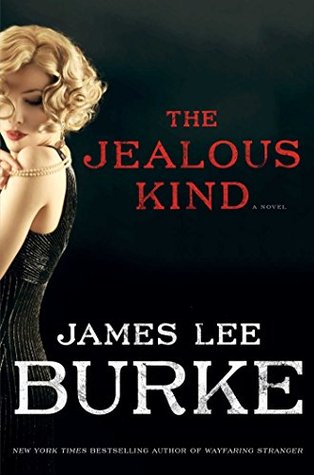 James Lee Burke is a legend, a venerable and highly respected writer known for his luminous prose and quirky characters. In this, his second work of historical fiction in a planned trilogy, he demonstrates that he can still work magic better than ever. I received this DRC from Net Galley and Simon and Schuster in exchange for an honest review, but I would have paid full freight if I had to, and I rarely say that about any book anymore.
 And you thought Fifty Shades of Gray was controversial. Just remember that you heard it here first: if this novel has legs and gets around, it’s going to create a lot of noise. I could almost smell the book-burning bonfires as I read the last half. And lucky me, I read it free thanks to Net Galley and St. Martin’s Press, from whom I received a DRC in exchange for this honest review.
 HE Bates wrote before, during, and after World War II. Many readers came to his work after seeing a televised version of it. It was different for me. I am fond of excellent fiction, military history, and short stories, and when I cruised Net Galley and found The Flying Officer X and Other Stories, I took a chance and scored a copy. Once I had read those, I knew I would want to read more of his work when I could. So although I came to this outstanding novel in a different way than most readers, I have to tell you that I loved it every bit as much as they did. Thank you Net Galley and Bloomsbury Reader for the complimentary DRC. I read multiple books at a time, and I feel a bit sorry for others I read at the same time I read this, because almost everything else looks shabby next to Bates’s work. Those that enjoy great literary fiction, romance, and historical fiction—which this technically isn’t, since it was written during that time rather than later, but the feeling it generates is similar—should get a copy. Once the reader opens it, she is destined to be lost to all other purposes until the last page is turned.
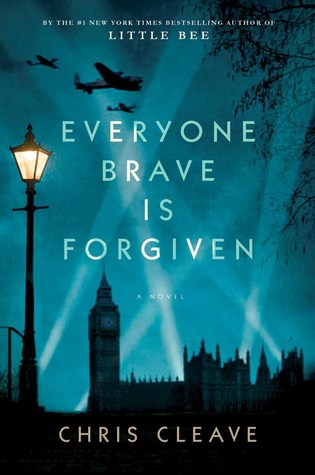 This is one of those rare novels that I have passed by multiple times despite all the buzz it has generated, because it looked as if it was out of my wheelhouse. A socialite. Pssh. A British officer. Sure. But eventually the enormous buzz among readers and booksellers made me curious. The last time I had this experience, the novel was The Goldfinch, and once I had begun it I gasped almost audibly at what I had almost let slip away from me. And so it is with Cleave’s brilliant novel, historical fiction mixed with more than a dash of romance. I was lucky enough to get the DRC free of charge in exchange for an honest review; thank you Simon and Schuster and also Net Galley. This luminous novel is available to the public Tuesday, May 3, and you have to read it. It is destined to become a classic.
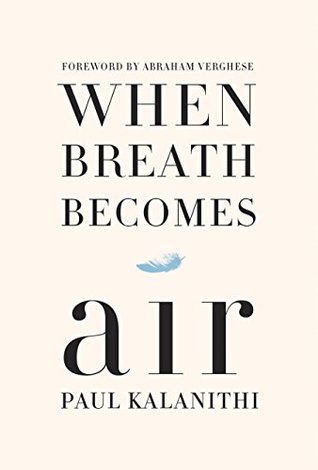 Paul Kalanithi was a promising young physician who had nearly finished completing ten years of training as a neurosurgeon when he was diagnosed with Stage IV lung cancer. His twin ambitions had been to become a neurosurgeon and to write. When he realized how little time was left of his too-brief life, he decided to spend his remaining time writing this book. Thank you, Net Galley and Random House Publishing House for the DRC. Dr. Kalanithi died in March 2015, but he left this luminous memoir behind as part of his legacy. It is available to the public January 19, 2016.


 Seattle Book Mama