Liberation Day, by George Saunders*****

Liberation Day is a collection of the best short stories you will ever encounter. I had never read George Saunders before, but when I received an invitation from Random House and Net Galley to read and review this book, I remembered him by reputation and jumped at the chance. This book is for sale now.

Sometimes I feel conflicted when I see words like “Booker prize winner” and “exquisite” I feel torn. The book may be brilliant, but it also may be a whole lot of work to read. I am happy to report that is not the case here. Every one of these nine stories could serve as the cornerstone of a collection; the title selection is first, but I suspect that is more about length than anything, as it approaches novella length. It’s science fiction but also vaguely political; a group of people have had their brains scrubbed to near emptiness, and they are mounted on a “speaking wall.” Their sole purpose is to provide entertainment as a sort of scripted Greek chorus. They may only speak upon command; they assume this is a good arrangement, because they have no memories of their prior lives. But then the home (and Speaking Wall) owners are visited by their adult son, who concocts a scheme to liberate the speakers.

Many of these stories have stylized prose and invented words that might be difficult for a reader whose first language isn’t English.  “Mother’s Day,” which is one of my favorites, begins:

“This distinguished-looking gentleman would appear at your door somewhat sloshed and ask, Were your trees slaggard? Were they gublagging behind the other trees? Did they need to be prodderated? And hold up the little device. In this way they had nearly lost the house.”

Happily, for underconfident readers, there is an audio version available. I used it part of the time because I was running behind. There’s a different narrator for each story; actor Tina Fey does one of them! My notes are full of praise for these performers, who make a brilliant book even more so.

I especially enjoyed “The Mom of Bold Action,” which features the ultimate unreliable narrator, and my absolute favorite, “Ghoul”. Imagine, if you will, landing in Hell, or its amusement park equivalent, but there are still rules of etiquette to be observed; in particular, you are expected to be positive, and constantly encourage the other ghouls as they commit the ultimate misdeeds assigned to them. I laughed so hard at this one that it made my family a little cranky, and I had to go off by myself to hear the rest. Worth it.

The stories are a mixed bag in terms of genre, and all are outstanding.

Highly recommended in whatever format makes your heart happy.

Silver Alert, by Lee Smith ***-****

3.5 stars rounded upwards. My thanks go to Algonquin Books and Net Galley for the invitation to read and review. This book is for sale now.

The premise is one that a lot of readers over age 40 will be able to relate to. Herb and Susan have been very happy, but as they enter their twilight years, Susan is no longer able to care for herself or even communicate well. I don’t think we are ever told the specific cause, whether it’s a stroke that’s left her undone, or dementia, or some other thing, but the result is the same. Herb believes he is qualified to care for his wife, together with a home health assistant that he can well afford to pay, but the truth is, he is too forgetful to do the job properly. In fact, he is closer than he will admit to needing care himself.

Susan always did love a good mani-pedi, and so he hires a traveling manicurist to stop in and take care of Susan’s nails. The young woman that calls herself Renee does more than that, however; she becomes fond of Susan, and shows up with outlandish hats and art supplies and other things that make Susan smile.

But now the family is here, the responsible, busy adults that can see this situation is untenable. They want to move Herb and Susan to a care facility, but Herb is adamantly opposed. Herb isn’t going to have anything to say about it much longer, though, and he can see the handwriting on the wall.

As I read first half of this little book, I feel a certain amount of reviewer’s remorse. Why have I signed on to read this thing? It’s supposed to be funny, but it isn’t. And I took it because it has been billed as humorous; ordinarily I avoid books about aging.

About halfway into it, however, my feelings begin to change, because I realize this story isn’t about Herb and Susan. It’s about the manicurist, whose real name is Dee-Dee.  Dee-Dee comes from hardscrabble poverty, and has escaped from a trafficking situation she was thrust into just as puberty began. She took some of the traffickers’ money when she fled, and she uses the name Renee to cover her trail.

Herb’s son is leery of Dee-Dee. He believes she has questionable motives; maybe she a grifter, or a gold digger, or who knows what? When he uncovers her true identity, he is sure he is right. As preparations are made to move the old folks and sell the house, he visits her in the sad little trailer where she is staying to warn her off.

I like the interplay of these two characters of wildly disparate social classes, and the difference in their thinking. The most redemptive feature throughout this quirky little novel is the voice that comes through. The rich (asshole) son is absolutely believable, though his is a minor character; that’s okay, I don’t really want to spend more time with him. But sweet little Dee-Dee, who is desperately undereducated and has nobody to help her, nevertheless tends to give others the benefit of the doubt. She’s plucky, using advanced vocabulary words that she’s picked up, planning for her future.

It seems likely that this sweet little novel will get less credit than it should, because of the way it’s marketed. When we see a book in the humor section, we expect it to make us laugh. It has a warm and fuzzy cover, and nobody would expect the serious trigger issues contained within it. (Do NOT buy this book as summer reading for your precocious middle schooler!) Had it been presented to readers as a whimsical tale of friendship, it would have met with friendlier reviews.

Recommended for adults over 40 that are looking for a beach read.

Lone Women, by Victor LaValle*****

“Queer folk, the Henrys.”

Adelaide Henry is “profoundly lonely,” growing up without siblings, with older parents that spurned the world around them. They had their reasons. And yet, in the opening chapter, as I see Adelaide pour kerosene over both of their lifeless forms and burn them, along with their house, I wonder…were they bad enough to deserve this?

But nothing is as it seems, and this is part of the magical spell that Victor LaValle weaves into this kickass novel, Lone Women. By the time I understand the why and the who and the what, I feel an intimate connection to Adelaide, as if I may be the only one trusted with her secrets.

My thanks go to Net Galley and Random House for the review copy. This is one of the finest novels to be published in 2023, and you should get it and read it.

Adelaide flees the California farm where she’s lived all of her life, and buys a homestead in Montana. Almost everything about her life changes; from the warmth of California to the frigid winters of the Northern Rockies, from life with her parents to one lived alone, and from an all-Black community to one that is almost entirely Caucasian. She brings very little with her, only what she can carry, but she is curiously possessive of her extremely heavy trunk, and though I initially assume that she keeps something of great monetary value inside it, I soon realize that isn’t it. My early notes ask the same thing over and again: “What is in that trunk?”

From there, our story unfolds and I can’t stop turning the pages. I’ve never read a novel of any genre that’s like this one, and I’m guessing that you haven’t, either.

Do yourself a favor. Don’t read the synopsis. Go into it blind. It’s a lot more fun if you learn of the characters and events at the times the author intends.

There’s a powerful message in play, but the story is so adroitly delivered that it never feels like a polemic.

I won’t say more, because I don’t want to ruin it for you, but believe me, the next time LaValle publishes a novel, I will be first in line to read it. Highly recommended, especially to feminists.

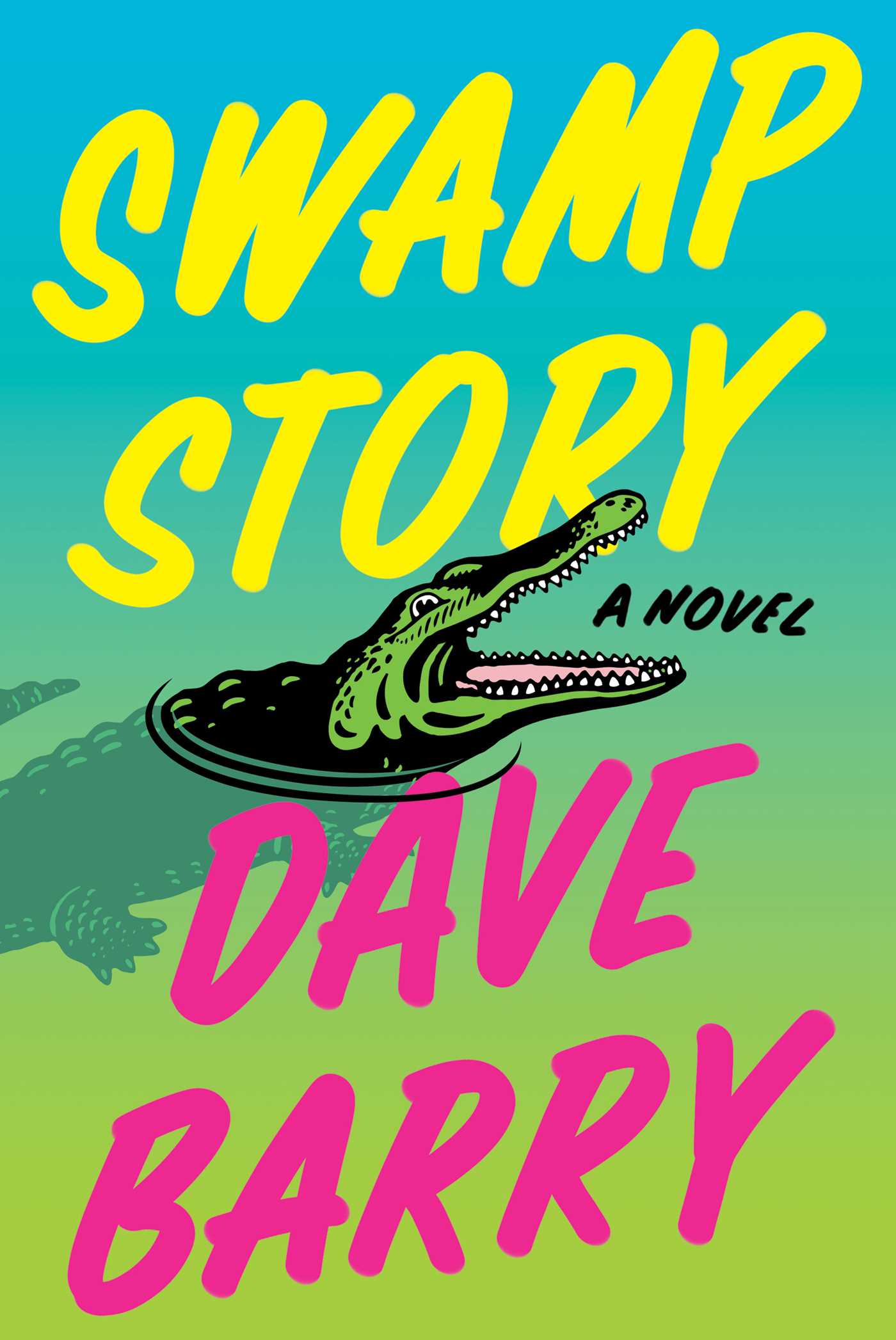
Swamp Story, by Dave Barry*****

Dave Barry’s new novel, Swamp Story, should come with a warning label: Danger. Do not read in area where explosive laughter is not permitted. Fans of Barry’s will be pleased to hear that this is possibly the best thing he’s ever written. Readers new to Barry will want to read more. This book will be available to the public May 2, 2023.

My thanks go to Net Galley and Simon and Schuster for the invitation to read and review.

Our protagonist is Jesse, a lovely person that has made a huge mistake. She feel hard for Slater, a young man with a smokin’ hot body, a limited brain, and a solipsistic world view. Now she’s stuck in a cabin in the Everglades with him and his camera wielding buddy Kark, and oh yes—their baby, Willa; not to mention all of the flora and fauna that live here:

“Kark! You need to get this!”

“What?” said a voice, as hoarse as Slater’s, maybe hoarser.

“Big fucking snake,” said Slater. “I mean big.”

The snake slid forward another two feet, directly toward Jesse and Willa. Jesse saw that she now no longer had the option of even trying to run past it.

“Slater!” she said, trying to keep the panic out of her voice, not wanting Willa to pick up on it.

Slater held up his hands in a Calm down gesture.

“It’s cool,” he said. “This’ll be good. Good footage.”

“Good footage?” said Jesse. “Are you—”

“Goddammit, Kark,” yelled Slater, “get the camera out here!”

“OKOKOK,” said Kark, emerging from the cabin, holding the video camera. ” Fuck. The battery’s dead.”

Things appear to improve for Jesse when she stumbles across a cache of gold bars hidden in the glades, but this proves to be a mixed blessing, as some truly bad men learn of her good fortune and seek to take it from her, using any means necessary. However, the first such men, Billy and Duck, are not only evil, but also hilariously bumbling at times. And then, of course, there are the others.

Meanwhile, the owner of Bartle Brothers Bait and Beer decides to give his languishing business a shot in the arm by manufacturing an internet hoax. The Everglades Melon Monster is a sketchy, low budget creation whose star is an inebriated fellow wearing a Dora the Explorer head, and yet, somehow it works. Now it seems that everyone is descending on the Everglades, and almost every person that arrives is “batshit crazy.”

I’m not telling you how this thing ends; you’ll need the book for that. Don’t wait for the movie. You can thank me later!  As for me, I’m off to order a Bartle Brothers Bait and Beer tee shirt.

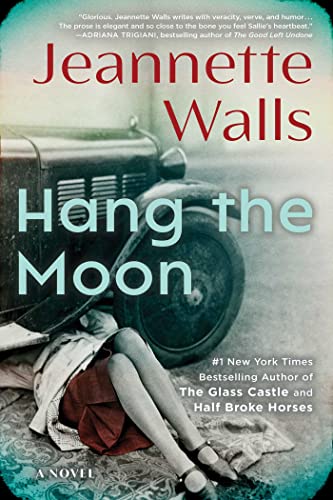
Hang the Moon, by Jeanette Walls*****

Jeanette Walls is the author of outstanding memoirs, most notably The Glass Castle. Her new novel, Hang the Moon, is brilliant, and you should read it. My thanks go to Net Galley and Scribner for the review copy. This book is for sale now.

Sallie Kinkaid is born and raised near the turn of the twentieth century in a tiny backwater in Virginia, daughter of its wealthy scion, “Duke” Kinkaid.  Her mother has died, and Duke has remarried, and now Sallie has a younger half-brother, Eddie. Sallie is a daredevil, given to occasional recklessness, whereas Eddie has a gentler, more introverted nature, with a love of learning and music. But one day, hoping to awaken some more adventurous aspect of his personality, Sallie takes Eddie out for a ride in her cart, and he is injured. Just like that, Sallie no longer lives with her father; she is cast out to live with an impoverished aunt, and there she remains for nearly a decade.

Sallie is a young woman when she returns, and now she must navigate the shoals of local politics, keeping clear of Duke’s sometimes unpredictable temper.  Duke owns nearly every property in the county, and he is deft at doling out favors and keeping the local peace, always in a way that works to his own advantage. Sallie has a hundred questions, some longstanding, and others that develop as she works for her father. However, questions are discouraged in the Kinkaid home. An aunt tells her, “Honey, there are some rocks you don’t want to look under.”

When the local economy is shaken by the unthinkable, Sallie must make some hard choices as she comes into her own. Moonshine has long been an unofficial, yet pivotal way that the local working class makes its living, and when feuds erupt and the government attempts to intervene, Sallie must choose sides. As she comes into her own, she discovers some hard truths about the family she thought she knew. Walls is at her best here, with a strong, resonant setting, a clear, credible plot, and unforgettable characters. This is the sort of book that one comes back to. Highly recommended.

Poverty by America, by Matthew Desmond****

“Hungry people want bread. The rich convene a panel of experts. Complexity is the refuge of the powerful.”

Desmond is the author of Evicted, the Pulitzer winning examination of urban homelessness. Desmond himself grew up poor, and his family was forced out of their home when he was a child. These things give him a different and more authoritative perspective than most urban ethnographers.

 My thanks go to Net Galley and Crown Publishing for the invitation to read and review. This book will be available to the public tomorrow, March 21, 2023.

This book is written for a general readership, and it’s more readable than any other nonfiction work I’ve seen on this subject. His tone is conversational, and his research is impeccable, drawing from a wide variety of sources, well integrated and organized. He addresses the past and present roles of racism, explaining how the overtly discriminatory statutes and policies of the past have morphed into more subtly framed, yet still ubiquitous ones of today. He tells us “why there is so much poverty in America and…how to eliminate it.” He speaks to an audience of middle and upper class readers, warning that we must “…each of us, in our own way, [must become] poverty abolitionists, unwinding ourselves from our neighbors’ deprivation and refusing to live as unwitting enemies of the poor.”

In revealing the roots of American poverty, Desmond is thorough. He discusses the role played by medical costs, and the many workers that still cannot afford health care; the withering of unions, and the way that gig workers and independent contractors have replaced permanent employees; incarceration, and the debilitating effects it has, not only on the person sent away, but on their families for generations to come; the way that government assistance programs have been legally diverted to programs having nothing to do with the poor; the way that poor people are forced to pay more for the same goods and services that the better off pay. He discusses the ways that those living in poverty are cut off from political and economic opportunities. He does these things better than anyone else is doing them right now, and it makes me mad as hell, seeing millions of ruined lives all laid out so starkly.

It is when he approaches solutions that things become a little muddy. There are a few of his suggestions that I genuinely disagree with, but most of them are sound; the problem is that, despite his assurance that all of these changes can be made without much incursion into the lives of the wealthy and powerful, the chances of these people agreeing to implement such changes are somewhere between slim and none. He assures us that he is no Marxist (and that’s the truth, alas,) and that the rich can still have plenty; yet in reality, it’s clear to this reviewer that the kinds of changes that are needed are ones that working people will have to force from the tightly closed fists of the rich. This is where the fifth star falls off of my rating.

Nonetheless, Poverty by America is well worth your time and money, and I recommend it to you.

Moonlight and the Pearler’s Daughter***-****

3.5 stars rounded upwards. My thanks go to Net Galley and Simon and Schuster for the review copy. This book is for sale now.

Eliza has always been close to her father, a man that runs a fleet of pearling vessels. Her mother is gone, so it’s only Eliza, her father, and her brother. Then one day, the fleet comes back, but her father isn’t with it. He’s gone missing! Did he fall overboard? No, not that anybody saw, but if he isn’t on the ships, it seems the logical explanation.

For a variety of reasons, Eliza doesn’t believe it. She is determined to find him herself; yet to do so, she must go places and do things that are absolutely unacceptable for a woman in Western Australia in 1886. Fortunately—and conveniently—a young German man wants to go these same places, and he accompanies her. From there, things proceed in about the way you might expect.

Other reviewers that came before me say that this story is beautifully written, but terribly sad. I steel myself, but though the story is melancholy in places, I don’t find it depressing. However, I am also less impressed than I anticipated.

The good: I love the setting, and the setting plays a large role in this tale. Australian pearl divers! I have never read anything like this before, and I learn some things. I have never thought before about how the pearls that jewelers sell are collected. Though I would imagine that the process has changed over the past 150 years, it is still interesting to me. Along the same lines, I appreciate the amount of detail in the author’s notes.

On the other hand, the character development is underwhelming. Neither Eliza nor Axel is much different at the ending of the story than at the start. Eliza is a bit wiser, and she has learned things about her father and brother that had been kept from her before, but I can’t call hers a dynamic character; Axel is even less so. The same applies to the quality of the writing. It isn’t bad, but after the buildup, I expected it to be better than this. But the worst thing is a plot twist, right within the climax, that is jaw-droppingly improbable. My mother used to warn me that if I roll my eyes up into my head, they may stay there, so I am grateful to have emerged from this novel with my vision intact. Ohhh, brother.

So for a bit I consider that this is a three star read, but the resolution involving Eliza and Axel is very nicely done, and it wins me back enough to round it up to four. I recommend this book to those interested in the setting.

The Wonders, by Elena Medel***

Elena Medel is a Spanish award winning poet, and this is her debut novel. My thanks go to Algonquin and Net Galley for the invitation to read and review.

I am initially excited to be asked to read a work of fiction that “brings a half century of the feminist movement to life,” but in most regards, the magic has escaped me. I suspect part of this may be cultural, and/or a matter of translation, because the style is very different from North American and British novels. A single paragraph may last for pages, and there are vast swaths of internal monologue that leave me checking the page count.

And yet, there are some fine moments here. I can’t recall having seen a novel that demonstrates so decisively what happens to a woman that is not given the choice to terminate a pregnancy, or what kind of life the child is likely to have. We begin with Maria, who is completely disinterested in her baby, and almost immediately leaves her with her mother, parenting only by sending money home as she is able. She works the night shift, facing danger and harassment constantly.

Her daughter Alicia is not only disinterested in motherhood, but never develops human attachments. She takes joy in hurting other people, physically and emotionally, from an early age. She makes no true friends, and she doesn’t want any. Her character chills me to the bone.

Although it isn’t an enjoyable read for me, I recommend it to a niche audience, those that have a particular interest in international feminist literature. It will be available to the North American public tomorrow, March 1, 2023.

Unnatural History, by Jonathan Kellerman****

Unnatural History is the 38th entry in the wildly successful Alex Delaware series. I began reading it soon after the first volume was published; When the Bough Breaks came out in 1985, so the series has been going strong for close to forty years, and very well may continue for many more. My thanks go to Net Galley and Random House Ballantine for the review copy. This book is for sale now.

For the uninitiated, Delaware is a child psychologist; Kellerman is also a child psychologist, and his earlier books incorporated his area of expertise, placing him in a subgenre all his own. I’ve wished many a time that he would write more books along these lines, but he hasn’t done a lot of it lately, and in this book,  there are only glimpses of it. Nevertheless, the story held my attention.

I’m not giving you much of the plot, because there’s a synopsis for that, but in large strokes, the story is about the murder of the son of one of the world’s wealthiest men. He’s an odd duck, not terribly bright; his mother is dead, and his father is a hands-off parent, to say the very least. Our victim has unlimited access to money, and that’s about it. He makes a splash in the art world by photographing homeless people in costumes that reflect their deepest dreams. Find a derelict street person, and find out what they always wanted to be. A pilot? A surgeon? A ballerina? Offer them the chance to be photographed as if that’s what they are now, and give them a juicy wad of cash for their trouble; then send them back to the streets where they came from.

The family structure for this strange young artist is truly bizarre; the father marries, and he fathers a child. One child, no more. Then, a couple years later, he divorces his wife and does the same thing again. The children of these unions are never introduced to one another.

Thus, Milo has plenty of meaty material to work with, and with such strange circumstances, Alex is tapped to analyze the participants.

Delaware works part time as a kiddie shrink, often consulting when there is a court case involving insurance claims or divorce. However, he still has plenty of time to work for the Los Angeles Police Department, consulting on cases where a psychologist’s input is valuable. His BFF, Milo Sturgis, is a homicide detective, spurned by others in the department because of his sexual orientation. Often as not, Delaware ends up riding along as an unofficial partner.

This aspect of the series—the almost-a-cop—is usually where things start to slip a little, when anything does. I want to buy the premise, and so I can go along with it as long as it doesn’t become too obviously unrealistic. We all want to be entertained, right? So when Alex trots out to the patrol car and slides in beside Milo, I smile and nod, and I push away the little skeptic within me that says, “But really…?”

There have been a few Delaware books that have gone sideways for me for that reason, books where Delaware puts on his Kevlar vest and packs a revolver. I am happy to say that this isn’t one of them. In fact, the manner in which these details are dealt with is one of its strengths. First of all, there are times when Milo wants Alex to go with him, but Alex is busy. He has to be in court that morning. Thank you! Then later on, toward the climax, there’s a situation that (no spoilers) shakes out in a way I find the most believable of anything Kellerman has written. It’s satisfying, without sacrificing the fun of the story.

The whodunit at the end might be the nicest touch of all.

I recommend this mystery to Kellerman’s faithful readers, and to those that love the genre.

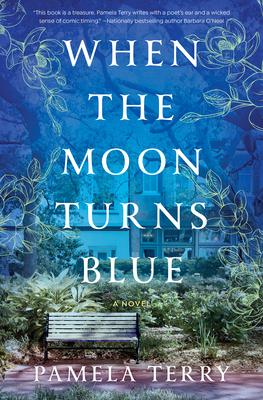
When the Moon Turns Blue, by Pamela Terry*****

Once in a while the odd thing happens,

Once in a while the dream comes true,

And the whole pattern of life is altered,

Once in a while the moon turns blue.

The tiny Georgia hamlet of Wesleyan is preparing to bury one of its own, and Mother Nature is preparing to cover the entire town in ice. But nobody—well, almost nobody—knows that a source of local tension is about to go nuclear, as someone is planning to topple and destroy the statue of a Confederate general in the park inside the boundaries of Old Man Griffin’s land. “The fight was just getting going good, and now somebody’s declawed the cat.”

This riveting, curiously charming and sometimes hilarious novel is the second by Pamela Terry, whose outstanding debut novel was The Sweet Taste of Muscadines. This one may be even better. My thanks go to Net Galley and Random House Ballantine for the invitation to read and review. This book is for sale now.

With the death of Harry Cline, we find ourselves at his funeral, a massively attended affair. But his wife, Marietta, develops a disabling, blinding migraine, and although they have been on the outs for years, Butter, her (former) best friend, comes to the rescue. By the time they’ve snuck out the side door of the church, we already know at least a little about both women, and now we want to know everything.

With just two novels published, Terry has already proven herself to be among the best authors when it comes to character development. Soon we’ll meet others—Marietta’s obnoxious brother, Macon and his beleaguered wife Glinda, who will have a large part in this story and is one of my favorite characters, as well as a host of others, who have smaller roles but are each so unmistakably established that it’s no work at all to keep track of them. But perhaps her finest achievement here is in creating a masterpiece that is ultimately a feel good book, despite the use of a red hot real world controversy within its pages.

I generally read several books at a time, and this one is the one that I saved for bedtime, because I wanted to be able to read it uninterrupted, and it is the one I wanted in my head when dreams came. It didn’t let me down.

This inspirational work of Southern fiction stands shoulder to shoulder with the finest classics, To Kill a Mockingbird and Fried Green Tomatoes. I wholeheartedly recommend it to you.