The Golem of Brooklyn, by Adam Mansbach*****

Len Bronstein is an art teacher. He has a whole lot of clay he’s filched from his employer’s supply closet, and now he’s stoned. He should make something. He should make a Golem. And friend, that’s just what he does.

Traditionally, The Golem is made by a rabbi to help the Jewish people during difficult times. Len isn’t a rabbi, and he doesn’t expect much from his creation:

Five minutes passed, and nothing happened. Len reminded himself that he didn’t actually expect anything to…he didn’t believe in any of this shit. He stood, dusted himself off, and went inside to grab a beer…Len deposited his beer in the sink just as The Golem ripped his back door off the hinges and flung it aside.

My thanks go to Net Galley and Random House Ballantine for the invitation to read and review. This book is for sale now.

Now that The Golem has awakened, he needs to know what his target is. His answer comes to him as he views the news on Len’s television. White Supremacists are railing about a Jewish conspiracy; the Holocaust, they say, was a hoax. The Golem was asleep during the Holocaust, but once it’s explained to him, he’s ready to get busy. But first, he must talk to the rabbi.

Our second main character is a woman named Miriam, Miri to you and me. She works at the bodega down the street, and Len recruits her to be a translator; The Golem, you see, only speaks Yiddish, and Len doesn’t. Miri has been drummed out of the temple because she is a lesbian, but The Golem likes her just fine. Before you know it, Len, Miriam and The Golem are on a road trip beyond all others, first to find a way in to see the Sassov Grand Rebbe, a wealthy and powerful man with a great many gatekeepers, and then to a scheduled White Pride rally down south.

This is, as may be obvious by now, very edgy humor. There’s a great deal of profanity, and whereas most of it is hilarious, at the beginning, the author could have varied his choices more. There are lots of cuss words out there, and not all of them begin with F. But this is a small matter. This novel’s action is interspersed with brief passages of Jewish history that I find very interesting, and they are so brief, and so skillfully woven into the narrative, that you may not notice that you’re learning some things.

My favorite passages involve a bombastic politician, and multiple encounters with cops. (The Golem doesn’t care for them.) As for me, I have read several very funny novels this year, but none made me laugh out loud as often as this one. And in the end–well, you don’t expect me to tell you how this ends, now do you?

Highly recommended to readers that lean left and can tolerate profanity.

Flags on the Bayou, by James Lee Burke****

James Lee Burke is one of the finest prose stylists the U.S. has to offer. His brilliant, lush descriptions, quirky, resonant characters with interesting names, and his passion for the rights of the working class are the stuff of legends. My thanks go to Net Galley and Simon and Schuster for the invitation to read and review his latest novel, Flags on the Bayou. This book is for sale now.

Our protagonist is Hannah Laveau, a former slave who’s on the run from the law. With her is Florence Milton, an abolitionist from Massachusetts. Hannah is determined not to be caught, but also to retrieve her little boy, Samuel, a preschooler from whom she was separated at the battle of Shiloh. Her determination is singular. Along the way we have officers from both sides of the Civil War, corrupt rich guys, and bushwhackers. The story is complex, as are all of Burke’s novels, and the setting atmospheric.

All of these things being said—and I’ve said them many times before, since I began reading his work about a decade ago—there are some things that I would like to see done differently. Burke has always intertwined social and political messages within his novels, and so it’s the subtext in this book that jars me. In fact, it bothers me enough that I abandoned this story twice before I finally dug in, determined to finish it.

The first category here is the American Civil War, and the fallout we still deal with today. In past novels, Burke has told us that the slaveocracy was wrong, and that the war was indefensible. I feel as if he has retreated from that here. We have some ugly Confederate characters, to be sure, but we also have ugly Union officers, and General Sherman—one of this reviewer’s most beloved heroes—gets run through the mud multiple times. It’s as if Burke wants us to know that actually, both sides were bad, and that war itself is just plain awful. This is weak tea indeed.

The second is one I’ve been eyeing for the last few of Burke’s novels, and I have soft-pedaled it because of my great admiration for the body of his work, and for his ageing dignity, but I do have to say something here. His development of female characters needs work. Lots of it. All of his females are either Madonnas or whores (and sometimes, Madonnas that are forced to be whores, through no real fault of their own.) I would dearly love to see a female character in his books who is not there for her sexuality, and who is not either a victim or a potential victim. With Burke’s Dave Robicheaux detective novels, progress was made with a lesbian cop character, and I was thrilled. But she came and then went, and his experience creating her hasn’t overflowed into his other work.

More than any one thing, I want to see Mr. Burke write a book—just one, seriously—where there is no sexual assault, no threat of sexual assault, and no memory of sexual assault. It’s getting old, sir. You surely have the ability to provide female characters with other motivations. I want to see it.

I was nearly annoyed enough to rate this book three stars, but I liked the ending a lot, and so the fourth star remains.

So that’s my two cents, because as much as I love his work in general, this is getting in the way. There will doubtless be some blowback from his other devoted fans once I publish this review; bring it.

A final note: because I was struggling with this book, I checked out the audio version from Seattle Bibliocommons. The voice actors that perform it are world class. However, because the story is so complex, bouncing back and forth in point of view and setting, it is hard to follow in audio alone. The best way to read this is with both the printed word, whether on paper or digitally, accompanied by the audio.

Mother-Daughter Murder Night, by Nina Simon****

Nina Simon’s debut novel, Mother-Daughter Murder Night, marks a fine beginning to an auspicious career. My thanks go to Net Galley and William Morrow for the review copy. This book is for sale now.

The story unfolds with three generations of women—Lana, Beth, and Jack—solving a murder mystery together. Lana, the grandmother, has just received dreadful news from her doctor, and she’s forced to rely upon Beth, her estranged daughter, for help to and from chemo appointments. Jack is her granddaughter, Beth’s daughter. Although all three are important characters, Lana is the protagonist.

Lana doesn’t deal well with helplessness.

No sooner has she moved into the little beach house in central California where the other two reside, than Jack, a teenager with a job as a kayak tour guide when not in school, finds a dead body while she is working. Suspicion initially falls on Jack, and so Beth and Lana dive in, first seeking to prove that Jack is innocent, and then, led by Lana, to find out who actually did it.

Amateur sleuth books come with an inherent challenge to the author, because obviously, civilians that have never worked in law enforcement are badly outmatched by actual cops. They don’t have the tools, the connections, or the experience to carry it off, and so such mystery novels sometimes end up looking ridiculous. Simon holds her own here nicely.  Another issue I see frequently is with characters that are children. Jack is a teen, and she’s a bright girl, but Simon doesn’t fall into the trap of creating an unbelievably smart teen in order to justify making her walk and talk exactly like an adult. Jack has the naivete and occasional bad judgement common to kids her age, and because of this, the story rings true.

There are a couple of things that I’d change if I could. First, the whole “fiercely independent” and “tiny firecracker” personas are badly overused and becoming a cliché. The second may be partially due to my own false assumptions. Between the cover and the title, I initially thought this would be a comic caper, with the women planning to mete out some vigilante justice with hilarious missteps and hijinks along the way. Although the book has its moments, it’s not as funny as I anticipated.

Nonetheless, this is a fun read, easily followed, and with more character development than one usually sees in a novel of this nature. The chemo occasionally seems a little too easy on Lana, but it’s not beyond the pale; after all, different people tolerate these things at different levels. There’s never a moment where I slam down the book due to disbelief. I appreciate the working class realism in Beth and Jack’s lives.  

I recommend Mother-Daughter Murder Night  to those that enjoy the genre, and I look forward to seeing what Simon writes next.

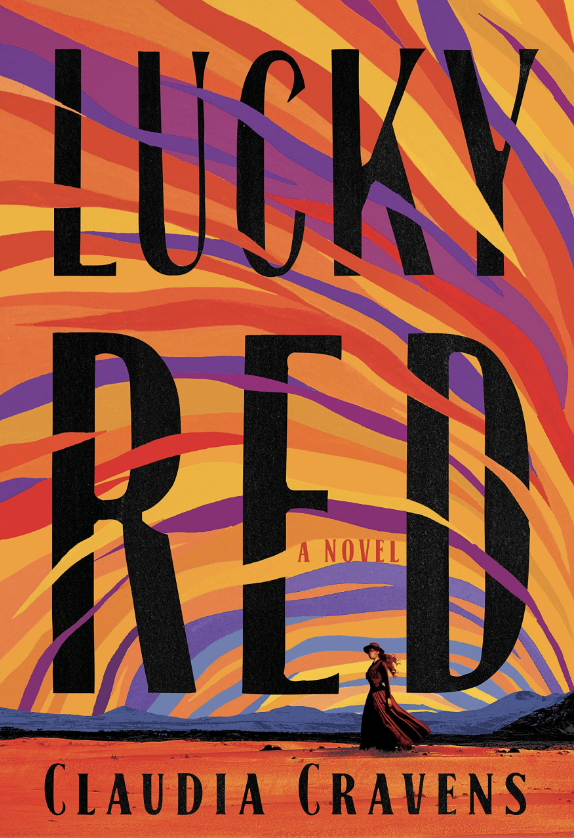
Lucky Red, by Claudia Cravens*****

Larry McMurtry, eat your heart out. There’s a fine new word-slinger come to town, and her name is Claudia Cravens.

My thanks go to Random House and Net Galley for the invitation to read and review Lucky Red. This book is for sale now, and you should get it and read it.

Bridget lives a life of hardscrabble deprivation; her mother died in childbirth, and all she has is her pa. He loves her, but he’s worthless; when he finally gets a bit of money, he invariably drinks and gambles till it’s nearly gone. During one such episode, he gambles away their little house, and then buys a homestead, sight unseen and many miles away. What they find instead is a tar paper shack; there are no crops or tilled acreage, no tools or even a decent place to live. They crawl into the miserable hovel to get out of the elements, at least, and get some sleep; a rattler has the same notion, but when pa thrashes in his sleep, the rattler bites him in the neck, and then there is only teenage Bridget.

Bridget makes her way to Dodge City, and in no time, she is stone cold broke. She’s recruited to work in a brothel, the only one in town owned and run by women. She doesn’t mind the work and makes friends among the other “sporting women,” and is curiously removed from the process for which she is paid; slide prong A into slot V; moan a little, gush, and collect your pay. But later, she finds herself obsessed with a new sex worker; a lovely blonde woman named Sallie. Everyone around her understands the significance of this fascination, but Bridget herself doesn’t get it. She’s young, and she’s naïve. But when Spartan Lee, a female bounty hunter, comes to town and asks to hire Bridget, the sun shines and the angels sing.

This story is epic, and in many ways reminds me of Little Big Man, but with a female protagonist. And in many ways, what makes it so successful is its restraint. At the book’s outset, there’s a slimy man that wants to buy Bridget’s hand in marriage, which would give her father a nice chunk of change, but she hates the man, and her father doesn’t push it. A less capable writer would have done it the other way, but here, and in every instance where I predict what will happen because it’s so obvious, Cravens does something else. And the lesbian sex is brief and almost free of physical details—a sad thing for anyone looking for soft porn, but it serves to keep the story moving forward—with the emotion behind it carrying the internal narrative.

Although Bridget has no complaint about the work she does, and the management is more benign than in houses owned and run by men, Cravens keeps it real. One night, Sallie is attacked by a client, and Bridget bursts in to rescue her. It doesn’t go well. Sallie berates her for her naivete:

“You don’t see the first thing about this, though, do you. They all have a knife, Bridget. They all have a gun, and they were all born with two fists on the ends of their arms. You think you’ve got this all figured out, but any single one of ‘em could take a swipe at you some night and you’d be dead before you hit the ground.”

To tell you more would be to spoil it for you, so I’ll leave you with this: Lucky Red is the best debut novel of 2023, and one of the best books I’ve seen this year, period. Don’t miss it.

The Wind Knows My Name, by Isabel Allende****

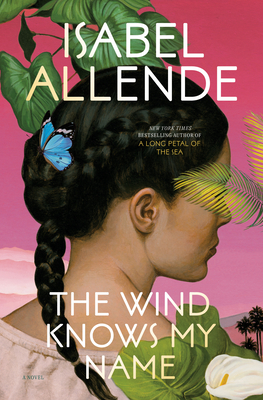
Isabel Allende is a living legend, a literary genius and fierce defender of human rights, foremost of women and immigrants. The Wind Knows My Name is a novel that features the struggle of two generations of immigrants, those that came to the U.S. during the Holocaust, and those that are coming here now from Latin America. Allende moves us seamlessly from one set of characters to the next, and then back again.

My thanks go to Net Galley and Random House Ballantine for the review copy. This book is for sale now.

I have been reading Allende’s work for decades. To read her stories is to be transported. In this case, the protagonists include two small people designed to possess the human heart. Samuel is a Jewish violin prodigy, still quite small as this story unfolds; his parents send him to safety when the Nazi occupation of Vienna takes hold, thinking that they will square things away and join him later. Of course, they are never able to do that. Our present-day protagonist is Anita, a Guatemalan immigrant child that is nearly blind. She is separated from her family at the U.S. border, and does her best to stave off loneliness by talking to her sister, Claudia, who is dead.

On the one hand, Allende is, to my way of thinking, on the side of the angels here politically. She always is. But if this feels a bit lecture-like to me, a diehard fan, it seems unlikely that she will reach a lot of newer readers. Usually I bond with her characters and carry them around with me for some time after I have turned the last page, but this time I find I am watching the page numbers go by. The person I feel most affinity for is Samuel, the tiny child clinging to his precious violin, but he disappears quickly and when he returns, he is an old man. Another reviewer commented that too much is told here, and too little shown, and that sounds right to me. And as much as I love Samuel, I also am burned out on historical fiction set during World War II. I hope in her next project, the author will turn in another direction.

To Allende’s many devoted readers, this book is recommended with the above caveats.

Liberation Day, by George Saunders*****

Liberation Day is a collection of the best short stories you will ever encounter. I had never read George Saunders before, but when I received an invitation from Random House and Net Galley to read and review this book, I remembered him by reputation and jumped at the chance. This book is for sale now.

Sometimes I feel conflicted when I see words like “Booker prize winner” and “exquisite” I feel torn. The book may be brilliant, but it also may be a whole lot of work to read. I am happy to report that is not the case here. Every one of these nine stories could serve as the cornerstone of a collection; the title selection is first, but I suspect that is more about length than anything, as it approaches novella length. It’s science fiction but also vaguely political; a group of people have had their brains scrubbed to near emptiness, and they are mounted on a “speaking wall.” Their sole purpose is to provide entertainment as a sort of scripted Greek chorus. They may only speak upon command; they assume this is a good arrangement, because they have no memories of their prior lives. But then the home (and Speaking Wall) owners are visited by their adult son, who concocts a scheme to liberate the speakers.

Many of these stories have stylized prose and invented words that might be difficult for a reader whose first language isn’t English.  “Mother’s Day,” which is one of my favorites, begins:

“This distinguished-looking gentleman would appear at your door somewhat sloshed and ask, Were your trees slaggard? Were they gublagging behind the other trees? Did they need to be prodderated? And hold up the little device. In this way they had nearly lost the house.”

Happily, for underconfident readers, there is an audio version available. I used it part of the time because I was running behind. There’s a different narrator for each story; actor Tina Fey does one of them! My notes are full of praise for these performers, who make a brilliant book even more so.

I especially enjoyed “The Mom of Bold Action,” which features the ultimate unreliable narrator, and my absolute favorite, “Ghoul”. Imagine, if you will, landing in Hell, or its amusement park equivalent, but there are still rules of etiquette to be observed; in particular, you are expected to be positive, and constantly encourage the other ghouls as they commit the ultimate misdeeds assigned to them. I laughed so hard at this one that it made my family a little cranky, and I had to go off by myself to hear the rest. Worth it.

The stories are a mixed bag in terms of genre, and all are outstanding.

Highly recommended in whatever format makes your heart happy.

Silver Alert, by Lee Smith ***-****

3.5 stars rounded upwards. My thanks go to Algonquin Books and Net Galley for the invitation to read and review. This book is for sale now.

The premise is one that a lot of readers over age 40 will be able to relate to. Herb and Susan have been very happy, but as they enter their twilight years, Susan is no longer able to care for herself or even communicate well. I don’t think we are ever told the specific cause, whether it’s a stroke that’s left her undone, or dementia, or some other thing, but the result is the same. Herb believes he is qualified to care for his wife, together with a home health assistant that he can well afford to pay, but the truth is, he is too forgetful to do the job properly. In fact, he is closer than he will admit to needing care himself.

Susan always did love a good mani-pedi, and so he hires a traveling manicurist to stop in and take care of Susan’s nails. The young woman that calls herself Renee does more than that, however; she becomes fond of Susan, and shows up with outlandish hats and art supplies and other things that make Susan smile.

But now the family is here, the responsible, busy adults that can see this situation is untenable. They want to move Herb and Susan to a care facility, but Herb is adamantly opposed. Herb isn’t going to have anything to say about it much longer, though, and he can see the handwriting on the wall.

As I read first half of this little book, I feel a certain amount of reviewer’s remorse. Why have I signed on to read this thing? It’s supposed to be funny, but it isn’t. And I took it because it has been billed as humorous; ordinarily I avoid books about aging.

About halfway into it, however, my feelings begin to change, because I realize this story isn’t about Herb and Susan. It’s about the manicurist, whose real name is Dee-Dee.  Dee-Dee comes from hardscrabble poverty, and has escaped from a trafficking situation she was thrust into just as puberty began. She took some of the traffickers’ money when she fled, and she uses the name Renee to cover her trail.

Herb’s son is leery of Dee-Dee. He believes she has questionable motives; maybe she a grifter, or a gold digger, or who knows what? When he uncovers her true identity, he is sure he is right. As preparations are made to move the old folks and sell the house, he visits her in the sad little trailer where she is staying to warn her off.

I like the interplay of these two characters of wildly disparate social classes, and the difference in their thinking. The most redemptive feature throughout this quirky little novel is the voice that comes through. The rich (asshole) son is absolutely believable, though his is a minor character; that’s okay, I don’t really want to spend more time with him. But sweet little Dee-Dee, who is desperately undereducated and has nobody to help her, nevertheless tends to give others the benefit of the doubt. She’s plucky, using advanced vocabulary words that she’s picked up, planning for her future.

It seems likely that this sweet little novel will get less credit than it should, because of the way it’s marketed. When we see a book in the humor section, we expect it to make us laugh. It has a warm and fuzzy cover, and nobody would expect the serious trigger issues contained within it. (Do NOT buy this book as summer reading for your precocious middle schooler!) Had it been presented to readers as a whimsical tale of friendship, it would have met with friendlier reviews.

Recommended for adults over 40 that are looking for a beach read.

Lone Women, by Victor LaValle*****

“Queer folk, the Henrys.”

Adelaide Henry is “profoundly lonely,” growing up without siblings, with older parents that spurned the world around them. They had their reasons. And yet, in the opening chapter, as I see Adelaide pour kerosene over both of their lifeless forms and burn them, along with their house, I wonder…were they bad enough to deserve this?

But nothing is as it seems, and this is part of the magical spell that Victor LaValle weaves into this kickass novel, Lone Women. By the time I understand the why and the who and the what, I feel an intimate connection to Adelaide, as if I may be the only one trusted with her secrets.

My thanks go to Net Galley and Random House for the review copy. This is one of the finest novels to be published in 2023, and you should get it and read it.

Adelaide flees the California farm where she’s lived all of her life, and buys a homestead in Montana. Almost everything about her life changes; from the warmth of California to the frigid winters of the Northern Rockies, from life with her parents to one lived alone, and from an all-Black community to one that is almost entirely Caucasian. She brings very little with her, only what she can carry, but she is curiously possessive of her extremely heavy trunk, and though I initially assume that she keeps something of great monetary value inside it, I soon realize that isn’t it. My early notes ask the same thing over and again: “What is in that trunk?”

From there, our story unfolds and I can’t stop turning the pages. I’ve never read a novel of any genre that’s like this one, and I’m guessing that you haven’t, either.

Do yourself a favor. Don’t read the synopsis. Go into it blind. It’s a lot more fun if you learn of the characters and events at the times the author intends.

There’s a powerful message in play, but the story is so adroitly delivered that it never feels like a polemic.

I won’t say more, because I don’t want to ruin it for you, but believe me, the next time LaValle publishes a novel, I will be first in line to read it. Highly recommended, especially to feminists.

Swamp Story, by Dave Barry*****

Dave Barry’s new novel, Swamp Story, should come with a warning label: Danger. Do not read in area where explosive laughter is not permitted. Fans of Barry’s will be pleased to hear that this is possibly the best thing he’s ever written. Readers new to Barry will want to read more. This book will be available to the public May 2, 2023.

My thanks go to Net Galley and Simon and Schuster for the invitation to read and review.

Our protagonist is Jesse, a lovely person that has made a huge mistake. She feel hard for Slater, a young man with a smokin’ hot body, a limited brain, and a solipsistic world view. Now she’s stuck in a cabin in the Everglades with him and his camera wielding buddy Kark, and oh yes—their baby, Willa; not to mention all of the flora and fauna that live here:

“Kark! You need to get this!”

“What?” said a voice, as hoarse as Slater’s, maybe hoarser.

“Big fucking snake,” said Slater. “I mean big.”

The snake slid forward another two feet, directly toward Jesse and Willa. Jesse saw that she now no longer had the option of even trying to run past it.

“Slater!” she said, trying to keep the panic out of her voice, not wanting Willa to pick up on it.

Slater held up his hands in a Calm down gesture.

“It’s cool,” he said. “This’ll be good. Good footage.”

“Good footage?” said Jesse. “Are you—”

“Goddammit, Kark,” yelled Slater, “get the camera out here!”

“OKOKOK,” said Kark, emerging from the cabin, holding the video camera. ” Fuck. The battery’s dead.”

Things appear to improve for Jesse when she stumbles across a cache of gold bars hidden in the glades, but this proves to be a mixed blessing, as some truly bad men learn of her good fortune and seek to take it from her, using any means necessary. However, the first such men, Billy and Duck, are not only evil, but also hilariously bumbling at times. And then, of course, there are the others.

Meanwhile, the owner of Bartle Brothers Bait and Beer decides to give his languishing business a shot in the arm by manufacturing an internet hoax. The Everglades Melon Monster is a sketchy, low budget creation whose star is an inebriated fellow wearing a Dora the Explorer head, and yet, somehow it works. Now it seems that everyone is descending on the Everglades, and almost every person that arrives is “batshit crazy.”

I’m not telling you how this thing ends; you’ll need the book for that. Don’t wait for the movie. You can thank me later!  As for me, I’m off to order a Bartle Brothers Bait and Beer tee shirt.

Hang the Moon, by Jeanette Walls*****

Jeanette Walls is the author of outstanding memoirs, most notably The Glass Castle. Her new novel, Hang the Moon, is brilliant, and you should read it. My thanks go to Net Galley and Scribner for the review copy. This book is for sale now.

Sallie Kinkaid is born and raised near the turn of the twentieth century in a tiny backwater in Virginia, daughter of its wealthy scion, “Duke” Kinkaid.  Her mother has died, and Duke has remarried, and now Sallie has a younger half-brother, Eddie. Sallie is a daredevil, given to occasional recklessness, whereas Eddie has a gentler, more introverted nature, with a love of learning and music. But one day, hoping to awaken some more adventurous aspect of his personality, Sallie takes Eddie out for a ride in her cart, and he is injured. Just like that, Sallie no longer lives with her father; she is cast out to live with an impoverished aunt, and there she remains for nearly a decade.

Sallie is a young woman when she returns, and now she must navigate the shoals of local politics, keeping clear of Duke’s sometimes unpredictable temper.  Duke owns nearly every property in the county, and he is deft at doling out favors and keeping the local peace, always in a way that works to his own advantage. Sallie has a hundred questions, some longstanding, and others that develop as she works for her father. However, questions are discouraged in the Kinkaid home. An aunt tells her, “Honey, there are some rocks you don’t want to look under.”

When the local economy is shaken by the unthinkable, Sallie must make some hard choices as she comes into her own. Moonshine has long been an unofficial, yet pivotal way that the local working class makes its living, and when feuds erupt and the government attempts to intervene, Sallie must choose sides. As she comes into her own, she discovers some hard truths about the family she thought she knew. Walls is at her best here, with a strong, resonant setting, a clear, credible plot, and unforgettable characters. This is the sort of book that one comes back to. Highly recommended.