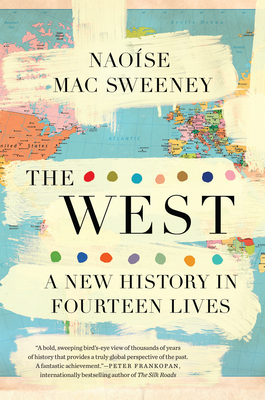
The West, by Naoise Mac Sweeney****-*****

4.5 stars, rounded up.

Those that have taken a course on Western Civilization—as college freshmen or otherwise—are familiar with its framework, that the modern world can attribute its earliest, most progressive, democratic, and technically superior attributes to the dead White European men that came before us. Archeologist and award-winning historian Naoise Mac Sweeney has taken a sledgehammer to this construct, proving that many of the smartest scientists, inventors, and social, military, and political leaders were not White, not European, and not male.

My thanks go to Net Galley and Random House for the review copy. This book is for sale now.

Mac Sweeney demonstrates her thesis by discussing fourteen key figures from the past that don’t fit into the standard framework. She begins with Herodotus and ends with Carrie Lam. Some chapters read like a college text or lecture, one where I know that this information is important, but my mind keeps wandering, and I check to see how much longer the chapter will be. Others woke me up. In chapter seven, she features Safiye Sultan of the Ottoman Empire. She was not legally able to become sultan following her husband’s death, so she saw her son installed, and then “summarily executed” his nineteen younger brothers to prevent anyone from contesting his right to rule. Another that made me sit up and take notice is Njinga of Angola. I was riveted by this one, to the extent that I actually shouted at one point. (It’s all right; I was at home.)  If we judge her work by whether she has proven her thesis, then unquestionably she has done so. 

There are two aspects that I didn’t care for here. The first is a mannerism. The use of the Victorian “we” is grating. “As we shall see…” “We have discussed…” No. She has already seen, and the only one doing the discussing within the pages of this book is the author.  Also, since the title itself identifies this tome as a history book, Carrie Lam of Hong Kong, whose quotes date from 2021 and 2017, has no business being included here. History is defined as what has occurred fifty years or more prior to publication. Mac Sweeney knows this.

In a fit of pique over these two flaws, in addition to the snoozy parts of the narrative, I initially rated this book with four stars, but this is a groundbreaking body of work, and after reflection, I changed my rating to 4.5 stars, rounded up.

Highly recommended to students and to anyone interested in world history.

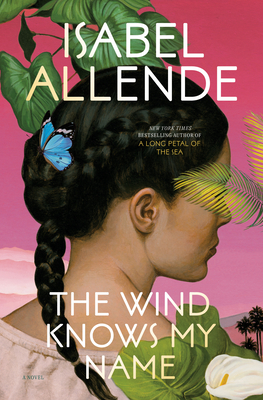
The Wind Knows My Name, by Isabel Allende****

Isabel Allende is a living legend, a literary genius and fierce defender of human rights, foremost of women and immigrants. The Wind Knows My Name is a novel that features the struggle of two generations of immigrants, those that came to the U.S. during the Holocaust, and those that are coming here now from Latin America. Allende moves us seamlessly from one set of characters to the next, and then back again.

My thanks go to Net Galley and Random House Ballantine for the review copy. This book is for sale now.

I have been reading Allende’s work for decades. To read her stories is to be transported. In this case, the protagonists include two small people designed to possess the human heart. Samuel is a Jewish violin prodigy, still quite small as this story unfolds; his parents send him to safety when the Nazi occupation of Vienna takes hold, thinking that they will square things away and join him later. Of course, they are never able to do that. Our present-day protagonist is Anita, a Guatemalan immigrant child that is nearly blind. She is separated from her family at the U.S. border, and does her best to stave off loneliness by talking to her sister, Claudia, who is dead.

On the one hand, Allende is, to my way of thinking, on the side of the angels here politically. She always is. But if this feels a bit lecture-like to me, a diehard fan, it seems unlikely that she will reach a lot of newer readers. Usually I bond with her characters and carry them around with me for some time after I have turned the last page, but this time I find I am watching the page numbers go by. The person I feel most affinity for is Samuel, the tiny child clinging to his precious violin, but he disappears quickly and when he returns, he is an old man. Another reviewer commented that too much is told here, and too little shown, and that sounds right to me. And as much as I love Samuel, I also am burned out on historical fiction set during World War II. I hope in her next project, the author will turn in another direction.

To Allende’s many devoted readers, this book is recommended with the above caveats.

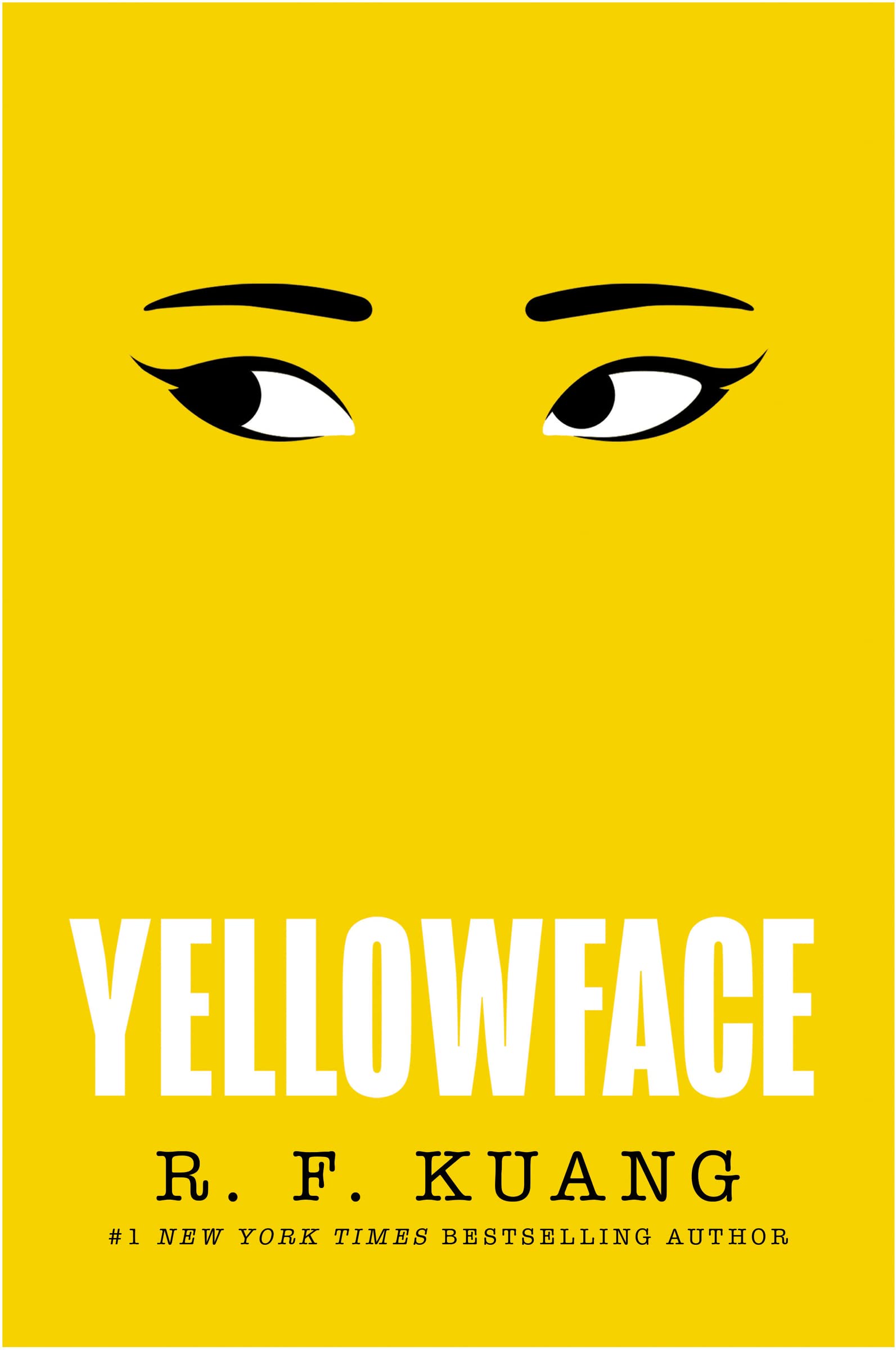
Yellowface, by R.F. Kuang****

Rebecca F. Kuang lights a match, and the literary world explodes! Her new novel, Yellowface, takes on issues of racism, cultural appropriation, cancel culture, and identity politics. My thanks go to Net Galley and William Morrow for the review copy; this book is for sale now.

Our protagonist is Juniper Hayward, a struggling writer. June’s longtime friend, Athena Liu, is spectacularly successful, and though June tries not to be bitter, Athena is a bit oblivious to June’s distress, and so although June likes her, she also kind of hates her. Then one day, as the two of them are discussing Athena’s newly completed masterpiece, which took a decade to create and has been seen by no one yet, Athena chokes to death on a bit of food. June employs the Heimlich maneuver, but it doesn’t work. Now Athena is dead, and June has in her possession the unpublished manuscript.

What comes next makes my jaw drop! June leaves with the manuscript, which still needs cleaning up before it can be published, and using every lame attempt at justification one can imagine, she edits it and publishes it under her own name. She rationalizes:

“The truth is fluid. There is always another way to spin the story, another wrench to throw into the narrative. I have learned this now, if nothing else…My only sin is loving literature too much.”

To make matters worse, her publisher suggests she use her middle name, Song, as a pen name. (Oh, snap! There’s already a mystery series that stars Juniper Song, though this doesn’t make it into the novel.) The book is a brilliant success, but during her book tour, audiences cannot help noticing that June is, well, Caucasian.

Man your battle stations!

Initially, June seems like a decent enough person that has made one self-serving mistake, but as the narrative unfolds, her judgment, behavior, and moral character deteriorate. The suspense is thick and absorbing as I wait to see just what will happen next.

In places, this story is drop dead funny.

I recommend this book to those that love to see good fiction based on current events.

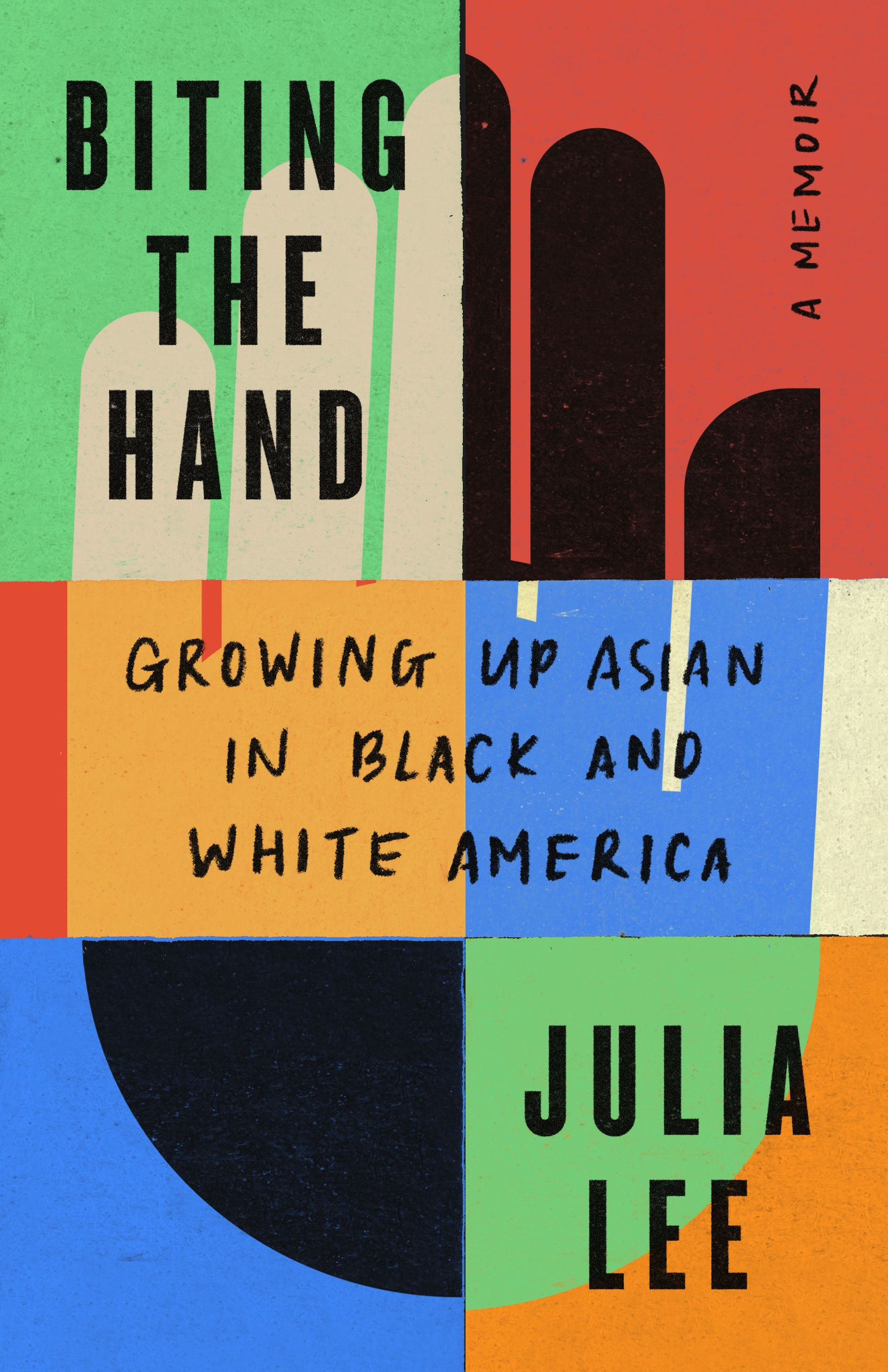
Biting the Hand, by Julia Lee****

Julia Lee is not amused, and she’s decided to say the things nobody else is saying. In this deeply analytical, provocative memoir, she tells us about her own experiences growing up, and the issues faced by Asian immigrants and Asian Americans in the United States, where “we are critical to the pyramid scheme of the American Dream.”

My thanks go to Net Galley, Henry Holt Publishers, and Macmillan Audio for the review copies. This book is for sale now.

In some ways, I feel as though I am reading someone else’s mail as I read this, because it is clearly intended for an audience of people of color. However, I did read it, and I’m going to review it.

When the discussion of race in the U.S. comes about, it is, as Lee states, almost always a conversation about Black people and Caucasians. Those that don’t fit into either group are sidelined. Perhaps more harmful is the way that people of Asian descent are presumed to be sympathetic to the status quo. Ever since a major news periodical dubbed Asians as “the model minority” back in the early 1960s, expectations and assumptions have leaned in that direction. And the roots of this division—Black versus Asian—make this a particularly thorny assumption to untangle. After all, a large percentage of African-Americans can trace their lineage to slavery; their ancestors weren’t born in the States, nor did they choose to come here, but were kidnapped and brought by force. Angry? You bet! But Asian immigrants came of their own accord, oftentimes fleeing untenable circumstances in their countries of origin. And so, their children, and those that have come after, have largely been indoctrinated to be appreciative. If things don’t go well, they tell them, then we must work harder!

This Caucasian reviewer comes to you without the Asian background, appearance, or experience that Lee speaks of; yet I live in a city that has one of the largest Asian populations in the U.S., and am married to an Asian immigrant, and parent to a child that is half-Japanese. So many of the stories—strangers that ask where you’re from, and won’t accept the truth of “California,” where Lee was born, or “Seattle,” my daughter’s hometown, are familiar ones.

Lee is fed up with the mainstream news stories that endeavor to pit Asian and Black people against each other. Her parents were small business owners in a mostly Black part of Los Angeles during the riots of 1992, and her experiences inform her conclusion, that there must be solidarity between all people of color in order to successfully fight for significant change.

The one bone I have to pick is the casual manner in which she dismisses the question of social class as a key factor. Her very brief note about this is that it’s a tomato and to-mah-to issue, not worth much discussion, because most people of color are working class. This is simply untrue, and it enforces a stereotype of Black people as being mostly poor and dispossessed, when in actuality, eighty percent of Black people in the US live above the poverty line. There are African-Americans that have far more money than I will ever see; some of the many Asian groups have a higher median income than Caucasians. So yes, social class is a huge factor here, one that Lee should examine more critically. There are working class Whites that can be allies; there are wealthy families of color that would shut down the struggle, given half a chance. The missing star in my rating reflects her failure to recognize this, and to offer concrete solutions to this problem.

The book’s title comes from Lee’s mentor at the otherwise very white-supremacist dominated Harvard—Jamaica Kinkaid. I actually gasped when I saw this. What a luminary she found to guide her!

Both the audio and print version of this book are equally readable, so go with whatever you usually prefer.

This is a fine resource for those seeking to examine Asian and Asian-American racial dynamics. Read it critically, but do read it. There’s a lot here that has needed to be said for a long, long time.

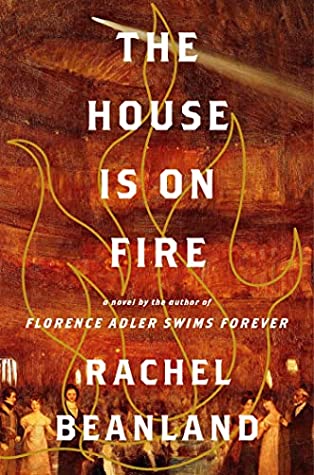
The House is On Fire, by Rachel Beanland***-****

Rachel Beanland wrote Florence Adler Swims Forever, an arresting debut that caught my attention along with that of a great many other readers. Her sophomore novel, The House is on Fire, is a good read, though not as compelling as her first. My thanks go to Net Galley and Simon and Schuster for the invitation to read and review. This book is for sale now.

The house in question is a theatre; the setting is Richmond, Virginia. The story is modeled after the massive fire of the Richmond Theater in December, 1811, which at the time was the greatest human calamity to have befallen the U.S. Scores of people were killed, and the disaster created headlines around the country, and even internationally. Beanland tells us in her author’s note that she chose to center the book around four real people that were affected by the fire; some she was able to learn a good deal about, whereas for others, she had to invent almost everything. The characters are Gilbert and Cecily, both of whom were slaves; Sally, a young Caucasian widow; and Jack, a Caucasian stagehand in charge of pyrotechnics during the performances, despite his being just fourteen years old.

Beanland nails the setting like a pro, recreating the technology, character, and landscape of the period, and doing so subtly, without relying on shortcuts or cheesy devices such as popular music and political figures. It’s a good thing, because setting is important to this story.

The characters are not as well developed. The one I feel I know best, by the end of the book, is Cecily, a young slave woman desperate to escape the predatory son of the man that owns her. However, Cecily’s story is the one that Beanland invented. I have mixed feelings about Cecily’s motivation. On the one hand, it’s a well-documented fact that young slave women were raped by masters and other whites as a matter of course, a horrifying fact that must never be forgotten. On the other hand, fear of a sexual predator is an easy device to employ, and I keep thinking about what actor-director Jodie Foster says about its overuse: if you don’t know what motivates a woman, writers and directors everywhere immediately reach for rape. I am thankful that Beanland doesn’t provide any prurient details or graphic descriptions. But apart from love of family and fear of sexual violence, I still know nothing of Cecily at the end of the story.

The other characters are still less defined. Gilbert’s last master permitted him to hire himself out as a blacksmith once his other chores were done, and he has been planning, once he has enough set aside, to purchase freedom for himself and his wife. We also see that he is a hero, helping to pull or catch a great many people that are stuck in the burning building. All of this is demonstrated at the outset, and not much changes for him.

Young Jack is consumed with fear and guilt due to his part in the fire. He had dreamed of becoming an actor, and now that seems unlikely. He wants to tell the truth, but others insist that he not. Again, that’s all known to us from the start, and Jack isn’t much different when it’s over.

Sally is the least defined, to the extent that I keep having to recheck to see who she is.

But then, not every book is character based. This one is more about plot and setting, and those that prefer a story with a lot of activity will likely be pleased.

Beanland is a fine writer, and I do look forward to seeing what she writes next.

Lone Women, by Victor LaValle*****

“Queer folk, the Henrys.”

Adelaide Henry is “profoundly lonely,” growing up without siblings, with older parents that spurned the world around them. They had their reasons. And yet, in the opening chapter, as I see Adelaide pour kerosene over both of their lifeless forms and burn them, along with their house, I wonder…were they bad enough to deserve this?

But nothing is as it seems, and this is part of the magical spell that Victor LaValle weaves into this kickass novel, Lone Women. By the time I understand the why and the who and the what, I feel an intimate connection to Adelaide, as if I may be the only one trusted with her secrets.

My thanks go to Net Galley and Random House for the review copy. This is one of the finest novels to be published in 2023, and you should get it and read it.

Adelaide flees the California farm where she’s lived all of her life, and buys a homestead in Montana. Almost everything about her life changes; from the warmth of California to the frigid winters of the Northern Rockies, from life with her parents to one lived alone, and from an all-Black community to one that is almost entirely Caucasian. She brings very little with her, only what she can carry, but she is curiously possessive of her extremely heavy trunk, and though I initially assume that she keeps something of great monetary value inside it, I soon realize that isn’t it. My early notes ask the same thing over and again: “What is in that trunk?”

From there, our story unfolds and I can’t stop turning the pages. I’ve never read a novel of any genre that’s like this one, and I’m guessing that you haven’t, either.

Do yourself a favor. Don’t read the synopsis. Go into it blind. It’s a lot more fun if you learn of the characters and events at the times the author intends.

There’s a powerful message in play, but the story is so adroitly delivered that it never feels like a polemic.

I won’t say more, because I don’t want to ruin it for you, but believe me, the next time LaValle publishes a novel, I will be first in line to read it. Highly recommended, especially to feminists.

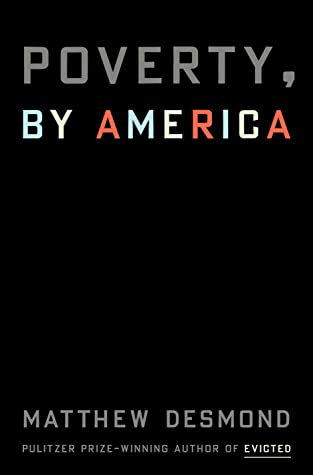
Poverty by America, by Matthew Desmond****

“Hungry people want bread. The rich convene a panel of experts. Complexity is the refuge of the powerful.”

Desmond is the author of Evicted, the Pulitzer winning examination of urban homelessness. Desmond himself grew up poor, and his family was forced out of their home when he was a child. These things give him a different and more authoritative perspective than most urban ethnographers.

 My thanks go to Net Galley and Crown Publishing for the invitation to read and review. This book will be available to the public tomorrow, March 21, 2023.

This book is written for a general readership, and it’s more readable than any other nonfiction work I’ve seen on this subject. His tone is conversational, and his research is impeccable, drawing from a wide variety of sources, well integrated and organized. He addresses the past and present roles of racism, explaining how the overtly discriminatory statutes and policies of the past have morphed into more subtly framed, yet still ubiquitous ones of today. He tells us “why there is so much poverty in America and…how to eliminate it.” He speaks to an audience of middle and upper class readers, warning that we must “…each of us, in our own way, [must become] poverty abolitionists, unwinding ourselves from our neighbors’ deprivation and refusing to live as unwitting enemies of the poor.”

In revealing the roots of American poverty, Desmond is thorough. He discusses the role played by medical costs, and the many workers that still cannot afford health care; the withering of unions, and the way that gig workers and independent contractors have replaced permanent employees; incarceration, and the debilitating effects it has, not only on the person sent away, but on their families for generations to come; the way that government assistance programs have been legally diverted to programs having nothing to do with the poor; the way that poor people are forced to pay more for the same goods and services that the better off pay. He discusses the ways that those living in poverty are cut off from political and economic opportunities. He does these things better than anyone else is doing them right now, and it makes me mad as hell, seeing millions of ruined lives all laid out so starkly.

It is when he approaches solutions that things become a little muddy. There are a few of his suggestions that I genuinely disagree with, but most of them are sound; the problem is that, despite his assurance that all of these changes can be made without much incursion into the lives of the wealthy and powerful, the chances of these people agreeing to implement such changes are somewhere between slim and none. He assures us that he is no Marxist (and that’s the truth, alas,) and that the rich can still have plenty; yet in reality, it’s clear to this reviewer that the kinds of changes that are needed are ones that working people will have to force from the tightly closed fists of the rich. This is where the fifth star falls off of my rating.

Nonetheless, Poverty by America is well worth your time and money, and I recommend it to you.

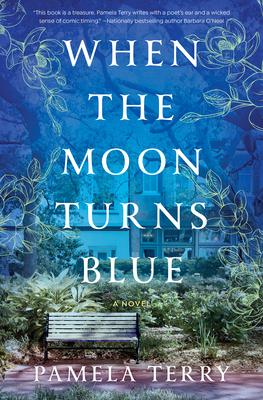
When the Moon Turns Blue, by Pamela Terry*****

Once in a while the odd thing happens,

Once in a while the dream comes true,

And the whole pattern of life is altered,

Once in a while the moon turns blue.

The tiny Georgia hamlet of Wesleyan is preparing to bury one of its own, and Mother Nature is preparing to cover the entire town in ice. But nobody—well, almost nobody—knows that a source of local tension is about to go nuclear, as someone is planning to topple and destroy the statue of a Confederate general in the park inside the boundaries of Old Man Griffin’s land. “The fight was just getting going good, and now somebody’s declawed the cat.”

This riveting, curiously charming and sometimes hilarious novel is the second by Pamela Terry, whose outstanding debut novel was The Sweet Taste of Muscadines. This one may be even better. My thanks go to Net Galley and Random House Ballantine for the invitation to read and review. This book is for sale now.

With the death of Harry Cline, we find ourselves at his funeral, a massively attended affair. But his wife, Marietta, develops a disabling, blinding migraine, and although they have been on the outs for years, Butter, her (former) best friend, comes to the rescue. By the time they’ve snuck out the side door of the church, we already know at least a little about both women, and now we want to know everything.

With just two novels published, Terry has already proven herself to be among the best authors when it comes to character development. Soon we’ll meet others—Marietta’s obnoxious brother, Macon and his beleaguered wife Glinda, who will have a large part in this story and is one of my favorite characters, as well as a host of others, who have smaller roles but are each so unmistakably established that it’s no work at all to keep track of them. But perhaps her finest achievement here is in creating a masterpiece that is ultimately a feel good book, despite the use of a red hot real world controversy within its pages.

I generally read several books at a time, and this one is the one that I saved for bedtime, because I wanted to be able to read it uninterrupted, and it is the one I wanted in my head when dreams came. It didn’t let me down.

This inspirational work of Southern fiction stands shoulder to shoulder with the finest classics, To Kill a Mockingbird and Fried Green Tomatoes. I wholeheartedly recommend it to you.

Love Is Loud: How Diane Nash Led the Civil Rights Movement****

Just in time for Dr. King’s birthday! This lovely biography by Sandra Neil Wallace introduces a little-known leader of the Civil Rights Movement, Diane Nash. Nash fought for equal rights for people of color, and had a significant part in the changes that were won.

My thanks go to Simon and Schuster for the copy I received for review purposes. This book is for sale right now.

Most of us have never heard of Nash, who was active during a time when Black people and women were sometimes overlooked, and at other times, excluded in historical narratives. She grew up in the South side of Chicago, where there were many skin colors and cultures, but not many Caucasian people. It was when she went to college in Nashville that she gained firsthand experience of Jim Crow laws, which required separate (and generally inferior) facilities for African-Americans. And Diane was having none of it.

This sumptuously illustrated picture book details the key stages of her development and achievements. My one concern is with the references to “love” in the title and text which are never explained. Is the love in reference to her religion, a philosophy, or something else? The word is thrown in there several times with no context at all. If her mission was to bring change about using nonviolent methods, as Dr. King chose to do and encouraged others to do as well, it is not mentioned. Did she see Gandhi as a role model? We aren’t told. Instead, it appears that the word is injected to sanitize, to offset the word “fight,” perhaps because this story is written for young people. But children aren’t stupid, and without any cohesive portrayal of Nash’s character and underlying motivation, I fear they may forget her. Literature has power, and so although I am glad to see Nash introduced to young people, the effect is diluted when proper character development—which is necessary, even in a children’s picture book—is not provided.

That said, the literacy level is perfect for upper elementary students, and would also make a fine read-aloud for a teacher to frame a single lesson around. It would also be first rate for a sub plan, and teachers know that’s something we always need on hand.

Bryan Collier is the illustrator, and his artwork fills every inch of every page, with the text superimposed on top of it. This is lush, gorgeous work that elevates the story with its presence.

Recommended for classrooms, libraries, and to parents and other guardians of children in grades 4, 5, and 6.

Marked for Life, by Isaac Wright, Jr. *****

Marked for Life is the legal memoir of Isaac Wright, Junior, and it is a compelling story. At age 28, Wright was framed as a “drug kingpin,” though he had never used or sold drugs, and when he rejected the plea deal offered him, he was convicted and sentenced to life plus seventy years. Through his own efforts, he was able to prove his own innocence and regain his freedom. This book is for sale now, and you should get it and read it.

My thanks go to Net Galley and Macmillan Audio for the review copy. Listening to the recorded version is all the more powerful, because the author reads it himself. Readers should know that this book starts out painfully harsh, with the blow-by-blow events of the day he is arrested, and his subsequent treatment. There’s not a tremendous amount of physical violence, but the emotional toll could just about bring me to my knees; imagine how it must have been for Wright, who lived through it! I begin to fear that I will dread listening to it, and so I promise myself that this will be my car book; I will listen to it while I am driving around, and when I get home, I will turn it off. However, only the beginning is harsh, and once I am twenty percent of the way into it, it becomes so interesting that I quickly change my mind, and it joins me in the kitchen. So reader, don’t be afraid of this book. The rough part is all in the first few chapters.

Wright is targeted by corrupt local officials, who are under the misapprehension that he has a small fortune socked away in the safe in his bedroom. In fact, Wright is a successful businessman; he starts as a music producer, then moves into management, touring with Run DMC, and indeed, he and his family live well. Although he doesn’t say as much, part of me wonders if that is his crime, in the eyes of the local cops and courts: he’s a Black man with money. As soon as he is arrested, the shakedown begins. Give us the money, Wright, and we’ll make it all go away.

He doesn’t, and they don’t.

The most fascinating part of this is learning how a prisoner is able to study the law and represent himself. Obviously, not everyone is as literate and intelligent as Wright is; he makes himself indispensable to other prisoners by assisting them with their own cases also. His ability to juggle a lot of moving parts—his own appeal, his fellow inmates’ cases, and the rigors and restrictions of the prison system, along with the endless pressure on him from those that framed him—is impressive. A lot of his success lies in his perception of what other people want. What does the warden want? What do his fellow prisoners want and need? If this had been me, I don’t think it would have gone well. I’d have been good with the research and the paperwork, but I doubt I could have read the wishes and intentions of those around me as successfully as Wright has done. Ultimately, it is an inspirational story, and I highly recommend it to you.