The Wages of Sin, by Harry Turtledove**

Before reading this book, I had always enjoyed Harry Turtledove’s alternative history novels, which have a sci fi vibe and usually a good dose of humor, sometimes of the laugh out loud variety. When I saw that this one was available, I leapt on it. What a freaking disappointment!

Nevertheless, my thanks go to NetGalley and ARC Manor Publishing for the review copy. This book is for sale now.

The premise is that HIV—renamed The Wasting– erupts in the early 1500s, but instead of dismissing it as a disease spread by gay men, English society sequesters its women in the home, never to be permitted friends or visitors, never allowed to go out and do their own shopping without extreme cloaking of bodies and faces, and extreme risk for committing the social sin of venturing out of the house. Viola is supposedly our protagonist, a young, intelligent woman of marriageable age who fumes under her constraints and entertains herself by reading her physician father’s collection of medical books.

Peter, whom we actually see a good deal more of, is the young man that the parents have arranged to marry Viola. The two of them are permitted to meet (in Viola’s home of course) in order to determine whether they are compatible. They are. Now Peter is off to university, and for the most part, we go with him.

Immediately we meet Peter’s obnoxious, wealthy roommate, who is masturbating when we encounter him. Turns out this guy never thinks of anything except sex. Peter is determined to wait for marriage because of the Wasting. There’s no treatment and there’s no cure; he doesn’t want it, and he doesn’t want to give it to Viola. His roommate, however, frequents brothels on an almost nightly basis and talks about it, graphically, interminably. Think of every vulgar, disgusting, disrespectful term you don’t want to know about women’s anatomy and the various sexual positions, and this jerk uses them all. All. The. Time. Repetitiously, constantly, and for no reason except, apparently, to make us hate him, which we do, and possibly as filler.

Have you ever known someone that makes up excuses to use objectionable language, because, see, they’re quoting someone? That’s how this feels to me.

There is no character development of any kind here. The book is short, but it feels interminable. I made it halfway through, then read the last twenty-five percent to be sure there wasn’t some redemptive element at the climax or the end. But there is no climax. There’s no story arc. For that matter, there are no gay people or bath houses, but hey, it’s alternative history, it’s fiction, and if Turtledove wants to leave out the gay people, he can do that.

But the disease? It comes from Africa. Oh, of course it does. Blaming the Black people for everything has apparently made it through from our time period to Turtledove’s invented world.

There is no redemptive feature to be found here, and frankly, the second star in my rating is there only as a wistful nod to this author’s earlier works. I recommend this book to anyone forced to purchase something for a horny, obnoxious male that wants a socially acceptable way to read porn. That’s it.
The Meth Lunches, by Kim Foster****

Kim Foster and her husband, David, create a food pantry in front of their house—and later, inside it—during the pandemic. It begins with the employment of one hungry handyman who’s also an addict, and from there, it mushrooms. This is her memoir of that time, and also a philosophical treatise on poverty and hunger in the United States.

My thanks go to Net Galley, RB Media, and St. Martin’s Press for the review copies. This book is for sale now.

When Foster’s family moves from New York to Las Vegas, one of the first thing she notices is the meth. It’s everywhere. Perhaps it is the milder weather; addicts in New York have to find a spot out of the weather during much of the year, but Vegas is in the desert, mild enough for the unhoused to sleep just about anywhere, warm enough that addicts don’t have to hide themselves away to get high.

The pandemic hits Vegas hard. So many people make their living from some aspect of the entertainment business, and for a while, it is a dead industry. And so, after hiring a man with an obvious dependency to do work on their property—work that he never completes—and hearing his story, the Fosters decide to convert the little free library in front of their home to a little free pantry. And from there, it mushrooms.

The pantry begins small, but Foster is a chef, and she can’t stand the notion of just putting out pre-packaged crap when she can cook food with fresh ingredients that will make others feel better. And as the book takes off, I momentarily regret taking this galley, because I generally hate stories that drop recipes into the middle of the plot. If I want cooking information, I’d rather go to a cookbook, or to a recipe website. And it was right there in the title, after all: The Meth Lunches. It’s pretty obvious from the get go that lunch is going to be juxtaposed with social issues.

But as the story continues, I don’t hate it after all. For one thing, this whole book is nonfiction. There’s no plot that is sidelined by a recipe. The whole point is that that Foster considers food, and the act of feeding others, to be a sort of therapy. She makes the point well.

Eventually, the scale of the operation becomes mind boggling. Multiple freezers to hold meat; trucks that deliver food. The pantry begins as an out-of-pocket gift from the Fosters to the down and out of Las Vegas, occasionally supplemented via Venmo from friends, when they are able to help. Inevitably, the pantry finds its way into the local media, and networks form with other food banks and nonprofits.

In between all of this, Foster develops relationships with some of the people that come by. She and her husband are foster parents—ironic, given their name, right? And we hear not only about what the children they house and love have experienced, but also about the children’s biological families. Because although it’s officially discouraged, Kim strongly feels that the children heal best if their biological parents are in their lives in whatever limited way is possible. So before we know it, she is deeply involved with some horribly dysfunctional adults as well. And it is the stories she tells about interacting with them and the children, two of whom she and David eventually adopt, that make this story so riveting.

At the outset, she intends for the pantry to be a resource for local families that have homes and kitchens, but whose finances have taken a huge hit due to the pandemic. The very poor already have resources, she reasons. But of course, the homeless find her, and she doesn’t turn them away.

And here is the rub, the only aspect of this book that I dislike. She tells us that one unhoused person in four is mentally ill, and she believes that this official figure is low, at least in Las Vegas. And then she talks about those with addiction issues.

But what she never gets around to discussing at all—unless she does it so briefly that I miss it—is the unhoused people that are not chemically dependent on anything, whose mental health is stable, but who don’t have a permanent residence because they straight-up ran out of money. To hear her tell it, you’d think they don’t exist, and you know that’s not so. So many American families live from paycheck to paycheck, even when the economy is said to be booming. And I feel that she has left these people without faces or voices. And that, in turn, perpetuates a stereotype, the one that suggests that everyone that is homeless is there because they’re either crazy or junkies or both. I use the offensive terms intentionally, because that’s how the stereotype works. 

And the stereotype in turn begets a lie, the insinuation that nobody has to be unhoused. Don’t use drugs. Get mental health care. Get over yourself. And whereas I can see that Foster doesn’t intend to promote such thinking, and in fact takes a hard line over poverty existing at all in such a wealthy nation, when she doesn’t give space to the many, many individuals and families that are out there because the wage earner was laid off, or because they were just squeaking by but then the rent increased, it does distort her overall picture. I don’t come away from this book thinking that most of the homeless are not using meth or any other dangerous, life-altering street drugs, even though it’s true.

Nevertheless, this is a poignant, stirring tale that won’t be told by anyone else, because it can’t be, and bearing in mind the caveats above, I recommend it to you, both as audio and print.

Happiness Falls, by Angie Kim*****

Angie Kim’s barnstorming best seller in 2019, Miracle Falls, showed us that she is a force to be reckoned with. Now she’s written something even better. My thanks to go Net Galley and Random House for the review copy. This book is for sale now.

I admired Kim’s debut novel, but because of its complex nature, it was a fair amount of work to read. Happiness Falls is every bit as brainy, but it’s streamlined, with just five important characters and a handful of secondary ones, so the reader can spend more time enjoying it and trying to puzzle out the solution, and less time trying to keep up with the plot and recall the intermittently appearing characters as it progresses.

As with her debut, this story features a main character with special needs. Eugene Parson has Angelman syndrome, a rare disorder that has rendered him incapable of speaking. This is a problem, because one day, Dad and Eugene go to the park for their daily walk, but Eugene comes home alone, bloody, disheveled, and tremendously upset. What happened? The family’s concern intensifies when Dad’s backpack is found floating downstream, but Eugene cannot speak. And so, the mystery that is interwoven into this family drama is established.

The story is told in the first person by Mia, Eugene’s older sister. Mia’s twin, John, rounds out the siblings, and their mother is the fifth family member. It’s set in Virginia during the pandemic; however, plot and character are much more important here than setting.

The mystery—what has happened to Dad—is wholly original because of the critical role played by Eugene’s communication challenges. Originality becomes more important to me every time I pick up a mystery; once you’ve read several hundred of these things, sameness can produce tedium. But this novel has much more going for it than that. The characters are absolutely believable. The teenagers are all convincing; they are age appropriate, bright but occasionally impulsive. Best of all is that there is no abuse story tucked in here. Their dad is or was a loving one, and the same is true of their mother. The parents have navigated bumps in their marriage, but by the time we hear of them, they’re fine. There’s no horrific baggage waiting to ambush us. These are nice people whose lives are complicated solely by the need to assist Eugene, whom everyone also loves. I make a point of telling you this, because I am sick to death of stories about terrible mothers. I’ve had enough of them, and am delighted Kim doesn’t go there.

Our narrator, Mia, is cleverly drawn; she is the family cynic, and she’s the family motormouth, and so if we occasionally wonder why Mia is telling us everything in such detail, it’s because Mia is a talker.

There are twists and turns all over the place. Just when I begin to think I might have a handle on this mystery, Kim throws in something else that leaves me gaping like a guppy. What? Huh? Oh. Well, there goes my theory. What now?

Because I came to this post-publication, I checked out the audio version at Seattle Bibliocommons to help me catch up. The audio is very well done. Initially I didn’t find Mia’s narrative voice appropriate because she seemed mighty chirpy for a girl that may have just lost her father; however, once Mia’s character is further developed, which doesn’t take long, I realize that the chirpiness is part of Mia’s denial. She’s very close to her dad, and she can’t bear to think that he is in danger, or worse.

I have rarely felt any interest toward any profound learning disability, but Kim made me care about Eugene and Angelman’s.

This novel is brilliant, a standout for 2023. I highly recommend it to all that love a good mystery or family story.

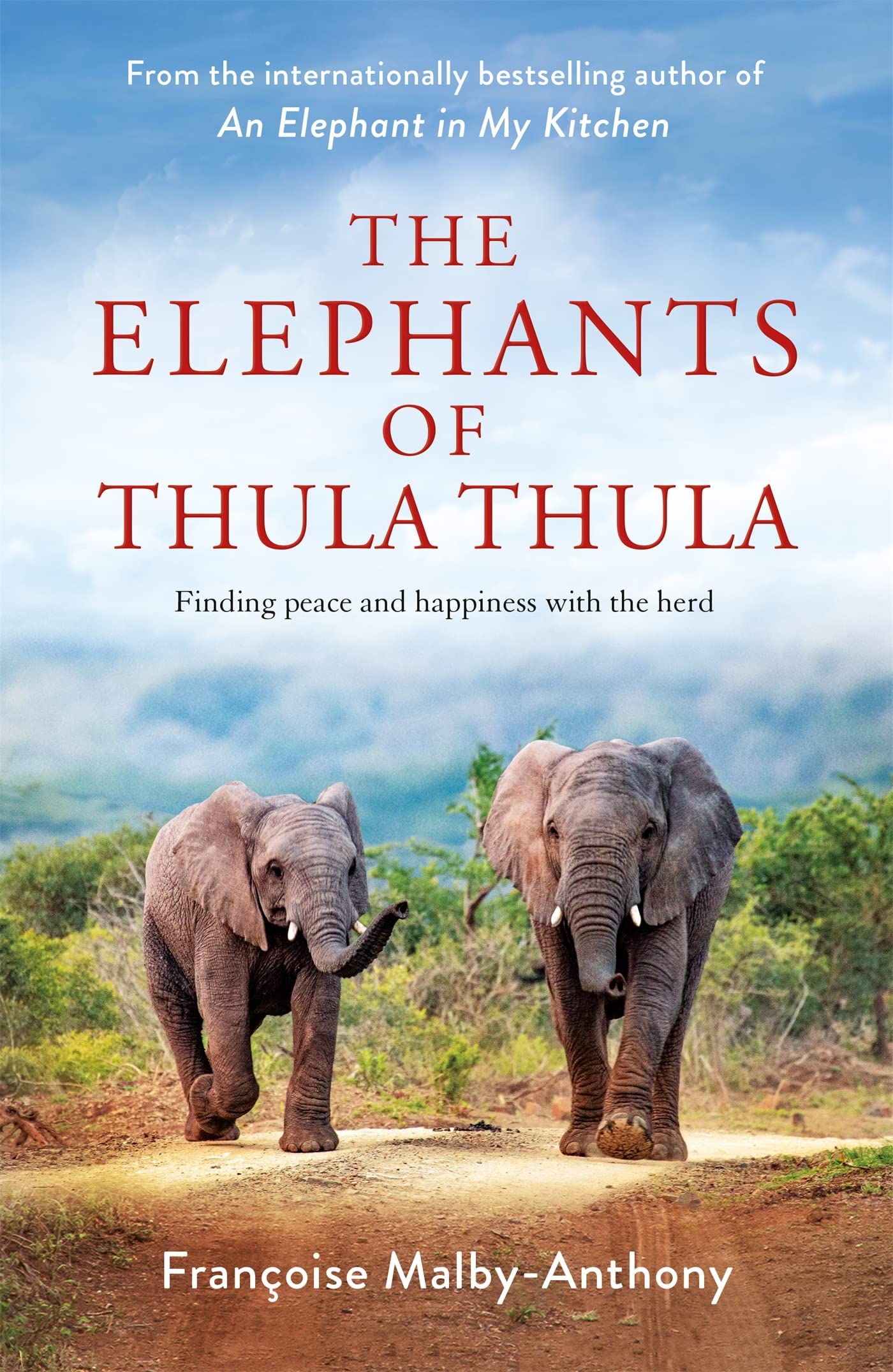
The Elephants of Thula-Thula, by Francoise Malby-Anthony****

Francoise Malby-Anthony is an established author and the owner of a game reserve in South Africa. Although she’s written previous books about this reserve, The Elephants of Thula-Thula is the first of her books that I’ve read. My thanks go to Net Galley and Macmillan Audio for the review copy; this book is for sale now.

As I begin listening to the audiobook, I am not sure I like it much. After a brief passage about elephants, the author segues into a longer piece about rhinos and by the time she admits that the rhinos are her favorites, I mutter, “No kidding!” There are other passages in which she gushes about the refuge’s well-heeled but generous donors, and I’m beginning to feel as if this is the sort of book that people will buy because the refuge is a good cause, but nobody will actually learn anything or even enjoy it much.

About halfway in, though, I have a change of heart. The second half is much better than the first. She discusses throughout the book the challenges posed to the refuge by the pandemic, and she talks about the measures taken to remain solvent while also keeping her employees whole. There is actually more talk about elephants now. I confess I am jarred by the moment when a favorite animal dies (no spoilers) and she tells us that this is the worst grief of her entire life. She says this not too long after explaining that the reserve’s founder, her husband, has recently died, and so my head snaps up when the tells us that the loss of the animal is the worst. I am chalking it up to hyperbole, but if I were the editor, I’d suggest a rewording.

Nevertheless, there are wonderful anecdotes about the elephants, and of course the rhinos, as well as the addition of a cheetah. She discusses baboons—I’d never fully realized how scary they can be—and I enjoyed hearing about how one goes about moving a giraffe to another location. There’s a lot more about elephants in the second half, and she discusses the threat to the herd when some bureaucrats add up the acreage and decide that there are too many elephants here, and some must be either moved out or “culled” (which means, of course, killed!) The reserve is expanded, but it takes a whole lot of jockeying and maneuvering to carry it off.

Readers that have enjoyed Malby-Anthony’s earlier books, or that have a strong interest in wildlife preserves may enjoy this book greatly, and it is to them that I recommend it.

Kunstlers in Paradise*****

4.5 stars, rounded upward. My thanks go to Net Galley, Henry Holt Publishers, and Macmillan Audio for the review copies. This magnificently quirky novel is for sale now.

Julian Kunstler is kind of a mess. He’s a twenty-something New Yorker whose girlfriend has just dumped him. He has no job, and he doesn’t want one; at least, not the low-paying, entry-level variety of jobs for which he is qualified. He takes himself home to his parents who have been paying his way, confident that they will understand his plight and increase his allowance. Instead, he hits a wall. What are your plans for the future, Julian? (None.) What do you plan to do for money? (Get it from you.) Just as a dramatic situation has begun to unfold, they hear from his 93 year old grandmother, Mamie, who lives in Los Angeles. She wants him to come to stay with her awhile; she needs assistance. He’s not so sure that he wants to go, but when his parents insist, he gets on that plane. Once there, the pandemic strikes, and he is trapped in lockdown with his grandmother and her elderly companion, Agatha.

Mamie has always been fond of Julian, and although she does need a driver for doctor appointments and the like, what she wants, more than anything, is to tell her life story. Most of it, anyway. It begins in Austria, as Jewish artists like her father, a successful composer, are being pushed out of public life by the Nazis. (Here, I emit a small moan; I am heartily sick of Holocaust stories. Happily, we don’t stay there long, and this story is worth it.) She goes on to describe the shock she experiences in suddenly being transplanted into a completely different climate, language, and culture, and much of Mamie’s story is droll. And Julian, who never would have sat still for these tales had they come from his parents, listens. At first, he listens impatiently, assisted by Mamie’s generous liquor collection. As time goes on, he begins to listen with greater patience and understanding. And by the end of a year’s time, he listens with genuine interest. His own exile from New York is pale, after all, in comparison to the exile his predecessors endured.

The most dynamic character is, of course, Julian, but through Mamie’s stories, we see how life has already changed her. Agatha is enigmatic until the book is nearly over, and I love what Cline does with her, too.

If I were to change one thing, I would edit down the material about the genius composer friend that emigrates from Austria and is close to the family. This reviewer was a music major once upon a time, and if this part of the narrative is a bit much for me, then probably many others will feel the same. Of course, if the reader comes to the book with a deep interest in Schoenberg, then it may prove quite satisfying.

I am fortunate to have access to both the digital print galley and the audio version, and reader Jesse Vilinsky is hands down the funniest, most skillful voice actor I have ever had the pleasure to hear. Cline’s book is very good, but in the hands of Vilinsky, it is infinitely better. Her interpretations of Mamie and Julian are spot on, hilarious at times, moving at others. The way she voices Agatha is absolute comic genius!

For those that love quirky humor and historical fiction, this book is highly recommended.

Lucy by the Sea, by Elizabeth Strout*****

Lucy is a widow, and she misses her second husband, David, terribly. Her entire life, or most of it, anyway, has been marred by deprivation, cruelty, and tragedy. Then finally she meets and marries a lovely man, and they are happy together until death parts them. She thinks of him constantly. But now the pandemic has taken hold, and although she isn’t really paying attention, her first husband, William, is. William is single now, too, and he and Lucy see one another from time to time because of their two daughters, both grown now. And so in this, the fourth of the Lucy Barton books, William obtains the keys to a friend’s cabin, clear up on the coast of Maine, and he swoops in and takes Lucy away with him, away from the contagion. Just for a week or two, she figures.

My thanks go to Net Galley and Penguin Random House for the invitation to read and review. This book is for sale now.

I must confess that after reading the first two in the series, My Name is Lucy Barton and Anything is Possible, I decided to give it a rest. Strout is a literary genius, of that I have no doubt, but the stories she wrote were so grim, and her formidable authorial skill only made them sadder. I decided for my own good to walk away.

But then I was invited to read and review the third, Oh William, and early reviews suggested more joy and less wretchedness, and after I read it, I was glad I had done it. That holds true here as well, although, like Becka and Chrissy, Lucy and William’s daughters, I am a little concerned for her. But I’m getting ahead of myself.

William is more alert than Lucy, or perhaps, like so many, she has been in denial. “It’s odd how the mind does not take in anything until it can.” She is reluctant to go. A friend has died; what about the funeral? She shouldn’t miss that! The friend, however, has died of COVID19, and William tells her there won’t be a funeral. But then…what about her hair appointment? Her lunch date? Cancel them, he tells her.

The most delicious thing about the Lucy books is the depth with which Strout develops character. In fact, there’s almost no action taking place. The books are eighty or ninety percent character. So naturally, the reader that needs an intricate plot to be happy won’t find satisfaction here, but those of us—and I am one of them—that are happiest exploring rich, dynamic characters are in for a treat.

It’s a strangely nostalgic journey. So many of the attitudes and expectations that gripped us during the early days of the pandemic are in full flower in these pages, and though it’s only been a couple of years, it was such a unique period that I find myself nodding when one character or another says something that sounds exactly like me, or a family member, or a friend.

But back to Lucy and William. They were married for nearly twenty years before he ran off with someone else, and now they have been divorced for about the same length of time. When Lucy asks William why he invited her to go with him, he tells her that he wanted to save her life; but in fact, there’s more to it, and this becomes clearer as we progress. And as much as I want dear Lucy to be happy, I also want to remind her that a man that will up and leave after twenty years for no reason other than an infatuation with someone else, is unlikely to be trustworthy on an emotional level. Watch yourself, Lucy. It’s good that you’re out of the germ pool, but hang onto your heart.

As for me, I look forward to seeing how things develop; the ending leaves little doubt that there must be an Amgash #5.

Faithful readers will want to read this book; for newbies, you can read them out of order and they’ll make sense, but because Strout is building her character as we go, it’s better to read them in order if you can. And also for newbies: Lucy and William are both Caucasian Boomers, and so the most enthusiastic readers will probably come from this demographic. Highly recommended.

The Furies, by John Connolly*****

The Furies is #20 in the Charlie Parker detective series, by John Connolly. Several entries ago, Connolly began introducing supernatural elements so that each novel now is either a detective story laced with elements of horror, or else a true hybrid. Friends, nobody does this better than Connolly. Nobody.

My thanks go to Atria Books and Net Galley for the review copy. This book is for sale now.

This particular book is singular in that it is a pair of novellas in one volume, but they share the same characters, and flow so smoothly that I forget, at times, that it’s two different stories. Each of them has women that are either at risk of death or grave bodily harm, or that appear to be. The characters are brilliantly crafted; some are old favorites that Connolly’s faithful readers will recognize. We have Angel and Louis, not much, but enough to satisfy; the Fulci Brothers return, and these guys make me laugh out loud. (Notice that I don’t say that Connolly makes me laugh. I believe the characters enough that most of the time, my readerly relationship isn’t with the author, but with the characters themselves.) And we have some brand new baddies as well.

I won’t even tell you about all of the ne’er-do-wells that frequent these pages, because there are a host of them, but the most memorable and salient are Raum Buker, a career criminal, and Bobby Wadlin, an opportunistic slumlord who runs a boardinghouse for the formerly incarcerated. Let’s take a look at Raum:

“There are men who are born into this world blighted, men who are blighted by the world, and men who are intent upon blighting themselves and the world along with them. Raum Buker somehow contrived to be all three in one person, like a toxic, inverted deity….Raum became his own worst enemy by election, and decided by extension to become the worst enemy of a lot of other people, too….Gradually, like fecal matter flowing down a drain, gravity brought Raum to Portland. He kept company with men whom others avoided, and women who were too foolish, desperate, or worn down by abuse to make better life choices.”

Unfortunately for Raum, he has obtained, extralegally, of course, a rare coin that is also a supernatural talisman. It’s a bit like the ring that Bilbo Baggins and Gollum vie for in The Hobbit, but the coin is loose in modern society among humans during the pandemic.

Bobby Wadlin runs The Braycott Arms where Raum lives, along with some other questionable people. Wadlin is too lazy to be truly evil; he inherited this pile from his late daddy, and he rents rooms to former convicts because they are the least likely to make a fuss over repairs and such that most people expect from their rental lodgings. Wadlin sits behind the front desk during most of his waking hours and sometimes other hours, too, watching endless Westerns on his little television. When things start to go sideways, he turns to an herbal product that is named in the book, and as I read, I became sold on its anti-anxiety attributes and bought some for myself. It works, too! As long as it doesn’t turn me into Bobby Wadlin, I’ll be okay.

There are small but important ways in which Connolly’s skill sets him apart from other writers. An essential component is his timing. Less experienced and analytical authors might create an amusing character or situation, and it’s funny, and then it’s over. For others, they know they’ve struck gold, so then they beat it to death to where it’s stale and loses its magic. Connolly seems to know precisely at what point to bring back the humorous bits for maximum effect. He lets us forget all about that hysterical situation or person back there, earlier in the novel, and so when he brings it out again, the hilarity hits us right in the funny bone. There’s never a wasted word, with everything carefully measured and edited down for maximum effect.

If there is one area in which this author might improve, it’s in the way he writes female characters. When I finish a Parker novel, it’s always the men that I remember. Connolly demonstrates tremendous respect for women, but he doesn’t fully develop any of them. There it is, a challenge.

Nonetheless, The Furies is brilliant and entertaining, and I recommend it enthusiastically to you.  

Mecca, by Susan Straight*****

Susan Straight is a force to be reckoned with. I knew this after I finished reading I Been in Sorrow’s Kitchen and Licked Out All the Pots after it came out in 1992, and after I sought out, bought, and read everything else she’d written that was available. When I discovered that her new novel, Mecca, was available on Net Galley, I leapt on it. My thanks go to Net Galley and to Farrar, Strauss, and Giroux for the review copy. This book is for sale now.

Mecca, an ironic title if ever there was one, is a story of race, class, and gender, and the way that they play into the “Justice” system in California. Add a generous seasoning of climate change and its horrific effects in dry, dry Southern California, and a fistful of opioid addiction, and you have a heady mix indeed. But these are all well worn ground at this point, and this book is exceptional, not because it examines complex current events, but because of Straight’s facility in building visceral characters we care about, and launching them into this maelstrom in a way that makes it impossible to forget.

We begin with Johnny Frias, an American citizen of Latino heritage. As a rookie and while off duty, he kills a man that is raping and about to murder a woman named Bunny. He panics and gets rid of the body without reporting what’s happened. Frias is on the highway patrol, and he takes all sorts of racist crap all day every day. But his family relies on him, and when push comes to shove, he loves his home and takes pride in keeping it safe.

Ximena works as a maid at a hotel for women that have had plastic surgery. One day she is cleaning a room and finds a baby! What to do? She can’t call the authorities; she’d be blamed, jailed, deported, or who knows what. She does the best thing she can think of, and of course, there’s blowback anyway.

And when a young Black man, a good student with loads of promise that has never been in any trouble at school, or with the law, is killed because the cops see his phone fall out of the car and decide it’s a gun…?

I find this story interesting from the beginning, but it really kicks into gear in a big way at roughly the forty percent mark. From that point forward, it owns me.

As should be evident from what I’ve said so far, this story is loaded with triggers. You know what you can read, and what you can’t. For those of us that can: Straight’s gift is in her ability to tell these stories naturally, and to develop these characters so completely that they almost feel like family. It is through caring about her characters that we are drawn into the events that take place around them, and the things that happen to them.

This is a complex novel with many moving parts and connections. I read part of this using the audio version, which I checked out from Seattle Bibliocommons. But whereas the narrators do a fine job, I find it easier to keep track of the characters and threads when I can see it in print. If you are someone that can’t understand a story well until you’ve heard it, go for the audio, or best of all, get both.

Highly recommended.

Overboard, by Sara Paretsky*****

Sara Paretsky is one of my all-time favorite writers; I’ve been reading her Victoria Warshawski detective novels for most of my adult life. Paretsky is one of four living authors to have received both the Grand Masters Award from the Mystery Writers of America and Cartier Diamond Dagger Award from the Crime Writers’ Association of Great Britain. She, together with the late Sue Grafton and Marcia Muller, have pioneered the image of women detectives in fiction, departing from the femme fatale of yesteryear who could only reveal the truth by using her sexuality to coax disclosures from men, instead creating capable women professionals that can ferret out the truth using their brains and bulldog persistence. A sympathetic cop friend tells Vic, “You’re a pit bull, Warshawski. You’ll go into the ring with anyone, as long as they’re at least three times your size.”

My thanks go to Net Galley and William Morrow for the review copy. This book is for sale now.

If I knew nothing of this author and her scrappy detective, the first line in the book would have reeled me in: “It was Mitch who found the girl.” As it is, I already know that Mitch is one of the two dogs she shares with her elderly neighbor friend, Mr. Contreras, and I feel as if I am greeting an old comrade.

The girl in question is in bad shape, and she doesn’t speak. For a while her identity is a mystery. Vic would be happy to offload her to medical professionals and get back to her own life; she’s got a lot of clients, and Lotty, her doctor friend that serves as a mother-figure in Vic’s life, is urging her to investigate the rash of attacks on the local synagogue. She doesn’t need more work.

But the cops—generally not friends of Vic’s at the best of times—are ready to haul Vic in. In fact, given their track record, Vic is amazed at the attention the girl is getting. All manner of monied movers and shakers show intense interest in the girl, and it makes Vic suspicious.

She’s right.

A sixteen year old boy comes to her office, asking her to look into a dicey situation involving his father. He believes his dad is in danger, and his parents won’t tell him anything. And so, there’s this kiddo, and there’s the girl: “Two teens, two life-threatening secrets—I have to assume they’re connected somewhere, somehow.”

She’s right again.

Before we know it, her apartment and office have been searched and bugs are left; her phone is being tracked; and Vic has to resolve the case in order to get her life back. She’s jumping in the cold river to elude capture, hiding in the least likely places, and keeping the kids safe from the forces that would harm them. Her attorney chuckles that “You get in over your head faster than Houdini in a water tank.”

He’s right, too.

When I opened this galley, I was already reading a handful of others that I liked, and figured I’d put this one into the rotation, but as often happens when I read Paretsky, everything else sat untouched until I’d torn through this book feverishly, as if the lives of Vic, her clients, and Chicago’s working class depended upon it.

Highly recommended to those that love strong detective fiction; feminists; and champions of the working class.

The Sentence, by Louise Erdrich*****

I wasn’t able to get a galley this time, and so I checked out the audio version from Seattle Bibliocommons. This turned out to be the best possible way to read it, because Erdrich narrates it herself.

The Sentence is set in Minneapolis during the pandemic, from November 2019 to November 2020. It starts with the world’s most hilarious crime, one which sends our protagonist, Tookie, to prison; however, most of the meat of the story takes place once she’s out again. Tookie develops a love of writing (“with murderous intent,”) while she’s incarcerated, and so, once she is released, what more natural place is there for her to look for work, than a bookstore? But this bookstore is special. It’s haunted.

Tookie’s story is wrapped around a number of social issues and current events; most prominently, of course, is that of American Indians’ rights; this is the time and place of the murder of George Floyd by Minneapolis cop Derek Chauvin, and so the demonstrations of outraged citizens are folded into the novel as well. And of course, this is not one bit funny.

I came to read Erdrich late in the game, when The Night Watchman, which won the Pulitzer, came out in 2020. That one novel persuaded me that from now on, I would read every blessed thing Erdrich writes. The Sentence strengthens this resolution.

Highly recommended.