Coffin Moon, by Keith Rosson*****

“One thing you can be certain of, boy. Things change. Even for those such as us.”

In 2018, I read a book by a promising local author titled Smoke City. It was complex and kept me on my toes, and all told, it was a good novel. Since I enjoyed it, the small publisher he was working with sent me another of his books, The Mercy of the Tide. I liked it, too.

Fast forward. I received a galley this year by the same author, but he was no longer working with the itty-bitty press. No, he was published by Random House. This made me sit up and take notice! My thanks go to NetGalley and Random House for the invitation to read and review Coffin Moon, the scariest straight-up horror novel you’re likely to find on the shelves this year. It will be available to the public September 9, 2025.

The premise is this: our protagonist, Duane Minor, is back from Vietnam. The year is 1975; the place, Portland, Oregon. His wife Heidi is living in an apartment over the bar her parents own, and Duane goes to work for them. Heidi’s 13-year-old niece, Julia, comes to join them as well after her mother is sent to prison. Duane is a bit shaky, following his tour of duty, but he’s sober, has pulled himself together, and things are going pretty well. That is, until the vampire takes over the bar.

That’s all you need to know of the plot to get started. In fact, I don’t even recommend reading the promotional blurb, because it’s better if you come to it on your own. What I will say is that this is not just any horror novel. There is more depth to it than you typically see, philosophical questions inextricably wound into the decisions that Duane and his niece must make. There’s also far more character development than I generally see in this genre. Finally, the word smithery Rosson brings to it makes this book grittier, more heart-rending, and far more thought provoking than other books of its ilk. Mr. Rosson was a good author before, but the brilliance of his prose has surged since his early work.

As I get older, I find I only have enough fortitude to read one or two horror novels each year; the rest of the time, I reach for other genres. If you are also an infrequent reader of horror, I strongly urge you to make this story a priority. It’s the sort of novel that stays with you long after the last page is turned.

But the sun is coming up; I must leave you.

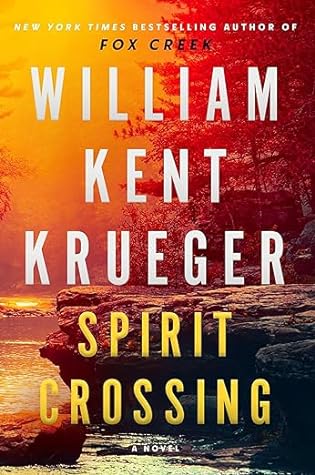
Spirit Crossing, by William Kent Krueger

Spirit Crossing is the spellbinding new novel in the Cork O’Connor series by William Kent Krueger. The book starts with two missing women, and an accidental discovery of a fresh grave. Readers faithful to the series will recognize the characters; there are enough of them, mostly related to one another, to provide depth and interest, without confusing the reader or making the plot too complex.

Lucky me, I read it free and early. My thanks go to NetGalley and Atria books for the invitation to read and review. This book is for sale now.

The story begins innocently enough, with the series protagonist, Cork, out berry picking with his son, son-in-law, and grandson, who is known by the Ojibwe nickname Waaboo. While searching for blueberries, they come across a fresh grave. Waaboo sees the victim standing before him, as if she is still alive, and he’s distraught because she is so unhappy. Waaboo is not the first one in his family to have this ability; nobody doubts that he sees what he says he sees. And so the men immediately wonder whether this is the grave of Olivia Hamilton, daughter of a wealthy Anglo, who’s been reported missing with massive headlines everywhere; or that of Crystal Two Knives, a missing Native girl whose name barely elicits more than a yawn from law enforcement.

And so right away, we are looking at not only the characters, but the longtime issue of missing Native girls and women, and the way that law enforcement neglects their cases for those whose families have money and connections.

One of the things I admire most about Krueger’s writing is the way that he incorporates urgent issues that especially impact the place where he lives—northern Minnesota—into the plot, blending them in so seamlessly that the reader isn’t distracted, because the issues are part and parcel of the mystery to be solved. He does the same thing with pipeline protests similar to the Dakota pipeline that lit up the headlines in recent years. Other aspects of the story include Ojibwe (Chippewa) culture and history, which is part of every book in the series, since most of the family is Ojibwe, and in this case, a character with a brain tumor. When significant events occur and the woman with cancer is the only one to witness them, did they really happen, or is it the brain tumor talking? This adds a layer of psychological tension not present in most of Krueger’s book; I’m not a fan of that subgenre, and am pleased to see that this doesn’t take over the plotline. It’s dealt with tastefully and without sensationalism.

Those that read my reviews know that I have an interest in seeing how authors develop child characters, particularly in a story such as this one, in which the child plays a major role. It makes me crazy when an otherwise competent author searches for shortcuts, such as a child that’s precocious or gifted, to explain away their own failure to craft the child’s character in a way that is honest developmentally. This is one more reason I enjoy this series. Yes, Waaboo has unusual powers, but he is still a small boy. The notion of going home without blueberries is a major blow. Tears threaten. I love the way Krueger develops this kid, and I can’t wait to see more of him in the future.

My one criticism involves a specific passage between the 88th and 90th percentiles, just as we rise toward the climax. Without going into spoilerish details, I will say that one character does something that everyone in the family agrees they must not do, and without any explanation, everyone in the family is fine with them doing it this time. This, of course, puts the character in danger, which anyone that’s paying attention can predict the very moment the action commences. It’s clumsy in a way that is atypical of this author, and I have no idea why he makes the choice he does, but it affects my enjoyment of the book, because suddenly I am not thinking as much about the characters as I am about the author. Having this occur a split second before the climax is especially grating.

On the other hand, I am picky. Very picky. I suspect that this passage will annoy only a small percentage of readers.

I do recommend this book, and this series, to those that love a good mystery. Although it can be read as a stand-alone, those with the time and inclination might enjoy going back a few titles, or even to the beginning of the series.

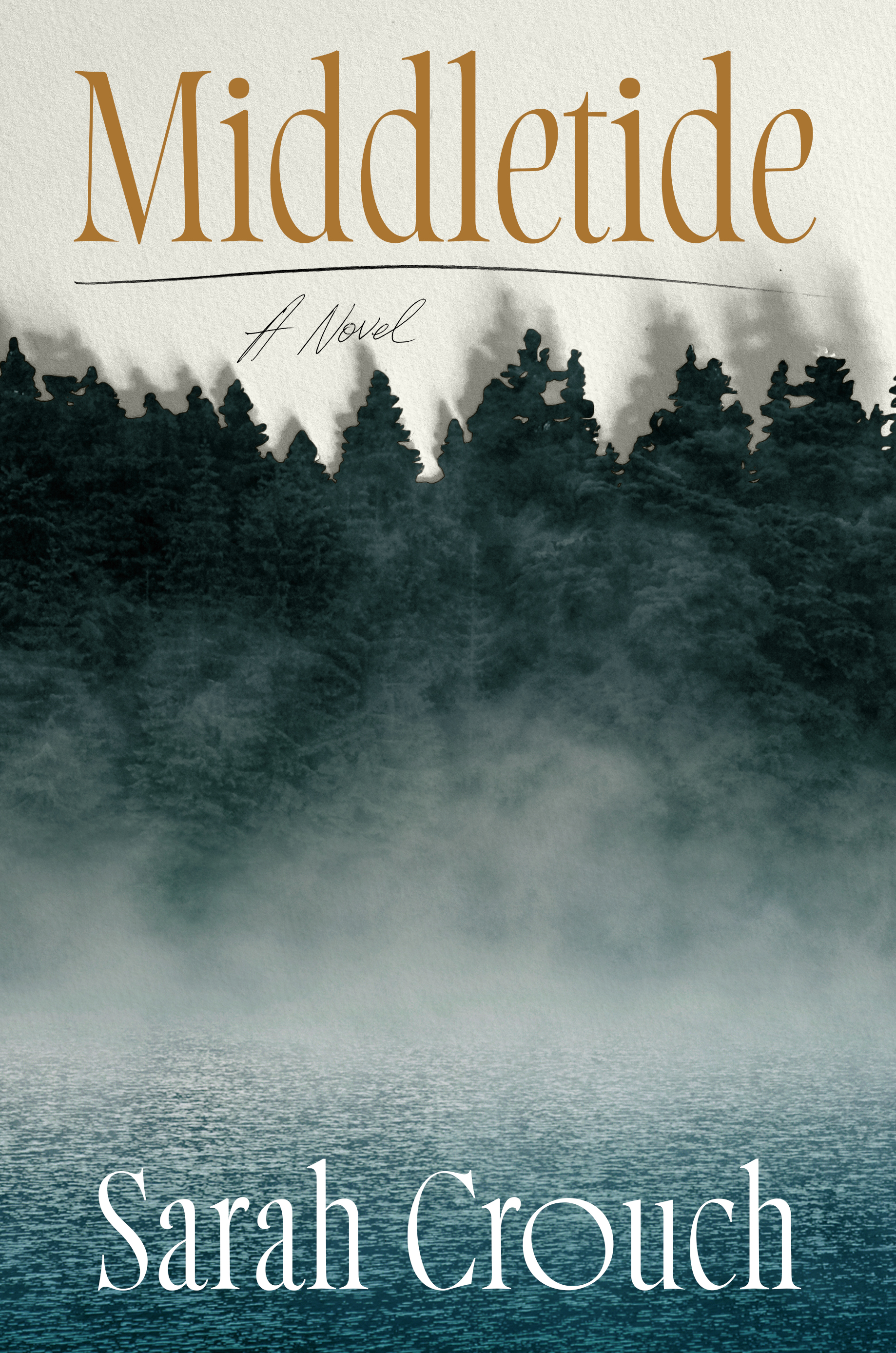
Middletide, by Sarah Crouch*****

Sarah Crouch makes her authorial debut with Middletide, a mystery set in the Pacific Northwest near where she grew up. Atmospheric and tense, it’s a damn fine start to what is sure to be a promising career.

My thanks go to NetGalley and Atria Books for the invitation to read and review. This book is for sale now.

The premise is that Elijah Leith leaves home when he reaches adulthood, eager to flee his violent alcoholic father, and make a name for himself in San Francisco. But his father dies, and when his first novel goes nowhere and he runs out of money, Elijah returns and takes up residence in the cabin where he grew up. He hopes to rekindle a relationship with his teenage sweetheart, but she has moved on, and since he was unreliable the first time around, she is reluctant to trust him anyway.

Then the cops find the body of Dr. Erin Landry hanging from a tree on Elijah’s property.

This whodunit is original and intelligently written. The pacing is perfect, and I never would have guessed the ending, at least not until nearly the end when the author spells it out. Elijah is not the most lovable protagonist, but Crouch develops him so that, although not a prince or a hero, he is nonetheless a decent human being by the end. Some will consider the solution to be over the top, but it’s only far fetched if the author fails to convince us that it’s true, and I am persuaded.

Those looking for a fun read to pack for a vacation, or just to occupy a weekend at home, here you go. Grab your book, your lemonade or your whatever, and head for your happy place. You can thank me later.

A Fever in the Heartland, by Timothy Egan*****

Timothy Egan, winner of the Pulitzer Prize, is one of my favorite historians to read. His most recent book, A Fever in the Heartland occupied the bestseller lists for months, and rightly so. I took my time with it because it is a very uncomfortable read most of the way through, with the first half being much rougher than the last. I learned a lot from it, and this is clearly a case of truth being stranger than fiction.

The Klan was originally formed by former Confederate officers after the Union’s victory in the American Civil War. However, it was stamped out during Reconstruction, and was gone for fifty years. It was revived on Stone Mountain, Georgia, and the horrifically racist film by D.W. Griffin, The Birth of a Nation, which depicts African-American men as crazed rapists that drink to excess and lose their minds when a Caucasian woman is anywhere nearby, not only aided its reincarnation, but contributed one of its most feared symbols. No crosses were burned until it showed up on movie screens around the United States; the pointy hoods were shaped that way to make the men underneath them appear taller. Later, the women’s organization had robes with cardboard forms in their own pointy hats, because a night of terrorism is no excuse for a woman to let her hair get out of control.

At one point, one Caucasian man in three belonged to the Klan. There was even a children’s organization, with activities similar to boy and girl scouts.

The woman that is at the center of this story, Madge Oberholzer, was the secretary in the office of D.C. Stephenson, the Grand Dragon of the newly revived Klan. Despite the hugely moral speeches he gave around the country extolling traditional values (for the time) including the avoidance of alcohol; women that remain virgins until marriage and then live their lives in service to their husbands and young children; Protestantism, with regular church attendance; Caucasian separation from other races and ethnicities; and unquestioning patriotism, Stephenson himself was a drunk, as well as a serial rapist and sexual sadist, fond of using his teeth to mutilate the women that he savaged. Madge was the one victim that would not crawl into the shadows, and she literally used her last dying breaths to expose him.

I was given a hardcover copy of this book when it was at its height of popularity, but it took me a long time to get through it, because I could only stand to read a few pages at a time. The end was enormously satisfying, however, and even in the worst parts, there are occasional moments that made me want to stand up and cheer. For example: the Klan plot to go the University of Notre Dame—a Catholic university– and burn the golden dome there was foiled by its football team, and the melee that ensued when they physically attacked the Klan is the origin of their nickname, The Fighting Irish. (The dome survived.)

Often when I read nonfiction history, I can’t help imagining how much more interesting it would be if it were written as historical fiction. That was never the case here. Firstly, if this were a fictional account, reviewers everywhere would have been brutal, because nobody would ever believe a story like this one. But the fact is, it’s entirely true, and Egan is second to none when it comes to research. Also, his conversational narrative style is as interesting as the best historical fiction; the pace here is slowed in places, not by any lack of authorial fluency, but by the horrifying nature of this true story.

For those that have the capacity to read something like this without becoming morbidly depressed or coming unstuck, this book is highly recommended. For everyone else, I recommend finding something lighter and more uplifting to alternate with it, and to never read this at bedtime. You won’t want it in your dreams.

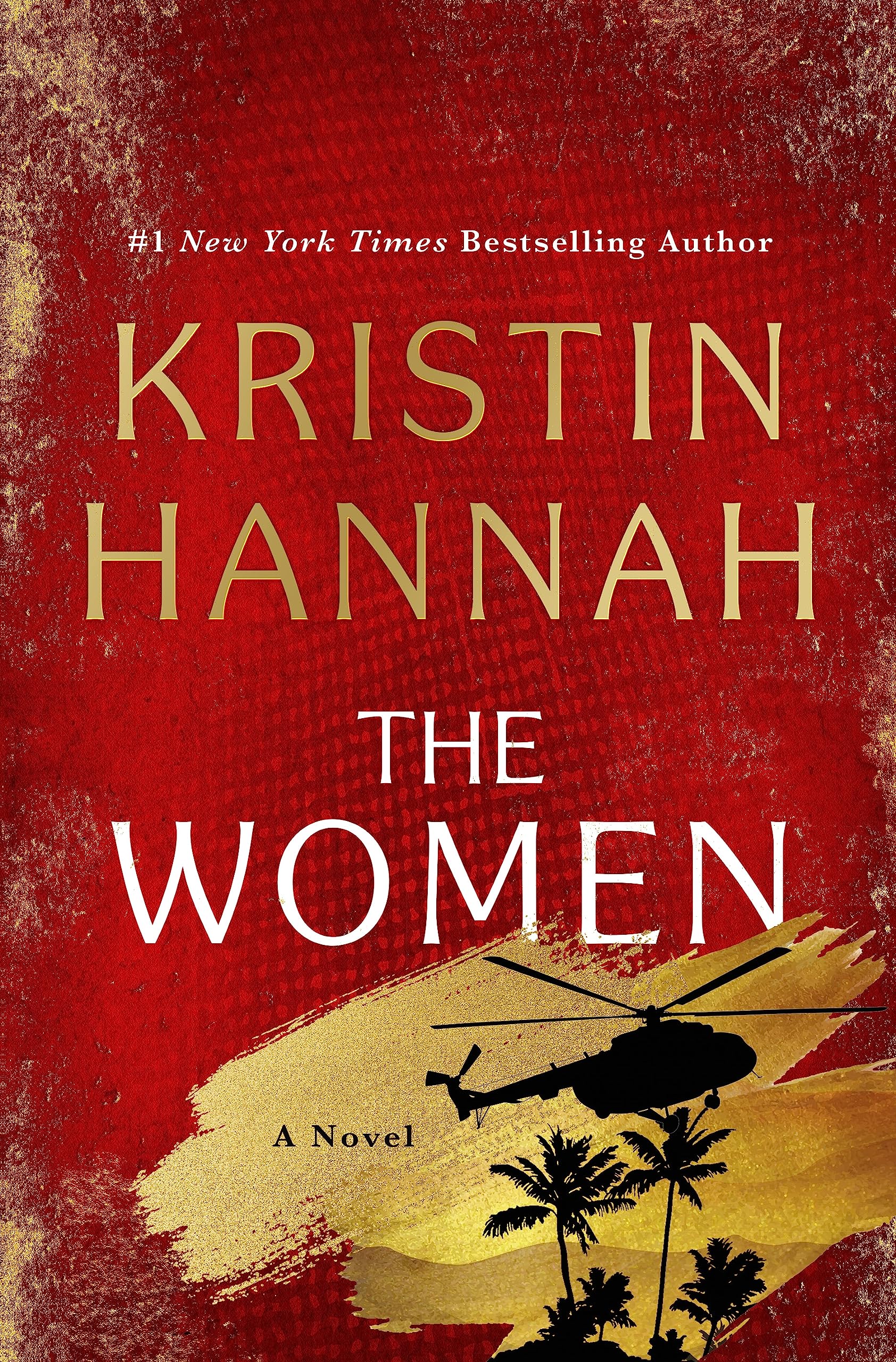
The Women, by Kristin Hannah****

Kristin Hannah can draw character like nobody else. Her latest novel, The Women, tells the story of Frances “Frankie” McGrath, a young woman from an upper middle class family that follows her brother to Vietnam, serving as an army nurse. Frankie is a character that will stay with me long after I read dozens of other novels, and this experience is made even more memorable by the talented Julia Whelan, the voice actor that narrates the audio version. My thanks go to NetGalley, St. Martin’s Press, and Macmillan Audio for the review copies. It will be available to the public February 6, 2024.

Frankie is twenty years old when we meet her, and her family is throwing a party for her big brother and best friend, Finley, who is leaving to serve in the U.S. Navy. Kennedy is in the White House, and most Americans still bear an implicit trust in their government. But Frankie is worried about Fin, and doesn’t like that he is about to put himself in harm’s way. He reassures her, “It isn’t dangerous, Frankie. Trust me. I’m a Naval Academy graduate, an officer with a cushy assignment on a ship. I’ll be back in no time. You’ll hardly have time to miss me.”

Frankie completes her nurse’s training, then signs on to join her brother, but before she is even packed, the telegram arrives. Finley is dead; killed in action.

The plot itself is unremarkable. Yes, war is hell; yes, friends die. And yes, a married man that sees an attractive, vulnerable American woman in a place where they are scarce, will lie like a rug in order to get close to her. But in Hannah’s hands, every joy and every sorrow are real and visceral, because we believe.

Frankie serves as a combat nurse at the front, and works in every possible hard situation. Sometimes the lights go out during surgery because a bomb has fallen; at one point her sleeping quarters is bombed and has to be rebuilt. She works for days on end without sleep when it’s necessary. And the trauma follows her home.

My only quibble with this otherwise outstanding story is the emphasis Hannah places on the abuse of returning troops by the public. She brings in the old saw about them being spat upon and called baby killers, even though an easy search confirms what I remember: this is mostly myth. Just as women weren’t really burning bras, most troops were not greeted with abuse. It’s true that the wildly patriotic parades that greeted the troops that returned from World War Two are not there for these men and women, but then, the Korean War vets didn’t see them, either. Historical fiction should honor history, not rewrite it.

With this caveat, I recommend this book to you. Do read it; it’s a damn fine novel. But do so critically, because you can’t always believe everything you read.

The River We Remember, by William Kent Krueger*****

William Kent Krueger has been writing since the late 1990s, but he only came onto my radar in 2019, when he published This Tender Land. To read Krueger once is to want to read him again and again, as often as is possible, and that’s what I’ve been doing. The River We Remember is his most recent mystery, an achingly atmospheric novel set during the 1950s in rural Minnesota. My thanks go to Net Galley and Atria Books for the review copy. This book is for sale now.

The protagonist in this stand alone whodunit is the local sheriff, Brody Dern. Brody is a thoroughly believable character; there’s nothing of the TV sheriff about him. When the wealthy, universally hated Jimmy Quinn is found floating dead in the river, Dern does not lose sleep while vowing to find and reveal the entire truth. His first response is his own deep resentment that Quinn had to go and die in what had been, until now, Brody’s favorite spot to relax. How dare stupid, rotten Jimmy Quinn ruin this special place with his bloated corpse? And his second instinct is to minimize the damage to everyone else concerned. For example, the Quinns are Catholic, and if Jimmy committed suicide, they can’t bury him with the family. If not suicide, then perhaps a family member could stand it no more and shot him dead. Again, if so, no great loss, and let’s make sure the family is taken care of. And so, Brody’s first instinct is to wipe down Quinn’s truck so that, if other authorities should become involved in the case, none of these poor people will have to suffer for it.

Then, he goes to the evidence cabinet and removes some of the confiscated drugs so that he can get a decent night’s sleep.

Part of what fascinates me here is the culture of small town Minnesota during this time period. People don’t lock their doors most of the time. When a prisoner that Brody knows is almost certainly innocent requests a sharp knife in order to carve something, Brody gives it to him, right there in the cell. There are a number of interesting secondary threads, and all contribute to the steamy, smoldering ambience in which this story is set.

But oh lordy, the racism. And in this, I know there is no exaggeration. The culture among the Caucasian population of this tiny town, with regard to Native peoples and those of Japanese descent is not so very different from what I experienced as a child, growing up in the 1960s and even the 1970s in suburbs on the American West Coast. It’s bad. It’s really bad.

A feature of Krueger’s work—a signature aspect, in fact—is the inclusion of American Indian cultures and sociopolitical issues in Northern Minnesota. In other stories I’ve read, it’s been the Chippewa; this time, it’s a Dakota Sioux man named Noah Bluestone, and his Japanese wife, Kyoko. The author develops his characters well, with no stereotypes or hackneyed pop culture. This alone makes his work worth reading, but there’s so much more.

Over the course of just a few short years, Krueger has joined other luminaries on my list of authors whose work I read without question. I highly recommend this book to all that love the genre.

Murder Off the Books, by Tamara Berry*****

“There came a time in every crime solver’s life when they wanted to stop getting stuffed in the backs of vans and facing down danger at every turn.”

My thanks go to Poisoned Pen Press and Net Galley for the review copy. This book is for sale now.

Tess Harrow lives with her daughter, Gertrude, in a tiny hamlet in Washington State. She’s taken the hardware store she inherited and had it redone, and so now it’s her bookstore. But the locals are a bit leery of Tess; everywhere she turns, somebody drops dead. To reassure them that she is normal and trustworthy, she’s throwing a gala bookstore opening; wine, cheese, books, and…a corpse.

Well, heck.

But the good news is, Tess is a pretty decent sleuth. She’d be a lot better if she knew when to shut up, though:

“His words became a snarled growl. ‘Has anyone ever told you that you talk too much?’ Everyone, all the time—and she wasn’t about to stop now.”

This book, and this series, contains exactly what I like to see in a cozy mystery: colorful characters, an easily followed plot, and a good deal of whimsy.

Because I was running late, I checked out the audio version of this story from Seattle Bibliocommons. I like the reader, and the narrative is easy to follow, even for a text-oriented reviewer like me. I highly recommend this book in whatever format is your favorite.

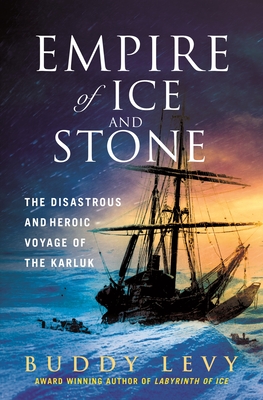
Empire of Ice and Stone, by Buddy Levy****

Empire of Ice and Stone tells of the voyage of the Karluk, a brigantine vessel that sailed from Canada to the Arctic in 1913. It was led by Captain Bob Bartlett, the world’s best ice navigator at the time, and Vilhjalmur Stefansson, a “visionary” leader in search of wealth and fame. My thanks go to Net Galley and St. Martin’s Press for the invitation to read and review; this book is for sale now.

This well told narrative details a part of history of which I have read very little. As school children, most of us in the Western developed nations read of the early explorers, but stories of voyages in the twentieth century are few and far between. This is why I take this one on, but I begin to wonder partway into it whether it is more than I have bargained for.

The first half is more than a little confusing, because there are so (so, so, so) many names to remember, and almost all of them are Caucasian men—as is usual for the time and situation. About halfway into it, I abandon my efforts to memorize all of them, and once I am satisfied with memorizing the names of the two leaders plus “Auntie,” (more in a moment) and the ship’s pets, I calm down a bit and it’s easier to follow.  I am fortunate enough to receive the audio galley as well as the digital review copy, and that combination makes it easier to follow.

That said, this is not gentle reading. There is death—in many cases slow and terrible—and betrayal around every corner. I understood that there would be some of that when I took the book, but I’ll tell you right now, if you, dear reader, have any sort of mood disorder or are going through a dark time personally, you may want to stay away from this thing.

As the bodies begin to pile up, I start to feel angry, and I remain so, to some degree, until the book is done. Because this was a dumb thing that these men did. Their ship wasn’t up to the task, they cut too many corners at the outset, and this more or less spelled doom for many of those aboard. I can’t help speaking to these men as though they can hear me, and I’m asking what the fuck got into them to do this at all? If everyone had stayed home, most likely all of them would have lived to a ripe old age. True, they made some scientific discoveries; yet air travel was just around the corner, and the whole thing could have been done much more safely later on.

The story has a definite hero (Bartlett,) and a definite villain (Stefansson,) and the farther into the voyage we go, the more obvious this becomes. However, I would have liked to hear a good deal more about the other hero. Levy tells us that a lot of these men would have been dead before the rescuers arrived had it not been for the Innuit woman that was hired, along with her small children (!) to travel with them, and the narrative bears this out. Time and again, when they are on the razor’s edge of starvation, she comes up with an innovative way to use the environment around them to provide calories. Not always delicious calories, to be sure, but alive is alive. “Auntie” is a total badass, and deserves more ink; possibly not much information is available, given the biases of the time.

The book feels longer than it actually is; however, given the amount of complex information provided, it probably shouldn’t be pared down further. At the same time, I kept thinking that this would be so much more approachable if Jeff Shaara were doing the telling (via historical fiction.)

For those that are very interested in the history of early sea voyages, and to researchers, this immaculately researched book is recommended.

Collateral Damage, by J.A. Jance****

Collateral Damage is the 17th book in the Ali Reynolds mystery series by J.A. Jance. My thanks go to Net Galley and Gallery Books for the review copy; this book is for sale now.

As fans of the series know, Ali is married to B. Simpson, and together they run a small but increasingly prominent cybersecurity firm called High Noon, appropriately named given their Arizona home base. In this installment, B. is on his way to the airport when he’s run off the road. He and the man driving him are badly injured, and the police take the lazy way out, assuming that Ali is behind the crime. Who could better benefit from his death? The business is worth a lot of money, not to mention B’s fat life insurance policy. Soon Ali and her trusted High Noon employees investigate, assisted once more by Frigg, the nearly sentient AI that can go where no one is supposed to go, and find out things that aren’t legally obtainable.

Jance is a veteran mystery writer, and she’s produced bestselling novels for decades. This time around, the novel is better than what most authors can do on their best days, and yet it’s not Jance’s most riveting story. The pacing is on the sedate side, and it’s not until we are well and truly at the climax that it feels urgent. I suspect this is because the story’s protagonist, Ali, and the other repeating characters that I have enjoyed so much over the past few years are sidelined here. Once Frigg ferrets out the critical information that suggests that the crime is the work of a longtime serial killer, Ali provides the cops whose unsolved cases are involved, and we mostly follow them, alternately with the baddie.

A side note, but one worth mentioning: Jance has a couple of long-running series that are set in Arizona, and there have been times when I’ve reported that I dislike the tinge of stereotyping that I have seen in the way her Latinx and Black side characters are depicted. I feel as if she’s turned that around here, and having registered complaints in the past, it’s only fair to recognize that this time, she’s done well.

Fans of the series will want to read this in order to enjoy continuity between the last, Unfinished Business, and whatever she writes next. For new readers, I advise beginning the series with number 11, Clawback. Going back to the first entry—which of course, you can do—requires reading the series before it develops into a strong vehicle. If you start the series here instead, you will have the information you need to move forward, and the quality is as uniformly excellent as any other series I have read.

I recommend this book to Jance’s readers, and I recommend it to new readers as suggested above.