Charlie and Me, by Mary Neiswender, Kate Neiswender

Mary Neiswender was the first and primary journalist that the notorious serial killer Charles Manson was willing to talk to. She did so at a time in history in which women in journalism were exceedingly rare, and she put up with a whole lot of crap, first in order to remain in her field, and then later to rise to its pinnacle, receiving a Pulitzer nomination.

My thanks go to the University of Nebraska press and NetGalley. This book is for sale now.

Charles Manson was the leader of a group that called itself “The Family,” almost entirely made up of girls and young women that had nowhere else to go. However, people came and went within it, and so those that spoke of it as a cohesive entity were mistaken. Manson was handsome and charismatic despite his small physical form, and he was convicted of the 1969 Tate-LaBianca murders even though he was almost certainly not present at the time.

Neiswender regarded him as a killer, but also was convinced that he hadn’t had a fair trial. She makes a good case. She delayed writing this book until Manson’s death in prison in 2017, as she had promised to keep much of what he said off the record. Once he died, she considered herself to be freed from that agreement. Neiswender died in March of this year, and her daughter has assisted her in seeing that the book was completed and published.

I don’t read a lot of true crime, but I couldn’t put this book down. Neiswender’s observations and insights are fascinating, and she does a fine job of bringing Manson to life—in a way that the public can appreciate without the physical threat the man represented in person.

Highly recommended.

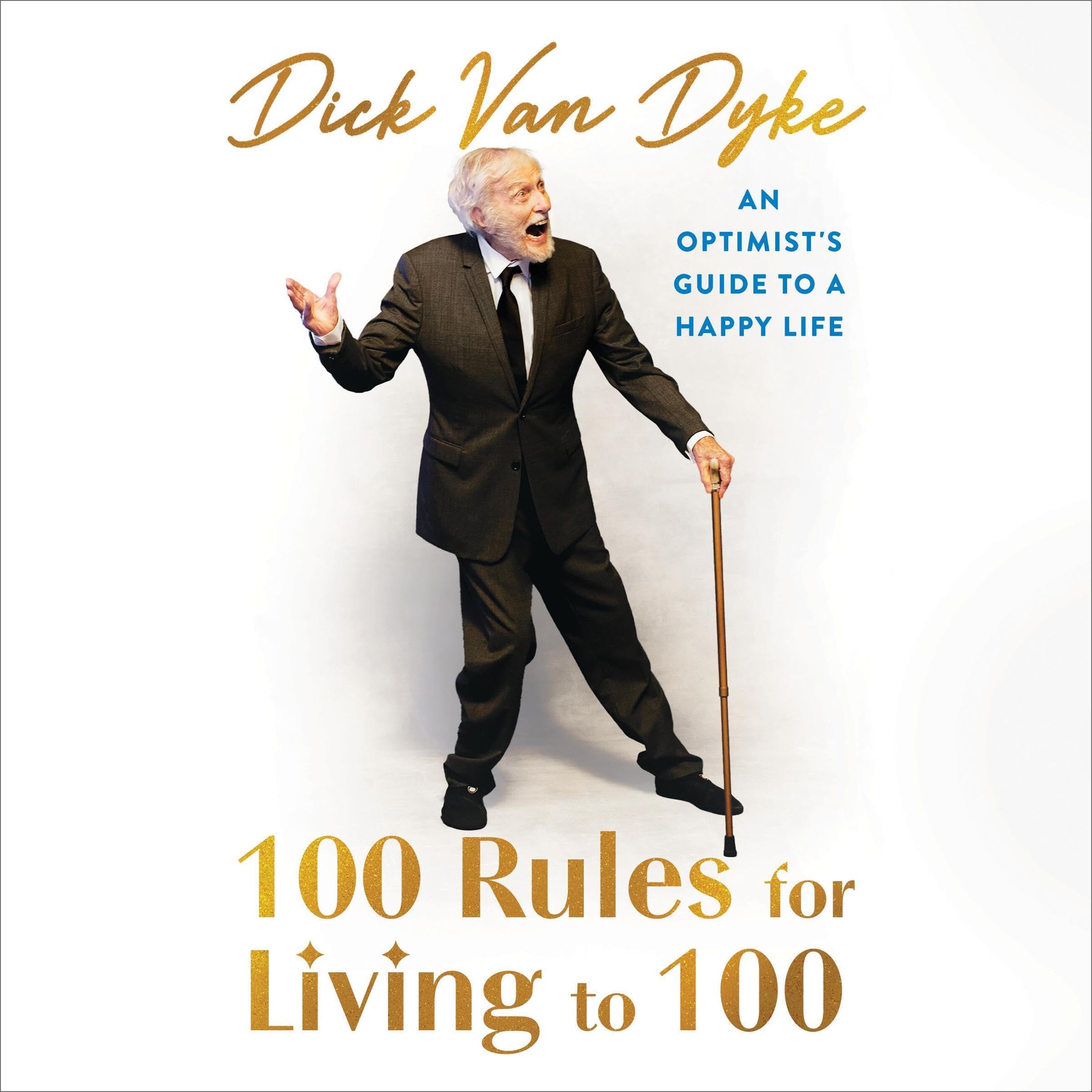
100 Rules for Living to 100, by Dick Van Dyke****

Version 1.0.0

Dick Van Dyke was a wonderful part of my childhood, and this lovely audiobook has put a little more bounce in my step. It’s not really about rules, of course, but the format is a perfect scaffold for a combination memoir and self-help book. My thanks go to NetGalley and Grand Central Publishing for the review copy; this book is for sale now.

Van Dyke entered my consciousness when I was a kindergartener, and the original movie Mary Poppins brought droves of families to theaters. I was not the only family member that was entranced, and all of us sang along to the sound track once the record was on our stereo turntable. The movie, and its lead characters, played by Julie Andrews and Van Dyke, glowed with humor and optimism.  What a wonderful message to share, the idea that the best we can give our children is our time and our attention. In the early 1960s, the suggestion that adults ought to listen to children was ahead of its time and much needed.

Many of the anecdotes the author conveys have to do with experiences shared between him and Arlene, his current wife. Despite the May-December romance, it sounds like a wonderful union. He talks about the recent and horrific events with the Santa Ana fires that took the homes of so many—though his own was spared. My favorite parts, though, are the ones in which he discusses the future roles he’d like to play, because he isn’t really retired from the industry. Way to go, Dick!

Reader Tom Bergeron does a nice job, and as a bonus, he sounds quite a bit like the author.

I recommend this little gem to everyone that could use some positive energy, and to all that love the author.

The True Happiness Company, by Veena Dinavahi****-*****

4.5 stars, rounded upwards. Veena Dinavahi’s experience as a member of a cult called The True Happiness Company is so outrageous that if it were written about as fiction, it would be universally panned as ridiculous and unbelievable. But it isn’t fiction; it’s what happened to her. My thanks go to Random House and NetGalley for the invitation to read and review. This book is available to the public now.

Veena’s parents are immigrants from India who gave everything that they had in order to provide their children with the best opportunities possible. Between their sacrifices and Veena’s high I.Q., she was admitted to a coveted, highly competitive school that also had a horrifyingly high rate of suicides and suicide attempts due to the intense pressure under which its students labored. When Veena became suicidal, her parents turned to professionals for guidance, but one of the so-called professionals they consulted, the most persuasive and charismatic of them all, was a charlatan. With their life savings neatly stashed in his own bank account, this man, who claimed to be a psychologist but was not, diagnosed Veena as having a borderline personality; once she accepted the diagnosis, “Bob” used it to undermine her instincts of self-protection and what seemed to her to be common sense. She couldn’t be trusted to decide anything for herself, because she was crazy. And thus was this young woman brought under the spell of an insidious conman and sexual predator, one who also used her parents’ unfamiliarity with American culture to gain their acceptance of the things to which their daughter was subjected.

Before she knew it, Veena was married to a young man she didn’t know very well, but who was also susceptible to the charms of this snake oil salesman. She married him because the doctor said to; once this was done, Bob became the third element in their marriage. Both of them spoke to him in person or by phone daily, or even multiple times a day. He resolved every dispute, and he forbade them to resolve anything without involving him first. It is a miracle that Veena was able to find the support and resolve she needed in order to extricate herself and her children from the dungeon of despair he created.

I am quite late with this review; the book came out in May, but it is a harsh read, and I took my time with it. Were it fiction, Veena could have inserted moments of levity or joy to relieve the horror, but it isn’t, and there were none. I would have liked for her to break up some of the roughest bits by flashing forward to bits of her life as it is now, but then, it’s not my story to tell. I’m just glad she and her children are safe, and that she can rebuild her life.

Those that enjoy true crime will be interested in this memoir. Highly recommended to those that have interest in cult stories, and that will willingly endure a rough read.

Words for My Friends: A Political History of Tupac Shakur***-****

3.75 stars, rounded up.

Tupac Shakur lived for just 25 years, but he left an outsized legacy. Author Dean Van Nguyen has published a “political history,” a biography of sorts focusing on Tupac’s political ideology and the foundation on which it was formed. My thanks go to NetGalley and Doubleday for the review copy. This book is for sale now.

Van Nguyen begins his narrative with an overview of the Civil Rights Movement of the 1950s and ‘60s.  This is an area I’ve studied fairly closely, and so there was no new information in it for me, but I could see its value in a community college Black Studies or general history course. Once we’re past that, we enter into Tupac’s family background, and from there forward, his personal and political upbringings are intertwined. His parents were members of the Black Panthers, a militant, armed group of rebels seeking to force equity for Black people in the U.S. from a government that was long on promises and short on substance. There is a tremendous amount of the book given to the history of the Panthers, and most of what is recounted occurs either before Tupac was born, or while he was an infant.

Here’s my takeaway: I have often been curious about the Panthers, whose struggle I knew in broad strokes, but few specifics, and so this is interesting to me. But the book’s title has led me to believe that this book is primarily about Tupac, and we are at around the 40% before he even comes into the narrative. This is my sole complaint about this work, but it’s a significant one. Had the title been clearer that this is really a history of Tupac and the Black Panthers, I probably would have still read it, but because of the way it’s promoted, I feel frustrated when the 20% mark goes on by, then the 30% mark, and apart from a brief reference or two, Tupac isn’t even in it. In fact, we learn more about his mother than we do about him.

Once we do get to the meat of the matter, this is riveting material. What a gifted man he was, and yet he was still coming of age when he died. He loved reading classical literature, and he attended a fine arts high school where he was better able to develop his interests and talents, playing in Shakespearean productions; but as is often the case for children in low-income households, about the time he put down roots and made connections, his mother had to give up their lodgings, and that meant moving to a new town and a new school.

 This happens again and again. Single motherhood is hard anyway, but once you bring crack into it, the game’s all but over. And (here I suppress a primal scream,) because his father isn’t there and his mother is struggling, Tupac believes he must take care of his mother and long, long before he is old enough to bear such a burden. Teachers everywhere have seen that kid. He might be Black, Caucasian, or any other ethnic and racial background; he might be a she, for that matter. But children that take the responsibility that belongs to the head of the household are under a whole lot of stress, and the fracture lines often don’t show in their teens. They look as if they’re handling the job like an adult, often being praised by those in authority for their organization and focus. But—ask a social worker here—when they hit their twenties, that’s when they start falling apart. Because kids cannot be adults. When they are forced into the role, it will break them, sooner or later. And it seems clear to me that this is part of what led to Tupac’s early demise.

There’s a lot of interesting material packed into the relatively small part of the book that he occupies. We learn about the other famous performers he meets and befriends, first in school, then professionally, and about the political ideas he explores, serving for a while as a member and organizer of the local chapter of the Communist Party’s youth group. His willingness to dive deep into ethical and political ideas is reflected in his music, and to my knowledge, there is no other rapper that has included respect for women, along with an overtly pro-choice message, in their recordings. But just as his star begins to rise in earnest, he is killed.

Those considering reading this book should either be ready to read extensively about peripheral issues and events that don’t directly include Tupac, or should be ready to get the book with the intention of skipping a lot of material. As for me, I’m glad I read it.

Tonight in Jungleland, by Peter Ames Carlin*****

“And then the door flew open, and the wolf of doubt came slinking in.”

Springsteen fans, get your plastic out. Peter Ames Carlin has crafted a riveting Springsteen biography about the making of the iconic album, “Born to Run.” Having read it, I have gained even greater appreciation for the Boss’s rock and roll genius. My thanks go to NetGalley and Doubleday for the review copy. This book is for sale now.

“Born to Run” is Springsteen’s third album; the first and second albums received rave reviews from industry publications, but they sold poorly, and Columbia Records had Bruce on their kill list. He was contracted for three albums, but since they had already decided he wasn’t going anywhere, it was difficult to get them to finance the third album’s production or even listen to it once it was done. Take a brilliant, charismatic singer/songwriter, a talented, loyal band, and a couple of industry influencers that would all but starve themselves in order to see this album succeed, and it was nevertheless a nail-biter.

Mike Appel was Bruce’s manager, and he believed in his client so passionately that he was ready to bend a few rules and take a blow torch to a few others. When expenses exceeded the support from Columbia, when everyone’s charge cards were maxed and there was still a record to finish, he dumped his children’s college funds into the general kitty so that the album could see daylight. Columbia Records had told him they’d review his client’s work if he could make a hit single, so “Born to Run” became the song on which the album’s success was hinged. Then Jon Landau, a much-revered industry journalist, heard Bruce’s music and wrote, “I saw rock and roll future and its name is Bruce Springsteen.” Landau became his producer, and it is due to this holy musical trinity that Springsteen and the E Street Band became world renowned. In fact, they went so far as to send bootleg copies to friendly deejays, since the record company was doing absolutely no promotion, and it worked!

I have never been a sufficiently rabid fan to go into the weeds on this band or any other. I didn’t know who else was in his band, apart from his wife. I also had no idea what was required of anyone attempting to get an album financed and promoted by a major house—particularly during the pre-digital days of the late 1900s. Two things have always drawn me to Springsteen’s music: tunes so impossibly resonant that I am unable to sit still when I listen to them, and the lyrics that speak to the industrial working class. These are not the songs of a pretender. Bruce grew up lean and hungry, and because of that, and his rare talent for communication, the songs ring true.

Springsteen was, and I suspect still is, a perfectionist. The following quote is lengthy, but that seems appropriate, given the amount of time, toil and sweat they put into this album:

Ensconced in 914 in the wee hours, Appel and Bruce seemed to try every idea that occurred to them. A string section. An ascending guitar riff repeating through the verse. A chorus of women chiming in on the chorus. An even bigger chorus of women oooh-ing behind the third verse. Still more strings on the bridge and on the last verse, doing those disco-style swoops, like sciroccos whipping up from the dance floor. They’d work out a part, hire whatever musicians or singers were needed to get it on tape, then mix it all together to see what they had. Sometimes it would stick, sometimes they’d just laugh, shake their heads, and slice it out… Work on the instrumental track went on and on, but it still didn’t rival Bruce’s laboring over the lyrics. He had always put energy into his narratives but the pressure he felt to get “Born to Run” just exactly right pushed him to a whole other level of perfectionism, determined to get every word, every nuance, every syllable, something like flawless. No, exactly flawless. Sometimes he’d be in the midst of a take, sing a few lines of a verse, shake it off, then take his notebook to a folding a chair. He’d find a pen, open the book, look at the page, and just …think. He’d be there for a while. An hour, two hours, maybe more. Meanwhile in the control room Appel would be at his place at the board, Louis Lahav in his. This happened a lot. How long would it be this time? They’d peer through the glass, chat a bit. Fiddle with paperwork, try to see what Bruce was up to. Still staring into space? Reading back through his pages? Writing? Impatience was not an option. Appel was paying the bills but as far as he was concerned Bruce could have all the time he needed. Eventually he’d look up, reach for his headphones, and say he was ready to record. Lahav would roll the tape and they’d begin again.

When I read a musical memoir or biography, I take frequent breaks to stream the music in question. Ames’s narrative has made me appreciate the musician and his band more deeply. I also have to say—as a person that once aspired to become a musician also—that I am dumbfounded by anyone that can write and then play their music without knowing how to read music, or assembling a score to help them recall it later. The same is true for band members that can hear a song and create their own accompaniment without benefit of a written score. As a youngster, I thought such an approach was stupid. Now I stand in awe of it.

If you’ve made it all the way through this review, the book will be a snap. If possible, read it in a time and place where you’ll be free of distraction. It’s worth it. Highly recommended.

Heartbreaker, by Mike Campbell and Ari Surdoval*****

Mike Campbell is a musician and songwriter who served as Tom Petty’s lead guitarist and songwriting partner from the band’s inception until Petty’s death in 2017. I’m a sucker for a strong musical memoir when I can find it; although the galley for this book was available, I chose not to request it, instead using an audiobook from Seattle Bibliocommons. I didn’t want the pressure of a deadline. I wanted to be able to lose myself in Campbell’s story, to take unlimited side trips to stream songs that he refers to, either because I haven’t heard of the song and want to listen to it, or because he’s identified a song that I have loved for a long time and want to hear again.

Although I listened to Tom Petty and the Heartbreakers from the late ‘80s onward, I was never one to follow the news about individual band members. In fact, before I read Warren Zanes’ biography of Petty, I didn’t even know who was in the band. I just knew that when I was in the car and I heard Petty’s voice on the radio, it was time to turn up the volume. And so I come to this memoir without any preconceived ideas, and also without a lot of prior knowledge. Sometimes when a luminary dies, people that have only known them peripherally come out of the woodwork with their stories, looking to make some quick money by inflating their own importance in that person’s life. Once I begin listening to Campbell—who narrates his own audiobook—I can see that this is definitely not that.

It’s also not a Tom-and-me kind of memoir. Petty appears in it of course, but this story is about Campbell, not about Petty, and once it gets rolling, I can tell that Campbell has plenty of interesting experiences worth hearing about independent of anyone else.

The audio takes me a little while to get used to. As it begins, I note the delivery that is nearly a monotone, and a less than fluid reading style. In a strange way, it reminds me of being in an elementary school classroom that’s doing round robin reading aloud. We have come to the student that doesn’t want to read aloud because he knows he won’t sound good. And just as I am thinking that surely for a book that has the kind of reach I expect it to have, they could have found a more engaging narrator, the penny drops, and I realize—oooh, this guy is reading his own book! That being the case, I resolve to stop being so picky and accept the author’s narrative style. Eventually I grow accustomed to it, and it’s a good thing, because I find Campbell’s experiences fascinating! What a lot these musicians endured in order to be heard. Hunger, homelessness, and the derision of their elders; broken down cars, unfriendly cops, and shifty bar owners that want the music, but don’t really want to pay for it. And I am so glad they persevered, because the world of rock and roll would have been so much poorer without them.

I strongly recommend this memoir to those that enjoy listening to Tom Petty and the Heartbreakers.

Heal the Beasts, by Philipp Schott***-****

Veterinarian Philipp Schott brings us another charming book, Heal the Beasts: A Jaunt Through the Curious History of Veterinary Arts. My thanks go to NetGalley and ECW Press for the invitation to read and review. This book is for sale now.

In his trademark style, Schott provides veterinary history through a series of brief vignettes. My favorite deals with Manvir, the constipated elephant. And with that, a word of caution: there’s plenty of gross material here, as one might expect; be advised in case, like me, you are fond of reading and eating simultaneously.

Among other things, we see a series of firsts—for example, Dr. Elinor McGrath was the first veterinarian in the world to perform tonsillectomies in dogs, in 1888. Chicagoans, be proud! The ancient Egyptians tended to spoil their pets every bit as much as many of us do today, and it was a crime to mistreat an animal.

There are also some fictional anecdotes and myths woven into the narrative, and I am not a fan of this, particularly since they are interspersed with factual material within the same chapter. My first preference would be to have everything here be nonfiction, but failing that, for goodness’ sake, separate out the fictional material. Put a little border around those anecdotes or something, don’t just drop them into the middle of true information!

That aside, I like this collection. Most animal lovers will enjoy it, but it would be especially nice to have in veterinary office or hospital waiting rooms. Recommended to those that love their pets—or other people’s.

Class Clown, by Dave Barry****-*****

4.5 stars, rounded upwards.

The first time I read a Dave Barry column, it was 1984, and a friend sent it to me. We had only snail mail back then, but it was so funny that she snipped it out of the airline magazine she’d read on a business trip and mailed it to me. I don’t remember which column it was, but it left me gasping for air, I laughed so hard. This was a difficult time for me, a young mother with two small children, a third on the way, and almost no money, and I floated along on the laughter that article brought me for a solid month. I hung it on the fridge where I could reread it whenever the urge struck me. That is how I became a Dave Barry fan.

Since then, his work has either hit or missed for me; almost all of the time, it has hit and although times are easier for me now, laughter is always a balm. When he misses—which is rare—he misses bigtime. But this time he’s golden, the Dave I remember reading that first time.

My thanks go to NetGalley and Simon and Schuster for the invitation to read and review. This book is for sale now.

It strikes me again how frequently the funniest humorists, be they journalists, novelists, standup comedians, or comic actors, have tragic backgrounds. Barry has experienced more than his fair share, with a schizophrenic sister who’s been institutionalized, a father that died too young, and a mother that couldn’t recover from his loss, and took her own life. Barry wrote about her when it happened, and he reprints some of it here.

He reprints some other things, too, and I expected that. I don’t think that it cheats the reader when he documents parts of his professional journey by reprinting some of the things he wrote; he’s been writing prolifically for thirty years, and it seems to me that it was probably a lot of work just choosing what to include and what to leave out. It feels strangely like a school reunion, rereading the excerpts from drop dead funny columns that I enjoyed for the first time when they were originally published. Oh, my heart, “Ask Mr. Language Person!” I’m an English teacher, and I’m in stitches all over again.

The thing about an autobiography is that the author is also the subject, and so when he decides what parts of his own life to write about and what to keep private, we readers need to accept that. At the same time, it does seem disingenuous to completely pass over his marriages and divorces. A paragraph for each, maybe? Just give us the benchmarks.

I hadn’t known that he was responsible for Talk Like a Pirate Day, and both I and my middle school students owe him for that one! But the thing that is most striking to me, and that I appreciate most, is his reflection about the political discourse in the U.S., and the way we have become polarized and too often, uncivil. In the past—and he cites the Kennedy/Nixon campaign—arguments between family and friends were “heated, emotional, sometimes angry, but never nasty. At the end of the night everybody hugged everybody, because they were friends, and they understood that they could disagree about politics without believing the other side was evil. Mistaken, maybe. Evil, no.” All I can say about that is thank you, Dave, and amen.

Because I was running late, I checked out the audio version from Seattle Bibliocommons. Barry does his own reading, and it’s even better that way.

There are a lot of hilarious experiences he recounts, but the thing about Barry that binds all of the experiences, the columns, and the books he’s written is his refusal to take himself too seriously, and it is his complete and delightful intolerance toward pretentiousness that keeps me coming back. I cannot imagine Dave Barry snubbing anybody, ever. Wouldn’t the world be a better place if everyone was like that?

Highly recommended.

The Rulebreaker, by Susan Page*****

Barbara Walters was a force to be reckoned with. She was the journalistic pioneer who singlehandedly smashed the glass ceiling that kept women from anchoring network news; over the years she would conduct television interviews with heads of state, criminals, otherwise reclusive stars, and anyone else she deemed newsworthy. She was ruthless in the pursuit of a story, but during interviews, she used velvet gloves to deliver the most searing questions, and her subjects responded.

My thanks go to NetGalley and Simon and Schuster for the review copy. This book is for sale now.

Page has written a full, epic autobiography, starting with Walters’s childhood, which was fraught with uncertainty, and ending with her death. She has written it the way the story of a luminary should be written, touching on the many remarkable aspects of Walters’s life without lingering too long on any one of them. She keeps the pacing brisk, and the tone respectful but frank, never fawning. I can’t imagine anyone doing a better job, including Walters herself; the autobiography, Audition, is the most cited source in the endnotes, but Walters had a tendency to drone while telling her own story, particularly about her childhood, while Page keeps it moving.

Walters grew up in a show business household; her father, Lou Walters, produced live shows, and when they were successful, the family lived in style; when they weren’t, it was hand-to-mouth genteel poverty. His gambling addiction caused the family terrible hardship on numerous occasions, and once she made it in the industry, Barbara was forever writing checks to bail him out of debt. Her younger sister, Jackie, was intellectually disabled, and needed constant care and attention. Barbara remarked that in looking back, she doesn’t feel that she was ever young, as she carried so many adult responsibilities at such an early age.

Breaking into mainstream journalism—not fashion or cooking stories, but hard news—was a tough road. She did it at a time when women weren’t expected, or allowed, to do much of anything outside of mothering, housekeeping, and a small number of stereotypical positions. Any female that dared step outside these tight confines was labeled, not as an attorney, manager, or journalist, but as a “lady journalist,” and so forth. Her job on the Today show was announced—with a bit of urging from Barbara herself—in the New York Journal-American thusly:

“’Dawn Greets Barbara, A Girl of Today,’” the headline over the story read. ‘A very attractive, shapely, well-groomed, coiffed and fashionably frocked feminine member of NBC’s dawn patrol” …adding that she had ‘no wish to become a personality.’ She wants to remain as she is…the prettiest reporter in television.’”

That didn’t last, if it was ever true at all. She fought, tooth and toenail, for every single advancement in her career; mainstream news anchors, male of course, resented her and resisted her, particularly when she was hired to appear as a co-anchor. Her early career was marked with restrictions, with Harry Reasoner and Walter Cronkite subjecting her to endless bullying and requirements of when she could speak on the air—not until they had—and other petty, petulant rules.

But she never gave up, and she never went home.

As is often true for anyone that lives for their career, Walters wasn’t able to maintain any of her marriages or raise her own child. She was busy. This is the one regret she voiced at the end of her life, when she found herself alone, with only her longtime paid assistants to see to her needs.

Page narrates her own audiobook, which I checked out from Seattle Bibliocommons in order to catch up, and I immediately noted how much her voice and intonations resemble those of her subject, albeit without the speech impediment. I enjoyed listening to her.

Perhaps my favorite moment in this book is the moment when a very elderly Barbara Walters falls on a marble staircase after refusing to take the arm of the younger woman offering it. She faceplants, is badly injured, but when she regains consciousness, the first thing out of her mouth is an imperial order: “Do not call an ambulance. Do not call an ambulance.” (Of course they did. They had to.)

Although Walters was never a feminist crusader and generally looked out for herself, her family, and friends rather than her younger peers, we women owe her a debt of gratitude. She forced doors open that were bolted shut, and the ripple effect was immeasurable.

Highly recommended to those interested in Walters, feminist history, and anyone that just enjoys a good biography.    

Shattered, by Hanif Kureishi***

A while back, I read a novel by Hanif Kureishi titled The Last Word.  It was not his most successful book in terms of sales, but I was gob-smacked by his cleverness, and so when I saw that he had a memoir coming out, I felt compelled to read it, even though it was likely going to be sad, since it is, at least in part, a memoir of what it’s like to be almost completely paralyzed.

My thanks go to Harper Collins and NetGalley for the review copy. This book is for sale now.

Kureishi is a seasoned writer and journalist, and as he writes about this horrifying event alternately with the earlier parts of his life, we see happier times as well. I thought it would be a narrative that I would need to take in small bursts because of its tragic nature, but that I would nevertheless appreciate it for its brilliance. What a surprise; I can read about his accident, hospitalization, and the experiences he has as a disabled person without a lot of difficulty, but I am drawn up short by the numerous passages about his sexuality.

You see, I am of the old school that believes that just because a thing is true, that doesn’t necessarily mean that its many details belong in a memoir. For example, sometime during nearly everyone’s life, we have digestive difficulties brought on by a case of the flu or some other thing. Has it happened? Yes. Do we need a detailed description of the writer’s vomit and bowel movements? Perhaps not. And this is the way I feel about his fondness for porn, for explorations of his own sexuality with various partners and all by himself (ew!) and even his fondness for street drugs and booze. Why would I want to read about any of this?

Sadly, Kureishi says that he no longer enjoys reading or writing fiction, and since that is the part of his work that I admire, I think we’re done here.

To be clear, he is a capable wordsmith, and those that are curious about what a disability might be like can get a taste of that here, which is why there are three stars and not fewer. I cringe when I read about his plane flight, with people shoving past him, even as they glance pityingly down at him. But like many Boomers, I have tasted a less extreme aspect of this myself, and so Kureishi’s version of it feels to this reviewer like a busman’s holiday.

This book is recommended to those of his readers that have appreciated his earlier nonfiction work, and to those with an interest in the lives of paraplegics and quadriplegics. For others, there are numerous online reviews that include large excerpts, and I recommend reading those before you invest in this book.