
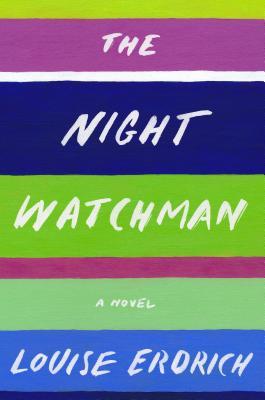
I cannot believe it has taken me this long to read the legendary novelist, Louise Erdrich. I had my reasons—wrong ones, as it turns out—and I am grateful to Net Galley and HarperCollins for the review copy, and thus helping me pull my head out of…the place where it was. This excellent novel is for sale now.
Let me explain, first off. Many years ago, I enrolled in an alternative graduate program that emphasized respect for all cultures and races, and which required, as a graduation requirement, attendance at a full day seminar listening to a locally famous Native storyteller. The story was delivered in a monotone, with a good deal of repetition and no effort at summarization. So, after dutifully suffering through 6 hours of it on one of the hottest days of summer, I pledged to myself that I’d never go through that again.
Twice, good friends have urged me to read Erdrich’s novels, but I was also told she was an American Indian storyteller whose heritage formed a central theme in her writing. My eyes glazed over, and I vowed to give it a miss. When The Night Watchman drew early raves, I realized that my assumptions about Erdrich might be in error, and I hustled back to Net Galley to see if I might still score a galley. It’s a lesson well learned.
The year is 1953, and the place is the Turtle Mountain reservation in North Dakota. Patrice Paranteau has finished school, but she doesn’t want to get married. She has seen her friends do so and turn into old women overnight, shivering as they hang the wash to freeze dry in winter, and collecting snow to melt so that their children can take a bath. No thanks. Instead,
I cannot believe it has taken me this long to read the legendary novelist, Louise Erdrich. I had my reasons—wrong ones, as it turns out—and I am grateful to Net Galley and HarperCollins for the review copy, and thus helping me pull my head out of…the place where it was. This excellent novel is for sale now.
Let me explain, first off. Many years ago, I enrolled in an alternative graduate program that emphasized respect for all cultures and races, and which required, as a graduation requirement, attendance at a full day seminar listening to a locally famous Native storyteller. The story was delivered in a monotone, with a good deal of repetition and no effort at summarization. So, after dutifully suffering through 6 hours of it on one of the hottest days of summer, I pledged to myself that I’d never go through that again.
Twice, good friends have urged me to read Erdrich’s novels, but I was also told she was an American Indian storyteller whose heritage formed a central theme in her writing. My eyes glazed over, and I vowed to give it a miss. When The Night Watchman drew early raves, I realized that my assumptions about Erdrich might be in error, and I hustled back to Net Galley to see if I might still score a galley. It’s a lesson well learned.
The year is 1953, and the place is the Turtle Mountain reservation in North Dakota. Patrice Paranteau has finished school, but she doesn’t want to get married. She has seen her friends do so and turn into old women overnight, shivering as they hang the wash to freeze dry in winter, and collecting snow to melt so that her children can take a bath. No thanks. Instead,
“She was the first person in the family to have a job. Not a trapping, hunting, or berry-gathering job, but a white people job. In the next town. Her mother said nothing but implied that she was grateful. Pokey had this year’s school shoes. Vera had a plaid dress, a Toni home permanent, white anklets, for her trip to Minneapolis. And Patrice was putting a bit of every paycheck away in order to follow Vera, who had maybe disappeared.”
The point of view shifts between Patrice; a local boy turned boxer, Wood Mountain; Haystack Barnes, the white math teacher and boxing coach; and Thomas, Patrice’s uncle, who is the night watchman at the jewel bearing plant. Thomas is modeled after Erdrich’s grandfather, and the author’s notes at the end mention that his struggle to save the Chippewa land made writing this book an emotional experience.
As the story opens, Patrice is preparing to track down her sister, who is rumored to have had a baby in Minneapolis, and Thomas is organizing a group of Chippewa to attend the hearings in Washington, D.C. The Feds have sent a letter to the tribe suggesting that since they were clearly successful, they would surely no longer require government aid or protection. Their land would be absorbed by the U.S. government and then sold to private buyers; its current residents would be relocated to cities where they could get work. And it’s a measure of exactly how clueless the average American was about the Chippewas’ plight that Barnes, who lived and worked among them, said, “I don’t understand why it’s so bad. It sounds like you get to be regular Americans.”
There are other points of view as well; the most memorable are the Mormon missionaries that have drawn the short straw and been sent to minister to the “Lamanites.” This religion holds that the inferiority of American Indians is revealed holy truth; only by converting can they be salvaged, and when that happens, the new converts will slowly become whiter. Our two missionaries dislike each other profoundly, which is unfortunate since they may only separate from one another to use the toilet. When the main story becomes intense and at times, very sad, in will pop the missionaries and before I know it, I am laughing out loud. In addition, I admire the way the strong female characters are developed.
There are three primary threads to follow: what Patrice decides to do with her future; whether Vera will be found; and whether the Chippewa of Turtle Mountain will lose their land. All are handled with the mastery one might expect from an iconic author.
Don’t be the idiot that I was. Get this book and read it now.


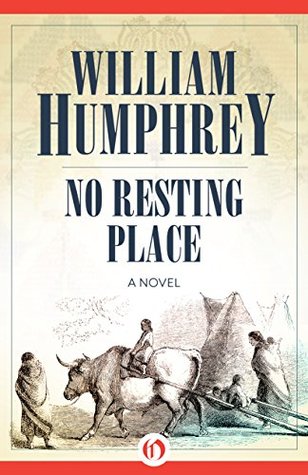 I was drawn to this story because I had read William Humphrey’s Home from the Hill, brilliant Southern fiction that was a contender for the National Book Award, and I couldn’t imagine letting anything written by this author pass me by. Thanks go to Net Galley and Open Road Media for the DRC, which I received free in exchange for this honest review. The book will be re-released digitally February 17, 2017.
 I received this book free from Net Galley, courtesy of Doubleday, in exchange for an honest review. It looked like a fascinating read, but I am disturbed by the sources chosen, which sent up all sorts of red flags right from the get-go and before I had even focused on the references themselves, a due diligence that has to be done before any nonfiction work can be recommended. Once I examined the references, I concluded that so many of them are so questionable that nobody, including the writer, can demonstrate anything beyond the premise of the book itself to be true. The killings happened; that’s about it.
 Nagy does a more than serviceable job in documenting Washington’s intelligence methods. Thank you for the DRC, which I received free in exchange for an honest review from Net Galley and St. Martin’s Press. This title is for sale today.
 Tears in the Grass marks the debut of novelist Lynda Archer. It tells the story of three generations of Cree women, and in doing so also provides the reader with that tribe’s rich history and culture. Thank you to Net Galley and Dundurn for the DRC, which I received in exchange for an honest review. This book is available for purchase now.
