 Nothing Short of Dying is Storey’s first novel, and it’s full of no-holds-barred action. Despite some inconsistencies, it’s a good read, featuring a protagonist alienated, as so many Americans are, by time spent in prison. In some ways it is very much a tale of 2016 America. I received my DRC free and in advance in exchange for my honest review; thanks go to Net Galley and Scribner.
Our protagonist is Clyde Barr, and since the novel is labeled “Clyde Barr #1”, we’ll be seeing him again. Barr is back on the outside. He’s spent so much time away, between prison and time spent in Third World nations, that the rampant consumerism he finds upon returning to US society and the vast number of choices over trivial things overwhelms him. He wants to head to the Yukon and enjoy some time in the woods, but before he can do that, he gets word that his younger sister Jen, who’s very close to him because of shared childhood trauma, is in trouble and needs to be rescued.
I’d seen evil on three continents, some of it unspeakable, but it seemed worse in this place I called home. On a different continent, everything—good and bad—can seem strange, alien. But you don’t expect to come back to places that seem too familiar and discover the greatest evil of all.
Despite the occasional moment in which a female does something proactive, Storey’s plot is full of damsels in distress, and Barr’s whole mission is to save his sister, and then later to also run to the rescue of another woman that appears along the way, but to whom he grows inexplicably attached in a really short time. Character development is shallow, but I can see that an effort is made. Storey also uses the unsavory technique of identifying a bad guy by having him use nasty, racist language. But this is not one of those books I only finish due to a deal with the publisher; I genuinely want to see where this one is going and how it will come out.
Barr is a rough and tumble type, the kind of guy that makes his truck start by kicking the side panels and door and slamming his fist on the hood. It makes me like him.
Not so appealing is his reaction to the irritated woman working in the bar: “On her the expression looked cute.”
However, the thing that resonates most for this reviewer is that when trouble comes calling and another character asks him whether they ought not to call police, Barr says no:
“’They probably have guns.’
“’So do I,” I said.’”
The fact is that Barr flies under a black flag. He doesn’t care about preserving evidence; in fact, it improves things if his fingerprints are nowhere close to any of the messes he either starts or finds himself part of. And fifteen years ago, I don’t think a book like this would’ve found a reputable publisher like Scribner. Barr is our hero, but he has no respect for officers of the law, and his inclination is to solve problems and even make a living in a way that goes around US law rather than in accord with it.
But today so many ordinary, decent people have either done time for something most countries wouldn’t consider to be a lock-up kind of offense, or have a loved one that is or was imprisoned, that alienation from cops and the sometimes the law has become the new normal. I write this from a middle class neighborhood in mellow Seattle, a place where the neighborhood association sat down with a representative from SPD to ask that they let us solve our own problems and quit sending officers here to stalk every Black kid that drives, walks, or gets off a city bus. And I know this scenario is playing out across the nation, but it’s worse in down-and-out areas where people prefer to hide from cops, or film them, because nobody from the cop shop is going to come out to have coffee and chat with the locals.
When you have no power, nobody from downtown cares what you want. And so I think a story like this one will find a receptive audience. There is really no Officer Friendly; if you can’t avoid problems, you have to deal with them yourself nine times out of ten.
This novel, the reader should know, is brutal, violent, and grim. There are torture scenes. The pacing is almost always lightning fast, with lots of fast driving and shooting; the pace only slows in one area, and that is whenever Barr has to build a campfire out in the middle of nowhere, we get a detailed lesson in how this is done. Once I was on my second detailed campfire lesson, I made a note in my tablet. Why are we suddenly stopping for another campfire lecture? But in general, the action travels at warp speed. You have to have the stomach for it, though. But I am a retired English teacher, and there are stories I don’t want to read because they are too graphic; this one stayed inside my ick-boundary by a tiny margin. So if you’re still reading my review and considering reading this book, likely you’ll be okay.
I made a more positive note at the end of chapter 23, because it flowed really well.
A favorite passage is when Barr is hobbling up the mountainside on an injured leg, “sucking air like a sun-stroked impala.” Storey’s figurative language is strong in a number of places, and it helps keep the pages turning.
The story’s denouement left a bare thread dangling in a somewhat obvious way, but this is the writer’s first installment in the series. With strong imagery, a clear plot line, and action, action, action, I know this is a writer to watch. I look forward to seeing the next Clyde Barr novel; this one was released recently, and you can get a copy of your own right now.
With the caveats above, I recommend you read this adrenaline-coursing thriller.


 Shelley Costa is a writer to remember. Her dazzlingly dark humor and her ability to spin a tight original story that builds irresistibly caught my eye with her first Val Cameron mystery, Practical Sins for Cold Climates. I began checking in with Henery Press regularly when I logged onto Net Galley, and my stalking paid off big time. Thanks go to Henery and also to Net Galley, from whom I received a DRC in exchange for an honest review.
 “Is it worth being able to say what you need to say, if it means you land in prison?”
 Gwendolyn is 19 years old when she marries Laurence Hooper, the owner of a tea plantation in Ceylon, an island nation south of India now named Sri Lanka. Jeffries provides a compelling, sometimes painful glimpse of the mores and assumptions of the heirs of the UK Empire at the outset of the peasants’ rebellion led by Ghandi. Though a few small glitches occasionally distract, this is a strong piece of fiction that fulfilled the writer’s mission admirably. Thank you to Net Galley and Random House-Crown Publishing for the DRC, which I received free in return for an honest review. The book is on sale today.
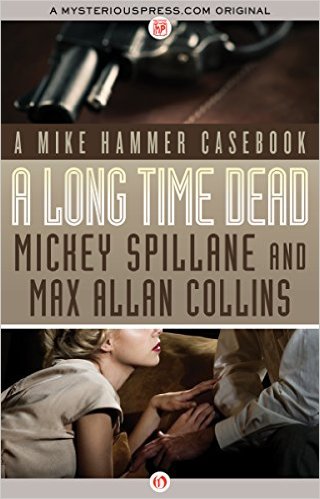 “The evening sky was gray and growling but I had left the trenchcoat behind and my suit coat was unbuttoned. This was the kind of sketchy gin mill where I wanted easy access to the .45 under my arm. The waterfront bouquet greeted me, salt air, grease, oil, sweat and dead fish drifting like a ghost with body odor.
 Fans of Emerson’s Thomas Black mysteries will be as pleased as I was to see this, the 14th in the series. Black took a very long nap and seemed to have all but disappeared for awhile, but then he was back with Monica’s Sister, followed by this title. There was no DRC for this one, so I picked it up free using my Amazon Prime digital credits. It was a good way to spend them. The book was released in 2015, so of course you can get it also.
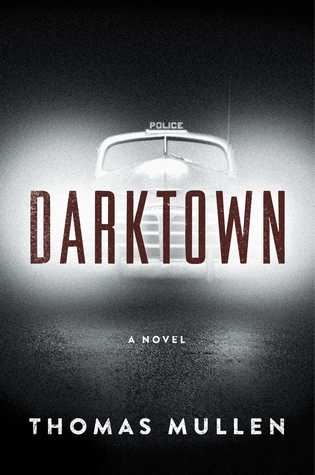 I was originally turned down for a DRC of this novel when I requested it last spring, and I took the unusual step of following up with Atria, more or less begging for it. I’ve been reviewing titles for Net Galley for two years and have received nearly 300 DRCs, so it is a sign of my interest level that I went to this extreme to read this one in advance in exchange for an honest review, and it’s a sign of decency and responsiveness that a representative from Atria Books invited me to review it after all. Although I am grateful , this five star review is not about gratitude, but a measure of the importance I attach to the issues it addresses and the skill with which the story is told.
 Shelley Costa is a writer to remember. Her dazzlingly dark humor and her ability to spin a tight original story that builds irresistibly caught my eye with her first Val Cameron mystery, Practical Sins for Cold Climates. I began checking in with Henery Press regularly when I logged onto Net Galley, and my stalking paid off big time. Thanks go to Henery and also to Net Galley, from whom I received a DRC in exchange for an honest review.
 I had never read anything by John Connolly before, but this eerie thriller has made a forever-fan of me. Thanks go to Net Galley and Atria books for the invitation to read and review. Connolly cooks together a hair-raising thriller with a handful of horror, a smidge of fantasy and a dash of magical realism; the resulting brew is one that nobody else could possibly cook up. For those that write, reading this dark redemption tale is likely to produce both admiration and despair, because this novel is born of a talent that no creative writing workshop will ever be able to produce. You may write, and I may write, but nobody else will ever, ever be able to write like Connolly.
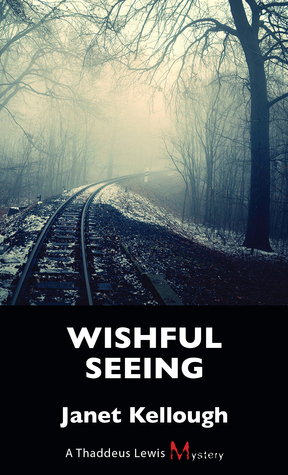 Thaddeus Lewis, the traveling preacher sleuth, is back on the road again. He’s headed to speak at a gathering of Methodist Episcopalians when he finds himself involved, once more, in a murder case. This cozy mystery is my second in an endearing series by Janet Kellough. I snapped up the DRC when I saw that Dundurn had made it available on Net Galley, so I read it free in exchange for an honest review. This title will be available to the public this Saturday, July 30.
 Seattle Book Mama