
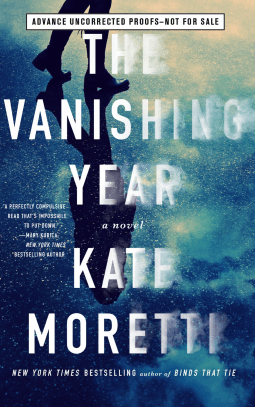
 3.5 stars, rounded up for this one. I received my copy from Atria Books and Net Galley in exchange for an honest review. I am impressed most by the first half of the book, and particularly with regard to character, Kate Moretti is a rock star.
Our protagonist is Zoe Whitaker, and we learn that Zoe grew up as Hilary—with one “L”, and no political baggage—and then chose to adopt “Zoe”, the name on her birth certificate prior to her adoption. There’s a lot more mess here than there needs to be, the adopted-child angst, the guilt over having not given her mother Evelyn the funeral she deserved, and fear, fear, fear.
Moretti does a wonderful job of building suspense, and part of this is the vague but real tension, the constant shoulder-checking, wondering if someone has found her. It makes us wonder who, and it makes us wonder why. Bit by bit, she unspools tidbits of the past in the way you might expect someone that needs a friend and is learning to trust a new confidant might do.
Moretti’s main character is beautifully sculpted. Some novelists that withhold information to build tension hang onto so much that we don’t get to know our protagonist, but I was perched right on Zoe’s shoulder, or hanging out with her newly discarded friend Lydia, asking her why the heck Zoe is so passive. Is fear the only language Zoe knows? I felt close to Zoe, and I wanted her to tell me more.
Meanwhile, there’s the marriage. Henry Whitaker, an immensely wealthy man, sees Zoe across a crowd and homes in on her. Those familiar with the patterns common to abusive relationships know that this is a red flag; the guy whose gaze lights on a partner and from then on wants full possession of every move, every thought, and every minute. He makes a snap decision like lightning and then never lets up. And Henry has plenty of other red flags too, but he’s not a stereotypic abuser; Moretti is too cunning to permit any caricatures into her novel.
For the first half of this story, I relished the meaty ambiguity, not only in Zoe’s life but in what it represents. Yes, Henry is too possessive, too bossy, but on the other hand, this young woman that has never been known for her remarkable beauty or extraordinary talent has the Cinderella marriage without the stepsisters.
“I might be under someone’s thumb, but I have money now.”
Zoe has no living relatives to her knowledge, apart from the birth mom she hasn’t located and that may not want her when she does. She doesn’t have a degree, and is working at a florist’s shop in Manhattan when Henry finds her and whisks her away. He is devoted to her, provides her with every small thing her heart desires. She has a car and a driver, she has servants, she has clothes, jewels, and the whole nine yards. Everyone defers to her. There’s no restaurant that won’t make room for her at the front of the queue. Tickets to a sold out event? No problem.
It is easy for us to moralize from afar, we feminists with our principles, but economic want can shorten a woman’s life significantly. As this reviewer heads into retirement, I look at the lives of the women I knew when we were school girls, and no matter how clever or talented, their material well being seems tied, more than anything, to who they married and whether they remained married. Ask any woman over age 50 who’s looking for a job and watching those past-due notices land in her mailboxes, both electronic and physical, and many of those same women would be more than happy to let someone else tell them what to wear in exchange for such a well-padded safety net.
And so as Henry’s behavior escalates, I grow more entranced with the story’s Virginia Woolfish aspect, and I expect Moretti to take us up that mountain. How much is too much? At what point does one relinquish the guarantee, if there is one, of not only the basic requirements but luxuries one may quickly grow accustomed to, in exchange for breathing room, the dignity that comes with independence, self-respect, and with apologies to Woolf, possibly a room of one’s own?
But Moretti doesn’t go in that direction; at the last minute she tosses in a tremendous amount of new information that is original yet seriously far-fetched. Those that want a white-knuckle thriller with a female protagonist may be very happy here, but I was sad, left feeling as if the waiter had decided not to serve me and abandoned me after the hors d’oeuvres.
This title was released on October 4, and so if you are eager to see what all the buzz is about, get a copy, and then let me know what you think.
One way or another, Moretti will be a novelist to watch. The subtlety and nuance that escaped her as this novel progressed are still hers to be had, if she chooses to use them. I know I can’t wait to see what she publishes next.
 Paul Dwyer is dead, a floater that has only been found because his construction business diverted the water from the place where his body is dumped, and it dries up in the Southwestern desert heat, leaving his body exposed to the world. I was lucky to be able to read this book early, thanks to an invitation from Net Galley and Diversion Publishing, in exchange for this honest review. I am overjoyed to rate it five stars. I knew nothing at all about either Smith or Diversion, but it turned out to be a risk that worked out in my favor and the author’s.
 Shelley Costa is a writer to remember. Her dazzlingly dark humor and her ability to spin a tight original story that builds irresistibly caught my eye with her first Val Cameron mystery, Practical Sins for Cold Climates. I began checking in with Henery Press regularly when I logged onto Net Galley, and my stalking paid off big time. Thanks go to Henery and also to Net Galley, from whom I received a DRC in exchange for an honest review.
 “Is it worth being able to say what you need to say, if it means you land in prison?”
 Gwendolyn is 19 years old when she marries Laurence Hooper, the owner of a tea plantation in Ceylon, an island nation south of India now named Sri Lanka. Jeffries provides a compelling, sometimes painful glimpse of the mores and assumptions of the heirs of the UK Empire at the outset of the peasants’ rebellion led by Ghandi. Though a few small glitches occasionally distract, this is a strong piece of fiction that fulfilled the writer’s mission admirably. Thank you to Net Galley and Random House-Crown Publishing for the DRC, which I received free in return for an honest review. The book is on sale today.
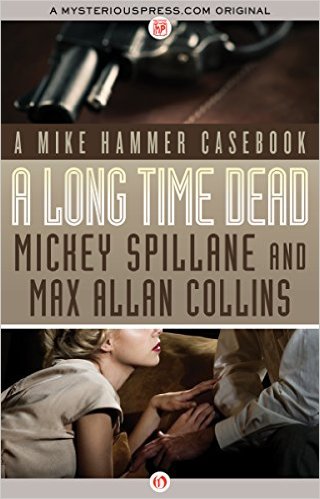 “The evening sky was gray and growling but I had left the trenchcoat behind and my suit coat was unbuttoned. This was the kind of sketchy gin mill where I wanted easy access to the .45 under my arm. The waterfront bouquet greeted me, salt air, grease, oil, sweat and dead fish drifting like a ghost with body odor.
 Fans of Emerson’s Thomas Black mysteries will be as pleased as I was to see this, the 14th in the series. Black took a very long nap and seemed to have all but disappeared for awhile, but then he was back with Monica’s Sister, followed by this title. There was no DRC for this one, so I picked it up free using my Amazon Prime digital credits. It was a good way to spend them. The book was released in 2015, so of course you can get it also.
 Nothing Short of Dying is Storey’s first novel, and it’s full of no-holds-barred action. Despite some inconsistencies, it’s a good read, featuring a protagonist alienated, as so many Americans are, by time spent in prison. In some ways it is very much a tale of 2016 America. I received my DRC free and in advance in exchange for my honest review; thanks go to Net Galley and Scribner.
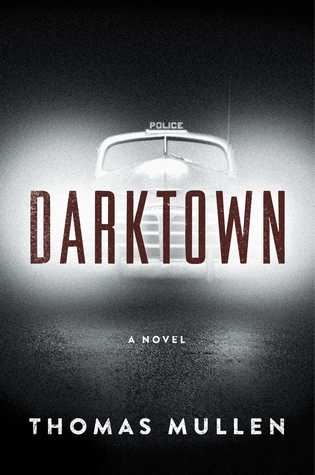 I was originally turned down for a DRC of this novel when I requested it last spring, and I took the unusual step of following up with Atria, more or less begging for it. I’ve been reviewing titles for Net Galley for two years and have received nearly 300 DRCs, so it is a sign of my interest level that I went to this extreme to read this one in advance in exchange for an honest review, and it’s a sign of decency and responsiveness that a representative from Atria Books invited me to review it after all. Although I am grateful , this five star review is not about gratitude, but a measure of the importance I attach to the issues it addresses and the skill with which the story is told.
 Shelley Costa is a writer to remember. Her dazzlingly dark humor and her ability to spin a tight original story that builds irresistibly caught my eye with her first Val Cameron mystery, Practical Sins for Cold Climates. I began checking in with Henery Press regularly when I logged onto Net Galley, and my stalking paid off big time. Thanks go to Henery and also to Net Galley, from whom I received a DRC in exchange for an honest review.
