It’s a rare book that I find abrasive right out of the gate, especially since there are no controversial social messages here, just a mystery that I didn’t like and didn’t finish. Thanks go to Crown Publishing and Net Galley for the review copy, which I received free and early in 2017. I should have written a review long ago, of course, but I found it hard to reconcile my antipathy for this story—a debut, no less—with the nearly unanimous adulation expressed by other reviewers. I am still a bit bewildered, but there it is.
This is a book that tries too hard. There are too many cutesy nicknames, and the structure of the plot feels gimmicky and formulaic, as well as mighty unlikely. Of course, most mysteries have aspects that are unlikely because most real-life murders and other mysterious doings have logical, obvious, dull explanations. We agree to pretend the murder mystery is plausible in exchange for being entertained. The problem is that I wasn’t, and so I couldn’t.
Two other factors that contributed to my grumpiness were the overwhelmingly male list of characters, and the cultural collision between British fiction and my brain. I’ve read and enjoyed some British fiction; if not, I wouldn’t have requested this galley. But here the culture and jargon are thick on the ground, and the inner narrative feels endless.
I no longer have to be concerned that I will crush this author’s hopes and dreams; Tudor’s debut is a huge success both in terms of sales and the corresponding enthusiasm of its readership. This author has gone on to publish more books, and I have had the good sense not to request those this time. Ultimately this came down to taste more than anything else, but I have to call ‘em as I see them, and I found nothing to love, apart from a compelling jacket and an attention-getting title.
The quality that distinguishes Cha from other top-tier mystery writers is her absolute fearlessness in using fiction to address ticklish political issues. Your House Will Pay is impressive. I read it free and early thanks to Net Galley and Harper Collins. I am a little sick at heart that I’m so late with my review, but this book is rightfully getting a lot of conversations started without me. It’s for sale now, and you should get it and read it.
Our two protagonists are Grace Park and Shawn Matthews. They don’t know each other, but their families intersected one critical day many years ago. The Parks are Korean immigrants, the owners of a small pharmacy. The Matthews family is African-American, and they have never stopped grieving the loss of sixteen-year-old Ava, who was shot and killed one evening by Grace’s mother in a moment of rage and panic. The other thing shared by Grace and Shawn is that both were quite young when it happened. Shawn was with his older sister when she was killed and has memories of what happened; Grace has been shielded from the event and knows nothing about it until the past opens itself up in a way that is shocking and very public.
The story alternates between the initial event, which happened in the 1990s, and today; it also alternates between the Park family and the Matthews’. The development of the characters—primarily Grace and Shawn, but also Shawn’s brother, Ray and a handful of other side characters—is stellar. Throughout the story I watch for the moment when the narrative will bend, when we will see which of these two scarred, bitter families is more in the right, or has the more valid grievance. It never happens. Cha plays it straight down the middle. Both families have been through hell; both have made serious mistakes, crimes against one another. And ultimately they share one more terrible attribute: both families have been callously under-served by the cops and local government, for which relatively poor, powerless, nonwhite families are the dead last priority.
Cha bases her story on a real event, and she explains this in the author’s notes at the end of the book.
As a reviewer, I am closer to this than many will be: my family is a blend of Caucasians, Asian immigrants, and African-Americans. I read multiple galleys at a time, shifting from one to another throughout the reading parts of my day, but it is this story that I thought about when I wasn’t reading anything.
The first book that I read by this author was from her detective series. When I saw that she had a galley up for review, I was initially disappointed that this wasn’t a Juniper Song mystery, but now that I have seen what Cha is doing and where she is going with it, I see that this had to be a stand-alone novel. There isn’t one thing about it that I would change.Highly recommended to those that love the genre and that cherish civil rights in the U.S.; a must-read.
I had never read this author’s work before, but went looking for it after reading raves about it from online friends. Thanks go to Net Galley and Scribner for the review copy, and to Seattle Bibliocommons for the audiobook that helped catch me up when I found I’d fallen behind. This book is for sale.
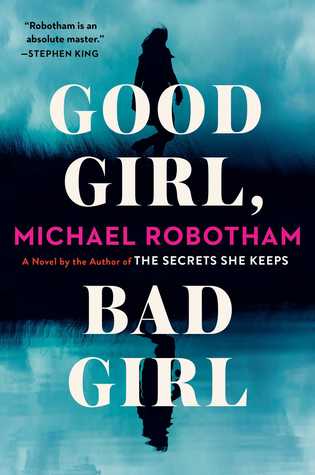
Evie Cormac–whose real name is unknown–is a patient in a children’s psych ward. She was found emaciated and filthy at the scene of a violent crime; it’s believed she was kept hostage, though she won’t deny it or confirm, or talk to anyone about it. Cyrus Haven, a psychologist that looks to become a recurring series protagonist, has his own tragic past. When Evie applies for emancipation, Cyrus offers to bring her home as a foster child until she can live alone. Everyone tells him it’s a crazy thing to do.
Meanwhile, a very different girl has been murdered. Jodie Sheehan had a golden future; a championship figure skater, she was locally famous and appeared destined for great things. Instead she was found murdered not far from home. Who the heck would do such a thing? Jodie had no enemies. Police are baffled.
Throughout this tautly written novel I found myself waiting for big reveals. What connection can there be between Evie and Jodie? Who is Evie really?
The thing I admire about this story is the restraint Robotham shows. A more formulaic writer would twist things around and then hit us with all sorts of deep though wildly unlikely ties between the two cases. He doesn’t do that. I expected the big dramatic scene in which Evie spills everything; he doesn’t write that scene. I’ve probably read a few too many novels of mystery and suspense lately, and I was in the mood to roll my eyes. That eye-roll had to wait for a different book and author, because I believed most of this story, and Robotham had shown excellent taste in keeping the reveals minimal.
Here’s the one thing that makes my eyebrows twitch; it’s the same issue I sometimes have with Jonathan Kellerman’s Alex Delaware books, which I like a lot. Psychologists don’t race around conducting independent investigations, confronting possible perpetrators, and interviewing people t hat don’t want to talk to them. And sure as hell, psychologists don’t wear bulletproof vests.
But those of us that like these stories agree to suspend disbelief given half an excuse, because a psychologist’s ordinary job—interviewing truculent teens in an office, perhaps, or making hospital rounds—is not nearly as much fun to read about as is a psychologist-as-detective protagonist. There were a couple of times toward the end where I made little frowny notes in my copy, but for the most part I was on board. Robotham takes us deep inside Cyrus’s head, and the more I felt I knew the character, the more I was able to believe the narrative.
Should you read this book? Sure, why not? It held my attention quite nicely, including during my loathsome hours on my exercise bike. I would happily read this author’s work again. Recommended to those that enjoy the genre.
3.5 rounded upward. The Last Resort is a novel about a
marriage retreat where nothing is as it seems.
Thanks go to Net Galley and Simon and Schuster for the
review copy. This book is for sale now.
Readers should know that this novel holds triggers for just about everything, left, right, and center.
Miles and Grace Markell run an intensive marriage therapy camp in Mexico. The affluent couples that come here are desperate to save their crumbling marriages. Everyone is supposed to give up their cell phones and internet privileges, and once they do that, they are more or less helpless, which is part of the proprietor’s plan.
Between the punny title and the teaser that suggests that
the couple that runs the retreat has the worst marriage of anybody, I was
anticipating that this would be hilarious, and that’s not so. There are a
couple of moments of dark humor, but mostly this is a straight-up suspense
story. That said, it’s a good book, but nothing special. It took me a good long
time to distinguish the couples from each other. The climax is fast
approaching, and I’m still trying to remember which person Shell is, and who
her husband is, and what problem has brought them here. I would probably have
had greater success if I hadn’t read this book at the same time as a handful of
others, but if I had been forced to read just one book, I would have chosen
most of the others I was reading over this one.
This doesn’t mean you won’t enjoy this book. I had recently
read another story about a retreat where everyone’s phones were seized and
internet forbidden, and so in some ways my lack of interest here was a fluke.
Read the synopsis; if you are interested, I recommend you get this one free or
at a deep discount.
I have loved Susan Isaacs’s work for decades, and so when I
saw her newest novel up for grabs on Edelweiss, I jumped at the chance to read
it. This book is for sale now.
Corie Geller is a former FBI agent. Now she is the stay-home
mom of a fourteen year old stepdaughter, and the wife of a prominent judge. She works as a scout for quality Arabic
fiction. And she’s bored out of her mind.
But old habits die hard, and she can’t help noticing that a
member of her regular lunch group, Pete Delaney, has habits that raise red
flags. He’s too normal, almost as if he’s working at it. His appearance is
forgettable, his occupation is dull…but he always sits facing the door when he
goes out to lunch. He sets Corie’s professional sense a-jangling. Is Pete
really this bland, or is it a front for something more sinister?
The few people that Corie confides in are sure she is
jumping at shadows. She needs a job, or a hobby. Briefly I wondered whether
Pete and Corie were going to fall madly in love, but then I remembered who my
author is. Isaacs would never.
The one person that takes Corie’s questions seriously is her
father, a retired cop who’s bored also. As she and her papa peel away Pete’s façade,
they grow closer to uncovering his secrets. And Josh—Corie’s husband, whose
work requires a whole lot of travel—knows nothing of any of it.
The thing that elevates Isaacs above other novelists is her
feminist snark. It’s put to excellent use here. Aspects that don’t work as well
for me are the detailed descriptions of upscale furnishings and other expensive
possessions, and the whole Arabic literature thing, which adds nothing at all
to the story and is a trifle distracting; I kept wondering when it would become
relevant to the story, but then it didn’t.
But both of these are minor factors.
The reader should also know that this is not a thriller. There
seems to be a trend among publicists to promote all mysteries as thrillers, and
perhaps this helps sales in the short run, who knows; but it doesn’t serve the
author well in the long run. Isaacs doesn’t write thrillers, she writes solid,
feminist mysteries that pull the reader in with the story arc characteristic of
strong fiction. When I hit the 62% mark at bedtime one evening, I understood
that the next time I read it, I would have to finish it, and indeed, it was too
exciting to read flopped in bed as I usually do. I had to sit up straight, and
I kept finding myself leaning forward as I read, as if I might need to jump up
at any minute.
I would love to see Isaacs use this protagonist in a series.
I’ve missed this writer and look forward to her next book, whether it’s another
Corie Geller story or something else. I recommend this book to feminist mystery
readers that are ready for a chuckle or two.
Scribner held me in thrall with this one. I’m surprised it hasn’t turned up on more lists. This is the first of 20 best-of posts for this year; to keep track, check the Best Books page listed on my header.
I’m a longtime fan of Cornwell’s Scarpetta series, so when Amazon offered me a free, early look at this first book in the new Captain Chase series, I was over the moon. Thanks go to Amazon First Reads, and I am sorry not to provide the kind of review that I expected to write, but this one doesn’t work for me.
Whereas her earlier series was the original forensic thriller genre, Calli Chase, our protagonist, is a cop for NASA. Perhaps I should have seen this problem coming. I am generally not interested in the sciences, at least to any detail. I don’t mean to sound like a Luddite: I maintain the practical knowledge necessary to raise plants, provide quick home-medical treatment when called upon, and carry off other every day, practical matters. But physics? Chemistry? That whooshing sound right now was me leaving the room. So all of the science chatter early in the narrative led me to close the book and read something else several times, until I realized we were past the pub date and I owed a review. Surely it would get better, once we got into the actual plot. We have heavy foreshadowing that lets us know that some big bad event is about to unfold, and more foreshadowing that tells us there are some great big ol’ skeletons in Calli’s closet and that of her twin, Carme.
But that’s another matter. The foreshadowing used in the Scarpetta series is masterful stuff, suffusing me with a profound sense of dread that makes me turn the pages faster just to know what in the world is around the corner. This foreshadowing, on the other hand, is so heavily troweled on that it makes me impatient. This foreshadowing feels like filler by the 25 percent mark, and there are places in my notes where I say, Enough already. What. Just tell us and get on with it.
As Cornwell’s Scarpetta became a long-running series, she did what great writers of the genre do, moving more deeply into character. After a certain point readers became jaundiced as our hero was once again knocked out, blindfolded, and stuffed in a car trunk or whatever–how many times can this happen to the same person?–and so she moved more toward a psychological thriller, where there were possible enemies within the fortress, so to speak. Could she really trust her Benton, her husband, who is keeping secrets from her? Could she trust her niece? What about her work partner? There was all sorts of scheming and things were not as they appeared. Some readers grew cranky at this point, but I found it fascinating, because I felt I knew her core characters so completely.
But with Captain Chase none of this works, because the author has basically created the same characters with different names and relationships. Perhaps wary of this inclination, the protagonist is unlike Scarpetta, but obnoxiously so, and Chase is not a character I believe. Every tenth word from this character is a euphemism, with copious amounts of the first person narrative explaining and re-explaining how much she hates vulgar language. But whereas I have no problem with most off-color language, I’ve had people in my life that avoided it on principle, usually due to a religious conviction, and not one of them used euphemisms like this character does. Most of them believe that a euphemism is wrong because it’s a swear word dressed up as something else, and the best thing to do is omit them altogether. Instead of yelling ‘Gosh darn,’ they would say ‘Oh no!’ or, ‘How did this happen?’ But with Chase, it’s one long eye-roll, and so when we get to our less-than-stirring climax and she actually says, “Shit!” (and then of course has to talk about having actually said that word) I let out a snort and closed the book. I quit at 85 percent and didn’t stick around for the ending.
It’s a sorry thing, having to write a review like this for an author I like, because of course I cannot help but wonder what personal circumstances would make a bestselling author write and publish something this unworthy. Money? Health? But I don’t know, and ultimately my responsibility is not to the author but to my readers.
As for you, if you are fascinated with NASA, maybe you won’t find this story as repellent as I do, but I would urge you not to spend big on it. Get it free or cheap unless your pockets are very, very deep.
3.5 rounded up. My
thanks go to Simon and Schuster and Net Galley for the review copy. This book is for sale now.
Avery and Sadie were best friends, as close as sisters. After her parents died in a terrible crash, Avery came to live with the Loman family and was included in nearly everything, almost like extended family. The Lomans are the local gentry, vastly more wealthy and influential than any other family for miles around. In some ways it was like a dream; Avery grew up as an only child whose working class parents struggled to pay for the bare necessities, and like others in this touristy little beach town, she had been awed by the Lomans, who lived at a lofty remove from ordinary people. But now Sadie is dead, and although Avery is employed by the Lomans as a property manager for their vacation cottages, it is painfully obvious that she is no more family to them than any of the other full time residents here.
Police say that Sadie killed herself, but Avery doesn’t think so. She turns over one clue after another, all of them suggesting that this isn’t as it appears. But once she is able to persuade the cops that Sadie didn’t jump over the cliff’s edge, she becomes their primary person of interest in a murder investigation. Now she is even more motivated to find out what happened that night.
Miranda is a champion when it comes to creating murky, haunting settings and a sense of disorientation. I believe Avery as a character through about 80 percent of this story, but the ending doesn’t hold up this time, and when plot becomes as preposterous as this one has, the character can’t stand up either.
I’ve read and reviewed this author three times now, and each
time I found aspects of the ending that raised my eyebrows, but this is the
first time that I couldn’t make myself buy into it for the sake of a good yarn.
I was aggravated, a feeling similar to what I’d experience if an old friend
looked me up and spent an evening with me, only to conclude by asking me for
money, or trying to persuade me to join an odd religion. In short, I felt like
I’d been had.
Miranda’s fans may want to get a copy of this novel and see
what they make of it, but I’d counsel you to get it free or cheap unless your
pockets are deep ones.