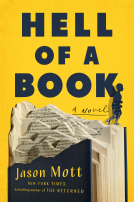
Hell of a Book, by Jason Mott*****

It really is.

This book is a standout in more ways than one. First the obvious: look at that cover! Then again, how many novels have a nameless protagonist all the way through the book? Get into it deeper, and the distinctions become more complex. The buzz around it is wholly justified. My thanks go to Net Galley and Random House for the review copy. This book is for sale now.

Our author is on an odyssey that takes the form of a book tour, and it lands him, in the end, back where he grew up. He doesn’t tour alone; apart from the various organizers he meets in various locations, he is accompanied by a small Black child he refers to as “The Kid.” Alternately, we also see the story of a young Black boy, a very Black boy, nicknamed “Soot,” who grows up in the American South.

As I read, I am always on the back foot, understanding most of what it being said, yet developing questions as I go. Our author says (often) that he has a condition, and that this is probably why he can see The Kid when others cannot. My notes ask whether his condition is dissociative, and is The Kid just part of himself? Or is The Kid Soot? Are Soot and The Kid both part of the author? Every time I come up with a plausible theory, something else happens to undercut it. Yet one other thing becomes clearer all the way through: to be born an African-American boy in the United States is to be perpetually on the back foot; perpetually having to guess how best to proceed; to perpetually guess at one’s welcome or lack of same, at the quality of one’s relationships with Caucasians, to perpetually guard one’s own safety. And to be very Black—“Nigga, I bet when you get out of the car your daddy’s oil light come on”—is to invite not only the suspicion and hostility of Caucasians, but to draw the enmity of lighter Black people, too.

The synopsis of this story that initially drew me billed it as humor, and in places, it is not only funny, but laugh-out-loud funny. But the further we get in, the darker it becomes.

There are a number of sardonic references to the publishing world; editors, agents, and other promoters have told the author that while it’s fine to write about Black characters, He must not write about being Black:

“The last thing people really want to hear about is being Black. Being Black’s a curse—no offense—and nobody wants to feel cursed when they read something they just finished paying $24.95 for…The future of this country is all about patriotic, unity-inducing language. Post-Racial. Trans-Jim Crow. Epi-Traumatic. Alt-Reparational. Omni-Restitutional. Jingoistic Body-Positive. Sociocultural-Transcendental. Indigenous-Ripostic. Treat of Fort Laramie-Perpendicular. Meta-Exculpatory. Pan-Political. Uber-Intermutual. MOK-Adjacent. Demi-Arcadian Bucolic. Write about love. Love and Disney endings…”

Later, an interviewer asks if the past doesn’t still matter, and the author says, “It does. Not just three-fifths of it, but all of it.”

So, my friend, you can see why this book should be called a love story. Race? Oh, no no no. Fear? Injustice? Police brutality? Of course not. After all, this is a hell of a book!

Highly recommended; one of the year’s finest.

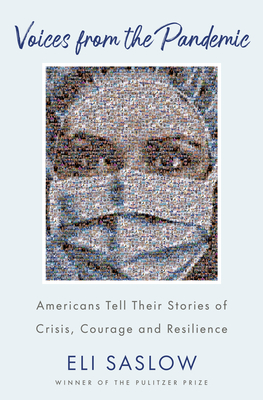
Voices from the Pandemic, by Eli Saslow****

Eli Saslow is the journalist that wrote Rising Out of Hatred, the story of former White Supremacist Derek Black, in 2018. When I was offered the chance to read and review his new book, Voices from the Pandemic, I jumped on it, because I like this author a lot. Once I had it, I avoided it like the plague (pardon the reference) for a couple months, wondering just what I had been thinking, to sign on for something like this. In the end, I am glad to have read it.

My thanks go to Doubleday and Net Galley for the review copy.

Saslow tells us in the introduction that he expected to become depressed, perhaps numbed, by all of these interviews, but ultimately was galvanized by “their empathy, their insight, their candor and emotional courage.” Fair enough, but an awful lot of these stories are gut-wrenching. For whatever reason, he chooses to start with some of the most horrific ones, but as we work our way into the book, there are several that are not about the excruciating, grim death of a loved one, but are interesting for different reasons. There are stories of essential workers, of coroners, and medical professionals. One that has stayed with me is that of a middle aged man, ex-military, who is finally compelled, when everyone in the household loses their livelihoods, to visit a food bank. He gets there two hours before it opens to be on the safe side, and discovers that there’s already a huge, hours-long line.

My favorite story is that of Bruce MacGillis, a wily old man that barricades himself in his room in his nursing home, lets nobody in, throws open his windows in subfreezing weather, and stuffs towels underneath the doorway to keep out other people’s germs. He ends up being one of two residents that are spared, out of eighty-nine residents. (My notes say, “Hell yeah!”) On December 28, he lets a nurse come in to administer his vaccine. I hope that man lives to be a hundred.

There are some stories by vaccine deniers, mask avoiders, included here, but if you are among them, you probably won’t enjoy this book. It leans heavily toward science, and away from conspiracy theories.

After I’d procrastinated reading this thing, I checked out the audio version at Seattle Bibliocommons to give myself a leg up. I thought it might be easier to hear these stories while I was also engaged in some other task, so I fired it up while I was slicing bell peppers and marinating meat. If anything, it was worse that way. Well—to be fair—worse, and also better. There’s a separate reader for each story, and the hard ones are read with such searing emotion that it makes them all the worse. The saving grace is that each person’s story is concisely told, so there was only one time that I hit the stop button and fast-forwarded to the next one. At the outset, I only listened for a few minutes at a go, and then turned to listen to another book, something light and fictional, to restore my mood. By the second half, I no longer needed to do that.

The book only covers the 2020 portion of the pandemic, but I’m not sure it would sound much different had he waited to include the whole horrible thing. (It will be over someday…won’t it?) Recommended, for those that can do this.

Another Kind of Eden, by James Lee Burke****

James Lee Burke is a living legend, a novelist who’s won just about every prize there is, and whose published work has spanned more than fifty years.  My thanks go to Net Galley and Simon and Schuster for the invitation to read and review. This book is for sale now.

Another Kind of Eden is a prequel to Burke’s Holland family trilogy. The time is the 1960s, and protagonist Aaron Holland Broussard is in Colorado working a summer job. He falls in love with a waitress named JoAnne, but there are obstacles to their happiness everywhere he looks. There’s a charismatic professor that won’t leave her alone, a bus full of drugged-out young people that have fallen under his influence, and of course, there’s corruption among the local wealthy residents, which is a signature feature in Burke’s work. Aaron is a Vietnam veteran, and he has residual guilt and grief that get in his way as well. He’s got some sort of an associative disorder, though I am not sure that’s the term used; at any rate, he blacks out parts of his life and cannot remember them. He also has anger issues, and he melts down from time to time; there’s an incident involving a gun that he forces a man to point at him that I will never get entirely out of my head, and kind of wish I hadn’t read.

I had a hard time rating this novel. If I stack it up against the author’s other titles, it is a disappointment; a lot of the plot elements and other devices feel recycled from his other work, dressed up a bit differently. But if I pretend that this is written by some unknown author, then I have to admit it’s not badly written at all. By the standards of Burke’s other work, it’s a three star book; compared to most other writers, it’s somewhere on the continuum between four and five. Since I have to come up with something, I decided to call it four stars.

All that being said, if you have never read anything by this luminary, I advise you to start with one of his earlier books–almost any of them, actually.

Easy Crafts for the Insane, by Kelly Williams Brown*****

Kelly Williams Brown is an experienced author, but she is new to me. I ran across this odd little book at exactly the time I needed it, and maybe you do, too. My thanks go to Net Galley and Putnam Penguin for the review copy; this book will be available to the public July 6, 2021.

Brown points out that mental illness remains one of the few conditions that are cloaked in secrecy and shame. Nobody afflicted with bipolar disorder chooses it, and although it can be successfully treated, there’s no cure, either. The title of the book reflects her choice to simply own it. “This is the water I swim in…I wanted to talk about how I have come to be content in my own skin.”

In sharing her journey, she tells us how nearly impossible it is to find a psychiatrist within a reasonable commute, who takes your insurance; now try doing it while you are in a precarious state of mental illness. At one point things come to a head, and in a fugue of which she has no memory at all, she rises from bed and attempts suicide, nearly succeeding. Had her boyfriend not found her when he did, she would have died. “’Lots of people, they just take a few aspirin and say they want to die, but you meant it!‘  the very kind ER doctor says with something that sounds a tiny bit like begrudging approval.”

The crafting aspect of this book is partly a device, used to share what kind of mindset caused her to resort to it, and also which crafts are soothing at life’s most difficult times; several of the crafts she discusses are just as mysterious to me after reading her instructions as they were before. Her favorite little origami stars, which grace the book’s cover, are among these. And there are some crafts for which she tells us she has no clear instructions, and recommends YouTube tutorials, so that part’s kind of a wash. However, there are a couple of things that do sound interesting and that I might try. I initially rated this book four stars, thinking that if a person puts crafts in the title, the crafts should be clearly taught, but later I decided that this book really, truly isn’t about crafts.

Brown has money, and at times I am a little alienated by her wealth, that is obvious in her narrative. But she recognizes this, and she uses it to drive home the point:

“I had good insurance, and open schedule, and no internal conflict over therapy—and yet it was still fucking impossible. My privileged ass could barely make it happen. Think about the hurdles that Americans who don’t have these advantages face every day when they’re trying to access help!”

I have deliberately left out the humor here, the places that at times make me laugh out loud. You can find them for yourself. They are well placed, preventing the overall tone from becoming too grim.

 I found this book the day after dropping a close family member off at the psych ward of a local hospital, and it seemed almost like an omen that I should read it. If you are contemplating reading it, whether due to mental health issues of your own, or of those close to you, or simply out of curiosity, I highly recommend you do it. This little gem may become a cult favorite, and it would be a shame to be left out of the loop. And if it inspires you to be more vocal in advocating for mental health awareness and treatment, and of dragging this pervasive problem out of the attic and shining some light on it, then the world will be a better place.

Broken, by Jenny Lawson****-*****

4.5 stars, rounded up.

Jenny Lawson, AKA The Bloggess, has a new book out, and I do believe it’s my favorite. My thanks go to Net Galley and Henry Holt for the review copy. This book is for sale now.

Lawson bucks a somewhat disquieting trend, and I am so glad. The trend is to make the first three chapters—most likely what sells the book—sterling, and then fill the rest with mediocre, highly missable prose. In contrast, the earliest part of this memoir is good, but it’s not great. She starts slow and then builds toward most of her best material, leaving me smiling as the book concludes.

But let’s go back to the material at the start, which I find to be random in a way that yearns for the hand of a high profile editor. I’m throwing my hands up, wondering just why a professional writer would blather on like this. Can she write a coherent sentence, and then end it when it’s over? Of course, I continued reading and loved the essays in the middle, and as we draw near the end, she refers to the challenges she encounters in writing, citing her inclination to overwrite, and the resultant paragraphs that contain “a run-on sentence that would make an English teacher cut herself,” and I howled, because that’s it, exactly. Almost exactly, I mean; I was moaning, but I hadn’t reached for anything sharp.

What is it about depression and humor, and the connection between them? It’s hard to tease apart all of the components that make Lawson’s writing so compelling; to a certain extent, it’s alchemy of the human spirit, I suppose, combined with skill at self-expression. But there are other components much easier to spot. One is her disarming frankness; for example, she mentions that people, remarking on her twentieth wedding anniversary, ask about her secrets for a long and happy marriage, and she tells us that actually, not all of those years have been happy. There are good periods, and there are bad periods. And then she adds, not entirely jokingly, that part of the reason she is still married is that there are things in her marriage that she doesn’t write about.

But even more compelling is her level of perception, and her ability to understand the subtext of just about everything.

I’ll mention my favorite parts, but I am not giving up any more humorous quotes, because that’s a crappy thing to do to a humor writer. There’s a funny part having to do with shoes, and the kayaking trip from hell, which she dubs “Divorce Creek.” The chapter about Transcranial Magnetic Stimulation, which is a serious bit for the purpose of informing us, is interesting and may be of help to a number of readers. (However, the searing honesty about her suicidal impulses might actually be a trigger for a profoundly depressed reader.) And the infuriating experiences she has had dealing with insurance makes me want to throw things, but it is important that she includes them here.

If you’re a fan of The Bloggess’s writing, you have to get this book. If you are new to her work, you can dive into this memoir without reading her previous ones. Highly recommended.

The Museum of Forgotten Memories, by Anstey Harris***

Cate Morris has her back to the wall. She’s lost her job and her apartment; her husband, Richard, is dead and she and her son, Leo, are still grieving. With nothing left to lose, she packs their belongings and heads for Richard’s ancestral home at Hatters, a place that turns out to be full of secrets and the unexpected.  In the end, the museum is renovated, as well as its occupants.

My thanks go Net Galley and Gallery Books for the review copy. This book is for sale now.

I read and enjoyed Harris’s last novel, Goodbye Paris, and when I saw that she had another book in the works, I leapt on it. Harris develops plots that are fresh and original, and so when I open the book, I expect great things. And in most ways, I find them.

The first and most obvious aspect is the museum. The family patriarch, Sir Hugo, is now deceased, but he was a benign presence in the tiny village; his museum, which is now somewhat anachronistic, showcases a collection of taxidermized African animals, among other things:

“It is a conundrum, like everything else in this peculiar house. From the glaring dead animals conserved in their alabaster homes, through the thousands of books that no one can reach to read, right into the wet green foliage of the unmanageable woods Colonel Hugo’s grandfather meticulously planted, this place contradicts itself at every turn, gives then takes away, frightens then comforts.”

Though Leo is an heir and has the right to be there, Cate and Leo are met coolly by Araminta, an older woman who has become nearly the sole caretaker of the whole enormous enterprise.  There are a number of things that don’t add up, but since there’s no real choice, Cate and Leo forge on. Leo, who has Down’s Syndrome, is a hugely congenial character, and again, Harris brings in an element that few other novelists have done lately. I have never had much interest in this syndrome, and came to the novel for the author rather than this attribute, but I enjoy Leo a lot, and he has a shining moment toward the conclusion that I will remember for a long time.

Throughout the novel’s progress, Cate is still processing and grieving Richard’s loss, though it’s been years. There’s a stretch midway through that feels repetitive, with Cate grieving, remembering, stewing, and assuring the reader that she won’t tell anyone everything about Richard’s death. I become impatient with it, mentally telling her to fish or cut bait and get on with it, but soon after I hit that point, she does exactly that. There are a lot of secrets floating around this museum; there’s one involving Araminta that I am able to guess ahead of time, but there’s another big reveal toward the end that I find inappropriate and jarring, and it’s important enough to the story that I can’t overlook it. Up to the ninety percent mark, I had this book pegged as a five star read.

Despite my disappointment, I am not finished with Anstey Harris. Her work is bold and original, and I respect her willingness to take risks. However, my advice to you is to buy it cheap or get it free if you’d like to read it; save the full cover price for her next novel, or use it to buy the last one, if you haven’t yet read it.

Queenie Malone’s Paradise Hotel, by Ruth Hogan****

When I requested the galley for this book, I was taking a chance. I do love good historical fiction, but I seldom enjoy a cozy mystery, and this story is but a whisker away from being one. I was afraid the story might be cutesy instead of quirky, cloying instead of life affirming. And how delightful it is to be wrong! I received my copy free and early, thanks to Net Galley and Harper Collins. It’s for sale now.

The premise is that Tilda has returned to the town where she and her mother lived after her parents separated. She was an only child, and her mother is dead, and so it falls to Tilda to tie up the loose ends of her mother’s small estate. And at this point, my snark is already peeking its beady eyes out, saying Oh geez, another story that starts with an only child cleaning up the estate. Lots of those lately! And a mean mother? That’s got to be my number one eye-roller right now!  And I tell you these things, reader, because it underscores what a job Hogan had ahead of her in order to break down my resistance; and yet, she did.

The narrative is divided into two points of view which alternate. The first is young Tilly, the little girl that doesn’t understand what is happening between her parents, and is devastated when her father moves out. The second is the adult Tilda, whose capacity for trust in other people is limited.

The first part of the book is a hard read in places, because Tilly is in so much pain, and it feels drawn out, although one could argue that time passes more slowly when we are young. Tilly’s parents are always quarreling; then her daddy moves out, and Tilly, who was a daddy’s girl, takes out all of her hurt and rage on her mother. Her mother is brittle and not very stable, and she’s at wit’s end. First they move from the house where the family had lived to the hotel in the title; then, against her wishes, Tilly is sent off to boarding school. Tilly had loved living at the hotel and didn’t understand why she was exiled.

Tilda learns what her mother was thinking when she finds and reads the journals that her mother had left for her, and again, it’s not exactly an original device on the author’s part, but it’s done so well that it doesn’t matter. Tilda also finds one of her mother’s old friends, and she learns some things that way as well.  There are some genuine surprises that are also believable and fit the characters and setting. It’s artfully done.

As to the quirky bits, they are what makes the story unique and successful. For starters, Tilly (and Tilda) see ghosts, not just now and then, but in some cases regularly. Let’s take, for example, the little dog named Eli. Not everyone can see Eli; Tilly can, and some others can as well, but most cannot. And our suspicion that Eli is not a corporeal critter is affirmed by the fact that decades later, this woman still has exactly the same dog, and he is as spry as ever.

Then—and I have saved the best for last—there’s the child’s narrative. Tilly explains things to us in the language, and with the frame of reference, of a small child of six or seven years. She is a bright girl, but she’s a child, and so her explanations for things are often a bit twisted, and her conclusions are often far-fetched ones that are based on the limited amount that the girl understands. My favorite bits are the mondegreens, and there are many. (A mondegreen is the word or phrase that results from someone that hears words that aren’t in her vocabulary, and thus replaces them with words she does know; one well known example is the American Pledge of Allegiance, starting with “I led the pigeons to the flag.”) My favorite of Tilly’s mondegreens is when she attends church and sings “The Old Rubber Cross.” And the thing I love most about Tilly’s mondegreens is that Hogan doesn’t explain them or beat them to death; she drops them in and then moves on as if nothing unusual has occurred.

I started reading this book using the review copy provided me, but because I was running behind, I checked out the audio version at Seattle Bibliocommons when I was a short way in, and I alternated versions. I especially want to give a shout out to Jane Collingwood, who reads the audio version. I can think of no more challenging narration than that of a child. Collingwood had to sound like a little girl half the time, but nobody wants to hear an actor’s version of baby talk at all, and surely not for half of a novel, so she has to walk a very fine line, not sounding like an adult, but also not sounding inane. On top of that, she must also voice the adult version, sounding like the same child, except grown up.  It’s a tricky assignment and she carries it off perfectly; I tip my hat to her.

The ending is optimistic, yet credible. Those in need of a feel-good story—and there are an awful lot of us that do, right now—could do a whole lot worse. Recommended to those that enjoy quirky novels and historical fiction.

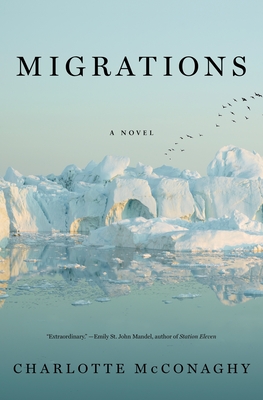
Migrations, by Charlotte McConaghy****

My thanks go to Net Galley and Flatiron Books for the review copy. I alternated my digital copy with the audio version I found at Seattle Bibliocommons; the reader does a fine job, and so if you want this book, you can’t go wrong in terms of print versus sound.

This is either exactly the right time to read this book, or exactly the wrong time.

Franny Stone has never been happy staying in one place, and now, when the walls are about to close in on her, she decides that one final voyage is in order. The Artic terns are about to make one final migration, and she means to go with them. Posing as a marine biologist, she persuades a fishing crew to take her along; she has the data to follow the terns, and the terns are following the fish. It’s in everyone’s best interest to work together here, now that so many species are extinct and the fish are so scarce. Once in motion, however, few things go according to plan.

The setting is the future, at a time when humanity has depleted most of the world’s wildlife. It is bleak, bleak, bleak.

Much of the story revolves around Franny’s character, and since we know from the get-go that she doesn’t intend to return alive once this trip is done, there are two questions that keep me turning the pages. I want to know why she wants to die, and of course, whether she does. The reason for her morbid plans is spooled out to us in small bits; whether she dies at the end is something the reader must learn for herself.

As for me, I had huge expectations by the time I began reading, because this novel shot up to bestseller level almost overnight. Perhaps that’s why I felt a trifle let down when it was done. It’s a good story, but I wouldn’t call it one of the year’s finest. Certainly, there is moral gravitas behind it, and yet those most likely to read it are not climate change deniers. For me to have loved this story, I would have needed more hope and less utter despair. When a story starts sad and ends sad, the little places in which it is slightly less sad aren’t enough to bond me to the narrative.

On the other hand, I am just one reviewer. There are a whole lot of readers out there getting all the feels and loving them. I recommend this story to anyone looking for a catalyst for a good ugly cry.

Behind the Red Door, by Megan Collins**-***

I enjoyed Collins’s debut, The Winter Sister, and so when I was invited to read and review this second novel, I jumped on it. My thanks go to Net Galley and Atria Books for the review copy. This book is for sale now.

Have you ever had someone in your life that’s a hot mess and makes terrible decisions, one after another? This felt a little bit like that, at least during the periods when I believed the character; and I did, some of the time. But whereas The Winter Sister held together beautifully until the implausible ending—a common issue with mysteries and thrillers—this one is riddled with difficulties throughout.

Fern had a traumatic childhood. Her father used her to conduct cruel experiments, deliberately terrifying his daughter in a variety of ways so that he could write about her responses. Now she’s grown and gone, though not surprisingly plagued by serious mental health issues, but healing nonetheless, and he summons her home. He says he needs her. Against the advice of stable people in her adult life, Fern packs her bags and comes a-runnin’. Who knows? Maybe her daddy wants to say sorry; perhaps he is terminally ill and set on making amends.

Well, um, no.

Upon her return, three terrible things happen almost immediately. First of all, her father, Ted, has not changed a bit, and he only called her back because he’s moving and doesn’t have time to pack. He wants her to pack for his move. He doesn’t plan to help pack his own crap, and he doesn’t plan to pay her for her time. Plus, he still plays cruel tricks on her, just like bad old times.

On top of this, her best friend’s sadistic brother, Cooper, is still around, and he’s still not a real nice guy. She discovers this almost immediately firsthand.

And on a trip to the store, she runs across a book, a memoir written by Astrid Sullivan. Flash! Bang! She knows that face, doesn’t she? Did she know Astrid?  Now Astrid has been murdered, and Fern has been having dreams about her, which might be flashbacks. Has she buried memories of the murder? And…WHO would have DONE such a thing?  Nobody SHE knows would do a mean thing like that! Unless…naw.

Oh dear.

The story is told in alternate narratives, Fern’s and Astrid’s, courtesy of her memoir. This method does build a sense of dread, but it feels a little choppy in the telling.  In addition, I had difficulty believing the character’s motivation. I could see reflexively running home—I’ve known people that would do the same—but what I cannot understand is why, when she found out what Ted’s big emergency was, she didn’t toss her bag back in her car, say Buh-bye and good luck with the move, and hightail it home.

There’s a lot of extraneous business here; we have Fern’s mental health problems, and on top of it all, she’s pregnant. (Oh, good idea. A baby. What could possibly go wrong?)

I believe Collins has a great book in her, but this isn’t it. That’s okay; back to the drawing board. Life is long. But reader, as for you, I recommend you either pass this one up, or read it free or cheap.

The Split, by Sharon Bolton****

My first book by this author was The Craftsman, which came out in the fall of 2018. That story blew me away, and after that I made it a point to watch for new books by Bolton. Thanks go to Net Galley and St. Martin’s Press for the review copy. This book is for sale now.

The title is a double entendre: our protagonist, Felicity, is avoiding someone, and she is certain he’s found her. Since her field is glaciology, she decides to travel to Antarctica with an expedition. He’ll never find her there, and even if he should, he’d be at a distinct disadvantage to her. Those are her stomping grounds. Thus, she is about to split.

The catch, however, is that her superiors are uncertain she is mentally stable enough for this journey. She keeps missing time; there are whole blocks, an hour, an afternoon, a weekend, when she doesn’t recall where she was or what she is doing. She finds evidence that she has done things she does not remember doing. As we perch in her psychologist’s office, veritable flies on the wall observing her therapy sessions, it soon becomes clear what the issue is, or at least it did to me; and thus, the second meaning of the title.

One of the things I appreciate about this story is that there is no coy effort on Bolton’s part to deflect the reader’s awareness of what ails Felicity. I would have liked at some point to see or hear the correct name used; Felicity has a dissociative disorder. But this is a small quibble.

What I appreciate the very most is that Bolton doesn’t sensationalize this disorder, but sticks closely to the truth. Why not? The real thing is dramatic enough all by itself to keep our interest. And when I realized where we were headed with this I regretted, if just for a brief while, having signed on, because this topic cuts close to the bone for me. I have a close family member with this disorder, and hearing the voices of people that were, and yet were not, my relative’s voice is one of the most horrifying experiences of my life. After a few weeks of it, I had to pull back and ask to only be phoned by the dominant person in my relative’s body, the one that I, like the rest of the family, was acquainted with. And so, once I decided to continue reading this book, I listened closely for inaccuracies in its telling, using my relative as a baseline (a sample size of one, which I’ll admit is sketchy,) and I found none. Most readers won’t have this experience for comparison.

Although the mental condition is revealed, bit by bit, fairly early in the story, there are still surprises aplenty, particularly with regard to the stalker. The climax is a bit farfetched, but nevertheless this is a solid job, and Bolton gets big props from me for dealing with a difficult premise accurately and fairly.

I flipped back and forth between the printed review copy and the audio version I scooped from Seattle Bibliocommons. Both versions are well done and easy to follow, so you can’t go wrong. Recommended to those that love a good psychological thriller, and that have no triggers that might conflict with your enjoyment.