The Meth Lunches, by Kim Foster****

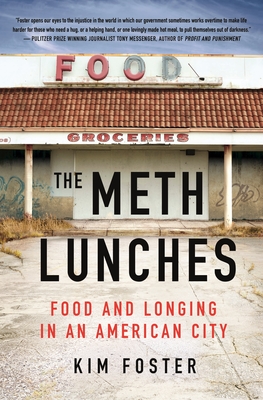
Kim Foster and her husband, David, create a food pantry in front of their house—and later, inside it—during the pandemic. It begins with the employment of one hungry handyman who’s also an addict, and from there, it mushrooms. This is her memoir of that time, and also a philosophical treatise on poverty and hunger in the United States.
My thanks go to Net Galley, RB Media, and St. Martin’s Press for the review copies. This book is for sale now.

When Foster’s family moves from New York to Las Vegas, one of the first thing she notices is the meth. It’s everywhere. Perhaps it is the milder weather; addicts in New York have to find a spot out of the weather during much of the year, but Vegas is in the desert, mild enough for the unhoused to sleep just about anywhere, warm enough that addicts don’t have to hide themselves away to get high.

The pandemic hits Vegas hard. So many people make their living from some aspect of the entertainment business, and for a while, it is a dead industry. And so, after hiring a man with an obvious dependency to do work on their property—work that he never completes—and hearing his story, the Fosters decide to convert the little free library in front of their home to a little free pantry. And from there, it mushrooms.

The pantry begins small, but Foster is a chef, and she can’t stand the notion of just putting out pre-packaged crap when she can cook food with fresh ingredients that will make others feel better. And as the book takes off, I momentarily regret taking this galley, because I generally hate stories that drop recipes into the middle of the plot. If I want cooking information, I’d rather go to a cookbook, or to a recipe website. And it was right there in the title, after all: The Meth Lunches. It’s pretty obvious from the get go that lunch is going to be juxtaposed with social issues.

But as the story continues, I don’t hate it after all. For one thing, this whole book is nonfiction. There’s no plot that is sidelined by a recipe. The whole point is that that Foster considers food, and the act of feeding others, to be a sort of therapy. She makes the point well.

Eventually, the scale of the operation becomes mind boggling. Multiple freezers to hold meat; trucks that deliver food. The pantry begins as an out-of-pocket gift from the Fosters to the down and out of Las Vegas, occasionally supplemented via Venmo from friends, when they are able to help. Inevitably, the pantry finds its way into the local media, and networks form with other food banks and nonprofits.

In between all of this, Foster develops relationships with some of the people that come by. She and her husband are foster parents—ironic, given their name, right? And we hear not only about what the children they house and love have experienced, but also about the children’s biological families. Because although it’s officially discouraged, Kim strongly feels that the children heal best if their biological parents are in their lives in whatever limited way is possible. So before we know it, she is deeply involved with some horribly dysfunctional adults as well. And it is the stories she tells about interacting with them and the children, two of whom she and David eventually adopt, that make this story so riveting.

At the outset, she intends for the pantry to be a resource for local families that have homes and kitchens, but whose finances have taken a huge hit due to the pandemic. The very poor already have resources, she reasons. But of course, the homeless find her, and she doesn’t turn them away.

And here is the rub, the only aspect of this book that I dislike. She tells us that one unhoused person in four is mentally ill, and she believes that this official figure is low, at least in Las Vegas. And then she talks about those with addiction issues.

But what she never gets around to discussing at all—unless she does it so briefly that I miss it—is the unhoused people that are not chemically dependent on anything, whose mental health is stable, but who don’t have a permanent residence because they straight-up ran out of money. To hear her tell it, you’d think they don’t exist, and you know that’s not so. So many American families live from paycheck to paycheck, even when the economy is said to be booming. And I feel that she has left these people without faces or voices. And that, in turn, perpetuates a stereotype, the one that suggests that everyone that is homeless is there because they’re either crazy or junkies or both. I use the offensive terms intentionally, because that’s how the stereotype works. 

And the stereotype in turn begets a lie, the insinuation that nobody has to be unhoused. Don’t use drugs. Get mental health care. Get over yourself. And whereas I can see that Foster doesn’t intend to promote such thinking, and in fact takes a hard line over poverty existing at all in such a wealthy nation, when she doesn’t give space to the many, many individuals and families that are out there because the wage earner was laid off, or because they were just squeaking by but then the rent increased, it does distort her overall picture. I don’t come away from this book thinking that most of the homeless are not using meth or any other dangerous, life-altering street drugs, even though it’s true.

Nevertheless, this is a poignant, stirring tale that won’t be told by anyone else, because it can’t be, and bearing in mind the caveats above, I recommend it to you, both as audio and print.

Scattershot, by Bernie Taupin*****

I was a teenager when Elton John’s music exploded onto the radio, and to this day, there are certain songs that I play in celebration, or when I need my mood lifted. For decades it lay in the back of my mind, wondering what was behind these lyrics or those. Never one to delve into the lives of celebrities all that often—a few shallow attempts convinced me that usually the most interesting thing about them is their work, which I’ve seen or heard already—I nevertheless filed it away, to find out about those lyrics one day.

Retirement came, and so with extra time to spare, I finally learned that Elton didn’t write those words. None of them! It was his writing partner, Bernie Taupin. I found this out only after reading an Elton John bio. I searched for one of Bernie’s and found empty air instead. When I saw this galley, I had to read it, and I am so glad that I did. Big thanks go to Net Galley and Hachette Books for the review copy; this book is for sale now.

Sometimes a public figure will publish a memoir, but either openly or secretly, they require a ghost writer, and in the cases of some others, we may wish that they had. Taupin, however, is a writer, and boy does it show! His eloquence is undeniable, hilarious in some places, moving in others. His judgment is unerring, knowing when to be brief and when to use detail, and his candor is refreshing as well. The result, for me, is that when I’ve finished reading, instead of the usual five or six quotes that I’ve highlighted so that I can select one or two to use later, I instead find that I’ve highlighted eighty-eight, and some of these are multiple pages in length! I’ve spent an hour trying to choose which one to share, and it’s hard because they’re all brilliant. Since choosing just one is impossible, let’s just go with the first, which is near the beginning of the book, the beginning of the Bernie and Reg (Elton, later) show. The chapter begins:

“Sheila hated my coat. I can’t say I blame her. It hung on a hook on the back of our bedroom door like a Neanderthal artifact from the Natural History Museum…when it rained, which was often, it smelled like an uncured yak hide. Afghan coats were in style, as were kaftan jackets, three button tees, and velvet pants. I’m positive we didn’t succumb to the latter, but as for everything else, my new best friend and I did our very utmost to look the part…Sheila was Reg’s mother.”

Born in a tiny, isolated hamlet into the very bottommost scrapings of the working class, Bernie knew from an early age that he wanted out. He loved his family, and later, when money came his way, he took good care of his parents, but he never wanted to live in that place again, and became Californian down to the marrow of his bones the instant he landed in Los Angeles.

Taupin doesn’t hold much back, that’s for sure. The most essential ingredients of a top notch autobiography are that the person has lived an interesting life; knows how to write about it; and is willing to talk about just about every aspect of it. Taupin gets top marks in all three areas. Early on, I became concerned about his attitude toward women, given that the first we learn of his having married is when he makes a side reference to his first marriage dissolving, and I thought, Seriously? You tell us all of the everything, but don’t even mention your marriage? Small wonder it didn’t take. I maintain that concern through two more marriages that get little ink; but then we reach his current, and most likely permanent union, and everything changes and I feel much better.

Taupin has stories about just about every celebrity on the planet, and he does talk about the inspirations for his lyrics. I would have finished this book much sooner, but the greatest joy of reading a rock and roll musician’s memoir is reaching back to listen to the songs whose lyrics he scribed, as well as the many musical influences that shaped him. (Country western, I kid you not!) This book became such a prominent part of my day that my family was leery of turning up during the lunch hour, because I had passages to read aloud. And yet they had to admit that many of them were pretty damn good.

This book is highly recommended to all that love rock music, Elton John, and also to those that just love a resonant, well written memoir.

The Forgotten Girls, by Monica Potts***

My thanks go to Net Galley and Random House for inviting me to read and review The Forgotten Girls, by Monica Potts. I generally enjoy reading books that focus on the working class, and so I thought this would be a good fit. And it might have been, had it been better written.

In broad contours, it’s a memoir that examines the lives of Potts and her best friend, Darci, both of whom grow up in a tiny, isolated town in the Ozark Mountains. The community is long on religion and red hats, and short on jobs, opportunity, ambition, and encouragement for girls to make something of themselves. Nevertheless, Monica, whose mother has raised her with the expectation that she complete her high school education, go to college, and then live somewhere else where there are more possibilities, has done all of those things, while Darci, who is every bit as talented and has just as much potential, is raised by a dithering mother that lets her do whatever she chooses because she dislikes conflict, and who has no expectation that her daughter will make a better life for herself, since she herself did not.

Okay.

Potts wonders why she made it out of there and Darci didn’t, and yet I’m not seeing the mystery, nor anything that’s all that different from what’s happening all over the country. And indeed, part of the time, Potts discusses this fact, that it is happening in many places that lack resources and that don’t prioritize education. And so, sometimes the story seems to be a sociological study that uses Monica and Darci as examples, and at other times there is so much anguished self-flagellation that I find myself wondering why she thinks the public needs to hear about her friend’s failure to thrive, and whether this isn’t mostly therapeutic writing for the author’s own benefit.

In other words, the book seems like a lengthy treatise in search of a thesis. We wander in and out of both girls’ lives, with a good deal of attention paid to the death of Potts’s sister, but there’s no real direction or clear purpose that I can find.

In the back of my mind, I can hear choruses of other readers asking whether this situation is considered special because it’s about white girls. Nobody makes a fuss when girls in rural areas that are Black or of Latinx heritage fall through the cracks; hell, it’s been happening for more than a hundred years.

Many other reviewers seem to find merit here, but I confess I don’t see much. If you choose to read this one, I suggest getting it free or cheap.

Bad Mormon, by Heather Gay***

I was in the mood for a celebrity wallow and that’s what I got. I have never watched Gay on any reality TV program, but was drawn by the book’s sassy title. I checked out the audio version of this memoir from Seattle Bibliocommons and listened to it in the evenings when I was watering my plants.

I had a bit of an anti-Mormon bias going into this thing, having spent a somewhat traumatic freshman semester at BYU, the Mormon’s flagship college, several decades ago. I was a squeaky clean kid with several Mormon friends, and I thought I’d fit right in. I didn’t, and the system reeked of superficiality, rewarded passivity for the girls, and I saw hypocrisy and double standards; it grated on me. I couldn’t wait to get out of there, even though I had initially been desperate to live anywhere in the world other than home. So I smiled when I saw this memoir, and thought okaaay! Let’s hear it.

By the time Gay was finished, I was a little less anti-Mormon than when she began. What can I say? Perhaps I was born contrary. But to kick over the traces of the faith and culture in which you have been raised, there should be a good reason, right? Maybe you’ve found disparities and contradictions within the doctrine, or decided that a system that endorsed racism and sexism was not okay, or as a woman, you longed for a professional career that required brains and didn’t involve staying home all day. A good reason.

But for Gay, she changed, and yet she didn’t. She wanted more control of her own life, and there, I sympathize. But ultimately what she really wanted to do was develop a business in which she sold women booty-shot photographs of themselves and peddled a product that allowed women to do their own Botox injections; because, she asks, what could possibly be more important than your physical appearance? And I said, Yup. Sounds plenty Mormon to me.

Other things rubbed me the wrong way, too. Here’s one: while she is being filmed for the Real Housewives TV program, she realizes that she has to formally break with the Church, which in turn means pulling the rug out from under her three daughters. Telling them about this is something to be done privately, with sensitivity and care, right? Well, no. She does it while she’s being filmed, so it will turn up in a zillion living rooms all over America, including those of their extended family and the girls’ classmates. She peppers her narrative with quotes from the Book of Mormon–which she doesn’t cite; is she being ironic, or running on automatic pilot?

I just can’t.

On the other hand, what does one expect from a book like this? There are a few good laughs, and lots of cliches. And I learned what goes on in a temple ceremony; spoiler alert, it’s dull.

For those that are interested, I advocate for getting this book free or cheap. Don’t pony up the full cover price.

Biting the Hand, by Julia Lee****

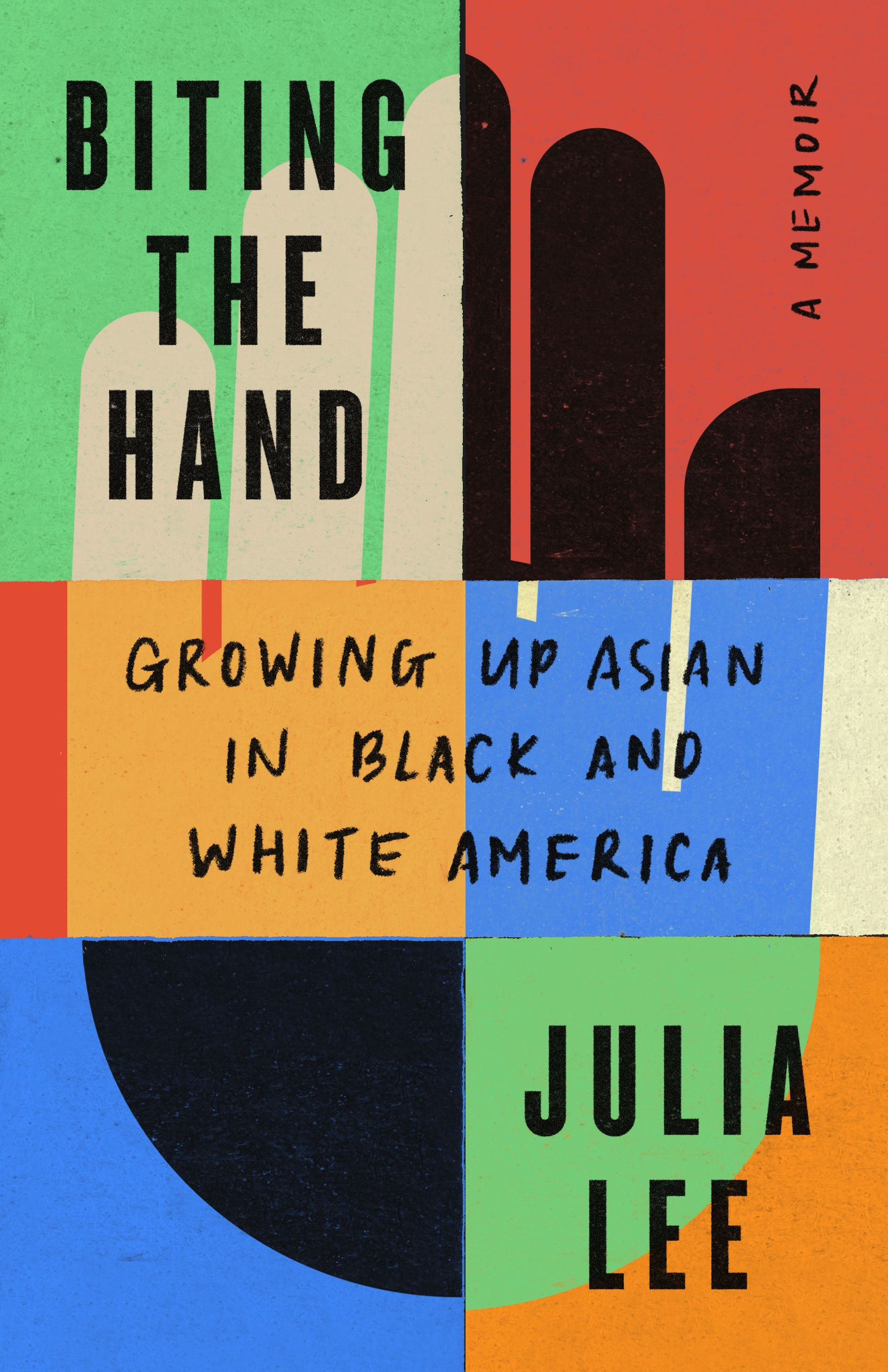
Julia Lee is not amused, and she’s decided to say the things nobody else is saying. In this deeply analytical, provocative memoir, she tells us about her own experiences growing up, and the issues faced by Asian immigrants and Asian Americans in the United States, where “we are critical to the pyramid scheme of the American Dream.”

My thanks go to Net Galley, Henry Holt Publishers, and Macmillan Audio for the review copies. This book is for sale now.

In some ways, I feel as though I am reading someone else’s mail as I read this, because it is clearly intended for an audience of people of color. However, I did read it, and I’m going to review it.

When the discussion of race in the U.S. comes about, it is, as Lee states, almost always a conversation about Black people and Caucasians. Those that don’t fit into either group are sidelined. Perhaps more harmful is the way that people of Asian descent are presumed to be sympathetic to the status quo. Ever since a major news periodical dubbed Asians as “the model minority” back in the early 1960s, expectations and assumptions have leaned in that direction. And the roots of this division—Black versus Asian—make this a particularly thorny assumption to untangle. After all, a large percentage of African-Americans can trace their lineage to slavery; their ancestors weren’t born in the States, nor did they choose to come here, but were kidnapped and brought by force. Angry? You bet! But Asian immigrants came of their own accord, oftentimes fleeing untenable circumstances in their countries of origin. And so, their children, and those that have come after, have largely been indoctrinated to be appreciative. If things don’t go well, they tell them, then we must work harder!

This Caucasian reviewer comes to you without the Asian background, appearance, or experience that Lee speaks of; yet I live in a city that has one of the largest Asian populations in the U.S., and am married to an Asian immigrant, and parent to a child that is half-Japanese. So many of the stories—strangers that ask where you’re from, and won’t accept the truth of “California,” where Lee was born, or “Seattle,” my daughter’s hometown, are familiar ones.

Lee is fed up with the mainstream news stories that endeavor to pit Asian and Black people against each other. Her parents were small business owners in a mostly Black part of Los Angeles during the riots of 1992, and her experiences inform her conclusion, that there must be solidarity between all people of color in order to successfully fight for significant change.

The one bone I have to pick is the casual manner in which she dismisses the question of social class as a key factor. Her very brief note about this is that it’s a tomato and to-mah-to issue, not worth much discussion, because most people of color are working class. This is simply untrue, and it enforces a stereotype of Black people as being mostly poor and dispossessed, when in actuality, eighty percent of Black people in the US live above the poverty line. There are African-Americans that have far more money than I will ever see; some of the many Asian groups have a higher median income than Caucasians. So yes, social class is a huge factor here, one that Lee should examine more critically. There are working class Whites that can be allies; there are wealthy families of color that would shut down the struggle, given half a chance. The missing star in my rating reflects her failure to recognize this, and to offer concrete solutions to this problem.

The book’s title comes from Lee’s mentor at the otherwise very white-supremacist dominated Harvard—Jamaica Kinkaid. I actually gasped when I saw this. What a luminary she found to guide her!

Both the audio and print version of this book are equally readable, so go with whatever you usually prefer.

This is a fine resource for those seeking to examine Asian and Asian-American racial dynamics. Read it critically, but do read it. There’s a lot here that has needed to be said for a long, long time.

The Answer Is, by Alex Trebek*****

I first sought to read this book when its author was still alive. I couldn’t get the galley, and so I obtained a copy of the audiobook from Seattle Bibliocommons, by which time Trebek had left us.

It’s a curious thing, the attachment so many of his viewers, myself included, felt toward him. He was a game show host. There are other game shows that have longstanding hosts, but when they die—if they haven’t already—it will register as nothing more than a footnote, a handy answer in Trivial Pursuit. But somehow, with his polished yet soothing demeanor, Trebek found his way into our hearts. Go know.

The audio is read alternately by Trebek and by Ken Jennings, a record-breaking champion that found a measure of fame himself. It works nicely. Here are the things that surprised me. First, Alex’s family lived in a small town in Canada near Ottawa. They struggled financially, and so in order to pursue higher education, Alex had to have a scholarship. He got one, but while enrolled, he got into a power battle with a particularly hated teacher. Alex was expelled. That was a good school, though, in spite of the man Trebek so hated (and about whom he never changed his mind!) In the end, he and his father returned to the school, met with the administrator, and begged. A more sympathetic teacher/mentor agreed to be in charge of young Alex, and he was able to go back and complete his degree.

His career started in radio, working as a disc jockey. He had a love of classical music, and found his way to the Canadian Broadcast Corporation. Later, he was invited to audition for a game show in the States. So much more money! From there he hosted quite a number of game shows, finally landing his berth in Jeopardy in 1984. Later on he briefly considered trying to move into acting, but he came to know some actors that worked on the same set where Jeopardy was filmed, and he soon found out that they were making the same money as he was or less, but he only worked for a couple hours each day, home in plenty of time to eat dinner with his family and pursue hobbies and whatnot, whereas the actors were keeping grueling schedules. At that point, he decided he liked it just fine right where he was.

In parting, he reminded his listeners that everybody dies, and he is in his nineties. He’s had a good life. It’s time to go. I found this tremendously graceful, because pancreatic cancer has a reputation for being one of the most painful forms of the disease. But maybe that was Trebek’s magic:  always putting the other person at ease.

Highly recommended.

Elvis and Me, by Priscilla Presley****

Priscilla Presley is the ex-wife of the king of Rock and Roll. I was a teenager when he died, and neither I nor most of my peers were fans; in the event his name did come up, we’d invariably ask, “Wait. Do you mean young hot Elvis, or old pudgy Elvis?” But I do love a good memoir, and those written by or about musicians are high on my list. My thanks go to Net Galley and Macmillan Audio for the review copy. This audio version of the author’s 1985 memoir is for sale now.

The relationship between Priscilla and Elvis took place in a completely different time, with completely different sexual mores and assumptions. That said, this was still a truly messed up pairing. Today, Elvis would probably be considered a predator, but within the context of the American South in the 1950s and early 1960s, he was regarded as a romantic, and women threw themselves at his feet. A quick online peek at old film and television clippings says it all.

Priscilla grew up in a strict but loving household. Her stepfather, the only father she knew, since her own died when she was an infant, was a military man, and so the family moved often. It was while they were stationed in Germany that one of Elvis’s employees saw Priscilla and invited her to meet with Elvis, who was doing his own tour of duty.

I have to feel for the bind her parents were in. On the one hand, she was just fourteen years old, and Presley was twenty-four, a grown man. On the other hand, if they refused to let her go, she would never have forgiven them; this was an invitation that literally millions of girls yearned for. Seeking a happy medium, her stepdad set boundaries: they were to be chaperoned, never alone together, and he wanted her home at a certain time. He groused about the fact that someone other than Elvis would be transporting her, but the reason was a legitimate one: Elvis could not drive himself anywhere without the car being mobbed. It was genuinely unsafe.

Rather than being the single event that the family anticipated, Elvis made their visits regular ones; when her parents balked, Elvis spoke to them personally, turning all of his charismatic charm on them, and telling them everything they wanted to hear. Most of it was untrue, of course, but the one thing he adhered to was not having sexual intercourse. During this time period, the Madonna-Whore dichotomy was alive and well, and any girl or woman known to have sex outside of marriage was likely to be ostracized by former friends and in some cases, family. It’s hard to imagine now, but at that time, no birth control pill had been invented, and a pregnancy outside of marriage was likely to ruin a young woman’s entire life.

Priscilla reads this memoir to us herself, and that makes it much more fun to hear. As we age our faces and our bodies change a lot, but our speaking voices change very little. Remembering some of the silly moments from that time, the author lets out a brief, girlish giggle, and it’s almost impossible to believe that she is now a grandmother.

Priscilla acknowledges that this was a monstrously unequal relationship. Elvis dictated whom she could talk to, what she wore, and sometimes even what room in the house she was supposed to be in. At one point, when he is going to be touring for months on end and she will be left at home with his grandmother, she goes out and gets a job. She’s so proud of herself. He makes her quit immediately. When he phones from the road, she had by God better be there. Priscilla compares this to Pygmalion. He has all the power, and she is in his thrall before she has even had a chance to grow up.

I have read two other Elvis biographies, and as dreadful as all of this sounds, the other authors were less gentle. In fact, this is part of Priscilla’s stated reason for deciding to tell her own story.

There are advantages to reading this particular biography. The official version of events is often what is published, but Priscilla is positioned to know the real story, more often than not. For example: when Elvis is drafted, the official story is that, although stars of his caliber are often offered soft assignments that involve singing to the troops, or making inspirational training films, Elvis insisted on doing the same job as every other American man.  On the other hand, Priscilla states that this is all his manager’s doing, because it will make Elvis appear noble. Enough new songs were taped in advance for there to be regular new releases on the radio throughout his tour of duty; toward the end, Elvis feigns illness because he’d prefer to be in the hospital being swarmed by nurses than marching around and getting dirty.

Her memory of Elvis, despite everything he put her through, is mostly a tender one. The spiral that led to his death, his issues with mental health, back before much was known, coupled with the immense number of strong prescription drugs he used to wake up in the morning and go to sleep at night—or to NOT go to sleep at all, and just stay up, night after night—set him up for relationships with unscrupulous characters, and nobody could rein him in, because he was the King.

Recommended to those that like vintage rock music or well-written memoirs of famous musicians.

Liberating Lomie, by Saloma Miller Furlong*****

Saloma Miller Furlong is the author of two memoirs that focus on her decision to leave the Amish faith and community; this is her third. I received a copy for review purposes from the author; this book is for sale now.

Furlong hasn’t had the typical Amish childhood. In her earlier works, she explains that her father was unable to function normally; given to sudden, inexplicable rages, he was a frightening man when he was angry, and he was angry often. Sometimes his rages occurred at predictable times; other times, they came from nowhere. He was unable to do the necessary work to support the family, as is usual in Amish households, and Saloma’s mother, siblings, and Saloma herself had to scramble to pick up the slack. These things are described in Why I Left the Amish and Bonnet Strings. Her experience is also featured in two PBS Experience films, “The Amish,” and “The Amish Shunned.” These documentaries are available free of cost online.

None of Saloma’s books provides light reading; her experience is a brutal one, her childhood traumatic. She is assaulted numerous times, and some of these involve sexual assaults. She tells her mother, who does nothing to protect her. And so, if you are looking for a book that details the typical Amish life, its cultural and religious practices, what technology is acceptable and what is forbidden, and so forth, this is probably not the book you’re looking for, although the two documentaries mentioned above will provide a good overview. Instead, her books demonstrate what happens when an Amish household or some of its members are in crisis.

The extremity of her trauma is glaringly obvious by the fact that her first two memoirs completely overlook her mother’s own brutality towards Saloma, as well as her complicity in assaults by Saloma’s father and older brother. For more than fifty years, this author buried this part of her own trauma, the betrayal she experienced by the person most responsible for her protection as a child. Only recently has she permitted herself to acknowledge it within her own mind, let alone write about it. In the email she sent me requesting that I read and review this new memoir, she told me that she wishes there were a way to recall every single copy of that first memoir, because it omits so much. But I believe one can also read it, and for that matter, all three of these books, with the understanding that we learn as much by what is not said, as by what is.

Saloma’s decision to leave home, to abandon the culture that is all she’s ever known, is driven by two factors. The first and greatest, of course, is self-preservation, the need to find physical safety. But another strong motivator is intellectual inquiry. Amish girls do not attend school after grade 8. This isn’t a general rule; it’s an absolute one. In rare cases an exception may be made for a young man, if his course of study will ultimately benefit the community, but at the end of eighth grade, girls are done. Informal study and reading are also nearly impossible. Amish homes contain the Bible and essential Amish teachings; novels, art books, even resource materials have no place there. An Amish family member that is curled up with a book or newspaper is a slacker at best, using time that could instead be used to benefit the family. At worst, it is a sign of moral corruption, reading worldly content that is not necessary and may even be regarded as evil. No, Saloma couldn’t get away with such things; she once purchased a magazine subscription of the tamest variety, and that was allowed, though it was seen as strange.

Sometimes we know a book is good because of the thinking it inspires after we finish the final page. So it is for me here. I find myself wondering why there aren’t more Amish youngsters that are unable to turn away from the written word. Surely there are other bright, intellectually curious boys and girls that chafe at being forcibly wrenched from their education? Initially I assumed, as many non-Amish do, that most Amish youth might slip through the open door represented by Rumspringa, hit the road, and never look back, but I learned that this isn’t true. The overwhelming majority of Amish teens remain Amish all of their lives, and the majority that do leave, return home later and stay put. And so I wonder; have they simply bred for passivity? It’s a conundrum.

I am initially surprised by Furlong’s decision to use the same book cover here that she used on her first, but I believe it may have been done with an eye toward replacing the old memoir with this new one.

As for the writing quality here, I like the quality of her analysis, and so for those that enjoy a memoir with depth, I recommend this book to you.

Dirtbag, Massachusetts: A Confessional, by Isaac Fitzgerald***-****

I enjoy a good memoir, and so I was all in when I saw this singular work; my thanks go to Bloomsbury and Net Galley for the review copy. It’s by “the beloved founding editor of Buzzfeed Books,” but somehow, I either missed that part or forgot about it, so I read it and assessed it as if he were just some random guy, and ultimately, that’s probably the fairest way to do so anyway. This book is for sale now.

Fitzgerald has seen and done just about everything. His family life growing up is dreadful, and he is delighted to bail out of the screaming, wretched mess called home in order to attend boarding school. He is the scholarship kid, but he benefits plenty from the largesse of his classmates. Post education, he takes himself to San Francisco, with an entire continent stretching between himself and his family. Upon arrival, he continues his favorite pastime, drinking, which he began doing with his older brother when he was just twelve. His parents didn’t do it, so he figured it might be a good choice.

The promotional blurb says that this is the story of the author’s “search for a more expansive vision of masculinity.” Perhaps this is why I find it so hard to relate to. There are moments, though. A huge chunk of the first half in particular describes his affinity for bars, which he identifies as his safe spaces. My notes from the start of this segment say “Oh boy, I always wanted to read yet another alcoholic memoir.” Soon afterward, though, he says, as if reading my mind, that if we expect him to discuss the way he quit drinking, we’ll be in for a long wait, because he still drinks, though not nearly as much. That much was good for a chuckle. Then there’s another segment about his period with the porn industry. I confess I straight-up skimmed some of that, although again, there’s a moment, when he talks about the importance of consent, and how the porn industry, in his experience, is more careful and respectful of this boundary than anyone else he’s encountered.

The book is billed as being humorous, but this is a massive overstatement. Most of the content is dead serious. But then again—yes, you guessed it. There are moments.

What takes me by surprise, and happily so, is the message that he’s spent the whole book building toward, and I never see it coming until we’re there. I highlighted it in case I wanted to use it as a quote here, but that would be an epic spoiler. You didn’t know that memoirs can have spoilers? Oh yes. They can. And when I see this one, my disgruntlement fades and I am once again a perfectly gruntled reader and reviewer.

One aspect that I appreciate, and particularly appreciated during the rougher patches, is that the brief essays that, strung together, make up the memoir, make very short chapters, and they’re clearly marked. This is a terrific bedtime book, because I am able to find a reasonable stopping place when I need to turn out the light (or, as it happens, turn off my Kindle.)

If you’ve read this review and are interested, then I recommend it to you. I anticipate that men will enjoy it more than women.

Did Ye Hear Mammy Died, by Seamas O’Reilly*****

Seamas O’Reilly is an Irish journalist; as far as I can tell, this is his first book. He was just five years old, one of the youngest of eleven children, when cancer claimed his mother, leaving his father—an extraordinary man, if even half of Seamas tells us is accurate—to raise them all. This is their story. My thanks go to Net Galley; Little, Brown and Company; and Fleet Audio for the review copies. This memoir is for sale now.

Of all the ways in which one can write about the death of a parent, this is one that I never considered. O’Reilly describes his family, his mother’s demise and the impact it has on his family and the community; and the subsequent years of his own and his family members’ lives, and he is hysterically funny. How he manages to achieve this without breaching the boundaries of good taste and respect is nothing short of pure alchemy. Somehow he finds just the right combination of irreverent humor, poignant remembrance, and affection, and it’s pitch perfect.

His finest bits are assigned to his father. I’m giving you just one example, because I want you to experience everything else in context. This isn’t his most amusing anecdote, but it’s a worthy sample of his voice. After heaping praise on him for other things, he tells us:

“He is alarmingly cocky when it comes to his skill at killing mice, a species he hates with a malevolent, blackhearted glee. It’s an odd facet of his character; a man regarded by his friends as one of the kindest, gentlest humans on earth, and by mice as Josef Stalin. He takes particular joy in improvising weapons for the purpose, and has killed rodents with a shoe, a book, and at least one bottle of holy water shaped like the Virgin Mary. He famously dispatched one with a single throw of a portable phone, without even getting out of bed. I know this because he woke us so we could inspect the furry smudge on his bedroom wall…”

I have both the audiobook and the DRC, and rather than alternate between the two, or listening to the audio and then skimming the DRC for quotations and to answer any of my own questions, which is my usual method, I chose to read them both separately, because this story is good enough to read twice, a thing I seldom do these days. Whereas I usually think that having the author read his own audio is ideal, since the author himself knows exactly where to place emphasis and deliver the piece the way it is intended, this time I am ambivalent. O’Reilly speaks faster than any audio reader I’ve yet heard, and he doesn’t vary his pitch much, and as a result, there are some funny bits that I miss the first time through; I am doubly glad to have it in print also. As the audio version progresses, I grow more accustomed to his speaking style, and I miss less than I did at the outset. Nevertheless, if the reader has a choice and doesn’t greatly prefer audiobooks, I recommend print over audio. Ideally, I suggest doing as I did and acquiring both versions.

There’s no doubt in my mind that this will be among the most memorable and enjoyable books published in 2022. Highly recommended.