
“When a star fades, it takes a long time for us to realize, as long as it takes for the last of its light to reach Earth…When a brain fades it takes a long time for the body to realize.”
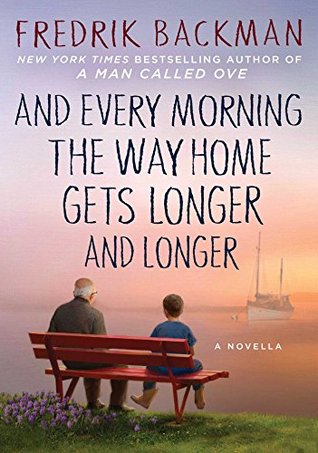
Frederik Backman’s new novella provides us with a philosophical yet poignant glimpse of an elderly man trying to hang onto his memories, and the love of those that must say goodbye to him inch by inch. I received my DRC from Net Galley and Random House Alibi in exchange for this honest review. This novella will be published November 1, 2016.
They say that each generation corrects for the one before it, rendering us more like our grandparents sometimes than our parents themselves. So it is with Noah and Grandpa. Grandpa calls his grandson “Noahnoah”, because he likes his grandson’s name twice as much as anyone else’s. Sometimes Noah’s father Ted comes to see Grandpa, and when he mentions Noah, Grandpa doesn’t know who that is. Sometimes Grandpa knows everyone; sometimes he doesn’t. Sometimes he mistakes one of them for the other.
But Grandpa—who has no other name in this book, having taken on the generic persona that Western society tends to give us as we grow very old—shares a special bond with his grandson, and it is his grandson that comes to him, still, with questions about life and the universe.
Grandma is no longer living, but theirs was a happy marriage despite their dispute about God and the afterlife. Noah says to his grandfather, “’Grandma believed in God, but you don’t. Do you still get to go to Heaven if you die?’”
Grandpa tells him, “’Only if I’m wrong.’”
The years pass. As usual, Grandpa wants to know about school, but he has forgotten that Noahnoah isn’t a student anymore; he’s become the teacher. On the other hand, school is better than ever now. And so it goes.
This story is brief, and I read it in just a couple of sittings. Despite the cover art, it isn’t necessarily a book for children. It’s a wonderful story in that it shows us a gentle way of dealing with aging—which can be so hard to do, particularly if Alzheimer’s makes the elderly sufferer angry with no reason—and it also helps us learn to let go. For some, this might be a good grief story. For others that had to let go without being able to be with the beloved family member much in their final years, it might be painful, because the grandson and father both spend time with this man as he declines.
I can see ways in which this story might help a YA reader with not only a strong literacy level, but the ability to think abstractly, cope with Alzheimer’s or another form of dementia in an elderly relative that means a lot to them, but I would advise the parent or guardian to read it first, and then decide. There’s no sex, no profanity; just pleasure, love, joy, and aching sorrow.
 Fannie Flagg is legendary, and rightly so. In fact, at one point in my reading of this DRC, I reflected that someone with her power to move people has power indeed; how fortunate that she uses her gift to benefit the rest of us. I don’t know about you, but I am ready to read something that provides a level of reassurance that all has not gone sour in this world, and that everything passes, sooner or later. I was fortunate to read this free and in advance thanks to Random House and Net Galley, but it’s one of the very few books for which I’d have paid full freight if it came down to it. It hits the shelves November 29 and is available for pre-order right now.
 EL Doctorow died last year, and the literary world—well, at least the English-speaking part of it—mourned. I know I did. He was one of the finest writers ever to grace the planet, and so when I spotted this collection of stories, even though I understood that I had probably read most or all of them already I snapped it up. Thanks go to Net Galley and Random House for the DRC, which I received free in exchange for this honest review. The collection will be available to the public November 1.
 “Is it worth being able to say what you need to say, if it means you land in prison?”
 Gwendolyn is 19 years old when she marries Laurence Hooper, the owner of a tea plantation in Ceylon, an island nation south of India now named Sri Lanka. Jeffries provides a compelling, sometimes painful glimpse of the mores and assumptions of the heirs of the UK Empire at the outset of the peasants’ rebellion led by Ghandi. Though a few small glitches occasionally distract, this is a strong piece of fiction that fulfilled the writer’s mission admirably. Thank you to Net Galley and Random House-Crown Publishing for the DRC, which I received free in return for an honest review. The book is on sale today.
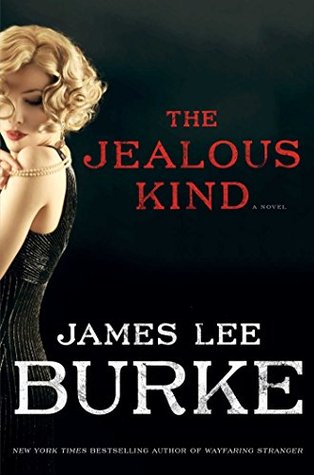 James Lee Burke is a legend, a venerable and highly respected writer known for his luminous prose and quirky characters. In this, his second work of historical fiction in a planned trilogy, he demonstrates that he can still work magic better than ever. I received this DRC from Net Galley and Simon and Schuster in exchange for an honest review, but I would have paid full freight if I had to, and I rarely say that about any book anymore.
 I was originally turned down for a DRC of this novel when I requested it last spring, and I took the unusual step of following up with Atria, more or less begging for it. I’ve been reviewing titles for Net Galley for two years and have received nearly 300 DRCs, so it is a sign of my interest level that I went to this extreme to read this one in advance in exchange for an honest review, and it’s a sign of decency and responsiveness that a representative from Atria Books invited me to review it after all. Although I am grateful , this five star review is not about gratitude, but a measure of the importance I attach to the issues it addresses and the skill with which the story is told.
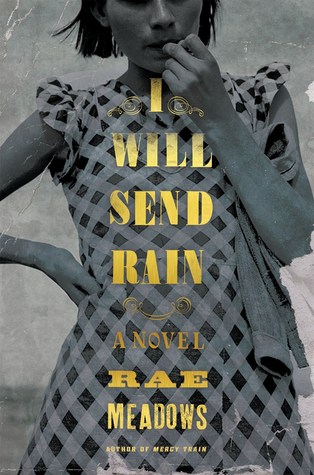 Annie Bell could have chosen to marry a well-to-do member of the gentry in her home town, a man with fine china and a full time kitchen servant. Young and buoyant, she chooses love instead, and moves to Oklahoma with Samuel Bell to start a brand new life on the free land that’s been provided. What could go wrong when two young people are strong and dedicated to one another? Oh, it’s an old, old story in so many ways, but Meadows makes it brand new. Thanks to Net Galley and Henry Holt Publishers, I read it free and in advance in exchange for this honest review. It will be available to the public August 9, 2016.
 And you thought Fifty Shades of Gray was controversial. Just remember that you heard it here first: if this novel has legs and gets around, it’s going to create a lot of noise. I could almost smell the book-burning bonfires as I read the last half. And lucky me, I read it free thanks to Net Galley and St. Martin’s Press, from whom I received a DRC in exchange for this honest review.
 And you thought Fifty Shades of Gray was controversial. Just remember that you heard it here first: if this novel has legs and gets around, it’s going to create a lot of noise. I could almost smell the book-burning bonfires as I read the last half. And lucky me, I read it free thanks to Net Galley and St. Martin’s Press, from whom I received a DRC in exchange for this honest review.
 Seattle Book Mama