
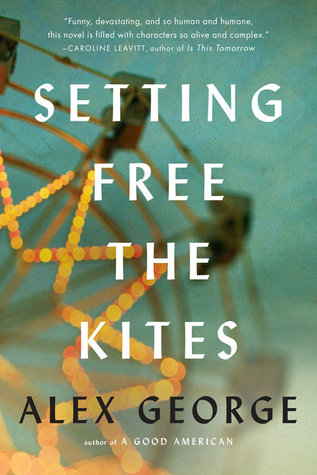
Setting Free the Kites, by Alex George*****

settingfreethekites“Hope is a curious thing. It emerges in the most unexpected places.”

Robert Carter is an introverted boy with few friends and loving but preoccupied parents. His life changes forever when he is befriended by a new kid at school. Nathan stands up for him when he is being assaulted by a bully, and a friendship is forged that will last for life. Thank you Net Galley and Penguin Putnam for the DRC, which I received in exchange for this honest review.

Our story is set in a small Maine town in 1976. Nathan’s parents are creative people, sculpting, writing, building one-of-a-kind kites, but tragedy strikes early in the story and Nathan’s mother retreats into herself, and is not available to her only child. Robert’s parents are fond of Nathan, who also befriends Robert’s terminally ill brother Liam, and soon Nathan has found a second home.

Most reviewers describe Setting Free the Kites as a tragic tale, and they’re right, but what few people mention is how many really funny scenes lie in between the somber stuff. George’s writing has tremendous voice, one that brings these adolescent boys to life as few others do. I actually laughed out loud more than once, and this not only makes this a more enjoyable read, but also underscores the tragedy, taking the reader through a whole wide range of emotions.

The genre crosses between adult and young adult fiction. If I were still teaching highly capable language arts students, I’d want half a dozen copies of this book to use in a reading circle; that said, the sexual content would also force me to send home permission slips, because conservative parents would otherwise rampage into the district office with torches, hot tar and feathers. However, I consider this an outstanding enough read that I’d jump through some hoops to use it.

In some ways, however, it is more suited to literate adults. George uses a high vocabulary and uses it well. It’s certainly not a story I’d recommend to someone whose mother tongue is not English, because there’s too much cultural nuance and subtlety for that audience, and likewise, most adolescents won’t benefit from such a novel.

There are a couple off odd extraneous reveals toward the end of the story that startled me, and that did nothing to enrich the story or develop its characters. However, the rest of the book is so outstanding that it’s a five star read regardless.

This book is available to the public February 21, 2017. Highly recommended to those that love great literary fiction.

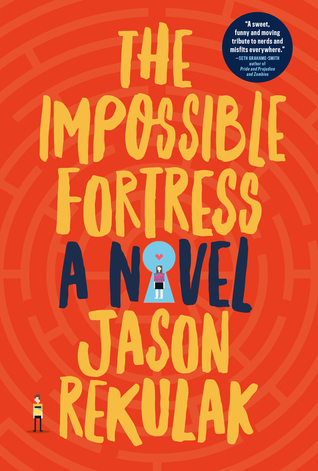
The Impossible Fortress, by Jason Rekulak*****

Happy Release Day! This exceptionally engaging YA title is available today, and you should read it.

seattlebookmama's avatarSeattle Book Mama

theimpossiblefortressThe Impossible Fortress has been generating a lot of buzz since last summer when the review copies came out, and rightfully so. It’s hard to believe this is a debut novel, because it’s smoothly designed and hugely original. It’s written with a deftly woven plot that never misses a step; engaging characters that are nearly corporeal, they are so well sculpted; and an utterly captivating voice that unspools the narrative. Best of all, it’s hilarious! I thank Net Galley and Simon and Schuster for my DRC, which I received in exchange for an honest review. This title comes out February 7, 2017.

When this reviewer retired from teaching, I buried myself in books I had long wanted to read, and I promised myself that I would never have to read another young adult novel. That promise to myself still holds true, but now and again I see a premise so…

View original post 663 more words

The Impossible Fortress, by Jason Rekulak*****

theimpossiblefortressThe Impossible Fortress has been generating a lot of buzz since last summer when the review copies came out, and rightfully so. It’s hard to believe this is a debut novel, because it’s smoothly designed and hugely original. It’s written with a deftly woven plot that never misses a step; engaging characters that are nearly corporeal, they are so well sculpted; and an utterly captivating voice that unspools the narrative. Best of all, it’s hilarious! I thank Net Galley and Simon and Schuster for my DRC, which I received in exchange for an honest review. This title comes out February 7, 2017.

When this reviewer retired from teaching, I buried myself in books I had long wanted to read, and I promised myself that I would never have to read another young adult novel. That promise to myself still holds true, but now and again I see a premise so tantalizing that I know I want to read it anyway; this was one of those times. It’s a book you can read in a weekend, and once you have it, you won’t want to put it down anyway.

First I’d like to reassure readers that are most comfortable in the liberal arts realm that the programming jokes here are very shallow, and you can easily read this without missing anything even if you aren’t a tech type. I wrinkled my brow at the chapter headings and called my spouse, a network engineer, in to see them. He told me it’s just the chapter numbers written in code. So for those of you that hyperventilate around complicated math and science, it’s okay. Breathe.

Moving on to the story itself, here’s the set-up: it’s 1987, and Vanna White, America’s girl next door who’s seen every weeknight on television’s Wheel of Fortune, has posed nude for Playboy, and no one under the age of 18 can buy that magazine. The only place it’s even for sale in our depressed rustbelt neighborhood is in Zelinsky’s shop, and the man is unhinged when it comes to kids in his store. He’s had problems with crime, and on top of that, he’s grieving his wife’s death, and right at this moment, he’s in the anger, anger, anger stage.

Our 15 year old protagonist is Billy, a ninth grader whose mother works long hours and can’t supervise him effectively. His two longtime friends are Alf and Clark. The threesome is determined to get that Playboy from Zelinsky’s store. Since they can’t buy it from him, and since it’s kept behind the counter which the owner watches feverishly during all store hours, they’re going to have to steal a copy when the store is closed. Sort of steal it. They’ll sneak in; leave money on the counter; then leave with their magazines. They’ll want three, of course, so that each can have his personal copy.

When his hormones aren’t in overdrive, Billy loves computers more than anything. He sneaks a programming manual inside his textbook during class time, because it’s what he wants to learn about. His mother is beside herself when she sees his grades—“You’re failing Rocks and Streams!”—but she has no idea what to do about it. The only thing she can take away that Billy really cares about is his computer, and she does it, telling him he can have it back once his grades are up.

As it happens, our store owner has a daughter that’s about the same age as Billy, and she has a computer too. Billy is better with computers than any of his public school classmates, but Mary, a student at St. Agatha, is brilliant. He talks to her initially as part of the scheme to get into the store at night and filch the magazine, but once he sees what she can do online, he is transfixed, and he spends more and more time in the back of Zelinsky’s store watching what Mary can do on her computer. He notes that his own technical finesse next to Mary’s is “like finger painting next to Picasso.” As the friendship between them develops, Billy is torn between Mary and computers, versus Alf, Clark, and the magazine. He tries to back out of the plan they’ve agreed upon because he doesn’t want to hurt Mary’s feelings, but complications emerge.

Although Rekulak does a fine job developing Billy, the best developed character in this story is unquestionably Mr. Zelinsky.  As to setting, I am impressed with how much minutiae is absolutely accurate here. But it’s not the character development, setting, or plot that drives this novel; it’s the voice, which is as authentic in adolescent reasoning , planning, and oh dear heaven, in its impulsiveness as anything I have ever seen.

Whether you are a teen, a parent, a teacher, or a reader that’s just looking for a good laugh, you’ll find it here. Highly recommended.

Turbo Twenty-Three, by Janet Evanovich**-***

turbotwentytI’ve been a big fan of the Stephanie Plum series since Evanovich launched it over twenty years ago.Twenty? Whoa now, that hardly seems possible. But the first book in the series landed a host of great-first-book awards in 1995, the year before my youngest child was born.  I haven’t missed a single book nor even read any of them out of sequence.
There was a point somewhere along the way when the series started to lose its zip and some of the new fuel the writer injected turned sour. Does anyone recall the bit where Stephanie’s sister moves home from out of state, and one of the sister’s daughters thinks she’s a horse? It was beyond stupid to my way of thinking, but the point is that our author pulled it all back around within the next couple of books and it was funnier and fresher than ever. The last in the series, Tricky Twenty-Two, was an absolute scream, and so although I rarely purchase a book for myself anymore, I plunk #23 onto my Christmas wish list without a moment’s hesitation. And when Christmas is done, I scurry off with my four much-longed-for new books—three of them mysteries– and prepare to feast.

So this is a crushing disappointment. Sad, sad, sad. It isn’t funny enough to actually laugh at even once, and there are aspects of it that actually offend. I consider this sort of odd, given that since her movie deal, Evanovich has actually sanitized a lot of the spicier aspects of her work. The language isn’t nearly as blue as it was when she was new at this thing and had little to lose; the sex isn’t as steamy; and all told, it seems as if her imagination has an agent of its own whispering into its ear, asking just exactly how much revenue she’s willing to risk losing if she pursues this, that, the other creative but risqué notion.

How is it possible then that for the first time in a career of over twenty years and nearly two dozen published mysteries in this series alone, this author has been so politically tone deaf?

As I read one scene involving Stephanie and Lula, a pairing that’s almost always good for a laugh, my face was in a tentative smile, the expression one wears when expecting something funny to happen any minute. And that’s the moment when Lula claims to be extra lucky when seeking employment, because she can check off three boxes; she’s Black, she’s female, and she’s large in size. These should just about ensure that she’ll be hired. And then she tops it off by allowing that the only better thing that could happen would be if she were in an altercation with a cop and got beaten up and landed on YouTube.

Once I see this, I’m not laughing, and now I’m not smiling anymore either. It’s time to put the book away, read something else, and come back later when my blood pressure has settled.

The story continues; it isn’t funny, but it also isn’t dull. My attention is held, and I’m still somewhat convinced that it’s just about to get funny. And that’s when Lula says she is going to make money online by pretending to wake up one day “feeling like I’m a dude” and go use the men’s restroom. She’ll go in, “have my positive experience”, capture it on film and get rich. And of course, there are trans people all over America getting filthy rich just by identifying with a different gender than the one assigned them by nature and their parents…right?

Not so much.

I do find two amusing parts in this story. The first is some understated business with Stephanie’s parents. It’s the only subtle humor she employs, and maybe that’s why it works so well. I love seeing her mom and dad respond to uncomfortable situations.

The second is an entirely unexpected yet believable twist on the whole Morelli-or-Ranger thing, which had begun to go stale. I won’t spoil it for you, because you may still want to read this book.

One other obvious twist is that the writing, which has always been accessible to a reader that’s made it part way through high school, has been dumbed-down considerably. I find myself distracted by the number of four and five word sentences; where’s the fluency? I check the vocabulary and recognize that she’s dialed it down to a fourth grade level. I’ve administered vocabulary tests to fourth and fifth graders, and I find myself having flashbacks of the sort a retired teacher doesn’t really need. What the hell, Janet? Are we marketing to the functionally semi-literate now?

Nevertheless, I’ll be reading #24 when it comes down the pike; but not until I can get it used or free. My wish list is now reserved for other things.

You Can Have a Dog When I’m Dead, by Paul Benedetti***-****

youcanhaveadogwhenThis is a collection of funny stories and brief essays. It’s geared for the Boomer generation, and is billed basically as bathroom reading. Thank you to Net Galley and Dundurn Press for the DRC, which I received in exchange for this honest review. I rate this book with 3.5 stars and round it upward; it will be available to the Canadian public –and presumably anyone anywhere that wants to buy it digitally—February 17, 2017.
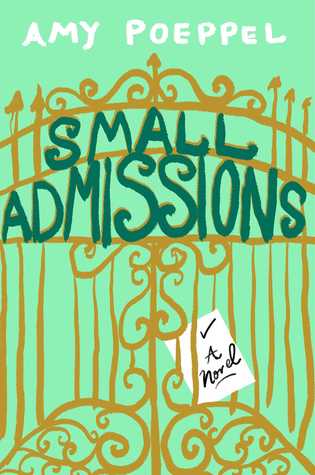
I confess I made an assumption when I saw the title. I was expecting jokes and essays dealing with man’s best friend; actually, I find very few stories related to dogs, but an unexpected number related to death. Of course, many of the essays are not humorous, but of a more reflective nature. This is all well and good, and the quality of the writing is worthy of such a sobering topic. But when I saw the book billed as being similar to the work of Dave Barry, I wasn’t anticipating reflections on my own mortality. I was expecting jokes.

That aside, there are indeed some very funny pieces here, and although I am on the borderline in terms of being in—or out—of the Boomer generation, a lot of the humor does resonate. I love seeing Benedetti try to explain a home phone to a young person:


“I should probably explain to anyone under thirty that a home phone is an actual device about the size of a toaster that remains in your house. The reason you cannot take it with you to the bar, to your class, and into the toilet, where I’m sure you’re receiving very important calls, is that it’s attached by wires directly to the wall in your house.”


I enjoy the piece on his garden, and about his elderly mother’s dance class.  I am disquieted to learn that every person, real or imagined, in any of these stories is assumed by the writer to be Caucasian.

I also find myself wondering why every story has to have booze in it somewhere. Wine, beer, whiskey, Bailey’s, more beer, more wine, gin, Kahlua…what’s up with this?

Should you pick up a copy for yourself? I suppose that depends upon what the purchase price looks like and how much time you spend at home. If it’s affordable and you are retired, you might like to have it. If the price tag is hefty, you may want to wait.

But I imagine Mr. Benedetti would prefer you to purchase it before you get that dog. Because…yeah.


Small Admissions, by Amy Poeppel*****

Happy release day! The holidays are over and your humor may be running dry and a little snarky by now. If so, this book is just what the doctor ordered…and it’s for sale right now.

seattlebookmama's avatarSeattle Book Mama

smalladmissionsI received an advance reader’s copy of this darkly amusing novel from Net Galley and Atria Books. It’s funny as hell, and even more amusing to teachers, school counselors, and others that have dealt with high maintenance parents and the aura of entitlement they carry with them. I rate this title 4.5 stars and round upward.  It comes out December 27, 2016, just in time to chase away your post-holiday depression.

I sat on this book for more than three months, which is a rare thing for me.  I kept starting it, not liking it, and deciding to set it aside and look again with fresh eyes later. Finally November came, and I realized the book was not going to change; I’d given my word to the publisher I’d review it; it was time to suck it up and get the job done. And this is a little ironic all…

View original post 408 more words

Best of 2016: Humor

I tried. I really did. The fact is, 2016 was a hilarious year, at least where new books are concerned. Each time I chose one, I felt terrible about the excellent titles I wasn’t choosing and that would win in a different, less competitive year. So here’s my #1 choice in this genre, but I also want to remind you of the other 5 star books that made me laugh out loud this year:

#1

TheFloodGirls

Enter a caption

The Flood Girls, by Richard Fifield*****

Also outstanding:

Best of 2016: Memoirs

IT’S THAT TIME OF YEAR, AND THIS YEAR SEATTLE BOOK MAMA WILL OFFER UP THE YEAR’S BEST, ONE GENRE PER DAY, CONCLUDING WITH THE OVERALL BEST OF THE YEAR. TODAY WE’RE LOOKING AT BEST MEMOIRS. THE YEAR’S BEST:

Best Memoir of 2016

Sometimes ordinary people write the most extraordinary memoirs; Hazzard’s is a case in point. If you haven’t read it, you’re missing a great read, and at times, very funny as well.

A Thousand Naked Strangers: A Paramedic’s Wild Ride to the Edge and Back by Kevin Hazzard *****

Honorable Mention:

Those that enjoy watching Carol Burnett will love this memoir, and those that don’t know who she is need to climb on YouTube and find out. Or click the video included in this review:

suchgoodcompany

In Such Good Company: Eleven Years of Laughter, Mayhem, and Fun in the Sandbox, by Carol Burnett****

Small Admissions, by Amy Poeppel*****

smalladmissionsI received an advance reader’s copy of this darkly amusing novel from Net Galley and Atria Books. It’s funny as hell, and even more amusing to teachers, school counselors, and others that have dealt with high maintenance parents and the aura of entitlement they carry with them. I rate this title 4.5 stars and round upward.  It comes out December 27, 2016, just in time to chase away your post-holiday depression.

I sat on this book for more than three months, which is a rare thing for me.  I kept starting it, not liking it, and deciding to set it aside and look again with fresh eyes later. Finally November came, and I realized the book was not going to change; I’d given my word to the publisher I’d review it; it was time to suck it up and get the job done. And this is a little ironic all by itself, since that’s the position in which our protagonist found herself, but more on that in a minute.

The issue with the first part of the book is that it reads like a very lengthy introduction, steeped in character introduction and overlong inner narrative. After I had read—and loved—the rest of the book, I went back and reread that 15%. Was it just me? What was wrong with it? And once I had read the book and become familiar with all of the characters, it seemed perfectly fine. In fact, it seemed a lot like the voice-over at the beginning of a movie. Then I read the author’s biography, and discovered that this novel was first written as a play.

Suddenly, it all made sense.

Our protagonist is Kate, and she’s come undone. Her French boyfriend has dumped her:

“When he’d encouraged Kate to follow her heart, he hadn’t meant she should follow it to Paris.”

Meanwhile, upon departure she’s left her position at NYU.  She was studying anthropology, and now she isn’t, and her family doesn’t know what to do about it. Enter Angela, her sister, who moves heaven and Earth in order to get Kate’s life going again; once Kate’s out of the woods, Angela can’t stop maneuvering and controlling. She’s good at being a white knight, and she can’t give it up. We have Vicki and Chloe, her friends from college, and the old boyfriend from France lurking offstage.

The fun commences when Kate gets a job in the admissions department of a small, private secondary school. She’s misrepresented her skill set to get it, but she’s determined to give it a try:

“Kate viewed Hudson Day as an unknown culture that required her exploration.”

It’s time to start interviewing and selecting students, managing interviews with demanding, sometimes aggressive parents. I’ve taught honors students in a public secondary school, and I thought my experience took fortitude; Kate’s experience was similar to my own, but on steroids.

There are hilariously dysfunctional parents, kids whose folks don’t have a clue what they can do and what they can’t, and in the midst of it all, relationships among Kate’s nearest and dearest become unstuck and reconfigured in ways that mirror those Kate works with, and even Kate herself. I can’t tell you anymore, because it would ruin it for you, but this snarky romp is not to be missed. It’s cunning, wickedly bold humor at its finest.

The Whole Town’s Talking, by Fannie Flagg*****

Happy release day to Fannie Flagg! This one is a treasure. If you’re buying Christmas or Hanukkah gifts, consider this book, which is bound to make your loved one smile…especially for those over 40.

seattlebookmama's avatarSeattle Book Mama

 “Up on the hill, Lucille Beemer said, ‘Good morning, everybody.’

“Two hundred and three people just waking up answered, ‘Morning’.”

thewholetownstalking Fannie Flagg is legendary, and rightly so. In fact, at one point in my reading of this DRC, I reflected that someone with her power to move people has power indeed; how fortunate that she uses her gift to benefit the rest of us. I don’t know about you, but I am ready to read something that provides a level of reassurance that all has not gone sour in this world, and that everything passes, sooner or later.  I was  fortunate to read this free and in advance thanks to Random House and Net Galley, but it’s one of the very few books for which I’d have paid full freight if it came down to it. It hits the shelves November 29 and is available for pre-order right now.

Our…

View original post 813 more words