
 I had promised myself not to read any more Holocaust memoirs. What is to be gained? But when I saw this title available as a review copy on Net Galley, I thought that there is actually something to cheer the spirit in recounting how some of these monsters were tracked down and brought to justice. To date this is the most comprehensive telling of that achievement that I have read. Thanks go to Simon and Schuster and also to Net Galley for the DRC. This book is available for purchase May 17.
Were it not for the efforts of Jewish survivors and the state of Israel, very few of the top-ranking Nazi officers would ever have gone to trial. Following World War II, Allied forces divided small, relatively helpless nations of Europe like a pack of robbers piecing out the spoils after a bank job. Once that was done, there was little energy or funding put into hunting down Nazis. To be sure, there was no logistical way to try and punish everyone in Germany or its neighboring states that had belonged to the Nazi party or its offshoots. There were millions. Some of them joined because it was easier to join than to not join; some did it for job security; and a surprising number did it because they loved Hitler and the Third Reich. No matter how terribly they have behaved, you can’t jail millions of people that did the wrong thing, even when their participation and complicity have resulted in the deaths of innocent millions. And so an agreement was reached that just the top guys would be hunted down and tried in an international court.
By the time the war ended, however, the USA had begun the Cold War with Russia and its satellite states, incorporated at the time as the USSR. Congress was much more interested in funding ways to combat Stalin’s version of Communism than it was in locating war criminals. And this is where Israel became such an important player.
There are passages within this meaty tome that necessarily detail the kinds of horrors visited by one or another Nazi officer in order to illustrate the level of evil the individual in question represented. It is not good bedtime material. But there is far more of the courage, cleverness, and above all teamwork involved in finding these people, documenting their crimes, and bringing them to justice, and that’s what I wanted to see.
Philosophical questions that were examined when I was a kid in school are raised once more. At what point can a person no longer defend himself by saying he was just following orders? At what point does trying to follow the law of the land—even Fascist law—no longer let a person off the hook? Many of those that stood trial were people that had initiated one or another terrible innovation in the torture or murder of other human beings. Others went to trial for their monstrous brutality. Concentration camp survivors bore witness against them. I loved reading about those that had been stripped of everything, horribly tortured and humiliated right down to the nubs of their souls in a position of some power against their oppressors. It felt right.
Addressed here also is the tremendously controversial kidnapping of the butcher Adolph Eichmann. Eichmann lived in a Latin American nation that did not extradite war criminals; Israeli forces ferreted him out, forced him onto an airplane and took him to stand trial in Israel. Those that objected to this illegal behavior ultimately had little recourse. I felt like it was one of those times when a rule is rightfully broken. (See Six Million Accusers: Catching Adolph Eichmann, also reviewed on this blog.)
For researchers and students of history, as well as those with a strong interest in this area, this book is highly recommended.
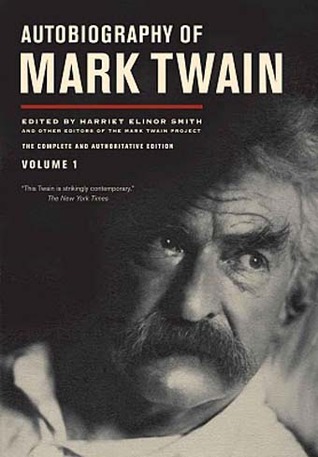 Initially I was surprised not to have seen the autobiography of such a famous individual before. Twain, I learned at the outset, composed his memoir with the stipulation that it not be published until 100 years following his death, because he wanted to be entirely frank about some situations and persons without incurring the displeasure of them, their children, or their grandchildren. Twain died in 1910, and his memoir had been finished just four months. For those of us living now, it was worth the wait. Although I was fortunate enough to snare the DRC for volume 3, I had to go out and hunt down volumes 1 and 2. It’s well worth obtaining and reading for those with the attention span and literacy skills it requires.
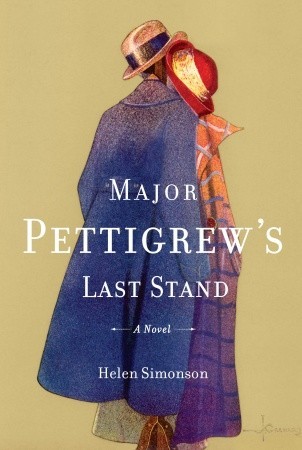 Had this story not received such wide acclaim and been made into a movie (which I’ve yet to see, but I watched the Oscars), I would probably never have gone near it. I like working class protagonists, and I don’t read many romances, because often as not, they are corny, soft porn, or both. But I saw it at the library and decided to give it a try, and I quickly remembered, upon reading it, that some rules are made to be broken. So even if you usually don’t read romances, and even if a retired British pensioner is not your idea of an interesting protagonist, this should be the exception to the rule.
 I confess that I am a big fan of Burke’s. He’s written a prodigious number of novels over the past fifty years, and I have read almost all of them. This is why, although I get nearly all of my books free prior to publication, I put this title on my Christmas wish list when I wasn’t given access to a galley. Perhaps because my spouse paid full jacket price for it, I am holding it to a higher standard than I usually do. This book is either a three star or four star read, depending on whether we factor in the dollars. Let’s call it 3.5 and round it up. It seems like a shame to 3-star a writer who is so talented and has contributed so much to American literature.
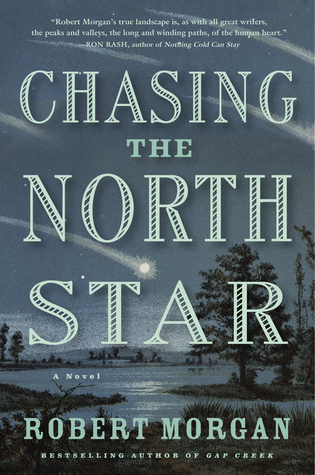 Chasing the North Star is a compelling narrative of two teenagers escaped from slavery on their flight toward the North. Thank you to Net Galley and Algonquin Books for the DRC, which I received in exchange for an honest review. This book becomes available to the public April 5, 2016.
 I was invited to read and review this compendium of articles from long ago by my friends at Open Road Integrated Media and Net Galley. I appreciate the invitation. The articles in the collection were really published in a tabloid by the title above during the period after World War II ended, and they are presented here as a bit of humorous nostalgia, rather like the spirit of Punch or The Onion. These articles will tickle the funny-bone of some of its readers, but it wasn’t a good match for me.

 What an amazing book! Once I began reading Loigman’s masterful historical fiction, my other galleys waited, meek and neglected until I was done with this one. Thank you twice, first to Net Galley and second to St. Martin’s Press for giving me a DRC in exchange for this honest review.
 Military history and World War II buffs will enjoy this well written third installment in Jackson’s Sergeant George Yeoman series. I hadn’t read any of the others in the series, but it didn’t matter; it serves just fine as a stand-alone novel. Thanks go to Net Galley and Endeavour Press for the DRC, which I received free of charge in exchange for this review.
 HE Bates wrote these stories during WWII; he served in the British Royal Air Force and received the unusual commission of author. His whole job was to write one short story after another. He was stationed with British pilots from 1941-1942, and he sat with them when they were between flights and listened with a sympathetic ear. He listened well, and the result is a collection of nearly 30 short stories, one of which is novella length, and they are strong, resonant fictional stories whose protagonists were inspired by actual pilots. Thank you twice to Net Galley and to Bloomsbury Publishers for the DRC. This collection is for sale now.
 Seattle Book Mama