
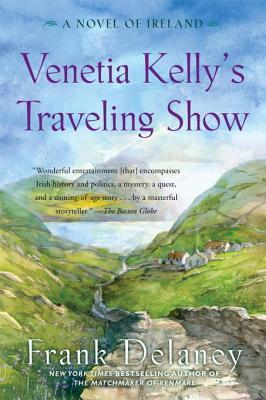
 Frank Delaney was well known in the UK before those of us in the United States had heard of him; NPR has called him “the most eloquent man in the world”, and after I had read Ireland, an epic novel that has to do with a storyteller and so much more, I was sold. I wasn’t blogging or reviewing back then, and after I had turned the last page, I told my family that I wanted to read everything else Delaney had written. Then I received this novel as a Christmas present, and was underwhelmed. I set it aside and figured I would give it away, but later I realized that it was the first in a trilogy for which I had also received the other two books. In February of this year, I took a deep breath and plunged in for another try.
This novel is much briefer than Ireland, and I’m a reader that often finishes a good book of this length in a weekend. The problem is that this one isn’t that good. In fact, I found myself wondering whether the author had perhaps been about to produce another similarly epic work and instead decided to chisel three books out of it. Whereas Ireland magically blends Irish history, culture, and political struggle with the fictional memoir of a young boy that has met and been captivated by a wandering story teller, creating a story one can sink into and forget the rest of the world even exists, this story, which is also a family’s fictional memoir, feels like a hamster on its wheel, going through the same stuff over..and over…and…
The setting is rural Ireland in 1932; the protagonist is Ben MacCarthy, and he spins the first person narrative that makes up the story. His family is one of humble farmers, and like so many families, they barely eke out a living. The farm has been in Ben’s mother’s family for generations. His father is frustrated, not meant to be a farmer it seems, and maybe that is why he is so easily caught up in the snare set for him by the Kelly family. The Kelly patriarch is Thomas “King” Kelly, a wealthy, connected man, and Venetia is his daughter. She travels as the main act in a caravan, and Ben’s father falls in love with her instantly, leaving Ben and his mother without a means of subsistence.
Almost the entire book is the account of Ben, whose mother sends him to bring his father home, though he is just an adolescent himself, as he goes after his father, is rejected, and then is sent back after him again. It’s monotonous and irritating. Part of the story has to do with Venetia’s ventriloquism and her dummy, Blarney. Clearly Blarney is intended to draw and amuse the reader, but I found another of my eye-rolling frenzies coming on. Right, I want to say. Cute. Now can we cut to the chase?
Delaney at his best doesn’t cut to the chase; that’s the whole point of weaving a story, to make the reader want to hear more detail, not less. In Ireland, he succeeded, and I grieved for a week when the story was over, because I wanted it back. With this story it was more the opposite; I hit the 78% mark after months of reading it in small snippets, basically only resorting to it when my electronic reader had to be charged. I kept it conveniently by my bedside so it would entice me, but just looking at the cover became a chore, and I finally resolved to skip to the end, then figure out how much of it could be skimmed to understand the outcome and give the other two books a try. Had my loving relatives not put full cover price into not only this title but the two that come after it—and oh I do hope they’re better!—I wouldn’t have bothered.
One side character that stands out and prevents this from being a 2 or 2.5 star novel is Billy Maloney, the handyman that swears profusely. Because his mother won’t hear profanity, young Ben repeats Billy’s messages verbatim, and rather than leave out the curses, he substitutes the word “flockin’” in their place. We will forget all about Billy as we get caught up—or not—in the MacCarthy family’s drama and the Kellys’ schemes, and then all of a sudden a whole stream of ‘flocks’ will appear. There were some other devices Delaney also used, but they didn’t work for me. This one did.
Well, what can I tell you? If you are a dedicated fan of Irish literature and you have deep pockets, go ahead. You’ve seen what I have to say, and if you still want the book, you can buy it.
But if you’re only getting one sumptuous, luxurious novel and you love tales of Ireland, then that’s the book I recommend to you. Read Frank Delaney’s Ireland, and let this one stay in its warehouse.
 James Lee Burke is a legend, a venerable and highly respected writer known for his luminous prose and quirky characters. In this, his second work of historical fiction in a planned trilogy, he demonstrates that he can still work magic better than ever. I received this DRC from Net Galley and Simon and Schuster in exchange for an honest review, but I would have paid full freight if I had to, and I rarely say that about any book anymore.
 I was originally turned down for a DRC of this novel when I requested it last spring, and I took the unusual step of following up with Atria, more or less begging for it. I’ve been reviewing titles for Net Galley for two years and have received nearly 300 DRCs, so it is a sign of my interest level that I went to this extreme to read this one in advance in exchange for an honest review, and it’s a sign of decency and responsiveness that a representative from Atria Books invited me to review it after all. Although I am grateful , this five star review is not about gratitude, but a measure of the importance I attach to the issues it addresses and the skill with which the story is told.
 I received a DRC of this memoir from Random House through its First to Read program. I read the book free in exchange for an honest review. Though it wasn’t a good fit for me, I think there are niche readers out there that might enjoy it.
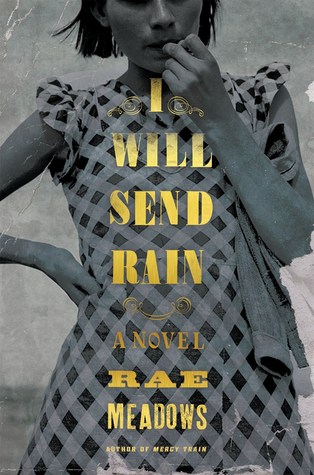 Annie Bell could have chosen to marry a well-to-do member of the gentry in her home town, a man with fine china and a full time kitchen servant. Young and buoyant, she chooses love instead, and moves to Oklahoma with Samuel Bell to start a brand new life on the free land that’s been provided. What could go wrong when two young people are strong and dedicated to one another? Oh, it’s an old, old story in so many ways, but Meadows makes it brand new. Thanks to Net Galley and Henry Holt Publishers, I read it free and in advance in exchange for this honest review. It will be available to the public August 9, 2016.
 Many people don’t know much about Cuba, the tiny island nation a mere 90 miles from the coast of Florida. The American media has distorted the Cuban Revolution for as long as I can remember. Before the revolution, which took place in 1959, Havana was like Bangkok, a place where little girls prostitute themselves so they won’t starve to death, where wealthy visitors can experience every pleasure, innocent or corrupt, known to humanity but where most citizens have little chance of even having their basic human needs met. Cuba’s alliance with the Soviet Union (USSR) helped the Cuban people defend themselves from US efforts to overthrow the revolutionary government, but the alliance also led to a period of Stalinist repression that darkened artists’ worlds for a period of time. Randall discusses all of this in her introduction. Following the period Cubans call the Rectification Period (reference mine), Stalinist practices were peeled away, and more freedom of expression created a more hospitable environment for artists, in addition to strengthening the revolution itself. In Cuba art is not privately sold as a general rule, and artists receive a salary for what they do, paid by the Cuban people.
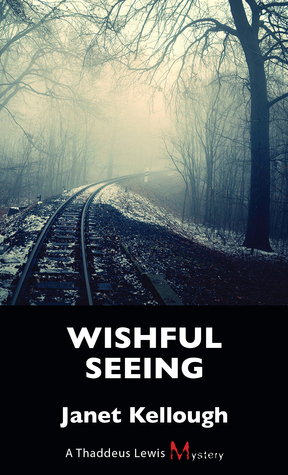 Thaddeus Lewis, the traveling preacher sleuth, is back on the road again. He’s headed to speak at a gathering of Methodist Episcopalians when he finds himself involved, once more, in a murder case. This cozy mystery is my second in an endearing series by Janet Kellough. I snapped up the DRC when I saw that Dundurn had made it available on Net Galley, so I read it free in exchange for an honest review. This title will be available to the public this Saturday, July 30.
 If I were to review the subject of this memoir rather than the book itself, it would be a slam-dunk five star rating. As it is, I can still recommend Carmon’s brief but potent biography as the best that has been published about this fascinating, passionate justice of the Supreme Court of the United States. I have no doubt many more will follow, and it’s possible I will read every one of them. As it stands, this is a rare instance in which I turned my back on my pile of free galleys long enough to ferret this gem out at the Seattle Public Library, because I just had to read it. You should too.
 Annie Bell could have chosen to marry a well-to-do member of the gentry in her home town, a man with fine china and a full time kitchen servant. Young and buoyant, she chooses love instead, and moves to Oklahoma with Samuel Bell to start a brand new life on the free land that’s been provided. What could go wrong when two young people are strong and dedicated to one another? Oh, it’s an old, old story in so many ways, but Meadows makes it brand new. Thanks to Net Galley and Henry Holt Publishers, I read it free and in advance in exchange for this honest review. It will be available to the public August 9, 2016.
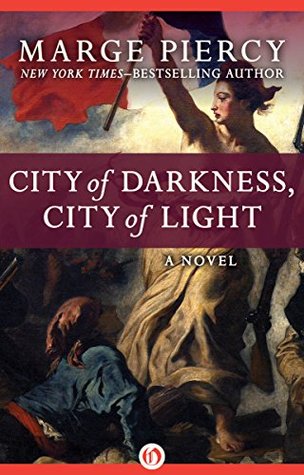 Piercy is a legend among feminists, and her writing was pivotal in my own development during the late 1970s and early 1980s as a newly-hatched adult. When this title, a novel based on the French Revolution, came out in 1996, I put it on my Christmas list and read it hungrily once I received it. When I noticed that it was released digitally this spring, I scored a digital copy from Open Road Integrated Media and Net Galley in exchange for this honest review. It’s a novel that is definitely worth reading twice.
 Seattle Book Mama