
Nixon: the Life, by John A. Farrell*****

richardnixonfarrellHistory buffs rejoice; the definitive Nixon biography is here.  John A. Farrell is the renowned biographer of Clarence Darrow. Now he gives us a comprehensive, compelling look at the only US president ever to resign from office under the cloud of imminent impeachment. This is the only Nixon biography that answers the many questions that left Americans—and those around the world that were watching—scratching our heads. Why, why, and why would he do these things? Farrell tells us. I read this book free and in advance, thanks to Net Galley and Doubleday, but it would have been worth paying the full retail price if I’d had to. It’s available to the public now.

Anytime I read nonfiction, I start with the sources. If the author hasn’t verified his information using primary sources, I go no further. Nonfiction is only fact if the author can prove that what he says is true—and I have never seen more meticulous, more thorough source work than what I see here. Every tape in the Nixon library; every memoir, from Nixon’s own, to those of the men that advised him as president, to those written by his family members, to those that opposed him are referenced, and that’s not all. Every set of presidential papers from Eisenhower on forward; the memoirs of LBJ, the president that served before Nixon took office; reminiscences of Brezhnev, leader of Russia ( which at the time was part of the USSR); reminiscences of Chinese leaders that hosted him; every single relevant source has been scoured and referenced in methodical, careful, painstaking detail. Farrell backs up every single fact in his book with multiple, sometimes a dozen excellent sources.

Because he has been so diligent, he’s also been able to take down some myths that were starting to gain a foothold in our national narrative. An example is the assertion that before the Kennedys unleashed their bag of dirty tricks on Nixon’s campaign in 1960, Nixon was a man of sound principle and strong ethics. A good hard look at his political campaigns in California knocks the legs out from under that fledgling bit of lore and knock it outs it out of the nest, and out of the atmosphere. Gone!

Lest I lend the impression that this is a biography useful only to the most careful students of history, folks willing to slog endlessly through excruciating detail, let me make myself perfectly clear: the man writes in a way that is hugely engaging and at times funny enough to leave me gasping for air. Although I taught American history and government for a long time, I also learned a great deal, not just about Nixon and those around him, but bits and pieces of American history that are relevant to the story but that don’t pop up anywhere else.

For those that have wondered why such a clearly intelligent politician, one that would win by a landslide, would hoist his own petard by authoring and authorizing plans to break into the offices of opponents—and their physicians—this is your book. For those that want to know what Nixon knew and when he knew it, this is for you, too.

I find myself mesmerized by the mental snapshots Farrell evokes: a tormented Nixon, still determined not to yield, pounding on the piano late into the night. I hear the clink of ice cubes in the background as Nixon, talking about Prime Minister Indira Gandhi of India, suggests that “The Indians need—what they really need—is a mass famine.”

I can see Kissinger and the Pentagon making last minute arrangements to deal with a possible 11th hour military coup before Nixon leaves office. Don’t leave him with the button during those last 24 hours, they figure.

And I picture poor Pat, his long-suffering wife to whom he told nothing, nothing, nothing, packing all through the night before they are to leave the White House…because of course he didn’t tell her they were going home in time to let her pack during normal hours.

The most damning and enlightening facts have to do with Vietnam and particularly, Cambodia. Farrell makes a case that the entire horrific Holocaust there with the Khmer Rouge and Pol Pot could have been avoided had Nixon not contacted the Vietnamese ambassador and suggested that he not make a deal with Johnson to end the war.

Whether you are like I am, a person that reads every Watergate memoir that you can obtain free or cheaply, or whether you are a younger person that has never gone into that dark tunnel, this is the book to read. It’s thorough and it’s fair, and what’s more, it’s entertaining.

Get it. Read it. You won’t be sorry!

Dorothy Day: The World Will Be Saved By Beauty, by Kate Hennessy***

dorothydayDorothy Day is an interesting historical figure, the woman that founded The Catholic Worker, which was initially a combined newspaper, homeless shelter, and soup kitchen. I once subscribed to The Catholic Worker, and since it cost one penny per issue, you couldn’t beat the price. I saw this biography available and snapped it up from Net Galley; thanks go to them and Scribner, who provided me with a DRC in exchange for an honest review. This title was published in late January and is now available for purchase.

I always had a difficult time getting a handle on what The Catholic Worker stood for. The name suggests radicalism, and indeed, Day was red-baited during the McCarthy era. Day was a Catholic convert and a strong believer in sharing everything that she had with those that had nothing. She worked tirelessly and selflessly, and despite often living an impoverished existence somehow made it into her eighties before she died, an iconic crusader who became prominent when almost no women did so independently—though she was no feminist, and believed that wives should submit to husbands. Since her demise, speculation has arisen as to whether she might be canonized.

What was that huge crash? Was it a marble statue being knocked the hell off its pedestal? Hennessy takes on the life and deeds of her famous grandmother with both frankness and affection. In the end, I came away liking Day a good deal less than I had when I knew little about her. Her tireless effort on behalf of the poor included anything and everything her very young daughter had in this world, and at one point she remarked that she felt unable to ask others to embrace a life of poverty if her child wasn’t also a part of that. It was a different time, one with no Children’s Protective Service to come swooping down and note that the child was sleeping in an unheated building in the midst of frigid winter; that there was no running water, since the building was a squat; that the only food that day was a single bowl of thin soup and perhaps a little hard bread donated from the day-old stores of local bakeries; that even small, personal treasures and clothing given the child by other relatives and friends would either be stolen by homeless denizens or even given away by her mother, a woman with the maternal instincts of an alley cat. Day did a lot of good for a lot of people, and no one can say she did it for her own material well being, but she more or less ruined her daughter’s life, and even when grown, Tamar’s painful social anxiety and panic attacks derailed her efforts to build a normal life for herself.

Nevertheless, the immense contribution that Day made at a time when the only homeless shelters were ones with a lot of rules and sometimes religious requirements cannot be overlooked. She is said to have had a commanding presence, endless energy (and the mood swings that accompany such energy in some people), and a mesmerizing speaking voice. Day’s physician also treated the great Cesar Chavez, and reflected that their personalities were a lot alike.

I confess I was frustrated in reading this memoir, because I really just wanted the ideas behind the Catholic Worker laid out for me along with the organizational structure. Was the whole thing just whatever Day said it was at the moment, or was there democratic decision making? I never really found out, although I gained a sense that the chaotic events shown in the memoir reflected an unarticulated organizational chaos as well. This is a thing that sometimes happens with religious organizations; the material underpinnings are tossed up in the air for supernatural intervention, and the next thing they know, there’s an ugly letter from the IRS.

Only about half of this memoir was actually about Day; my sense was that the author did a lot of genealogical research and then decided to publish the result. The first twenty percent of the book is not only about Day’s various romantic entanglements; a significant portion of the text is mini-biographies of those men, and frankly, I wasn’t interested in them. I wanted to know about Day. Later I would be frustrated when long passages would be devoted to other relatives and their lives. Inclusion of daughter Tamar was essential, because Dorothy and Tamar were very close all their lives and shared a lot, and so in some ways to write about one was to tell about the other. But I didn’t need to know about Day’s in-laws, her many and several grandchildren, and so on. I just wanted to cut to the chase, but given the nature of the topic, also didn’t want to read Day’s own writing, which has a religious bias that doesn’t interest me.

Those with a keen interest in Dorothy Day and the Catholic Worker may want to read this, because not many books are available that discuss her life and work. On the other hand, I don’t advise paying full cover price. Get it free or at a deep discount, unless you are possessed of insatiable curiosity and deep pockets.

The Signal Flame, by Andrew Krivak*****

Happy release day to Andrew Krivak! This one is head and shoulders above the rest. If you are ready to get lost in a book, it’s for sale now.

seattlebookmama's avatarSeattle Book Mama

thesignalflameThere are good writers, excellent writers, and of course, indifferent writers, but once in a rare while there’s a writer that makes me sit up straight and take notice, someone with that special spark of genius that no money can buy nor school can teach. Krivak’s work is exquisite, the product of both power and restraint. If you love historical fiction, you have to read this book, which comes out January 24, 2107.
I was lucky and read it free in exchange for an honest review, thanks to Scribner and Net Galley. If you read my last review of a DRC, you know I call them as I see them; I see this one as standing, at the end of 2017, as one of perhaps a dozen that will still shine after I’ve read between one and two hundred others.

Bo, our protagonist, is the grandson of Slovakian immigrants, and…

View original post 578 more words

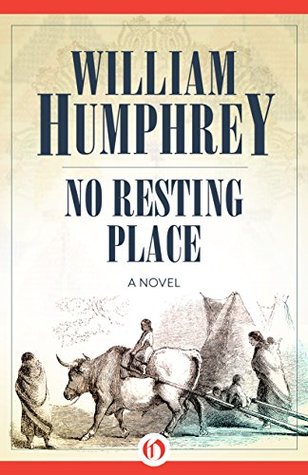
No Resting Place, by William Humphrey*****

norestingplace I was drawn to this story because I had read William Humphrey’s Home from the Hill, brilliant Southern fiction that was a contender for the National Book Award, and I couldn’t imagine letting anything written by this author pass me by. Thanks go to Net Galley and Open Road Media for the DRC, which I received free in exchange for this honest review. The book will be re-released digitally February 17, 2017.

Humphrey tells this story like no one else. The Trail of Tears is one of the most heinous crimes any government has wrought upon its aboriginal peoples, a shameless land grab that stole all of the lands belonging to Cherokees and several other tribes of the Southeastern USA. It’s a story that has to be told by someone; those that have American Indian roots may have access to oral history, but for Anglos like me, if it isn’t written down, future generations may not know about it. And by telling it as if it were historical fiction, Humphrey is able to add dialogue and make it more accessible. That said, the reader will need to bring strong literacy skills to this novel. Humphrey’s fiction is always hyper-literate, all the more so in this case because he meticulously researched it. It is the last thing he wrote, a genuine labor of love, and it shows.

That said, nobody can make this real-life event a happy one, and nobody should. It’s brutal. I was about a quarter of the way in, reading in tiny bites in order to make the reading more bearable, when I began to regret having committed to reading and reviewing it. In the end, however, I am glad I did read it, because I learned a lot of new things about the various tribes and although Humphrey’s narrative isn’t enjoyable to read because of the subject matter, he does it more eloquently and in more conscientious detail than anyone else that I’ve read. I say this having taught a unit on the Trail of Tears for a number of years; I am not an expert on this part of American history, but I also didn’t come to it without prior knowledge.

It’s a story that will break your heart—and if you already know the basics, it will do so all over again—but it’s also a story everyone should know. Like the Holocaust, it’s a part of history whose recounting must not be permitted to pass from our knowledge. As for me, I read more than one book at a time, and I found this was less likely to leave me feeling depressed if I alternated it with lighter material. It is likely to be of special interest to those of Cherokee descent and also to Texans, whose forefather Sam Houston is featured here.

The writing style may seem peculiar to younger readers because it is written in a formal style not often used anymore, but there is no denying the word-smithery that makes this cruel event come alive on the page.  Highly recommended to those with the literary skills and stamina required to pursue it.

Bluff, Bluster, Lies and Spies, by David Perry*

bluffblusterliesThe American Civil War is part of the curriculum I used to teach, and in retirement I still enjoy reading about it. When I saw that Open Road Media had listed this title on Net Galley to be republished digitally this summer, I swooped in and grabbed a copy for myself. I was so eager to read it that I bumped it ahead of some other DRCs I already had, and I really wanted to like it.  Unfortunately, this is a shallow effort and it shows.  Don’t buy it for yourself, and for heaven’s sake don’t advise your students to read it.

It begins gamely enough with a discussion of events in Europe and how the changing contours of that part of the world affected the attitudes of England, France, Russia, Prussia, and Spain. At this point my curiosity was piqued, because I had never read anything about which side of the Civil War the last three of these countries favored.  But if the rest of the text can be believed—and parts of it cannot—the reason we never hear about Russia, Spain, and Prussia with regard to this rebellion is that they decided they had no stake in its outcome. This part of the text could have been dealt with in one sentence rather than owning a share of the introduction and being dragged in again later, but this is not the only bit of obvious filler that burdens this misbegotten book.

I am tantalized initially when Perry brings in a controversy that does interest academics: would Britain have recognized the Confederacy in order to get cotton, or was it busy with other considerations and willing to obtain cotton from colonial holdings in Egypt, India and elsewhere for the duration? This question is discussed, leaves the narrative and is broached again several times, because although the book has chapters, it isn’t organized. The same topics of discussion, and the same quotations that serve as its meager, questionable documentation are dropped into the text again and again. It’s as if Perry doesn’t expect anyone to read it all the way through and is hoping we will drop into the middle of the book somewhere to look up a fact and then leave again without seeing whether he actually knows what he’s talking about.

He doesn’t.

For example, after citing the same obscure document for pages on end—since I read it digitally, I highlighted “Dispatch 206” seven times before noting that this section, at least, is garbage—he brings up Poland. He talks about Poland and Russia’s attachment to same as a buffer state, but never shows any relationship between Poland and the American Civil War other than that Russia had other greater priorities at this time, which had already been established in an earlier section.  And he misuses the term “Manifest Destiny”. Perry apparently believes this term has equal use to multiple governments in reference to themselves around the world.

He tells us that privateers are outlawed during the Civil War and infers that this, therefore, will surely mean that all the sad pirates will dock their ships and get honest jobs. No more privateers out there now, matey!

He says that Lincoln was a slow thinker, and he refers to American diplomats as ditherers.  He documents none of it.

I read the citation section to see if more joy would be had if I pursued this book past the halfway mark. I read his author bio, which indicates no expertise regarding this conflict, which by now doesn’t surprise me.  Frankly, I don’t understand why this book ever saw the light of day, or why Open Road would republish it.

I would love to say that those with deep pockets should go ahead and order it if they can afford all the books they want, but I can’t even say that. The book is unreliable, disorganized, and badly documented. It contains falsehoods and insults the reader’s intelligence.

Put your plastic away. This is dross.

The Signal Flame, by Andrew Krivak*****

thesignalflameThere are good writers, excellent writers, and of course, indifferent writers, but once in a rare while there’s a writer that makes me sit up straight and take notice, someone with that special spark of genius that no money can buy nor school can teach. Krivak’s work is exquisite, the product of both power and restraint. If you love historical fiction, you have to read this book, which comes out January 24, 2107.
I was lucky and read it free in exchange for an honest review, thanks to Scribner and Net Galley. If you read my last review of a DRC, you know I call them as I see them; I see this one as standing, at the end of 2017, as one of perhaps a dozen that will still shine after I’ve read between one and two hundred others.

Bo, our protagonist, is the grandson of Slovakian immigrants, and has been steeped in the tradition of those that came before him. His grandfather, Jozef, served in the trenches during World War I; Jozef’s son, Bo’s father, was imprisoned for desertion during World War II and then died in a hunting accident upon his return home. Bo’s grandparents and mother have raised him and his brother Sam, who is missing in action in Vietnam. When Jozef dies, Bo is the last man left to carry on the family business and the traditions with which he was raised.

The title of the book refers to the sign for which Agamemnon was to watch for news from Troy; the book is begun with the relevant quote from Aeschylus, an old friend in literature that I hadn’t visited in nearly 40 years. I tell you this not to intimidate you, because I think this text is accessible to most high school graduates that love good literature. No, I just want you to understand that this is a work of depth and quality…and also unending sorrow.

Hannah, Bo’s mother, has been writing to the Navy twice each month for updates about the status of her missing son. Without a body, she doesn’t feel free to mourn; without a notification of death, she holds on to a tiny filament of hope that Sam may come marching home and surprise them all, any day now. Foremost in everyone’s minds is that Sam must not also be considered a deserter.

Now President Nixon speaks of ending the war with honorable peace, but there can be no real peace for Hannah; the Navy sends the same response every time she writes, “informing her that Sam was still carried in a missing status. Like he’s in a box somewhere, she would say, and the marines just haven’t gotten around to opening it yet.”

Father Rovnavaha is their parish priest, but he is also an old, dear family friend, and as he lays to rest two generations of a local family that are killed in a terrible flood, he seeks to comfort those present, perhaps himself included, by speaking of a kingdom, but Hannah has trouble believing as she once did:


“Her faith was once that strong, but she doubted it now, doubted not that there was a promise but that the promise claimed was a gift to hold, a joy that could assuage all sadness. No, she had come to believe that the only thing one could be certain of was loss. The loss of others as one lived on.  Loss as the last thing one left behind.”


Bo’s inheritance takes him in directions no one could have foreseen, and so although Krivak’s novel is indeed full of loss, it also shows us that hope can come from a direction never anticipated.

The characters here are beautifully rendered, developed so subtly that we aren’t aware of it occurring until it’s accomplished. There are no heavy-handed devices such as diaries or extensive local gossip; we see who each person is by the things that they do, and just as in life, we know who they are not only by their words, but by their actions. Krivak never lets a stereotype embrace his characters or plot; the result is so genuine that I feel I am following a dear old friend through the narrative.

Highly recommended for those that love historical fiction, as well as for anyone that needs an excuse to sit down and have a good cry.

House of Silence, by Sarah Barthel**

houseofsilenceThe premise of this historical romance had me at the get-go: Isabelle Larkin is engaged to marry wealthy, powerful Gregory Gallagher, but she calls it off after she sees him commit murder. Her family doesn’t believe her, and embarrassed, they have her trucked off to a sanitarium, where she meets Mary Todd Lincoln. I thank Net Galley and Kensington Publishing for the invitation to read and review. This book becomes available for purchase December 27, 2016.

Barthel’s story has some nice moments. I love the bit where our protagonist ruminates about the impropriety of unlacing her boots in a place where they might be seen; let no one think her a loose woman!

However, there are also moments when the narrative hiccups in a way that startles me. Ultimately, this happens so frequently that the spell is broken, and instead of being transported to a different time and place in the way one is with strong literature, I am reminded all too often that this is a galley, and it’s one that needs a hands-on editor before it should see daylight.

Every writer of historical fiction has to make a choice. Are we going to use exactly the same forms of language and speech that were common to the time, or are we going to ease up just a little and use the book’s note to the reader to explain that this has been done intentionally for the purpose of creating a more accessible novel?  This of course doesn’t even include the extremely risky, though occasionally very successful choice to move an historical tale to the present setting; modern Romeo and Juliet stories immediately come to mind.

Barthel has chosen to play it straight and use the speech of the time, but every now and then, a phrase or sentence of twenty-first century casual speech flies in and lands mid-chapter, a bit like a flying saucer. Suddenly I see “As if I cared about sex at a time like this”, and “I hope you are all right with that.” There are a lot of these moments inserted into a page here or there of otherwise-Victorian prose, and they keep me from buying into the premise.

I hope that this story will be re-released somewhere up the road, and if so, I would be happy to reread it and possibly recommend it to the reader. It’s a shame to see such an excellent premise spoiled with what is essentially sloppy editing. But in its present form, I can’t recommend it to you.

Best of 2016: Historical Fiction

There weren’t a lot of outstanding historical novels this year, but those that are good are oh, so good. Every single one of these five titles owned me until the story was done; for awhile afterward; and a little bit still.

                          #1 thegirlfromv

The Girl from Venice, by Martin Cruz Smith*****

HONORABLE MENTION:

Gone to Soldiers, by Marge Piercy*****

gonetosoldiersBrevity isn’t possible here. Settle in and get comfy. Here we go.
The word “epic” gets overused in the world of advertising, and so as a reviewer, I have learned to take the promise with a grain of salt. However, Piercy is renowned, an iconic presence for feminists and for anyone that approaches life from a class perspective. I read this book when it first came out in the 1980’s for no discount whatsoever, and I loved it. Books come and go at my house, since space on the bookshelf is itself a commodity, but Piercy has a permanent shelf all her own; when I saw that Open Road Media had released this book digitally, I jumped on it, even though the release date had passed and even though I already had the book, because I wanted to help promote it, and I was happy to read it again. I rate it 4.75 stars and of course, round it upward.

There are two myths that get told, are believed by others, and then they are retold about World War II. The most recent one is that told by Holocaust deniers, who say that the whole death camp thing was just a huge exaggeration. Yes, there were prisons; yes, guards were mean sometimes; yes, people died, because nobody was getting enough food in Poland and other non-German parts of Europe anyway. This is a lie, but as eyewitnesses grow old and die, it takes a certain vigilance to keep this damnable untruth from gaining a toehold. Piercy tells the truth, and she does it really well. More on that in a moment, but let’s deal with the other lie first.

The second myth, one that’s understandably popular as patriotism grasps the human heart and we wish that our rulers, past and present, were truly noble, is that the USA joined its allies in a quest to preserve democracy and save those poor Jews and other unfortunates tucked away in those hellish camps. Piercy approaches this palace of straw from many different angles and razes it to the ground.  Jews that wanted out faced tremendous obstacles, from nations—the USA included—that were extremely choosy about how many Jews they would take. The US and UK governments were more obstructive than helpful, and countless men, women, and children died because of these exclusions.

Piercy is a brilliant storyteller, and in her hands, the period and its people are so believable, nearly corporal, that I carry them with me still.

This story is told through the eyes of ten characters whose narratives are staggered. There are French characters, British, and Americans; men and women; straight, gay, lesbian, and bisexual.  They hail from a variety of socio-economic circumstances and are affected by the war in different ways. It’s miraculous to see a writer develop even one of these characters as fully and thoroughly as Piercy does; how is it that she does so with a wide range of characters, yet has never been nominated for a prestigious award?

Those of us that are old and perhaps cynical may consider that the very political perspective that makes her prose so rich may be what kept her from landing on a short list. I guess we’ll never know for sure.

Piercy is a scholar and she approaches this historical period with sources in hand. She doesn’t interpret loosely, and her note to the reader tells us in what instance she has taken liberties, for example not wanting to have a whole string of people that have the same first name. Always she is aware of the subtext, the stereotypes that women aviators faced, for example.

My most beloved characters were Jacqueline, a hero of the French resistance, along with her lover, Jeff, and her little sister Naomi, one of the fortunate few who’s sent to live with American relatives before it’s too late. I liked Louise’s moxie, and I loved what happened to Duvey. I also really enjoyed the unusual perspective that Daniel and his fellow code-breakers shared, becoming so familiar with the Japanese point of view that they bonded with the men whose communications they were deciphering.

As we discuss the Japanese, we come to the .25 that I deducted. I did this as a token objection to the use of the racist vernacular that I know was commonplace during the time. This reviewer grew up with a father that served during this war, and reminiscences among the guests he and my mother entertained were so frequent that I, in youthful ignorance, rolled my eyes and decided they were impossibly dull. And my mother taught me that the terms he and they used to speak of Germans, of Jews, of Japanese were never, ever to be used in my own conversations with anyone at any time. And so yes, racist references and ethnic slurs were common to this era.

But I note that whereas our author has had the good taste and the good sense not to repeat the ugly terms by which Jewish people were called, and seldom repeats the anti-German slurs, the “J” word is used dozens of times, usually by the character that fights in the Pacific. And I have to say, it really stings.

There were fewer Asian Americans during the period when Piercy wrote this than there are today, particularly in the author’s own New England home. For anyone writing this today, and for anyone less venerable and also less influential for me personally during my formative years, I would lop off at least a couple of stars from my rating. It’s ugly to repeat these epithets, and it’s particularly painful to me to read them. This is my husband we’re talking about; it’s my daughter, too. It’s my in-laws, one of whom fought, as good Japanese citizens were expected to, for the Japanese Imperial Army. So I would not care to see her go back and insert the horrible terms hurled at Jews and Germans for the sake of consistency; I’d just rather see the “J” word used less often. She could mention it in her introduction if she feels the reader needs to know that she’s made an adjustment.  That’s my viewpoint, and I’m sticking to it.

But it’s also true that when I was young and confused, Piercy was one of the bright feminist lights in literature to whom I looked for guidance. So I am moved not only by the excellence of this work, but also by the shining legacy she has provided for women during an uncertain time.

One further note: though I have a degree in history and have taught it, I have seldom seen much written—at least in English—about the French Resistance. This part is arguably the most deeply resonant part of this novel, and though I had read the book before, it’s amazing what one can forget over the course of twenty or thirty years. I don’t read many books twice because there are so many I haven’t read at all yet; and still this is one that I may read a third time, as I feel my recollection of the fine details already slipping away.

For those that treasure excellent literary fiction; that have the stamina for a novel of this length; that love outstanding historical fiction; that enjoy stories that are told from a feminist viewpoint and that recognize social classes and the way they affect us; this story is unparalleled. Get it and read it.

Orphans of the Carnival, by Carol Birch****

“Julia hated thinking about money. There’d always been enough. Other people provided, but she had to work. She could sweep and wash and light fires, or she could sing and dance and let them look. Singing and dancing won all, hands down.”  orphansofthecarnival

Thank you to Net Galley and Doubleday for the DRC, which I received in exchange for this honest review. The book comes out Tuesday, November 8.

Orphans of the Carnival is a fictionalized account of the life of Julia Pastrana, a Paiute woman born in Latin America in the nineteenth century, a time in history when people born with serious birth defects have no surgical alternatives, and are viewed by many as having been cursed by God; often they find themselves, as Julia does at one point, as traveling circus acts, with their physical difference providing them with a means of making a living, however degrading, during a time when there is no medical alternative and no government safety net.

Her early life is spent as a servant and nurse to an elderly relative after her mother abandons her. Given the chance to perform—and be stared at—for a wage with room, board, and transportation thrown in, she chucks her broom, chamber pot, and scrub brush and hits the road with a circus.

Part of the allure in Julia’s performance is that she begins it completely covered, with a dress, long sleeves, and a veil covering her face; she sings and dances, saving the  big moment when her veil is lifted for the end of the act. In order to make a living largely based on the need of the public to see what she looks like, she cannot go out in public or be seen outside of the show, which makes for a lonely existence. But over the course of time, her circumstances change once she places her career in the hands of a manager named Theo Lent.

There are few remaining records existing of Pastrana, and so when Birch tells this story, most of it is invented. On the one hand, she has little information to work with, but on the other hand, she is also not constricted in her storytelling by a long list of historical details to be attended to. I love the wry way in which she wraps the whole thing up, particularly with regard to Theo, who even the scant available data demonstrates was a real piece of work. I won’t give you any more than that, because there are twists and turns that I didn’t see coming, and I don’t want to ruin it for you.

There’s also an alternate narrative that takes place in the present, involving a woman named Rose, a hoarder with a mysterious background. I think the story would work just as well and perhaps better without Rose, but this is a minor aspect of the overall story, and it also doesn’t detract much if at all from the main plot.

About halfway through the book I run a Google search for an image of Pastrana, and of course, Wikipedia doesn’t let me down. I am shocked, not by how horrible she looks, but by how normal she appears. She does have more body hair than most women, but there’s skin showing through; the appellate of “bear woman” is a tremendous exaggeration. She is born with an overly extended jaw line and a second row of teeth, two separate disorders; in addition, there’s another disorder that causes the excess body hair. But the response of the crowds seems overwrought, though it is undoubtedly what happened at the time; if the public, or a part of it, didn’t see Pastrana as truly unusual, she wouldn’t have made this her livelihood, because the crowds would not have come.

Why read this book? I was initially drawn by the cover, and then again by the unusual topic. In this troubled election period, I am more than ready to escape to a completely different time and place, and to be sure, Julia’s problems make others seem miniscule.

What keeps me interested once I commence is Birch’s writing. She knows how to drive a plot forward, and when to step back from the midway craziness and insert something wry and understated to make us smile slyly. I find myself wondering where she plans to take this or that aspect of the tale, and she never disappoints.