The Kitchen Front, by Jennifer Ryan****

I enjoyed Ryan’s historical novel, The Spies of Shilling Lane, and so I was thrilled when Ballantine Books and Net Galley offered me a review copy for this one. It’s for sale now.

The story is set in rural England during World War II. We have four protagonists, all of them women. Audrey Landon is a widow; her husband died in the war, leaving her with two boys to raise on her own. The old family home, which she inherited from her parents, is falling apart, and she has no means to repair it. In some places, the roof has caved in.

The second is Audrey’s sister, “Lady” Gwendoline. Gwen puts herself first at all times, since nobody else ever has. She married for wealth and convenience, and she lords her affluence over her sister and everyone else. But her husband is a cruel man, and her existence is a lonely one despite its material comfort.

Zelda was a top chef in London, but once her pregnancy became visible, she had to get gone. Her landlord calls her a “trollop,” and she knows she can’t stay there now, so she applies for wartime housing. The volunteer in charge of placing her is Lady Gwendoline, who snickers with amusement as she assigns her to live in Audrey’s house.

Nell is a chef’s assistant at Fenley Hall, the prestigious old pile where Lady Gwendoline and Sir Strickland hold court. The chef, Mrs. Quince, has taught her nearly everything she knows, and it’s a good thing, too; the old lady isn’t getting any younger.

All four women enter a cooking contest held by the Ministry of Food, a “wartime cooking challenge” to showcase recipes that use ordinary ingredients and work around rationing.  The winner will be the new announcer for The Kitchen Front, a wartime radio program—and this program existed in real life.

As in the last story, Ryan develops her four characters in a way I believe; the most benevolent have flaws, and the most unsympathetic, Lady Gwendoline, is complex and capable of change. It is Gwendoline that is most developed at the end, but all four are dynamic characters.

For a brief while, I use the audio version of this book, which I obtain from my local library. Jasmine Blackborow does a fine job as reader in most regards, but there is a side character that turns up in a couple of emotionally charged scenes, an Italian prisoner of war, and when she voices him, he sounds like Dracula, which ruins the magic. For this reason, I recommend sticking to the printed version.

The first half of this story is almost unputdownable, and for a time I nearly forget my other books. But as the climax approaches, things become predictable, almost formulaic, and the ending is a bit too tidy for my tastes. The scenes toward the end with Mrs. Quince are overwrought.  It’s not terrible, but because I am so far in love with the first half, I am disappointed by the denouement. Also, if recipes must be included, as apparently they must, the author should give them character by using the substituted ingredients in the instructions; the more desirable ingredients can be footnoted.

Ultimately I rate The Kitchen Front four stars; five for the first half, three for the second.

The Incredible Winston Browne, by Sean Dietrich****-*****

4.5 rounded upward.

The time is the 1950s; the place is Moab, Florida, a tiny town where everyone knows everyone else. Winston Browne is the sheriff; Eleanor Hughes is a frustrated single woman that fears she is headed for spinsterhood; and a small girl, Jessie, is on the lam from a creepy cult that considers her to be “a little abomination.”

I read this book free, courtesy of Net Galley and Thomas Nelson Publishers. It’s for sale now.

The story begins with Winston in his doctor’s office. There’s bad news about his chronic cough. Tests show it’s not only malignant; it’s metastatic. In other words, Winston should put his affairs in order.

Winston is a friendly guy, but he’s also an introvert. He tells no one of his condition. He’s single, and there’s no family to warn, so he goes about his life about the same as before he learned his diagnosis.

Jessie is awakened in the middle of the night by one of the Sisters, who hustles her into a waiting vehicle. She’s being busted out of the Temple compound by softhearted women that know the girl is doomed if she remains. Jessie has an independent spirit, and so when she is dropped off at the train station with instructions of where to go and who to trust, she follows her instincts instead. Her instincts take her to Moab, Florida.

Eleanor—you can call her Ellie—is fed up with Jimmy. They’ve dated for year upon year, and she is so frustrated by his inaction that she can scarcely stand the sight of him. If he is so crazy about her, then why doesn’t he propose? She’ll never have a husband or a family, and it’s all his fault. But then Winston comes along, and the birds sing in the trees.

For the first half of this book, I thought it would be a four star read. It was a good enough tale, but I had my reservations. For starters, where are the Black people in Moab? If we’re meeting the townsfolk—and we surely are—how is it that all of them are Caucasian? A visit from Jackie Robinson is all well and good, but this is Florida, for heaven’s sake. Is Moab a sundowner town?

I run a quick search, knowing that the African-American population during this mid-1900s was much lower than it is now, and I am grudgingly convinced that there might well be a little town in the boondocks with only white residents. Back then, it could have happened, so…okay.

It is during the second half that everything falls together and I am swept away by the characters. No more consulting the Google oracle; the intimacy has become too strong for me to step back.

It’s difficult for me to find a feel-good book without schmaltz. Most books that are billed as heartwarming tend to make me roll my eyes or retch a little. Dietrich works magic, though, and although it takes a minute or two to reel me in, ultimately I am captivated. The droll, understated humor that drops in and out at just the right moments is a key element. The captions that appear regularly make me guffaw more than once; don’t skip over them! They’re terrific. The text is punctuated now and then by contributions from the Moab newsletter, whose minutiae underscores just what a dull place this town usually is.  

However, let me also say a quick word here about the audio version. I began reading this book close to the publication date, and so when I was partway into it, I checked out the audio book from Seattle Bibliocommons. By doing so, I could extend my reading sessions, switching over to the audio when I had to do something else with my eyes and hands. The author reads his own narrative, and he has a wonderful voice, warm with just the right amount of drawl. The best way to enjoy this book is to access both the print version and the audio; if you must choose one or the other, it’s a toss-up, perhaps with a slight edge toward the audio.

Some readers will be pleased to know that there is no off color language or sex involved. If a movie were made based on this book, it would most likely show a General Audiences rating.

Highly recommended to those that love a feel good story, historical fiction, or Southern fiction.

The Recent East, by Thomas Grattan*****

The Recent East introduces novelist Thomas Grattan, and it’s an impressive debut. It follows a family of German-Americans from 1965, when the eldest emigrates from East Germany with her parents, to the present. I initially decide to read it because of the setting; it’s the first fiction I’ve read set in the former Soviet satellite country. However, it is the characters that keep me engaged to the last page.

My thanks go to Net Galley and McMillan for the review copy; this book is for sale now.

The story opens in 1965 as Beate and her parents are defecting:

Everyone talked about the West as if it were a secret. They leaned in to share stories of its grocery stores that carried fresh oranges, its cars with bult-in radios. Covered their mouths to mention a Dusseldorf boulevard that catered to movie stars and dictators, whole Eastern month’s salaries spent on face cream. There were entire, whispered conversations about its large houses and overstuffed stores, its borders crossed with a smile and a flick of one’s passport. Some talked about it as if it were the most boring thing. Others like it was an uppity friend. But everyone talked about it…

The first chapter makes me laugh out loud. Teenage Beate is mocked when she enrolls in school in Cologne, because her clothing is nowhere near as nice as what the kids in West Germany wear. Since her parents cannot afford to upgrade her wardrobe just yet, Beate comes up with the genius idea to alter the clothes she owns to make them look as Soviet as possible, and she “put on her Moscow face, worked on her Leningrad walk.” Sure enough, the kids at school are terrified of her now. She still doesn’t have friends, but she isn’t bullied anymore.

Morph forward in time. Beate is a mother now, living in upstate New York with her two adolescent children and unhappy husband. When the Berlin Wall falls, so does her marriage. Soon afterward, she is notified that her late parents’ house now belongs to her. She packs up her belongings and her children, then buys tickets to Germany.

Adela and Michael have always been close, but the move shakes their relationship. Their usual routines are shattered, and their mother, reeling from the divorce, becomes withdrawn and uncommunicative. What a terrible time to disengage from parenting! Both Michael and Adela roam the city of Kritzhagen at will, at all hours of the night. Michael is just 13 years old and gay; sometimes he doesn’t come home at all at night. I read these passages, written without obvious judgment or commentary, with horror. A new house, new city, new country, new continent, and it’s now that their mother forgets to set boundaries? I want to find this woman and slap her upside the head (though I guess that’s a different sort of boundary violation.) Half the houses in town stand empty, and since they have no furniture of their own and their mother is doing nothing to acquire it, Michael breaks into houses and steals furnishings. Look, Ma, I found us some chairs.

My jaw drops.

Adela goes in the other direction, becoming a conscientious student and social justice advocate. But their mother pays her no attention, either.

For the first half of this story, it seems like a four star novel to me; well written, competent, but nothing to merit great accolades. This changes in the second half, because all three of these characters are dynamic, and the changes in them are absolutely believable and deeply absorbing.

I have friends that do social work, and what they have told me is this: children that are forced to become the adults in the family, taking on responsibilities they’re too young for when a parent abdicates them, often appear to miraculously mature, competent beyond their years. Everything is organized. They may do the jobs as well as any adult, and sometimes better than most. How wonderful!

But because they aren’t developmentally ready for these things yet, what happens is that later, when they are grown, they fall apart and become breathtakingly immature, because they have to go back and live their adolescent years that were stolen from them. (As a teacher, I saw this in action a couple of times.)  And so I am awestruck by how consistently our Grattan’s characters follow this pattern.

As the second half progresses, I make a couple of predictions, one of which is sort of formulaic, but Grattan does other things, and they’re far better than what I’d guessed. We follow these characters for several decades, and at the end, we see the relationship that blooms between Beate and her grandson. When it’s over, I miss them.

Because Michael is gay and is one of our three protagonists, this novel is easily slotted into the LGTB genre, but it is much more than this. Instead, one should regard it as a well-written story in which one character is gay.

But whatever you choose to call this book, you should get it and read it if you love excellent fiction.

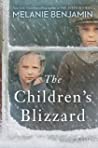
The Children’s Blizzard, by Melanie Benjamin****

My thanks go to Net Galley and Random House Ballantine for the review copy, and to Seattle Bibliocommons for the audio version when I realized I was running behind. This book is for sale now.

I wanted to read this novel because it is different from everything else in my queue. I have a history degree and have taught American history, but I’d never heard of the Children’s Blizzard, which was real. The story is set mostly in and around “Godforsaken Omaha,” and I seldom see fiction set in Nebraska, so that is also interesting.

But once I had the book, I had second thoughts. Here we were, in the midst of this miserable, frightening pandemic, and for the first time ever, I wasn’t able to host my family for Christmas; I couldn’t see my grown children or tiny grandchildren in person…and I was going to read a book where small children froze to death in the snow? What exactly had I been thinking of, to request such a book? And so I shuffled it onto the back burner.

Then I saw that my online friends had liked it, and so with a deep breath, I pulled out my review copy, turned on the audio copy and began. And my friends were right; this is a good story.

The thing that makes the difference is that the blizzard is done before the story is even halfway over! I had envisioned slow, agonizing deaths that would take up the whole novel, and that isn’t what Benjamin does at all. While the deaths are indeed sad, she doesn’t draw them out gratuitously—and not everybody dies. Instead, the story is primarily about the aftermath, the way that these Scandinavian settlers respond to what has occurred, and the role of the ambitious reporter that covers the tragedy.

Benjamin does a fine job developing the characters, primarily the women involved, and I especially appreciate her unsentimental approach. Friends, if you ever find yourself feeling starry-eyed about the distant past, wishing things were simpler and done as they were long ago, this book will snap you out of it quickly. Believe it.

I recommend The Children’s Blizzard to those that enjoy historical fiction, and I especially recommend the audio book to you. The reader does a nice job of incorporating a Scandinavian accent without overdoing it, and it makes it easier to relate to the characters. I enjoyed it, and would happily read Benjamin’s work in the future.

Sin Eater, by Megan Campisi**-***

Sin Eater is a one-of-a-kind work of historical fiction, and I was invited to read and review it by Atria Books and Net Galley. Though other reviewers seem to appreciate it, I have a difficult time bonding with any part of it, and so eventually abandon it. I check out a copy of the audio version from Seattle Bibliocommons, but sadly, I find I don’t want to listen to it, either.

When I read historical fiction, I expect to learn something. The best of the genre are those that convey an event that actually occurred, and that are presented as fiction so that the author can add dialogue and an inner narrative. Historical fiction that is a bit looser, perhaps telling a story of an actual place, person, and time but adding elements that are fictional, perhaps because of gaps in what is documented, or even because the author just plain feels like it, are sometimes excellent if the characters are compelling and immediate, and the writing particularly strong.

When I accept the review copy of this novel, I do so partly because of this cover (though others have also been used,) but mostly because I am intrigued by the notion of a sin eater, and I want to learn more. However, the author’s notes tell me that there’s no information available about it, save for the phrase that popped up somewhere; what a disappointment.

Then there’s the plot, one that starts grim, then becomes grimmer, followed by a brief (very brief) flicker of hope, followed by persecution, death, and misery, misery, misery.

Campisi is a competent wordsmith, but the characters never gel for me, and maybe that’s just as well, since they are doomed. I am a passionate feminist, and the promise of that element is an additional lure, but in the end, I see no message that hasn’t been done elsewhere better.

If you consider yourself to be the sort of reader that might like this story, based on the promotional description, you may be right; but as a reviewer, all I can offer is my own take on it, and I cannot tell anyone that I am impressed, because I am not.

Celebrate Women’s History Month With This Terrific New Release

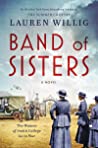
I reviewed this excellent novel in January, based on a true story of American women that travel to France to help civilians during World War I. If you haven’t checked it out, have a look by clicking the link below the picture.

The Four Winds, by Kristin Hannah****-*****

“‘My grandfather was a Texas Ranger. He used to tell me that courage was a lie. It was just fear that you ignored.’ She looked at him. ‘Well, I’m scared.’

‘We’re all scared,’ he said.”

Kristin Hannah’s electrifying new novel, The Four Winds, is set during the Great Depression in the American Dust Bowl and California. It’s a story about courage, and about the ways that love can transform us. My thanks go to Net Galley and St. Martin’s Press for the invitation to review. It’s for sale now.

Elsa is born into a wealthy family, but this doesn’t do her much good. She is tall, ungainly, and considered homely by her parents, a contrast to her two younger, more adorable sisters. She was very ill when younger, and the family liked having her tucked away in her room so much that they would like her to remain there. When company comes over, it is suggested that she go “rest.” Affection and kindness are denied her entirely.

One day, in a fit of unheard-of rebellion, she buys herself a silk dress and sneaks out to a speakeasy. There she meets Rafe, and before long she is rolling in the hay. When the morning sickness comes upon her, her furious father drives her to the Martinelli farm, (“Italians, no less!”) and she is unceremoniously dumped there. The baby is a Martinelli, he tells them, and it—and its mother—are your problem now.

Rose and Tony Martinelli are not affluent like Elsa’s parents; she learns to haul water and do farm chores, and she learns how to make delicious, cheap food the Italian way. But her father’s abandonment is a blessing in disguise, because the Martinellis are good people. She is happy there with them. She marries Rafe, and she bears two children. But the land has been over-farmed, and soon the dust storms come and destroy nearly everything they have built:

Past the outhouse, a murky, urine-yellow haze burnished the sky. Wind picked up, barreled across the farm from the south. A board flew off the chicken coop and cracked into the side of the house. Rafe and Tony came running out of the barn. The cows mooed angrily and pushed into each other, pointing their bony butts into the dust storm.

The door opened. Rose yanked her to her feet, pulled her into the rattling, howling house.

Elsa and Rose ran from window to window, securing the newspaper and rag coverings over the glass and sills. Dust rained down from the ceilings, wafted from infinitesimal cracks in the window frames and walls. The candles on the makeshift altar blew out. Centipedes crawled out from the walls, hundreds of them, slithered across the floor, looking for somewhere to hide.

A blast of wind hit the house, so hard it seemed the roof would be torn off. And the noise. It was like a locomotive bearing down on them, engines grinding. The house shuddered as if breathing too hard; a banshee wind howled, mad as hell.

Friends, this isn’t even the climax. This is sixteen percent of the way into the story. And misery and tribulation continue to rain down on this poor little family and thousands more like them. The crops die, and the livestock that doesn’t starve is killed by breathing dust. Children, including Elsa’s little boy, fall ill with dust pneumonia; no matter how hard they try to prevent it, so much dust is in the atmosphere that it makes its way into the lungs, and so the youngest and oldest are soon in trouble.

The first half of this novel is a rough read. There’s sorrow, and suffering, and loss, and grief, and I find myself eyeing the page numbers and thinking to myself that if this were written by anybody else, and if I didn’t owe a review, I probably wouldn’t finish it, because who wants an entire story of this? But at about the halfway mark, things begin to change.

By now, Rafe has hit the bricks. Never a man of character or great resolve, he sneaks off into the night, leaving the three remaining adults to care for the children and the farm. And it is now that change takes place. Without Rafe to anchor the family as is traditional during this period, Elsa is left to make the decisions about her children’s futures, and in doing so, she changes.

Hannah portrays the Depression era American West vividly and accurately, and this is when the story grows legs. The plight of agricultural workers is likewise dealt with in clear, immediate detail. My one quibble, and it is the source of the missing half star in my rating, is her inexpert portrayal of Communism, which plays more than a passing role in the last thirty percent of the story. The first time I saw farmworkers’ struggles as “shutting down the means of production,” I cleared my throat, but I told myself it was possibly a typo that might be edited out in the finished version. The next two times I saw it, I started making notes. This is not a technical error; this is a dumb-butt error (trying to elude the censors here) that should have been caught on the first pass, and because it appears when the climax ramps up, it is a distraction that interferes with the flow of the narrative.

Nevertheless, this is a well-written novel, set during an interesting time period. Particularly arresting is the development of the relationship between Elsa and her adolescent daughter, Lareda, whose point of view is shared alternately with Elsa’s.  Setting, character, and plot work together seamlessly to enforce one another and move the story forward, yet if I had to hang my hat on one laudable aspect of this book, it would be character development.

I strongly recommend this novel to you.  

Foregone, by Russell Banks*****

“Oh, Canada!”

Leonard Fife is a legendary filmmaker, his searing social commentary an important part of North American history. But now he is dying, and he has a few things he needs to get off his chest before he goes. My thanks go to Net Galley and Harper Collins for the review copy. This book is available to the public March 2, 2021.

Fife is not a lovable character, and now that the end is near, he wants everyone to know it. With the cameras trained on him, darkness all around him but for the spot shining on him as he speaks, he tells his life’s story, and he spares himself nothing. One relationship after another, abandoned without even a goodbye. Children left fatherless. Lives laid waste in his passing. Banks is one of the most brilliant novelists in the U.S., and his word smithery can turn nearly any terrible story into spun gold, but he never pulls punches. His writing is often painful to read, and here it is true in spades, agonizing. By the halfway mark, I am watching the page numbers crawl by and wishing it over.

But of course, there’s a surprise in store.

I don’t want to give spoilers, but in the last half of the book, the question arises as to whether our narrator is reliable. He says he did all of these dreadful things; but did he really…?

The book flows so seamlessly that the difficulty of writing it is not obvious, but here it is: almost the entire thing is one man’s narrative. There’s very little dialogue. It’s not an easy thing to carry off, and yet, this is Banks, and he does.

As his narrative unspools, we are occasionally reminded of his current circumstances by breaks in the action. Once in awhile he is overtaxed and starts to drift off, or worse, and action has to cease immediately while the nurse does important things quickly. Now and then she has to change his bag, or help him onto the toilet and wipe his butt afterward. There’s not a lot of dignity left to the man. But he doesn’t give a…okay, I’m not saying it.

As he insistently recounts his many betrayals of loved ones, ignoring the more suitable, conventional questions that the people filming him thought were going to provide the framework of the film, he makes it crystal clear that it doesn’t bother him in the slightest, what he is doing to his legacy. Torpedo all of it; hell, he’ll be dead before the film opens. What he wants is to be truthful, and the one person he wants to know the truth is Emma, his wife. He knows he cannot be truthful with her unless the camera is rolling, and he won’t proceed unless she is there. RIGHT there. He calls for her many times, making certain she hasn’t left. And through the occasional things she says, we are aware that Emma is not merely his arm candy, not a sycophant that married him for fame, fortune, or prestige; she’s a respected professional in her own field, juggling her own commitments in order to be present here and now for Leonard.

By the time the story ends, my feelings have changed. Leonard is still no angel, but he’s not the sack of excrement I believed him to be, either. The guy I hate at the end is the filmmaker, once Leonard’s protegee, but now wolfishly eager for his mentor to die on camera for him. The nurse orders the camera turned off, but the director calls over the top of her to keep it rolling, the vulture. I want to smack him!

Ultimately we see that death is a final betrayal, a form of abandonment; but Leonard is at peace, because his goal is realized. And this is the story’s title, but I am not going to tell you how that works.

Get the book and read it. All your own sorrows will feel smaller.

Band of Sisters, by Lauren Willig*****

Lauren Willig is an established author, but she is new to me. Band of Sisters, her newest release, has made me a fan. I read it free and early, and my thanks go to Net Galley, William Morrow, and Harper Audio for the review copies. It will be available to the public March 2, 2021.

A group of Smith College alumni sail to France on a mission to help civilians suffering extreme deprivation during World War I.  “They carry money, supplies, and good intentions—all of which immediately go astray,” says the promotional blurb, and that’s what happens. It’s hard to make plans when you don’t know which way the battle may turn or where bombs may fall, but these are plucky women, two doctors among them, and several of them are members of wealthy, influential American families as well. The story is based on actual women and events, and the teacher in me wishes I were still in the classroom and able to order sets of this excellent novel to share with honors students, girls especially, who need to see more of themselves in the study of American history.

Our two protagonists are Kate and Emmie, best friends and roommates a decade ago, united in this adventure. Kate is the only woman among the “Smithies” that doesn’t come from money and that doesn’t pay her own way; she is led to believe no one else paid their own way, either, but it isn’t true. And this is a chewy, inviting historical truth that we don’t see often in fiction. Though social class divisions are every bit as present and sharp today, assumptions made by most Americans have become more generous. During the early years of the twentieth century, there was a widely held belief that rich people were better in other ways as well, whether they had earned their fortunes or inherited them. They considered themselves to be God’s own chosen ones, and their wealth was one more sign that the Almighty loved them a bit more than others. Poverty was considered shameful, a thing to be concealed; there were no government funds of any kind to help the poor, and if there had been, women like Kate would have just about died before accepting them. Taking charitable contributions was a sign of personal failure and possibly dishonesty to most people back then. And the truth is, Kate isn’t impoverished, and she surely hasn’t failed at anything, but she has to work to earn her living, a thing most Caucasian women in the U.S. didn’t do in 1917. She is horrified when, midway through our narrative, she learns the truth about her travel expenses, and this creates one of the crises within the story.

Willig is a fine novelist. The pace never flags, and there’s never a moment of revisionism that makes me blink. She is true to the time period and the characters. Emmie’s character is a harder sell, to my way of thinking, because she comes from tremendous wealth, but her family has made her feel unworthy because of her physical appearance, and by the end of the book, I love Emmie as much as I do Kate.

I’ve plucked a sample for you, a scene in which Kate and Emmie are evacuating an area which is being overrun by the Germans:

[Kate] wanted Mrs. Barrett; she wanted Dr. Stringfellow; she wanted anyone who could tell them what to do and where to go. Grecourt looked different already, the anemones churned up by the tread of two hundred soldiers, tents dotted around the lawn, Maybe, if she closed her eyes and wished hard enough, she could make it a week ago; the ground bright with flowers; slipping into story time and holding Zelie on her lap while Nell read to the basse-cour children in French about little Red Riding Hood and the Big Bad Wolf, joking with the unit around the supper table about their amazing ability differentiate between types of guns.

But it wasn’t a week ago. The Big Bad Wolf was here, he was on the march, with his big, big teeth and big, big guns, and maybe she wasn’t the best the Unit could have, but she was what they had right now.

By the time we reach this part of the story, I could not stop reading if I wanted to. It would have been impossible.  

The hardest characters for many writers are the children, and although we have no child protagonists, there are numerous scenes in which children play a part. How does a child act when he is traumatized by war? Willig is in perfect form here as well.

I received both the digital review copy and the audio, and I used them both. At the beginning there are so many women introduced to us at once that I felt lost with just the audio, and so I listened and read along to keep track. The narrator, Julia Whelan, does a superb job with a challenging manuscript, changing her tone and point of view to let us know which woman’s point of view we are hearing. My only concern regarding the audio version—which is much easier to follow once you have learned the most important characters—is that the story begins with a lengthy list of the women that participated, and it’s not great to listen to. I recommend you fast forward the audio to somewhere between five and seven percent, and then dive in.

I requested this galley because a number of Goodreads friends whose opinions I respect recommended it to me, and all of them were absolutely right. This book is a gem, and I highly recommend it.

The Unwilling, by John Hart*****

This one was worth the wait! John Hart’s new historical mystery, The Unwilling, is simply magnificent. My thanks go to Net Galley and St. Martin’s Press for the galleys; this book will be available to the public February 2, 2021. Those that love excellent fiction should get it and read it.

The French family is troubled. The father is a cop in their small hometown in North Carolina; the mother, Gabrielle, has some sort of emotional disability. Bipolar? Anxiety disorder? Who can say. All we know is that her nerves are shot, and she loses it quickly and easily. The couple have three sons; the first two are twins, but Robert, the golden one, is dead, killed in Vietnam. Jason went to ‘nam too, and rumors say that he killed 29 people there in his first year. He is rumored to be bad news and has already done a stretch in prison. That leaves the youngest, Gibson, known as Gibby. Both parents are possessive of him. As adolescence sets in, it begins to chafe, the way he is overprotected, and now that he’s a high school senior, he’d like a little more room.

And then Jason is released, and he comes home. He isn’t welcome at the family manse, so he stays elsewhere, but he wants to spend some time with Gibby before he blows town.

The title is a chewy one. Initially, I associate it with the daredevil stunt that some high school seniors—mostly boys—consider a rite of passage. It involves jumping into the quarry from a very high bluff; make the jump wrong, and you’ll be dead when you land. Gibby doesn’t jump. Jason does.

The basic framework of the story has to do with crimes Jason has done time for, and others that are committed while he’s in town. A girl he’s spent time with is viciously tortured and murdered, and many in the community make assumptions. But in reality—and we know this early on—he is being framed by a man known as “X” in prison. Truth be told, X is actually the weakest element of the story, and he’s mostly superfluous, but since this is supposed to be a thriller, the thread involving him adds suspense, particularly at the end. The climax is something else again.

But the most interesting aspect of the narrative has to do with the family, and by extension, one could say, all families. Over the course of time, a family’s story is told, and eventually labels develop. The small town setting in a pre-internet era makes this especially true, since most people’s interactions are limited to those that live in the same vicinity. And so, Robert French is the tragic hero, cut down in his prime while fighting for his country; Gibby is the baby of the family, a good kid, a good student; and then there’s Jason. Not long after the murder, Detective French speaks with the medical examiner about Tyra’s murder, and he asks the ME what would make someone do this; not just murder, but torture and mutilate. And the ME tells him that although it’s not the accepted clinical expression, “People like that are born wrong.”  And though French is reluctant to say such a thing about his own son, he wonders if he should accept this as true. His wife, mother of all three sons, tells him, “Gibby is all that matters.”

But as the story progresses, we see that there’s more to this story; a lot more. Jason has simply given up trying to defend himself. Refusing to do so is why he spent time in prison. When the world gives up on you, why try? To be sure, he’s no innocent, sad-eyed puppy. He’s seen things, and he’s done things. But people are complicated, and when we try to drop them into neatly labeled boxes, we shut ourselves off from learning details that don’t fit the picture we’ve painted.

For me, this story was less about solving a crime, and more about the characters. I was thrilled that the main story wasn’t about Robert. I’ve read too many novels lately that focus on the dead sibling, and it’s becoming trite. But Hart is a seasoned author, and he doesn’t drop into that well-worn channel. Instead, we see why various well-crafted, complex characters think and act as they do. Reading it, I find myself thinking about my sisters, and the small ways in which we developed labels as children and young adults; happily, none of us was labeled the bad seed, but if we’d been boys…? And I think also of my own children. For a brief, terrible time, I saw my eldest as that person, the one dragging his sister into trouble. Later, much later, I learned it was actually the opposite, but he figured it was better if one of them was still in good standing, and so he took blame that wasn’t entirely his. It’s not a great feeling, but at the same time, my own experience made this story more interesting, and I’m willing to bet there are a great many other readers that will read this book and think about their own families as well.

There are appealing side characters here, and the most compelling is Gibby’s best friend, a kid from the wrong side of the tracks who wants to make good.

So who is the unwilling one? Is it Gibby, for not jumping off the bluff? Is it Gabrielle, for not entertaining the possibility that her son, Jason, deserves more than she is willing to give him? Is it Detective French, for not being willing to completely give up on him? You can take this title in a lot of different directions.

Hart’s literary prowess shines here. It’s not always an easy read; during the more violent patches, I took it in small bites. I received both the print and audio galleys, and I moved back and forth between them, leaning more toward the audio, whose reader, Kevin Stillwell, does an outstanding job; but at times I forgot something, or wanted to check a detail or highlight a quote, and then I dove into my digital review copy. You can go either way without fear of disappointment.

Highly recommended.