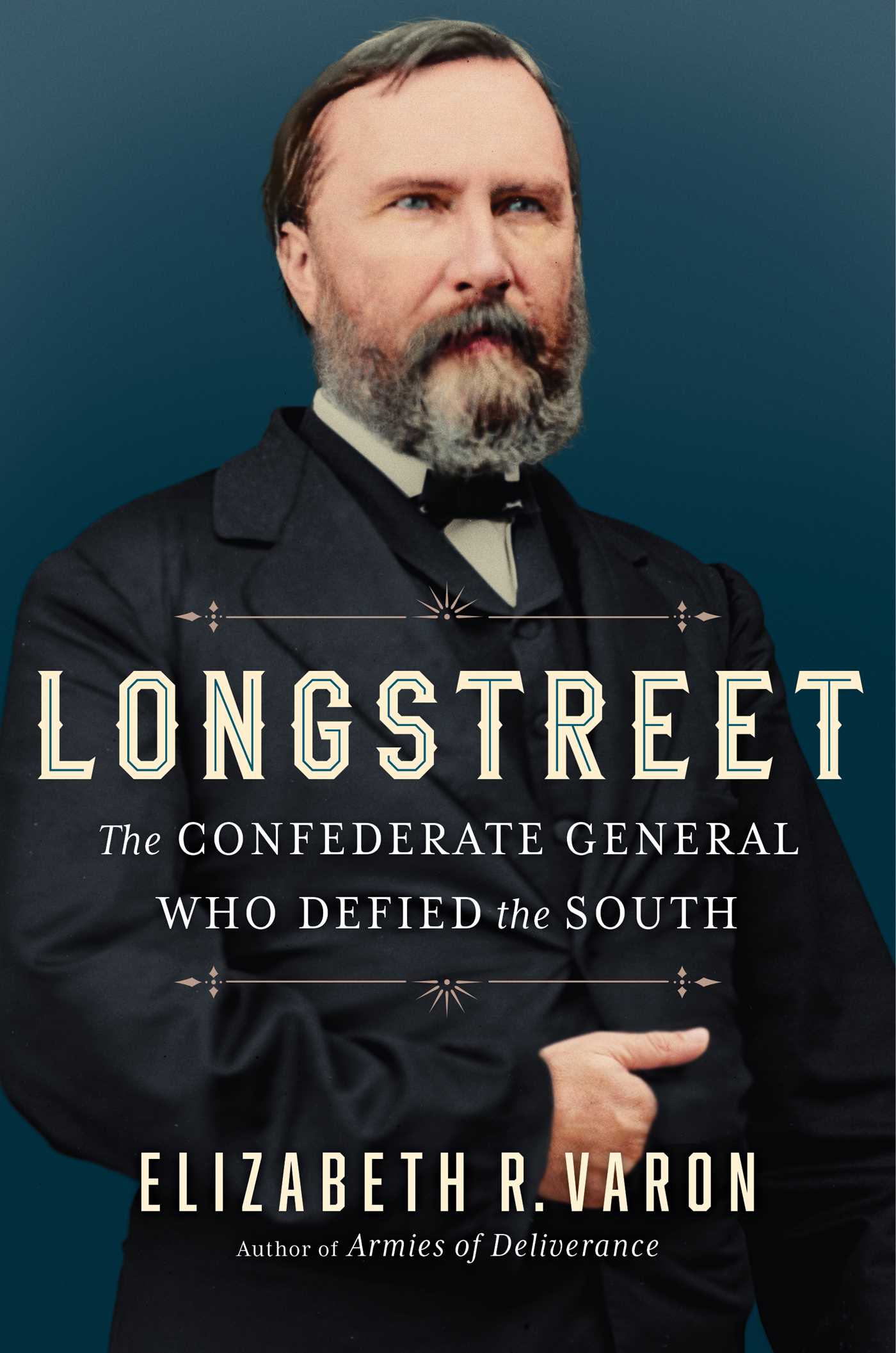
Longstreet, by Elizabeth Varon*****

Longstreet: The Confederate General Who Defied the South is a biography that focuses on Longstreet’s military service in the American Civil War, and his political life thereafter. It’s meticulously researched, and the documentation is among the best I’ve seen anywhere. Students, Civil War buffs, and other interested readers won’t want to miss it.

My thanks go to NetGalley and Simon and Schuster for the invitation to read and review. This book is for sale now.

James Longstreet was one of the most able and respected generals for the Confederacy, serving as General Robert E. Lee’s right hand officer. Lee called him “my old war horse.” However, a disagreement between them about strategy at Gettysburg has made Longstreet a convenient scapegoat for Lost Cause types that accuse him of treachery, of deliberately sabotaging the deadly three day fight, and thereby causing the rebels to lose a key battle. Varon sets the record straight, and then goes on to explain what he did following Lee’s surrender and the Confederacy’s failure.

When I saw the subscript in the title, I wondered whether Varon might be overstating Longstreet’s postwar behavior in order to draw readers. Having read it, I can say that she has not overstated one single thing. This is a fair and balanced account. In essence, Longstreet recognized that, while the Confederate Army fought long and hard, it had in fact lost, and there was no good to be gained from further destruction at a time when reconciliation was more important. He basically said that having lost the war, the best thing for the South to do is recognize that the war is done, and proceed to obey the laws of the United States and rebuild the ruined Southern states.

I was unaware, before reading this biography, how extensively defeated Caucasian Southerners were inclined to sabotage the U.S. government. Guerilla actions were common, along with the passage of local laws that directly conflicted with Federal ones. Acts of terror against African American former slaves, as well as free Black Southerners, were frequent whenever Federal troops or other peacekeepers were not present to see to their safety and their rights. And though I had not realized it, Longstreet hailed from Louisiana, which seems to have had the ugliest resistance of all, with the White League and the Knights of the White Camelia wreaking havoc against Blacks that occupied governmental posts, became too prosperous for the liking of local Whites, or that in any way displeased any White person of any social standing. Longstreet did his best to shut that down; he failed.

Varon discusses the role played by Longstreet’s personal friendship with U.S. Grant, one which predated the war; he was best man at Grant’s wedding to Julia. She suggests that although the friendship was important, Longstreet was also acting on principle.

Varon doesn’t overstate her case, and is measured and fair in her assessment. She points to the occasions when Longstreet folded and cooperated with the local racists in that well-traveled road of U.S. politicians: I have to do this terrible thing in order to get elected, or I can’t do any good for the former slaves or anything else. This habit, both past and present, sets my teeth on edge, but she doesn’t defend it. She also points out that had the Confederacy won the war, Longstreet would have remained a Dixie racist for the rest of his life, more likely than not.

Those looking at the length of this book—over 500 pages—should be aware that about the last twenty-five percent of it is endnotes, with documentation, bibliography, etc. And while it may be more than a general reader that simply enjoys a good biography might appreciate, those interested in the Civil War should get this book and read it.

Charlie Chaplin vs. America, by Scott Eyman*****

Charlie Chaplin rose to fame over 100 years ago, but his fame hasn’t faded over the years. One of the most visionary movie makers in modern history, he rose from desperate poverty and homelessness during his childhood to become one of the wealthiest and most respected men in his chosen profession. And yet, for some odd reason, the U.S. government relentlessly pursued him as if he were an enemy agent, eventually forcing him to retire abroad. It’s a bizarre episode in U.S. history, and a fascinating one.

When I saw that Scott Eyman, an author whose biographies of actors I have previously enjoyed—John Wayne, Jimmy Stewart, Henry Fonda—had written about this case, I had to read it. My thanks go to NetGalley and Simon and Schuster for the invitation to read and review. This book is for sale now.

Charlie was born in 1889 in London. His mother Hannah was an actress, a loving mother whose health was dreadful. In addition to more conventional illnesses, she was sent repeatedly, and for longer stretches each time, to mental hospitals; it has been speculated that she suffered from syphilis, which eventually had devastating effects on her brain. Charlie’s father was a businessman who left the family and refused to pay a single shilling of child support because one of Charlie’s brothers was conceived with another man. And as an aside, if there is an afterlife, I sincerely hope that Charles Chaplin, Senior is roasting eternally in the flames of hell.

For a while, Hannah’s relatives cared for Charlie and his older brother, Syd, but eventually the boys found themselves in a workhouse, beaten, abused, sickened, and barely fed. It was his brother Syd who first discovered that acting could keep him out of the workhouse and put food on the table, and once he was so employed, Syd took his pale, sickly little brother to the theater and persuaded his boss to use Charlie, too. Thus was a star born.

His tremendous suffering during his childhood gave Charlie a lifelong sympathy with the working class, the impoverished, and the down and out. Early in his career, a director gave Charlie a costume and told him to come up with a character, and this was when he invented The Little Tramp.

I’ve known for most of my life about Charlie’s expulsion from the U.S., but I’ve never been sure whether he was a Communist. I’ve known people brought up in Communist households in America, and for many years, they existed strictly underground, so I wondered, did Chaplin deny his affiliation because he wasn’t a Communist, or because he was? Eyman’s meticulous research demonstrates once and for all that Charlie was not political. He told the truth about himself: “I am not a Communist. I am a peace monger.”

Nevertheless, once he gained prominence in the American movie industry, he had a target on his back. It’s difficult to understand why politicians and bureaucrats in California and in Washington, D.C. hated him so fiercely.

“A month after the revocation of [Chaplin’s] reentry permit, the FBI issued a massive internal report documenting more than thirty years of investigations focused on Chaplin, a copy of which was dispatched to the attorney general. The report revealed that, besides the FBI, Army and Navy Intelligence, the Internal Revenue Service, the Central Intelligence Agency, the Department of State, and the U.S. Postal Service had all been surveilling Chaplin at one time or another. In short, the entire security apparatus of the United States had descended upon a motion picture comedian.”

Eyman has done a wonderful job here. Because I had fallen behind, I checked out the audio version of this book from Seattle Bibliocommons, and I alternately listened to it and read the digital review copy. Of course, anyone reading this book for the purpose of academic research should get a physical copy, but those reading for pleasure may enjoy the audio, which is well done; this is a through, and a lengthy biography, and the audio makes it go by more quickly.

I confess I haven’t read any other Chaplin biographies, so I cannot say for certain whether this one is the best, but it’s hard to imagine a better one. For those sufficiently interested to take on a full length biography, this book is highly recommended.

A Fever in the Heartland, by Timothy Egan*****

Timothy Egan, winner of the Pulitzer Prize, is one of my favorite historians to read. His most recent book, A Fever in the Heartland occupied the bestseller lists for months, and rightly so. I took my time with it because it is a very uncomfortable read most of the way through, with the first half being much rougher than the last. I learned a lot from it, and this is clearly a case of truth being stranger than fiction.

The Klan was originally formed by former Confederate officers after the Union’s victory in the American Civil War. However, it was stamped out during Reconstruction, and was gone for fifty years. It was revived on Stone Mountain, Georgia, and the horrifically racist film by D.W. Griffin, The Birth of a Nation, which depicts African-American men as crazed rapists that drink to excess and lose their minds when a Caucasian woman is anywhere nearby, not only aided its reincarnation, but contributed one of its most feared symbols. No crosses were burned until it showed up on movie screens around the United States; the pointy hoods were shaped that way to make the men underneath them appear taller. Later, the women’s organization had robes with cardboard forms in their own pointy hats, because a night of terrorism is no excuse for a woman to let her hair get out of control.

At one point, one Caucasian man in three belonged to the Klan. There was even a children’s organization, with activities similar to boy and girl scouts.

The woman that is at the center of this story, Madge Oberholzer, was the secretary in the office of D.C. Stephenson, the Grand Dragon of the newly revived Klan. Despite the hugely moral speeches he gave around the country extolling traditional values (for the time) including the avoidance of alcohol; women that remain virgins until marriage and then live their lives in service to their husbands and young children; Protestantism, with regular church attendance; Caucasian separation from other races and ethnicities; and unquestioning patriotism, Stephenson himself was a drunk, as well as a serial rapist and sexual sadist, fond of using his teeth to mutilate the women that he savaged. Madge was the one victim that would not crawl into the shadows, and she literally used her last dying breaths to expose him.

I was given a hardcover copy of this book when it was at its height of popularity, but it took me a long time to get through it, because I could only stand to read a few pages at a time. The end was enormously satisfying, however, and even in the worst parts, there are occasional moments that made me want to stand up and cheer. For example: the Klan plot to go the University of Notre Dame—a Catholic university– and burn the golden dome there was foiled by its football team, and the melee that ensued when they physically attacked the Klan is the origin of their nickname, The Fighting Irish. (The dome survived.)

Often when I read nonfiction history, I can’t help imagining how much more interesting it would be if it were written as historical fiction. That was never the case here. Firstly, if this were a fictional account, reviewers everywhere would have been brutal, because nobody would ever believe a story like this one. But the fact is, it’s entirely true, and Egan is second to none when it comes to research. Also, his conversational narrative style is as interesting as the best historical fiction; the pace here is slowed in places, not by any lack of authorial fluency, but by the horrifying nature of this true story.

For those that have the capacity to read something like this without becoming morbidly depressed or coming unstuck, this book is highly recommended. For everyone else, I recommend finding something lighter and more uplifting to alternate with it, and to never read this at bedtime. You won’t want it in your dreams.

The Last Outlaws, by Tom Clavin***

Tom Clavin is the author of Blood and Treasure: Daniel Boone and the Fight for America’s First Frontier, which is one of the best nonfiction galleys I’ve ever had the pleasure of reading, and so when I saw his new book, The Last Outlaws: The Desperate Final Days of the Dalton Gang, I jumped at the chance. My thanks go to NetGalley and Macmillan Audio for the review copy. This book is for sale now.

Sadly, I didn’t find the same level of fascination this time around. Outlaws! The Dalton Gang! How could this not be absorbing? And yet.

It is possible that had I read it rather than listened to it, I might have thought better of it. The narrator speaks in a clipped voice that at times approaches a monotone. I recall having an older male relative fast-reading some sort of legal agreement out loud. He obviously didn’t want to read it but had been told he must read every word before signing, and so he rushed through it, out loud, without pausing between the sentences, just to get through it. This seemed a little like that, as if the voice actor was bored to tears and wanted to be done. There is a place about a quarter of the way in where both he and the narrative perked up some, and I thought, Ah, here we go.

But we didn’t.

On the plus side, Tom Clavin gets his information straight before he writes anything, ever, so whereas those looking for entertainment should look elsewhere, those that genuinely want the information should get this book, either digitally or as a bound copy, and read it. Those doing research for a history essay or the like could do a lot worse than this.

So there you have it. Clavin is a capable author, and I am not done with him, but this narrator and I are finished.

Lexington, by Kim Wickens****

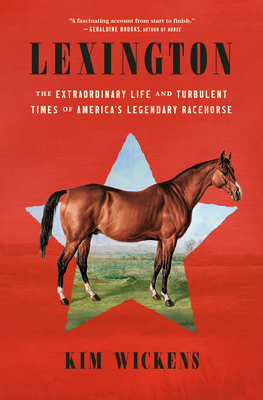
Kim Wickens’s book Lexington tells the story, not only of one immensely famous, popular race horse, but of horse racing in general during a bygone era in the U.S. My thanks go to Net Galley and Random House Ballantine for the review copy. This book is for sale now.

From 1780 to 1860, horse racing was the most popular spectator sport in the United States, and almost a religion in the South. Great fortunes rose and fell with the purchase, training, performing, and procreating of prize horses, and Lexington was the greatest of them all. Kim Wickens has done an astounding amount of research. This is probably the best documented work on equestrian history on the market today. If you love horses, and especially if you love horse racing, then this book is for you.

This reviewer knows little about either subject; I read it because it was different from most history books I’ve seen. My particular interest is the American Civil War; the synopsis mentioned General Grant and Abraham Lincoln, and I was all in. One of Lexington’s progenies was gifted to Grant by a supporter during the war, and he prized it greatly. The horse, Cincinnati, carried its new owner into at least three major battles. Grant allowed no one else to ride it, except, on a single occasion, President Abraham Lincoln.

Sadly for me, that’s about all we see of Lincoln, Grant, or the Union Army. It’s done in about four pages, which left me with 412 other pages. There are additional aspects here that are of interest to me, in particular the role of Lexington and his descendants in the crime spree by a bushwhacker named Sue Mundy, a name the man took on in order to throw lawmen off his trail. In fact, I found the second half of this meaty story to be much more interesting than the first half. Of course, although I like horses well enough from a distance, I have never been a rider or had any active interest in them. I am a city dweller, urban to my bones. For horse lovers, perhaps the first half will be as interesting or even more so.

One thing that I must mention has to do with the difficult material. This is nonfiction, and sometimes Lexington and other horses were mistreated by those responsible for their care. Whereas some race horse owners genuinely loved their steeds, ultimately they were investments. What to do with a horse, whether to race it or rest it, keep it or sell it, was governed mostly by the bottom line. Doubtless they would be appalled, were they alive today, to see the vast amount of coddling and spoiling we in the twenty-first century devote to our various fur babies. If you were to make a Venn diagram between us, about the only item that would occupy the shared bubble in the middle would be that we all own animals. That’s it. Whereas there is never any gratuitous description of the violence and other cruelties visited on the horses Wickens discusses, it’s in there, and if you can’t stand it, don’t read it.

I have rated Lexington four stars for a general readership, but for those with a strong, particular interest in horses, racing, and the history of both, this is most likely a five star read. Wickens is off and running!

If It Sounds Like a Quack, by Matthew Hongoltz-Hetling*****

Pulitzer Prize finalist Matthew Hongoltz-Hetling takes on the weird world of alternative medicine and the medical freedom movement in his new book, If It Sounds Like a Quack. My thanks go to Net Galley and PublicAffairs for the review copy. This book is available to the public right now.

The fact is, I have—or I had—no particular interest in alternative medicine, but I had read Hongoltz-Hetling’s last book, A Libertarian Walks Into a Bear, which was well researched, well written, and most importantly, completely hilarious. I have reviewed over 800 books, but the number of those that I later purchased is smaller than 10; yet I bought that book to give as a Christmas gift. So when I saw that he had another book available, I didn’t hesitate. And I wasn’t disappointed.

The book describes the bizarre programs and treatments espoused by six individuals: Larry Lytle, Toby McAdam, Robert O. Young, Alicja Kolyszko, Dale and Leilani Neumann, and The Alien. The seventh player in each section is America, and that’s where we see what U.S. laws say, and what enforcement, if any, comes down on these snake oil salesmen.

The opening section, the first of four, introduces each of these players and explains what led to them going into the businesses they have chosen. Among the various One True Cures are a laser salesman, a leech peddler, faith healers, a supplement seller, and a Mormon missionary that resurrects a long-dead theory about germs. There’s also a pair that develops a health drink; one of them is human, and one is not.

The author suggests that the success of these characters—and some of them have become wealthy beyond belief—has a good deal to do with the state of standard medical care in America. Nobody trusts Big Pharma. The disparity of what treatments we can expect is so great that in one New York hospital, there’s a wait time in the ER of nearly 6 hours for most people, whereas the wealthy can get a private room with high thread count sheets and a butler. One can see why many people conclude that anything must be better than this; yet, they are mistaken.

Apart from his sterling research and documentation, and his clear, conversational tone that at times caused me to forget, momentarily, that I was reading nonfiction, the thing that sets Hongoltz-Hetling apart from others is his ability to shift seamlessly from prose that is falling-down-funny, to that which is not only serious, but tragic, without ever breaking the boundaries of good taste. Because he did it so brilliantly in his last book, I watched for it this time—and I still couldn’t catch the segue way from one to the other.

Because I had fallen behind in my nonfiction reviews, I checked out the audio version from Seattle Bibliocommons and listened to it while I watered my plants. It is very well done, and I had no problem following the thread. The only downside is that the printed version has some humorous puns by way of spelling that the listener misses.

One way or the other, get this book and read it, even if the topic isn’t inside your usual field of interest. Highly recommended to everyone.

Biting the Hand, by Julia Lee****

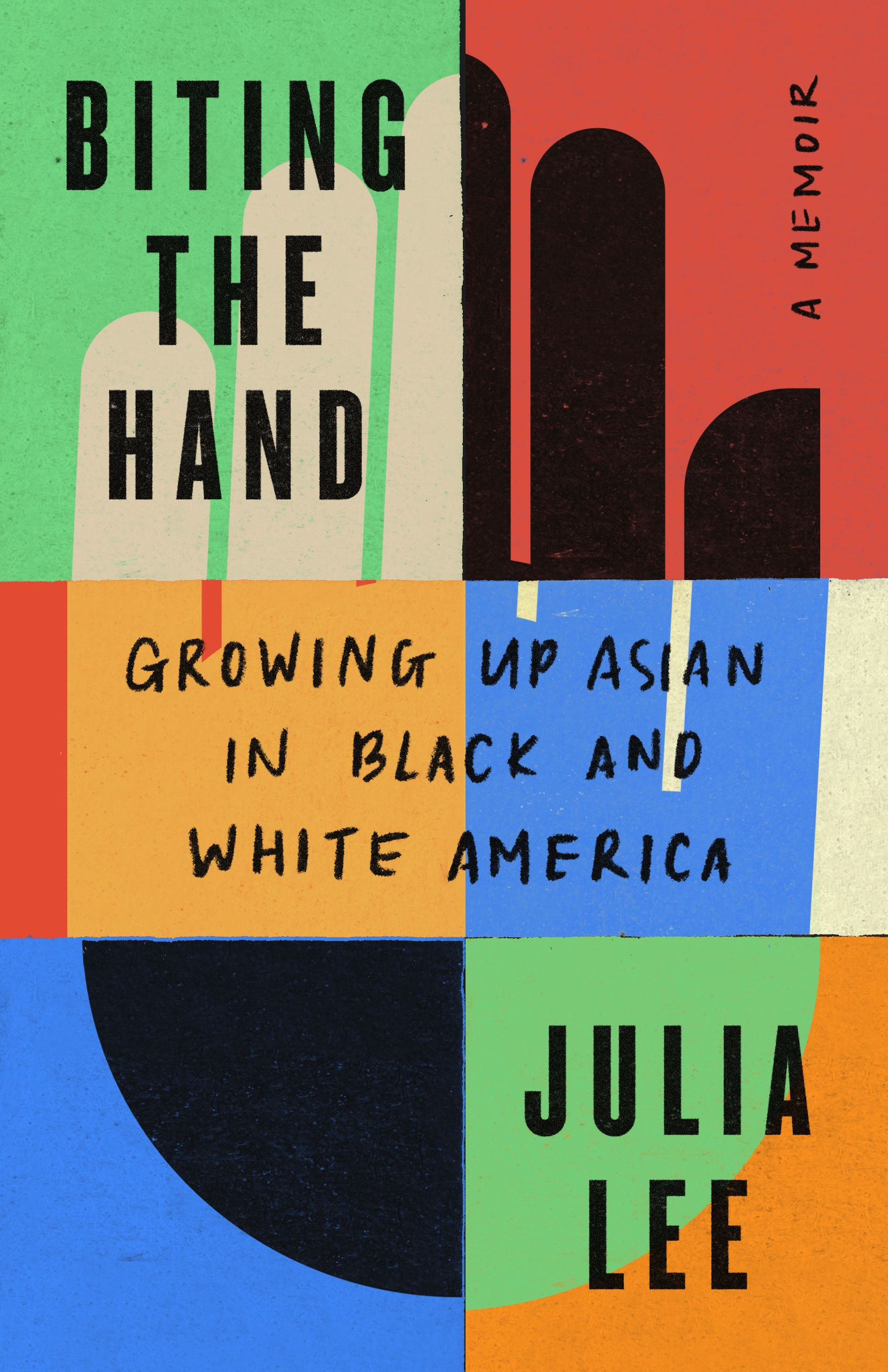
Julia Lee is not amused, and she’s decided to say the things nobody else is saying. In this deeply analytical, provocative memoir, she tells us about her own experiences growing up, and the issues faced by Asian immigrants and Asian Americans in the United States, where “we are critical to the pyramid scheme of the American Dream.”

My thanks go to Net Galley, Henry Holt Publishers, and Macmillan Audio for the review copies. This book is for sale now.

In some ways, I feel as though I am reading someone else’s mail as I read this, because it is clearly intended for an audience of people of color. However, I did read it, and I’m going to review it.

When the discussion of race in the U.S. comes about, it is, as Lee states, almost always a conversation about Black people and Caucasians. Those that don’t fit into either group are sidelined. Perhaps more harmful is the way that people of Asian descent are presumed to be sympathetic to the status quo. Ever since a major news periodical dubbed Asians as “the model minority” back in the early 1960s, expectations and assumptions have leaned in that direction. And the roots of this division—Black versus Asian—make this a particularly thorny assumption to untangle. After all, a large percentage of African-Americans can trace their lineage to slavery; their ancestors weren’t born in the States, nor did they choose to come here, but were kidnapped and brought by force. Angry? You bet! But Asian immigrants came of their own accord, oftentimes fleeing untenable circumstances in their countries of origin. And so, their children, and those that have come after, have largely been indoctrinated to be appreciative. If things don’t go well, they tell them, then we must work harder!

This Caucasian reviewer comes to you without the Asian background, appearance, or experience that Lee speaks of; yet I live in a city that has one of the largest Asian populations in the U.S., and am married to an Asian immigrant, and parent to a child that is half-Japanese. So many of the stories—strangers that ask where you’re from, and won’t accept the truth of “California,” where Lee was born, or “Seattle,” my daughter’s hometown, are familiar ones.

Lee is fed up with the mainstream news stories that endeavor to pit Asian and Black people against each other. Her parents were small business owners in a mostly Black part of Los Angeles during the riots of 1992, and her experiences inform her conclusion, that there must be solidarity between all people of color in order to successfully fight for significant change.

The one bone I have to pick is the casual manner in which she dismisses the question of social class as a key factor. Her very brief note about this is that it’s a tomato and to-mah-to issue, not worth much discussion, because most people of color are working class. This is simply untrue, and it enforces a stereotype of Black people as being mostly poor and dispossessed, when in actuality, eighty percent of Black people in the US live above the poverty line. There are African-Americans that have far more money than I will ever see; some of the many Asian groups have a higher median income than Caucasians. So yes, social class is a huge factor here, one that Lee should examine more critically. There are working class Whites that can be allies; there are wealthy families of color that would shut down the struggle, given half a chance. The missing star in my rating reflects her failure to recognize this, and to offer concrete solutions to this problem.

The book’s title comes from Lee’s mentor at the otherwise very white-supremacist dominated Harvard—Jamaica Kinkaid. I actually gasped when I saw this. What a luminary she found to guide her!

Both the audio and print version of this book are equally readable, so go with whatever you usually prefer.

This is a fine resource for those seeking to examine Asian and Asian-American racial dynamics. Read it critically, but do read it. There’s a lot here that has needed to be said for a long, long time.

Our Man in Tokyo, by Steve Kemper****

My thanks go to Net Galley and Mariner Books for the invitation to read and review; Our Man in Tokyo is for sale now.

For the most part, my curiosity about World War II has been slaked, but this book has a different point of view than any other I’ve seen. American history students know of the miserable experience of the two Japanese ambassadors to the U.S., whose own government did not even give them a clue that Japan was about to bomb Pearl Harbor, right there on American soil. But I had never heard a word about their counterpart, the U.S. ambassador to Japan. Joseph Grew was a skilled and seasoned diplomat, and he tried mightily to find common ground between the two nations. Of course, in the end he was more or less shouting into the wind. But I had never read a single thing about him, and so this biography caught my interest.

Readers should know that the last two thirds are much more interesting than the beginning. I don’t care about Grew’s early life, or his marriage, or his golf game. I’m in this strictly for the historical record regarding the U.S. and Japan during the period leading up to the war; also, of course, I wanted to know what happened to him, stationed over there as he was, once war broke out. All of these things are explained clearly and in a conversational manner that is easy to read or listen to. (Since I had fallen behind, I checked out the audiobook from Seattle Bibliocommons, and it sped things up for me.)

The various politicians with whom Grew dealt are interesting indeed. The divisions within the government itself, and also within the Japanese military, created all manner of problems with communication and decision making. There are some bizarre circumstances, and they’re well described. But also interesting to me are the less historically necessary, yet fascinating tidbits that he picks up along the way, living for a decade or so in Japan. Here’s just one nugget for you: Mt. Fuji was (and is) a popular vacation destination, but just prior to Japan entering the war, a terrible trend developed. Young people in their twenties and even their teens went to Mt. Fuji in order to throw themselves into the volcano! When 500 young lives had been lost, the government acted. There were no mental health clinics, and no counselors. Instead, they simply made it illegal to sell anyone a one way ticket to Mt. Fuji. And the really weird thing is, it worked! I am still shaking my head over this one. Kemper’s biography is full of these odd little bits that I doubt you will find anywhere else. His research and documentation are sterling.

As to the audio book, the reader does a serviceable job, apart from his dreadful pronunciation of Japanese names. Shudder.

I recommend Our Man in Tokyo to anyone interested in reading nonfiction about American diplomacy in Japan just prior to the outbreak of war between that country and the U.S. Don’t be ashamed to skip a couple of chapters at the outset if you wish; there’s not much there that will become important later.

Poverty by America, by Matthew Desmond****

“Hungry people want bread. The rich convene a panel of experts. Complexity is the refuge of the powerful.”

Desmond is the author of Evicted, the Pulitzer winning examination of urban homelessness. Desmond himself grew up poor, and his family was forced out of their home when he was a child. These things give him a different and more authoritative perspective than most urban ethnographers.

 My thanks go to Net Galley and Crown Publishing for the invitation to read and review. This book will be available to the public tomorrow, March 21, 2023.

This book is written for a general readership, and it’s more readable than any other nonfiction work I’ve seen on this subject. His tone is conversational, and his research is impeccable, drawing from a wide variety of sources, well integrated and organized. He addresses the past and present roles of racism, explaining how the overtly discriminatory statutes and policies of the past have morphed into more subtly framed, yet still ubiquitous ones of today. He tells us “why there is so much poverty in America and…how to eliminate it.” He speaks to an audience of middle and upper class readers, warning that we must “…each of us, in our own way, [must become] poverty abolitionists, unwinding ourselves from our neighbors’ deprivation and refusing to live as unwitting enemies of the poor.”

In revealing the roots of American poverty, Desmond is thorough. He discusses the role played by medical costs, and the many workers that still cannot afford health care; the withering of unions, and the way that gig workers and independent contractors have replaced permanent employees; incarceration, and the debilitating effects it has, not only on the person sent away, but on their families for generations to come; the way that government assistance programs have been legally diverted to programs having nothing to do with the poor; the way that poor people are forced to pay more for the same goods and services that the better off pay. He discusses the ways that those living in poverty are cut off from political and economic opportunities. He does these things better than anyone else is doing them right now, and it makes me mad as hell, seeing millions of ruined lives all laid out so starkly.

It is when he approaches solutions that things become a little muddy. There are a few of his suggestions that I genuinely disagree with, but most of them are sound; the problem is that, despite his assurance that all of these changes can be made without much incursion into the lives of the wealthy and powerful, the chances of these people agreeing to implement such changes are somewhere between slim and none. He assures us that he is no Marxist (and that’s the truth, alas,) and that the rich can still have plenty; yet in reality, it’s clear to this reviewer that the kinds of changes that are needed are ones that working people will have to force from the tightly closed fists of the rich. This is where the fifth star falls off of my rating.

Nonetheless, Poverty by America is well worth your time and money, and I recommend it to you.

The White House Plumbers, by Egil “Bud” Krogh and Matthew Krogh

Egil “Bud” Krogh was one of the men known as the “White House Plumbers,” which was a small group of operatives that dressed as tradesmen in order to illegally break into and ransack private offices for the purpose of digging up dirt on political opponents. Krogh’s job, together with E. Howard Hunt, was to lead a small team of men to burglarize the office of Dr. Fielding, the psychiatrist that treated journalist Daniel Ellsberg, in search of a way to discredit Ellsberg, whom President Richard Nixon regarded as an opponent.

My thanks go to Net Galley, St. Martin’s Press, and Macmillan Audio for the review copy and audio book. This book is for sale now.

Few people shy of the Boomer generation will have personal recollection of the Watergate scandal that brought down a sitting U.S. president for the first time, and the burglary of Fielding’s office was the first illegal event that set it all in motion. Nixon was furious that the Pentagon Papers had been released and that the U.S. Supreme Court had come down on the side of the First Amendment and the free press. Consequently, the president decided that the executive branch must go it alone, and sought a way to discredit the journalists behind it. That was how all of this came about. He howled about national security, and may or may not have believed it; or, he may have sought to cover up lies he had told to the American people about the war in Indochina, and  since he couldn’t force the publication out of circulation, the next best thing would be to persuade the public that its authors—or annotators, at any rate—were crazy and not to be believed. This background information comes from me, not from the book.

At any rate, this political memoir comes to us courtesy of Bud Krogh, and also his son Matthew, who completed it after Bud’s death. For the purpose of this review, I will use the name Krogh to refer to Bud, unless otherwise noted.

Krogh was brought into this mess by John Ehrlichman, one of the two advisors that were nearly as close as a second skin to Nixon during his time in office. Other accounts refer to both as cold-blooded thugs, and my earlier reading leads me to agree with them, but to Bud, Ehrlichman was a noble soul dedicated to his country and his president, a fine, devout individual that was like a second father to him growing up. It didn’t occur to him, initially at least, that anything he was being asked to do was corrupt or scandalous; here, I find myself shifting in my seat. Surely he must have wondered why this secret little group of men, not even government employees, were being tasked with this job, rather than the agencies that ordinarily do the cloak-and-dagger jobs? He claims that Nixon couldn’t trust FBI director J. Edgar Hoover, who was a slimy character, and that makes at least a little sense to anyone familiar with him. Yikes.

The writing as well as the accountability are uneven throughout this book. The prologue sounds sketchy to me. Those of us that have spent any time at all watching criminal trials take place is familiar with the vaguely nebulous language I see and hear at the beginning of this thing. Instead of saying that he has done something very wrong and is sorry, he says he has made bad choices, and he is sorry about “what happened.” This is the language that guilty people use when their attorney has told them to show remorse. Someone not listening carefully might think that the speaker has apologized, but they’ve actually distanced themselves from wrongdoing. During this portion of the memoir, I glanced at the text and also the device playing the audio, half expecting to see a little slime leaching from its margins.

And yet, at the end, the prose is more eloquent, and the accountability rock solid. Krogh goes to the psychiatrist in order to apologize in person, once he is out of prison. He visits Nixon to apologize to him (which baffles me, but okay.) He claims to have declined a presidential pardon. He never loses an opportunity to put on a hair shirt prior to his many speaking engagements. And so it goes.

One could surmise that the early portion was written by Krogh, and the end written by his son, but even if that is true, those speaking engagements were taken by Bud, not by Matthew, and likewise the specific apologies rendered. So who knows?

The narrator for the audiobook is Peter Krogh, who does a fine job.

If you are interested in studying the Watergate scandal and haven’t read any other books about it, this is not the one. Krogh’s involvement ended with the break-in to Fielding’s office, and he helped cover it up, lying under oath as he was told to do, but he had nothing to do with the Watergate Hotel burglary of the Democratic National Committee’s offices. In short, though famous enough to be remembered for his actions, he was not a central player. For those interested in reading just one book about this scandal, I’d go with All the President’s Men, by Woodward and Bernstein; The Nixon Defense, by John Dean; or Nixon: The Life, by John A Farrell. These are all fairly lengthy; if you are looking for something less lengthy, try One Man Against the World, by Tim Weiner.

As a general read for the uninitiated, I’d give this book 2.5 stars. For Nixon and Watergate buffs, I rate it 3.5 stars.