Lexington, by Kim Wickens****

Kim Wickens’s book Lexington tells the story, not only of one immensely famous, popular race horse, but of horse racing in general during a bygone era in the U.S. My thanks go to Net Galley and Random House Ballantine for the review copy. This book is for sale now.
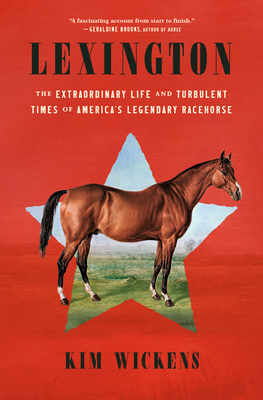
From 1780 to 1860, horse racing was the most popular spectator sport in the United States, and almost a religion in the South. Great fortunes rose and fell with the purchase, training, performing, and procreating of prize horses, and Lexington was the greatest of them all. Kim Wickens has done an astounding amount of research. This is probably the best documented work on equestrian history on the market today. If you love horses, and especially if you love horse racing, then this book is for you.

This reviewer knows little about either subject; I read it because it was different from most history books I’ve seen. My particular interest is the American Civil War; the synopsis mentioned General Grant and Abraham Lincoln, and I was all in. One of Lexington’s progenies was gifted to Grant by a supporter during the war, and he prized it greatly. The horse, Cincinnati, carried its new owner into at least three major battles. Grant allowed no one else to ride it, except, on a single occasion, President Abraham Lincoln.

Sadly for me, that’s about all we see of Lincoln, Grant, or the Union Army. It’s done in about four pages, which left me with 412 other pages. There are additional aspects here that are of interest to me, in particular the role of Lexington and his descendants in the crime spree by a bushwhacker named Sue Mundy, a name the man took on in order to throw lawmen off his trail. In fact, I found the second half of this meaty story to be much more interesting than the first half. Of course, although I like horses well enough from a distance, I have never been a rider or had any active interest in them. I am a city dweller, urban to my bones. For horse lovers, perhaps the first half will be as interesting or even more so.

One thing that I must mention has to do with the difficult material. This is nonfiction, and sometimes Lexington and other horses were mistreated by those responsible for their care. Whereas some race horse owners genuinely loved their steeds, ultimately they were investments. What to do with a horse, whether to race it or rest it, keep it or sell it, was governed mostly by the bottom line. Doubtless they would be appalled, were they alive today, to see the vast amount of coddling and spoiling we in the twenty-first century devote to our various fur babies. If you were to make a Venn diagram between us, about the only item that would occupy the shared bubble in the middle would be that we all own animals. That’s it. Whereas there is never any gratuitous description of the violence and other cruelties visited on the horses Wickens discusses, it’s in there, and if you can’t stand it, don’t read it.

I have rated Lexington four stars for a general readership, but for those with a strong, particular interest in horses, racing, and the history of both, this is most likely a five star read. Wickens is off and running!

If It Sounds Like a Quack, by Matthew Hongoltz-Hetling*****

Pulitzer Prize finalist Matthew Hongoltz-Hetling takes on the weird world of alternative medicine and the medical freedom movement in his new book, If It Sounds Like a Quack. My thanks go to Net Galley and PublicAffairs for the review copy. This book is available to the public right now.

The fact is, I have—or I had—no particular interest in alternative medicine, but I had read Hongoltz-Hetling’s last book, A Libertarian Walks Into a Bear, which was well researched, well written, and most importantly, completely hilarious. I have reviewed over 800 books, but the number of those that I later purchased is smaller than 10; yet I bought that book to give as a Christmas gift. So when I saw that he had another book available, I didn’t hesitate. And I wasn’t disappointed.

The book describes the bizarre programs and treatments espoused by six individuals: Larry Lytle, Toby McAdam, Robert O. Young, Alicja Kolyszko, Dale and Leilani Neumann, and The Alien. The seventh player in each section is America, and that’s where we see what U.S. laws say, and what enforcement, if any, comes down on these snake oil salesmen.

The opening section, the first of four, introduces each of these players and explains what led to them going into the businesses they have chosen. Among the various One True Cures are a laser salesman, a leech peddler, faith healers, a supplement seller, and a Mormon missionary that resurrects a long-dead theory about germs. There’s also a pair that develops a health drink; one of them is human, and one is not.

The author suggests that the success of these characters—and some of them have become wealthy beyond belief—has a good deal to do with the state of standard medical care in America. Nobody trusts Big Pharma. The disparity of what treatments we can expect is so great that in one New York hospital, there’s a wait time in the ER of nearly 6 hours for most people, whereas the wealthy can get a private room with high thread count sheets and a butler. One can see why many people conclude that anything must be better than this; yet, they are mistaken.

Apart from his sterling research and documentation, and his clear, conversational tone that at times caused me to forget, momentarily, that I was reading nonfiction, the thing that sets Hongoltz-Hetling apart from others is his ability to shift seamlessly from prose that is falling-down-funny, to that which is not only serious, but tragic, without ever breaking the boundaries of good taste. Because he did it so brilliantly in his last book, I watched for it this time—and I still couldn’t catch the segue way from one to the other.

Because I had fallen behind in my nonfiction reviews, I checked out the audio version from Seattle Bibliocommons and listened to it while I watered my plants. It is very well done, and I had no problem following the thread. The only downside is that the printed version has some humorous puns by way of spelling that the listener misses.

One way or the other, get this book and read it, even if the topic isn’t inside your usual field of interest. Highly recommended to everyone.

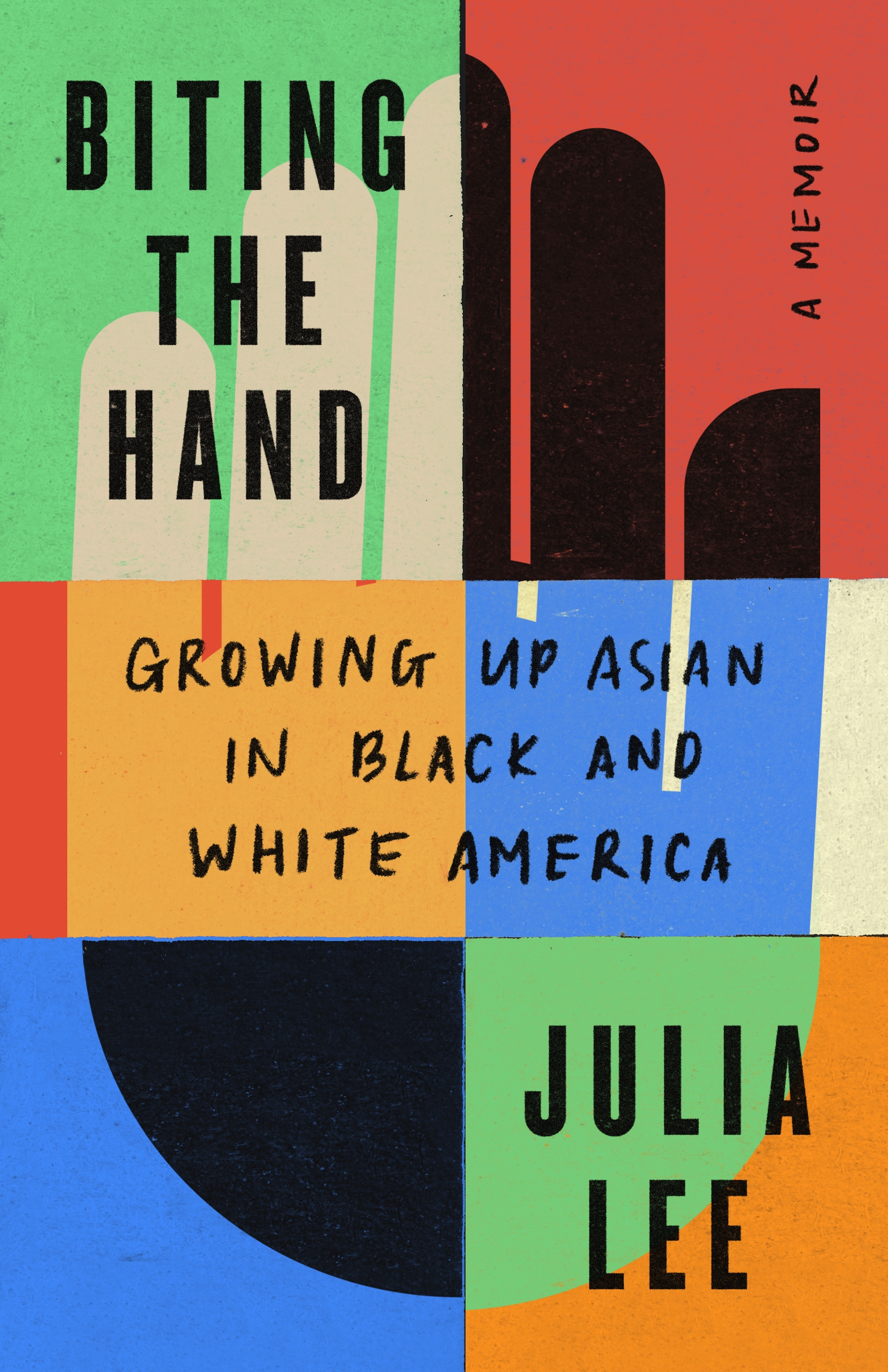
Biting the Hand, by Julia Lee****

Julia Lee is not amused, and she’s decided to say the things nobody else is saying. In this deeply analytical, provocative memoir, she tells us about her own experiences growing up, and the issues faced by Asian immigrants and Asian Americans in the United States, where “we are critical to the pyramid scheme of the American Dream.”

My thanks go to Net Galley, Henry Holt Publishers, and Macmillan Audio for the review copies. This book is for sale now.

In some ways, I feel as though I am reading someone else’s mail as I read this, because it is clearly intended for an audience of people of color. However, I did read it, and I’m going to review it.

When the discussion of race in the U.S. comes about, it is, as Lee states, almost always a conversation about Black people and Caucasians. Those that don’t fit into either group are sidelined. Perhaps more harmful is the way that people of Asian descent are presumed to be sympathetic to the status quo. Ever since a major news periodical dubbed Asians as “the model minority” back in the early 1960s, expectations and assumptions have leaned in that direction. And the roots of this division—Black versus Asian—make this a particularly thorny assumption to untangle. After all, a large percentage of African-Americans can trace their lineage to slavery; their ancestors weren’t born in the States, nor did they choose to come here, but were kidnapped and brought by force. Angry? You bet! But Asian immigrants came of their own accord, oftentimes fleeing untenable circumstances in their countries of origin. And so, their children, and those that have come after, have largely been indoctrinated to be appreciative. If things don’t go well, they tell them, then we must work harder!

This Caucasian reviewer comes to you without the Asian background, appearance, or experience that Lee speaks of; yet I live in a city that has one of the largest Asian populations in the U.S., and am married to an Asian immigrant, and parent to a child that is half-Japanese. So many of the stories—strangers that ask where you’re from, and won’t accept the truth of “California,” where Lee was born, or “Seattle,” my daughter’s hometown, are familiar ones.

Lee is fed up with the mainstream news stories that endeavor to pit Asian and Black people against each other. Her parents were small business owners in a mostly Black part of Los Angeles during the riots of 1992, and her experiences inform her conclusion, that there must be solidarity between all people of color in order to successfully fight for significant change.

The one bone I have to pick is the casual manner in which she dismisses the question of social class as a key factor. Her very brief note about this is that it’s a tomato and to-mah-to issue, not worth much discussion, because most people of color are working class. This is simply untrue, and it enforces a stereotype of Black people as being mostly poor and dispossessed, when in actuality, eighty percent of Black people in the US live above the poverty line. There are African-Americans that have far more money than I will ever see; some of the many Asian groups have a higher median income than Caucasians. So yes, social class is a huge factor here, one that Lee should examine more critically. There are working class Whites that can be allies; there are wealthy families of color that would shut down the struggle, given half a chance. The missing star in my rating reflects her failure to recognize this, and to offer concrete solutions to this problem.

The book’s title comes from Lee’s mentor at the otherwise very white-supremacist dominated Harvard—Jamaica Kinkaid. I actually gasped when I saw this. What a luminary she found to guide her!

Both the audio and print version of this book are equally readable, so go with whatever you usually prefer.

This is a fine resource for those seeking to examine Asian and Asian-American racial dynamics. Read it critically, but do read it. There’s a lot here that has needed to be said for a long, long time.

Our Man in Tokyo, by Steve Kemper****

My thanks go to Net Galley and Mariner Books for the invitation to read and review; Our Man in Tokyo is for sale now.

For the most part, my curiosity about World War II has been slaked, but this book has a different point of view than any other I’ve seen. American history students know of the miserable experience of the two Japanese ambassadors to the U.S., whose own government did not even give them a clue that Japan was about to bomb Pearl Harbor, right there on American soil. But I had never heard a word about their counterpart, the U.S. ambassador to Japan. Joseph Grew was a skilled and seasoned diplomat, and he tried mightily to find common ground between the two nations. Of course, in the end he was more or less shouting into the wind. But I had never read a single thing about him, and so this biography caught my interest.

Readers should know that the last two thirds are much more interesting than the beginning. I don’t care about Grew’s early life, or his marriage, or his golf game. I’m in this strictly for the historical record regarding the U.S. and Japan during the period leading up to the war; also, of course, I wanted to know what happened to him, stationed over there as he was, once war broke out. All of these things are explained clearly and in a conversational manner that is easy to read or listen to. (Since I had fallen behind, I checked out the audiobook from Seattle Bibliocommons, and it sped things up for me.)

The various politicians with whom Grew dealt are interesting indeed. The divisions within the government itself, and also within the Japanese military, created all manner of problems with communication and decision making. There are some bizarre circumstances, and they’re well described. But also interesting to me are the less historically necessary, yet fascinating tidbits that he picks up along the way, living for a decade or so in Japan. Here’s just one nugget for you: Mt. Fuji was (and is) a popular vacation destination, but just prior to Japan entering the war, a terrible trend developed. Young people in their twenties and even their teens went to Mt. Fuji in order to throw themselves into the volcano! When 500 young lives had been lost, the government acted. There were no mental health clinics, and no counselors. Instead, they simply made it illegal to sell anyone a one way ticket to Mt. Fuji. And the really weird thing is, it worked! I am still shaking my head over this one. Kemper’s biography is full of these odd little bits that I doubt you will find anywhere else. His research and documentation are sterling.

As to the audio book, the reader does a serviceable job, apart from his dreadful pronunciation of Japanese names. Shudder.

I recommend Our Man in Tokyo to anyone interested in reading nonfiction about American diplomacy in Japan just prior to the outbreak of war between that country and the U.S. Don’t be ashamed to skip a couple of chapters at the outset if you wish; there’s not much there that will become important later.

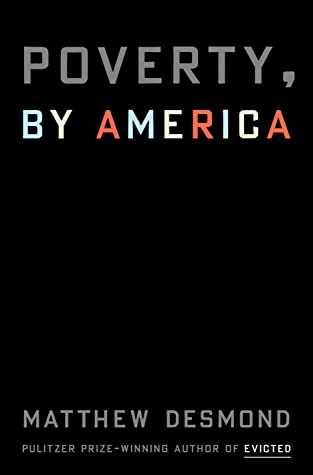
Poverty by America, by Matthew Desmond****

“Hungry people want bread. The rich convene a panel of experts. Complexity is the refuge of the powerful.”

Desmond is the author of Evicted, the Pulitzer winning examination of urban homelessness. Desmond himself grew up poor, and his family was forced out of their home when he was a child. These things give him a different and more authoritative perspective than most urban ethnographers.

 My thanks go to Net Galley and Crown Publishing for the invitation to read and review. This book will be available to the public tomorrow, March 21, 2023.

This book is written for a general readership, and it’s more readable than any other nonfiction work I’ve seen on this subject. His tone is conversational, and his research is impeccable, drawing from a wide variety of sources, well integrated and organized. He addresses the past and present roles of racism, explaining how the overtly discriminatory statutes and policies of the past have morphed into more subtly framed, yet still ubiquitous ones of today. He tells us “why there is so much poverty in America and…how to eliminate it.” He speaks to an audience of middle and upper class readers, warning that we must “…each of us, in our own way, [must become] poverty abolitionists, unwinding ourselves from our neighbors’ deprivation and refusing to live as unwitting enemies of the poor.”

In revealing the roots of American poverty, Desmond is thorough. He discusses the role played by medical costs, and the many workers that still cannot afford health care; the withering of unions, and the way that gig workers and independent contractors have replaced permanent employees; incarceration, and the debilitating effects it has, not only on the person sent away, but on their families for generations to come; the way that government assistance programs have been legally diverted to programs having nothing to do with the poor; the way that poor people are forced to pay more for the same goods and services that the better off pay. He discusses the ways that those living in poverty are cut off from political and economic opportunities. He does these things better than anyone else is doing them right now, and it makes me mad as hell, seeing millions of ruined lives all laid out so starkly.

It is when he approaches solutions that things become a little muddy. There are a few of his suggestions that I genuinely disagree with, but most of them are sound; the problem is that, despite his assurance that all of these changes can be made without much incursion into the lives of the wealthy and powerful, the chances of these people agreeing to implement such changes are somewhere between slim and none. He assures us that he is no Marxist (and that’s the truth, alas,) and that the rich can still have plenty; yet in reality, it’s clear to this reviewer that the kinds of changes that are needed are ones that working people will have to force from the tightly closed fists of the rich. This is where the fifth star falls off of my rating.

Nonetheless, Poverty by America is well worth your time and money, and I recommend it to you.

The White House Plumbers, by Egil “Bud” Krogh and Matthew Krogh

Egil “Bud” Krogh was one of the men known as the “White House Plumbers,” which was a small group of operatives that dressed as tradesmen in order to illegally break into and ransack private offices for the purpose of digging up dirt on political opponents. Krogh’s job, together with E. Howard Hunt, was to lead a small team of men to burglarize the office of Dr. Fielding, the psychiatrist that treated journalist Daniel Ellsberg, in search of a way to discredit Ellsberg, whom President Richard Nixon regarded as an opponent.

My thanks go to Net Galley, St. Martin’s Press, and Macmillan Audio for the review copy and audio book. This book is for sale now.

Few people shy of the Boomer generation will have personal recollection of the Watergate scandal that brought down a sitting U.S. president for the first time, and the burglary of Fielding’s office was the first illegal event that set it all in motion. Nixon was furious that the Pentagon Papers had been released and that the U.S. Supreme Court had come down on the side of the First Amendment and the free press. Consequently, the president decided that the executive branch must go it alone, and sought a way to discredit the journalists behind it. That was how all of this came about. He howled about national security, and may or may not have believed it; or, he may have sought to cover up lies he had told to the American people about the war in Indochina, and  since he couldn’t force the publication out of circulation, the next best thing would be to persuade the public that its authors—or annotators, at any rate—were crazy and not to be believed. This background information comes from me, not from the book.

At any rate, this political memoir comes to us courtesy of Bud Krogh, and also his son Matthew, who completed it after Bud’s death. For the purpose of this review, I will use the name Krogh to refer to Bud, unless otherwise noted.

Krogh was brought into this mess by John Ehrlichman, one of the two advisors that were nearly as close as a second skin to Nixon during his time in office. Other accounts refer to both as cold-blooded thugs, and my earlier reading leads me to agree with them, but to Bud, Ehrlichman was a noble soul dedicated to his country and his president, a fine, devout individual that was like a second father to him growing up. It didn’t occur to him, initially at least, that anything he was being asked to do was corrupt or scandalous; here, I find myself shifting in my seat. Surely he must have wondered why this secret little group of men, not even government employees, were being tasked with this job, rather than the agencies that ordinarily do the cloak-and-dagger jobs? He claims that Nixon couldn’t trust FBI director J. Edgar Hoover, who was a slimy character, and that makes at least a little sense to anyone familiar with him. Yikes.

The writing as well as the accountability are uneven throughout this book. The prologue sounds sketchy to me. Those of us that have spent any time at all watching criminal trials take place is familiar with the vaguely nebulous language I see and hear at the beginning of this thing. Instead of saying that he has done something very wrong and is sorry, he says he has made bad choices, and he is sorry about “what happened.” This is the language that guilty people use when their attorney has told them to show remorse. Someone not listening carefully might think that the speaker has apologized, but they’ve actually distanced themselves from wrongdoing. During this portion of the memoir, I glanced at the text and also the device playing the audio, half expecting to see a little slime leaching from its margins.

And yet, at the end, the prose is more eloquent, and the accountability rock solid. Krogh goes to the psychiatrist in order to apologize in person, once he is out of prison. He visits Nixon to apologize to him (which baffles me, but okay.) He claims to have declined a presidential pardon. He never loses an opportunity to put on a hair shirt prior to his many speaking engagements. And so it goes.

One could surmise that the early portion was written by Krogh, and the end written by his son, but even if that is true, those speaking engagements were taken by Bud, not by Matthew, and likewise the specific apologies rendered. So who knows?

The narrator for the audiobook is Peter Krogh, who does a fine job.

If you are interested in studying the Watergate scandal and haven’t read any other books about it, this is not the one. Krogh’s involvement ended with the break-in to Fielding’s office, and he helped cover it up, lying under oath as he was told to do, but he had nothing to do with the Watergate Hotel burglary of the Democratic National Committee’s offices. In short, though famous enough to be remembered for his actions, he was not a central player. For those interested in reading just one book about this scandal, I’d go with All the President’s Men, by Woodward and Bernstein; The Nixon Defense, by John Dean; or Nixon: The Life, by John A Farrell. These are all fairly lengthy; if you are looking for something less lengthy, try One Man Against the World, by Tim Weiner.

As a general read for the uninitiated, I’d give this book 2.5 stars. For Nixon and Watergate buffs, I rate it 3.5 stars.

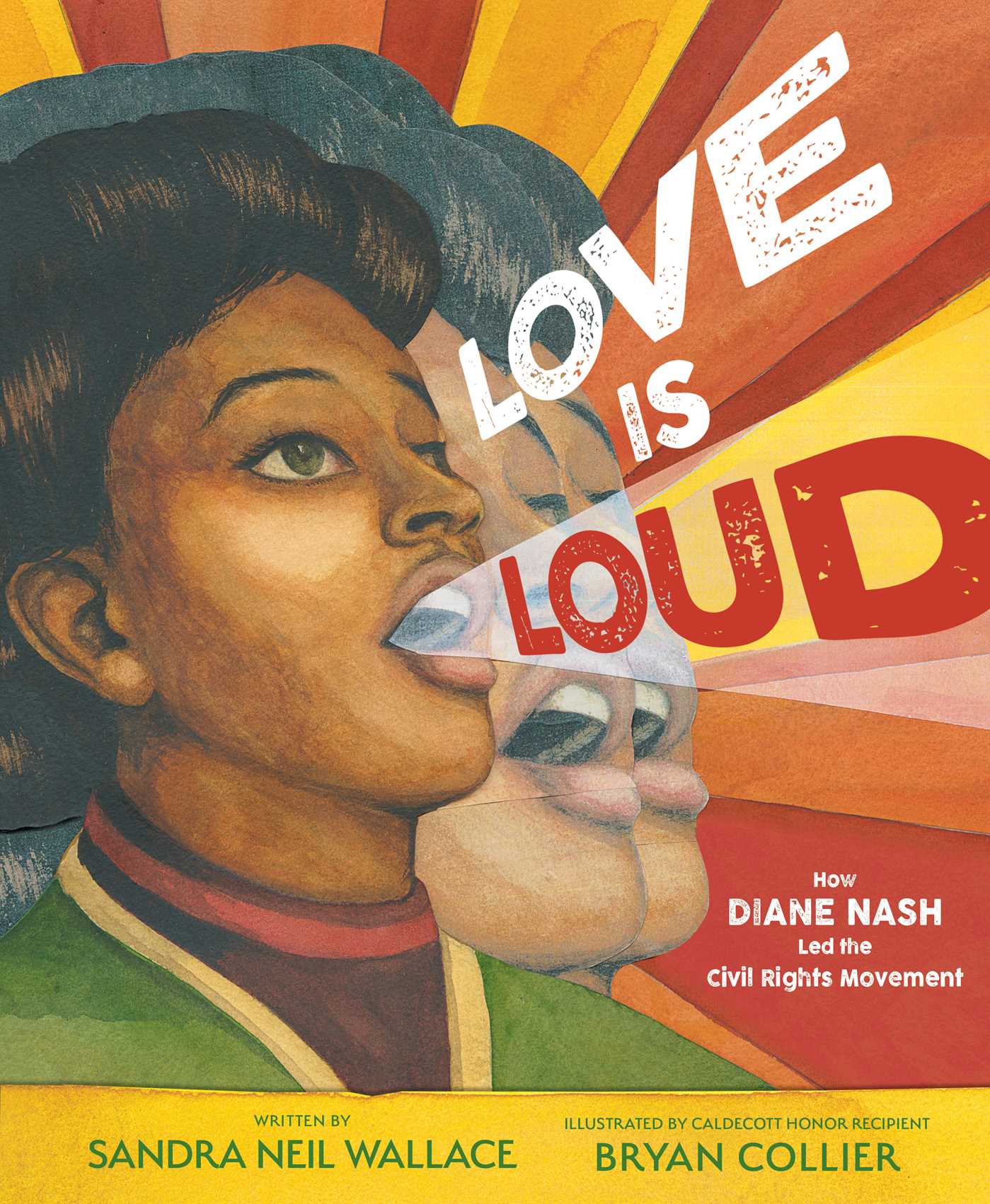
Love Is Loud: How Diane Nash Led the Civil Rights Movement****

Just in time for Dr. King’s birthday! This lovely biography by Sandra Neil Wallace introduces a little-known leader of the Civil Rights Movement, Diane Nash. Nash fought for equal rights for people of color, and had a significant part in the changes that were won.

My thanks go to Simon and Schuster for the copy I received for review purposes. This book is for sale right now.

Most of us have never heard of Nash, who was active during a time when Black people and women were sometimes overlooked, and at other times, excluded in historical narratives. She grew up in the South side of Chicago, where there were many skin colors and cultures, but not many Caucasian people. It was when she went to college in Nashville that she gained firsthand experience of Jim Crow laws, which required separate (and generally inferior) facilities for African-Americans. And Diane was having none of it.

This sumptuously illustrated picture book details the key stages of her development and achievements. My one concern is with the references to “love” in the title and text which are never explained. Is the love in reference to her religion, a philosophy, or something else? The word is thrown in there several times with no context at all. If her mission was to bring change about using nonviolent methods, as Dr. King chose to do and encouraged others to do as well, it is not mentioned. Did she see Gandhi as a role model? We aren’t told. Instead, it appears that the word is injected to sanitize, to offset the word “fight,” perhaps because this story is written for young people. But children aren’t stupid, and without any cohesive portrayal of Nash’s character and underlying motivation, I fear they may forget her. Literature has power, and so although I am glad to see Nash introduced to young people, the effect is diluted when proper character development—which is necessary, even in a children’s picture book—is not provided.

That said, the literacy level is perfect for upper elementary students, and would also make a fine read-aloud for a teacher to frame a single lesson around. It would also be first rate for a sub plan, and teachers know that’s something we always need on hand.

Bryan Collier is the illustrator, and his artwork fills every inch of every page, with the text superimposed on top of it. This is lush, gorgeous work that elevates the story with its presence.

Recommended for classrooms, libraries, and to parents and other guardians of children in grades 4, 5, and 6.

The Black Cabinet, by Jill Watts***-****

3.5 stars, rounded upward.

The premise sounds exciting: a cabinet consisting of African-American luminaries that advised Franklin D. Roosevelt, widely regarded as the best president the U.S. has ever had; well, as far as white folks went, anyway. Wouldn’t it be cool if he had Black advisors, even if it was kept away from the public eye?

It would have been cool, except mostly, he didn’t. Not really.

My thanks go to Net Galley and Grove Atlantic for the review copy. This book is for sale now; in fact, it’s been for sale for a long time. I’m very late with this review, because I was very late finishing the book, because it depressed me so deeply that I couldn’t face it.

Watts is a fine writer and has done the research. The issue for me is that this cabinet, which consisted of outstanding academics and other highly respected Black professionals, had incredibly little clout. They were kept secret. They were unofficial. And it sounds as though FDR tolerated them more than he appreciated them. Despite all of their labor and their eloquence, the New Deal left people of color standing in the rain without an umbrella.

The 1930s were a dreadful time for African-Americans, to be sure. The Jim Crow stranglehold on the South, along with less formal, mostly uncodified discrimination in the North, made it more or less impossible for most bright young Black men to make any headway in their chosen professions, apart from within the Black community (and for Black women? Fuhgeddaboudit.) So, it made my heart sing to learn that there was this exceptional group that advised FDR; but actually, they got crumbs off the president’s table. It makes me a little bit ill to see that this huge study turned up so very little.

For those still interested: there it is.

Scorpions Dance, by Jefferson Morley****

The Watergate burglary’s fiftieth anniversary has passed, and Jefferson Morley, a longtime journalist and political biographer, has written a history of that event; the focus is Richard Helms, the man that ran the CIA and had to walk a tightrope between the demands of President Richard Nixon, and what best served the CIA. This book is for sale now.

If you are searching for just one book to read about the Watergate debacle and/or Nixon, this isn’t it. However, if you are a hardcore Nixon buff, as I am, or if you are a researcher, looking for specific information for academic study, you can hardly do better.

My thanks go to Net Galley and St. Martin’s Press for the invitation to read and review.

Helms was a slick operator, walking a tightrope as he sought to protect the reputation of the agency while maintaining cordial relations with Nixon and those around him. For some of this, there’s a heavy irony involved here; how can anybody ever make the CIA look less than sleazy? But of course, leftists like me are not the ones Helms wanted to impress in the first place.

As the administration sought to damage political enemies that might prevent Nixon’s reelection for a second term, its shady dealings—hiring thugs to ransack a psychiatrist’s office in search for dirt on an opponent, and planting bugs in the office of the Democratic Party in the Watergate Hotel—proved to be the president’s undoing.

Two of the ugly characters in service to Nixon were in charge, for example, of interviewing candidates for a “riot squad” of counterdemonstrators to oppose the anticipated throngs of antiwar demonstrators that were anticipated in Washington. “One of them was Frank Sturgis, whose reputation for violence preceded him. ‘The men were exactly what I was looking for,’ Liddy rumbled in Will, his best-selling memoir. ‘Tough, experienced and loyal. Hunt and I interviewed about a dozen men. Afterward Howard told me that between them they had killed twenty-two men, including two hanged from a beam in the garage.’”

The burglaries had too many moving parts to be kept completely under wraps, and consequently, the president and his top advisors were soon looking for scapegoats below themselves, men that could be packed off to prison while the country regained confidence in the administration that had supposedly brought them to justice. At one point, they had Helms in their sights as a possible fall guy, and the former CIA director, McCord, who was retired, caught wind of this and was having none of it. In a letter, he said, “If Helms goes and the Watergate operation is laid at the feet of the CIA where it does not belong, every tree in the forest will fall. It will be a scorched desert. The whole matter is at the precipice now.”

There are moments when I wonder if the ghost of Richard Nixon haunts the White House, cackling with glee to see a former president in far more trouble today than he himself experienced when he was there. Who knows what the old dog would have thought about the political machinations unfurling today?

Morley has a conversational narrative tone that works wonders. Because I had fallen behind, I checked out the audio version from Seattle Bibliocommons, and narrator John Pruden does a fine job bringing it to life. But the most impressive aspect of this book is the research behind it, with treasure troves of primary documents and brilliant integration of data from multitudinous places. The endnotes are impeccable, enabling other researchers to trace back the facts to their original sources if they need or desire it.

For a niche readership of researchers, this is a five star work, but I suspect most interested parties will be of a more widespread readership; for them, this is still a fine read at four stars. Most satisfying.

Damn Lucky, by Kevin Maurer****

John “Lucky” Luckadoo was a bomber pilot in World War II in the most dangerous period of the European theater, and he survived twenty-five bombing runs, which was unusual. This is his story, told to us by the skilled wordsmith Kevin Maurer, and narrated by Holter Graham and Luckadoo himself. My thanks go to Net Galley, St. Martin’s Press, and Macmillan audio for the invitation to read and review.

The first portion of the narrative tells about Lucky’s early years, as well as his yearning to learn to fly. I feel a bit impatient as I read this segment, because I’m dying, like Lucky, to go to war. However, some of what I think is extraneous material proves to be important later on, so I’m glad not to have skipped anything.

A quarter of the way into the story, and we’re off. I am impressed by the descriptions, which are brief and unmistakably clear, written for general audiences of today. An example is when he tells us that a Quonset hut looks like a tin can that has been split lengthwise, then put on the ground, cut side down. Everything, from the planes, to the target, to the flying conditions is easily understood without talking down to the reader. The chapters are a good length, and the dialogue crackles. But now, we have to talk about that.

When anyone writes military history, whether it’s a biography, a memoir, a reference book, or any other nonfiction work, there must be citations for the facts and especially for quotations and dialogue. (I am proud of myself for not using twelve exclamation marks here; if there were an audio version of this review, I would be shrieking, so it’s just as well that we’ve stuck to print.) The author provides a bibliography at the end, and it. Is. Not. Enough. No, no, no! This is why so many writers in this field use historical fiction as a vehicle; the very best historical fiction communicates the same material, but is not bound to document facts. A bibliography alone would be just dandy for a work of historical fiction…which this is not. In fact, (said the American history and government teacher,) the four star rating is evidence of my appreciation for the clarity, organization, and pacing of this story; ordinarily I would go no higher than three stars for anyone in violation of this clear requirement. (Where was the editor?)

Moving on. The pace in the middle segment is brisk, but I have no problem putting it down and walking away when I am interrupted in my reading. That all changes at the sixty-sixth percentile, when the B-17 pilots and crews are sent on a mission to bomb Bremen. This is a huge mission, and a very dangerous one, as they are trying to bomb the canal where German U-boats are housed in broad daylight. At the same time, Goering is done watching his pilots get pounded, and he orders them to fight to the last man, and those that will not will be transferred to the infantry (note here that the German infantry is starving and freezing; pilots are much better fed.) Consequently, their aggression in the air is unprecedented, with kamikaze-like maneuvers that none of the Allies have seen from Germany up till now. During the portion of the book, I would not have left this story unless my house was on fire.

The callous decisions by higher-ups as to what an acceptable attrition level looks like, with about sixteen percent of active American airmen making it home alive after their service is done, is horrifying.

I have read a number of biographies and other historical works regarding this topic, but nevertheless, I learned some new information. I recommend this book to readers that are interested, but not to researchers or students.

Although the narrators do a perfectly fine job, I realize early that I cannot keep up with this level of detail without seeing the words, so I jettison the audio version and stick to the digital review copy. I recommend the audio version for those quirky souls that understand and retain spoken information better than print.