
3.5 rounded up.

Cussy Mary Carter delivers books to the rural poor folk of Troublesome Creek, Kentucky during the Great Depression. I read this quixotic tale free and early, thanks to Sourcebooks and Net Galley; it’s available for purchase now.
Cussy is the daughter of a miner; her mother is dead, and her father is dying slowly of Black Lung, known to them locally as “the miner’s sickness.” She has no siblings. The government pays her to follow every possible winding path to reach out-of-the-way homes, loaning books, magazines, and the scrapbooks assembled of odds and ends by the librarians themselves. It provides a bright spot in an otherwise grim little town.
I like Cussy Mary, but I have to admit that I am more attached to Junia, her mule—and if you read this book, you’ll see why. Everything Cussy does is fraught with peril, and though I seldom do this, I cheat and look ahead because although I can tolerate any fate for the human characters here, I need to know whether anything will happen to Junia. Junia serves as Cussy’s transportation, watchdog (watch mule?) and best friend. Ordinarily I am no more attached to hoofed animals than any other city dweller, but this plucky critter has me at hello.
One of the best single moments in historical fiction occurs when Cussy Mary is confronted by a rattlesnake on a path. A shot rings out, and a neighbor woman steps out of the trees holding a gun and yells, “Back. That’s my supper.”
The story’s greatest strengths all have to do with setting and historical detail. Cussy Mary and her father are among a relatively rare racial group that no longer exists, people possessed of blueberry-blue skin. They were often shunned by those they lived among, some of whom regarded them as “colored” (as did local law), and others of whom feared they carried a curse. I had never known about the “blues” before reading this novel, and this is historical fiction at its best, that which educates us and makes us like it.
I would have liked to see more subtlety and ambiguity in the development of Cussy Mary and the lesser characters. Everyone here is either a good person or a bad one. Richardson’s good people never have bad moments or vice versa. I understand when Cussy Mary turns down offers of food even though she is hungry; part of it is the pride that is an inherent part of the culture, and she also fears that those making the offer may be giving up their only food of the day. I understand this the first time she tells us, and the second, and the third…but by the time I see it again (and again, and..) I am rolling my eyes and wishing fervently that once, just once she will say thank you and scarf down the biscuit, or the apple, or the whatever. On the rare occasion she accepts food, she takes it to someone else, and then she goes home and eats thistles. It makes it difficult to believe her character, because nobody is that saintly every minute of every day.
Nonetheless, I recommend this book to you, because there’s nothing else like it. If there were a body of fictional literature widely available regarding this time, place, and its people, I might say differently, but as far I can see, this is it, and the setting is strong enough to just about stand on its own. Those that enjoy the genre will want this book.
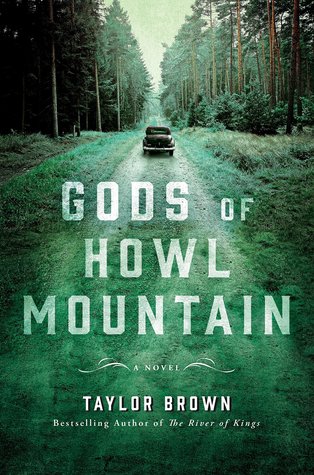
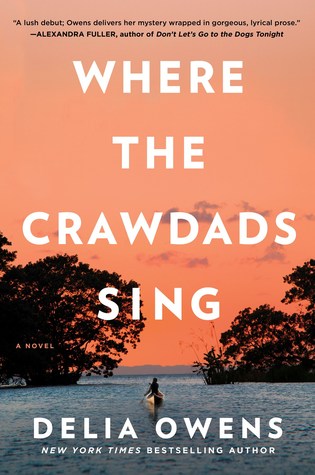
 Darl Moody and Calvin Hooper have been best friends forever, and so when Darl has the worst kind of accident, he knows who to turn to. You know what they say real friends will help you bury. The body in question is Carol Brewer; Darl was hunting out of season, and when he glimpsed something moving through the woods he thought it was a wild pig. Turned out he was wrong; turned out to be Carol, poaching ginseng on Coon Coward’s land. But you can’t bring the dead back to life, and you sure can’t call the cops for something like this. Carol is Dwayne’s brother, after all. Dwayne is a huge man, half- crazy and rattlesnake mean. There are no bygones in Dwayne Brewer’s world. There is only revenge.
 Ward is a force to be reckoned with, a literary power house whose books everyone should read. I read the third book in this trilogy, the National Book Award winning Sing, Unburied, Sing last summer, and then I knew I had to read everything else she had ever written. When I saw that this title, the first in the same trilogy, was being released again and that review copies were available, it seemed like Christmas. Many thanks to Net Galley and Scribner. This book was released again last week and is now for sale.
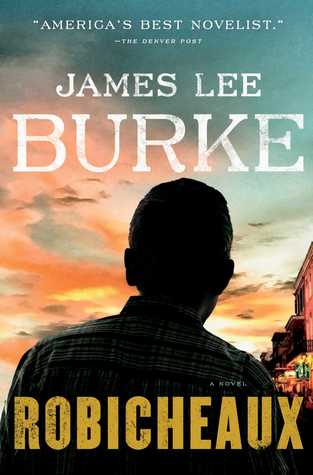 “You ever hear of the Bobbsey Twins from homicide?”
 This book was just what the doctor ordered. Whenever I find myself steeped in too much important-yet-grim literature, I have a handful of go-to authors that are guaranteed to leave me feeling better about the world. Jackson is one of them. I bought my copy of this book used via Powell’s City of Books, online using the gift certificate they bestow on reviewers from time to time. I recently won another one and have ordered some more books by this writer to brighten the winter to come.
 I had never read Ward’s work before, and now that I have I will follow her anywhere. Sing Unburied, Sing is a literary masterpiece, and one that fits the time in which we live. It opens up all sorts of thorny questions for examination, but like most thorns, it stings. I received my copy free and early courtesy of Scribner and Net Galley. This title is available to the public now.
