
 I like short stories. My Goodreads library tells me I have munched my way through 89 collections and anthologies; yet I can tell you that there is nothing even remotely similar to what Hale offers here. Thanks go to Simon and Schuster and Net Galley for permitting me to view the DRC for the purpose of an honest review. You should get a copy May 17, 2016 when it is released, so that when it is immediately banned by various school boards you will know what they’re screaming about.
The ribbon that binds these brilliant, bizarre tales is that each of them features a social outlier as a protagonist. We start with the airline flight from hell in “Don’t Worry Baby”; you have doubtless flown at least once on a flight with a small child whose mother you long to smack upside the head for her dreadful parenting skills, but this one wins the prize. The second story that deals with Judgment Day didn’t work for me; first there were some hyperliterate science references that zinged right over my head, and then the sick factor got the better of me, and so I skipped that one and moved on to the title story. Having read the rest, I am inclined to chalk that second one up to my own quirks rather than Hale’s skill set.
When I came to “The Fat Artist”, I could only bow in awe. I was overcome with frustration because no one else in my household enjoys literary fiction, and so I couldn’t share. In a nutshell, the protagonist, a performance artist, seeks to eat himself to death while setting a worldwide fatness record. I actually gasped several times while reading this one.
Although the writing within this collection provides outstanding examples of every imaginable literary device, those that teach high school literature would be wise not to place it on classroom shelves unless you work at an alternative school. A very alternative school. A very, very, very…well, hopefully my meaning is clear. There is so much edgy material, from language, to explicit sexual description, to sexual roles and gender ambiguity, that I can see the villagers coming with their torches, their hot tar, their feather pillows. Teachers, don’t do this to yourselves. Get a personal copy; take it home and enjoy it; then pass it on to someone that can be trusted to appreciate it. Seriously.
Four more stories follow, and they’re all strong. “Leftovers” deals with a middle aged man in the midst of an extramarital affair when his problem child unexpectedly appears, ready to ransack the family vacation home for valuables to sell in order to feed his addiction. The way this tale unfolds gives me goose bumps.
The next two tales deal with sexual roles and ambiguity. I came away from “Beautiful Boy”, which made me realize, whether by the author’s intention or not, that men that choose to cross dress only as a diversion are looking at the best of both worlds, never having to confront the glass ceiling because they’ll be at that office meeting clad in their conservative suit and tie like always; it reminds me of white actors that wore black face.
The final story of a troubled brother that lands in the basement of his brother, the MIT researcher, and is provided with a job driving squid from the docks to the laboratory, is as brilliant as all the others, and equally esoteric.
Hale is wholly original, but if I were to compare his writing to any other author, it would be to that of Michael Chabon.
Bring your literary skills to the feast that Hale has laid for you; you will need them. It’s one hell of a banquet.
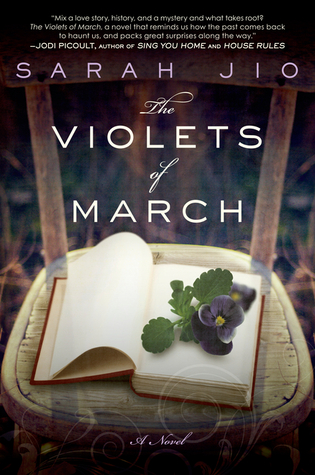 The Violets of March is a crossover title, part cozy mystery, and partly—maybe mostly—romance. I purchased it for myself years ago, back when I was teaching, not advance-reading, and buying all my own reading material. It’s not a bad book, but given that I had paid full jacket price for the trade paperback version after reading some rave reviews, I felt let down. It’s a pleasant read, but it didn’t live up to its hype.
 Lilac Girls is the story of three women during World War II. I received a DRC for this book courtesy of Net Galley and Random House Ballantine in exchange for an honest review. I rate this novel 3.5 stars.
 The Girls is a fictionalized account of the Manson Murders, a terrible killing spree that stunned the USA in the 1960s before any mass shootings had occurred, when Americans were still reeling from the assassinations of President Kennedy, his brother, Senator Robert Kennedy, and Dr. Martin Luther King. Manson, a career criminal with a penchant for violence yet possessed of a strange sort of charisma, attracted a number of young women and girls into a cult of his own founding. Later they would commit a series of grisly murders in the hills outside Berkeley, and it is this cult and these crimes on which Cline’s story is based. Great thanks to Net Galley and Random House for the DRC. This book will be published June 14, 2016.
 Dodgers is a harrowing tale of African-American teenagers sent away from their home in Los Angeles, an area depressed and tense but familiar, across the Rocky Mountains, the land of white folks, and into the pale rural American heartland, where they have been sent by a father figure to commit a capital crime. I could not wrench myself away from this story for love nor money once I’d begun it. Kudos to Bill Beverly, and thank you to Net Galley and Crown Publishing for the DRC, which I received in exchange for an honest review. This book is available to pre-order right now and becomes available Tuesday, April 5.
 Note: my records showed this would be published today, but they are in error. This title actually comes out in August and I have run my review earlier than I should have. You’ll see this again at a date closer to publication.
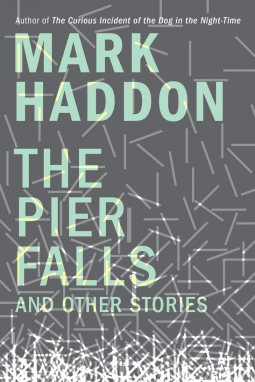 Mark Haddon has already left his mark on the world with his well known novel and play, The Curious Incident of the Dog in the Night-Time. I haven’t read that book but I will now, because this new collection is impressive. Thanks go to Net Galley and Doubleday for the DRC, which I received in exchange for a fair and honest review. At times like this, when I get to review stellar writing, it’s a great pleasure to do so.
 Tears in the Grass marks the debut of novelist Lynda Archer. It tells the story of three generations of Cree women, and in doing so also provides the reader with that tribe’s rich history and culture. Thank you to Net Galley and Dundurn for the DRC, which I received in exchange for an honest review. This book is available for purchase now.
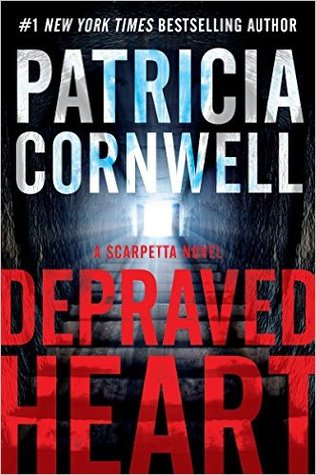 I’ve been reading Cornwell for over a decade. Her Scarpetta series is curiously addictive, a bit like curling up in my favorite chair with a furtive pint of gelato and maybe a ridiculous TV show or YouTube clip. But in thinking that way, I sell Cornwell short. She started out strong; floundered just for a short time; and now she is better than ever. And perhaps you are waiting for a disclaimer saying that I read it free, but in fact I did not. I’ve yet to see Cornwell’s work on Net Galley. The kindle version popped up as the deal-of-the-day for four bucks, and I grabbed it while I could.
 This is the second time I’ve been fortunate enough to get a DRC of Clifford D Simak’s short stories, courtesy of Net Galley and Open Road Integrated Media. (The last collection was titled We Install and Other Stories; I have reviewed it also.) Simak’s short stories are my kind of science fiction, the old school variety where there are no clever double entendres intended for–oh, for example–programmers that write obscure, difficult types of code. No, this is the stuff that is born of a fertile imagination and an excellent facility with words, and I enjoyed it start to finish, skimming nothing. And it’s for sale now, so you can get your own copy.
