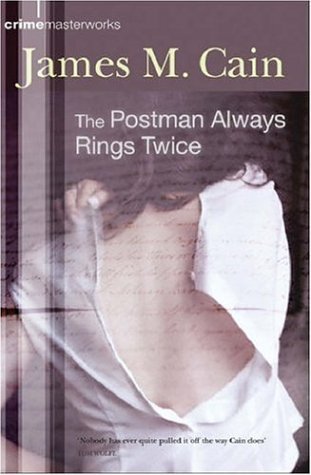
Combustion, by Martin J Smith*****

combustionPaul Dwyer is dead, a floater that has only been found because his construction business diverted the water from the place where his body is dumped, and it dries up in the Southwestern desert heat, leaving his body exposed to the world.  I was lucky to be able to read this book early, thanks to an invitation from Net Galley and Diversion Publishing, in exchange for this honest review.  I am overjoyed to rate it five stars. I knew nothing at all about either Smith or Diversion, but it turned out to be a risk that worked out in my favor and the author’s.

Our detective is Ron Starke, a single man whose father has Alzheimer’s. The reader cannot help but warm to him as we see him appear in his father’s room, hamburgers in a paper bag, prepared to patiently have the same conversation with his dad that he had with him several times yesterday and most likely will have tomorrow too.

Shelby Dwyer, the victim’s widow, is a very wealthy woman now. She isn’t sorry that he’s gone, and neither is their teenage daughter Chloe. Dwyer was a violent, ugly man in private, regardless of the shine he demonstrated publicly. Naturally, Shelby is the chief suspect, a thing made more difficult by the fact that she was Starke’s girlfriend a decade ago, when they were in high school.  But it’s a small town, a tiny exurb of Los Angeles, and everyone really does know everyone, aside from Starke’s supervisor, Kerrigan, a recent transplant from the big city. To make matters even more awkward, Starke had been considered a shoo-in for the job Kerrigan now occupies, and Kerrigan knows it.

He has a feeling that his new boss is gunning for him.

The story is told from alternate points of view, and Smith creates whiplash tension by shifting between them at key points.  Character development is solid, and it makes me wonder about the possibility of a series emerging from this debut.

Shelby may be rich now, but she is in tremendous personal jeopardy. All of the lonely nights spent holed up in the study, cruising online for connections she can’t find at home, have led her to expose herself in a horrifying way. And as she is forced to confess to Chloe about the unwise things she has said to another visitor in a chat room, a person using the handle LoveSick, and despite the horror of the moment I had to smile, as the traditional tables are turned and 17 year old Chloe has to tell her mother that you should never, never provide a stranger with personal details.

Smith’s debut is hot as the desert sun, a page turner that will live in your head after the last page has turned. Those that know me are aware I finish an average of three titles weekly for review, and so months or even weeks later if I am contacted by the writer’s publicist, I sometimes have to flip back through my records to remind myself…wait, this what which book again? And this is especially true of mysteries, which no matter how unique, tend to share a certain sameness. But in this case, that didn’t happen. The settings are so resonant, the characters so well sculpted that I felt as if I were an unseen guest among them.

It’s for sale today, and I highly recommend that you read it.

A Killer’s Guide to Good Works, by Shelley Costa*****

Happy release day to one of my favorite mystery authors! This book is available today, and if you haven’t ordered it yet, now’s the time to do it.

seattlebookmama's avatarSeattle Book Mama

akillersguidetogoodShelley Costa is a writer to remember. Her dazzlingly dark humor and her ability to spin a tight original story that builds irresistibly caught my eye with her first Val Cameron mystery, Practical Sins for Cold Climates. I began checking in with Henery Press regularly when I logged onto Net Galley, and my stalking paid off big time. Thanks go to Henery and also to Net Galley, from whom I received a DRC in exchange for an honest review.
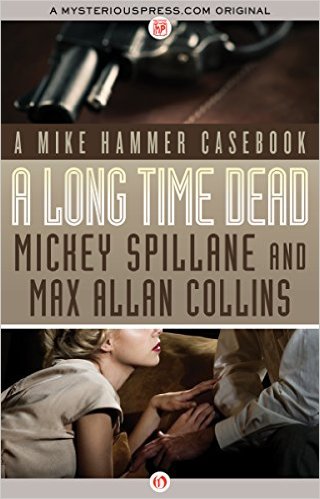
In this second Val Cameron mystery, our protagonist is back in the big city where she belongs. She is looking forward to lunch with her best friend Adrian, who promises to show her something rare and wonderful, but when she reaches Adrian’s office, her friend has been murdered and the artifact is gone. Val’s loss is our gain, as Costa unfurls another outstanding mystery. This title is available to the…

View original post 166 more words

A Long Time Dead–A Mike Hammer Casebook, by Mickey Spillane and Max Allan Collins*****

 alongtimedead  “The evening sky was gray and growling but I had left the trenchcoat behind and my suit coat was unbuttoned. This was the kind of sketchy gin mill where I wanted easy access to the .45 under my arm. The waterfront bouquet greeted me, salt air, grease, oil, sweat and dead fish drifting like a ghost with body odor.
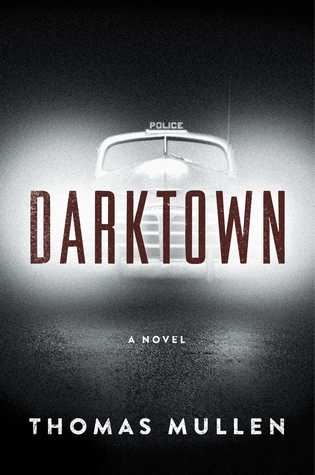
“If you needed to know anything about the harbor facilities stretching from the Battery to Grant’s Tomb, or wanted a line on anybody in the National Maritime Union or the Teamsters, this was your port of call. If you wanted to get laid or make somebody dead, that could be arranged, too. You know the place. They have them in London and Mexico City and Rome and Hong Kong, with smaller variations in smaller locales. But none were meaner or dirtier than the bar run by Benny Joe Grissi.”

Spillane was the prototype for noir fiction, and even though he’d been hiding in plain sight, I never read Spillane because he wrote so many books that I assumed he was cranking out something formulaic, a pot boiler special. I am delighted to find I was mistaken; this set of short stories, an atypical medium for Spillane, was provided to me free courtesy of Net Galley and Open Road Integrated Media in exchange for an honest review. I’ve had a few DRCs that didn’t measure up to my expectations lately, and this particular galley was my bright spot, the reading I considered my dessert after I had dutifully choked down the stuff I was only reading because I’d said I would.

Collins was a close friend of Spillane’s, and at the author’s request, he rounded out some rough drafts that had been left behind when Spillane died. Collins suspects that they had been left dormant because the author’s church would not have approved of the brief—and by today’s standard, very tame—sexual content included. Whatever. We can read them now, and Collins has used Spillane’s style seamlessly. Only one of these stories is more his than Spillane’s, and he tells us which one it is. He did a great job with it.

The author is legendary for the call-and-response style dialogue associated with the genre as a whole now. His use of it and other figurative language is so sweet that I found myself—a retired language arts teacher whose highlighter is the modern day equivalent of the red pen—noting passages where it’s artfully used, and sometimes I got so caught up in watching the language that I had to go back and reread a few pages, because I had lost track of the plot. But it was worth it. Here are a couple of examples:

“’Sure you aren’t seeing ghosts?’

“’Once I’ve killed this guy—really killed him—then maybe I’ll see a ghost.’”

And on the same page, more of the same; Lincoln followed by Lincoln, salesman followed by salesman. Together with the alliteration and the brisk, no nonsense yet curiously intimate prose, I found myself mesmerized. Spillane doesn’t care about preserving evidence, and he usually won’t call cops, at least not until his own business has been concluded. Given today’s social climate and mistrust of urban cops, I suspect this newly issued work by the famous writer will find a wide audience.

Although it’s been decades, I can nearly swear that the Carol Burnett show did some spoofs of this type of narrative during the 1970s, when I was just a kid. If one uses too much of the repetition it becomes ridiculous, and of course Burnett and her colleagues could spot fodder for satire a mile away. But although I kept my antennae up, I never found a weak place in the text that took the lyrical repetition to the point of silliness. It’s carefully meted out so that it reels the reader in rather than appearing ridiculous and distracting. And if you look at my last sentence, I can promise you the alliteration there was unintentional. Good writing stays with us, as any teacher will tell you; this is one reason we have students read something before they write. And thus it is that a tiny nugget of Spillane’s technique has made its way into my review.

Most people don’t want to analyze detective stories; they just want to read them. If so, then you should be good to go here. I was additionally pleased by the lack of racial and ethnic slurs which some writers of the genre would include in the name of authenticity. Likewise, the gorgeous receptionist is actually Spillane’s partner in both senses of the word, and she listens to what people reveal when they believe no one important is listening.

This is the very best of the noir genre. If you enjoy great detective fiction and can stand some graphic violence, this book is for you.

Darktown, by Thomas Mullen*****

darktown I was originally turned down for a DRC of this novel when I requested it last spring, and I took the unusual step of following up with Atria, more or less begging for it. I’ve been reviewing titles for Net Galley for two years and have received nearly 300 DRCs, so it is a sign of my interest level that I went to this extreme to read this one in advance in exchange for an honest review, and it’s a sign of decency and responsiveness that a representative from Atria Books invited me to review it after all. Although I am grateful , this five star review is not about gratitude, but a measure of the importance I attach to the issues it addresses and the skill with which the story is told.

The story centers on the first African-American cops hired in Atlanta; the year is 1948. This is considered an experiment, and to say the least, it’s awkward. The basic plan is that a small number of Negro—which is the polite term at this time in history—officers will report to a Caucasian supervisor, and they are responsible for patrolling the Black section of Atlanta. There are just eight men in this force.  They have no authority to make an arrest, so if someone has to go to jail, they must call for Caucasian police who are considered real police by higher-ups within the city administration.

To say the very least, it’s hard to take.

Mullen’s protagonists here are African-American officers Boggs and Smith, and the problem arises when they witness a crime, the assault of a woman by a Caucasian man in a car. The woman disappears, and no Caucasian cops are interested in hearing what these officers saw that night. The white cops that come in response to the report of a crime demean the Black officers, calling them “boy” and a variety of other horrible slurs.  As the white cops leave the scene, “Boggs was still standing in the street. If his rage had been a physical thing, it would have split the car in two.”

Eventually one of the white cops, a man named Dunlow, goes too far in the eyes of his rookie partner, Rakestraw, and the latter finds himself in a tenuous, secret alliance with Boggs.

Light banter breaks up tension in places, but no mistake, this is a brutal story. If it wasn’t harsh, it wouldn’t be the truth. This is one of the rare instances when the frequent use of the N word and other racist, vulgar language is actually historically necessary; you’ve been forewarned. Though Darktown is a useful history lesson, its greater value comes from causing readers to think more deeply about the role police play in western society.

A question I found myself considering, and not for the first time, is how much good Black cops can do even today to combat racism and other ugly biases by the department that employs them. Clearly cop violence toward people of color remains ever present.  If this book had been published ten years ago, I would have been concerned that in focusing on past racism, the story might have left us with the impression that racism was a problem only in the past, as if all that mess is over now.

But in 2016, we all know otherwise.

I hope you’ll read this painful but well crafted novel, and reflect some about how the dynamics of power have developed and why. Will a more diverse police presence be the key to equity for those that are so frequently crushed beneath the boot heel of what passes for a justice system in the United States, or is meaningful police reform impossible as long as cops are employed primarily to protect the property of the rich?  Would ordinary people be better off if we can, in the words of the old folk song, “…raze the prisons to the ground”?

This book becomes available to the public September 6, 2016. Highly recommended.

A Time of Torment, by John Connolly*****

ATimeofTormentI had never read anything by John Connolly before, but this eerie thriller has made a forever-fan of me. Thanks go to Net Galley and Atria books for the invitation to read and review.  Connolly cooks together a hair-raising thriller with a handful of horror, a smidge of fantasy and a dash of magical realism; the resulting brew is one that nobody else could possibly cook up. For those that write, reading this dark redemption tale is likely to produce both admiration and despair, because this novel is born of a talent that no creative writing workshop will ever be able to produce. You may write, and I may write, but nobody else will ever, ever be able to write like Connolly.

Our story is part of the Charlie Parker series, but I have not read any of the others and found I was able to hop into this story as a single read with no difficulty. Connolly provides just enough background to catch us up without dragging us through the book using promotional paragraphs some lesser authors might indulge in. I suspect not enough is repeated here to annoy his faithful readers.

Parker is a private detective that has been through a triple-death experience and come out the other end, but not unchanged. He’s hard enough to confront the ugliest nemesis, and it’s a good thing, because soon a trail of corpses will persuade him to leave his home in Maine for the dark place that is Plassey County, West Virginia.

The people of Plassey County have learned over the years—and centuries—to leave The Cut alone. Evil things are brewing there; it is there that the Dead King waits in an ancient building, and it is there that Oberon and Cassander struggle for dominance of this insular, cult-like community.  After all, “…the Cut looks after its own.”

This is a high voltage, hyperliterate read. Your middle-schoolers can’t read this, and it is so infused with violence that I’m not sure you’d want them to have it. But though I sometimes am put off from gory prose, I found that Connolly measured out these passages in small enough batches that my “ick” threshold, that little voice inside that tells me when a story isn’t fun anymore, wasn’t tripped. Spare but strong spots of irony and humor help lighten things up before they get dark, dark, dark again.

If I were to compare Connolly to any other writer, it would be James Lee Burke. The similarities that exist are a brilliant capacity to craft character, and the use of strongly resonant setting to reinforce character and move the story forward. The small but potent religious references are also similar. I highlighted the characters that were introduced throughout the course of this novel and found more than two dozen of them, and yet at the end of the book I still knew who each of them was without having to go back and reread. Connolly draws characters so real that by the time the book is done, the reader knows them as if they were family; yet thank goodness they aren’t.  This reviewer particularly enjoyed Parker’s assistants, Angel and Louis, as well as side characters Perry Lutter and Odell Watson.

Throughout the story, the pacing is swift and the plot absorbing. There is never a word that could be cut from the text and have the same result. If anything, the spare prose creates a sense of tension not only for that which is said, but also for that which is not.

This creepy tale was released this week, so you can have it to curl up with over the weekend if you’re quick about it. But before you commence, you’ll want to make sure that all the lights in your home are burning, and that all your doors and windows are locked.

Highly recommended.

The Goldfish Bowl, by Laurence Gough***

thegoldfishbowlIt’s seldom that I find myself so ambivalent about a galley; I read this free thanks to Net Galley and Endeavor Press in exchange for an honest review.  The writing skill is probably closer to a five; the respect level for women, people of color, and anyone that isn’t oriented straight as a bullet’s path is closer to a one. So those that are constantly inveighing about how tired they are of trying to be PC, here. This is for you. For those of us that have moved along, I am not so sure. This book was released digitally in January, 2016 and is now for sale.
I spent a good portion of this book confused, because it is billed as a new release, yet it really reads like a novel from the 1980s might.  A little digging revealed that it was initially published in 1988, and this explains a good deal. Mainstream attitudes have come a long way since then, and so some re-released novels stand the test of time, whereas others should perhaps be consigned, as Trotsky put it, to “the dustbin of history”.

The story is set in Vancouver, British Columbia, and this is part of what made me want to read this mystery. I don’t see a lot of fiction set there, and I know the area, so I thought this would be fun. And setting is done well.

Then we have our sniper:

“The sniper sat in the orange plastic chair, hunched over a Lyman ‘All American’ turret press. His hands were large and strong. The thick blunt fingers, nails carefully painted with a glossy red polish, moved with precision and grace as he assembled the shiny brass cartridges, primers, powder and fat 500-grain copper-jacketed slugs.”

Our sniper, who must surely be a baddy if twisted enough to put on women’s clothing and makeup, is referred to as clown-faced and is always designated as “he”. In the 1980s that boat would float with most of book-buying North America. Now, not so much.

There is one victim after another, and the beginning is paced at breakneck speed, relaxing readers only to suddenly shock us repeatedly, so there’s a sort of emotional whiplash. There are two detectives in charge of the sniper shootings, and one is a woman. That’s unusual in the department, where women are routinely referred to in demeaning ways and where hard core porn kept in a file cabinet is just a thing the boys in blue do. None of this appears to be there to make a point about what women put up with, however; it seems to be injected for realism and urban grit. And though none of the cops is particularly brilliant, Parker, the female cop, is particularly incompetent, emptying an entire gun at close range without hitting the target even once.

Okay.

Bright spots come with particular scenes. The climax is brilliant, and I love the detail of the guard horse in front of the evidence room. The author is clearly talented, but every time I found myself engaging with the text and not thinking about anything that had offended me, something else would come to the forefront, popping up like a turd in the punch bowl. Those that visit psychiatrists are all ‘fruitcakes’, and at one point, “a huge black” stands in the doorway. At this point my temper flared and I tapped into my tablet, “Huge Black WHAT, motherfucker?”

Yes, I know. Amazon won’t print that quote. It’s worth editing to have it in my blog, because that’s exactly how I feel about it.

There are good moments with figurative language, but then once in awhile a glaring fact that nobody checked pops up. Do people in Vancouver genuinely believe that the West Coast goes from British Columbia, to Washington, to California? Didn’t think so. Someone needs to apologize to Oregon, which is larger than some European nations.  The denouement, social justice issues aside, was a mighty long reach.

If you are already a tried and true fan of Laurence Gough—and he is an established writer with over a dozen published novels—then you will probably enjoy this one too.

As for me, I’ll pass.


Redemption Road, by John Hart ***-****

redemptionroadJohn Hart has  loyal readers, but until a friend mentioned his name to me I had not read his work. Thanks go to Net Galley and St. Martin’s Press for the DRC, which I received free in return for an honest review. This title is available to the public May 3, 2016. There are some partial spoilers below that give up events midway through the book, but of course the ending is kept secret so that you may find it for yourself. I rate this novel 3.5 stars and round upward.

Our protagonist is Elizabeth Black, a cop burdened by her profound attachment to Adrian Wall, a former cop sent to prison for a murder she is certain he did not commit, and also to Gideon, the child of the murder victim. On the day Wall is released from prison, Gideon, now an adolescent, lies in wait for him, prepared to shoot the man he believes killed his mother.

All hell breaks loose, and once more Liz is immersed in the case. She has served as surrogate mother to Gideon since his mother’s death; his father is not fit to raise a child, and so she has quietly slipped in and out of that family’s home, preparing meals, purchasing the child’s clothes. She can’t step back from this case, even when ordered by her superiors to do so.

Hart is a gorgeous prose stylist, and his pacing is unbeatable. He does use one very old plot device, and it, along with the subscript, which I will discuss in a minute, and the absolutely impossible denouement are the reasons the final star-and-a-half is denied.  In addition, there is a place in the story—I won’t spoil the specifics—in which Liz is stark naked and leaps into a car without a stitch of clothing on, and no one finds this remarkable. It appears that the writer had intended to get her dressed and overlooked this detail, as did editors.Hart’s facility with setting is lush and matchless; the violence in this novel, thoroughly visceral, tipped my “ick” button a couple of times, and for this reason and others, I may not return to his work. But his talent and skill are unquestionable.

A minor character of considerable interest is the attorney Liz hires to defend those close to her, a very elderly local courtroom legend known as Crybaby Jones. Every time Crybaby said or did anything, my mind lit up like Christmas, it was so endearing and entertaining. I wish he had been given a larger role in the story, but for the most part he was relegated to the sidelines.

Another character of interest is the prison warden, who functions as a local kingpin and terrorizes those around him into instant submission. I disliked the way this character was shaped, because it gave the author a handy way to dismiss the over-the-top violence by local cops and prison guards as the product of one terrible man’s dominance, which gives the reader the false but comforting assurance that when cops get bad, it’s an anomaly. Hart may believe this; I don’t. And this is a part of the subscript that grated on my nerves. Early in the story Liz reflects that it is oh so hard to be a cop “since Ferguson”, sounding the message that those of us that hold cops accountable and question the deaths of children and other weaponless civilians is cruelly unfair to those that wield the badge. My e-reader comment: “Oh boo hoo. Poor poor cops.”

Because this writer spins a good thriller, I attempted to overlook this and another troubling aspect of the subscript, but the second message was hammered home again, and again, and again, the message that any woman that terminates a pregnancy is a baby killer. He goes after this one long and loudly, with Liz recalling the day she “killed her baby” in a sleazy trailer park abortion. If we’d just had the trailer and no other abortion reference it could have been interpreted as a message that abortion should be safe and legal in every state in the USA, including North Carolina, but that is clearly not the author’s intent. He has her tearfully remembering what would have been her due date had she delivered the “child”; she marks her embryo’s birthday-that-wasn’t every year, and mawkishly speculates about what he –oh yes, she knows its gender, although this is not even scientifically possible until the fifth month of a pregnancy– might have liked, his possible activities, preferences, and yada yada.

Have you had an abortion, or known someone that has? I can think of half a dozen women without trying hard, and this is just not how it goes, folks. Nor should it be.

Fiction writers often use story to drive home a political message, because story is such a strong device and delivers such powerful feelings. In the hands of friends, it is admirable and welcome. In the hands of those that wish to dictate what a woman may or may not do with her body, and in the hands of those that would restore the status quo of police terror over Black men and other vulnerable members of our society, it is galling.

To sum up, Hart has created a work of stunning prose and imagery and tremendous suspense. If you lean far enough to the right to be unaffected or even galvanized by the subscript, then this is your book.

The Black Glove, by Geoffrey Miller*****

The Black GloveThe place is Hollywood, California; the time is 1980. Terry Traven is a private detective specializing in finding the runaway children of the wealthy. He is offered a job that appears to be more of the same; a local mogul’s son has disappeared, and Dad wants him found. But then the disappearance turns out to be a kidnapping, and the kidnapping turns out to be a murder, at which point all hell breaks loose. This story is fast-paced and though it’s set a generation or two ago, the issues with police brutality—otherwise known as “the black glove”—make it more socially relevant than your average piece of crime fiction. There are other components that will sit well with those with an eye for social justice, too. Thank you Brash Books Priority Reviewer’s Circle for the DRC, which I received in exchange for a fair and honest review. This book is available for sale right now.

The beginning of the book doesn’t appear to be auspicious. A guy walks into Traven’s office and presents him with a dossier that tells him all about himself, at least in the words of intelligence sources. The dossier is too lengthy–we see every word, pages and pages of italicized material– and is clearly a fast, easy way for the author to introduce us to the character. I was prepared to be let down.

Once we get past that sloppy introduction, however, the story is complex and fast paced enough to remind me of James Lee Burke’s detective series. Toss in some quirky names, like Senator Suspenders and a punk rock band called The Dead Cherries, and add a whole lot of action. And yet somehow we find ourselves discussing issues of race, gender, and gay rights without slowing the pace at all. I almost always take off at least a star for the use of the “n” word, but the way it is used here isn’t just some cheap stunt to show us that a bad guy is really rotten or ignorant; instead, the characters manage to embark on an abbreviated discussion of race and white privilege without ever becoming preachy or distracting from the main thread.  Some of it is very indirect, and it took me awhile to get a handle on it. In other places, it’s crystal clear, as when the visiting room at the jail is “gas chamber green…a cruelly subtle reminder to the inmate of his loss of freedom.”

The story’s subscript demonstrates how women and people of color are sometimes so overwhelmed by the racism and sexism that is inherent in US culture—and even more so when this novel was written than now—that we find ourselves internalizing that hatred. Likewise gay men, lesbians, and bisexuals; those from the Boomer generation will recall just how difficult this time period was for anyone that wasn’t straight.  And given that Miller wrote this during that time, I consider this story to be courageously written, a gutsy story by a writer unafraid to take a hard look at a controversial topic.

In fact, Brash Books hasn’t introduced a detective this brainy and complex, yet entertaining since they brought out Barbara Neely’s Blanche White series. What a tremendous find! I wish there was a whole series with this detective.

Meanwhile chances are excellent that you haven’t read this book yet, and if you lean left and enjoy a good detective novel, this is one you should scoop up right away.  It’s strong fiction with a progressive thread running through it. Don’t miss out.

The Invisible Guardian, by Delores Redondo***-****

theinvisibleguardianThe Invisible Guardian has received widespread acclaim in Spain. It will be available to English speaking audiences March 8, 2016. My thanks go to Net Galley and Atria Books for the DRC, which I received in exchange for an honest review. I rate this book 3.5 stars and round upward.

The title comes from the Basajaun, which translates to “invisible guardian”. It’s a mythological creature, large, hairy, filled with kind intentions; sort of a goodhearted Bigfoot. Protagonist Amaia Salazar is a detective who finds herself drawn back to the Basque country, where she grew up and where her family resides, in order to solve a mystery. Locally, many residents regard the Basajaun as undeniable reality. Salazar deals with this, in addition to limitless family drama, in order to solve the crime.

I really struggled with this novel. There were times I felt I was being talked to death, and I am guessing that Basque conversational tradition may be very different from that of the US. I was stunned that a detective would be permitted to run an investigation in which her own family members are considered suspects, but since it isn’t discussed beyond a brief conversation in which Salazar is offered the chance to hand the case off to someone else, it is probably a thing that is done in that part of the world. I can’t see how it would become an international best seller if not. Or perhaps I am naïve.

At times it feels as if there was far too much personal drama, and it seems to distract from the mystery. Some of it turns out to be germane to the case, and other parts are included primarily to develop the protagonist. On top of the relationship issues between Salazar and siblings, Salazar and in-laws, and Salazar and her colleague, she is trying to become pregnant, and we have to deal with her feelings about that. If it were up to me, the pregnancy thread would be yanked and saved for a future installment if used at all. It seems like one thing too many.

I did a huge eye-roll during the scene in which a local resident wants to know whether the body was bitten by a bear or the Basajaun, and Salazar explains that it’s too early in the investigation to know, one way or the other. There are also hideous sexist assumptions and statements in the dialogue throughout the book, but these will be dealt with near the end, so don’t abandon the story over this alone.

To the positive, I wanted to read this novel partly to stretch my own cultural boundaries, and in that I succeeded. When I think of Spain, I tend to think—as urban dwellers often do—of its cities, art, and music. I knew nothing, nothing, nothing about the Basque people. I still don’t know a great deal, but I got my toes wet, and everyone has to start somewhere.

In addition, Redondo can tell setting like nobody else. The descriptions of areas I have never been and never will are adroit and visceral. I felt as if I were the invisible presence standing alongside Salazar.

It seems unfortunate that there is new information introduced during the last ten percent of the novel, without which the reader has no possible opportunity to unravel the mystery. However, the plot and pace pick up significantly, and many of what seem to be extraneous story elements are braided together so deftly that my overall impression of the novel is greatly improved.

For those interested in learning more about the Basque culture, this novel is recommended.

Clawback, by JA Jance*****

clawbackI’m a long time reader of novels by JA Jance, but until I read this new release, I would have told you that her Arizona series are second string efforts compared to the JP Beaumont titles set in Seattle. Not anymore! Thank you to Net Galley and Touchstone Publishers for the DRC, which I read in exchange for an honest review. The book will be available to the public March 8.

Ali Reynolds is our protagonist. Her parents have retired, investing their lifelong savings with a company that turns out to be involved in a Ponzi scheme. Ali’s father goes to see his investment agent, who has also been a close friend for decades, and finds him dying. In attempting to revive him and another person, Dad gets the victims’ blood all over himself, and so he is suspected of murder when he calls 911. In an effort to help clear her father, Ali, along with her parents and those with whom she works at High Noon, unravels one layer after another of deception and danger.

Those that read my reviews know that I am always sensitive to the subtext. In addition to telling a well woven, technically savvy tale of suspense, Jance is brilliant here in the way she crafts her female characters. She takes apart almost every conceivable stereotype without pausing the story’s pace or becoming preachy or conspicuous. As the mother of a half-Asian daughter, I particularly appreciated the development of Cami. But even for those that don’t care much about social issues as reflected in text, it’s a tightly wound tale that will leave any reader leaning forward in their easy chair, straining to get to that last page and the denouement.

Besides enjoying the mystery, I also learned some things. I had never heard of a “clawback”, a terrible law that has to do with penalties that are assessed victims of Ponzi schemes, and I had also never heard of a “Silver alert”. I read a lot of nonfiction, but Jance’s new book is a great reminder that we can learn things from fiction too, and it’s often more fun that way.

Highly recommended to everyone.