Blind Fear, by Brandon Webb and John David Mann*****

Blind Fear is the third book in the red hot series by former Navy Seal Brandon Webb and concert cellist turned author, John David Mann. When the two of them collaborate, the pages jump. My thanks go to Net Galley and Random House for the invitation to read and review; this thriller is for sale now.

In Cold Fear, the second in the series, our protagonist, Finn, is on the run. He’s a SEAL for the U.S. Navy, an elite combat diver, but corrupt elements have framed him for the slaying of his closest team members, and until he can prove his innocence, Finn needs to be invisible.

He’s good at it.

Now he’s moved on from Iceland to Puerto Rico, and he’s been renting a room from Zacharias, an elderly man that supports himself and his two grandchildren by running a café. He works in the café in exchange for room and board. But now there’s trouble; his two grandchildren haven’t come home. Zacharias would go and look for them, but Zacharias is blind.

There’s nobody better at ferreting out secrets than our man Finn, but doing so puts him at risk. He’s deliberately stayed clear of the city because there are so many military people stationed there. The hinterlands have been safe, and until he can come forward with the proof he needs to save himself, the hinterlands are where he belongs.

But then…what about the children?

Like those before it, this is a taut, tense thriller with multiple massive emergencies weaving in and out of one another. We have Finn’s need to avoid discovery yet, find the missing children; now add a serial killer known as El Rucco who’s left grizzly human remains all over the island and a major hurricane, and friend, this is not your bedtime reading material. Read this one sitting up and with the lights on. Just trust me.

Through all of this, Finn also deals with personal baggage that he tries to ignore, but which comes to him in dreams. He has blocked out a large portion of his early life due to trauma, and he has “questions that had hung over him for thirty years like a kettle of vultures.” This is no soap opera and so we see and hear very little of it, but the snippets that intrude during Finn’s unguarded moments heighten the suspense and the reader’s sense of dread.

There are other praiseworthy attributes I could discuss; as we are introduced to the setting, we have brief but meaty passages that serve to inform us about the injustices that are meted out to this lovely but impoverished nation, and the way that the U.S. government has kept its boot on the necks of the people that live there. But all of this remains secondary to the story itself, and the focus is tightly maintained. The research is meticulous, and the organization is stellar. The development of the protagonist is outstanding; the secondary characters, particularly Zacharias and the older grandchild, Pedro, are visceral and memorable, and I would be delighted to see them again.

Highly recommended to all that enjoy a true thriller.

Empire of Ice and Stone, by Buddy Levy****

Empire of Ice and Stone tells of the voyage of the Karluk, a brigantine vessel that sailed from Canada to the Arctic in 1913. It was led by Captain Bob Bartlett, the world’s best ice navigator at the time, and Vilhjalmur Stefansson, a “visionary” leader in search of wealth and fame. My thanks go to Net Galley and St. Martin’s Press for the invitation to read and review; this book is for sale now.

This well told narrative details a part of history of which I have read very little. As school children, most of us in the Western developed nations read of the early explorers, but stories of voyages in the twentieth century are few and far between. This is why I take this one on, but I begin to wonder partway into it whether it is more than I have bargained for.

The first half is more than a little confusing, because there are so (so, so, so) many names to remember, and almost all of them are Caucasian men—as is usual for the time and situation. About halfway into it, I abandon my efforts to memorize all of them, and once I am satisfied with memorizing the names of the two leaders plus “Auntie,” (more in a moment) and the ship’s pets, I calm down a bit and it’s easier to follow.  I am fortunate enough to receive the audio galley as well as the digital review copy, and that combination makes it easier to follow.

That said, this is not gentle reading. There is death—in many cases slow and terrible—and betrayal around every corner. I understood that there would be some of that when I took the book, but I’ll tell you right now, if you, dear reader, have any sort of mood disorder or are going through a dark time personally, you may want to stay away from this thing.

As the bodies begin to pile up, I start to feel angry, and I remain so, to some degree, until the book is done. Because this was a dumb thing that these men did. Their ship wasn’t up to the task, they cut too many corners at the outset, and this more or less spelled doom for many of those aboard. I can’t help speaking to these men as though they can hear me, and I’m asking what the fuck got into them to do this at all? If everyone had stayed home, most likely all of them would have lived to a ripe old age. True, they made some scientific discoveries; yet air travel was just around the corner, and the whole thing could have been done much more safely later on.

The story has a definite hero (Bartlett,) and a definite villain (Stefansson,) and the farther into the voyage we go, the more obvious this becomes. However, I would have liked to hear a good deal more about the other hero. Levy tells us that a lot of these men would have been dead before the rescuers arrived had it not been for the Innuit woman that was hired, along with her small children (!) to travel with them, and the narrative bears this out. Time and again, when they are on the razor’s edge of starvation, she comes up with an innovative way to use the environment around them to provide calories. Not always delicious calories, to be sure, but alive is alive. “Auntie” is a total badass, and deserves more ink; possibly not much information is available, given the biases of the time.

The book feels longer than it actually is; however, given the amount of complex information provided, it probably shouldn’t be pared down further. At the same time, I kept thinking that this would be so much more approachable if Jeff Shaara were doing the telling (via historical fiction.)

For those that are very interested in the history of early sea voyages, and to researchers, this immaculately researched book is recommended.

Scorpions Dance, by Jefferson Morley****

The Watergate burglary’s fiftieth anniversary has passed, and Jefferson Morley, a longtime journalist and political biographer, has written a history of that event; the focus is Richard Helms, the man that ran the CIA and had to walk a tightrope between the demands of President Richard Nixon, and what best served the CIA. This book is for sale now.

If you are searching for just one book to read about the Watergate debacle and/or Nixon, this isn’t it. However, if you are a hardcore Nixon buff, as I am, or if you are a researcher, looking for specific information for academic study, you can hardly do better.

My thanks go to Net Galley and St. Martin’s Press for the invitation to read and review.

Helms was a slick operator, walking a tightrope as he sought to protect the reputation of the agency while maintaining cordial relations with Nixon and those around him. For some of this, there’s a heavy irony involved here; how can anybody ever make the CIA look less than sleazy? But of course, leftists like me are not the ones Helms wanted to impress in the first place.

As the administration sought to damage political enemies that might prevent Nixon’s reelection for a second term, its shady dealings—hiring thugs to ransack a psychiatrist’s office in search for dirt on an opponent, and planting bugs in the office of the Democratic Party in the Watergate Hotel—proved to be the president’s undoing.

Two of the ugly characters in service to Nixon were in charge, for example, of interviewing candidates for a “riot squad” of counterdemonstrators to oppose the anticipated throngs of antiwar demonstrators that were anticipated in Washington. “One of them was Frank Sturgis, whose reputation for violence preceded him. ‘The men were exactly what I was looking for,’ Liddy rumbled in Will, his best-selling memoir. ‘Tough, experienced and loyal. Hunt and I interviewed about a dozen men. Afterward Howard told me that between them they had killed twenty-two men, including two hanged from a beam in the garage.’”

The burglaries had too many moving parts to be kept completely under wraps, and consequently, the president and his top advisors were soon looking for scapegoats below themselves, men that could be packed off to prison while the country regained confidence in the administration that had supposedly brought them to justice. At one point, they had Helms in their sights as a possible fall guy, and the former CIA director, McCord, who was retired, caught wind of this and was having none of it. In a letter, he said, “If Helms goes and the Watergate operation is laid at the feet of the CIA where it does not belong, every tree in the forest will fall. It will be a scorched desert. The whole matter is at the precipice now.”

There are moments when I wonder if the ghost of Richard Nixon haunts the White House, cackling with glee to see a former president in far more trouble today than he himself experienced when he was there. Who knows what the old dog would have thought about the political machinations unfurling today?

Morley has a conversational narrative tone that works wonders. Because I had fallen behind, I checked out the audio version from Seattle Bibliocommons, and narrator John Pruden does a fine job bringing it to life. But the most impressive aspect of this book is the research behind it, with treasure troves of primary documents and brilliant integration of data from multitudinous places. The endnotes are impeccable, enabling other researchers to trace back the facts to their original sources if they need or desire it.

For a niche readership of researchers, this is a five star work, but I suspect most interested parties will be of a more widespread readership; for them, this is still a fine read at four stars. Most satisfying.

The Eternal Audience of One, by Remy Ngamije*****

“Life is not hard in Windhoek, but it is not easy, either. The poor are either falling behind or falling pregnant. The rich refuse to send the elevator back down when they reach the top. And since cities require a sturdy foundation of tolerated inequalities, Windhoek is like many other big places in the world. It is a haven for more, but a place of less. If you are not politically connected or from old white money, then the best thing to be is a tourist. The city and the country fawn over tourists. The country’s economy does, too. That is when it is not digging itself poor.

That is Windhoek. The best thing to do in the city is arrive and leave.”

And now, raise your hand if you find yourself wondering where Windhoek is. Don’t be shy. You’ll have plenty of company…ah. Yes. I applaud your bravery, being the first. And you, and you…and you in the back. Anyone else? That’s what I thought. Look around. Almost all of you. So now, I’ll relieve your discomfort and tell you, it’s in Namibia. Our protagonist, Seraphim, and his family must relocate there during the upheaval in their native Rwanda. This is his story, told in the first person.

My thanks go to Net Galley and Gallery Books for the review copy. This book is available to the public now.

Seraphim’s parents are strivers, working industriously to ensure that he and his siblings will have excellent educations and better lives. As a young man, he works hard and is fiercely competitive in school, but once he is at university in Cape Town, he becomes a party animal, using Cliffs Notes to dodge the assigned reading and embarking on booze fueled, all night romps. Ultimately, this is a coming of age story in a different time and place than that which most Western readers are accustomed to. And oh, my friend, if you are going to spread your wings and stretch your global literacy just a teensy bit, then this is one painless way to do it.

Once he’s inside South Africa, Sera deals with Apartheid, and during the course of his education, is advised by a wise friend, who tells him that if you want decent notes, you must befriend BWGs. These are Benevolent White Girls, and they seem to know some sort of educational code that young Black men have somehow been shut out of. There’s a funny passage about how to tell if a Caucasian is the sort one can hang out with, and to explain the difference in his own social class growing up, in contrast to others in his social group, he describes a problem with desks. There are fifty children in the class, he says, and not everyone can have a desk. Little Sera gets busy, and eventually is able to rise from chair number 50, to chair number three. Then, after a struggle with Gina and Hasham, the first and second place students, he rises to the first chair, first desk. When a friend asks what became of Gina and Hasham, Sera shrugs with his characteristic cocky arrogance, and he tells him, “I like to think they married and had second and third place children.”

Part of what I love is the way the voice here sounds like young men in their late teens and early twenties, here, there, or probably just about anywhere. In my experience, his demographic is the most hilarious of any in real life, and it comes shining through here, full of irreverent wit.

The narrative isn’t linear, and there’s some creative jumping around that, when combined with the internal discussions the narrator calls “The Council of the Seraphims,” can be difficult to keep up with. Don’t try to read the second half of this novel after you’ve taken your sleeping pill.

All told, this is a brainy, hilarious work, which is perhaps why Ngamije is being compared to Chabon and Zadie Smith.  He resembles neither, apart from being very literate and extremely funny. In fact, this book is worth reading just for the snarky texts sent by Sera and his friends; their handles crack me up even before I see what they have to say. Highly recommended, even at full price.

Pianos and Flowers, by Alexander McCall Smith**

Well, heck. I have so loved this author’s most famous #1 Ladies Detective series, and more recently have loved his new, satirical series starring Mr. Varg. When I saw this stand-alone collection of short stories—a genre I enjoy—I leapt at the chance to read and review it. My thanks go to Net Galley and Doubleday, but this one fell flat for me.

The collection is scaffolded by vintage photographs from The Sunday Times. Smith provides one of these photos at the start of every story, and then writes something (fictional) about the people and events displayed. I am initially deflated by these, thinking it might be a good fit for some readers, but for me more of a cure for insomnia, because Zzzzzz, when I find the italicized portion, which is intended to be a you-are-there insert. Why, why, why does every Caucasian reader under the sun think that the best way to add some World War II spice to a story, is to interject some of the racist slurs used widely at that time against Japanese people? True, it was a much more mainstream practice back then for white people to use nasty, racist terms to describe anybody and everybody that wasn’t Caucasian; you weren’t entirely safe if you were from Eastern or Southern Europe, so predominant was this tendency. Yet every author understands that if your book is to see wide circulation, you’d better not go tossing anti-Black references in as casual conversational terms. But ah—the Japanese! Now, that’s different. The Japanese don’t fight back all that much, so probably it means they don’t care. (Pause while I retch for a moment or two.)

This cheap-and-easy bit of vile, racist pop culture took this collection down from three stars to two. However, I can assure the reader that had it initially been a four or five star read, it would nevertheless have dropped to an unfriendly rating when I ran across such ugly language.

I am so done with that.

This thing is for sale if you really want it.

Africaville, by Jeffrey Colvin****

Narrated by Robin Miles

My thanks go to Net Galley and HarperCollins for the review copy; after publication, I used an audio book to finish it, thanks to Seattle Bibliocommons. It’s available to the public now.

There are two reasons I was drawn to this story. The first is the setting, which is primarily in Nova Scotia’s Black community. I have never read or heard a story set there, and so I was intrigued. There’s also a Civil Rights Movement tie-in, and for me, that sealed the deal.

The book starts out as a rough read, involving dead babies and “bad luck” babies that weren’t dead but needed killing. I was so horrified that I had to restart the book several times to get past it. Now that I have, I can assure you that once you’re past the introduction, that’s it. The dead babies are done. I’m not sure I would have lead off with this aspect, because I’m probably not the only reader to pick the book up and put it down fast. In fact, had I not owed a review, I would not have returned to it. I’m glad I did.

The story itself is ambitious, covering three generations of a family there. At the outset we have Kath Ella, who has ambition, but also a mischievous streak. I find this character interesting, but there are times when I don’t understand her motivation. The story is told in the third person and not all of her thoughts are shared with us, and so there are times when I’m left scratching my head. When the end of the book arrives, I’m still wondering.

Kath’s son and grandson comprise the second and third parts of the story; apparently the term used back then for passing as Caucasian was called “crowing,” and we see some of that. There are too-brief passages involving the Civil Rights Movement against Jim Crow in the Southern U.S., and I am disappointed not to see more about this or have the characters involved more deeply. What I do see of it is the surface information that most readers will already know.

Toward the end there’s a subplot involving getting an elderly relative out of prison, and I like this aspect of it, in particular the dialogue with the old woman.

The setting is resonantly described throughout.

All told, this is a solid work and a fine debut. I look forward to seeing whatever else Colvin has to offer. As to format, although Miles does a lovely job reading, something of the triptych is necessarily lost when we don’t see the sections unfold. For those that can go either way, I recommend the print version.

Marley, by Jon Clinch**-***

My thanks go to Net Galley and Atria Books for the review copy of Marley, a retelling of the Dickens classic told from a different point of view. This book is for sale now.

This work of historical fiction took off with a bang, and then fizzled.

I have not read any of Clinch’s earlier work, and at the outset of this novel, I am electrified by his prose. I love a good word smith, and Clinch’s facility with figurative language is impressive as hell. I was ready for a good Christmas book, and the October release date was right on the money. I snuggled beneath my favorite fleece blanket and immersed myself, savoring the clever phrasing and rereading parts of it before moving on.

There are two aspects of this work that hold it back; one is a quibble, but one worth mentioning, and the other is more significant. The quibble is that so much of the story isn’t about Marley. We know about Scrooge. If the author wants to write about Scrooge from a different angle, then the book’s title should reflect it. Instead, Marley’s effort at winning Scrooge’s sister Fan pulls us back into the Scrooge family, and there we stay for long stretches of the book. I echo other reviewers in asking, “But what about Marley?”

My larger objection, one that took awhile to gel as I read and ultimately prevents my recommending this book, is that the entire premise, the sacred message imparted by Dickens, is ground beneath Clinch’s authorly heel as he reframes Marley as a forger, smuggler, and criminal of the highest order. Dickens, in writing the original story, took pains to demonstrate that it is possible to be a “sound man of business,” to function entirely within the letter of the law, and still be morally bankrupt. A Christmas Carol was written to let readers know that those that succeed in legally building fortunes may nevertheless be damned if they are unwilling to extend themselves, whether through private charity or humane governmental programs. Scrooge made a point of telling his nephew that he pays his taxes, after all, and that’s the end of it.

In painting Marley as a man that brings money into the partnership through a multitude of illegal practices, Clinch not only ignores Dickens’s timeless moral and social message, but torches it, leaving only so much ash and cinder.

The chains that bind Marley in the afterlife reflect the chains of human bondage in his corporal one, as he invests the assets of Scrooge and Marley in slave ships, is a lovely literary device. I wish the author had found a way to use it without laying waste to the heart and soul of a timeless classic whose message is needed more today than ever.

Not recommended.

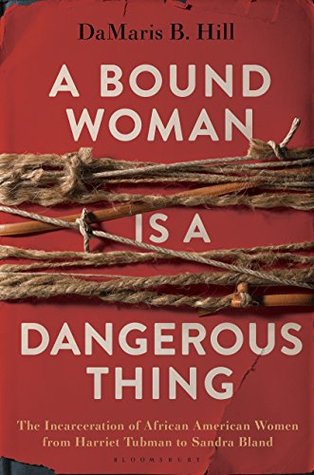
Best Poetry 2019: A Bound Woman is a Dangerous Thing, by Damaris B. Hill*****

Image

The Prison Letters of Nelson Mandela*****

This magnificent collection took 10 years to organize, collecting Madiba’s letters from the many points where they were received, and from the prisons–where many of them were not mailed out, for various technical reasons that were a poor disguise for censorship. The preface suggests that most people will want to flip through it rather than reading it cover-to-cover, but I am a habitual cover-to-cover sort, and so I read the first 50 pages in sequence. And the book’s editor is correct. This is not a cover-to-cover read.

Nevertheless, I am struck immediately by the dignity with which Mandela communicates with his captors. Time and again he writes to them in a courteous, civilized, and highly educated hand about the various ways in which his rights under South African law are being violated and what he is requesting they do to remedy it. He is persistent. He forces them to treat him as a human being. Mandela was an attorney, but he was also possessed of social instincts that nobody can teach anyone. And although I never met him, everything I have read–which is a good deal, where this man is concerned–convinces me that he was also a very nice person.

This is a tome, and it’s a treasure. I am glad I was denied a galley because this is the sort of volume I want as a physical copy. In the end my son purchased it for me for my birthday, and so I thank Benjamin. What a treasure.

If you are looking for just one book about Mandela’s life, read his hefty autobiography, Long Walk to Freedom. However, if you are a collector of books about South Africa, or about civil rights in general, or of course, about Nelson Mandela, go out and get this book now.

The Crowded Hour, by Clay Risen*****

The Spanish-American War sparked the earliest fire of U.S. imperialism, and the eccentric rich man that pushed it forward, Theodore Roosevelt, was at its center. Risen provides a contemporary view of this badly managed chapter in American history, dispelling longstanding myths and examining the long term effect of the conflict on the U.S. military. My thanks go to Net Galley and Scribner for the review copy, which I read free in exchange for this honest review. This book is for sale now.

Roosevelt was challenged with a number of health problems as a youngster, but instead of embracing his sedentary, privileged existence, he embarked on a series of physically demanding adventures in order to strengthen his constitution and affirm his masculinity.

When Cuban nationalists sought independence from Spain, Teddy began campaigning for American intervention. Men of his generation was had not known the destruction of lives and property that touched every part of this nation during the American Civil War, and like most young people, they were unwilling to listen to their elders. Roosevelt believed that war was a splendid thing, and that in facing death, men were elevated to a higher level. He joined his voice to those in the press advocating military aid to Cuba, and after tapping every powerful connection his wealthy family could access, he was successful.

 His own unit—all volunteers—were dubbed the “Rough Riders.” Most had no military training of any kind; the mighty Union Army had been all but disbanded once the nation was reunited. Though they were promoted as cowboys, the rugged individuals of the Wild West, a goodly number hailed from Wall Street and Harvard. In addition to being able to fund their own wartime excursion, they were noteworthy in their riding capability.

There was no San Juan Hill. There was a series of them.

The American invasion of Cuba cast a spotlight on its unpreparedness. Transporting troops, beasts and equipment across the Atlantic was a debacle of the worst order. There weren’t even close to enough seaworthy vessels, and because of this, most of the so-called cowboys fought on foot the entire time; horses and mules were stuck back in Tampa waiting to sail. There wasn’t enough food, potable water, or appropriate clothing for most of the men; the wealthiest among them fared best, but there were many occasions when there wasn’t any food to be bought at any price. There had been no reconnaissance and so they went in blind; the heat and disease killed more Americans than the Spaniards did. Vultures and immense land crabs that measured 2 feet across and traveled by the thousands made short work of the dead when not buried immediately. American losses were nearly triple those of the Spanish, and when the war ended there were no hospitals or sanitation ready to receive the legions of sick and wounded when they returned from the Caribbean.  

Roosevelt used the occasion to point to the need for a standing army and U.S. readiness, and ultimately this was his one useful contribution. In other regards, the man was an ass hat. His bald-faced racism, though not unusual at the time, went over badly with the Cuban freedom fighters that were supposed to benefit from their presence. He crowed to his friends about how much he enjoyed shooting an enemy soldier from just a few feet away “like a jackrabbit,” and called his 45 days of combat the ultimate hunting trip. Mark Twain hated the guy, and it’s not hard to see why.

Risen has an engaging writing style, and he uses lots of well-chosen quotations. His research is excellent as are his sources. I would have liked to see more of a breakdown along the lines of social class and other demographics, but this war did not yield a rich archival treasury like the one that came from the Civil War, so this may not be possible.

All told, this history is a find. Right now it seems that every second historian on the planet is writing about World War II, whereas this cringeworthy but significant chapter of American history has been largely left by the wayside.  I highly recommend this book.