
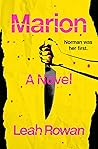
Marion, by Leah Rowan*****

Marion is the kick-ass debut novel for author Leah Rowan, and it’s hugely addictive! My thanks go to St. Martin’s Press, Macmillan Audio, and NetGalley for the invitation to read and review. This book will be available to the public June 2, 2026.

The story is a retelling of the 1960s smash, Psycho. I am not generally a fan of retellings unless they’re brilliantly done, and as it happens, this one is. We have two points of view here; one is Marion, and the other is Hannah, a budding private detective searching for a missing girl that was last seen near the motel. However, Marion is the protagonist.

Her real name isn’t Marion, but she adopts it as an alias early on, and so it might as well be. When we meet her, she’s an overworked and underappreciated office worker, and she’s also a concerned sister. Her older sister Lauren is in an abusive marriage, and cannot afford to leave for at least a year. Marion is frantic, trying to protect Lauren. Their parents are gone, and her mother made her promise to become the big sister and look after Lauren. It is that good intention from which everything else arises.

When her bus breaks down before reaching her destination, and when all of the nicer lodgings fill up with other stranded passengers, our protagonist is guided to this motel—yes, that motel. And that’s where things get real. She adopts the name Marion because she doesn’t want her boss to know where she is, but as things become more intense, she has additional reasons for remaining anonymous.

Eventually, Marion and Hannah meet.

That’s all I’m going to tell you, because surprise is everything here, but I do want to give a shout out to the audio narrators, because they are how a very good book becomes a great one. Natalie Naudus and Tawny Platis do exceptional jobs. I did most of my reading this way, pulling weeds with ear buds in, and I stayed out in the sun way too long, because I knew that once I was in the house, I had to stop listening!

The whole thing winds up with a couple of surprising twists at the end that make it even better.

Highly recommended to anyone that likes a scary book with some dark, feminist moxie.
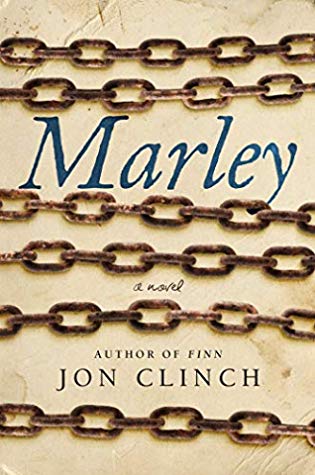
Marley, by Jon Clinch**-***

My thanks go to Net Galley and Atria Books for the review copy of Marley, a retelling of the Dickens classic told from a different point of view. This book is for sale now.

This work of historical fiction took off with a bang, and then fizzled.

I have not read any of Clinch’s earlier work, and at the outset of this novel, I am electrified by his prose. I love a good word smith, and Clinch’s facility with figurative language is impressive as hell. I was ready for a good Christmas book, and the October release date was right on the money. I snuggled beneath my favorite fleece blanket and immersed myself, savoring the clever phrasing and rereading parts of it before moving on.

There are two aspects of this work that hold it back; one is a quibble, but one worth mentioning, and the other is more significant. The quibble is that so much of the story isn’t about Marley. We know about Scrooge. If the author wants to write about Scrooge from a different angle, then the book’s title should reflect it. Instead, Marley’s effort at winning Scrooge’s sister Fan pulls us back into the Scrooge family, and there we stay for long stretches of the book. I echo other reviewers in asking, “But what about Marley?”

My larger objection, one that took awhile to gel as I read and ultimately prevents my recommending this book, is that the entire premise, the sacred message imparted by Dickens, is ground beneath Clinch’s authorly heel as he reframes Marley as a forger, smuggler, and criminal of the highest order. Dickens, in writing the original story, took pains to demonstrate that it is possible to be a “sound man of business,” to function entirely within the letter of the law, and still be morally bankrupt. A Christmas Carol was written to let readers know that those that succeed in legally building fortunes may nevertheless be damned if they are unwilling to extend themselves, whether through private charity or humane governmental programs. Scrooge made a point of telling his nephew that he pays his taxes, after all, and that’s the end of it.

In painting Marley as a man that brings money into the partnership through a multitude of illegal practices, Clinch not only ignores Dickens’s timeless moral and social message, but torches it, leaving only so much ash and cinder.

The chains that bind Marley in the afterlife reflect the chains of human bondage in his corporal one, as he invests the assets of Scrooge and Marley in slave ships, is a lovely literary device. I wish the author had found a way to use it without laying waste to the heart and soul of a timeless classic whose message is needed more today than ever.

Not recommended.