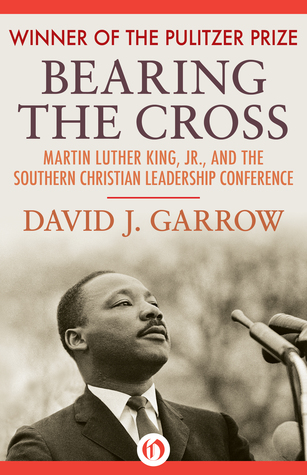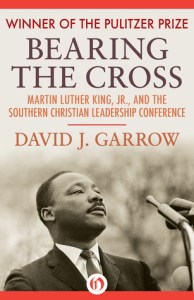
This comprehensive, scholarly yet accessible biography of Dr. King has already won the Pulitzer. Neither Net Galley nor Open Road Integrated Media really needs a review from me. Yet, because it is only now being released digitally, I saw the opportunity to read it free, and I leapt up hungrily and grabbed it while I could. But if you have to pay to read it, I will tell you right now, you will get your money’s worth and more.
The crossing of that bridge in Selma, Alabama was 50 years ago. You don’t need me to tell you that racist cops are still a problem throughout the USA, but the institutionalized American apartheid that was Jim Crow throughout Dixie is dead and gone. Much remains to be done, but what was accomplished by Dr. King and hundreds of thousands of African-Americans, along with other people of color and a handful of progressive white folks, is very much worth celebrating.
For many years I have wanted to read more of Dr. King’s speeches. School children are sick to death of the Dream speech, however brilliant and visionary it was at the time. It’s been used so often that it’s almost like the Pledge of Allegiance, tired and recited without a lot of meaning or enthusiasm by those too young to recall how radical the Civil Rights activists were considered back then. Garrow draws heavily from King’s speeches and letters here, and I was once more electrified to see what an eloquent person he was.
As Garrow explains, Dr. King did not set out to be a leader of anything except a good-sized church. He saw his entry into the theological world as that of a social activist, certainly; he received his BA in sociology, not religion or philosophy. But he had initially perceived his leadership role as that of mentor and guide to the congregation of a Black church in the American south. That was all he expected to become. When Rosa Parks was arrested for failing to yield her seat at the back of the Birmingham bus, demonstrations began to burgeon, and E.D. Nixon, a leader in the struggle, called upon King to speak at a key rally. After that, events unfolded and he found himself at the helm of a movement that was larger than any one person, but it needed a leader, and he was that man.
He was just twenty-six years old.
King quickly learned that in order to effect change, he had to gain the sympathy and agreement of a large segment of the American public, and at the time, that public was overwhelmingly Caucasian. Black folks were less than fifteen percent of the population, so they would need allies. In order to gain allies, he needed the media, particularly the big-city newspapers and television stations of the north. And in order to grab those headlines, show up on the evening news, he had to expose ugly, brutal repression. Because attempting to gain integrated facilities in a southern locale where he and his fellow activists would merely be cold-shouldered was just not newsworthy. Smart southern sheriffs who adapted the strategy of not hauling away those who sat illegally at lunch counters or entered stores through the whites-only entrance, but merely telling the proprietors to leave them there but not serve them and eventually they’d go away, were wicked but smart. The media would leave, disappointed to have traveled all that way without bloodshed or arrests, and the practice of segregation would continue, legal or not.
So in order to get the national news coverage that the Civil Rights movement had to have in order to turn the tide of public opinion, King had to lead people right into the teeth of the buzz saw, over and over and over again. Where’s Bull Connor? Let’s go there! Where is the Klan the ugliest, nastiest, most brutal? Put that place at the top of the list! And over the course of time, Americans saw it on the evening news, on the front page, and they responded.
The death threats piled up. Were it not so horrifying, it would be funny to note the number of times a vehicle blew up, a building was hit by a Molotov cocktail, shots were fired just where a moment ago Dr. King had been sitting, standing, talking, sleeping. He spoke to his wife and associates often about death, because he knew he could not get out of this movement alive, nor could he abandon it.
He had never, ever led anything before, apart from being student body president at his small college. Now he was thrust into the ultimate position of leadership. The activists who were already involved in struggle needed a minister, because a minister was a peaceful person, above reproach morally. They needed someone handsome, someone inspirational, a man that could speak eloquently. And Martin King, as he was then known (his father being “Daddy King”) was their man.
Years later, exhausted, suffering from clinical depression, King considered looking for a successor. Surely one person should not remain at the helm indefinitely. Perhaps he could, after all, lead a normal life, go home to Coretta, who was pissed at him for always being gone and not including her in his activities, and become a full time pastor at his church once more.
Then he won the Nobel Peace Prize, and although he was overjoyed at the honor, in another way, it weighed heavily upon him, because it was clear that now, he was the symbol. He was in it for keeps. The eyes of the entire world had likened him to the struggle against racism.
There was a lot of money attached to that prize, too. King was determined to donate all of the proceeds to the movement. Coretta asked if they couldn’t just take a small piece off for the children’s college funds? Nope. He didn’t even want to own a house, didn’t want anyone to charge that he was living larger than the average Black man in the American South. He was determined to live in the same kind of house, in the same neighborhoods that everyone else lived in. Eventually he agreed to buy a small brick house in an African-American section of Atlanta, but he worried that even that was too much. Others saw it and were surprised by how small, how humble it was. But King was concerned lest he place himself above others in struggle.
Later, he would ignore the advice of others in the movement when they told him to back off his opposition to the Vietnam War. It was a principled stand, and it cost him his support from the Johnson administration. He saw it as a key part of antiracist work; the US war against the people of Vietnam, the constant bombing, was related to race, and he saw it and said so.
The biography, which is carefully documented and also has a complete index, chronicles his most glorious triumphs, and also his struggles. Depression laid him really low, and nobody had any Prozac back then. I found myself wondering whether “hospitalized due to exhaustion” simply meant that his depression had got the better of him, and he had gone to bed and was unable to get up. I’ve been close to depressive folks, and I have seen it happen. It’s almost as if they are weighted to the bed. And again I find myself thinking what a young age he was, so very inexperienced, to be saddled with this enormous task.
There were other struggles as well. The FBI wired everything, everywhere he went. They documented his affairs so that they could blackmail him with them. Oh minister who is above reproach, look what we’ve got on you! And back then, that was a real thing. It would have created a scandal. King told one of his closest associates that he lived out of a suitcase for 25-27 days out of the month, and that sex relieved tension. And in 2015, the public, even probably many churchgoers, would see it and nod. His marriage was very tense, but Coretta was careful to present a staunchly supportive front, because there had to be unity in order to keep the focus on ending institutionalized racism. But in 1965, a prominent minister with women-on-the-side might well have been shunned by his own people, no matter how many times he stood at the pulpit and proclaimed himself a sinner.
Politically he foundered at times as well. During the struggle to end Jim Crow, primarily from 1955-1963, the crowds were there, overwhelmingly African-American of course, and they were ready to do what it took. They would march with or without him, but to prevent agents provocateur from turning peaceful marches to riots, King’s staunchly nonviolent leadership was key.
But what if the courts told King he could not march? Should he go, or should he stay? He waffled. He wasn’t sure. What was at the root of racism? He was sure it was the profit motive, and repeatedly stated, later in his career, that there needed to be a radical restructuring of the country’s wealth. But to foment an armed revolution was beyond him, and he was stuck in the rut of calling for mass civil disobedience.
At this point in my review I will break away from King’s story for a moment and speak of my own experience as an activist for various causes. I organized a lot of marches, carried a lot of bullhorns, and I will tell you this one thing: masses of people will not usually commit civil disobedience. When the march is over, the marchers don’t need a police record. When it’s time to wake up and go to work, they can’t be in a jail cell. They may have people depending on them, or they may just not want to go through the prison system, and who can blame them? Frankly, I wouldn’t either. I sometimes worked with people that wanted to participate in civil disobedience, but that whole thing had to be kept clear and separate from the rest of the march. The crowd needed to know when it was time to go home if they didn’t want to face arrest. And Dr. King did not understand this. You can have mass marches and mass rallies if you build them and promote them well enough. Or you can have a few people commit civil disobedience. But the one thing he wanted, later in his career while trying to end racism in Chicago, in Cleveland, in Detroit, and that in most situations you just cannot have, is massive civil disobedience.
So toward the end of his career as well as the end of his life, King was trying to put together a march on Washington, DC in which the participants would put up tents on the lawns of the capitol, sit in the Attorney General’s office and refuse to leave, until…and there, the list of demands was ever-changing. This was never going to happen, and he was frustrated by the lack of support he received from others in the movement when it came down to this plan.
If you are unfamiliar with the various organizations and individuals within the Civil Rights movement, you may have difficulty keeping up with the names and the acronyms. I had no trouble, but I also came to the book with the basics under my belt. The most famous organization, the NAACP (National Association for the Advancement of Colored People) was fiercely jealous of King’s organization, the Southern Christian Leadership Conference (SCLC). They saw it as divisive to have more than one civil rights-based organization. They also saw it as a threat to their dues base. Everything possible was done to keep these backroom skirmishes out of the public eye and present a solid front, but sometimes word leaked out. The Student Nonviolent Coordinating Committee (SNCC) was the group that brought the lunch counter sitters and the Freedom Riders. They were bitter, and at times rightfully so, because they went out on a limb and did things that SCLC promised to reimburse and then failed to do so. When the big collection was taken at one march or another, they expected their gas money back, and money for car repairs. They’d gone into this with little other than the shirts on their backs, and when the money promised them never arrived, they were pissed. They also never forgave King for refusing to go on the Freedom Rides with them.
But when all is said and done, King did the very best, if not better, than any man in his circumstances could be expected to do. He knew it would cost him his life, and he did it anyway. Without his leadership, what would have happened? History always marches forward, never backward, but things might have played out very differently. A lot more people might’ve gotten dead trying to achieve the same objective.
For those seeking the definitive biography of Dr. Martin Luther King, look no further. This excellent, Pulitzer winning work deserves a place of pride in everyone’s library.

Category Archives: biography
Careless Love: The Unmaking of Elvis Presley, by Peter Guralnick *****
This is the second volume of the definitive biography of Elvis Presley, renowned as the king of rock and roll. The first volume is Last Train to Memphis: The Rise of Elvis Presley, which I have also reviewed. Biographer Guralnick spent 11 years with Presley, and he conducted hundreds of interviews in order to create a fond but balanced portrait of this key figure in American musical history. If you are going to read an Elvis bio, this is the one.
I came to read this through a combination of opportunity combined with respect for that historical role of this legendary musical figure. I was born too late to be much of an Elvis fan; he was falling fast as I was coming of age. By the time I was old enough to really hone my musical tastes, he had become a caricature who was mocked by stand up comedians. It was only recently, when I ran across the first volume in a used bookstore that I began to take a serious look at his career. I had read over 300 biographies and memoirs, and it seemed to me that anyone that takes contemporary musical history seriously ought to at least have a look at it, and so I did. I was amazed to find that before his tragic decline and death, he had enjoyed two decades of unparalleled success, outselling even The Beatles at one point. The first volume chronicled his rise to fame, and it was a lot more fun to read. This one is a like reading about the Titanic; it’s too huge to be ignored, but you know it isn’t going to end well.
Whenever I read a music bio, particularly of someone I did not follow closely, I get online and find the songs that are mentioned most often. As I read this one I moved from the book to my desktop and back again, checking out some of his work on YouTube…and I actually purchased one song, because it was catchy.
This volume takes up the life of our musician following his service during World War II. In Germany, he had met Priscilla Beaulieu, who was still in high school. Elvis was, for all his celebrity, not a real mature fellow, and she was just what he needed. He enjoyed her company while being careful not to break any US or military laws, nor damage either of their reputations. He wondered whether the American public would have forgotten him when he came back to the States, but thanks to the Colonel, his non-military manager who adopted the nickname for fun, he was very much in the mind of America’s teens.
“Colonel” Tom Parker was a real piece of work, a cold, calculating capitalist who would shove paperwork under the nose of Elvis’s grieving father the very day Elvis was buried lest the licensing of his image and music be usurped. Guralnick also gives a fair amount of detail to this old-school huckster, who nevertheless helped keep Presley’s musical career afloat for decades.
Elvis’s descent into the world of addiction and depression is a terrible thing to read about. Following the death of his mother, Gladys, who was the center of Elvis’s life, he struggled with insomnia. Though Guralnick never actually says as much, I got the feeling that he was afraid of the dark, and afraid of death. At night he always had a good-sized crowd of good ol’ boys ready to hang out with him at Graceland, rent the nearby movie theater during its off-hours for their private enjoyment, or enjoy the local entertainment when he traveled. Only when the sun rose did he sleep. And like so many celebrities that rose to fame before adulthood, he soon sank into a dark place where he had to travel with his pet physician, who would feed him Demerol and numerous other heavy-duty, hospital-grade drugs when there was nothing the matter with him that a decent diet and some exercise could not probably have cured, at first anyway.
The last years of Presley’s life were strange, and before he left us they became stranger. He did a lot of things commonly associated with bipolar disorder (my term, not the author’s): he couldn’t just buy a fancy car for his wife or girlfriend, but had to buy one for each of the guys, and then another for their wives. He bought houses for himself, and then he bought houses for others. He bought diamonds for himself, and each of the closer members of his entourage was given a giant diamond custom-set into a pendant with “TCB”, for “Taking Care of Business”, with his own signature lightning bolt all spelled out in smaller diamonds. He needed a ranch, so he needed a horse; then each of the guys needed a horse; they each needed a mobile home on the ranch and a truck to drive while they were there…and so it went. Vernon, Elvis’s father, was in charge of paying the bills, but when Elvis’s spending spun out of control, Elvis didn’t want to hear what his father had to say about it. He knew he was making money hand over fist, and the notion that he might truly go broke didn’t compute. Toward the end, as his life became more desperate, he decided he needed an airplane, customized inside so he could sleep while on board, and then he decided to buy one for the Colonel too.
It wasn’t just his spending that was bizarre. He developed a fixation on law enforcement, and he wanted to be a special private agent for the government so that he could turn in celebrities that used illegal drugs. (The irony would have been entirely lost on him, even had anyone had the guts to point it out.) He wanted a meeting with J. Edgar Hoover, and sent him an obsequious letter calling him the country’s greatest American. It didn’t work. He collected cop badges from departments in the cities where he performed; a few turned him down, but usually he could get them to give him one by cranking up the pressure while turning on the charm…and of course, as always, he gave a lot of gifts.
Then he decided to go to Washington D.C., and a desperate President Nixon, who had been spurned by nearly every celebrity musician and actor he’d ever had his people approach, invited him in and got him the badge he wanted.
But then, what’s a badge without the gun? Presley’s gun collection, together with his unsafe habits, sometimes firing a gun while he was personally loaded with a bellyful of narcotics just to get people’s attention in his home, frightened away the women that were in his life during and following his marriage to Priscilla and the birth of his daughter, Lisa Marie.
It just makes you want to sit down and cry.
The one time I visited New York City, I got a garrulous cab driver and asked if he had driven for celebrities. Indeed he had. There were some that were very rude to him, but he said Elvis Presley was a really respectful man, a true pleasure to drive around.
If you have never heard this legendary man’s music, get on YouTube or the streaming source of your choice and check out some of his work. Musically he was a genius, perhaps a savant, and that remained true for over a decade after he had served in the military. His place in musical history cannot be contested.
If you have a strong interest in music history and/or biographies, get this book, together with its companion mentioned above. It may be out of print, but used copies are not hard to come by. And keep a box of tissues nearby; this is one of the saddest endings you can imagine. A great legacy in spite of everything, and a tremendous tragedy.
Harvey Kurtzman: The Man Who Created Mad and Revolutionized Humor in America, by Bill Schelly ***-****
Kurtzman was a comic genius who was ahead of his time. He created MAD magazine and also left his mark in comic book history and in men’s magazines such as Playboy. My great thanks go to Edelweiss, Above the Treeline and the publishers for the DRC.
Schelly, another MAD alum, has fastidiously documented every aspect of this biography. It begins with Kurtzman’s birth to parents active in the Communist Party USA and the International Workers of the World. Kurtzman himself was not a Communist, but opposed racism and was a progressive thinker. He was educated at a public art school in New York City that was funded by the Works Progress Administration, which is where he learned lettering skills that would stand him in good stead in the comics industry.
MAD was a creature of its time, and Schelly suggests that even comics, which were frowned upon by the older generation, were a tool that young people used to break free of the repressive society of the 1950s. Kurtzman created war comics and horror comics for EC, and maintained a furious work ethic. His humor entries began as “Look Here!”, a single page of filler, and then grew when comics began to wane under the government’s newly devised Comic Code, which was itself a blow to the First Amendment and drove a number of comics out of business. In fact, MAD began as a comic also, but went to magazine format in order to break free of code restrictions. It never applied for code approval, and was a breath of fresh air and gut-splitting humor to those of us that grew up reading it. Unfortunately, he and Bill Gaines, the publisher, came to a parting of the way after the magazine’s first year had ended, so although his signature still graces the cover of every subsequent issue because of the continued use of his cover art, those seeking a biography of MAD Magazine (and I confess I was) are not going to get much of it.
Multiple examples of Kurtzman’s work (signed “Kurtz” with a stick-figure man following) are given full page space in this volume. My advice to you is that if you read it, you don’t buy it digitally. There is so much detail that as the text suggests, one needs a microscope to get it all at full size. Of course, mine was free, and reading it digitally was still a privilege in such a case. If you’re going to pony up the money, try to get it on paper. I think you’ll enjoy it more.
I confess I was personally never interested in comics, and Playboy magazine is a hot-button subject, and so I skimmed that portion of the biography.
Kurtzman was diagnosed with Parkinson’s in his late 50’s and then cancer as well. He died at 68 and was cremated.
Reading Schelly’s biography made me crave a coffee-table volume of MAD Magazine art. I kept a copy of this subversive little periodical tucked inside my biology text book in middle school. I ask you to imagine MAD Magazine and Watergate. I wish I had saved every issue, but I passed them on to friends, which is also a great thing to do.
MAD as we knew it is moribund. It was taken over–if I remember correctly, by the TIME people, but certainly by a big-business press–and it has been shrunk, commercialized and sanitized to where it’s no longer interesting. The work of Kurtzman, Schelly, Jaffee, and the other MAD geniuses was what made it so brilliant.
For those with a strong interest in comic art history, highly recommended. For those interested in MAD history, recommended if you can find it at a discount or in a library.
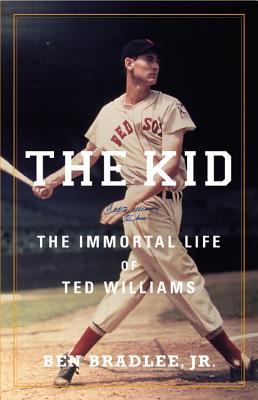
The Kid: The Immortal Life of Ted Williams, by Ben Bradlee Jr. *****
The Kid is the definitive biography of baseball legend Ted Williams, a hall-of-famer who still holds the record .406 batting average today, though he is (mostly) gone. Carefully documented, fluently told, and brilliantly edited, this baseball bio is not a quick read, yet there is also not a single word in it that is not necessary. Your humble reviewer walked away from the opportunity to receive a DRC, unsure I wanted to mow through over 700 pages with the amount of speed and diligence necessary to fulfill an obligation to the publishers. Recently I was able to get a copy to read at my leisure independently, and have enjoyed a fascinating glimpse at one of the most complicated figures in American sports history.
Williams was a tremendously gifted athlete, one with an intelligent approach who carefully analyzed his vocation and the physics related to it at a time when nobody in baseball was doing that yet. He spent one year in the minors, then went straight to the major leagues and the glory that quickly became his. Williams was an incredible hitter but struggled for a long time as a fielder, back before the “designated hitter” position existed. His career was twice interrupted for military service, and he chose to go down with his flaming fighter plane in Korea rather than risk breaking his legs—and possibly ending his baseball career—by bailing out and parachuting down to safety.
His personality was riddled with contradictions. Politically he was known for his rock-ribbed Republican conservatism, snubbing JFK’s overature but embracing Presidents Nixon, Reagan, and HW Bush. He avoided an endorsement of McCain for the presidency only because “Bush’s kid” was also running, and he wanted to remain loyal to the Bush family.
Yet with regard to race issues, he was among the most liberal. Bradlee says that the “curse of the Bambino”, i.e. the inability of the Boston Red Sox to win a pennant or a ring for a prolonged time period, was actually brought upon the team by its owner’s refusal to integrate the team long after the rest of Major League Baseball had done so. Williams, however, sent a letter of congratulations to Jackie Robinson when he broke the color barrier, and although Williams did not take part in the Civil Rights movement, not seeing it as his place as one who owed allegiance to the owners of his contract, nevertheless encouraged integration when it unfolded and was more welcoming toward Black players than most other Caucasian athletes in Boston. He paid tuition quietly and usually anonymously for promising young athletes on both sides of the color line.
It is speculated that part of this attitude toward minority players was due to his own Mexican heritage (on his mother’s side), but we will never know. He didn’t talk about it.
His antipathy toward the press, and particularly toward the local press, was legendary.
On the other hand, he secretly spent his time off visiting children in cancer units around New England, stipulating only that his time and money must never be publicized, apart from work done for his charity, the Jimmy Fund, which he established for sick kids whose families could not afford medical care.
In addition to being one of the most gifted hitters of all time, Williams was a prodigious, accomplished, avid fisherman, and spent most of his months away from baseball fishing in Florida, Canada, and even Latin America. In fact, everything he approached with great enthusiasm and with an analytical viewpoint, he seemed to master.
His marriages were disastrous, his children dysfunctional. The last years of his life were exploited badly by his only son, John-Henry, and Bradlee suggests, with good cause, that Ted perhaps was trying to make up in his dotage for his failure to guide and raise his children when they were young.
A tremendous scandal broke out at the end of his life when John-Henry sent Ted’s remains to a cryogenic facility to be decapitated and frozen. Denial may not, as Twain said, be “just a river in Egypt”, but some of us take it farther than others. John-Henry (and in time, his sister Claudia) wanted to have the family frozen in the hope they would one day all be thawed; the vagaries of age and disease scientifically reversed; and then they could all be happy together. A daughter from Williams’ first marriage was greatly upset by this and took the matter to the press; she was eventually paid to settle down and go away, but the family’s reputation was ruined beyond redemption.
Bradlee deserves a great deal of credit for his readable yet scholarly narrative. This reader was fascinated by most of Williams’ life story, though I never saw him play. (Readers who are also fishing enthusiasts will be delighted, no doubt, but I am not one, and confess that some of his fishing exploits and achievements left me glassy-eyed.)
Those looking for a strong baseball biography about one of the sport’s greatest players need look no further. The Kid is an absorbing look into both the life of Williams as well as the history of baseball. Recommended for those that love the sport and have the stamina required to read a comprehensive biography.
Lucy Stone: An Unapologetic Life, by Sally McMillen ****
The Sound of Music Story: How A Beguiling Young Novice, A Handsome Austrian Captain, and Ten Singing Von Trapp Children Inspired the Most Beloved Film of All Time, by Tom Santopietro ****
Since the enormously popular movie based on the story of the Von Trapp family was released 50 years ago, numerous books have been published about the family, the movie, or both. This reviewer tried reading Mrs. Von Trapp’s memoir many years ago and found it surprisingly dry. Not so with this humdinger by Tom Santopietro. When it comes out in February, you may want to read it even if entertainment history is not usually of interest to you. Because after all, The Sound of Music is not just any movie! Thank you, thank you to Net Galley and St. Martin’s Press for providing the ARC so that I could check it out and report back prior to the release date.
That said, if your entire life has been spent sad and deprived, or with your nose to a video game or hiding under a rock and so, somehow, you have never seen this movie, watch the movie first. It is a full three hours long, and not a single moment is wasted. In the tradition of Rogers and Hammerstein, the music forms a part of the narrative, rather than something inserted in between lines of a story which slow it down. Painstaking care was leant to avoid having a moment when the audience would collectively think, “Ho hum, I can see we’re about to burst into song here.” In fact, musicals were not much in fashion anymore, and religious films, which had enjoyed popularity just prior to this one, were now considered old and outdated. Extraordinary effort was taken to engage the audience, and it shows.
One reason it was even considered, odds being what they were, was that the stage version of The Sound of Music, which starred Mary Martin as Maria, had sold tickets like hotcakes. The possibility of a successful motion picture was intriguing. There was no way to use Martin for the film, though; she would have been past the age of fifty years when filming began, and things that can be obscured or disguised on stage tend to show up on camera. There could be no painted backgrounds for film—how cheesy! An entirely new script, with two additional songs added by the original composers, made it much more appealing than the stage version. A lot of money went into making this show work, and it was money well spent.
How the deal was struck to make the movie is explained thoroughly without trying the reader’s patience without a lot of extraneous or uninteresting detail. Each time I thought perhaps I was getting too much information—such as back-stories on the behind-the-scenes specialists—the narrative would lead from there into the aspects of the film that were their particular contributions, and then I would understand why I needed to know about that person. The creator of that gob-smackingly gorgeous wedding dress? Oh, hell yes! The choreographers who put together the whole nine-minute Do-Re-Mi music video…oh, yes I guess that was pretty amazing, so yes! And behind all of it was the genius of Robert Wise, a producer and director I had never even especially noticed before, but now will never forget.
I loved walking through the casting roster. Hmmm, who should play Maria? How about Angie Dickinson? (If you are old enough to remember her, you’ve got to find this pretty amusing.) Mia Farrow? She would’ve had the job if she could’ve sung better. Doris Day had a red-hot career going, but she turned this one down cold, accurately pointing out that her resume had been built by being the quintessential all-American girl, and just how was anyone suddenly going to think she was an Austrian nun? Point well taken.
Some of the others were fun, too. How about Yul Brynner as the captain? He really wanted that job. NO. And so it goes.
Interwoven throughout are the real family Von Trapp. Once she had accepted the deal and signed on the dotted line, the real “Sister Maria” was every bit as outspoken in real life as her fictional counterpart. In fact, she was so outspoken in her limitless suggestions as to how the film could be kept more in keeping with events as they unfolded that finally, a letter was sent off to her explaining, for once and all, that the movie was based “loosely” on her own story and was not intended to be a documentary. Stay out of the way; we’re making a movie here!
Which scenes were shot on a Paramount stage, and which were on location? Sometimes the difference is a matter of angle, with scenes being freely mixed. (The Von Trapp manse had several different locations, according to whether one was out front, out back, indoors, or in the gazebo.)
Imagine Maria skipping down that lane singing “I Have Confidence”…with fifty or so cameramen and other personnel following closely. And didn’t she make it all look easy? A clue: it wasn’t. That woman had an unstoppable work ethic!
And what of the Von Trapps now? Once they emigrated (not really through the Swiss Alps, silly; for one thing, to get there from Austria, you have to go through Germany!), they came to the United States, flat broke after a life of great comfort, albeit not as much luxury as depicted on film. They sang and toured till some of the “children” were sick to death of it and vowed to sink deep roots and stay put ASAP. Eventually they founded a ski lodge in Vermont, where the grand-Von-Trapps, at least some of them, still live and work.
Was Julie Andrews really that nice, or was she different off-camera? You have to read the book, and then you’ll know. Who else is remembered fondly by the cast, and who not-so-much? It’s all here.
Even less central aspects of the story, such as the campy sing along tradition that draws thousands anually, many in full costume (even dressed up as carburetors!) and likened to a nerdy version of the Rocky Horror Picture Show, are interesting and amusing.
What’s more, after you read the book, if it affects you as it did me, then no matter how many times you have watched the movie, you will need to see it again in order to appreciate everything you just read. Happily, we had the DVD ready to hand, and my daughter, who has also watched a number of times before, and I nestled next to the Christmas tree and re-watched it, with me pointing things out to her as we went along.
If you don’t have a date Friday night or prefer a less boisterous evening in the privacy of your own home, this movie just could be a great plan for you! Then you’ll be properly ready to read the book once it comes out around Valentine’s Day.
Mark your calendar. This story-behind-the-story is worth the anticipation.
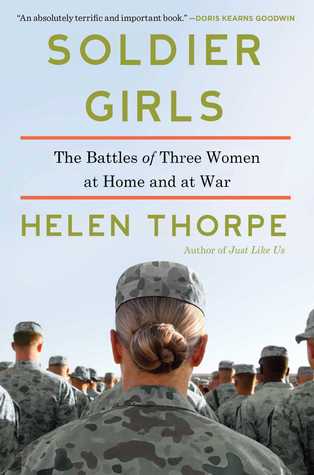
Soldier Girls: the Battles of Three Women at Home and at War, by Helen Thorpe*****
Now that this title has created some buzz, I thought I’d reblog this!
I was able to read this before its publication date, courtesy of NetGalley.com. Thanks, guys!
I am usually good for half a dozen books at a time, but I have to admit that this one story has dominated my reading hours for the past week or so. I had so many preconceptions (and yes, stereotypes) that I didn’t even realize I’d developed until I read about these brave souls who have gone to Afghanistan and in some cases, Iraq.
What kind of woman leaves the home she knows and signs up for the National Guard? Sometimes (often!) it is someone who needs money quick. Sometimes it’s a woman who is desperate to get out of her current living situation. And once in awhile, it is something done, at first, when one is dead drunk and out of control; the Guard will fix that quickly!
I’ve been a Marxist my whole…
View original post 115 more words
The Trials of Lenny Bruce ***** by Ronald K.L. Collins, David Skover
![]() |
I cannot remember the last time I felt so strongly about a book I had bought. I have never, ever felt this strongly about a CD! I found, by a rare bit of luck, this hardcover book in brand new condition, in a used book store. The CD inside the cover was still sealed. It is not just an actor on the CD; it is actual footage of Bruce’s voice performing (along with narration by someone else). It cost me all of five bucks. Unbelievable!
If you are a champion of free speech, you have to know that this amazing (though oh yes, profane) comedian broke new ground. It could be (and has been) argued that he paid with his life, that performing in a nightclub LINED with cops all up and down ultimately broke him, but he did not go gently. The first time I heard the material was in the movie “Lenny”, starring actor Dustin Hoffman in the title role. I knew it was good, but I was also young, had very tender ears, and I think there were times when the one-two punch of some of the words that I hadn’t heard much, caused me to miss some of the point. Even then, I understood that this was a powerful thing, though. This book and ESPECIALLY the CD, which provides not only the words, but the all-important inflections (transcribed, for those who miss some of what goes by in the snappy nightclub patter, in the book), is one of the most important pieces of primary evidence I have ever been privileged to hear, see, and own. I cannot believe the clarity of the sound! For those, like me, to whom the early sixties are not within the realm of memory, the book is essential for context. There are people who were well known at the time whose names go by like gunshots in his routine; two who come to mind were a cardinal and a bishop. The context that the CD does not provide is in the book. The text itself is 442 pp. in length; the rest is meticulous documentation. Pictures of everyone…this is a treasure! |
|---|

Now that this title has created some buzz, I thought I’d reblog this!