You Are Not Alone, by Greer Hendricks and Sarah Pekkanen****

I read this novel free and early, thanks to Net Galley and St. Martin’s Press. It’s for sale now.

Shay Miller has watched a woman die, and now life will never be the same. She is alone in the big city, barely getting by like so many working class women. She is in love with her roommate but doesn’t rock the boat by propositioning him; she has no friends or family nearby. Then one terrible day, she is waiting for her subway when a sinister looking man turns in her direction. Imagine how glad she is to see Amanda, a normal-looking woman who’s also headed her way. But instead of providing the security Shay is hoping for, Amanda jumps onto the tracks in front of a moving train.

It happens so quickly!

Shay is the sort of person that relies on information to deal with stress. She has a little notebook, what she calls her “Data Book,” filled with all sorts of oddball statistics that she quotes from at the start of each chapter and throughout the novel. (Frankly, I could have lived without this feature, which began to feel like filler at times.) She deals with the stress of having witnessed a suicide by finding out every single detail she can about the late Amanda.

And this part is the hardest aspect for me to buy into. She’s haunted by what she saw; okay. Amanda looked a lot like Shay, which made her more fascinating to our protagonist. Fine. But the obsessive way she pursues information—even once she finds she has the dead woman’s necklace, which she had forgotten momentarily—doesn’t jibe with me. She goes to her apartment, visits the woman’s mom…huh. Go figure.

Now, once I quit rolling my eyes and allowed myself to buy this premise, things flowed a lot more smoothly. Cassandra and Jane, friends of Amanda’s, hold a memorial service for her, and it is by attending this event that Shay comes to know these two sisters. They are kind, they are solicitous, and they are caring. Before Shay knows it, they are her new best friends, and because she herself is a good person—if a little odd—it doesn’t occur to her that their motives might not be as benevolent as they pretend to be. They are the spiders, and she is the fly.

Here’s the thing I like best about this story. Shay’s character has to be rock solid for it to work, and once we get past the stupid parts at the beginning, it is. I half expected her to be dumb as a box of rocks all the way through, but not so much. The way she is developed, neither too unrealistically savvy nor ultra-naïve, is admirable. There’s a thin path through the middle between these two extremes, and I wondered if she would be the dithering idiot that has to be saved by someone smarter, but that’s not how it shakes out. There are a couple of loose threads that are left dangling, but it’s the way Shay’s character is crafted that wins the day.

Those that enjoyed this authorial pair’s other books will like this one too; those in search of a good beach read or a fun weekend book should consider this one. All told, big fun, and delightfully original.

Dear Emmie Blue, by Lia Louis***

I read this copy free and early, thanks to Net Galley and Atria Books. From time to time I find myself reading too much dark material, which is the direction I’m generally drawn toward. I found this title and thought that it might balance my selection. And for what it’s worth, it did that.

The premise here is that Emmie has fallen hard for a young man that she met years ago by pure chance. At age 16, she had written a secret that she needed to share on a scrap of paper, along with her email address, stuffed it into a balloon and launched it into space. (How does one get a slip of paper inside a helium balloon without losing the gas inside it? But let’s not dwell there.)  Rather than falling into the ocean and choking a seabird to death, the balloon makes it to dry land, and Lucas finds it. The two become fast friends, and as time progresses, she is sure they are meant to be more.  She is devastated to learn that his plans are different from hers.

This story is a quick read with lots of dialogue. One of my pet literary peeves right now, however, is the terrible-mother-who-ruins-everything. Oh. Come. On. You can do better than this. However, other aspects of the story are more congenial. In the end Emmie takes control of her own life, as she should have done all along, and good things result.

Those looking for a pleasant beach read could do worse. However, the publicist that compares this book to Eleanor Oliphant is Completely Fine is completely delusional.

It’s for sale now.

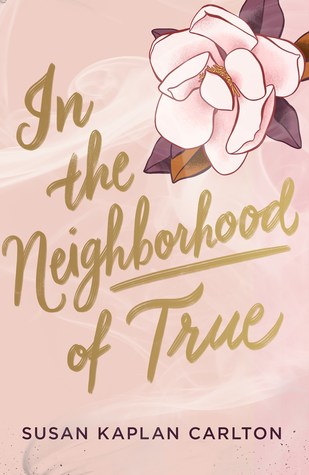
In the Neighborhood of True, by Susan Kaplan Carlton*****

“Shalom, y’all.”

Ruth Robb was born and raised in New York City, but following her father’s sudden death, she moves with her mother and sisters to Atlanta, where her mother’s family lives. The year is 1958. Almost immediately she is faced with a critical choice: should she quietly avoid mentioning her Jewish roots and allow her peers to make assumptions based on her grandparents’ standing in their Protestant church, or should she risk her newfound popularity with candor? My thanks go to Algonquin Books and Net Galley for inviting me to read and review. This book is for sale now.

The family has barely begun to grieve their loss. Everything is tossed into boxes and they leave New York, soon to be embraced by Ruth’s loving grandparents. Their new home, however, is almost too good to be true:  the house is large and luxurious, with a pool; her grandparents are generous and solicitous; their deep roots in the community make for nearly instant acceptance among the girls’ peers. But Ruth’s grandmother, called “Fontaine” within the family, has plans for Ruth and her younger sister, Nattie. They are enrolled in an elite Christian school, and Ruth is sent to private lessons for a “pre-debutante.” There’s a little pink book that serves as a grooming and etiquette guide, and it is specific and proscribed.

What isn’t in the pink book is the synagogue. Fontaine immediately informs the girls that they are, after all, “Half Christian,” but their mother quickly reminds her mother that she is a convert, and the girls are Jewish, period.

The characters are so resonant and believable that I find myself reflecting on the amount of stress that the girls, Ruth in particular, are experiencing. First, they must leave all of their friends, and the culture in which they’ve been raised, behind; their father is gone forever; and now there’s this tension between their loving grandmother, who provides them with everything, and their mother. This is not a dramatic conflict; but it shimmers under the surface constantly. They are a loving family, and they’re civilized. Yet Ruth is torn. But her nearly instant popularity galvanizes her, and she decides not to decide, by skating around questions of church and religion. After awhile her evasions become deception. Her mother is a discreet but unmovable force, with a sort of Jiminy Cricket demeanor: don’t forget who you are, Ruth. When are you going to tell your friends? What do they think you are doing on the weekend? The ante is upped when Ruth falls in love with Davis, who’s a big man on campus.

Things come to a head when the local synagogue is vandalized.

Carlton’s author blurb says that she had a similar experience, although she wasn’t the teenager, she was the mom. No doubt this is responsible for some of the story’s authenticity, but much of the compelling narrative has to be chalked up to excellent writing. There’s never a stereotype, and I never felt I was being lectured. Instead I am absorbed. What the heck is Ruth going to do? And though I am unfamiliar with Atlanta, there are several times when colloquial expressions that have fallen out of use pop into the story, expressions I recall from my early childhood in the 1960s. But the author never leans on pop cultural references; rather, they drop in naturally. It’s smooth as glass.

Sexual references tend toward the general; there is sex included, but not much detail. I include this information for teachers and parents considering including it in their libraries. If in doubt, read it before you present it to the young people in your life.

Since retiring from teaching language arts to adolescents, I have generally avoided reading young adult novels. I’ve been there and done that. But there’s an exception to everything, and I am glad I was given the chance to read this one. Highly recommended.

To Have And To Hoax, by Martha Waters**-***

Oh well.

Martha Waters spans three genres here: historical romance, rom-com, and satire. I like satire, and the other two, not so much. I am rounding my rating up to three stars, because I stepped out of my comfort zone with this novel, hoping for light entertainment; those that enjoy rom-com books may be more enthusiastic than I. My thanks go to Net Galley and Simon and Schuster for the review copy. This book is for sale now.

Lady Violet and Lord James found instant chemistry at a grand ball. Almost as instantly, they were married; then they quarreled and have been estranged ever since. Yet even the stupidest and most imperceptive reader will see that they are still crazy for one another. If one is in doubt, turn the page so the author can hit you over the head with it again. Again. And again.

I enjoy smart satire that leaves something to the imagination. This book tries too hard to be funny. I tried reading the DRC, and when I couldn’t get through it, I checked out the audio version from Seattle Bibliocommons. This made it, if possible, even worse. Overdone prose is made worse by an over-the-top voice actor.

I had been reading too much that was dark and serious, and then the pandemic broke out and I went looking for relief. I found it, but I didn’t find it here.

But again, I have never liked rom-com. If that’s your wheelhouse, you may appreciate this thing more than I do. I pushed through to the forty percent mark; my usual due diligence requires me, if skipping, to then proceed to the eighty percent mark and see if there are joyful surprises that might change my mind. But no.

Fans of the genre may feel differently, but I have to call them as I see them. Not recommended.

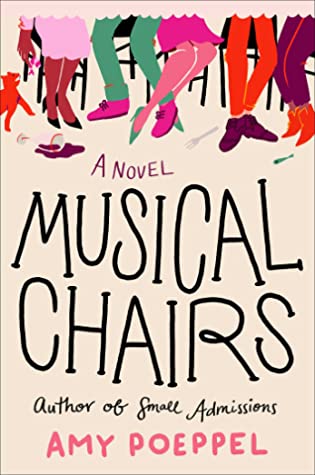
Musical Chairs, by Amy Poeppel*****

We need more writers like Amy Poeppel. Her previous novels, Admissions and Limelight, are whip-smart and hilarious; both involve well-developed characters stuck in odd but credible situations. Her new novel, Musical Chairs, shares these attributes, but it’s even funnier, and even more insightful. Lucky me, I read it free and early thanks to Atria Books and Net Galley. It’s available to the public August 1, 2020.

Our protagonists are Bridget and Will; they are family to one another in the modern sense, the sense that sometimes we adopt our most important friends and declare them to be kin. They’ve been together as performers in the Forsyth Trio since college. Bridget has never married; Will is divorced. They have seen one another through thick and thin, and well meaning outsiders think they must surely harbor romantic feelings for one another. Will has no children, but has served as a father figure to Bridget’s twins, both grown.

Summer is here, and Bridget is preparing to spend it in her summer house in Connecticut. Her boyfriend, Sterling, will be joining her; she thinks that he may be the one. But you know what they say about the best laid plans. Sterling dumps her on her ass without a moment’s hesitation, and both of her children descend on her unannounced. Her octogenarian father lands in the hospital. Nothing that happens is the way she had planned it.

At the same time, Will has been looking forward to some time on his own in the city, but Bridget is in distress and so he drops his other plans for her. Not one thing goes as planned.

I don’t usually enjoy books about rich people, and Bridget’s family is wealthy indeed. This one works for me because the disparity in wealth between Bridget and Will, who is an ordinary starving artist, is addressed in a natural, organic way throughout the narrative; but beyond that, I feel I know Bridget, and so she is not the rich woman, not the heiress, but instead she is Bridget, and she feels like a friend. We always forgive our dearest friends for things that are generally deal breakers with others. Finally, Poeppel has no tolerance for pretension, and more than anything, her honesty turns a good story into a terrific one.

The pacing here never slackens; one crisis is nearing resolution when another one pops loose. At one point I am convinced that Poeppel is driving home a message about the destructive nature of secrecy, but by the ending I can see she’s done no such thing. Sometimes secrets are great. Sometimes they work out well. And sometimes they are only secrets for a while as their owner waits for an appropriate time to reveal them.

The side characters here are brilliant as their perspective contrasts with that of the protagonists. The internal monologue involving Bridget and Will is personal, even intimate, and so we see everything as they do; but then Jackie, the ambitious young assistant that Edward has hired for the summer, looks these folks over and weighs in, and her observations make me laugh out loud. In fact, this book marks the first time since the pandemic began (at the beginning of March, here in Seattle) that anything I’ve read has made me laugh. It felt great! Then later, another side character’s pet parrot Ronaldo pipes up and it happens again. (My laughter woke my husband, and I was a little bit sorry, but also not.)

The dialogue between Edward and Will near the end makes me shake my head in awe.

At the outset, I am puzzling over the title. Musical Chairs turns out to be a website for job-searching musicians, but later I see a broader reason that this title was chosen. Throughout the chaos that unfolds for Bridget and Will this summer, the characters are constantly changing places, rotating, and assuming new positions, and it’s fine, because—and here’s our real message—change is not failure.

The references to the musical “My Fair Lady” are icing on the cake.

Highly recommended, and likely to be one of this year’s best books.  

The Talented Mr. Varg, by Alexander McCall Smith*****

There are hundreds, perhaps thousands of mystery writers whose work falls within the cozy subgenre, but none of them hits exactly the right note the way Alexander McCall Smith does. His feel-good vibe is engaging, but it’s never smarmy or cloying; the reader feels respected. Add to that a spot here and there that is straight-up hilarious; I can think of no better time to read his work. This is the second in the Detective Ulf Varg series, and it is every bit as delightful as the first. Can you read this book alone even if you missed the first? Yes and yes.

My thanks go to Edelweiss and Pantheon Books for the review copy. This book is for sale now.

Detective Ulf Varg leads a quiet sort of life; after all, he’s a cop, and this is Malmo, Sweden, hardly a hotbed of crime. He is the lead detective for a special bureau, one that was introduced to us in the first in the series, The Department of Sensitive Crimes. Often the matters under investigation involve misunderstandings, deceptions carried out to avoid embarrassment, and cultural miscues. Ulf spends his down time teaching his deaf dog, Martin, to read lips and taking him to therapy for his depression.

There’s a lot of that in Sweden, you know. Northern latitudes.

And so, it is from his dog’s psychiatrist that Ulf receives a tip of a possible counterfeit dog breeder. Someone out there is breeding husky/wolf mixed dogs, which are then sold to handlers that furnish trained wolves to appear in movies and television shows. Fraud! This could be Varg’s biggest case yet. But then, that wouldn’t be saying much.

Meanwhile, Varg longs for intimacy with his partner, Anna, but he mustn’t act on his feelings. There are departmental policies to be observed, and she is married. Oh, how he pines for her, quietly and in private. He dreams of a woman that will hold his hand as he falls asleep at night, a woman that will touch her toes to his under the covers and wiggle them. There are other women of course, but none like Anna. So when Anna needs a matter of her own investigated on the down-low, Ulf is ready and willing.

The most amusing thread here, as far as I’m concerned, involves Varg’s struggle with bureaucracy. You’ll have to find out the particulars for yourself.

Smith’s novels are my favorite bedtime material, subtle humor that unknots my twisted muscles and helps me gain perspective on whatever worries of the day have climbed in with me. I daresay he could do the same for you, too.

Highly recommended.

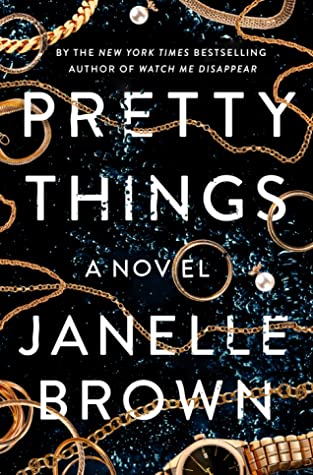
Pretty Things, by Janelle Brown*****

Nina is a second generation grifter, a talented thief that uses social media to spot and follow the conspicuously wealthy, then set up an opportunity to rip them off. But now Nina has gone straight; her college education has made it possible to earn an honest living. However, her mother’s chemo bills are stacking up, her mom too weak to find and execute her own ten-finger specials, and so Nina finds herself back in the game.

My thanks go to Net Galley and Random House for the review copy. This book is for sale today.

Vanessa Fucking Liebling is an heiress, a spoiled daddy’s girl that has found an avocation as a social media influencer. She thinks nothing at all of dropping tens of thousands of dollars for a single dress that she will wear once; she is courted by upscale manufacturers of women’s clothing, accessories, and you-name-it, and she flies free of charge to famous cities around the world with a small coterie of women like herself, the chosen ones that have the Instagram followers that make their endorsements so valuable. But when her father dies, Vanessa soon learns that the money problems he’s tried to tell her about are indeed real. With her party budget in the crapper and a schizophrenic brother to look after, Vanessa ditches the New York fashionistas and heads to the family’s vacation home, Stonehaven, located in Lake Tahoe, California. She is about to come nose-to-nose with destiny.

Our two protagonists, Nina and Vanessa, are featured alternately in the first and third person respectively; in addition, we catch snippets of their earlier lives and the critical events that have molded them.

Though Nina is a crook, I find her easier to like and bond with than Vanessa. Nina, despite her dishonesty, cynicism, and the immense chip on her shoulder, is an underdog, a scrappy fighter determined to better herself and to take care of her mama. She isn’t a violent offender, and the marks she steals from are so filthy stinking rich they hardly notice the loss of a wristwatch here, an antique vase there. It’s hard not to feel that if the world were a fairer place, the dilettante wouldn’t have that much stuff to start with, and Nina wouldn’t have to scramble to get by and take care of her sick mother.

Vanessa, by contrast, is a much harder sell. Brown develops the hell out of this character, showing her gradual awakening as she realizes how shallow her entire existence is, and how devoid she is of any true friends. At first I am having none of it. Poor little rich girl indeed; cry me a river! But Brown keeps chipping away at my resistance, and eventually I see Vanessa as a flawed human being with problems, rather than a rich person that deserves whatever karma comes her way.

My first book by this author was Watch Me Disappear, a glorious work of suspense that kept me enraptured till the last twenty percent, at which point I was consumed by dismay. Therefore I read this book with avidity, and yet at the same time I am on the alert, wondering if this story will also be resolved with a you’ve-gotta-be-kidding-me ending. My fears prove groundless. The main storyline as well as the smaller bits all come together in a way I find deeply satisfying. The ending is a complete surprise.

My one small criticism at the outset was the schtick about Nina’s mother’s chemo. It’s been done, and done again, and done again. I’m thinking I’d like the story better if she would just let the grifter be a grifter, rather than carrying on about poor, dying mom. However, there’s an additional twist at the end that I did. Not. See. Coming.

In the end, this book is the total package. I wouldn’t change a single thing.

Highly recommended. Get this book now!

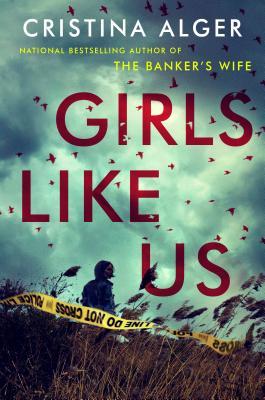
Girls Like Us, by Cristina Alger***-****

I received a review copy of this book from Net Galley and Putnam Penguin last summer. Since I received it after the publication date, I moved it to the back burner in order to prioritize galleys whose publication dates could still be met. January came, and I still hadn’t opened the book. Deeply ashamed, I checked out the audio version from Seattle Bibliocommons and listened to it in the evenings while preparing dinner. The audio version is three stars, but I suspect that if I had stuck to the digital review copy, it might have been closer to four, so I am rounding my rating upward.

FBI agent Nell Flynn, our protagonist, returns home after ten years away in order to bury her father and deal with his estate. She and her dad were estranged, and her mother died when she was a child; she has no siblings; she is also dealing with post-traumatic stress disorder, the fallout from an earlier case. I assumed incorrectly that this earlier case must mean that Nell Flynn either had, or was about to have her own series, yet no mention is made of this; as far as I can tell the PTSD has nothing, nothing, nothing to do with any other aspect of the story. Her boss urges her to seek treatment; she doesn’t want to because she’s hard-boiled, and yada yada. Moving on.

The body of a young woman is found, and then there’s another; since she happens to be visiting Suffolk County, her father’s partner asks Nell to lend a hand. She is recruited as a consultant, but she gets the sense that the local veterans don’t want her to dig deeply. Her father’s partner is a relative newbie, not part of the old boys’ network, and so she and he work together to try to solve the killings, but she is obstructed at every turn. Is there a cover-up taking place, and if so, is it because her father was culpable? First one thing and then another makes her wonder whether he might have killed them, and while she is at it, she also wonders if he had a hand in her own mother’s death many years ago, when she was quite small.

The thing that makes this story unique is the fact that the cop is investigating her own dead father. I also like the way the author deals with the mystery woman that her father’s will includes. I thought I saw how that thread was going to play out, and I was not even close to being right. I like Alger’s subtlety here.  I also like the medical examiner, who is female too.

The main challenge for me was as a listener. The reader that performed the audio version has a painfully wooden delivery and pronounces a couple of fairly common words differently from anyone else that I’ve heard, and each time she said them I was distracted away from the story line. The way Nell’s father’s old friend, Dorsey, is voiced sounds like a bad John Wayne imitation. So, should you read this book? If you enjoy crime fiction that’s character based, particularly with a female cop or detective, you could do worse. I wouldn’t pay full jacket price for it, though, and I don’t recommend the audio version.

The Museum of Desire, by Jonathan Kellerman****

I’ve been reading the Alex Delaware mysteries since Kellerman wrote the first in the 1980s; The Museum of Desire is the 35th installment in a successful, long-running series. Thanks go to Net Galley and Random House Ballantine for the review copy; this book is for sale now.

Kellerman was a child psychologist before he became an author and he brings his knowledge of children and families when he creates characters and situations. This is a reliably strong mystery series and I always smile when Alex’s BFF, Detective Milo Sturgis, barrels into Alex’s kitchen and starts eating his food. I feel as if I am receiving a visit from an old friend also.

The premise here is more shocking than most, and I find myself a bit squeamish when reading it. In reviewing the others he’s written, however, I can see that this isn’t a lot more extreme than usual, and so I conclude that perhaps I am more sensitive than I used to be. Those with doubts should read the promotional blurb carefully before making a purchase.

That said, the dialogue here is first rate, and pacing is brisk, as always.  Kellerman maintains credulity deftly by avoiding having Delaware tote a gun or tackle bad guys. In real life a kiddy shrink would be in his office, in the police station, or in court, period. But that’s dull stuff, and so the author has to strike a balance, creating fictional situations that don’t strain the reader’s ability to believe. He doesn’t wear a Kevlar vest or carry out other tasks that are clearly the work of on-duty cops; he provides his professional insights and does some extracurricular research, but the latter is the sort that a semi-retired professional might choose to do for a good friend. I had no trouble engaging with the story.

If I could change one thing, I would include more of the affluent, troubled teenager. Crispin is an interesting kid, but he pops in and out of the story in two very brief spots. Kellerman’s strongest suit is developing abnormal child characters, and I think this story would be more compelling if it had more of this bizarro kid in it.

One way or another, this is a solid entry in an already solid series, and I recommend it to you.

The Spies of Shilling Lane, by Jennifer Ryan****

Sometimes what I really need is a feel-good story. Had I ascertained that this was that sort of book, I would have had it read by the publication date. I read the beginning twice, decided it was going to fall into the grim duty category since I had accepted a review copy, and I set it aside. My apologies go to Net Galley, Crown Books, and the author for my lateness; my heartfelt thanks go to Jayne Entwistle, the reader for the audio version of this lovely tale, for rekindling my interest. I procured the audio version from Seattle Bibliocommons and listened to it while I rode my stationary bike and prepared dinner in the evenings. I began listening to it because I owed a review, but soon I found that I preferred this novel to the other good book I had been listening to just for pleasure.

Our story begins with Mrs. Braithwaite feeling injured and put upon. Her husband is divorcing her, and the women in the local charity club have banded together and ousted her from her treasured position of leadership. She is miserable. Betty, her only child, has run off to London, intent upon aiding her country now that the second World War is upon them, and she isn’t answering her calls. Mrs. Braithwaite decides to visit her, but upon arrival, she discovers that Betty is missing. The story flows from her effort to find her daughter and also herself.

Those seeking an espionage thriller won’t find it here; the story is character based, and in this Ryan succeeds richly. Mrs. Braithwaite enlists the reluctant assistance of Mr. Norris, Betty’s milquetoast landlord, and it is these two characters that are wonderfully developed. None of this would have been achieved without the spot-on cultural insights regarding the World War II generation. The shallower pop-cultural references to music are well and good, but Ryan goes deeper. The fact that the character is known only by her formal title, with the salutary “Mrs.” in place of a first name, speaks not only to the protagonist’s dignified, somewhat cold façade, but also to the practices of the time. Use of first names was considered an intimacy among the elders of this time period; women addressed their peers by it unless they were close friends or family members. Even the way that the plot develops is reminiscent of the fiction and movies of that generation. As in most good historical fiction, the setting mingles with the characters to move the plot forward.

I am not much of a cozy mystery fan, but I think this story would please cozy readers. At the same time, I appreciate the careful balance the author uses; the touching moments are deftly handled, never becoming cloying or maudlin. At other times there’s a playful, spoofing quality to it, as Mrs. Braithwaite and Betty search for each other, each fearing the other is in danger and thus placing herself in it.

I recommend this book to cozy readers, fans of historical fiction, and anyone in need of a boost in morale. It’s for sale now.