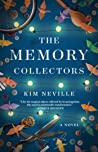
The Memory Collectors, by Kim Neville***

2.5 stars, rounded upward.

I was truly excited to read this book; perhaps too much so. It’s not a bad novel, but not the crowning wonder that I was expecting. My thanks go to Atria Books and Net Galley for the invitation to read and review.

Ev lives in poverty, sorting through trash in hope of finding treasures that she can improve upon and sell. As the story unfolds, we are momentarily off-balance, learning about Ev and the setting primarily through context. We learn early on that Ev has a traumatic past—with the particulars doled out in dribs and drabs to create suspense—and that she has an unusual gift, that of feeling the powerful emotions experienced by the item’s former owner. She wears gloves to prevent herself from becoming overwhelmed, particularly by the negative feelings some objects project.

Harriet is an elderly woman with similar gifts, and she’s in search of an heir. When she and Ev collide over contested objects, she wants to hire Ev. Ev resists at first, but is eventually drawn in after carefully negotiating her terms. An important side character is Ev’s long-lost sister, Noemi, who pops back into Ev’s life unexpectedly. Noemi’s role here is to reveal the past events that have scarred her elder sister, as well as to motivate Ev to be successful and build a better life.

At the outset, I am impressed by the writing, and it looks like the hype is deserved, because I am immediately engaged. But as the story moves forward, it becomes slower, then slooower, then slooooower…and I realize that this is one more fantasy novel in which the one original aspect, the “stains” that reveal the character of an object to people like Ev and Harriet, is just about all the author is going to give us. Everything else, from the revelations about the past, to the relationship between the sisters, to the dynamics between the elder and younger sensitive women, to the problem posed by another gifted but malign person, to uh, everything, is sort of lackluster and tedious. The character development is shallow and barely there. I never become comfortably acquainted with the world in which these women exist. It’s as if the author has trotted out this one device—I’m trying hard not to call it a gimmick—and then figures her job is done.  There isn’t much else that I haven’t seen done much better by other writers. In the end, I tossed it on the DNF pile.

I read this story digitally, but I alternated it with the audio version, and am inclined to recommend the audio version slightly more to those that plan to read it. Initially I don’t like the way that the reader, Emily Woo Zeller, voices Noemi, using a chirpy, almost shrill voice, but after I have listened for a bit over an hour, I become accustomed to it and grow to regard the character with a fondness I don’t find for the other characters. Instead of perceiving her as shrill, I begin to think, “Oh, it’s okay; that’s just the way Noemi is.” Since I don’t fully believe any of the other characters, I have to give Zeller props for her performance.

This book is for sale now; get it free or cheap if you’re interested, but don’t shell out the full jacket price unless your pockets are deep ones.

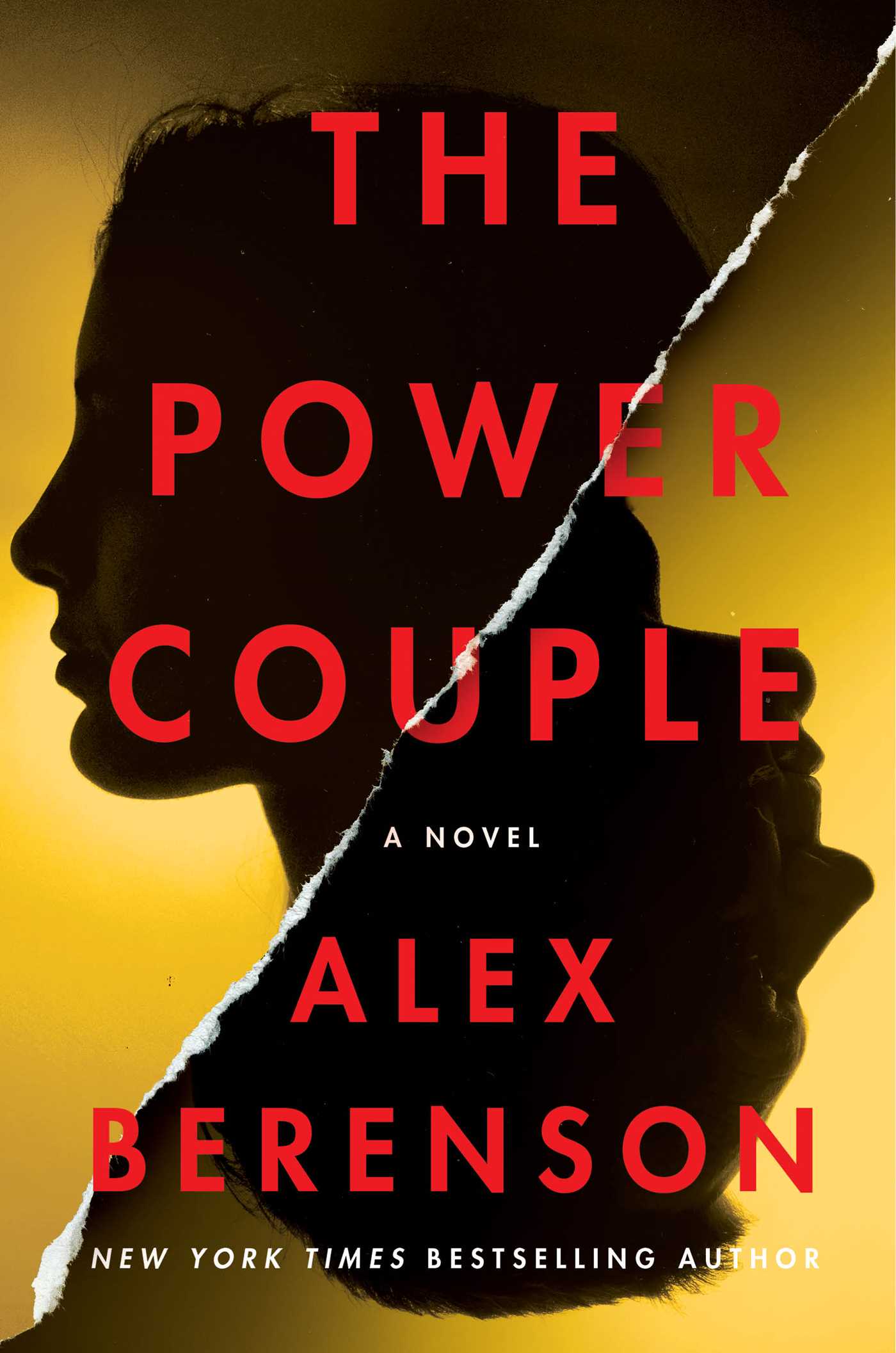
The Power Couple, by Alex Berenson****

Alex Berenson has done it again! I first read his work when I found a galley for The Prisoner, the eleventh in his John Wells series. When I saw that this stand alone thriller was available, I jumped on it. My thanks go to Net Galley and Simon and Schuster for the review copy.  The Power Couple is a fast read and a fun one, and I recommend it to you.

Rebecca (call her Becks) and Brian Unsworth are type A achievers, and both work for the federal government; she is a spy, and he is a hacker. But like so many couples, the similarities that brought them together are getting in their way now. With their children, Kira, who is nineteen, and Tony, who is younger, they take off for Europe to let off steam and spend quality time together. Maybe.

Early in the story, Kira is abducted, and from there forward, the pacing is perfect. Now and then Berenson pulls us back a bit as he shares sketches from their pasts that lead up to this event, but each reminiscence is brief, and the shift between points of view and time periods adds to the suspense. We see their lives through the perspectives of all except Tony, who is a minor character. In the end, Kira is the one we like best. (Trust me.) There’s not a lot of character development, but this isn’t that kind of novel.

I don’t want to give more away, because if I kill any surprises, you won’t enjoy the story as much; what I will say is that even if your own marriage is less than perfect, it is a shining beacon of integrity and affection when contrasted with that of the Unsworths.

This book is for sale now, and just right to take on vacation with you.

The Incredible Winston Browne, by Sean Dietrich****-*****

4.5 rounded upward.

The time is the 1950s; the place is Moab, Florida, a tiny town where everyone knows everyone else. Winston Browne is the sheriff; Eleanor Hughes is a frustrated single woman that fears she is headed for spinsterhood; and a small girl, Jessie, is on the lam from a creepy cult that considers her to be “a little abomination.”

I read this book free, courtesy of Net Galley and Thomas Nelson Publishers. It’s for sale now.

The story begins with Winston in his doctor’s office. There’s bad news about his chronic cough. Tests show it’s not only malignant; it’s metastatic. In other words, Winston should put his affairs in order.

Winston is a friendly guy, but he’s also an introvert. He tells no one of his condition. He’s single, and there’s no family to warn, so he goes about his life about the same as before he learned his diagnosis.

Jessie is awakened in the middle of the night by one of the Sisters, who hustles her into a waiting vehicle. She’s being busted out of the Temple compound by softhearted women that know the girl is doomed if she remains. Jessie has an independent spirit, and so when she is dropped off at the train station with instructions of where to go and who to trust, she follows her instincts instead. Her instincts take her to Moab, Florida.

Eleanor—you can call her Ellie—is fed up with Jimmy. They’ve dated for year upon year, and she is so frustrated by his inaction that she can scarcely stand the sight of him. If he is so crazy about her, then why doesn’t he propose? She’ll never have a husband or a family, and it’s all his fault. But then Winston comes along, and the birds sing in the trees.

For the first half of this book, I thought it would be a four star read. It was a good enough tale, but I had my reservations. For starters, where are the Black people in Moab? If we’re meeting the townsfolk—and we surely are—how is it that all of them are Caucasian? A visit from Jackie Robinson is all well and good, but this is Florida, for heaven’s sake. Is Moab a sundowner town?

I run a quick search, knowing that the African-American population during this mid-1900s was much lower than it is now, and I am grudgingly convinced that there might well be a little town in the boondocks with only white residents. Back then, it could have happened, so…okay.

It is during the second half that everything falls together and I am swept away by the characters. No more consulting the Google oracle; the intimacy has become too strong for me to step back.

It’s difficult for me to find a feel-good book without schmaltz. Most books that are billed as heartwarming tend to make me roll my eyes or retch a little. Dietrich works magic, though, and although it takes a minute or two to reel me in, ultimately I am captivated. The droll, understated humor that drops in and out at just the right moments is a key element. The captions that appear regularly make me guffaw more than once; don’t skip over them! They’re terrific. The text is punctuated now and then by contributions from the Moab newsletter, whose minutiae underscores just what a dull place this town usually is.  

However, let me also say a quick word here about the audio version. I began reading this book close to the publication date, and so when I was partway into it, I checked out the audio book from Seattle Bibliocommons. By doing so, I could extend my reading sessions, switching over to the audio when I had to do something else with my eyes and hands. The author reads his own narrative, and he has a wonderful voice, warm with just the right amount of drawl. The best way to enjoy this book is to access both the print version and the audio; if you must choose one or the other, it’s a toss-up, perhaps with a slight edge toward the audio.

Some readers will be pleased to know that there is no off color language or sex involved. If a movie were made based on this book, it would most likely show a General Audiences rating.

Highly recommended to those that love a feel good story, historical fiction, or Southern fiction.

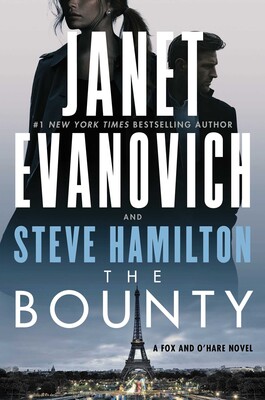
The Bounty, by Janet Evanovich and Steve Hamilton**

This book is the seventh in the Fox and O’Hare series. Our protagonists are Kate O’Hare, who is an FBI agent, and Nick Fox, a conman. My thanks go to Atria Books and Net Galley for the invitation to read and review. While this book isn’t my cuppa, there will be readers that enjoy it. One way or the other, it goes up for sale on Tuesday, March 23.

The first six books of this series were cowritten by Evanovich and Lee Goldberg. There’s no explanation for why Goldberg is out and Hamilton is in, but the switch may account for some of the inconsistencies between the earlier books and this one. An example: Kate and Nick were tight in the earlier stories, and yet somehow, they can’t stand each other now. There’s no reason given for the change, so I have to assume it’s an authorial quirk; I have to say, not an original one.

The premise is that the pair are hot on the trail of a massive cache of Nazi gold; also pursuing this treasure is criminal organization known as The Brotherhood. Kate and Nick are charged with finding the gold and bringing The Brotherhood to its knees.

Before they are even off the plane, I have questions. For example, since when does the FBI have authority to do this sort of thing abroad? In cases of terrorist attacks on American citizens, sure. But treasure hunting on foreign soil? And since when does any law enforcement body send two officers to bring down an entire organization? You can see my point.

But this is the sort of story that one can only appreciate by suspending disbelief and buying the premise. The whole thing has something of a James Bondian flavor to it, consisting of large amounts of chasing, hiding, climbing, leaping, and in between, dialogue, dialogue, dialogue. There’s a fair amount of derring- do; there’s a parachute, a grappling hook, lock picks; you name it. The element that distinguishes it from other such books is that both Fox’s and O’Hare’s fathers get involved.

For me to enjoy a novel from this genre, I need either a well-crafted story with literary merit, including character development, (i.e., James Lee Burke, Sue Grafton, John Connolly,) or else some form of well-executed humor. There are a fair number of wonderful satires out there, and of course, there’s the series that made Evanovich famous, the Stephanie Plum numbered series, which have hit more than they’ve missed and almost always make me laugh out loud more than once. In reading The Bounty, I don’t find these things.

However, not every reader has the same preferences that I do. This is a fast read with accessible vocabulary—my inner snark popped out at one point, and my galley has a note when the word “independence” is used: “Wow, four syllables!”—a linear story line, and an easily followed plot. I could see hauling something like this to the hospital when you’re going to have surgery and your attention span won’t be up to par. And then there’s the consideration of interest. Some want to read action, action, action, and if the story were more realistic, we’d probably be reading about paperwork, reports, and endless months cultivating a contact that proves to be useless. Not entertaining.

Even so, I can’t recommend this book for general audiences, or even for those that like the series.

A Small Town, by Thomas Perry*****

This is a super fun read. An entire small town is undone by a prison break that leaves so many townsfolk dead that those that remain mostly just move away. The chief of police is a woman that lost her family and her boyfriend, and she decides to take herself on a black op to find the guys that did the killing and remove them from the map. The town council quietly backs her by steering a Federal grant aimed toward law enforcement toward her project.

I got the audio version from Seattle Bibliocommons, and Christina Delaine does a sensational job as narrator. Cops that act outside the law are a sore spot right now, especially within the US, but Perry and Delaine drop me right into a make-believe time and place. It helps that the bad guys are Caucasian. I also like having the protagonist be a tall woman, bucking the trend toward tiny-firecracker female cops and detectives. The things she does on her mission seem more plausible for a tall woman, and Perry doesn’t knock himself out to make her seem adorable. In addition, there’s never a slow spot from start to finish, and never a moment when the mood is ruined by a detail done wrong. It’s about as perfect a thriller as you can get. Highly recommended, particularly in audio.

The Awkward Black Man, by Walter Mosely**

I had intended to read this author’s work for some time now, and collected a couple of his paperbacks that have sat unread for years. I’ve been so busy reading galleys, with the goal of being done by their dates of publication, that I read very few of the books I’ve bought for myself. When this galley came available, I figured my problem was solved; and in a way, it has been. My thanks go to Net Galley and Grove Atlantic for the review copy. This book is for sale now.

Like some other reviewers, I assumed that these short stories would be from the detective fiction genre that has made Mosely famous. As it happens, they aren’t. I could live with that; they aren’t especially compelling, but they’re not badly written. If not for one problem, I would go with three stars, or perhaps even three-and-a-half and consider bumping it up. However.

Mosely seems to have a problem regarding women. It isn’t that he hasn’t gotten the memo that women would like to be regarded as human beings; his writing gives one the impression that he simply disagrees. The first story of the collection is the title story, and it’s one of a physically large but socially clumsy African-American man that takes a liking to a receptionist where he works. His duties take him to her desk now and then, and he begins finding extra reasons to drop by. He chats with her a bit, but her response is unenthusiastic, and she doesn’t make eye contact. Believing that his intentions aren’t plain, he commences leaving a gift at her work station each day, beginning with a simple token and culminating, at the end of the week, with a Bonsai tree that costs him hundreds of dollars. She never thanks him for any of these, which confuses him. When he approaches her, she deals quickly with his work business, and then asks if there’s anything else she can do for him. His every overture is politely turned aside. Eventually, he is called into the boss’s office; he is accused of sexual harassment. The young woman he’s been trying to woo is scared to death of him, and only then does he realize that she actually can’t leave her station when he approaches her. It’s her job to be there. But he is distraught at having his reputation at work sullied, his position nearly terminated. He’s pretty sure it’s because he’s large and Black.

Huh. Well, perhaps the thing to do here, would be to not hit on women he works with. Maybe that’s the best plan for any man in any work setting, unless someone is clearly, plainly interested in him, has, for example, offered him a phone number. But I remind myself not to dismiss an author, especially one so well regarded for so many years, on the basis of a single story. So I read the others.

Indeed, the other stories don’t overtly demonstrate the same dismissiveness toward sexual harassment in the workplace, but the stereotypes never stop with this guy. Women that appear in his stories do so exclusively in relation to men. Even when they show up as mothers, their worth is in relation to their families; sons, grandsons, nephews, and of course, husbands. Women can be vixens, scheming and deceiving for their own evil ends; they can be victims. What women never are in Mosely’s stories are respected professionals, or community members, or anything else that suggests that they make a valuable social contribution that stands alone, that doesn’t bear directly on the life of whatever male character the story is really all about. It’s almost as though the last fifty years of the women’s movement and its achievements never. Fucking. Happened.

So, who wants my paperback copy of Devil in a Blue Dress? Cause now I know I won’t be reading it.

Recommended to those that love short stories and have no respect for women.

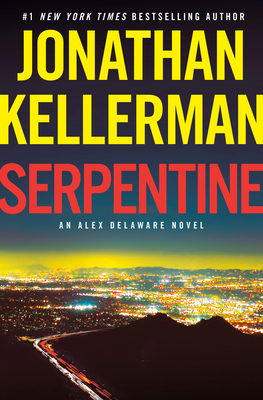
Serpentine, by Jonathan Kellerman****

This is the 36th entry into the Alex Delaware series, and it’s still going strong. Lucky me, I read it free. My thanks go to Net Galley and Random House Ballantine for the review copy. It will be available to the public February 2, 2021.

Milo Sturgis, the only gay detective in Los Angeles, has been ordered to take up a very cold case. Money talks, and big money talks loudest. A massively wealthy young woman wants to know what really happened to her mother, and who her biological father was. Ellie Barker was raised by her stepfather, who left her everything, and now that he’s gone, there’s no reason not to go digging for information about the things he didn’t like to talk about. Milo does an eye-roll and reaches for his phone. He thinks it would be better to have a psychologist along, and so once again, Alex joins him on the case.

The case is a complex one, and it also holds a lot of surprises, especially at the end. There’s a side character named Winifred Gaines, “equine laugh” and all, that I enjoy greatly.

I’m going to use this opportunity to share some reflections on the series as a whole. At the outset, clear back in the single digits of the series, the focus was mostly on Alex, and on children. Since Kellerman is a child psychologist, this format gave him an excellent chance to showcase his professional knowledge by incorporating troubled children or adolescents into the plot. I always learned something when he did this, and it was riveting.

Over the course of the series, children have become thinner on the ground. Perhaps this is because Kellerman has used up his reserves, but I don’t think so, somehow. It’s a mighty rich field, and as far as I know, he has it all to himself in terms of long-running series. This time, there are a few references to how children might behave under particular circumstances, and there’s a brief mention of a custody case Alex is working on, which is not central to the plot, but I nevertheless learned something just from the tiny little fragment he snuck into the story. I fervently wish that he would incorporate more child psychology and less kinky sex into his series now. If that makes me sound like a bluestocking, I’ll live with that.

What he has done that I like is build Milo into a more central character. Earlier in the series, Delaware was the central protagonist, and he and his girlfriend Robin—the sort of girlfriend that seems more like a wife—had some ups and downs. They separated at one point, then reunited. It did make them seem more like real people to me. Now, both of them are static and bland, but they provide a neutral backdrop for us to see Milo in action. And I have to admit, it works for me. Right from the get-go, Milo, who has a large appetite, comes lumbering into Alex and Robin’s kitchen, flings open the fridge, and starts making himself the mother of all sandwiches, and I realize that I am smiling widely. What an agreeable character! There’s a point about a third of the way in, where another guy stands up and Milo takes his seat, and “the couch shifted like a lagoon accommodating an ocean liner.” I just love it. There are a couple of allusions toward the end that hint that Milo may be experiencing some health issues that are common to large folk, but there’s no way that this character will die; not unless Kellerman wants to kill of his protagonists as part of an authorial retirement.

When all is said and done, this is a solid mystery from a solid series. Can you read it as a stand-alone? You can. However, you may become addicted and find yourself seeking out the others as well.

Recommended to all that love the genre.

One to Watch, by Kate Stayman-London*****

I’m not usually a romance reader, but when I saw the plus-sized woman on the cover of this novel, I was mesmerized. My thanks go to Net Galley and Random House for the review copy. This book is for sale now.

The premise is that Bea Schumacher, a successful plus-sized fashion blogger, is invited to be the subject of a season of Main Squeeze, which is a fictional reality show on the lines of The Bachelorette. I have been yearning for a proud, plus-sized protagonist since I read a novel last summer featuring a main character that used to be quite large. I didn’t want a protagonist that had a history of being big as her private, shameful secret. I wanted a protag that is plus-sized right now and fine with it. So I wasn’t drawn in by genre or the tie to reality television; I was hooked by the protagonist’s size.

Bea has never had a serious romantic relationship, and has just had her heart stomped on hard by a lifelong male friend. Bea had seen—or thought she had seen—their friendship evolving into something more, and after one magic night, she was sure her dreams had come true. Then the man of her dreams took off running and quit taking her calls. It would shake any woman.

But Bea has established herself as a serious force in social media, and a major reality program has come knocking. Isn’t it about time to have a plus-sized Bachelorette—er, Main Squeeze? With plus-sized courage, Bea throws her hat into the ring, but she also reminds herself that this is surely not the way to find real and lasting love; she is doing this to build her brand, and when it’s over, she’ll go back to her blog with lots of new followers. The only problem is that the audience is not so stupid that they can’t see what she’s doing. Ratings drop like a rock because Bea is obviously phoning it in, and the program director lets her know that she either needs to engage emotionally, or act like she’s doing so. No actor, Bea cracks open the door to her heart.

The readers most likely to enjoy this book are plus-sized women, and I have to tell you, there are some ugly remarks made by members of the public that are especially hard to read. It’s nothing we haven’t seen before, ladies, but it still hurts every stinking time. So there’s that.

But when all is said and done, I like this book a lot. Yes, it’s a light read in most ways; I don’t rate novels on the seriousness of their content, but rather on whether they represent the best of their genre. This book is a beach read perhaps, or a light romance, but the meaty social issues that are woven into it make it more-than. In the end I found it uplifting, and in this difficult year, that’s the kind of read I’m looking for.

A note on the audio version. Since I missed the pub date, I procured a copy of the audio version at Seattle Bibliocommons, and then immediately knew two things: first, that I HAD to read this book right away, not for the author or publisher, but for myself; and second, that this book is absolutely not suited to the audio format. It’s not the narrator’s fault; the text is liberally sprinkled with social media posts and parts of TV dialogue, and when read aloud it sounds artificial and disjointed. I promptly sent the audio version back and moved the digital galley to the top of my queue. If you read it, read it. It’s no good as an audio book.

That said, this book makes my plus-sized heart sing, and if you can use some of that, get this book. You’ll be glad you did.

Memphis Luck, by Gerald Duff**

In 2015, I read and reviewed Gerald Duff’s Memphis Ribs, the opening book in the Ragsdale and Walker series. It was irreverent but hilarious, and although it straddled the line between edgy but funny and straight-up offensive, it didn’t cross over, and I was still laughing out loud when it ended. I figured I was a Gerald Duff fan for life. All of us love the great literary talents, but a writer that can produce a good, hearty belly laugh is worth his weight in gold. With that in mind, I decided I’d keep an eye out for whatever else he might publish.

When Brash Books offered this second book in the series for review, I leapt on it. I’m sorry to say that I don’t love it the way I did the first.  Many of the same components are there—colorful bad guys, snappy banter between the two detectives—but the overall quality is lacking in places, offensive in others.

The mix includes a group of rip-off artists that are stalking an evangelical preacher, and a special needs teenager that the blurb tells us is autistic and also homicidal. I’m glad the blurb clarified these things, because although the character obviously has issues, none of them would suggest autism to me or as far as I can see, to anyone that has worked with autistic teens. So there’s that.

What I do like is the snappy banter between the two cops, which is one of the aspects of the first story that made it work for me. And the bizarro characters—the preacher that uses a cowboy theme to the extreme in his sermons, the odd teenager that appears to idolize him—at the outset seem pretty damn funny too.

But the corrupt Southern preacher schtick has been done quite a lot, and it’s in danger of becoming a trope. I might have locked into the whole cowboy thing, which is unique, but then there are the race jokes. And it’s the way Duff approaches race that tips this book over a deal-breaking boundary. Yes, I get it that the nasty racial remarks are all made by bad guys, but do we need so many of them? It’s as if Duff has studied every racist he’s ever known and catalogued every ugly racial insult for his future use. Less is more, but there are passages where they’re on every page, almost as if the author is looking for a good excuse to dust them off and make ample use of them. At times it’s cringeworthy; then at other times, it’s just sickening. I’m not having a good time anymore at this point, and were it not for my fondness for Brash Books and the previous book in the series, I would have quit reading it midway through. There’s lots of dialogue and it’s a quick read, but then it would be even quicker not to read it at all, and I wouldn’t have this sour feeling in my gut. Sad to say, I think Duff and I are done.

I cannot recommend this book to you.

The Sisters of Summit Avenue, by Lynn Cullen***-****

My thanks go to Net Galley and Gallery Books for the review copy, which I received over a year ago. I began reading this story numerous times, but I didn’t find it engaging enough to continue, and so each time I began it, I would end up returning it to my queue in exchange for something I liked. However, I recently began moving through my backlog with assistance from Seattle Bibliocommons, where I was able to get audio versions of those I’d left by the wayside. Ultimately, this is how I was able to follow through, and it’s a good thing, because the last half of this book is far better than the first half.

The story features three women, all of them in the American Midwest in the early 1920s. The sisters are Ruth and June, and their mother is Dorothea. June is the golden one, the prettiest and most successful. Ruth, who is younger, just resents the crap out of June. And she can tell that their mother loves June more.  June, on the other hand, is Betty Crocker; one of them, anyway. One of the few career opportunities open to women involves inventing recipes for Betty; answering Betty’s mail; and playing the part of Betty on the radio. Women visit the company expecting to meet Betty, and thy are outraged to learn that no such person actually exists.

Meanwhile, Ruth and her family remain in the family home with Dorothea, and the sisters are estranged. Their mother hates to see them this way, and she schemes to bring them together.

The narrative shifts between the three women, and from the past to the present. When we are taken back to their youths, we learn what has come between them, and what assumptions, grudges, and secrets each holds that has not been said.

The first half of this book feels like it will never end. The sloppy pop-cultural references grate on me, particularly when the shortcuts result in inaccuracy. For example, when the stock market crashes, Cullen has men jumping from skyscrapers left, right, and center, when in fact, this is mostly myth, or at best, hyperbole. At most there was a single jumper in real life. Historical fiction at its best teaches us in an enjoyable way, but when readers are presented with urban legends as reality, it is a letdown.

By the halfway point, I am only still listening to this book because I have to make dinner anyway, and having put in as much time as I have, I figure I may as well finish it up. My review is on its way to being three stars at best, and possibly two. So imagine my surprise when at the 55% mark, the whole thing wakes up! The female character that has been the least interesting up until now is Dorothea, but now we learn the meaty parts that she has kept secret, and there we find the key to everything else. I am so astonished that my jaw drops, and I stop chopping vegetables and gape at my tablet, which is streaming this story. Oh, heck! Seriously? This is why…? Oh, holy crap. Who knew?

From that point forward, it’s an entirely different ballgame. When I head for the kitchen, I’m already thinking about what I heard the day before, and looking forward to the next bit.

Those that enjoy character-based fiction could do a lot worse, as long as you take the historical parts with a grain of salt. Overall, I recommend that if you read this book, you should get it free or cheap, and prepare to be patient.