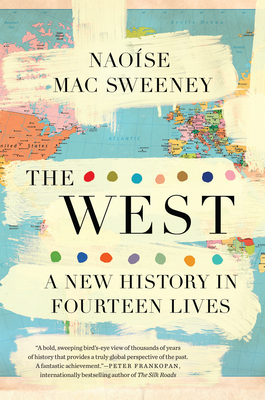
The West, by Naoise Mac Sweeney****-*****

4.5 stars, rounded up.

Those that have taken a course on Western Civilization—as college freshmen or otherwise—are familiar with its framework, that the modern world can attribute its earliest, most progressive, democratic, and technically superior attributes to the dead White European men that came before us. Archeologist and award-winning historian Naoise Mac Sweeney has taken a sledgehammer to this construct, proving that many of the smartest scientists, inventors, and social, military, and political leaders were not White, not European, and not male.

My thanks go to Net Galley and Random House for the review copy. This book is for sale now.

Mac Sweeney demonstrates her thesis by discussing fourteen key figures from the past that don’t fit into the standard framework. She begins with Herodotus and ends with Carrie Lam. Some chapters read like a college text or lecture, one where I know that this information is important, but my mind keeps wandering, and I check to see how much longer the chapter will be. Others woke me up. In chapter seven, she features Safiye Sultan of the Ottoman Empire. She was not legally able to become sultan following her husband’s death, so she saw her son installed, and then “summarily executed” his nineteen younger brothers to prevent anyone from contesting his right to rule. Another that made me sit up and take notice is Njinga of Angola. I was riveted by this one, to the extent that I actually shouted at one point. (It’s all right; I was at home.)  If we judge her work by whether she has proven her thesis, then unquestionably she has done so. 

There are two aspects that I didn’t care for here. The first is a mannerism. The use of the Victorian “we” is grating. “As we shall see…” “We have discussed…” No. She has already seen, and the only one doing the discussing within the pages of this book is the author.  Also, since the title itself identifies this tome as a history book, Carrie Lam of Hong Kong, whose quotes date from 2021 and 2017, has no business being included here. History is defined as what has occurred fifty years or more prior to publication. Mac Sweeney knows this.

In a fit of pique over these two flaws, in addition to the snoozy parts of the narrative, I initially rated this book with four stars, but this is a groundbreaking body of work, and after reflection, I changed my rating to 4.5 stars, rounded up.

Highly recommended to students and to anyone interested in world history.

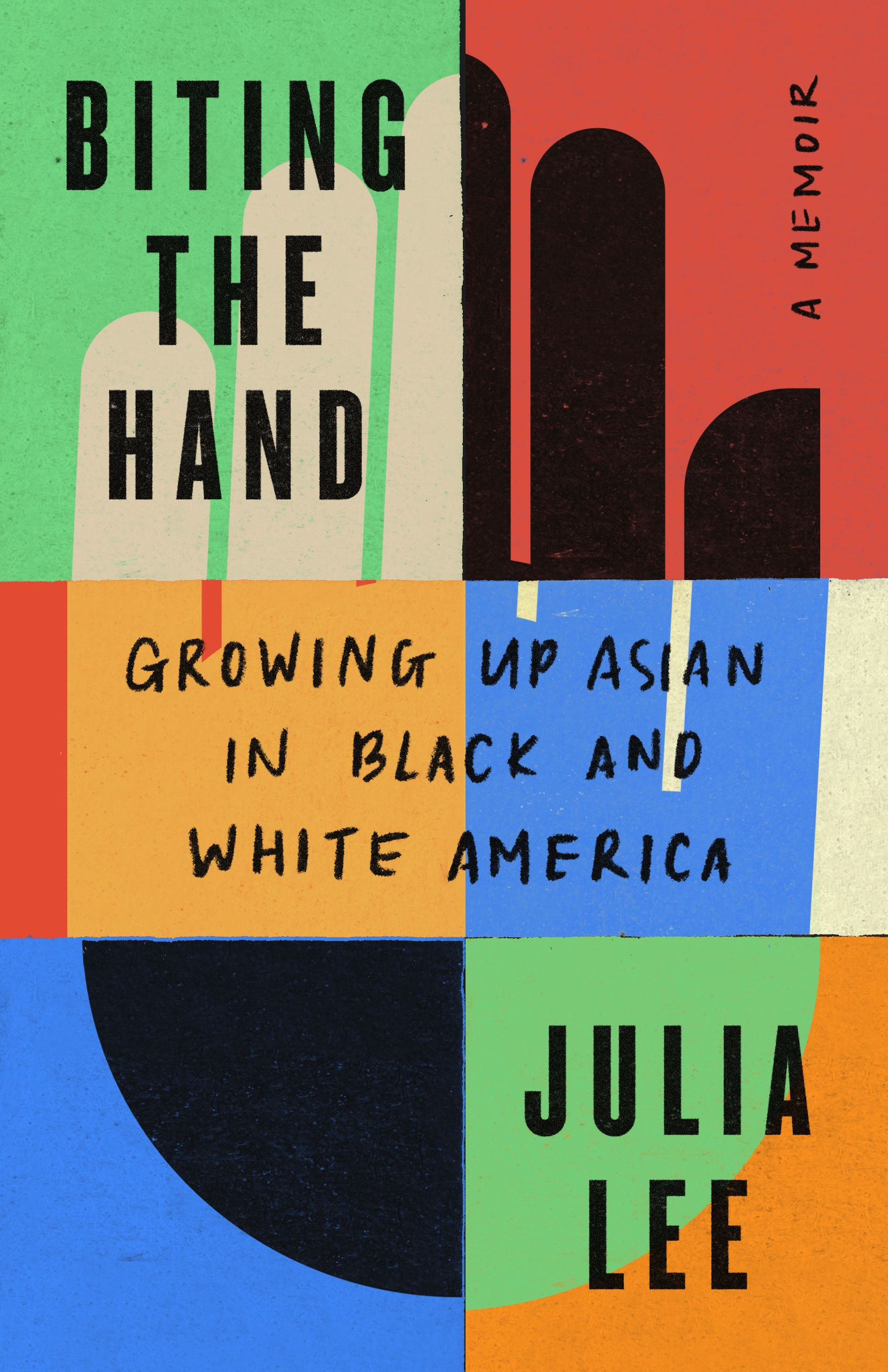
Biting the Hand, by Julia Lee****

Julia Lee is not amused, and she’s decided to say the things nobody else is saying. In this deeply analytical, provocative memoir, she tells us about her own experiences growing up, and the issues faced by Asian immigrants and Asian Americans in the United States, where “we are critical to the pyramid scheme of the American Dream.”

My thanks go to Net Galley, Henry Holt Publishers, and Macmillan Audio for the review copies. This book is for sale now.

In some ways, I feel as though I am reading someone else’s mail as I read this, because it is clearly intended for an audience of people of color. However, I did read it, and I’m going to review it.

When the discussion of race in the U.S. comes about, it is, as Lee states, almost always a conversation about Black people and Caucasians. Those that don’t fit into either group are sidelined. Perhaps more harmful is the way that people of Asian descent are presumed to be sympathetic to the status quo. Ever since a major news periodical dubbed Asians as “the model minority” back in the early 1960s, expectations and assumptions have leaned in that direction. And the roots of this division—Black versus Asian—make this a particularly thorny assumption to untangle. After all, a large percentage of African-Americans can trace their lineage to slavery; their ancestors weren’t born in the States, nor did they choose to come here, but were kidnapped and brought by force. Angry? You bet! But Asian immigrants came of their own accord, oftentimes fleeing untenable circumstances in their countries of origin. And so, their children, and those that have come after, have largely been indoctrinated to be appreciative. If things don’t go well, they tell them, then we must work harder!

This Caucasian reviewer comes to you without the Asian background, appearance, or experience that Lee speaks of; yet I live in a city that has one of the largest Asian populations in the U.S., and am married to an Asian immigrant, and parent to a child that is half-Japanese. So many of the stories—strangers that ask where you’re from, and won’t accept the truth of “California,” where Lee was born, or “Seattle,” my daughter’s hometown, are familiar ones.

Lee is fed up with the mainstream news stories that endeavor to pit Asian and Black people against each other. Her parents were small business owners in a mostly Black part of Los Angeles during the riots of 1992, and her experiences inform her conclusion, that there must be solidarity between all people of color in order to successfully fight for significant change.

The one bone I have to pick is the casual manner in which she dismisses the question of social class as a key factor. Her very brief note about this is that it’s a tomato and to-mah-to issue, not worth much discussion, because most people of color are working class. This is simply untrue, and it enforces a stereotype of Black people as being mostly poor and dispossessed, when in actuality, eighty percent of Black people in the US live above the poverty line. There are African-Americans that have far more money than I will ever see; some of the many Asian groups have a higher median income than Caucasians. So yes, social class is a huge factor here, one that Lee should examine more critically. There are working class Whites that can be allies; there are wealthy families of color that would shut down the struggle, given half a chance. The missing star in my rating reflects her failure to recognize this, and to offer concrete solutions to this problem.

The book’s title comes from Lee’s mentor at the otherwise very white-supremacist dominated Harvard—Jamaica Kinkaid. I actually gasped when I saw this. What a luminary she found to guide her!

Both the audio and print version of this book are equally readable, so go with whatever you usually prefer.

This is a fine resource for those seeking to examine Asian and Asian-American racial dynamics. Read it critically, but do read it. There’s a lot here that has needed to be said for a long, long time.

The Sorcerer of Pyongyang, by Marcel Theroux*****

“How did someone created by one reality begin to operate by the rules of another?”

The Sorcerer of Pyongyang is an excellent work of literary fiction by novelist Marcel Theroux. This is the first time I’ve read his work, but it will not be the last. My thanks go to Net Galley and Atria Books for the review copy; this book is for sale now.

I am drawn to this novel initially because of its setting. Nobody sets a book in North Korea! I am fascinated. Then I learn that the author is the son of Paul Theroux, the veteran travel journalist whose work, by chance, I have only just recently found and read. So there are two reasons for me to start this book, but once I begin, I realize that in the future, I will read whatever this author writes, regardless of where it’s set or who his relatives are.

The author’s notes indicate that Theroux has experience in North Korea, and this informs his work here. This book, remarkably enough, is based on a true story.

Our protagonist is Jun-su, a child growing up in poverty in rural North Korea. He and his parents believe the official explanation for the widespread poverty and malnutrition, which is that the blockade imposed by the United States and other Western nations has created the situation. Children in Jun-su’s class sometimes fall asleep at their desks, because they are starving. Part of the school day is also spent doing hard labor for the State. It doesn’t occur to Jun-su, or to anyone he knows, to question the misery imposed upon him, because it’s happening to everyone in the village, and they don’t go anywhere or see anyone outside it, so they assume the whole nation is suffering in the same manner.

Then comes the day when Jun-su falls ill with rheumatic fever. He misses a lot of school, and his teacher, Kang, visits him at home, bringing acupuncture needles to help with the pain. It is during this time that he is introduced to a game his teacher calls “The House of Possibility,” but which is actually Dungeons and Dragons. This game will be both a blessing and a curse to Jun-su for the rest of his life.

Because the illness permanently damages his heart, Jun-su cannot participate in labor with his classmates, and so instead, he becomes a poet, and he wins a contest and briefly meets the Dear Leader. He is sent to study at an elite institution far from home, and his eyes are opened in a number of ways. Soon he sees that not only is not every North Korean impoverished, but some live lives of unimaginable luxury. The corruption has been part of his entire life, but he can only just now see that.

Theroux does a fine job of developing Jun-su, but he does an even better one with setting. We can see what a hall of mirrors is involved in living in a Stalinist nation, where no civil liberties exist and unspoken, unwritten rules prevail alongside those that are codified. For example, the Dear Leader is so exalted that a person can be in big trouble if their home burns down and they don’t rescue his portrait (and that portrait WILL be hanging in the house,) and likewise, someone that sells hot food had better be sure there are no pictures of the Dear Leader in the newspaper he uses to wrap fish.

My one concern is that the story might degenerate into an anti-Communist diatribe, but that doesn’t happen. This is an outstanding novel, and I wholeheartedly recommend it to you.

The Fortunes of Jaded Women*****

The Fortunes of Jaded Women by Carolyn Huynh, is hilarious and oddly touching. It’s the best debut novel of 2022, and it isn’t as if there was no competition. My thanks go to Atria Books and Net Galley for the review copy; this book is for sale now.

Mrs. Mai Nguyen was born in Vietnam, but has lived most of her life as a Californian. When we meet her, however, she has flown to Kauai, the home of a renowned Vietnamese psychic. The psychic tells her that the year ahead will be a pivotal one, the one in which she must repair her relationships with her sisters and her daughters. There will be one wedding; one funeral; and one pregnancy.

Well, now.

Nobody likes to be estranged from a family member, and yet it happens. But all of them? Both sisters, and her daughters, too? (No brothers, and no sons, either.) But surely, it isn’t her fault; after all, there’s the curse.

Chapter four is when everything kicks up a gear, and I have seldom laughed so hard. Mrs. Minh Pham is the first to arrive, and she has my attention from the get-go when she slips the waitstaff some money and explains there could potentially be a “small, tiny, little shouting match, with a propensity for small, tiny, little objects to be thrown through the air.” Mrs. Pham is the middle daughter, and is accustomed to being the mediator in any dispute. She takes all the precautions she feels are wise; she parks near the door for a fast getaway if necessary. She removes the sharp utensils as well as the chopsticks from the table, and requests paper plates and plastic cutlery. “Mai had a reputation for throwing things.”

As the women arrive at the dim sum restaurant, they flash their fake Louis Vuitton handbags and immediately set about trying to one-up one another with regard to social status and affluence, and especially—oh yes, especially—that of their respective daughters. Within three minutes, a donnybrook ensues, and the other diners, who are also Vietnamese and well acquainted with the curse of the Duong sisters, begin placing wagers on the winner. The sixty-something sisters commence throwing things at each other and are gently escorted out of the restaurant. They head for a bakery, and they get kicked out of there, too. Finally, the three of them end up on a park bench, their hair and clothing in dishabille, and yet none of them makes any move to leap up and go home.

These are not spoilers; this all takes place within the first 17 percent.

The chapters change points of view, moving between the sisters, their elderly mother, and their daughters, all in the third person omniscient. The fascinating thing is, these crazy behaviors, and the ways that they mold and shape their daughters and their relationships, all fit perfectly.

Although the setting changes, from Orange County, California to Hawaii to Vietnam to Seattle and beyond, this story is character based, and that’s my favorite type of novel. The skeezy men they date—mostly white boyfriends with Asian fetishes—make it even funnier.

The ending is perfect.

This is one of those rare galleys that I may actually read a second time for pleasure. One thing I know for sure is that Huynh is on my radar now. I can’t wait to see what her next book looks like!

Genghis: Birth of an Empire, by Conn Iggulden*****

Though I usually review books that are either newly published or are about to be, once in awhile I reach back and discuss books that have been around for awhile. This one is excellent, and I consider it unmissable.

This book is phenomenal. How much do any of us know about Genghis Khan?

One thing I learned in discussion with my spouse, who is a Japanese citizen, is that whereas we from Western cultures pronounce the warrior’s name with a hard G, Asians–including the Mongolian culture from which the Khan emerged–pronounce it softly, like a J. I figure Mongols know how the name should be pronounced, so I have begun to pronounce it that way, too.

I wanted to read this series, or at least the first entry, because although I have read at least something about most of the greatest warriors in the world over time, I had read nothing about Genghis. We have a nonfiction tome, but it’s the sort of slog one only undergoes out of desperation, or as assigned coursework.

The first two or three chapters seemed fine, but not great. I wasn’t even sure if I would read the rest of the series. By the halfway point, however, my mind had changed completely! I found myself online doing image searches for the housing, clothing, and other parts of the nomadic life.

I have purchased the next in the series. I rarely buy books for myself, because I have so many already and have such constant access to galleys that it isn’t necessary; yet now and then, there’s a book I’ve gotta have, and that’s how I feel about this series.

Highly recommended for those that are interested in this time and place in history; in Genghis himself; or in military history.

Thief of Souls, by Brian Klingborg**-***

I was invited to read this mystery, and my thanks go to Net Galley and St. Martin’s Press for the review copy. I am always looking for something a bit different, and this sounded like it would be. And it is, but it’s not.

Here’s what I mean. A woman has been murdered in a particularly ugly, grisly manner. A hot shot cop who’s been buried in a backwater where nothing ever happens gets the case. Because he is clever and ambitious, he digs more than most cops might, and voila! Turns out this could be the work of a serial killer! But there are higher-ups in the force that would rather have a quick solve than an accurate one. Obstacles! And next thing you know, the cop is in danger too.

Yawn.

Okay. Now, take this same tired thread and drop it in China. With resonant characters, compelling use of setting, and some word smithery, it might come alive, and in the hands of a master storyteller, we might not even notice that the story’s bones are nothing new. Instead, I came away disaffected and mildly depressed. I quit at the sixty percent mark and didn’t even go back to look at the ending, which for me is unheard of, particularly in this genre.

I am no fan of the Chinese government, but the steady flow of negativity wore me down, not to mention the lack of strong character development. We know right away that Lu is a rebel, and as the story progresses, we also know that Lu is a rebel. At the start, we sense that the government, both local and national, is corrupt; as we near the climax, we also know that the government is corrupt.

What, in this story, is worth saving?

I thought it would be fun to see how an investigation works in China, and what sort of rights—or lack thereof—form the contours of the legal system. I came away sensing that the author doesn’t know all that much, either. There’s no Bill of Rights there, surely, but I knew that much going in.

I don’t have to have lovable characters to enjoy a mystery, but there does, at least, have to be someone interesting. Give me a complex, well-developed villain, for example, and I’m a happy camper. But there’s none, and I’m not.

So there you have it. Thief of Souls is one more sad case of an intriguing book cover and title promising more than it can deliver. If you want this book now, it’s for sale, but I would advise you to get it cheap or free unless you have a big stack of money sitting around that you were thinking of burning in the backyard. Otherwise, maybe not.

Miracle Creek, by Angie Kim*****

The buzz around this mystery started early, and it started loud. If it hadn’t I am not sure I’d have asked to read it. When I saw the premise—the use of a hyperbaric oxygen tank to murder an autistic child—I thought wow, this author is reaching. But a quick web crawl taught me that though controversial, hyperbaric oxygen therapy is actually used to treat autism. The treatment is controversial but the basis of the story is a sound one, so I have learned something already, and now that I’ve read it, I am glad I didn’t let it pass me by. Big thanks go to Net Galley and Sarah Crichton Books for the review copy. Miracle Creek will be available to the public April 16, 2019.

The HBOT therapy device is owned by Pak and Young Yoo.  A lot of hard work and financial struggle went into procuring this device; there were years when they had to live apart, with Young and their daughter Mary in Baltimore, Young working round the clock for room, board, and her daughter’s private school tuition while Pak worked two jobs in Korea, squirreling away resources. Now the unthinkable has occurred—the chamber has gone up in flames with patients inside it. Two people are dead and others are horribly injured, and there’s an intensive investigation that leads to an arrest. Elizabeth, a single mother, is charged with starting the fire in order to murder her little boy and free herself from the difficult caregiver role. On the surface, the facts are damning indeed, but what the cops don’t know, at least in the beginning, is that every single person that was there that day is lying about it.

Elizabeth, Kitt, and Teresa are mothers of autistic children, digging deep and running up their credit cards hoping for miraculous transformations. The seventh patient is Matt, whose wife has pressured him into trying this treatment to raise his sperm count. The other characters in this story are the Yoo family that own and operate the chamber, and the legal teams assembled for the trial.

Most legal thrillers and courtroom mysteries hinge heavily upon what happens in the courtroom. In contrast, although what plays out in court is not unimportant, the real meat of this story has to do with the actions, thoughts, and memories of the townspeople that are involved, primarily when court is not in session. Although our point of view is the third person omniscient, specific critical details are revealed to us in stages, and what we learn at the end differs greatly from the conclusions most of us will have drawn at the outset, when we had less information.

Why do people lie, and in particular, why would anyone lie to the authorities investigating a deadly disaster like this one? Make a list of the possibilities, and as you read, you’ll see them all, a veritable potpourri of bald-faced lies and critical omissions of facts. At the end of it, we find just one (lying) person that has integrity and pure motives, and everyone else has crossed a line, not only legally but ethically. And although there’s just one character here that I’d describe as dynamic, the others are developed to an extent as their layers of rationalization, anger, fear, resentment, and greed are revealed to us.

This is an explosive debut, and Angie Kim is a force to be reckoned with. You want to read this book, and happily, you won’t have to wait long. Highly recommended.

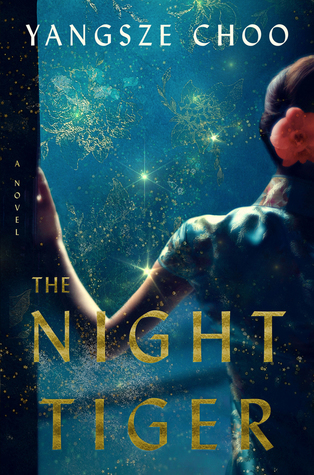
The Night Tiger, by Yangtze Choo****

Choo is a force to be reckoned with. Her dazzling second novel, The Night Tiger, crosses genres from historical fiction, to literary fiction, to mystery, to romance, to magical realism; it’s deeply absorbing and unlike anything else being published right now. My thanks go to Net Galley and Flatiron Books for the review copy. It’s hot off the presses; get yours before they sell out.

We have two protagonists, Ji Lin, whose widowed mother has married a tin ore dealer, and Ren, an eleven-year-old orphan that works as a houseboy. The story takes place in 1931 in Ipoh, Malaya, which was the name of Malaysia when it was still occupied, part of the British Empire. As the story commences, Ren’s master, Dr. McFarlane, has died of malaria, and his last words instructed Ren to go to Dr. William Acton, find McFarlane’s amputated finger and return it to McFarlane’s grave. He has 49 days, and the clock is ticking. Go.

So powerful is Choo’s storytelling voice that I was most of the way through the book before it occurred to me to wonder: who puts that kind of responsibility on a little kid, especially since the task involves traveling alone to a different town? But Ren loved his master, and he’s a loyal kiddo. Despite an offer by his former master’s housekeeper to take him in, he forges forward, determined to do as bidden.

Ji Lin has a different set of problems. She recently reached marriageable age, but the only man she’d have considered desirable is engaged to someone else. Her stepfather is looking for candidates so he can be rid of her, and Ji Lin doesn’t like the same men her stepfather prefers for her. And in 1931, there are very few respectable alternatives for women to support themselves. She might like to train as a teacher, but she needs money right this minute, before her stepdad finds out about her mother’s Mahjongg debt. That man beats her mother savagely over much smaller things, and this gambling debt is potentially ruinous. Ji Lin takes an apprenticeship with a dressmaker, but secretly makes a lot more money as a dance instructor, a risky job that can lead to assault, a ruined reputation, or both. One night on the dance floor, as she skillfully parries a handsy salesman trying to make a move on her, her hand brushes his pocket and a little glass tube rolls out. She pockets it so she can check it out later, and oh hey, there’s a finger in there!

Ji Lin’s stepbrother, Shin is an intern at the local hospital, and that place is seriously messed up: “There’s a secret, white and yeasty maggot, which threatens to undermine the neat and orderly life of the hospital.” Just for starters, what happened to all the amputated fingers that are supposed to be in the storeroom with the other medical specimens?

At the same time, an unusual number of deaths have occurred lately, and there’s concern that it’s a weretiger that’s behind them. A weretiger is like a werewolf in reverse: instead of originally being a human that changes to a monstrous sort of wolf when the moon is full, a weretiger actually is a tiger that can at times become human.

Choo is masterly at weaving a complex plot, developing characters, and using imagery and possibly allegory as well; the river is a symbol that has been around as long as literature. But her greatest contribution here is in the way she uses all these things to create suspense. Once the possibility of the weretiger is raised in more than a passing way, I find myself examining every secondary character—and some fairly important ones—whose whereabouts are unknown at about the same time a corpse is discovered with tiger tracks nearby. Could that person be a weretiger? Could this one? No. Well, maybe. We learn that a weretiger is distinguished by a limp or otherwise deformed back foot, and so then I am eyeing anybody with a hurt foot or a limp or a wheelchair.

There are a number of threads that weave in and out of the story: troubled dreams are shared by Ren and Ji Lin, who have never met, and Ren’s dead twin, Yin, speaks to him. Ren’s “cat sense” guides him away from trouble and toward the finger. I often struggle with magical realism, because I’ll be trying to solve the story’s main problem using real world information, but then someone will do something people cannot do, and I yelp with frustration. But Choo sells me on the notion that there’s a weretiger, because now I know that a dead twin that magically communicates here; who’s to say there can’t be a magical tiger monster that’s killing the local folk too? Somebody sure as heck keeps leaving tiger tracks, and I know it’s not me.

The author provides information about Chinese folklore, including the weretiger, in notes following the story, and about halfway through the book I read the author’s notes before finishing the story.

The only part of this book that I don’t like is the romance that pops up between Ji Lin and her stepbrother. Ew, ew! Why does Choo find this necessary? It doesn’t add interest so much as distraction. When their mother goes bonkers and tells them to stay the hell away from each other, I’m right there in her corner. You tell them, honey. Hit them again. You can borrow my umbrella. Let them have it! Sick little bastards. The author goes to pains to stress that they aren’t biologically related and that Shin’s father never legally adopted Ji Lin, but who the hell cares? The incest taboo has nothing to do with biology; it’s a social construct. We don’t screw the siblings we grow up with, period. This aspect of the story is just plain tasteless, and if I were her editor, I would cut it clean out of there, making Shin the fantastic brother that he had been when they were younger and nothing else.

That said, I nearly went for a five star rating anyway, because it is so gratifying to see a well written story about any part of Asia during the colonial period that is not written from the point of view of the colonists and whose main characters are native residents rather than the occupiers. By showing the ignorant, patronizing way that local Brits—many of whom are expatriates because they aren’t decent enough people to be accepted socially back home—Choo exposes the true nature of colonialism, and for this alone, I could stand up and cheer.

With the single caveat emphatically mentioned, I recommend this story to you.