Blind Fear, by Brandon Webb and John David Mann*****

Blind Fear is the third book in the red hot series by former Navy Seal Brandon Webb and concert cellist turned author, John David Mann. When the two of them collaborate, the pages jump. My thanks go to Net Galley and Random House for the invitation to read and review; this thriller is for sale now.

In Cold Fear, the second in the series, our protagonist, Finn, is on the run. He’s a SEAL for the U.S. Navy, an elite combat diver, but corrupt elements have framed him for the slaying of his closest team members, and until he can prove his innocence, Finn needs to be invisible.

He’s good at it.

Now he’s moved on from Iceland to Puerto Rico, and he’s been renting a room from Zacharias, an elderly man that supports himself and his two grandchildren by running a café. He works in the café in exchange for room and board. But now there’s trouble; his two grandchildren haven’t come home. Zacharias would go and look for them, but Zacharias is blind.

There’s nobody better at ferreting out secrets than our man Finn, but doing so puts him at risk. He’s deliberately stayed clear of the city because there are so many military people stationed there. The hinterlands have been safe, and until he can come forward with the proof he needs to save himself, the hinterlands are where he belongs.

But then…what about the children?

Like those before it, this is a taut, tense thriller with multiple massive emergencies weaving in and out of one another. We have Finn’s need to avoid discovery yet, find the missing children; now add a serial killer known as El Rucco who’s left grizzly human remains all over the island and a major hurricane, and friend, this is not your bedtime reading material. Read this one sitting up and with the lights on. Just trust me.

Through all of this, Finn also deals with personal baggage that he tries to ignore, but which comes to him in dreams. He has blocked out a large portion of his early life due to trauma, and he has “questions that had hung over him for thirty years like a kettle of vultures.” This is no soap opera and so we see and hear very little of it, but the snippets that intrude during Finn’s unguarded moments heighten the suspense and the reader’s sense of dread.

There are other praiseworthy attributes I could discuss; as we are introduced to the setting, we have brief but meaty passages that serve to inform us about the injustices that are meted out to this lovely but impoverished nation, and the way that the U.S. government has kept its boot on the necks of the people that live there. But all of this remains secondary to the story itself, and the focus is tightly maintained. The research is meticulous, and the organization is stellar. The development of the protagonist is outstanding; the secondary characters, particularly Zacharias and the older grandchild, Pedro, are visceral and memorable, and I would be delighted to see them again.

Highly recommended to all that enjoy a true thriller.

Livid, by Patricia Cornwell*****

I really enjoyed this, the 26th entry into the Kay Scarpetta series. From time to time, people publish unhappy reviews, but for me, it never gets old. In this one, a terrorist attack is made locally, and it’s associated with an attempt on the life of the U.S. president, who is in town at the time it occurs. Kay is, of course, the chief coroner, and she’s forced to perform the autopsy on someone she knows.

The ending isn’t satisfying, and with any other author, I’d knock off the last star. But with Cornwell, I know from experience that when she does this, it’s because it isn’t really over. This will come up again, if not in the next book, then in another soon after it.

Because I couldn’t get the galley, I checked out the audio book at Seattle Bibliocommons. The audio is kind of a mixed bag. I like how the narrator voices the protagonist, and she also does recurring character Pete Marino well. I thought it was wrong to read the voice of Lucy, Kay’s badass adult niece, with a higher pitched voice than any of the other characters. She is a daredevil that doesn’t suffer fools, and if anything, her voice should be lower in pitch than Kay’s. I also thought she made the judge a bit too languid sounding, which is at odds with the things she says. In short, if you are a reader that enjoys both audiobooks and print ones, go with the print. If you like only audiobooks, then go ahead.

If you haven’t read this series, I do suggest you begin with the first and work your way up. I might not have enjoyed this one so much if I didn’t know the characters.

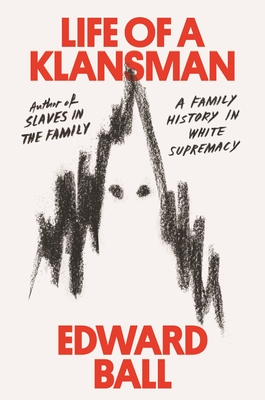
Life of a Klansman, by Edward Ball*

“White supremacy is not a marginal ideology. It is the early build of the country. It is a foundation on which the social edifice rises, bedrock of institutions. White supremacy also lies on the floor of our minds. Whiteness is not a deformation of thought, but a kind of thought itself…

‘The story that follows is not that a writer discovers a shameful family secret and turns to the public to confess it. The story here is that whiteness and its tribal nature are normal, everywhere, and seem as permanent as the sunrise.”

I read this book free and early; thanks go to Net Galley and Farrar, Strauss, and Giroux for the review copy.

Edward Ball writes about his ancestor, Constant Lecorgnes, known fondly within his family as “our Klansman.” The biography is noteworthy in that it is told without apology or moral judgement, as if Ball wants whites to feel okay about the racism, the rape, the exploitation, the murders, the terrorism that membership in the Ku Klux Klan, the Knights of the White Camellia, and any and all of the other white supremacist organizations have carried out, and will continue to carry out, in the United States. Relax, he tells us, it’s normal.

Well, let’s back up a moment. The “us” in the narrative is always Caucasians. It apparently hasn’t occurred to him that anybody else might read his book. In some ways, the “us” and the “our” used consistently and liberally throughout this biography are even worse than the explicit horrors detailed within its pages. It’s as if there is a huge, entitled club, and those that don’t belong are not invited to read. Further, it’s as if all white people are of a similar mind and share similar goals.

Not so much.

Ball won the National Book Award some years back for Slaves in the Family, a title currently adorning my shelves downstairs. I have begun it two or three times, but it didn’t hold me long enough for me to see what he does with it. And this book is the same, in that the late Lecorgnes is not particularly compelling as a subject, except within the framework of his terrorism. He was not, Ball tells us, a key player; he was just one more Caucasian foot soldier within the Klan. And so, the reading drones along, and then there are the key pronouns that capture my attention, those that give ownership to his terrible heritage, and a couple of paragraphs of the history of the period, particularly within Southern Louisiana, follow; lather, rinse, repeat.

As I read, I searched for accountability. As it happens, I have one of those relatives too; but my elders, though not beacons within the Civil Rights realm by a long shot, understood that such a membership brings shame upon us, and consequently I was not supposed to know about him at all. I overheard some words intended to be private, uttered quietly during a moment of profound grief following a sudden death. My mother spoke to someone—my father? I can’t recall—but she referred to her father’s horrifying activity, and I was so shocked that I left off lurking and spying, and burst into the room. I believe I was ten years old at the time. I was told that the man—who was never, and never will be referred to in the fond, familiar manner that Ball does—was not entirely right in the head. He truly believed he was helping to protect Southern Caucasian women, but he was wrong. It was awful, and now it’s over; let’s not talk about it anymore. In fact, this topic was so taboo that my own sister didn’t know. She is old now, and was shocked when I mentioned it last spring. She had no idea.

As I developed, I understood, from teachers and friends more enlightened than Mr. Ball, that the best way we can deal with ugly things in our background that we cannot change, is to contribute our own energies in the opposite direction. I’ve lived by it, and so I was waiting for Ball to say something similar, if not in the prologue, then surely somewhere near the end; but he never did. If Ball feels any duty whatsoever to balance the scales of his family’s terrible contribution, he doesn’t offer it up. There’s no call to action, no cry for social justice. Just the message that hey—it’s normal, and it’s fine.

I’m not sure if I want to read his other work anymore; but I know that what I cannot do, and will not do, is recommend this book to you.

Guest House for Young Widows, by Azadeh Moaveni**

Those of us in the United States don’t have much of a window on the women of ISIS, and I thought this title might help me understand them better. In some ways this proves true, but in the end, I couldn’t finish this book and I can’t recommend it. Thanks go to Net Galley and Random House for letting me read it free and early.

Here’s a quote that provides a thesis:

Many of these women were trying, in a twisted way, to achieve dignity and freedom through an embrace of a politics that ended up violating both…The political fractures from which [ISIS] arose have not been fixed. History has shown that unless conditions genuinely change, a new insurgency always arises from the ashes of an old one.

Moaveni shares the case studies of individual women that have been drawn to the Islamic State. Although the organization provides its women with a measure of security and protection, promoting higher education—in the service of the organization, of course—and sometimes furnishing jobs, it draws not only women that are desperate for food and shelter, but also women from comfortable middle class backgrounds. Once they are in, they find it difficult to leave. Moaveni demonstrates myriad ways in which women provide essential support for ISIS.

There are three things that I liked about this book. The research is well done; the women discussed here provide the reader with individual stories and therefore humanize them; and she acknowledges the disparity between mainstream Islamic belief and ISIS.

On the other hand, despite disclaimers within the narrative, I was overcome by a crawly sensation when I realized that the author’s overall purpose is to rationalize the choices made by women within Islamic State. She says they are relatable; I am appalled and unpersuaded.

Those that dislike a dictatorial regime should indeed advocate for a better system. How great a risk each person is willing to assume is of course an individual decision. But there is nothing that justifies or mitigates the atrocities visited on innocent people by this dreadful pseudo-religion. 

When push comes to shove, the only real dilemma for me is whether to provide one star or two in review. The second star is reluctantly assigned on the basis of the writer’s solid research; yet the ideas within it are entirely abhorrent.

Never, never, and never.