My thanks go to NetGalley and Random House Ballantine for the invitation to read and review. I found myself drawn to this novel because it’s different from everything else I have read. I’m fairly sure that I have never read a book set entirely in Greece; then there’s the fire, and the way that the forest interacts with the rural community living in and around it; many people have relied upon it, in one way or another, to make a living. The Book of Fire is an interesting read, and it’s available to the public now.
Having said this, my first 25% or so of the story finds me with buyer’s remorse (or, reader’s remorse?) The thing is sorrow, grief, and more sorrow. I begin to think maybe I’ll abandon it, because eventually one disengages when there’s no hope of any kind for a brighter outcome. But just as these thoughts begin to crystalize, there is a subtle shift, and then the whole thing becomes more toothsome.
The story is told in alternating timeframes, with the current day being told to us in the first person, while the past is told as if it is a fairytale, and so in it, our protagonist, Irini, is referred to most of the time as “the mother,” her spouse is “the husband,” and their child is “the girl.” It took me a long time to figure out the protagonist’s name, but then there is dialogue, and that helps.
Initially, the protagonist confides to us what she has done. She found the arsonist in the burnt forest; he was on the ground beneath a tree with a rope around his neck. The branch above him is broken, so it’s either a botched lynching or a botched suicide, but not entirely botched, because he’s in bad shape. She begins to try to help him, but then she remembers what he has done, and she walks away from him. When she returns the next day, full of remorse, he’s dead. And so already we have this fact thrown in there along with the man’s own crime. We don’t know whether he did this or it was done to him until nearly the end.
In time more details emerge to muddy the waters of responsibility, so then she has a hundred little ethical questions to examine, and these are joined with a powerful environmental message. Because of this, I think this novel would be terrific for book clubs, and also for the high school classroom. There’s no sex in it, and the vocabulary is accessible. And despite my early fears, the entire book is not a portrait of grief and misery.
“Thanksgiving is not about being happy. The holiday is not about mirth and beauty and the warmth of gaiety. Thanksgiving is about fulfilling family obligations and being miserable the way the good Lord intended.”
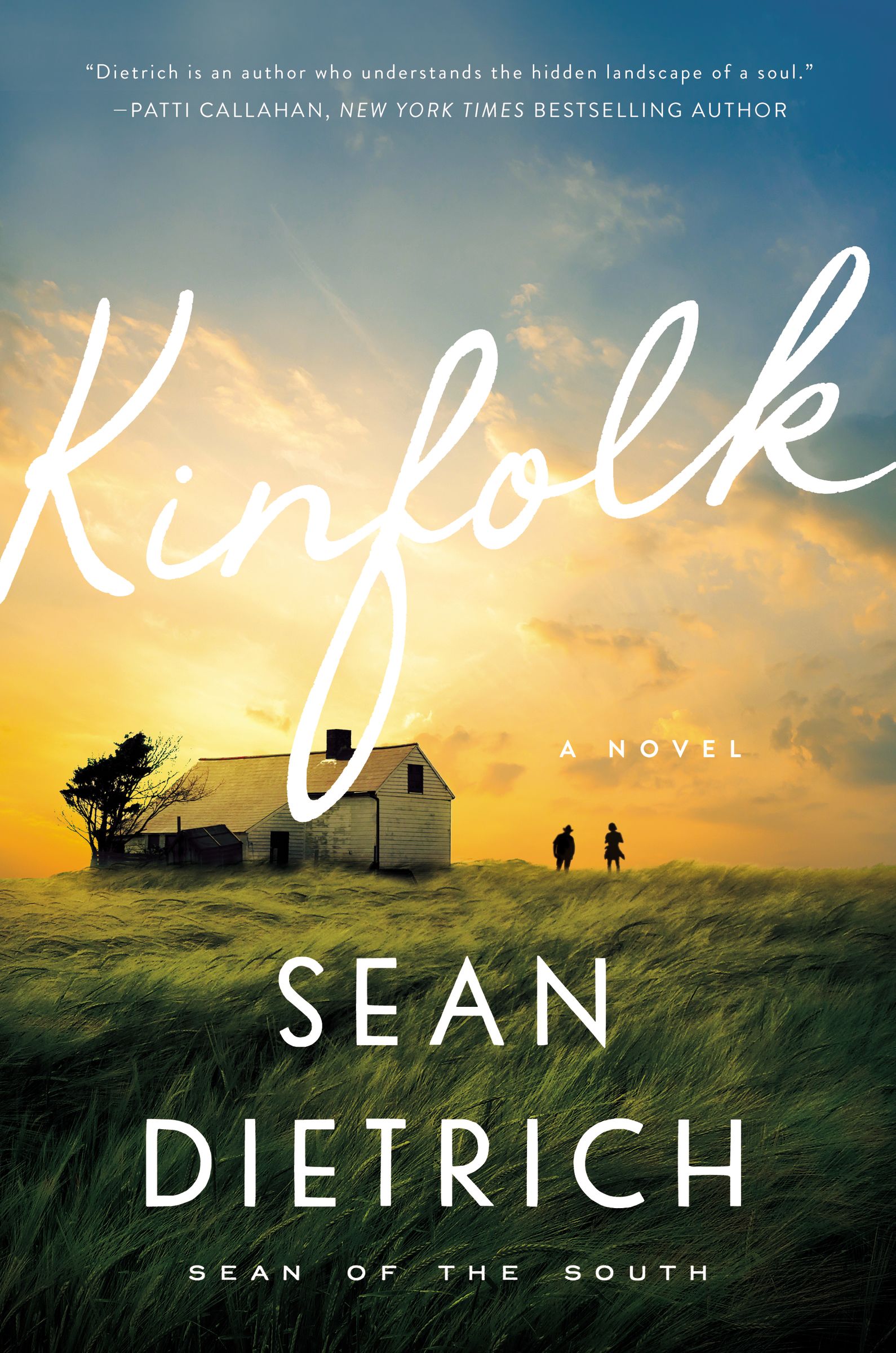
When we meet our protagonist, Nub Taylor, it is Thanksgiving night, and he and his cousin and best friend Benny are three sheets to the wind, idling in a rusty old truck across the street from the dignified, stately home of Nub’s daughter, Emily. Nub has been invited to dine there, but knows better than to attend. Emily is a widow; she married up, and every mover and shaker in town has shown up. No, Nub won’t be joining them. Nothing good would come of it.
My thanks go to Net Galley and Harper Muse for the review copy. This book is for sale now.
Our story is set in the 1970s in a tiny town in Alabama. Nub is long divorced from Emily’s mother, who keeps her distance these days. He takes his meals at the Waffle House, and that includes today:
“Waffle House did not close on Thanksgiving because Waffle House never closed. Waffle House was like the Vatican, only with better hash browns. Nobody on staff at the Waffle House had a key to the store, not even the manager. Because there were no keys. The doors were never locked. Waffle House just went on and on. Sort of like a disco.”
It is here that he meets Minnie. Minnie is fifteen years old and well over six feet tall. Why is this girl spending her holiday here, instead of with her kin? The answer is that she has none. Her father is in prison, and her mother has just recently killed herself.
Of course, Nub doesn’t know these things at first, but something about her calls to him. Perhaps all children of suicide victims wear something similar in their expressions; Nub had lost a parent the very same way, and he has never gotten over it. How does anyone? He knows “the cardinal rule about suicide. You don’t talk about it.”
Now, Minnie is orphaned and she is pregnant, courtesy of a thoughtless, spoiled local boy that told her he loved her, then laughed behind her back. And so it is that Nub realizes, as he learns more about Minnie Bass, that perhaps he may have a chance to redeem himself.
This is a wonderful story, full of warmth and a lot of heart. Dietrich is a master story teller, able to create viscerally real characters that leap from the page and a narrative that billows with home truths. There is no question that Kinfolk is among the finest books to be published this year.
The Recent East introduces novelist Thomas Grattan, and it’s an impressive debut. It follows a family of German-Americans from 1965, when the eldest emigrates from East Germany with her parents, to the present. I initially decide to read it because of the setting; it’s the first fiction I’ve read set in the former Soviet satellite country. However, it is the characters that keep me engaged to the last page.
My thanks go to Net Galley and McMillan for the review copy; this book is for sale now.
The story opens in 1965 as Beate and her parents are defecting:
Everyone talked about the West as if it were a secret. They leaned in to share stories of its grocery stores that carried fresh oranges, its cars with bult-in radios. Covered their mouths to mention a Dusseldorf boulevard that catered to movie stars and dictators, whole Eastern month’s salaries spent on face cream. There were entire, whispered conversations about its large houses and overstuffed stores, its borders crossed with a smile and a flick of one’s passport. Some talked about it as if it were the most boring thing. Others like it was an uppity friend. But everyone talked about it…
The first chapter makes me laugh out loud. Teenage Beate is mocked when she enrolls in school in Cologne, because her clothing is nowhere near as nice as what the kids in West Germany wear. Since her parents cannot afford to upgrade her wardrobe just yet, Beate comes up with the genius idea to alter the clothes she owns to make them look as Soviet as possible, and she “put on her Moscow face, worked on her Leningrad walk.” Sure enough, the kids at school are terrified of her now. She still doesn’t have friends, but she isn’t bullied anymore.
Morph forward in time. Beate is a mother now, living in upstate New York with her two adolescent children and unhappy husband. When the Berlin Wall falls, so does her marriage. Soon afterward, she is notified that her late parents’ house now belongs to her. She packs up her belongings and her children, then buys tickets to Germany.
Adela and Michael have always been close, but the move shakes their relationship. Their usual routines are shattered, and their mother, reeling from the divorce, becomes withdrawn and uncommunicative. What a terrible time to disengage from parenting! Both Michael and Adela roam the city of Kritzhagen at will, at all hours of the night. Michael is just 13 years old and gay; sometimes he doesn’t come home at all at night. I read these passages, written without obvious judgment or commentary, with horror. A new house, new city, new country, new continent, and it’s now that their mother forgets to set boundaries? I want to find this woman and slap her upside the head (though I guess that’s a different sort of boundary violation.) Half the houses in town stand empty, and since they have no furniture of their own and their mother is doing nothing to acquire it, Michael breaks into houses and steals furnishings. Look, Ma, I found us some chairs.
My jaw drops.
Adela goes in the other direction, becoming a conscientious student and social justice advocate. But their mother pays her no attention, either.
For the first half of this story, it seems like a four star novel to me; well written, competent, but nothing to merit great accolades. This changes in the second half, because all three of these characters are dynamic, and the changes in them are absolutely believable and deeply absorbing.
I have friends that do social work, and what they have told me is this: children that are forced to become the adults in the family, taking on responsibilities they’re too young for when a parent abdicates them, often appear to miraculously mature, competent beyond their years. Everything is organized. They may do the jobs as well as any adult, and sometimes better than most. How wonderful!
But because they aren’t developmentally ready for these things yet, what happens is that later, when they are grown, they fall apart and become breathtakingly immature, because they have to go back and live their adolescent years that were stolen from them. (As a teacher, I saw this in action a couple of times.) And so I am awestruck by how consistently our Grattan’s characters follow this pattern.
As the second half progresses, I make a couple of predictions, one of which is sort of formulaic, but Grattan does other things, and they’re far better than what I’d guessed. We follow these characters for several decades, and at the end, we see the relationship that blooms between Beate and her grandson. When it’s over, I miss them.
Because Michael is gay and is one of our three protagonists, this novel is easily slotted into the LGTB genre, but it is much more than this. Instead, one should regard it as a well-written story in which one character is gay.
But whatever you choose to call this book, you should get it and read it if you love excellent fiction.
What a way to start off the new year! Chris Harding Thornton has written one of those debut novels, the sort that makes an author reluctant to publish a second book, lest it fail to live up to the first. Lucky me, I read it free; thanks go to Net Galley and Farrar, Strauss and Giroux. It’s for sale tomorrow, and those that love excellent working class fiction should get a copy right away.
The setting is rural Nebraska, for a single week in 1978. It’s one of those tiny towns where not only does everyone know everyone else, but also just about every single thing that has happened in the lives of everyone else. Or at least they think they do; gossip takes on a life of its own. We have three protagonists, and their points of view alternate, always in the third person omniscient. Harley Jensen, the deputy sheriff, opens the story; then we meet Pam Reddick, a miserable, trapped, 24 year old housewife living in a singlewide trailer with her baby and a husband who’s always working; and Rick, the man Pam is married to, who works for his father, buying and renovating old mobile homes. Now there’s a job for you.
Both of the men, Harley and Rick, are leading lives of avoidance. As a child, Harley found his mother on the kitchen floor after she blew her own face away with a shotgun. The table was set, and the gravy was just beginning to form a skin on top. Gravy boat; bare, dirty feet facing the door after she fell over; cane bottom chair, shotgun, and…yeah. So now Harley is middle aged, single, childless; he maintains a careful distance emotionally from everyone. He does his job, but he’s no Joe Friday. He maintains a stoic, lowkey demeanor most of the time, putting one foot in front of the other, so that people won’t look at him with pity, which is intolerable:
People evidently needed that. They needed to know that you could overcome a thing like what happened here and keep going. That or you were just broken—more broken than they’d ever be. That worked fine, too. The one thing they couldn’t abide was that you just lived with it. You drank and slept and did laundry with it. You waited at the DMV and clocked in and out with it.
The opening scene in which we meet Harley finds him driving his usual patrol, eager to pass the last homestead he routinely checks for prowlers, vandals, or partiers. It is his parents’ home, now derelict and unsaleable. He prefers to zip past it, but he can’t today because there’s a truck down there. Turns out to be Paul Reddick, the wily, sociopathic brother of Rick, whom we’ve yet to meet. This scene is as tense and still as the air right before the tornado hits. It’s suffused with dread, and we don’t fully understand why yet. It sets the tone for the rest of the story.
Pam Reddick is too young to be so bitter, but it isn’t stopping her. She doesn’t love her husband, and if she ever did, we don’t see evidence of it. They are married because of Anna, their now-three-year-old daughter. This fact gives me pause, since Roe v. Wade came down in 1973; abortion is legal. But then I realize, first, that the Supreme Court made a ruling, but it didn’t furnish clinics, and an out-of-the-way place like Pickard County may never have had access. Pam and Rick have so little money that a trip to the nearest clinic and the payment for the procedure was about as likely as an all expense paid trip to Europe. No, she’d have that baby all right. And she has. But she has no enthusiasm for parenting or her daughter, who looks just like her daddy. Pam goes through the barest motions of motherhood, and only that much because her mother and her mother’s friends always seem to be watching.
Rick, on the other hand, is a guy you can’t help but feel sorry for. The entire Reddick family is a mess. Their father, who is a shyster, has more or less abandoned their mother, who has mental health problems, the severity of which depends on who is talking. The whole town knows about the night when, following the murder of her eldest son, she was seen in the backyard, stark naked, burning clothing in a barrel. His younger brother, Paul, whom we met earlier with Harley, uses street drugs and steals his mother’s prescriptions; he’s been in and out of trouble most of his life. Worse still, perhaps, is the fact—and it isn’t spelled out for us, but as the narrative unfolds, it becomes evident—that Paul is smarter than Rick. Nobody tells us Rick is stupid; rather, his inner monologue fixates on the mundane and tends to turn in circles. And here, we can see also that poor Rick loves Pam and Anna deeply, and considers them the very best part of his young life; he counsels Paul to settle down, find someone like Pam so that he can have a good life, too. And while Rick knows that Pam is unhappy, he tells himself that she’s mad about nothing, that she’ll settle down. He’s working hard, and we can see that; the guy is a slob, but he’s industrious, on his back in the dirt ripping fiberglass out of an old trailer, stripping wallpaper, replacing pipes. And when he goes home, exhausted and reeking, his feet are sore and itching, and the thing he finds most soothing, and which makes Pam crazy, is rubbing his feet on the radiator until pieces of dead skin come off in strips, which he of course doesn’t clean up.
At this point, I’m ready to get my purse out and give Pam some get-away cash. I couldn’t live that way, either. The worst of it is that Rick is already doing his very best.
The plot unfolds like a burning tumbleweed descending a dry hillside, and it is masterfully written. Much of its brilliance lies in what is not said. There are probably half a dozen themes that bear study, for those so inclined. The violence and poverty are obvious, but more insidious is the way this county chews up the women that live there.
Another admirable aspect of the narrative is the restraint with which cultural artifacts are placed. We aren’t barraged with the headlines of 1978, or its music or movie actors. Thornton doesn’t take cheap shortcuts. Yet there are occasional subtle reminders: the television’s rabbit ears that have to be adjusted to get a decent picture; the Corelle casserole dish.
So, is this book worth your hard-earned money? If you haven’t figured that out by now, you’re no brighter than poor Rick. Go get this book now. Your own troubles will all look smaller when you’re done.
It’s an honor to be invited to review any book by Random House and Net Galley, and so when the email came, I accepted without hesitation; I thank them for thinking of me and wish I could honestly recommend this one. Others have referred to this memoir, whose title is taken from a quote by Katharine Mansfield, as “exquisite, intimate, and lyrical”, and the author has won awards for her novels. I looked carefully to see if I could locate the genius in this book, but it eluded me completely.
The intimacy of the work is surely apparent. In essence, this is a mental health memoir, and the author writes of her fight with depression, her multiple suicide attempts and hospitalizations, of the expectation of others that she should continue to live when she didn’t want to. It’s brave writing, although mental health battles are now a fairly mainstream topic, but I am unable to find anything tangible to engage my interest.
My only real pleasure is in discovering that Li is already a successful writer; had it been a debut, I would have been scared silly. After all, if I say I don’t like the book, will the writer harm herself? What if I simply dodge the whole thing and let it get lost in the shuffle; will it happen then as well? But in seeing that this is someone with an established career and a wall full of accolades, probably the displeasure of one humble blogger won’t create a great deal of trauma.
The whole thing is bleak. The writer reminds us repeatedly that her life is private, that no one has the right to know any of its details and all I can think is, so what are we doing here, exactly?
Those that have read and enjoyed Li’s novels may find more to hang their hats on than I have found. All I know is that it is painful to read, has no beginning, middle or end that I can find, and is devoid of the literary qualities that can sometimes make a sad book enjoyable. I can’t recommend it.




 It’s an honor to be invited to review any book by Random House and Net Galley, and so when the email came, I accepted without hesitation; I thank them for thinking of me and wish I could honestly recommend this one. Others have referred to this memoir, whose title is taken from a quote by Katharine Mansfield, as “exquisite, intimate, and lyrical”, and the author has won awards for her novels. I looked carefully to see if I could locate the genius in this book, but it eluded me completely.
 Seattle Book Mama