The Old Lion, by Jeff Shaara****

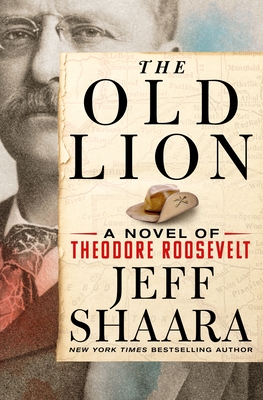
There are a good many books that have been written about President Theodore Roosevelt, and no two are exactly alike. That said, the two I’ve read—this one, and a biography by Clay Risen—could not be more different. In fact, you would never know they were writing about the same man.
My thanks go to Net Galley and St. Martin’s Press for the invitation to read and review. This book was published in May, but it took me some time to push my way through it.  I started out not knowing what tack Shaara would take here, and it is this introductory note that caused me to sit back a bit:

“Few, very few, would disagree that Theodore Roosevelt ranks high among the most revered, most respected, and most admired presidents in history.”

I guess it’s time for me to change my name to Few.

Because I had signed on for it—on the strength of my admiration for its author, whose books I always read without regard to topic—I hunted down the audio version at Seattle Bibliocommons. The voice actor that reads it is second to none, and does a remarkable TR impression. But I also have to say that the various thoughts and conversations which the historical fiction genre permits its author to create seem a bit on the rosy side. Where is the TR that not only organized volunteers, himself included, to fight in Cuba, but used vast amounts of his family’s connections and wealth to advocate for it? Where is the braggard that crowed to his friends about how much he enjoyed shooting an enemy soldier from just a few feet away “like a jackrabbit,” and called his 45 days of combat the ultimate hunting trip?

This is one more reminder that all history is political. Nobody will, or should, write a book about a public figure that uses every single fact available, but it is when the author chooses what to include, and what to leave out, that bias shows. There’s no way around it, even for the most objective of writers.

I cannot deny that there were positive aspects of TR’s tenure in the White House (which he named,) the birth of the nation’s park system, beginning with Yellowstone; he also gets points for having seen, ultimately, that these are not meant to be preserved as hunters’ playgrounds, but rather to preserve the natural life, including animals, that are native to the park. His attitude toward women and Black peoples’ suffrage is laudatory, compared with other politicians of his time, but Shaara doesn’t comment on the ugly racist attitude Roosevelt displayed toward other races and ethnicities, most notably those from Central and South America.

This is a four star read because no matter what he chooses to write about, Shaara spins a tremendously entertaining tale. If you choose to read this one, I recommend you obtain the audio version, and take the dialogue and in particular, Roosevelt’s innermost thoughts with a larger than usual grain of salt, and also read a second, nonfiction work for balance.

The Bitter Past, by Bruce Borgos***

2.5 stars, generously rounded upward.

The Bitter Past is the first in the Porter Beck series by Bruce Borgos, and if I liked it, I’d be thrilled to read more. On balance, though, I don’t. Nevertheless, my thanks go to Net Galley and St. Martin’s Press for the invitation to read and review. This book is for sale now.

The setting is the hinterlands of Nevada; part of the story takes place in the 1950s, and part of it is in the present. I rate the historical threads as 3.5 stars, and the contemporary part as 1. The premise is that Porter Beck is the local sheriff who is called when a grisly murder is discovered; in addition, a sister-wife goes missing. Sana Locke is the woman that the Feds send in, uninvited. The premise for the other thread is that a Russian operative named Georgiy Dudko lands in Nevada, tasked with entering the nuclear test site and stealing a nuclear warhead. Toward the book’s conclusion, we see how the two stories are joined.

Before I am even twenty percent of the way into this story, my hackles are up. I haven’t seen an author write with such brazen disrespect for women in a very long time, and I hope not to see it again. You see, Beck is God’s gift to women, and it’s a good thing, too, because none of them prove smart enough to find their butts with both hands until he sails in and fixes everything. From the instant Agent Sana enters the narrative, introducing herself as FBI, Beck is the guy in charge, and Sana is his li’l buddy, his sidekick. Good thing he is here to educate her. It is Beck that finds a hidden room in a house they’re searching; it is Sana whose eyes “go big.” He has to dive quickly to save her from the bad guy with the gun. He tells her what to do, and she does it. Here are some quotes that set my teeth on edge:

“Before [Sana] can speak, I place a finger over her lips.”

“Sana appears confused.”
“I bring my finger under her chin. ‘Look up.’”

And no collection of sexist bilge is complete without the old saw about how women are unable to get along with other women: “[Sana’s] still miffed about Brinley, [Beck’s sister] and it’s clouding her judgment…I glare at Brin, a warning to her to retract her claws.”

Beck feels completely free to comment on Sana’s physical features, particularly her “exquisite ass,” but of course, Sana likes that in a guy. She’s in the sack with his middle-aged, um, butt in no time flat.

For a long time I hold out hope that things will turn around, and the author will prove to us that actually, Beck is about to get his just desserts, and Sana had been sent to take him down for some reason, but the only comeuppance she deals him at any point is when she pulls a jujitsu move on him, and that’s only once.

What else? Ah yes, the sister-wife. The girl’s husband is a good FLDS neighbor, Beck tells Sana. They don’t force anyone to marry. She’s seventeen years old, so it’s fine.

What the fuck. Seriously? Excuse me while I grab my blood pressure medication.

In addition to all of this, there is the constant use of the word “illegal” to describe a person that is in the U.S. without documentation. They don’t even call them illegal immigrants, or illegal residents. They don’t merit a full grammatical description.

The thread that takes place in the past is more palatable. Georgiy needs into the nuclear test site, and so he befriends a scientist that works there, and is introduced to Kitty, the scientist’s daughter, whom he courts and accidentally falls in love with. Kitty is not developed as a character any more than Sana is, but at the same time, during the 1950s in the U.S., marriage and motherhood were very nearly the only acceptable path for women, so within the context of time and place, this is believable. I like Georgiy much better than Beck, that’s for sure!

There’s a twist of sorts at the end, but it’s not all that impressive, and it mitigates nothing.

I was provided with the digital review copy and the audio as well, and so I listened and read at the same time. Narrator James Babson does a fine job portraying the characters as they are written, and he isn’t to blame for the way I feel as I read.

That’s it in a nutshell. If all of this sounds just fine to you, then go ahead and get this thing, and stay away from me. Does anyone have any matches I can use?

The White House Plumbers, by Egil “Bud” Krogh and Matthew Krogh

Egil “Bud” Krogh was one of the men known as the “White House Plumbers,” which was a small group of operatives that dressed as tradesmen in order to illegally break into and ransack private offices for the purpose of digging up dirt on political opponents. Krogh’s job, together with E. Howard Hunt, was to lead a small team of men to burglarize the office of Dr. Fielding, the psychiatrist that treated journalist Daniel Ellsberg, in search of a way to discredit Ellsberg, whom President Richard Nixon regarded as an opponent.

My thanks go to Net Galley, St. Martin’s Press, and Macmillan Audio for the review copy and audio book. This book is for sale now.

Few people shy of the Boomer generation will have personal recollection of the Watergate scandal that brought down a sitting U.S. president for the first time, and the burglary of Fielding’s office was the first illegal event that set it all in motion. Nixon was furious that the Pentagon Papers had been released and that the U.S. Supreme Court had come down on the side of the First Amendment and the free press. Consequently, the president decided that the executive branch must go it alone, and sought a way to discredit the journalists behind it. That was how all of this came about. He howled about national security, and may or may not have believed it; or, he may have sought to cover up lies he had told to the American people about the war in Indochina, and  since he couldn’t force the publication out of circulation, the next best thing would be to persuade the public that its authors—or annotators, at any rate—were crazy and not to be believed. This background information comes from me, not from the book.

At any rate, this political memoir comes to us courtesy of Bud Krogh, and also his son Matthew, who completed it after Bud’s death. For the purpose of this review, I will use the name Krogh to refer to Bud, unless otherwise noted.

Krogh was brought into this mess by John Ehrlichman, one of the two advisors that were nearly as close as a second skin to Nixon during his time in office. Other accounts refer to both as cold-blooded thugs, and my earlier reading leads me to agree with them, but to Bud, Ehrlichman was a noble soul dedicated to his country and his president, a fine, devout individual that was like a second father to him growing up. It didn’t occur to him, initially at least, that anything he was being asked to do was corrupt or scandalous; here, I find myself shifting in my seat. Surely he must have wondered why this secret little group of men, not even government employees, were being tasked with this job, rather than the agencies that ordinarily do the cloak-and-dagger jobs? He claims that Nixon couldn’t trust FBI director J. Edgar Hoover, who was a slimy character, and that makes at least a little sense to anyone familiar with him. Yikes.

The writing as well as the accountability are uneven throughout this book. The prologue sounds sketchy to me. Those of us that have spent any time at all watching criminal trials take place is familiar with the vaguely nebulous language I see and hear at the beginning of this thing. Instead of saying that he has done something very wrong and is sorry, he says he has made bad choices, and he is sorry about “what happened.” This is the language that guilty people use when their attorney has told them to show remorse. Someone not listening carefully might think that the speaker has apologized, but they’ve actually distanced themselves from wrongdoing. During this portion of the memoir, I glanced at the text and also the device playing the audio, half expecting to see a little slime leaching from its margins.

And yet, at the end, the prose is more eloquent, and the accountability rock solid. Krogh goes to the psychiatrist in order to apologize in person, once he is out of prison. He visits Nixon to apologize to him (which baffles me, but okay.) He claims to have declined a presidential pardon. He never loses an opportunity to put on a hair shirt prior to his many speaking engagements. And so it goes.

One could surmise that the early portion was written by Krogh, and the end written by his son, but even if that is true, those speaking engagements were taken by Bud, not by Matthew, and likewise the specific apologies rendered. So who knows?

The narrator for the audiobook is Peter Krogh, who does a fine job.

If you are interested in studying the Watergate scandal and haven’t read any other books about it, this is not the one. Krogh’s involvement ended with the break-in to Fielding’s office, and he helped cover it up, lying under oath as he was told to do, but he had nothing to do with the Watergate Hotel burglary of the Democratic National Committee’s offices. In short, though famous enough to be remembered for his actions, he was not a central player. For those interested in reading just one book about this scandal, I’d go with All the President’s Men, by Woodward and Bernstein; The Nixon Defense, by John Dean; or Nixon: The Life, by John A Farrell. These are all fairly lengthy; if you are looking for something less lengthy, try One Man Against the World, by Tim Weiner.

As a general read for the uninitiated, I’d give this book 2.5 stars. For Nixon and Watergate buffs, I rate it 3.5 stars.

Don’t Say We Didn’t Warn You, by Ariel Delgado Dixon***-****

I was invited to read and review by St. Martin’s Press and Net Galley, and it sounded like a winner; a debut to boot. I am disappointed not to be able to read further, because this is clearly a writer with talent, and the story is an interesting one thus far.

Here’s the thing:  I see foreshadowing that suggests the family dog is going to meet with a lot of pain, and I am not up for it.

There’s been a trend away from this lately, and I suspect this is why: there’s a lot of push-back against it these days. There was a time when the sacrifice of a (fictitious) pet was considered a lesser evil. Rather than kill or torture a character that the protagonist loves and the reader may have bonded with, take out the dog, cat, horse, etc. It’s sinister foreshadowing, but nobody is dead yet. But these days, animals in general and pets in particular are out of bounds. If a writer goes there at all, it must be well in the past and with as few details as possible. Less is more, and usually, none is even better.

Were it not for the animal cruelty that other reviewers have referenced, both with the dog and the wilderness camp, I would gladly finish and review this galley. I wish the author well, and look forward to seeing what they publish next, assuming this deal breaker doesn’t make it into their next endeavor.

My rating isn’t based on much because I didn’t get far; four stars is the rating I give most often, but this time it should be taken with a grain of salt.

Daughter of a Daughter of a Queen, by Sarah Bird*****

Cathy Williams was a real person, and Sarah Bird steps up to tell her story, marrying an engaging narrative with historical fact. Though I am mighty late, I received this book free and early. My thanks go to St. Martin’s Press and Net Galley for the review copy.

Cathy Williams was born a slave, though her mother told her to regard herself not as a slave, but as a captive, one of noble warrior blood whose destiny was freedom. The American Civil War led General Philip Sheridan to the tobacco farm in Missouri where Cathy and many others performed forced labor for “Old Mister.” Sheridan chooses her to work in the kitchen; she isn’t pretty, and he figures she will do what she’s supposed to, rather than being caught up in romance. She and other former slaves work in exchange for meals and protection against Rebel slave-hunters.

The American Civil War is my favorite historical period to read about, and I have a soft spot for Sheridan, so this makes the story all the sweeter for me. Before my retirement, I was a history teacher and the civil war was what I taught for one term every school year, yet I didn’t find any inaccuracies here. That’s a rare thing.

Usually, stories that are set during this period hit a climax when the war ends, and soon after that, the book is over. Bird doesn’t do that here; after all, this story isn’t about the war, it’s about Williams. Victory is declared, everyone whoops for joy, and we’re not even halfway in it yet. I like this, because it shows some continuity, and one must wonder, at times—so the war ends, and then what? The South is decimated. The army virtually dissolves. What becomes of those we have been reading about? Reconstruction starts and fails, we know this; yet one wonders about individual stories.

After the war, the army is still Cathy’s home. She is a big woman, and when a soldier friend is murdered, she takes his army coat and dresses herself up as a man, becoming Private Cathay, and she joins the Buffalo Soldiers. In real life, she is the only woman to do so.

I won’t even try to recount the many experiences Williams has; in some ways, it’s a less exaggerated version of Forrest Gump, or Little Big Man, but an African-American woman is the subject, and the story is true. Bird did some top-notch research for this thing, and between that and her considerable skill with character development, pacing, and dialogue, the result is pure gold.

It starts a little slow, but patience will reward you. There’s a fair amount of violence—how could there not be—and a number of ugly situations that might make this a bad fit for a classroom read-aloud, and that’s a shame, but the story had to be told this way. I recommend it for high school libraries, and Black History Month shelves; it might also make a fine gift for your precocious reader, depending on your comfort level and theirs. The very best thing to do, younger readers or no, is to read it yourself. I alternated my review copy with the audio version that I scooped from Seattle Bibliocommons, and the reader is a standout, so I recommend it in that form as well.

Handsome Johnny, by Lee Server**

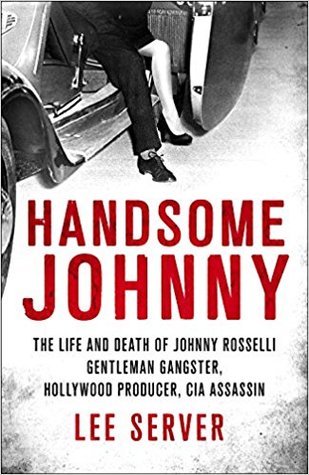
I was invited to read and review this biography by Net Galley and St. Martin’s Press; it’s the story of Johnny Rosselli, known as “the gentleman gangster.” Sometimes I enjoy a good gangster story; my great-uncle (whom I didn’t really know) was Sherman Billingsley, the thuggish owner of the New York Stork Club, and so when I read about others, it sparks my imagination. Usually.

I didn’t engage with the book’s beginning when I sat down the with digital review copy, and eventually I got bored and set it aside for something more compelling. But often, the galleys that land on the back burner become more interesting once I can get an audio copy. After avoiding this book till publication, I found an audiobook at Seattle Bibliocommons, and I began listening to it in the evenings when I prepared dinner. In this way I found it more interesting. There’s a fair amount of background provided, because the writer (perhaps wisely) doesn’t assume his audience is proficient in American history, Prohibition and so on. I didn’t hear anything I didn’t know already, but it was okay. Gradually it took on the flavor of a documentary, not riveting but not bad. I listened to the first 25% and thought I would probably finish it this way.

Unfortunately, a deal breaker came up somewhere in the next ten percent. Rosselli has gone to Los Angeles because there was no mob out there yet. He figured he’d pioneer vice and leg-breaking on the West Coast. Fine, fine. He meets Al Capone, who is being harassed by cops and told he can’t stay in L.A., and Rosselli does Capone a favor and thereby comes into the Capone orbit. Okay, fine. But then we get into the women.

Now, I understand that mobsters were about as far as anyone can get from feminism, and of course in the 1940s and 50s, there wasn’t any women’s movement to speak of. The problem is that Server doesn’t differentiate Rosselli’s point of view from his own. I get the distinct impression that the two aren’t very different. There’s only one quality worth reporting in women, and that’s their physical appearance. So Rosselli falls for Jean Harlow, who is perfect. Completely perfect. What makes her perfect? Well, she’s got great legs. They are described. Breasts too; we hear about that. And she is a virgin! Every middle-aged mobster loves to get a virgin in the sack, right? At age seventeen she’s barely legal, but nobody worries about that. Oh, and also she’s very, very white. Porcelain skin. Just wonderful.

By the time Server is done explaining all of Harlow’s best qualities, and the misery that that bastard put her through (though he doesn’t describe it this way; in fact, the reader has a kind of bemused smirk to his voice throughout,) and oh how sad about her suicide at age 27, I am seeing red.

 I’m not chopping bell peppers now. I’m standing stock still in my kitchen, glaring at my tablet. Dinner may be a little late.

I try to continue with the book, but I am pissed.  Finally, I decide life is too short. I’ve tried this book twice, but I don’t finish it. In fact, I consider that second star in the rating to be generous.

This book is recommended to misogynistic assholes. Everyone else should give it a miss.