The Briar Club, by Kate Quinn*****

I had never read a novel by Kate Quinn, but my friends on Goodreads raved about it and I was overcome by the fear of missing out. Happily, I was not too late to get a review copy; my thanks go to NetGalley and William Morrow, along with my apologies for lateness. From the get go, I could tell this book was too good to speed read, and so I set it aside for a time when I could sink into it and appreciate it. This fall I was able to get the audio version from the library to help me along; narrator Saskia Maarleveld is outstanding, and those that enjoy hearing their books should strongly consider ordering that format.

Our story takes place just after World War II, and it takes place almost entirely within the confines of Briarwood House, a women’s boarding house owned by the selfish, odious Mrs. Nilsson. The book’s prologue comes to us from the point of view of the house, and for a brief spell I wonder whether the house itself will become the main character. It doesn’t, and that’s probably just as well, because the women that rent its rooms, along with Pete and Lina, Nilsson’s two children, fill the story quite nicely, and all are beautifully developed, some more than others, with Nilsson herself being the only truly static character. In fact, I could argue that even the house’s character is developed somewhat.

I seldom do this, but the prologue is so juicy that I’m going to reprint a considerable chunk of it here, because Quinn’s voice—and okay, the house’s—provide a more convincing incentive to read on, than anything I can offer:

If these walls could talk. Well, they may not be talking, but they are certainly listening. And watching…Now its walls smell of turkey, pumpkin pie, and blood, and the house is shocked down to its foundations. Also, just a little bit thrilled. This is the most excitement Briarwood House has had in decades. Murder. Murder here in the heart of sleepy white picket fence Washington, D.C.! And on Thanksgiving, too. Not that the house is terribly surprised by that; it’s held enough holidays to know that when you throw all that family together and mix with too much rum punch and buried resentment, blood is bound to be shed sometimes…This was a very enthusiastic murder, the house muses. Not one moment’s hesitation from the hand swinging that blade…Briarwood House doesn’t like Mrs. Nilsson. Hasn’t liked her since she first crossed the threshold as a bride, complaining before she’d even shaken the rice out of her hair that the halls were too narrow (My halls! Too narrow!), and still doesn’t like her twenty years down the road. No one else in this kitchen does, either, the house knows perfectly well. It knows something the detective doesn’t. The killer is still very much in this room.

Now that the murder has been mentioned, I must caution you not to identify this story foremost as a murder mystery; it isn’t. The murder doesn’t come till nearly the very end, and the reason that it affects us so deeply is because of the author’s success in making every character here feel tangible and known to us. By the time anyone is enraged enough to swing anything, we know all of these women, or most of them at least, well enough to feel as if they are family. Boarder Grace March is revealed to us more slowly than the other women, but there are reasons for that, and by the end, I may love her best of all. No, this is first and foremost a stellar work of historical fiction.

At the outset, no one knows anyone else. Some are married, waiting for spouses to return from the conflict; some are single; some are professionals. Almost everybody has at least one serious secret. But as they grow to know one another, bonds are established that in some cases are stronger than those of blood relatives.

I won’t go through the plot or describe individual characters; as far as I’m concerned, that would be gilding the lily. Instead, I urge you to get a copy of this outstanding novel in whatever form is your favorite, with a slight nudge toward audio if you’re undecided. Highly recommended!

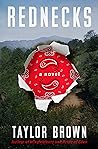
Rednecks, by Taylor Brown*****

“Law only serves them that’s in power. Ain’t no different than always…’Tis the victor who writes the history—and counts the dead.”

I’ve been an enthusiastic fan of author Taylor Brown since reading Gods of Howl Mountain, which was published in 2018. His new novel, Rednecks, is out now, and as with his earlier work, it is outstanding. My great thanks go to NetGalley and St. Martin’s Press for the invitation to read and review.

Brown tells the story of the Battle of Blair Mountain, a very real large scale battle, complete with machine guns, helicopters, tens of thousands of angry, armed miners, and the U.S. Army, an event which really did take place in the Appalachian Mountains in 1921. Over a million rounds were fired, and then the story was suppressed by the government, bosses, and big business media.

 In his author’s note, Brown tells us that the character of Dr. Muhanna, a heroic individual sympathetic to the cause of the miners, is based on his own great-grandfather. There is a meaty explanation of what parts of the story are based on the actual historical record, and what parts—small ones, to be sure—he has changed.

Apart from his skill as a writer and researcher, the thing that I have always loved best about Brown is his deep respect for the working class. It shines through every page of this novel. Mother Jones, the fiery Socialist labor organizer, is here as well, and she is possibly my favorite figure in American history. Unfortunately, she is not at her best here. Past ninety years of age and in poor health, she attempts to deceive the miners into quitting their struggle early once she learns that Washington, D.C. intends to send troops. It’s a pity that her many years of inspirational organizing and leadership are not on display here, but the facts are the facts, and this story is not, after all, chiefly about Mother, but about the miners, so I suppose that Brown has written it in the only honest way that it could be written. There are indeed passages that demonstrate her eloquence and loyalty to workers of every race and ethnicity.

As I read, I like to highlight passages to include as quotes in my review. This time, I came away with 53 quotes. Reluctantly, I am setting most of them aside; you will have to find them yourself. They’re better within the context of the story, anyway.

As a personal aside, I will mention that my own grandfather—“Papaw”—died of Black Lung disease in 1978 after having worked in a nonunion mine in South Dakota beginning in the eighth grade. He had to leave school and work fulltime, as there was not a social net back then, and he and his family would have starved if he had done otherwise. World War II brought him better fortunes, but coal dust, once lodged in the lungs, never leaves.

This is a gritty tale to be sure, one full of bloodshed and suffering, but also of immense courage and inspirational leadership. I read it in small bites lest it work its way into my dreams, until I reached the climax, at which point I had no choice in the matter, and was unable to put it down. This book is one of the year’s best. I highly recommend it to those that love labor history, historical fiction, or that just love a well-told story.

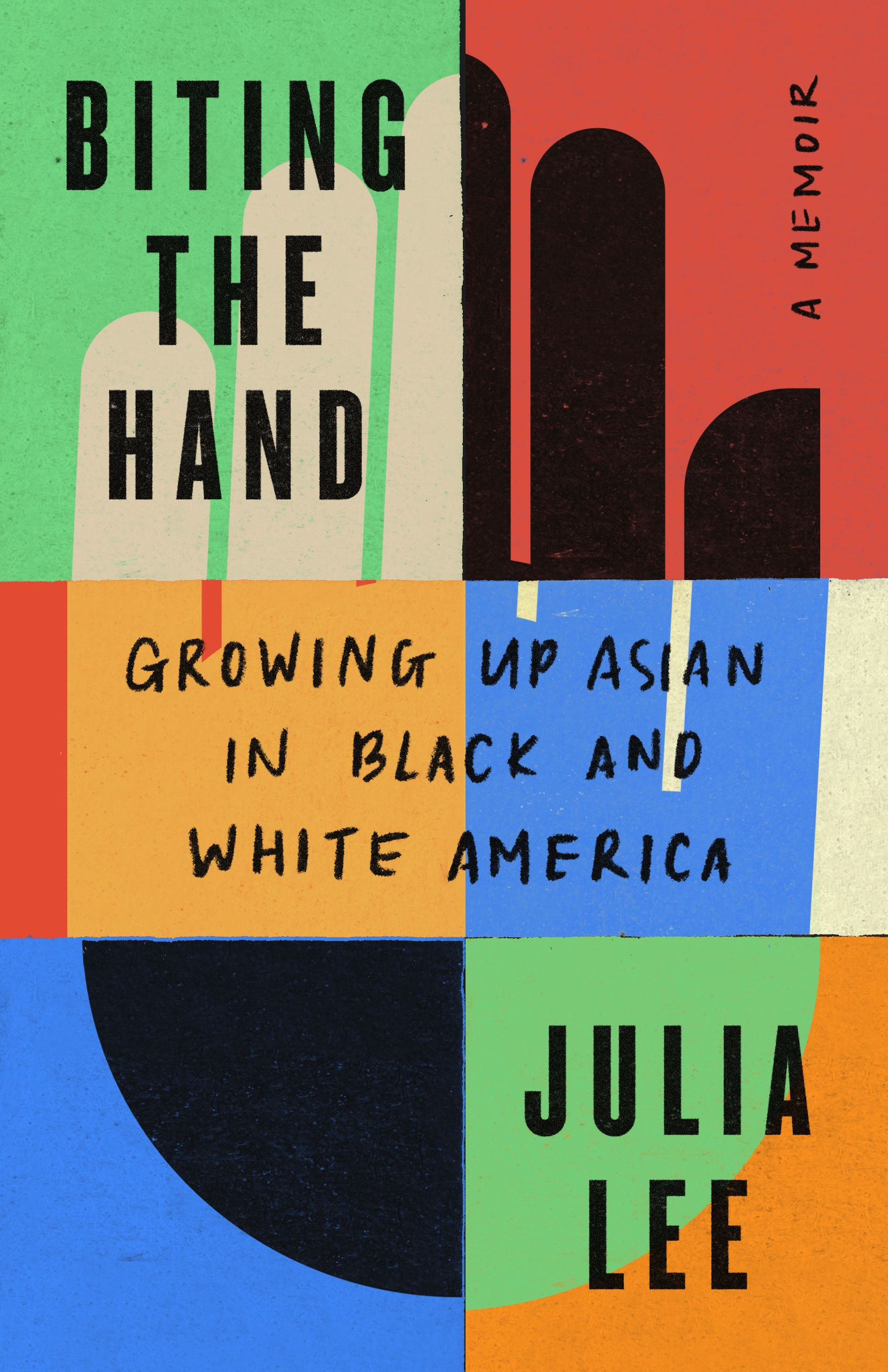
Biting the Hand, by Julia Lee****

Julia Lee is not amused, and she’s decided to say the things nobody else is saying. In this deeply analytical, provocative memoir, she tells us about her own experiences growing up, and the issues faced by Asian immigrants and Asian Americans in the United States, where “we are critical to the pyramid scheme of the American Dream.”

My thanks go to Net Galley, Henry Holt Publishers, and Macmillan Audio for the review copies. This book is for sale now.

In some ways, I feel as though I am reading someone else’s mail as I read this, because it is clearly intended for an audience of people of color. However, I did read it, and I’m going to review it.

When the discussion of race in the U.S. comes about, it is, as Lee states, almost always a conversation about Black people and Caucasians. Those that don’t fit into either group are sidelined. Perhaps more harmful is the way that people of Asian descent are presumed to be sympathetic to the status quo. Ever since a major news periodical dubbed Asians as “the model minority” back in the early 1960s, expectations and assumptions have leaned in that direction. And the roots of this division—Black versus Asian—make this a particularly thorny assumption to untangle. After all, a large percentage of African-Americans can trace their lineage to slavery; their ancestors weren’t born in the States, nor did they choose to come here, but were kidnapped and brought by force. Angry? You bet! But Asian immigrants came of their own accord, oftentimes fleeing untenable circumstances in their countries of origin. And so, their children, and those that have come after, have largely been indoctrinated to be appreciative. If things don’t go well, they tell them, then we must work harder!

This Caucasian reviewer comes to you without the Asian background, appearance, or experience that Lee speaks of; yet I live in a city that has one of the largest Asian populations in the U.S., and am married to an Asian immigrant, and parent to a child that is half-Japanese. So many of the stories—strangers that ask where you’re from, and won’t accept the truth of “California,” where Lee was born, or “Seattle,” my daughter’s hometown, are familiar ones.

Lee is fed up with the mainstream news stories that endeavor to pit Asian and Black people against each other. Her parents were small business owners in a mostly Black part of Los Angeles during the riots of 1992, and her experiences inform her conclusion, that there must be solidarity between all people of color in order to successfully fight for significant change.

The one bone I have to pick is the casual manner in which she dismisses the question of social class as a key factor. Her very brief note about this is that it’s a tomato and to-mah-to issue, not worth much discussion, because most people of color are working class. This is simply untrue, and it enforces a stereotype of Black people as being mostly poor and dispossessed, when in actuality, eighty percent of Black people in the US live above the poverty line. There are African-Americans that have far more money than I will ever see; some of the many Asian groups have a higher median income than Caucasians. So yes, social class is a huge factor here, one that Lee should examine more critically. There are working class Whites that can be allies; there are wealthy families of color that would shut down the struggle, given half a chance. The missing star in my rating reflects her failure to recognize this, and to offer concrete solutions to this problem.

The book’s title comes from Lee’s mentor at the otherwise very white-supremacist dominated Harvard—Jamaica Kinkaid. I actually gasped when I saw this. What a luminary she found to guide her!

Both the audio and print version of this book are equally readable, so go with whatever you usually prefer.

This is a fine resource for those seeking to examine Asian and Asian-American racial dynamics. Read it critically, but do read it. There’s a lot here that has needed to be said for a long, long time.

The Kitchen Front, by Jennifer Ryan****

I enjoyed Ryan’s historical novel, The Spies of Shilling Lane, and so I was thrilled when Ballantine Books and Net Galley offered me a review copy for this one. It’s for sale now.

The story is set in rural England during World War II. We have four protagonists, all of them women. Audrey Landon is a widow; her husband died in the war, leaving her with two boys to raise on her own. The old family home, which she inherited from her parents, is falling apart, and she has no means to repair it. In some places, the roof has caved in.

The second is Audrey’s sister, “Lady” Gwendoline. Gwen puts herself first at all times, since nobody else ever has. She married for wealth and convenience, and she lords her affluence over her sister and everyone else. But her husband is a cruel man, and her existence is a lonely one despite its material comfort.

Zelda was a top chef in London, but once her pregnancy became visible, she had to get gone. Her landlord calls her a “trollop,” and she knows she can’t stay there now, so she applies for wartime housing. The volunteer in charge of placing her is Lady Gwendoline, who snickers with amusement as she assigns her to live in Audrey’s house.

Nell is a chef’s assistant at Fenley Hall, the prestigious old pile where Lady Gwendoline and Sir Strickland hold court. The chef, Mrs. Quince, has taught her nearly everything she knows, and it’s a good thing, too; the old lady isn’t getting any younger.

All four women enter a cooking contest held by the Ministry of Food, a “wartime cooking challenge” to showcase recipes that use ordinary ingredients and work around rationing.  The winner will be the new announcer for The Kitchen Front, a wartime radio program—and this program existed in real life.

As in the last story, Ryan develops her four characters in a way I believe; the most benevolent have flaws, and the most unsympathetic, Lady Gwendoline, is complex and capable of change. It is Gwendoline that is most developed at the end, but all four are dynamic characters.

For a brief while, I use the audio version of this book, which I obtain from my local library. Jasmine Blackborow does a fine job as reader in most regards, but there is a side character that turns up in a couple of emotionally charged scenes, an Italian prisoner of war, and when she voices him, he sounds like Dracula, which ruins the magic. For this reason, I recommend sticking to the printed version.

The first half of this story is almost unputdownable, and for a time I nearly forget my other books. But as the climax approaches, things become predictable, almost formulaic, and the ending is a bit too tidy for my tastes. The scenes toward the end with Mrs. Quince are overwrought.  It’s not terrible, but because I am so far in love with the first half, I am disappointed by the denouement. Also, if recipes must be included, as apparently they must, the author should give them character by using the substituted ingredients in the instructions; the more desirable ingredients can be footnoted.

Ultimately I rate The Kitchen Front four stars; five for the first half, three for the second.