
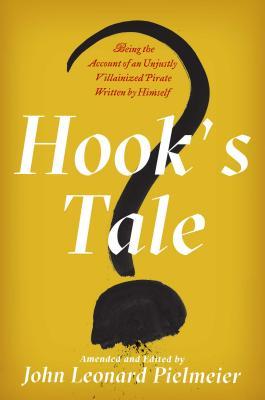
 Pielmeier’s debut novel gives poor, maligned Captain Hook an opportunity to share his side of the story. The teaser promises a “rollicking” story, and at first it seems to be exactly that, but it runs out of steam early on. Nevertheless, thank you, Net Galley and Scribner, for the opportunity to read and review.
At the outset, Captain James Cook (his name isn’t Hook!), named for the famous sea explorer, describes himself as looking nothing like the “unbearably pompous actor”, a clear reference to the hilarious Cyril Ritchard, who played Hook in the twentieth century complete with high heeled boots and a beauty mark; however, our pirate assures us, those periwinkle blue eyes do fit the bill. There is an assumption that the reader is well steeped in both the stage and cinematic depictions of the character, and it seems like a fair one. I love reading Hook’s fond and hugely original description of Smee, and our introduction to Hook’s pet crocodile.
“I named it Daisy, after my mother.”
Unfortunately, somewhere between the ten percent and twenty percent mark, the narrative founders, and the most frustrating part for this reviewer is that it’s hard to pinpoint exactly what goes wrong. The concept is strong, the voice clear, and yet my interest is gone before the quarter-mark is reached, and at that point I am reading for duty rather than pleasure. I came away with two considerations.
The first is the linear quality of the prose. The formal, old-school language is fun at the outset, but it might be more powerful if alternated with a present day narrative. Hook could have a grandson or other present-day relative that contributes; since Hook marries Tiger Lily, that might be a way to get there. Readers of the digital era may not have the patience to read the rather Victorian-sounding dialect all the way through. An alternating narrative would probably pick up the pace and make for a more compelling arc.
The second consideration is audience. There are two characteristics here that suggest completely different types of reader, and they don’t overlap very well, which may make for a small readership. We have the Boomers and those that came right after them, folks that may have seen the Cyril Ritchard version of Captain Hook on television. It was a childhood favorite of this reviewer, and you can watch the entire thing here:
https://www.youtube.com/watch?v=r6K2M…
The assumed knowledge and detailed descriptions jibe with this audience. But then there is the other sort of detail, the gore and guts that are more suited to a young reader, perhaps one in his early teens. Older readers may wince at the graphic gore here, decapitations and intestines and fountains of blood—I certainly did—but younger readers that are more likely to love it are unlikely to tolerate the formal prose style adopted. It’s hard to tell whether the writer had a particular audience in mind, but if so he shot wide of the mark.
Another possibility is that the story really is better as a visual medium. Reading about people flying is not as enjoyable as seeing them do it, and I say this as a person that prefers the printed word over film almost always. J.M. Barrie’s work itself is difficult to plow through, and also racist as hell; the story took wing on stage and screen. In addition, the stage version was the first time an actor had been hooked to cables and “flew” in front of a live audience; what seems like corny, ancient technology now, was new and exciting then.
All of this notwithstanding, you may love this book. It was released July 18, and is for sale now.


 The Kaminsky Cure is a satire of Nazi Germany previously published and now offered anew in digital format. Thanks go to Open Road Integrated Media and Net Galley for the invitation to read and review, and for the DRC, which I received free of charge. This title is available to purchase now.
 I like short stories. My Goodreads library tells me I have munched my way through 89 collections and anthologies; yet I can tell you that there is nothing even remotely similar to what Hale offers here. Thanks go to Simon and Schuster and Net Galley for permitting me to view the DRC for the purpose of an honest review. You should get a copy May 17, 2016 when it is released, so that when it is immediately banned by various school boards you will know what they’re screaming about.
 I would have reviewed this title sooner, but I was laughing too hard! Thank you, Endeavor Press, for the complimentary DRC, which I received directly from the publishers in exchange for an honest review. Waugh’s clever, sly satire still has me snickering. Those with a rudimentary knowledge of European history should not let this one slide by unread. Laughter is good for you, and as long as you know the broad contours regarding Napoleon’s life, loves, and battles, I defy you to read this novel without chortling.
 “There is a terrible alchemy coming.”
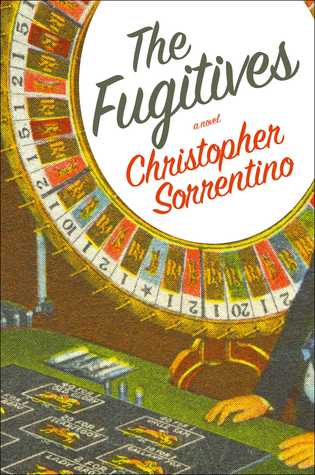 Sandy Mulligan is a renowned author, but he’s hit a crisis. He’s left his wife and children for someone else, and it didn’t work out. Now he’s taken to the hinterlands to try to write the book he’s contracted to produce. Meanwhile, he runs across John Salteau, who claims to be an Ojibway storyteller, but it doesn’t ring quite true. Like Mulligan, Salteau is hiding from something. And if that isn’t enough, we have Kat Danhoff, herself a refugee of sorts, and she has landed in the same tiny burg, first to write about Salteau, and then to write about Mulligan interviewing Salteau. And before I can say more, I need to tell you that this clever satirical work was given me free of charge by Net Galley and Simon and Schuster in exchange for this honest review. It goes up for sale on February 9, 2016.
 Seattle Book Mama